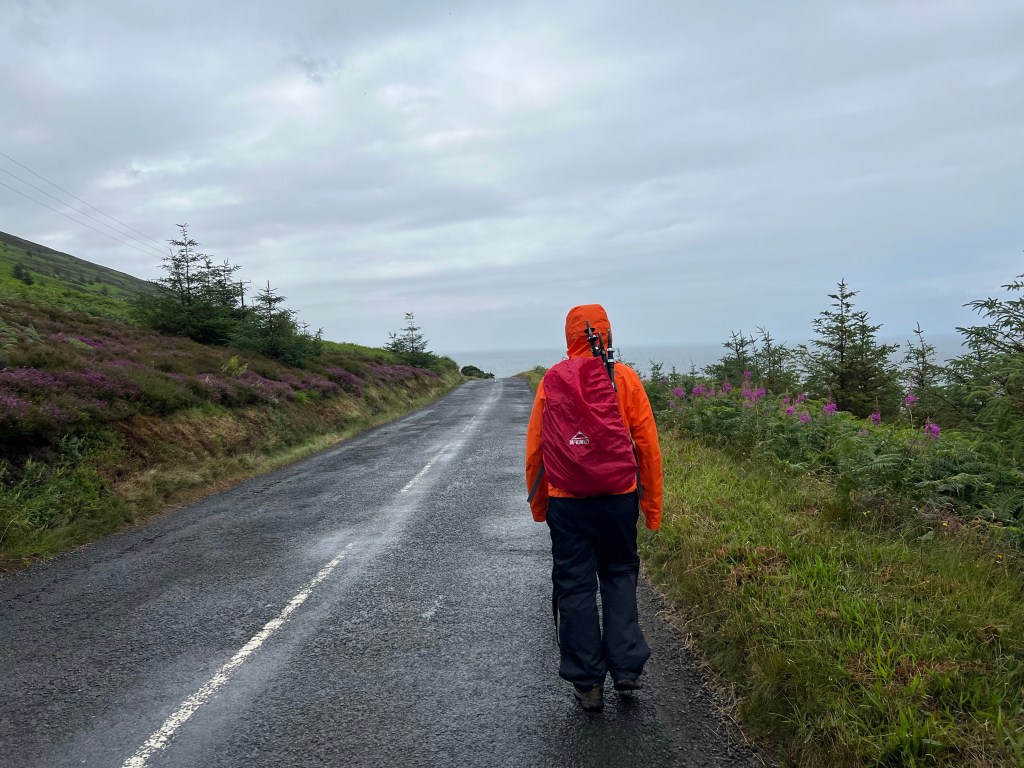
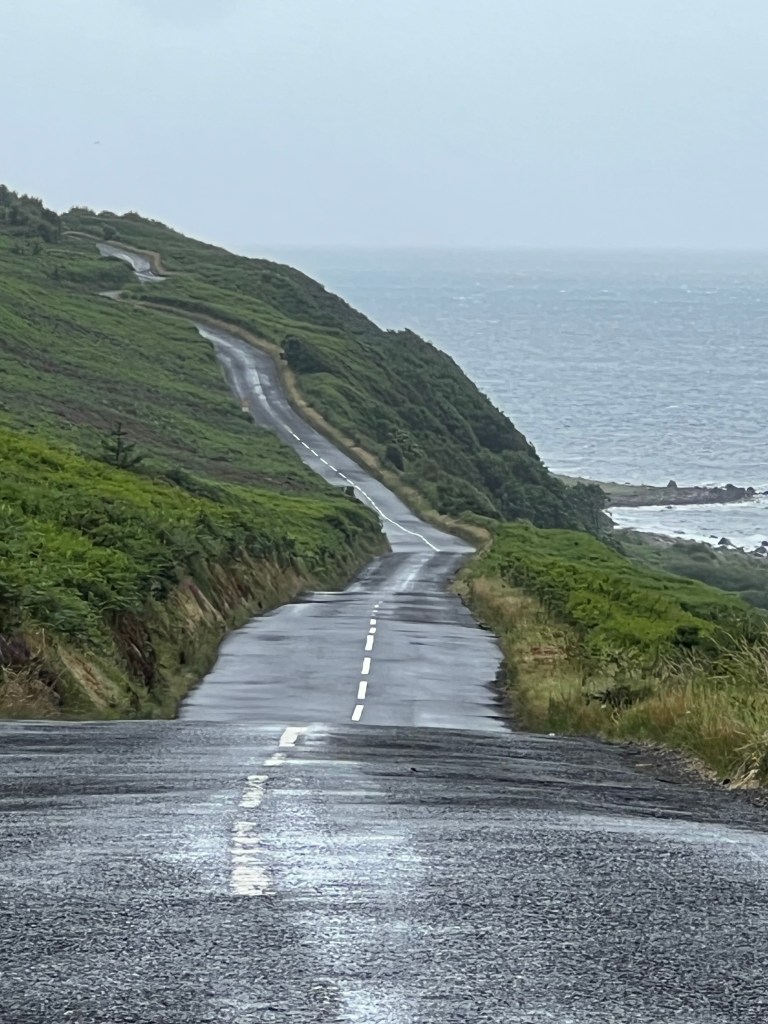
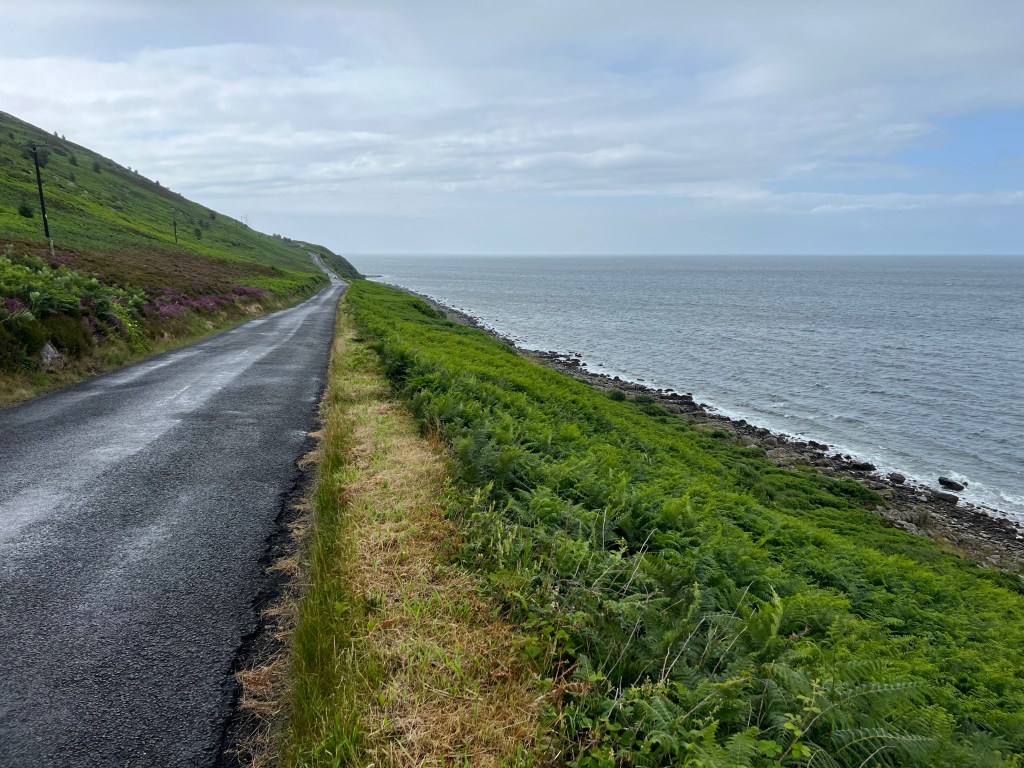
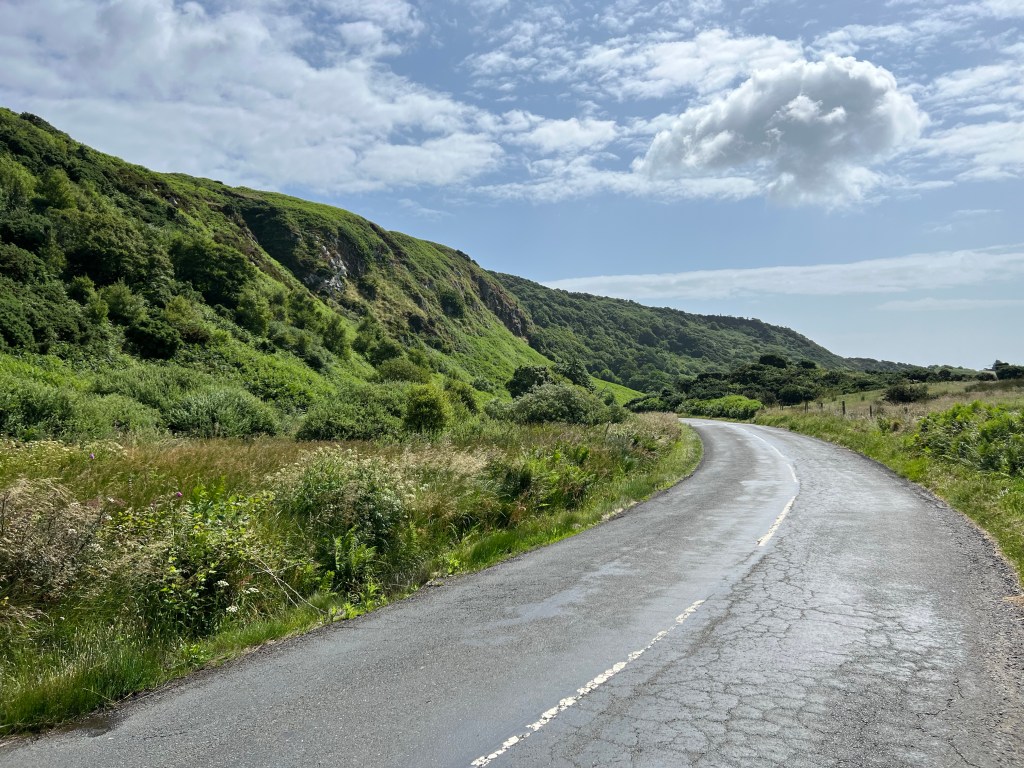
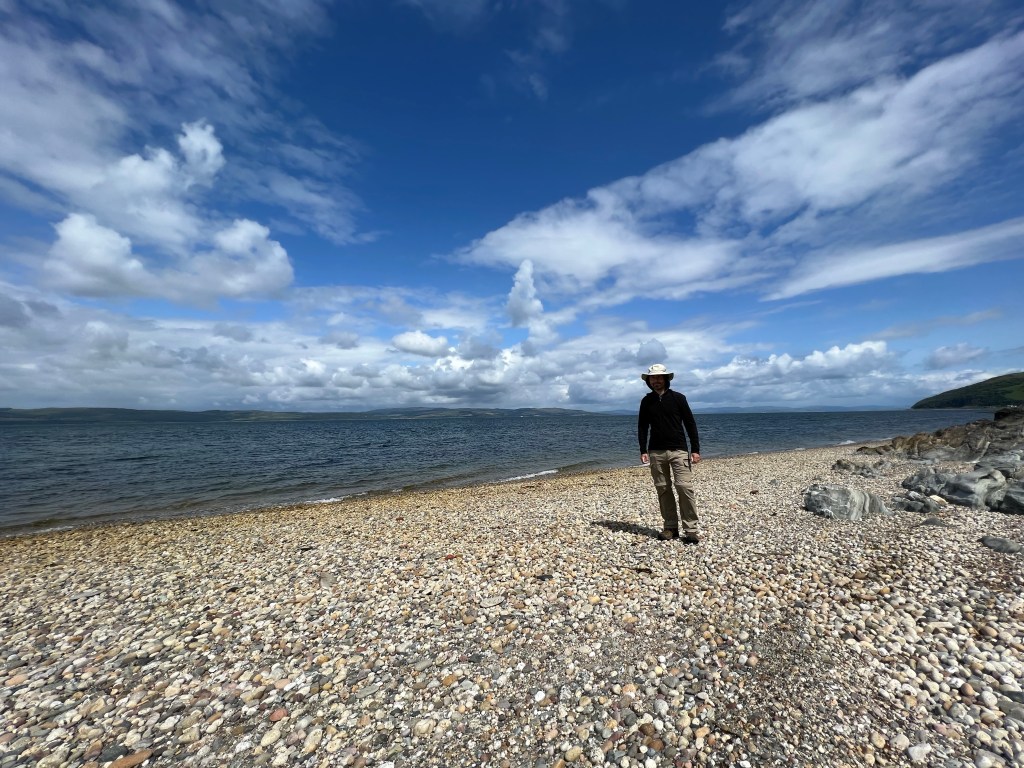
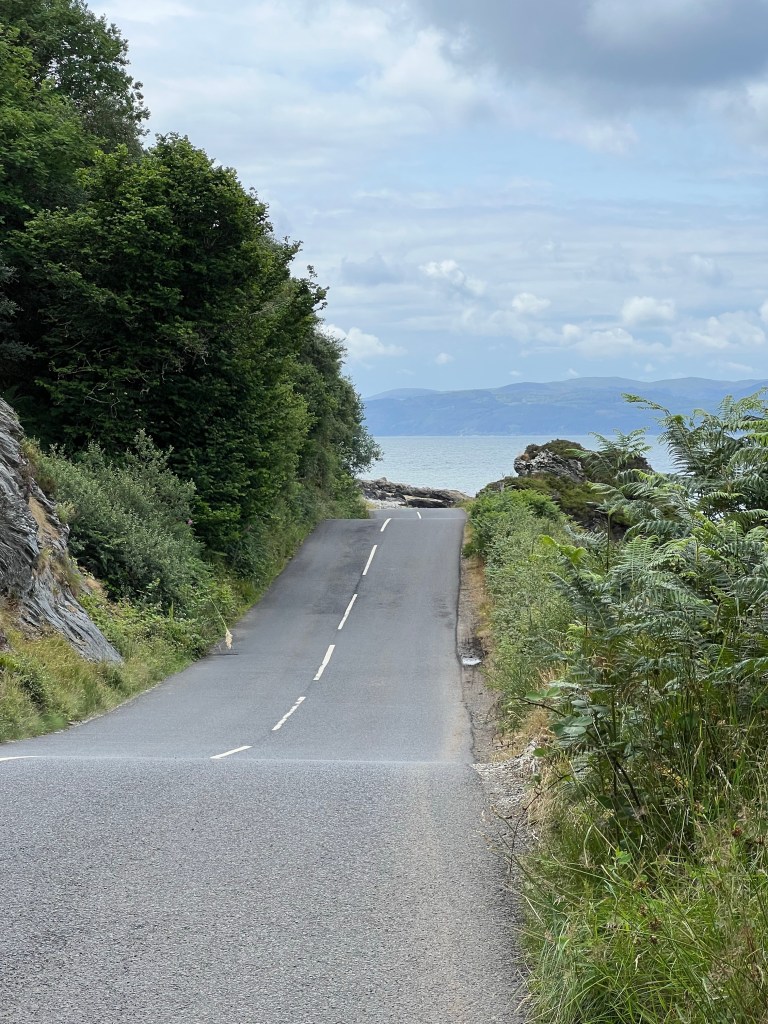
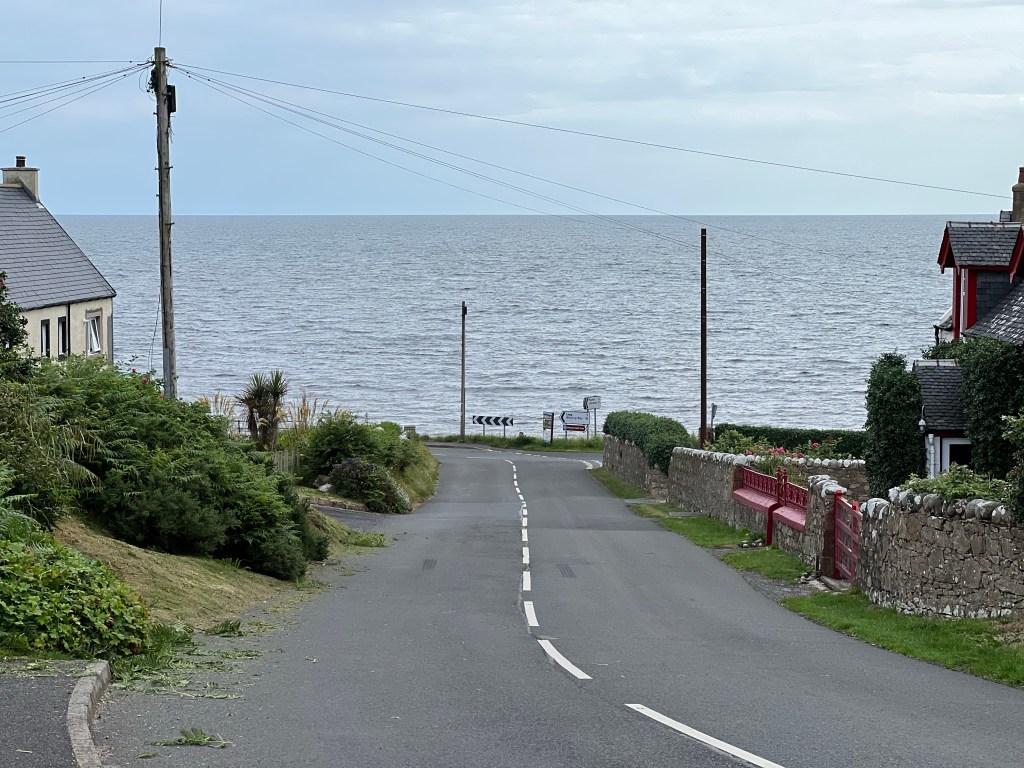
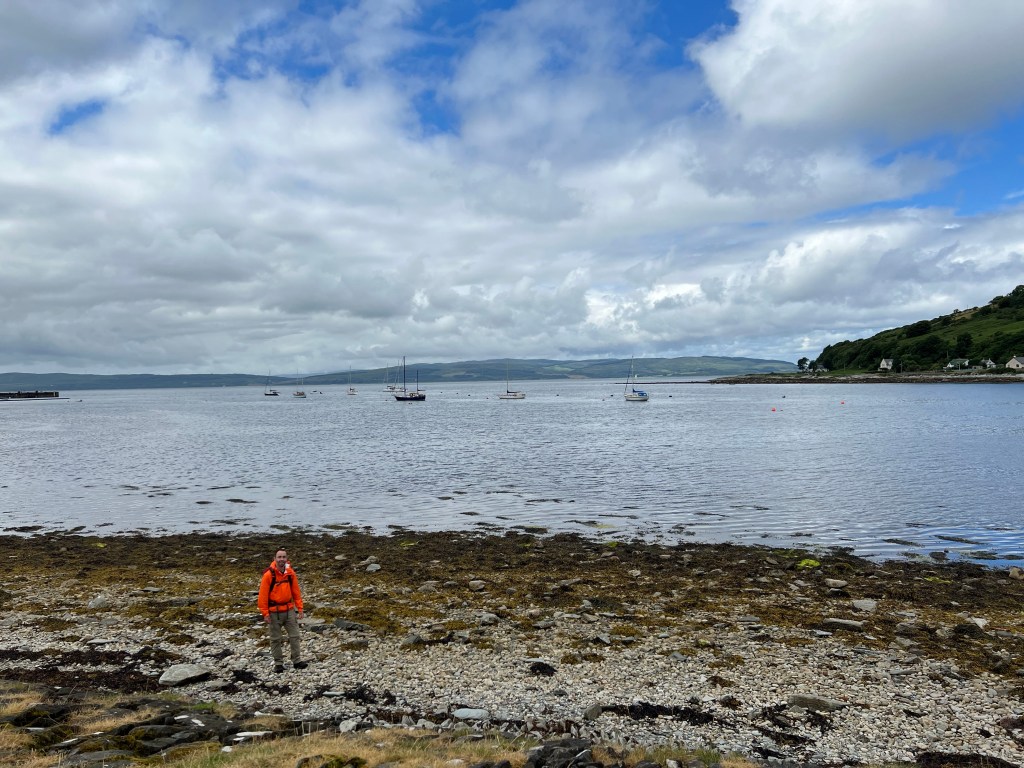
Due to a number of factors (blustery winds, local trail information, advice from our host, and a blister the size of a business card) we decided to take the cyclists route instead of the beach boulder-hopping-watch-the-tides route. This led us beachside on a secondary road, and then up onto the main road.
A damp and blustery walk
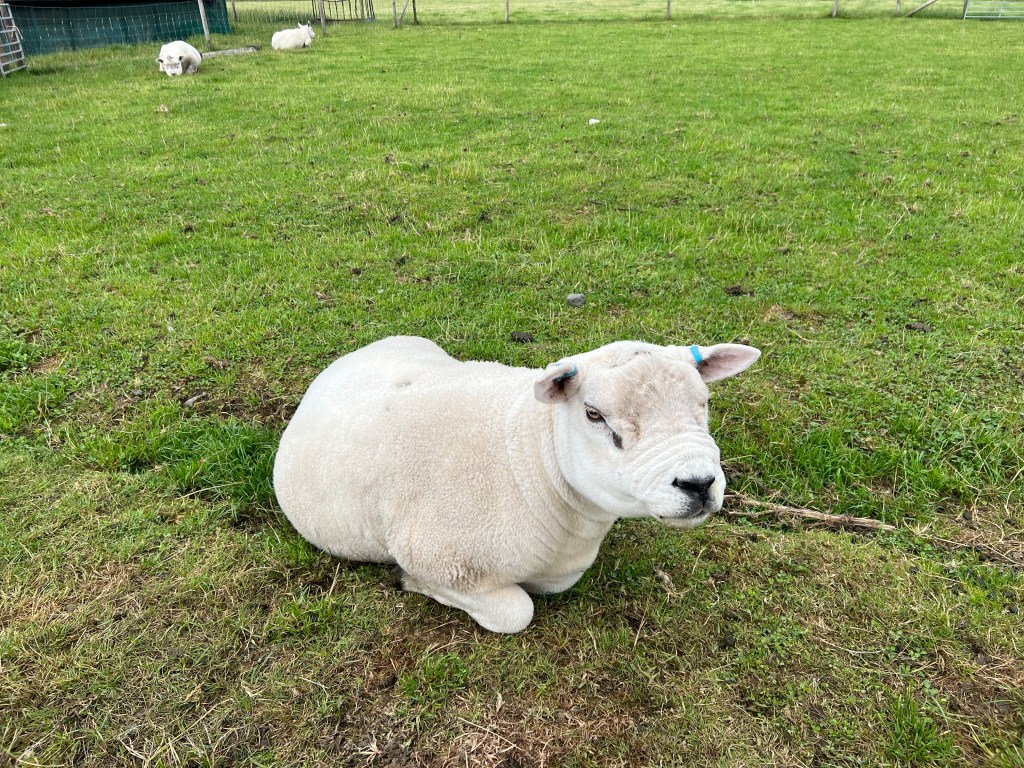
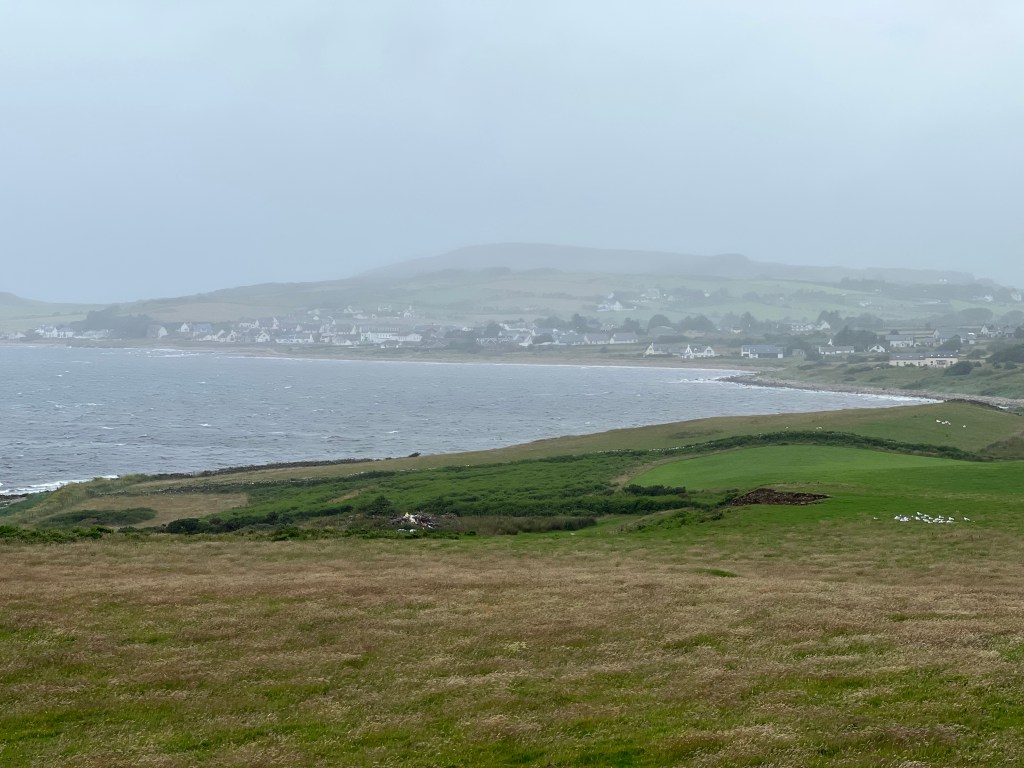
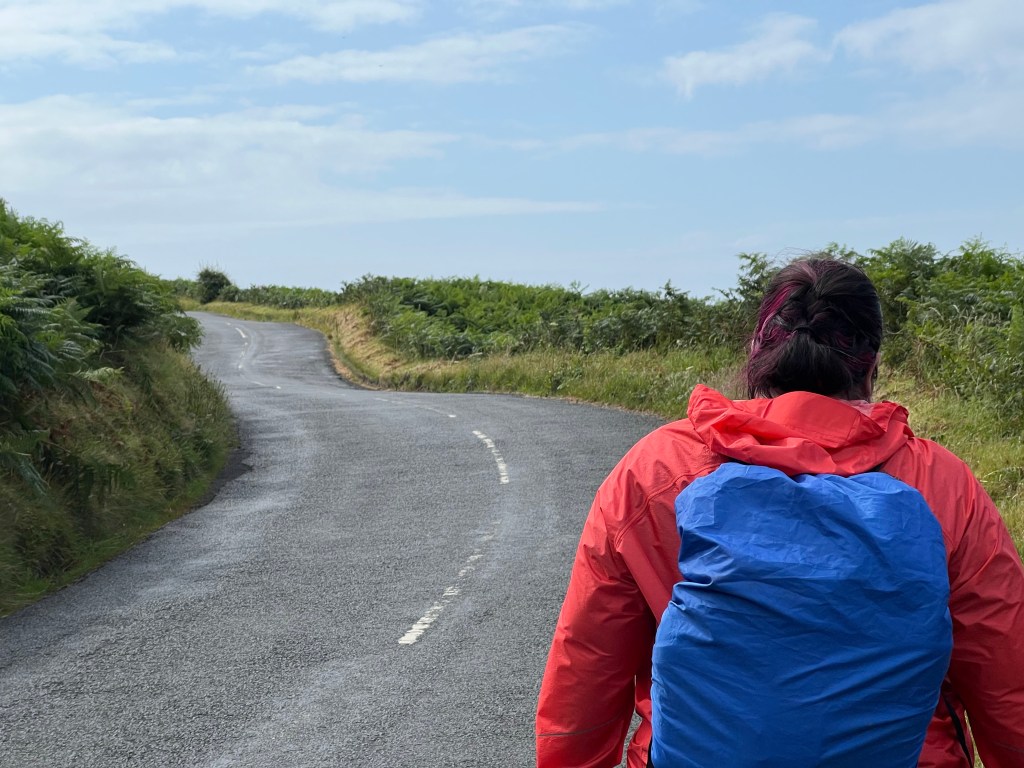
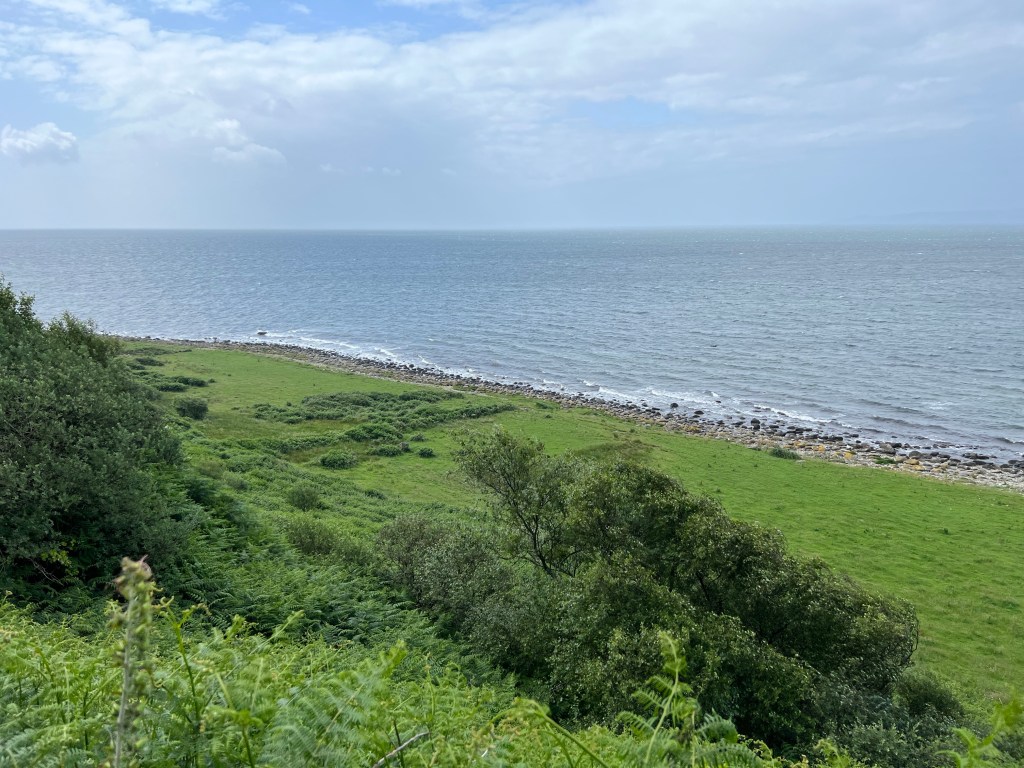
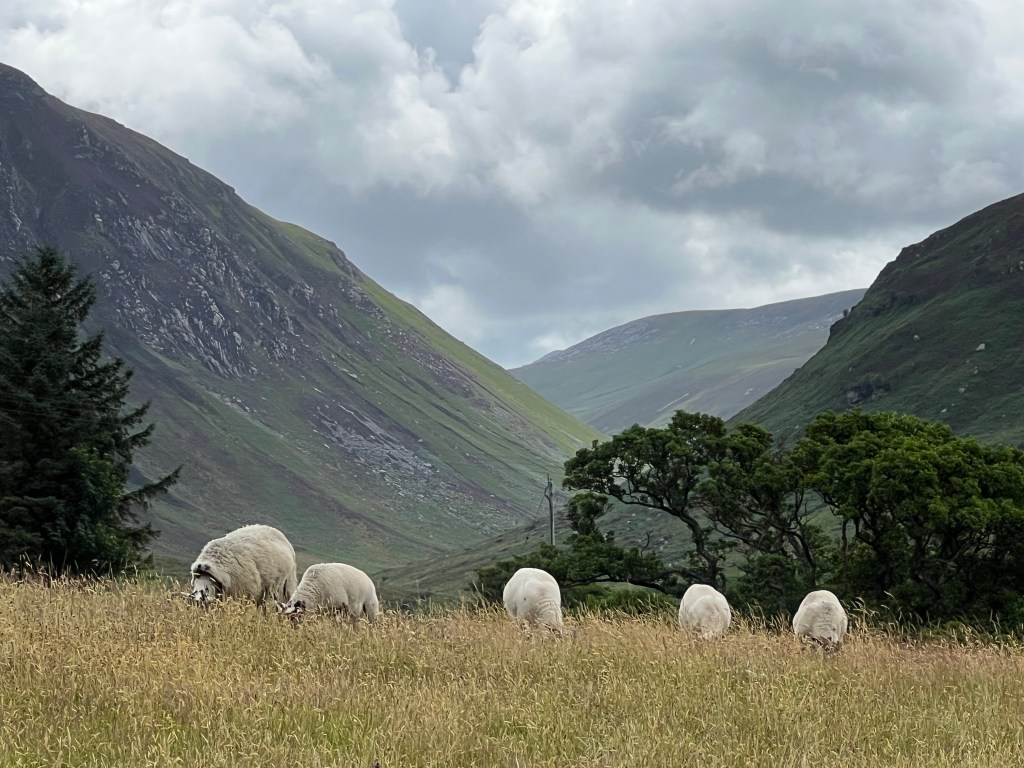
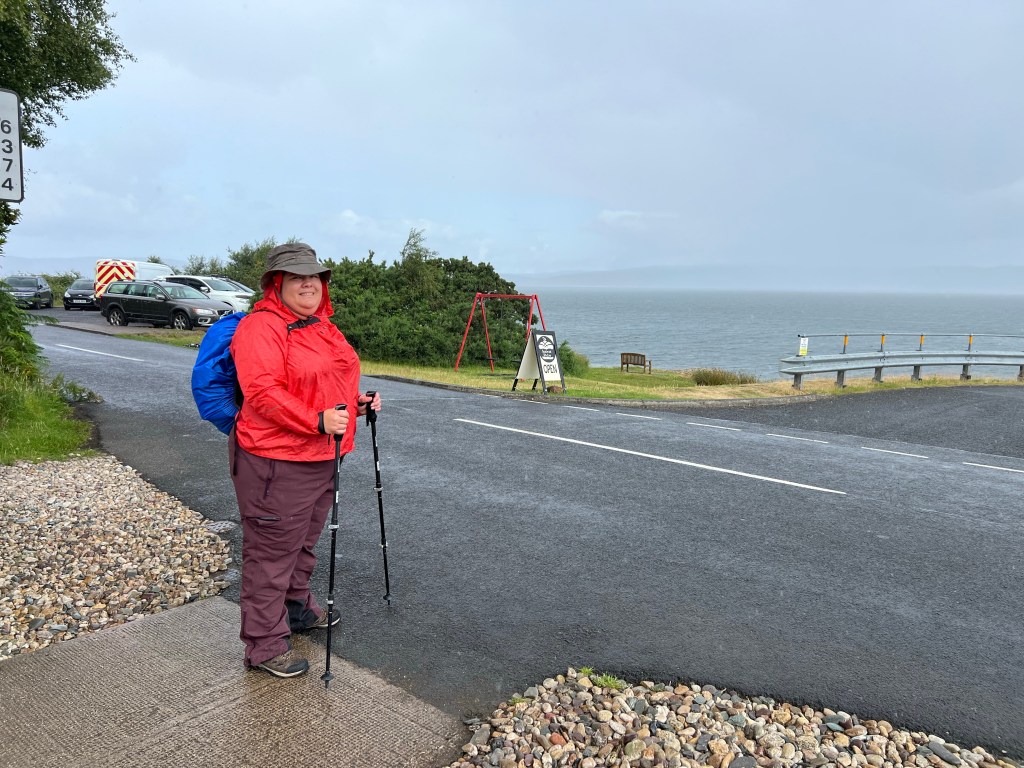
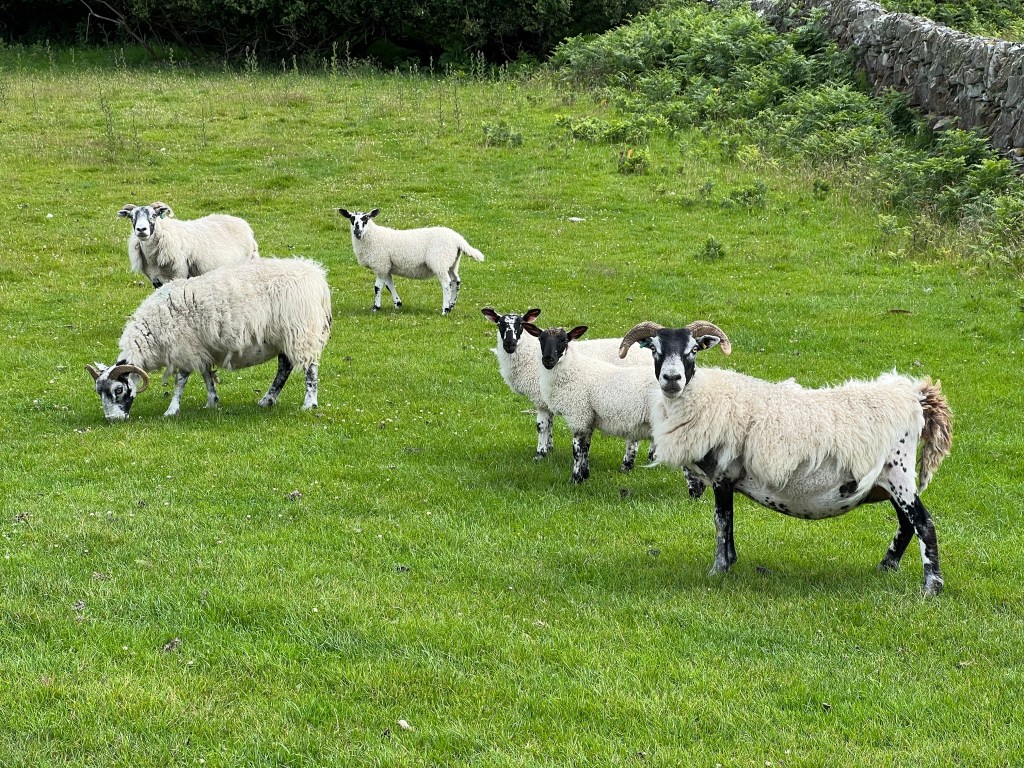
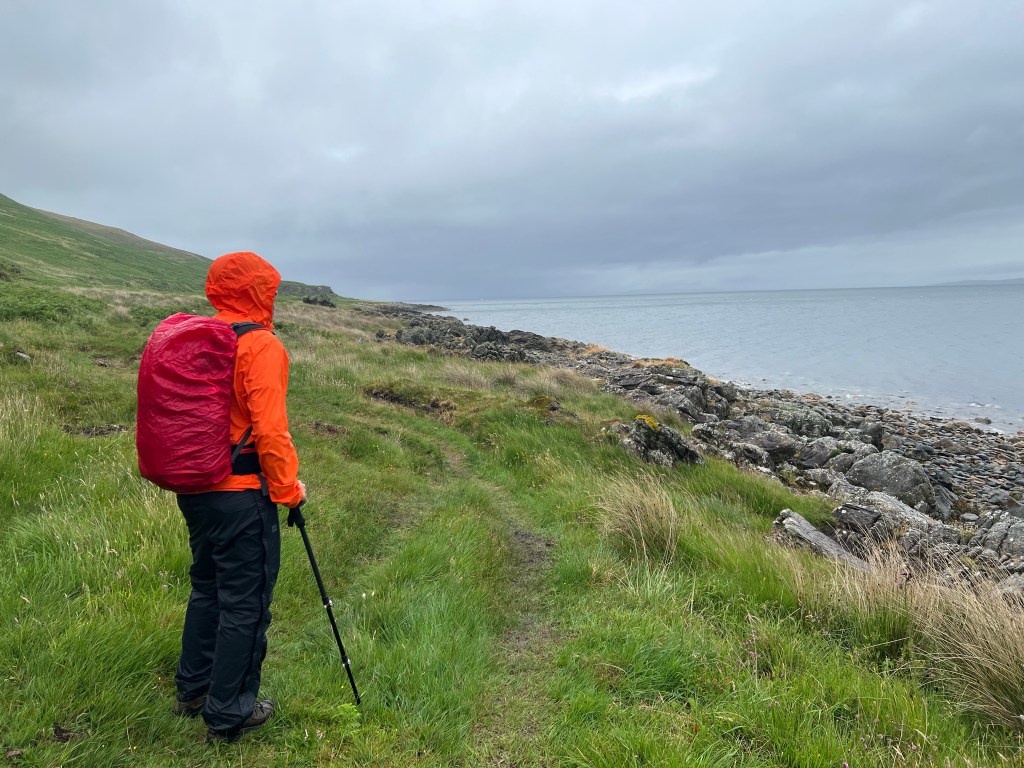
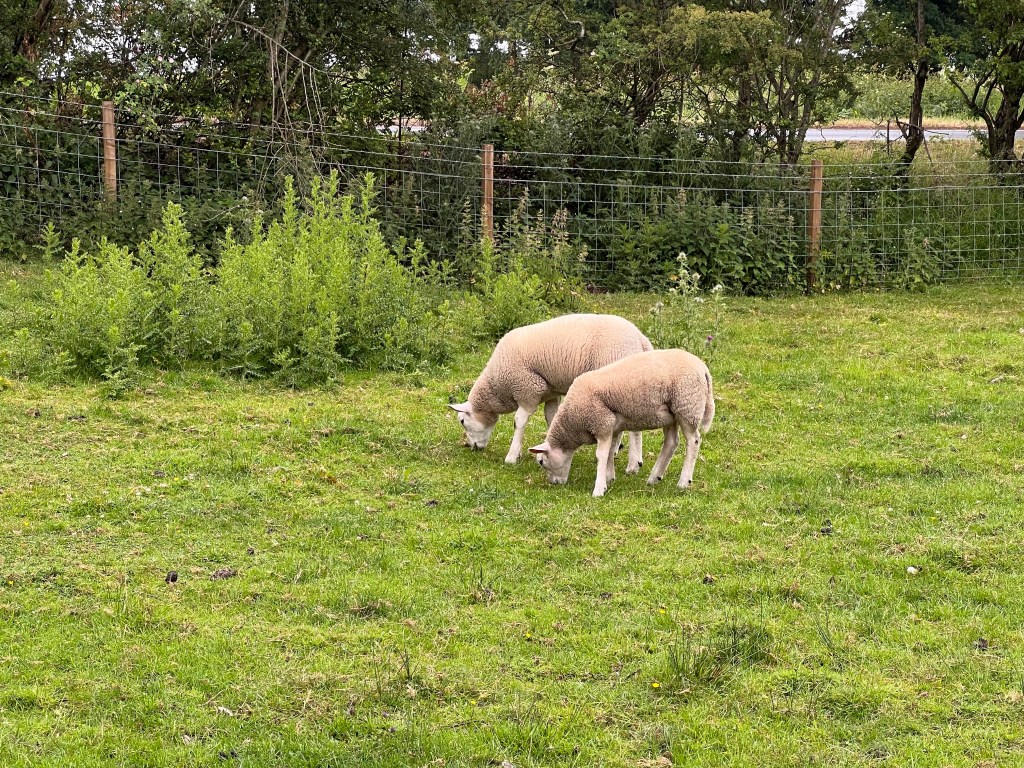
The weather was unsettled and very breezy – the ferries off island were cancelled – so it was rain suits most of the day. The inland route was very scenic, and we loved comparing the different types of sheep.
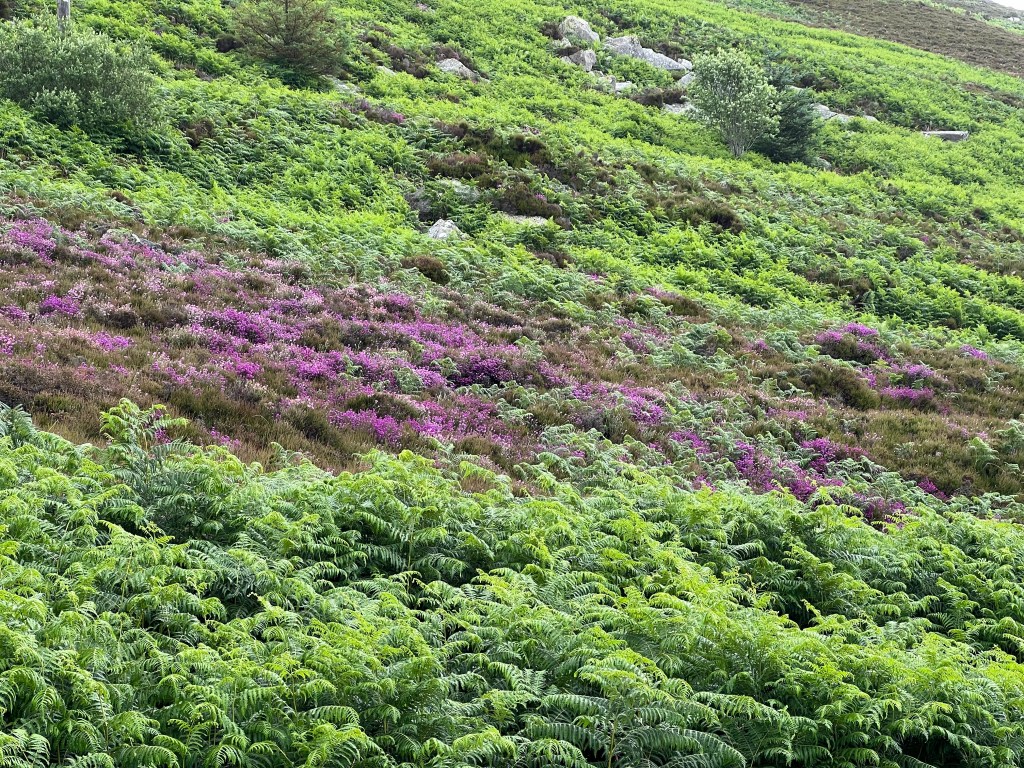
These sheep had pug-like facesMisty day on the coastIt’s a long and winding roadBeautiful vistasA melodious mix of heathers punctuated the fernsOne foot in front of the other
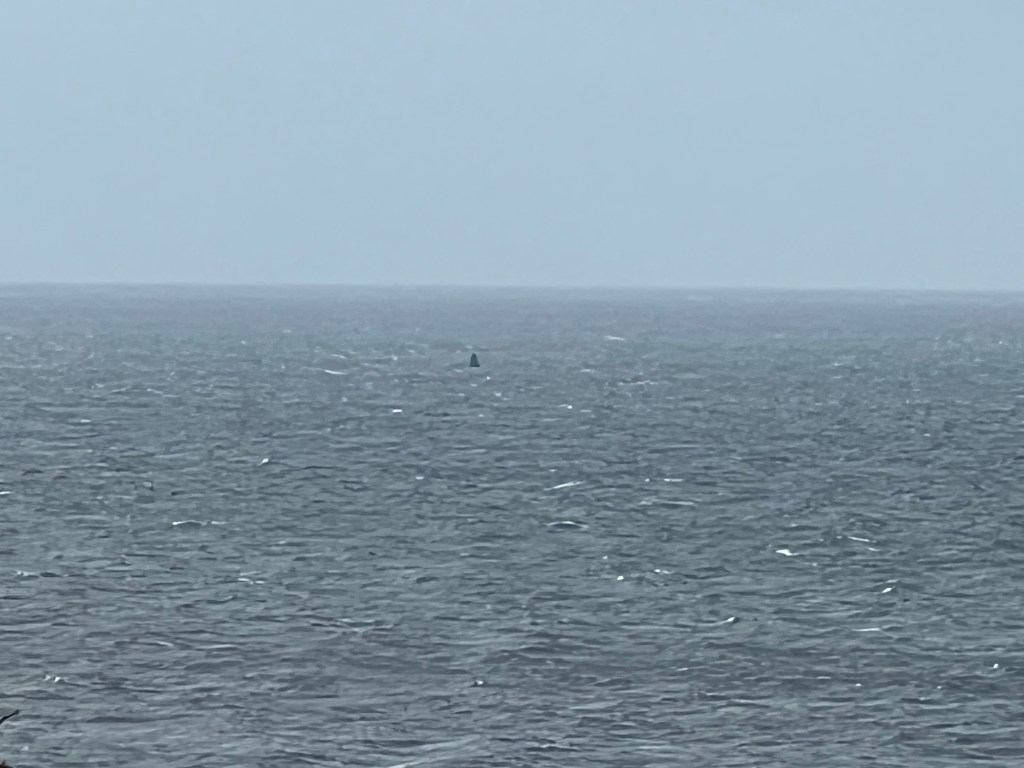
Our first snack break was where the hiking route joined the cycle route, and the views of the rough waters were gorgeous. We were very lucky and saw a pod of dolphins jumping and frolicking in the surf.
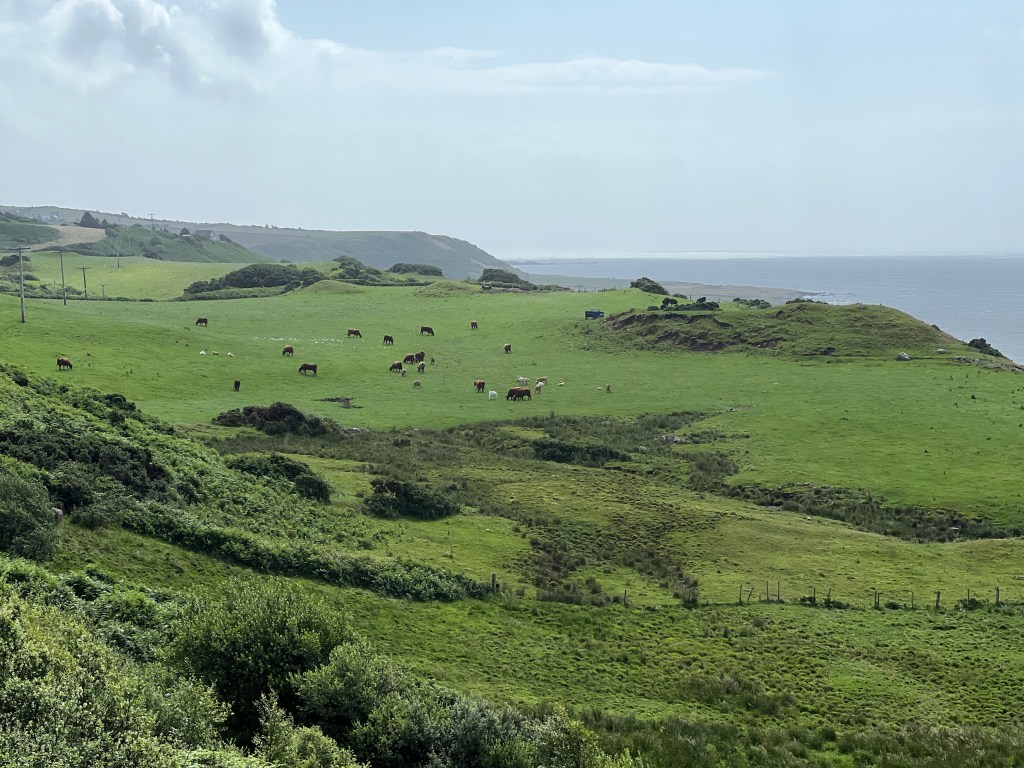
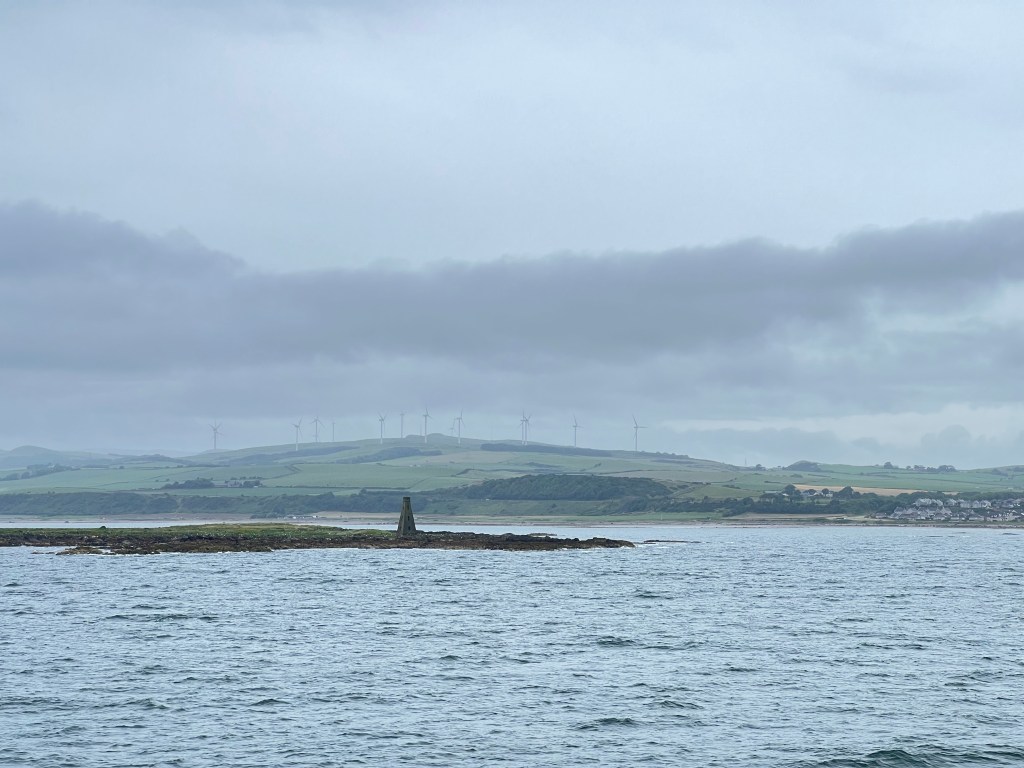
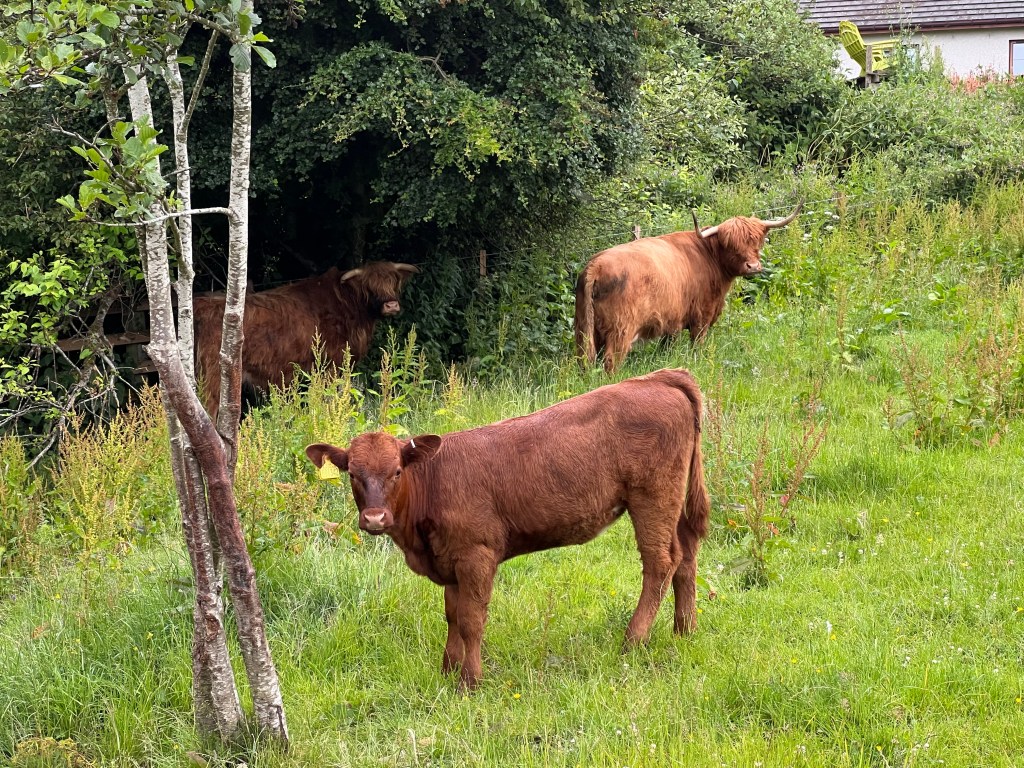
This is a photo of a dolphin jumping in the distance, we swearDave calls this the saltwater Nessie (it’s really a navigational buoy). The lunch spot was quite scenicCows! But not Highland cows. All sorts of terrain The pastures roll on and on
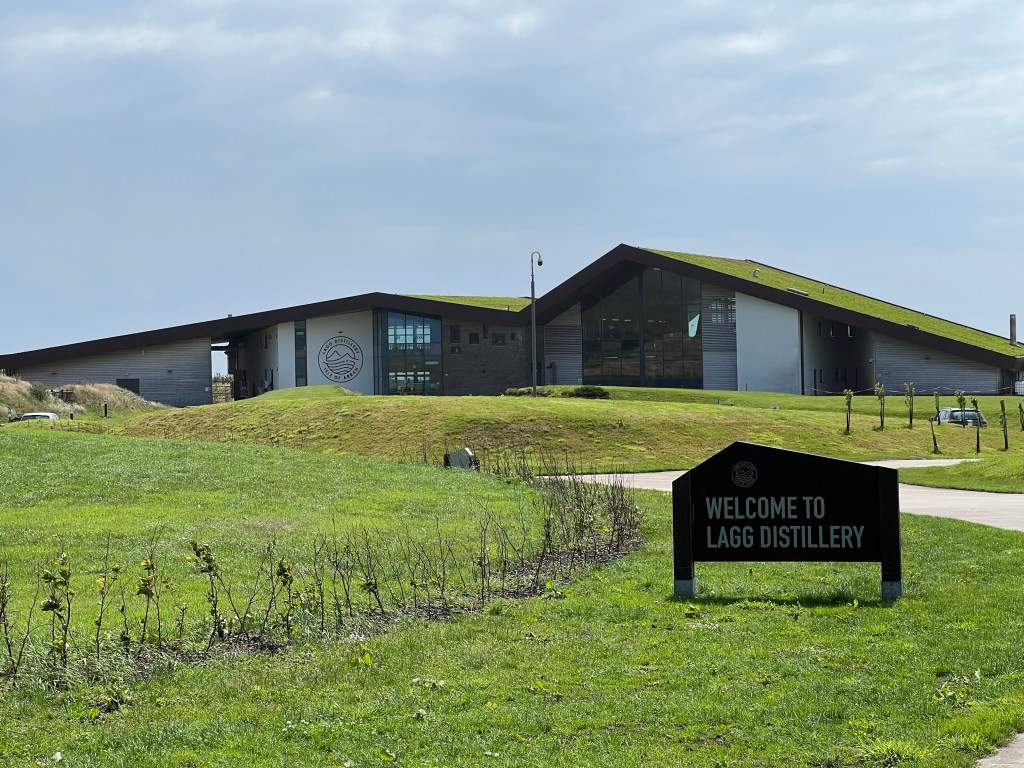
Today’s route was a bit shorter than others, so it was surprising when we came across the Lagg Distillery in good time for lunch. Delicious bagels mounded with topping in a dry, warm place with clean washrooms and a gift shop. What more could one want?
Lagg Distillery
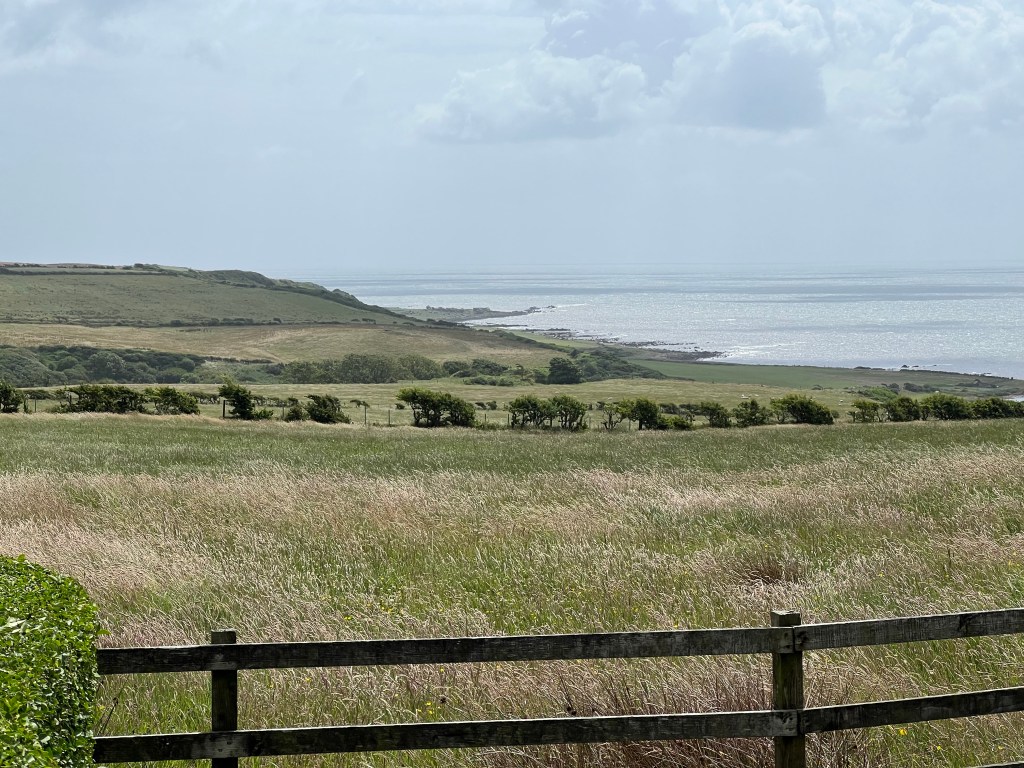
After lunch we wandered the last kilometre into Lagg, then caught the bus to take us to our next abode in Whiting Bay. We checked in, and realized the chef shortage on the island had hit here, too. So we hopped on the next bus for Lamlash, and got dinner at the local pub.
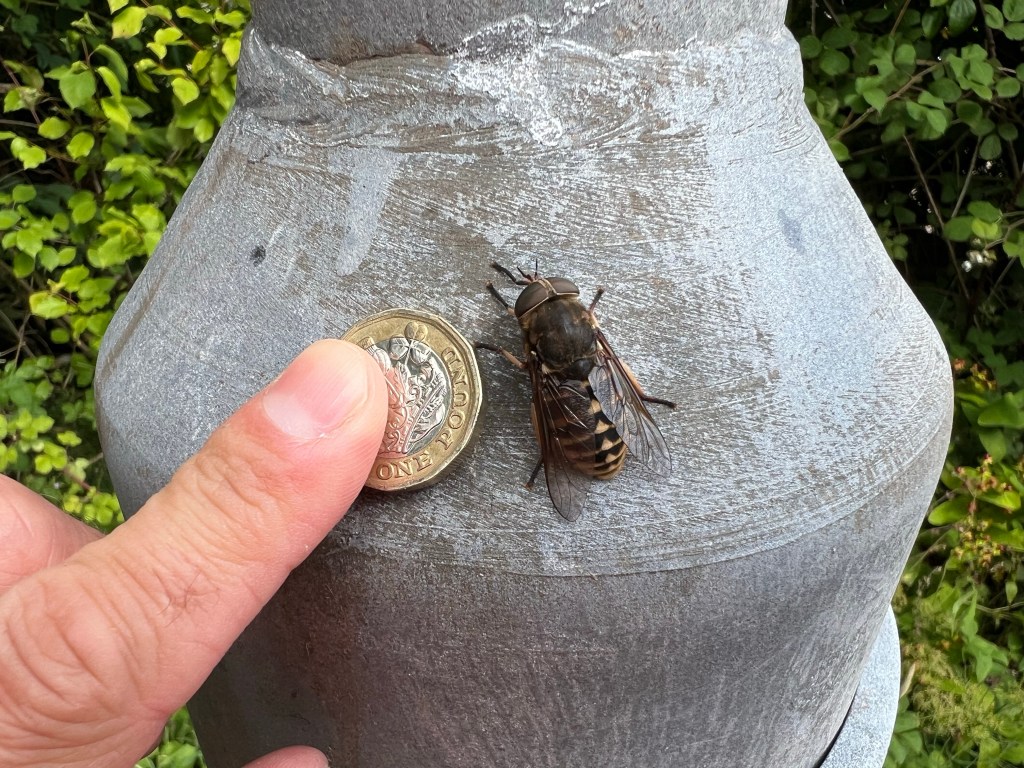
Dark giant horsefly, the heaviest fly in Europe. Dave thinks the £1 coin is more useful than his thumb for scale.
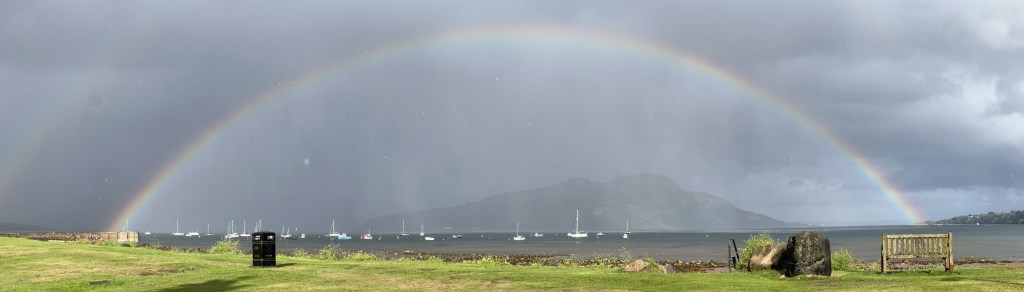
After the pub we hit the co-op for rations for the next night, and waited for the bus. As we waited, it started raining and a gorgeous full bow rainbow appeared over the water, framing the Holy Isle. It was spectacular, and a great end to the night.
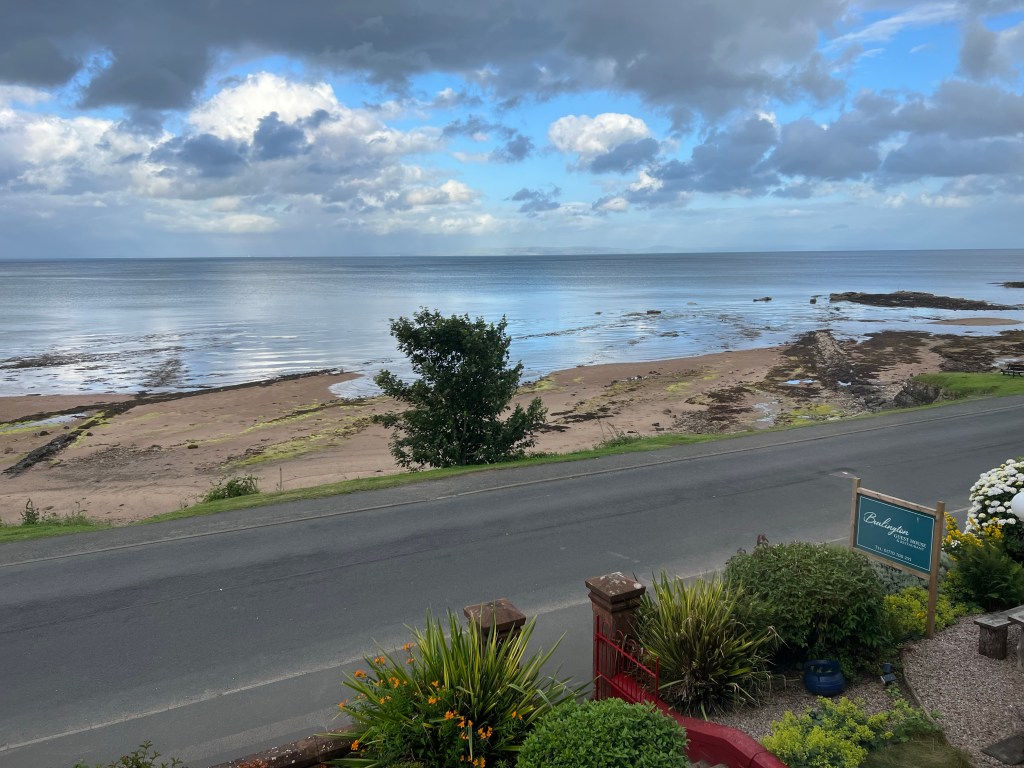
At LamlashRainbow over the Holy IsleView from our (lovely! spacious!) room
As the title suggests, we cheated a bit today. There were lots of things to see, and not enough time to do them all and the entire Coastal Way, so we had our drop off at Machrie Moor instead of Imachar.
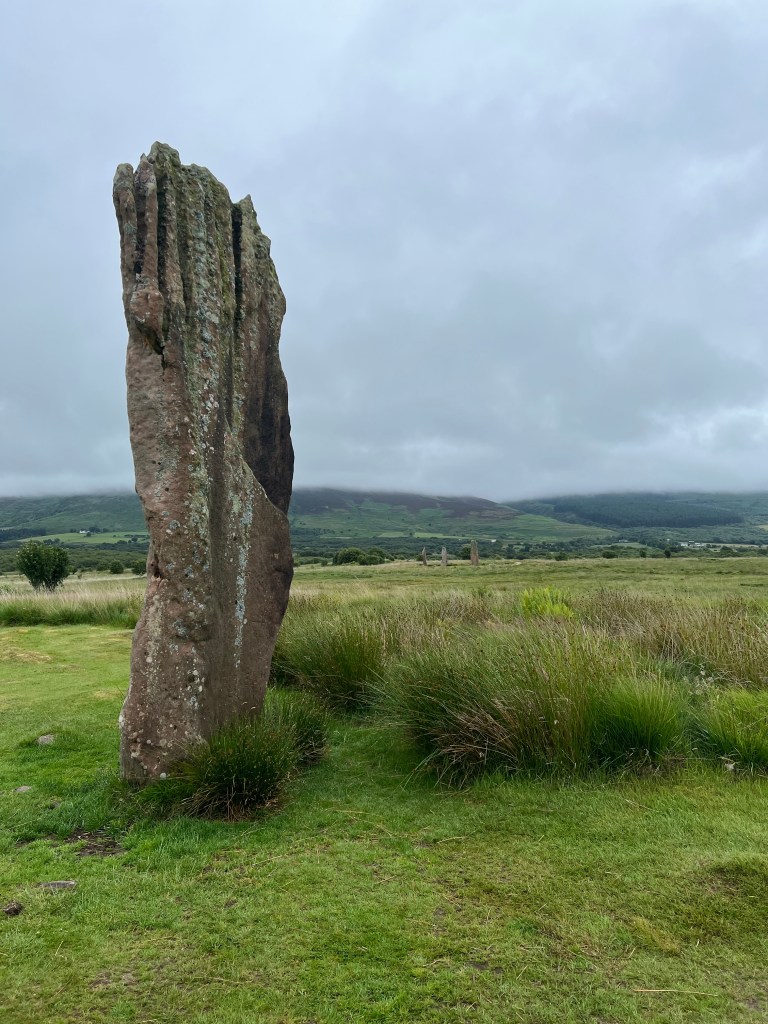
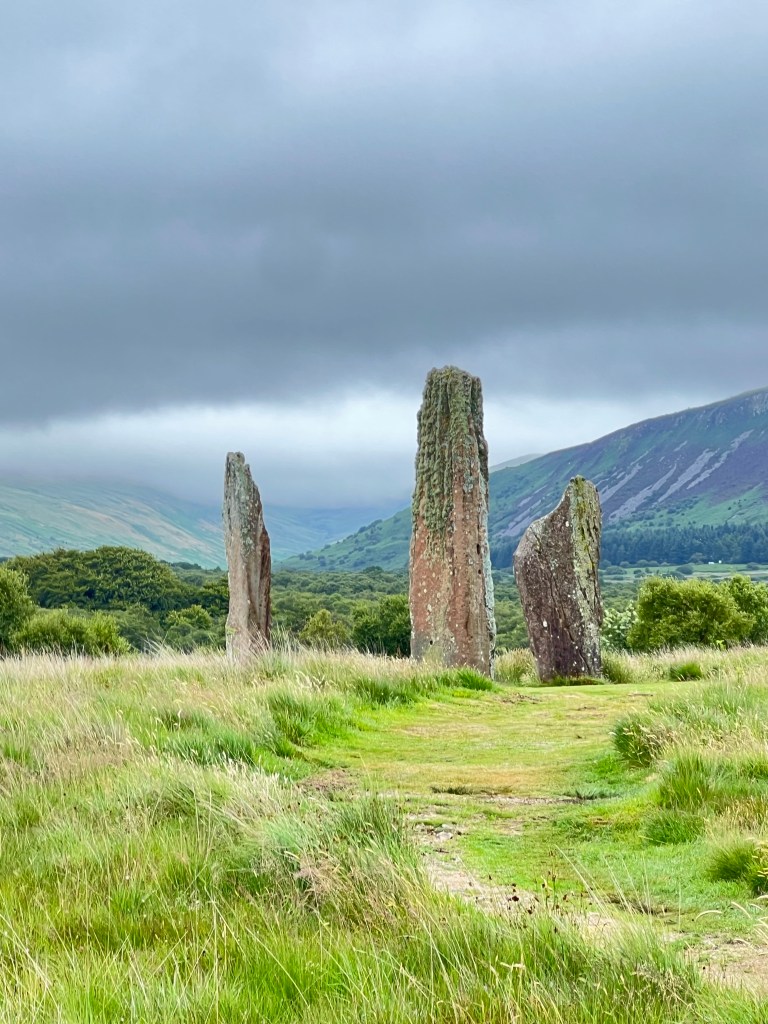
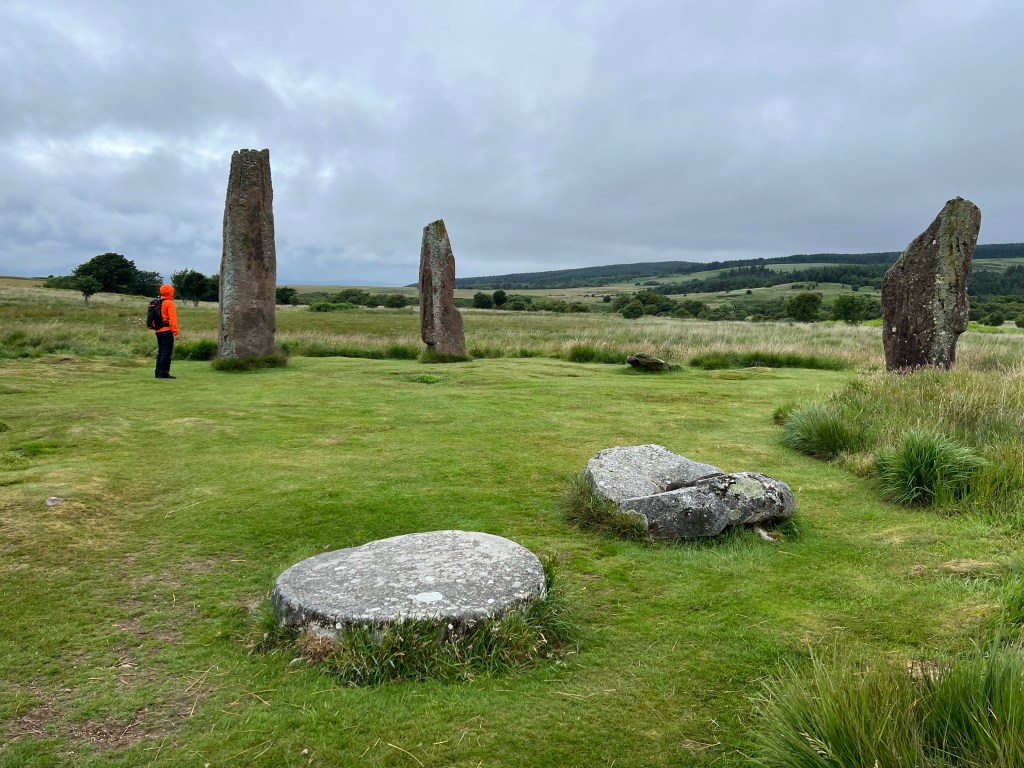
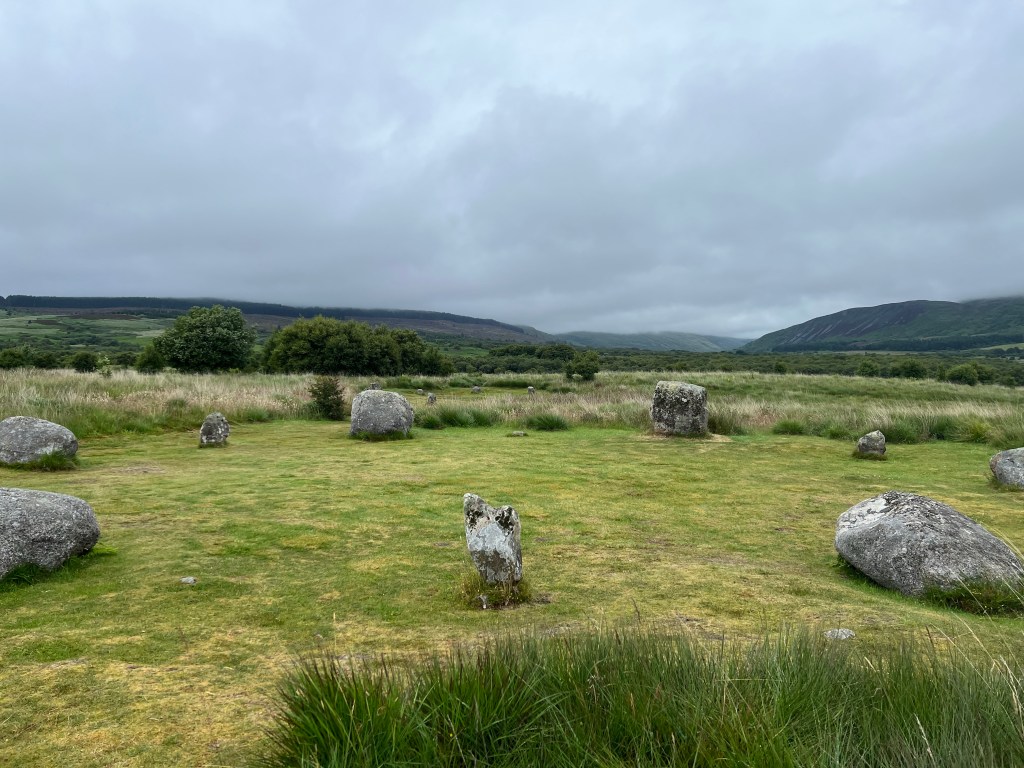
Mahrie Moor is known for their 1800 BCE standing stones, but there are actually a number of stone circles here, and evidence shows wooden structures predate those (2500 BCE), with earliest use of the site in 3500 BCE.
Machrie Moor 3Machrie Moor 2Machrie Moor 2Machrie Moor 11, with 1 in the background
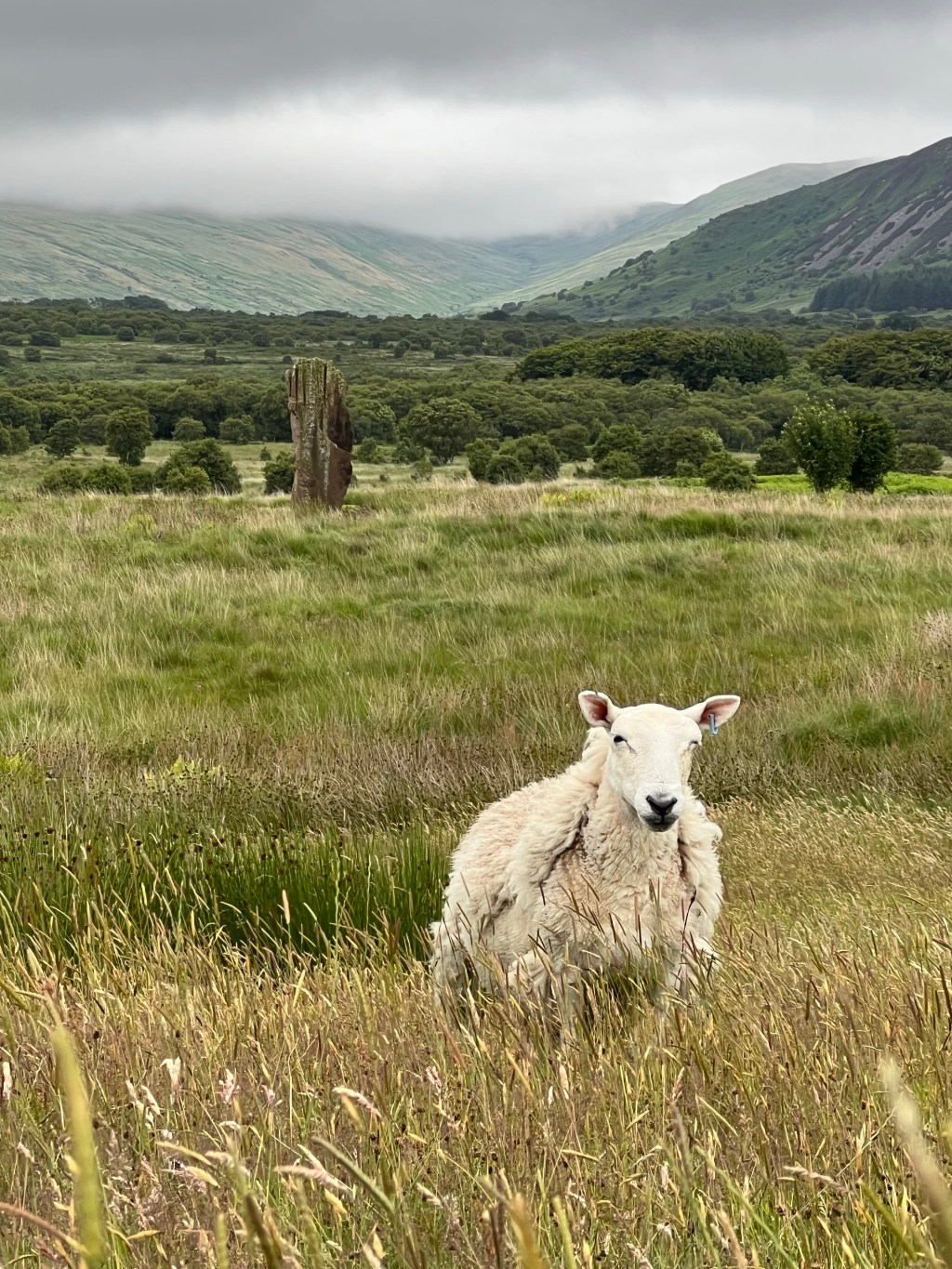
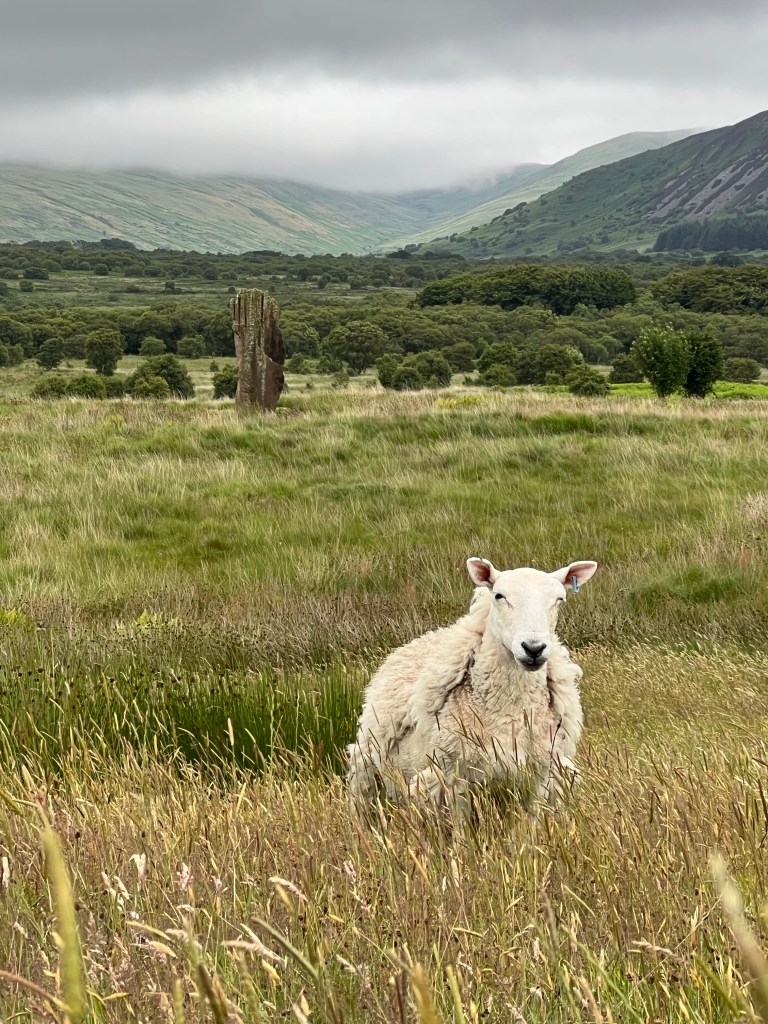
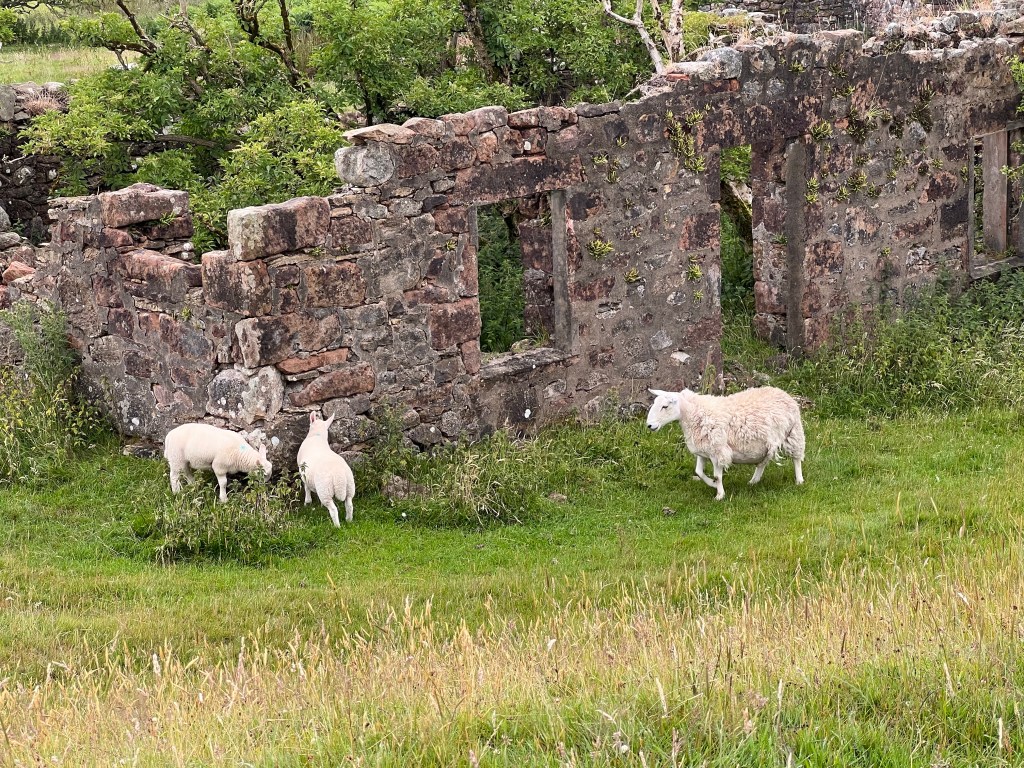
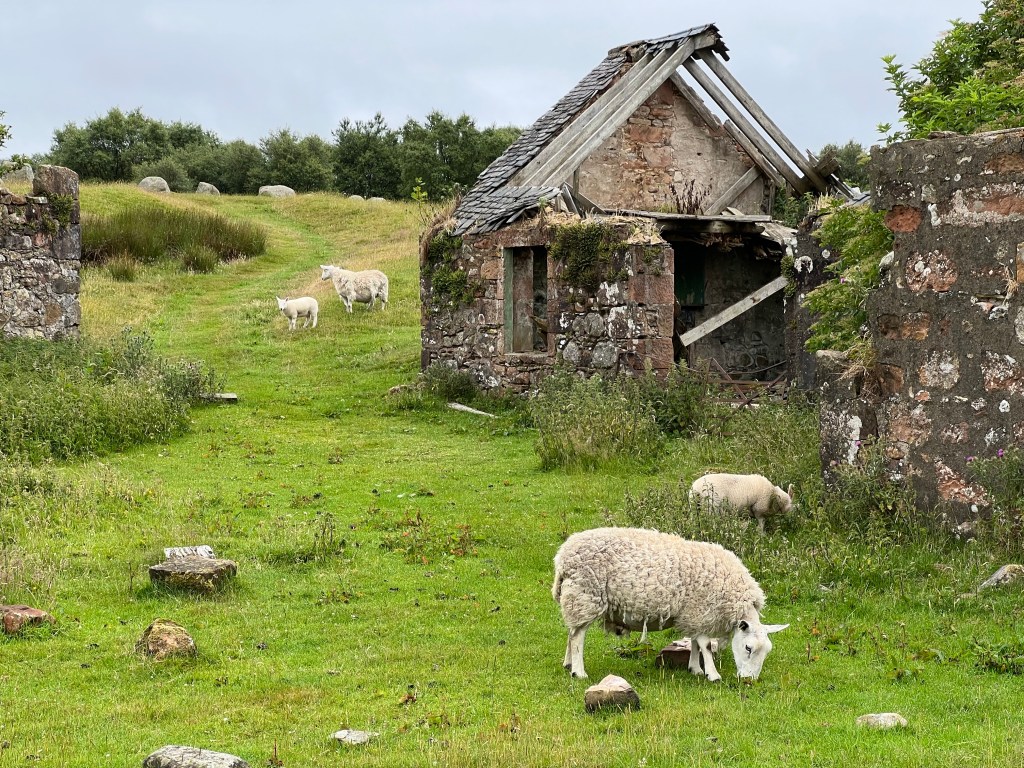
In addition to the circles, the walk led us through farmers fields with hundreds of sheep, and by the ruins of an old – but not standing-stone-old – home.
Sheep and standing stoneThistle Sheep keeping the tastiest vegetarian clearThere are more sheep than people in Scotland.
We also saw a neat bird. It was creating quite a ruckus. We think it was a whimbrel.
After viewing the stones we retraced our steps through the moor and then down the road. King’s Cave was next on our list. Once we reached the park we spotted picnic benches, and decided it was lunch time.
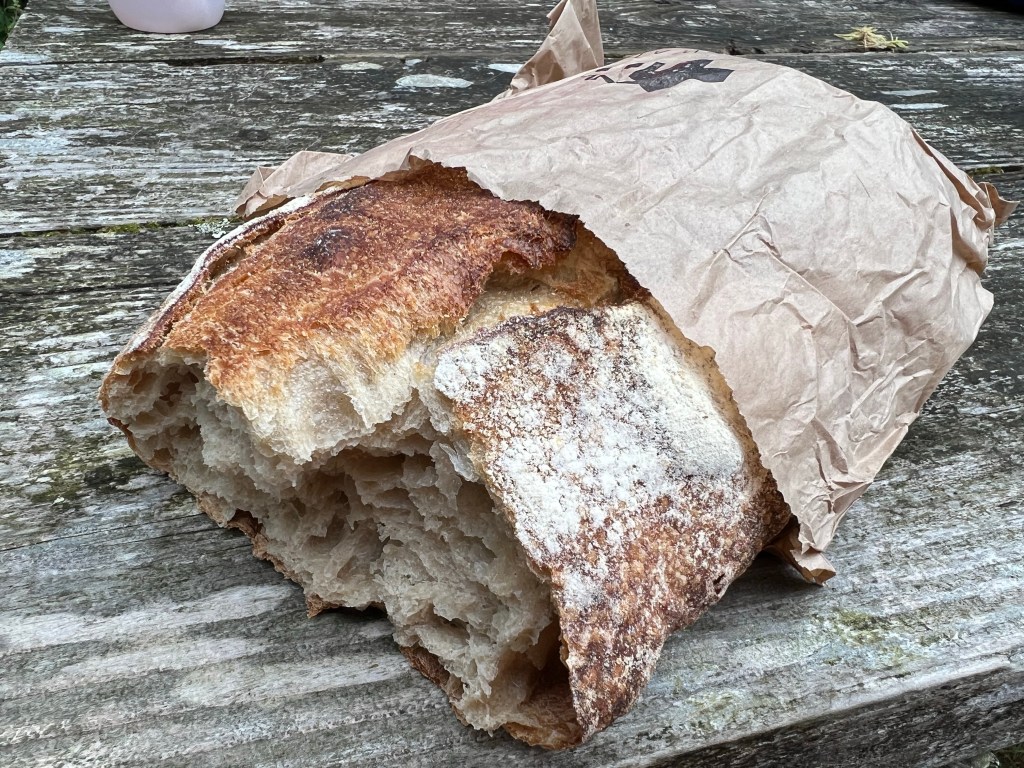
We bought this from the honour-system Bakehouse Shed. Old-fashioned white bread, and it is incredible.
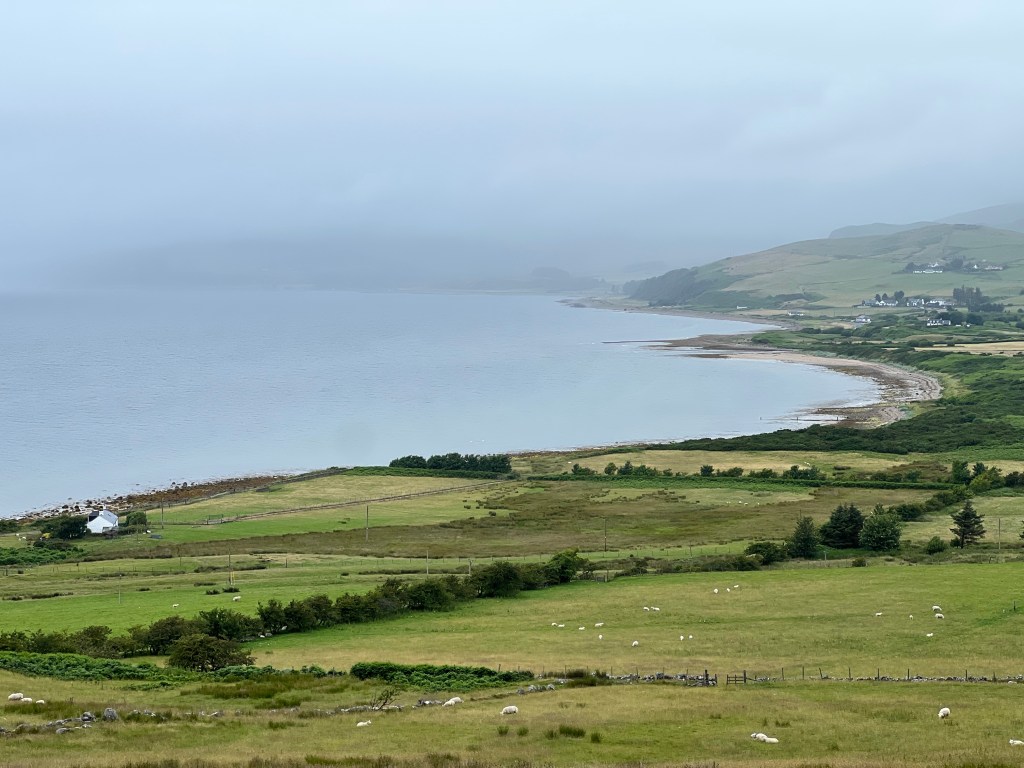
Back on the official Coastal Way trail, the actual path to King’s Cave was marvellous- wide, smooth, with forest on one side and endless views on the other. After walking through gentle hills, it was time to descend to the beach.
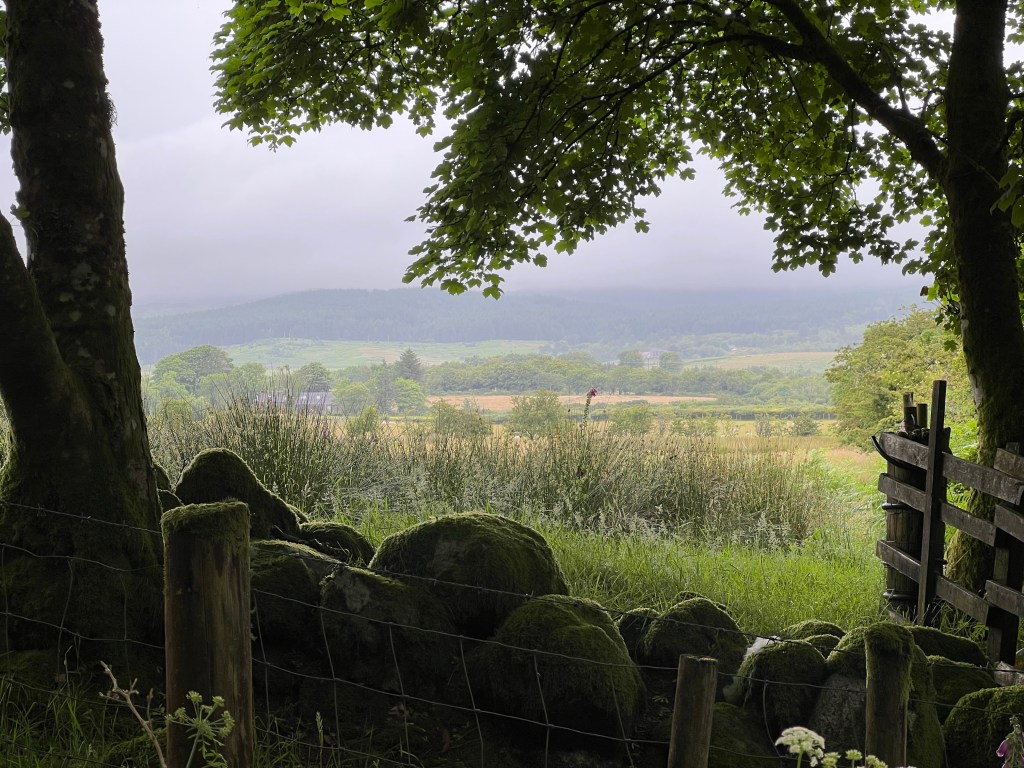
Old trees and older stone walls, covered in moss Beautiful vistas
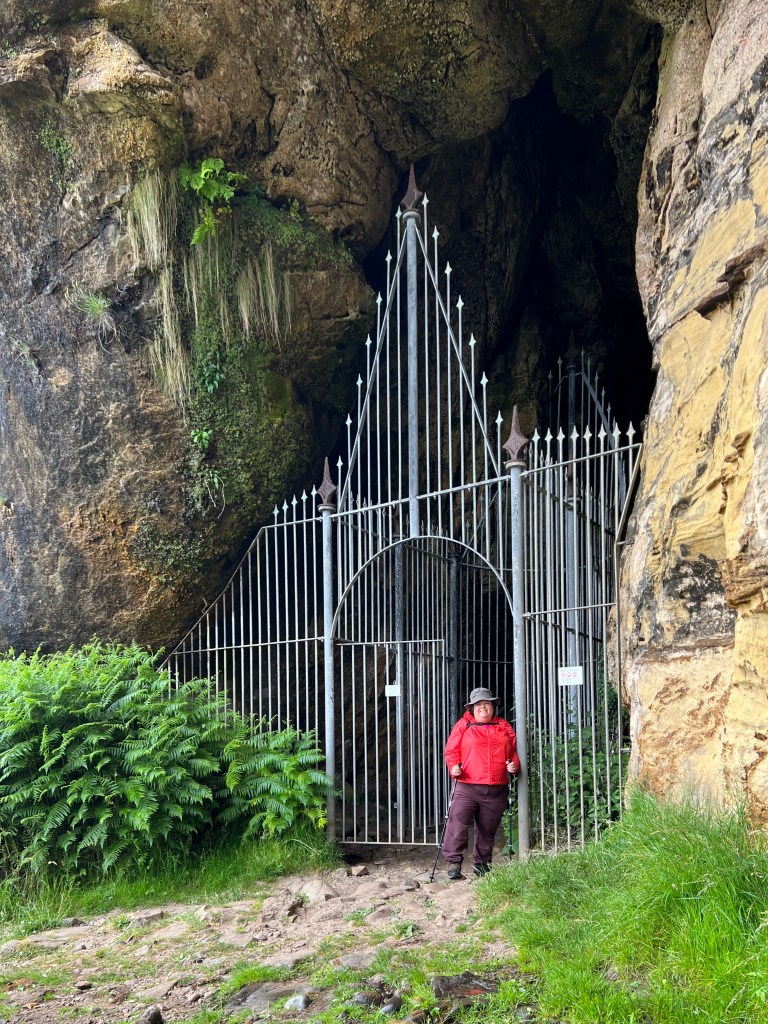
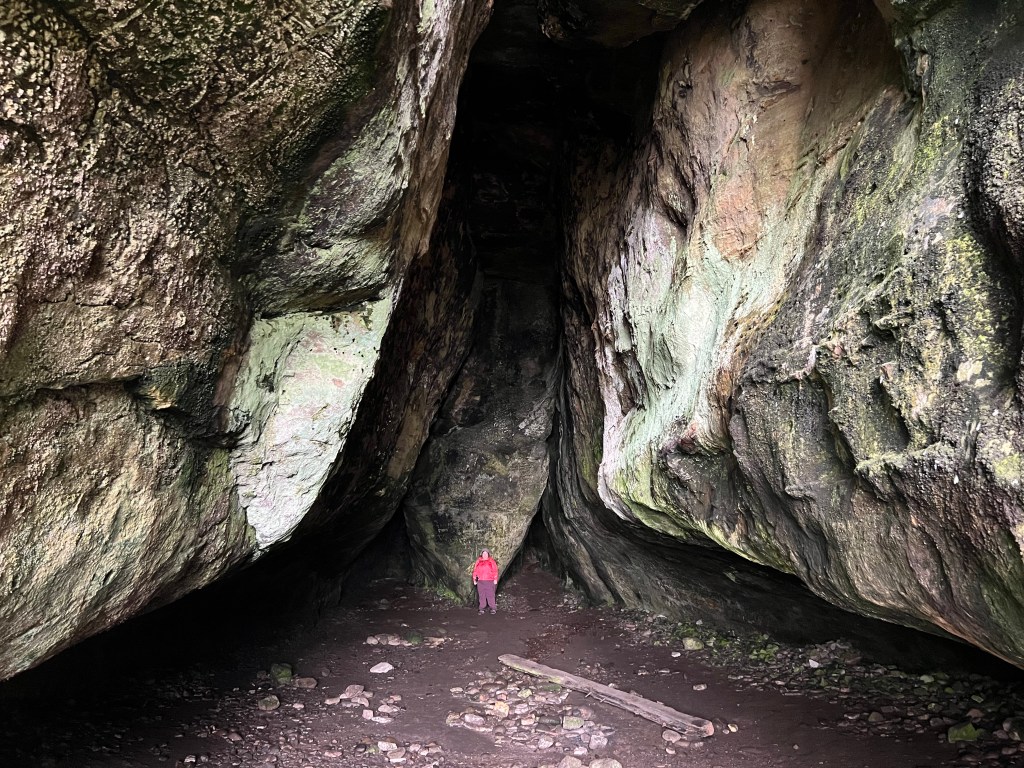
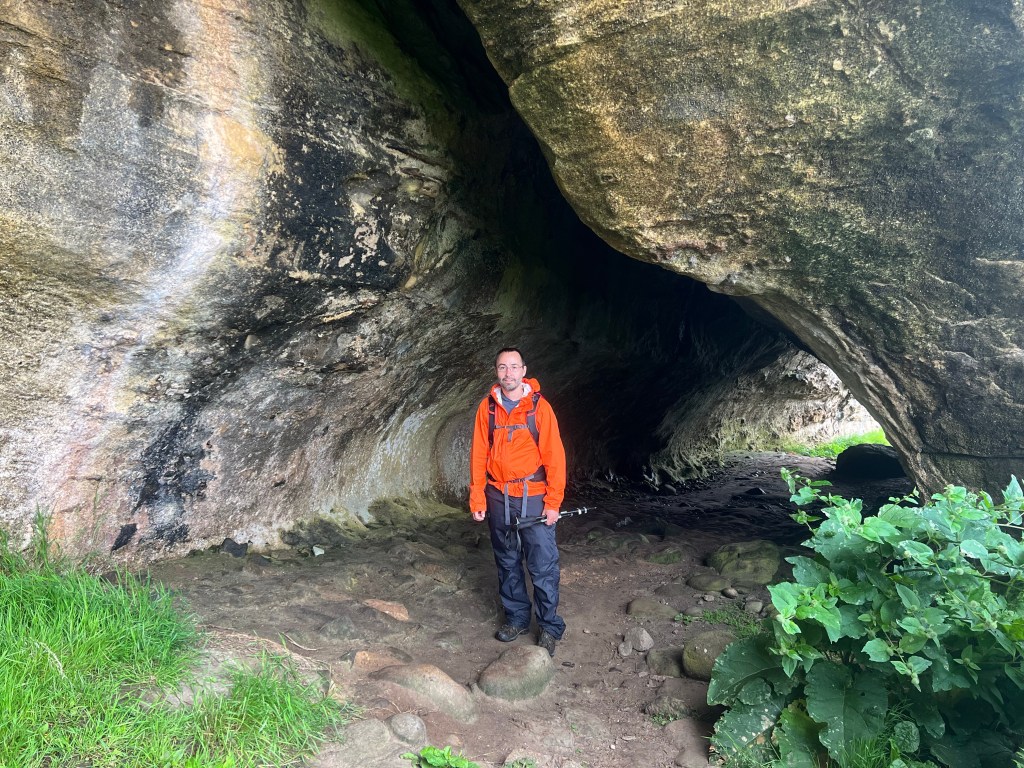
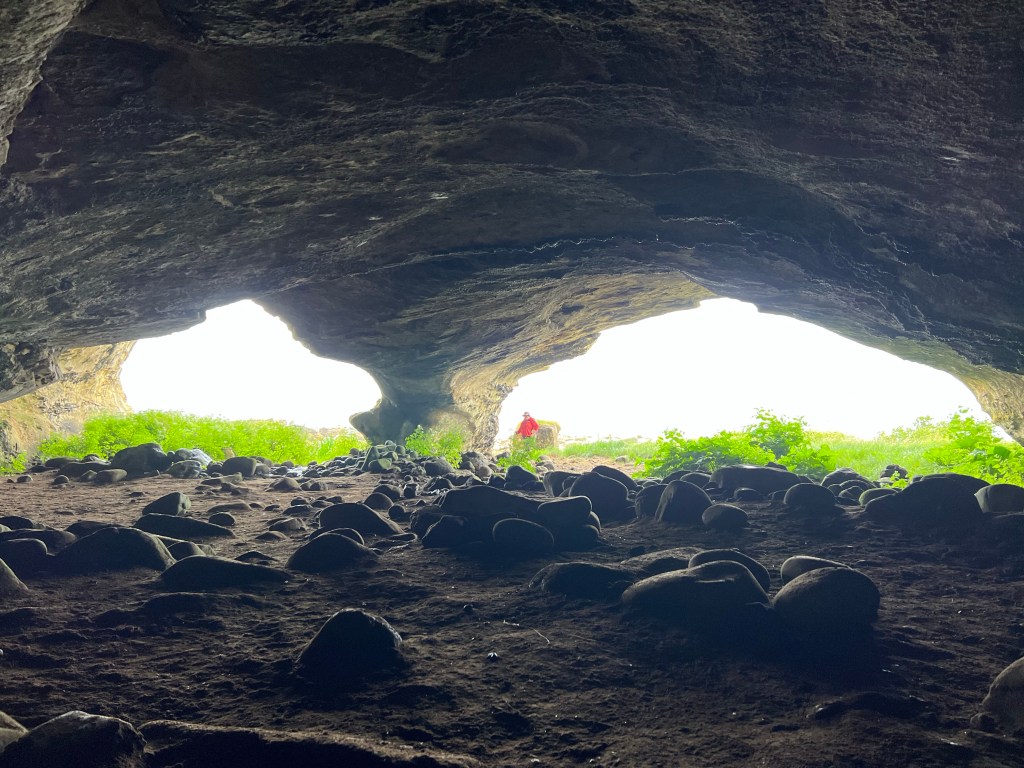
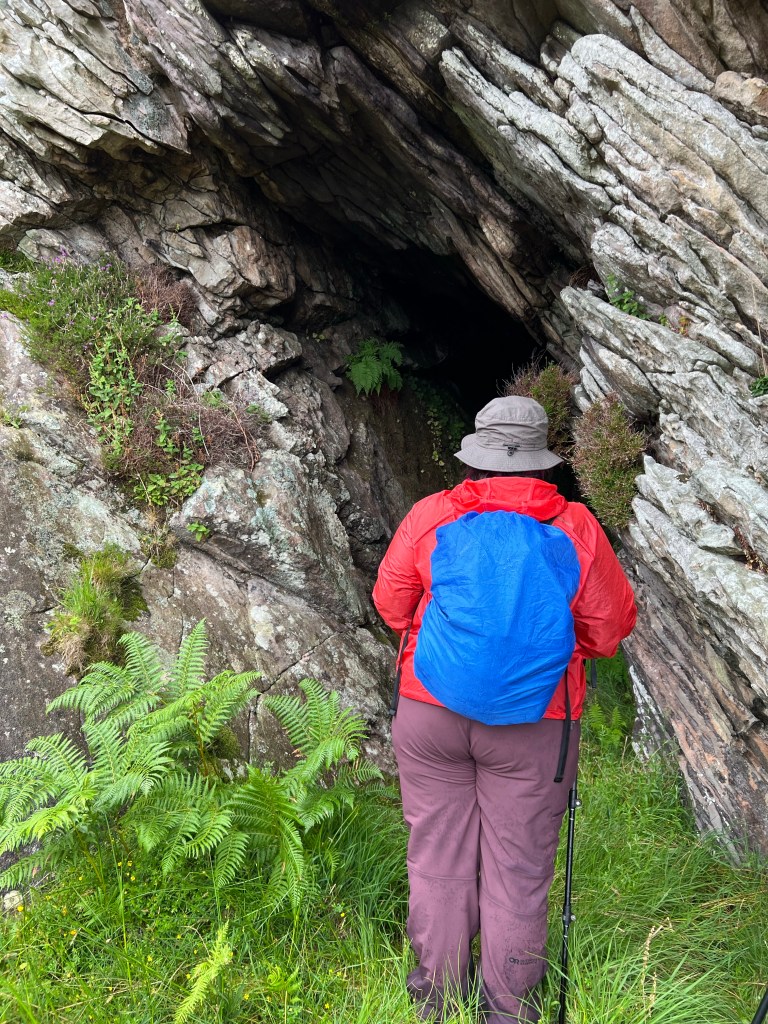
King’s Cave was huge. Such a neat place to go, you could tell it had been used for eons by the packed dirt and petroglyphs pecked into the walls. Although it has only been called King’s Cave for the last two hundred years or so, it is said that Robert the Bruce sheltered there before the Battle of Bannockburn (1314).
Entrance to the King’s CaveIt’s a big cavePassageway outside the King’s CaveThe neighbouring cave, where we (and many others) ate lunch out of the rain
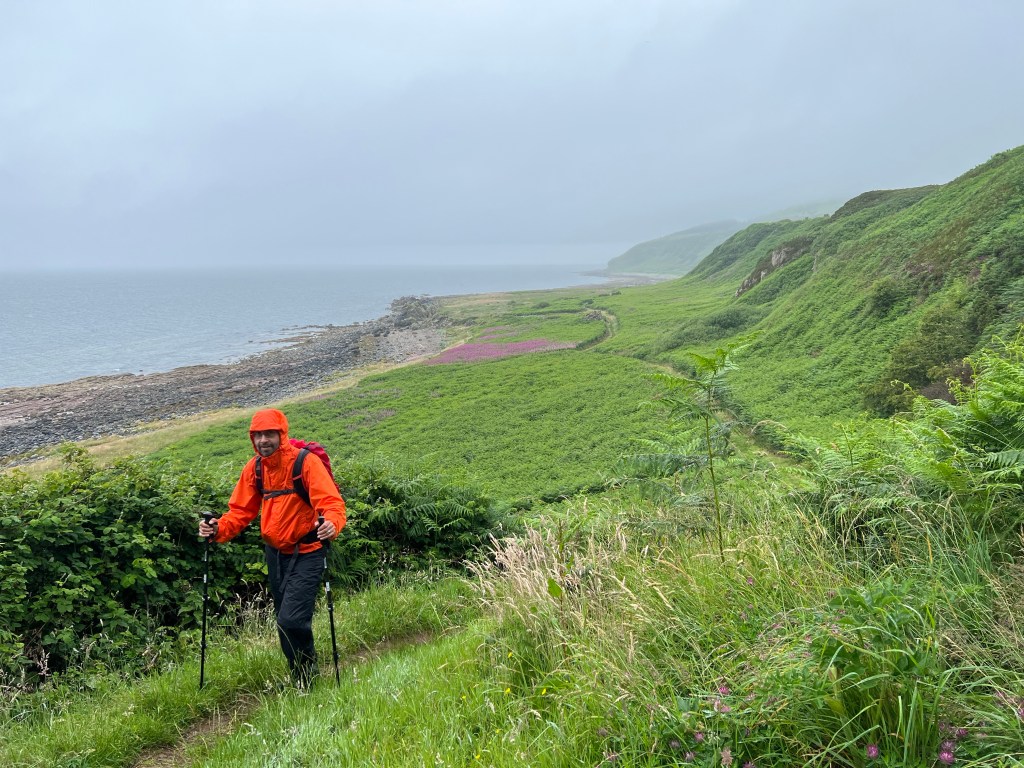
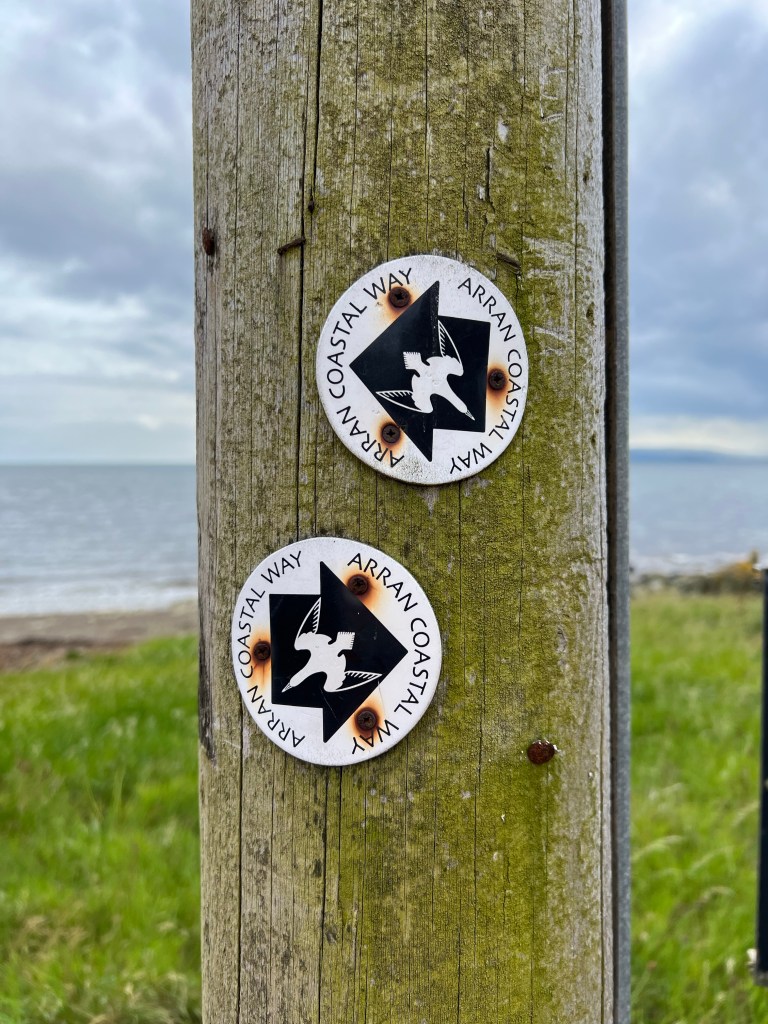
After viewing the caves, we continued on the Arran Coastal Way, along the beach and on the verge. This path had been freshly weed-whacked, which was a lovely treat. We were hiking towards some imposing columnar basalt cliffs.
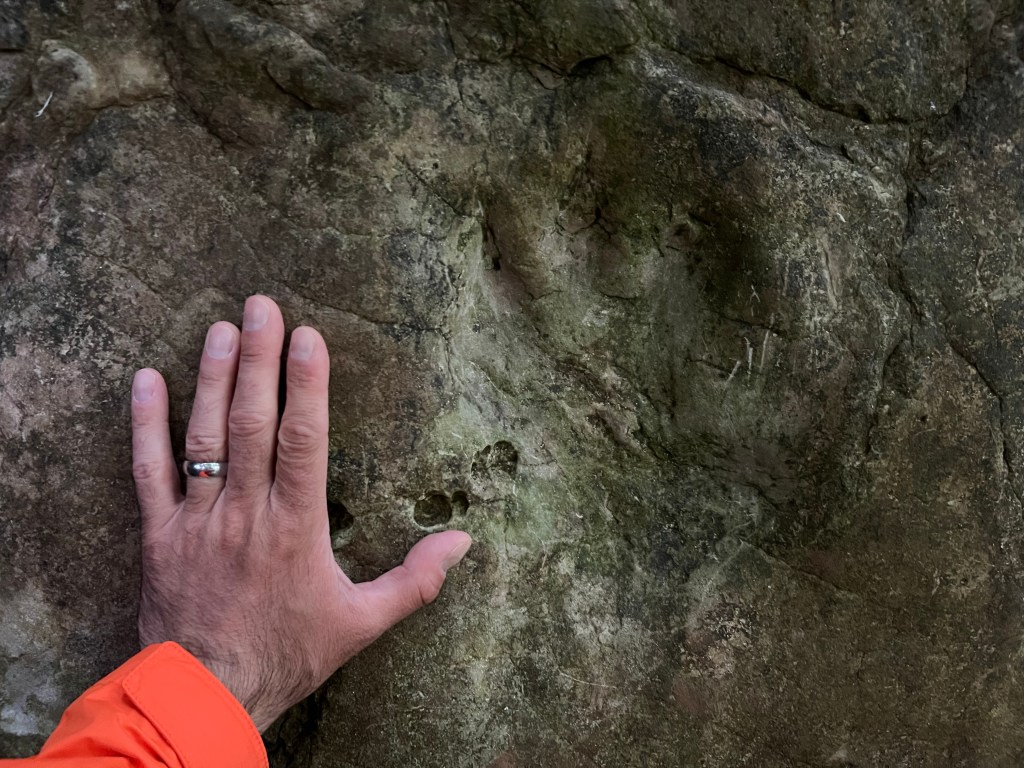
Halfway to the cliffs there was an Arran Geopark marker. Intrigued, we followed a short trail to the cliff, where there were fossilized footprints from the age of the dinosaurs. They do not have a firm ID, but they believe they were from a large alligator-like reptile.
Dave compares his hand to the weathered print on the right
Reaching the cliffs we could battle beach boulders and tide, or traipse up a new path that went over a pass and descended through farmers fields and a golf course. We did the latter, and quickly made our way back to town.
Making our way up to the pass
After warm showers we went to town for dinner… a burger and a lasagna. We hoped for a repeat of the show a Gannet had given the night before, plunging from the air into the water, but no such luck. We consoled ourselves with some sticky toffee pudding and walked back to the B&B.
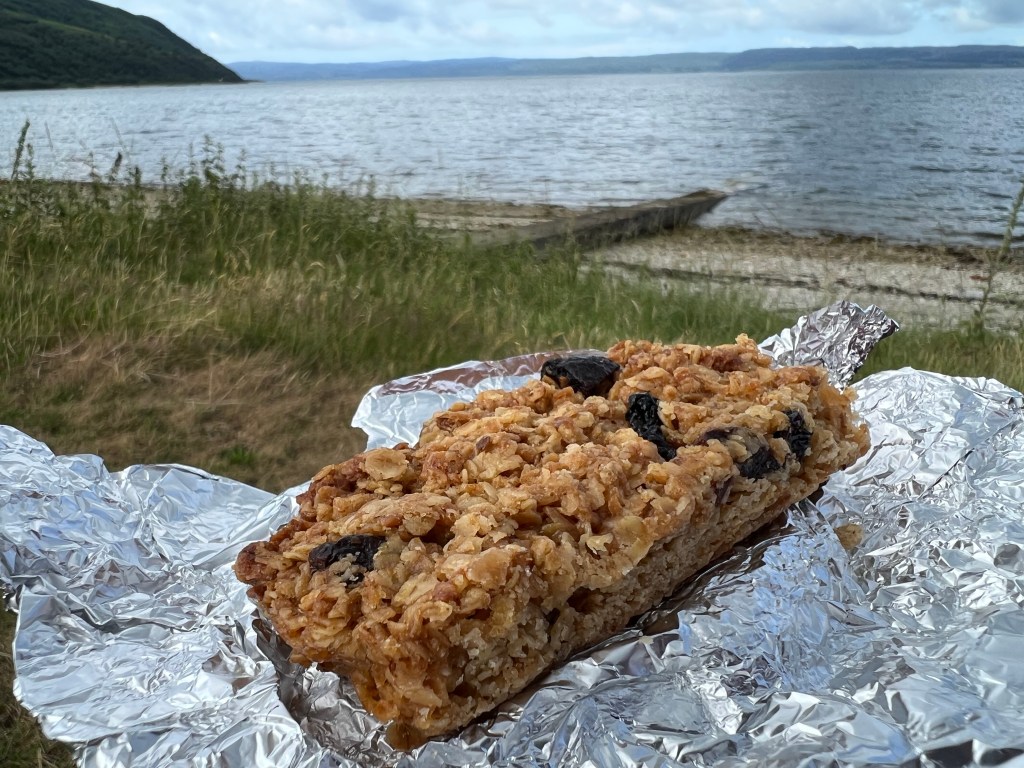
After one final delicious breakfast we bade our farewells to Cath and Mac, who gave us a little parting gift of Scottish travelling food, two bars of flap jack.
We made progress on the now familiar route to the ferry terminal, and picked up sandwiches to go from the Sandwich Station. The main route now heads for the woods on and old Postie trail, but our first intel was that it was overgrown, steep, and slippery when wet. So we opted for the road walk alternative.
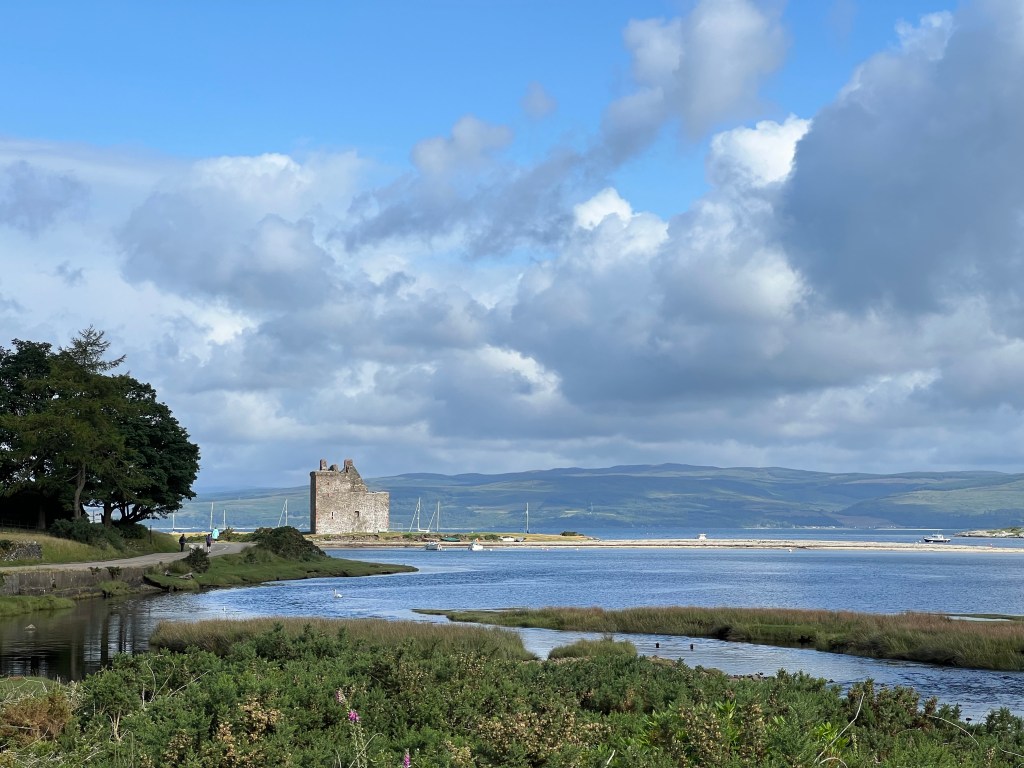
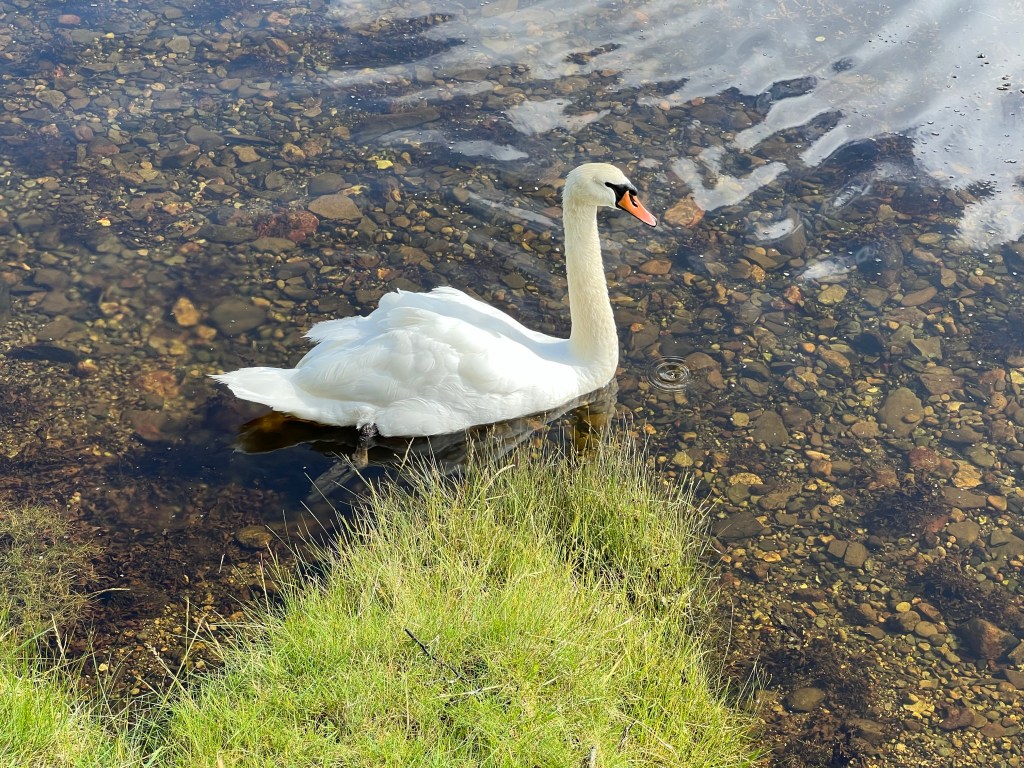
Farewell castle ruins Farewell swanFarewell Lochranza!Departing the Sandwich Station
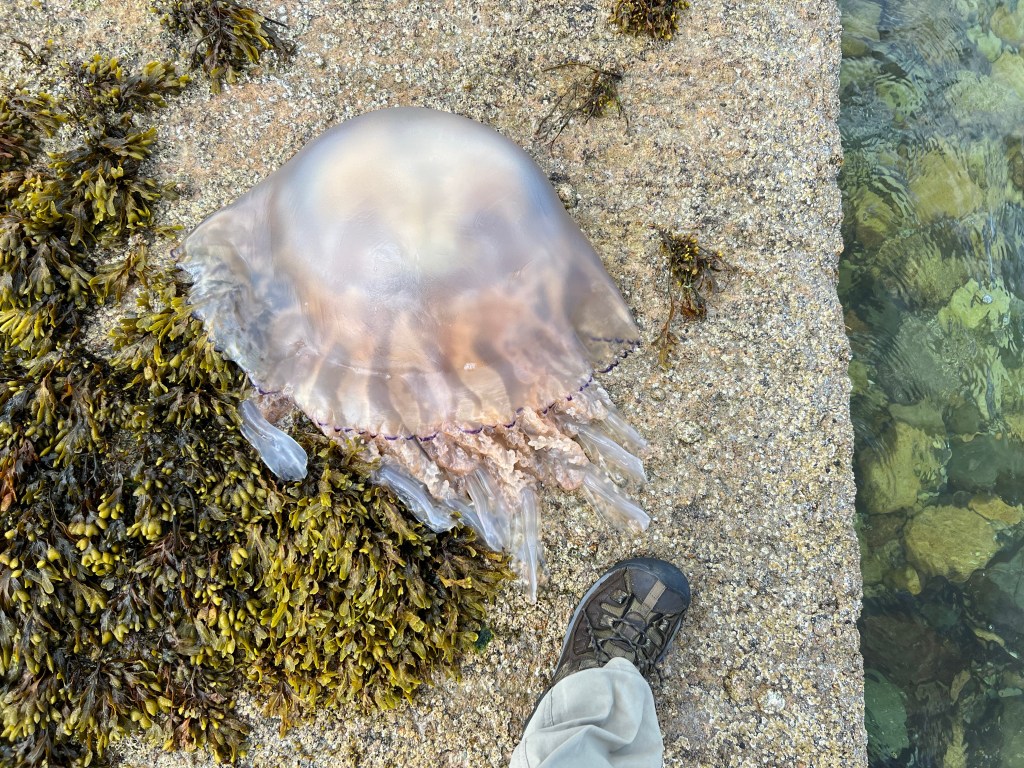
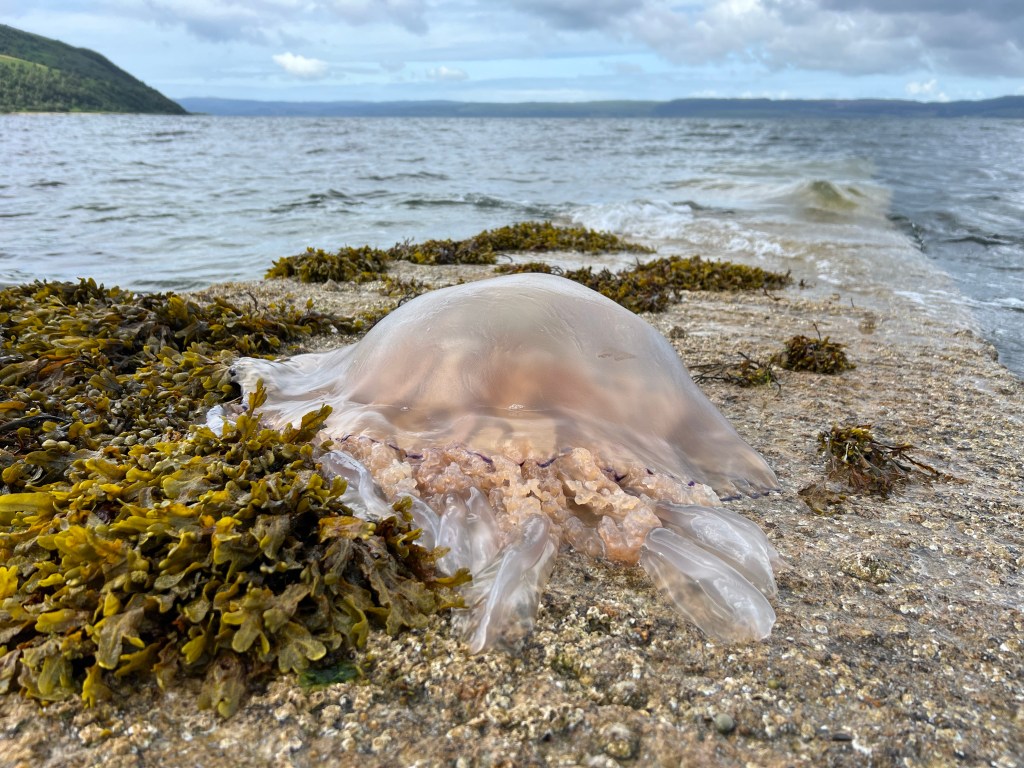
Although most of the day was on the road, we were right beside the water and got to enjoy all sorts of birds, a washed up jelly, and lots of varying rock formations. We sat seaside for lunch and breaks, includes the flap jack that proved to be like a granola bar: oats, nuts and fruit mixed with honey.
Flap jack, as Mac makes it. Barrel jellyfish, Dave’s foot for scale. Barrel jellyfish Dave appreciating the beach Sheep and a glen Roadways rippled like the sea More sheepBeachside path
We eventually reached Imichar, which is literally two houses and a mailbox. The proprietor of tonight’s B&B picked us up for an overnight in Blackwaterfoot.
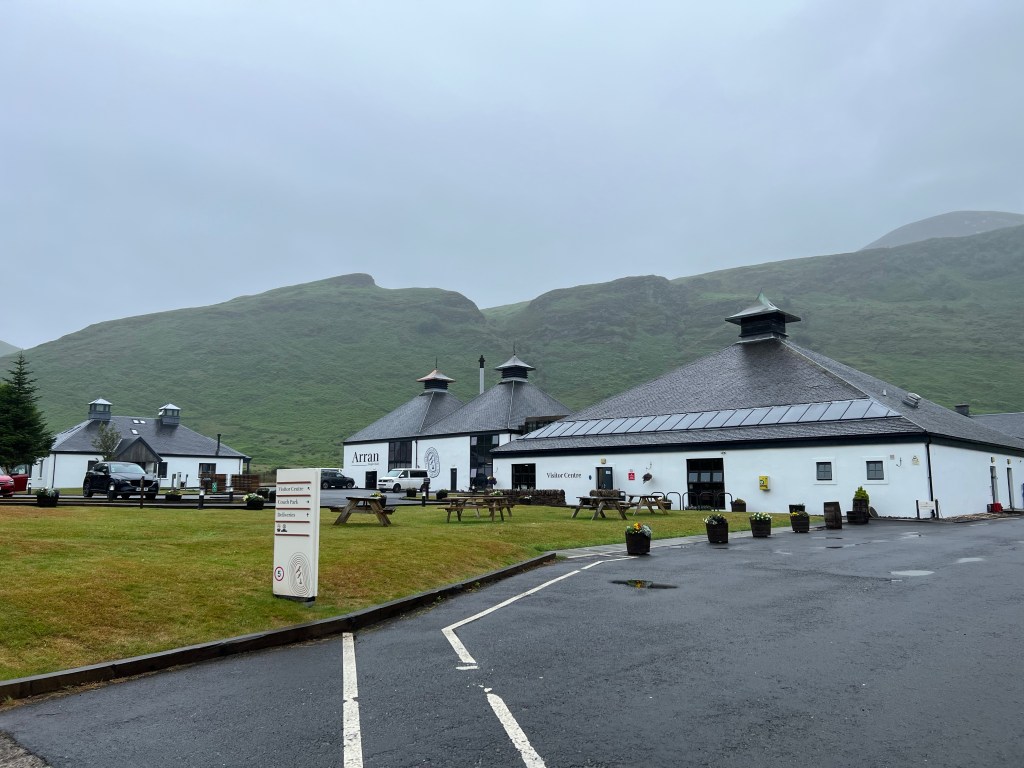
We scheduled today to be off, so we could appreciate the attractions of Lochranza. After another delicious breakfast, we headed down the footpath to Lochranza Distillery, where they make Arran Whiskey “the traditional way.”
The Lochranza Distillery
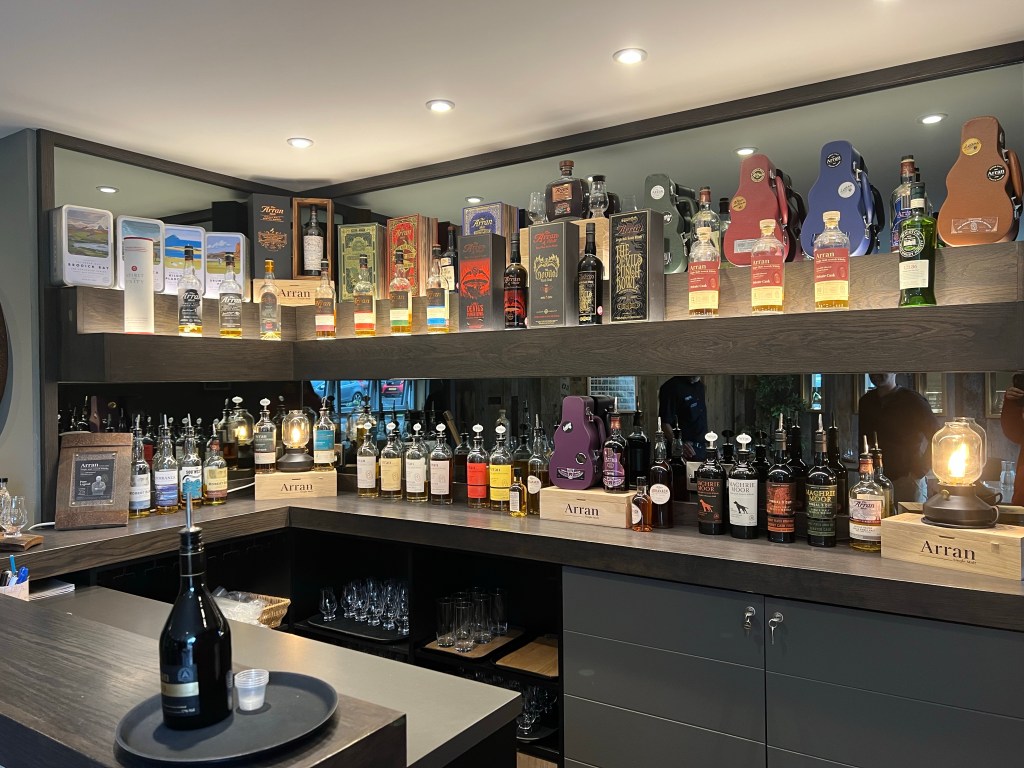
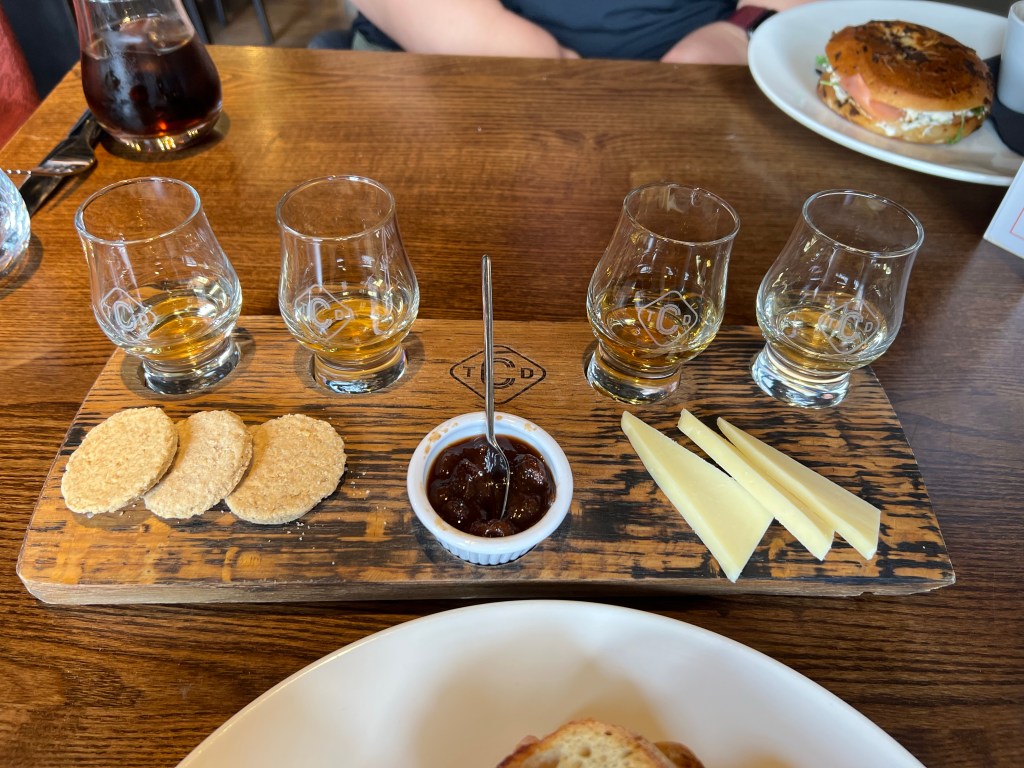
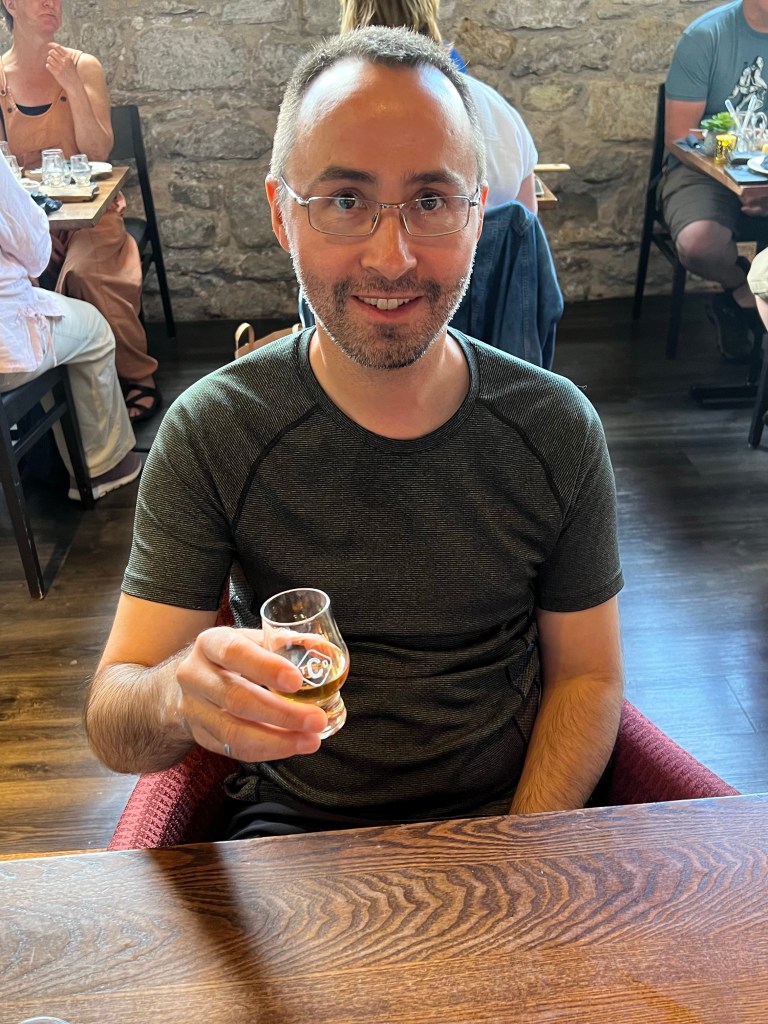
We had booked a tasting, which turned out to be a fascinating class on the making of whisky and how each flavour is imparted and blended. They even had a “drivers kit” to pack up Jen’s five barely-touched drams. (Dave drank his, plus three other tasters). A really great way to wait out most of the morning rain.
We were on the classic flight, but they had a lot to sample in the fancy version. And cool art / cases.
Next stop: Sandwich Station. This converted fire station served luxury exotic sandwiches in a no-frills way. Jen enjoyed five-spice rubbed hot pork shoulder on artisan bread with Szechuan mayo, while Dave’s aged cheddar with onions and marmalade on the same artisan bread hit the spot for him. A great way to soak up some booze.
This guy had a taste for luxury sandwiches that we did not indulge Sandwich Station is at the end of the harbourEnjoying the sun
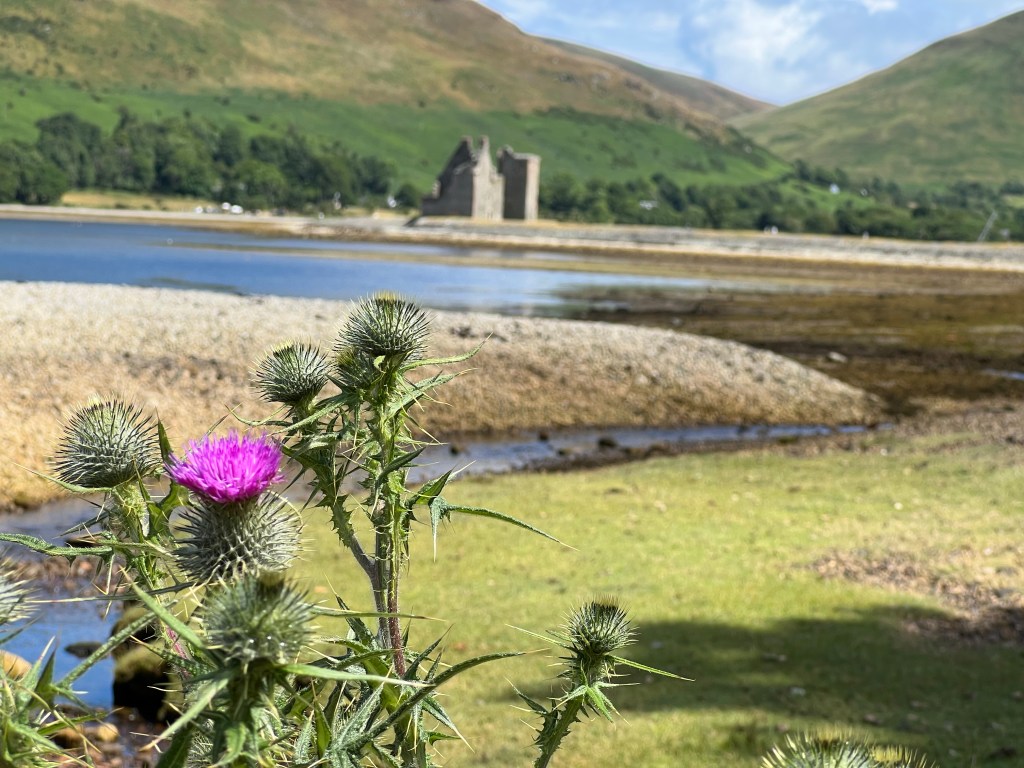
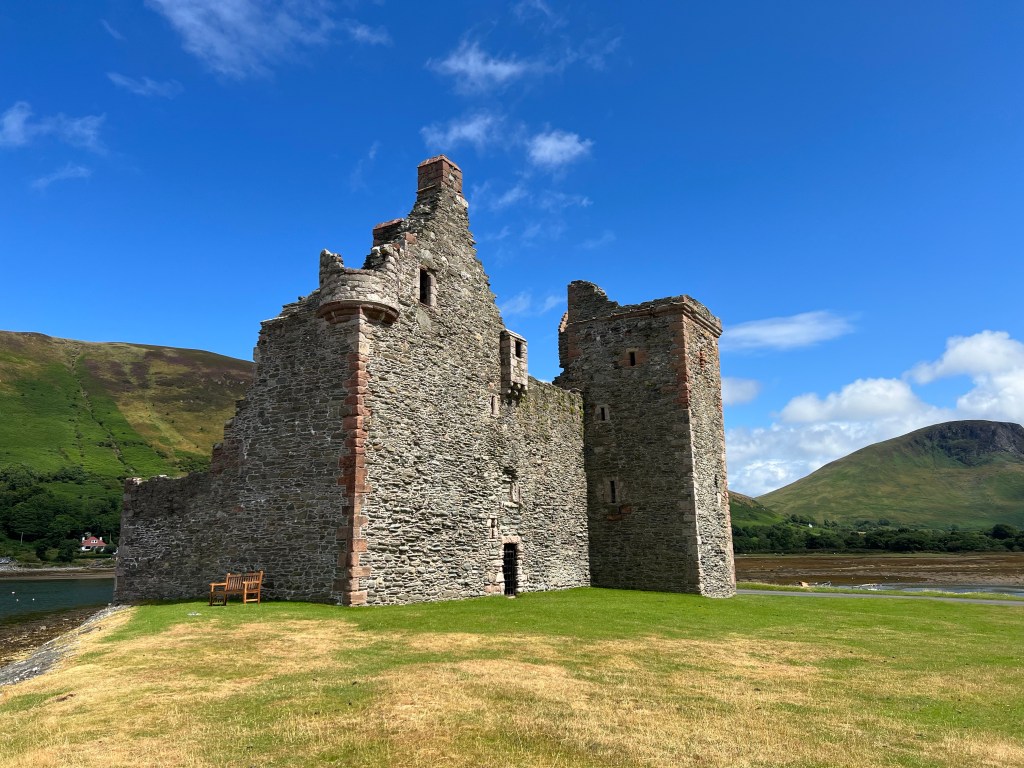
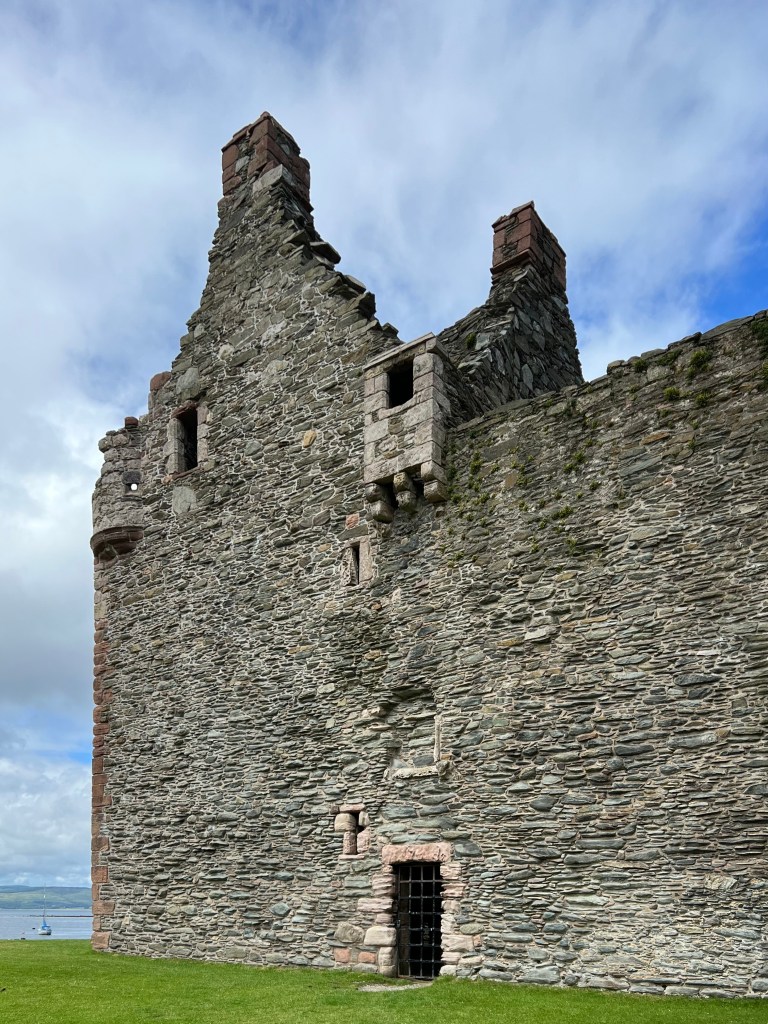
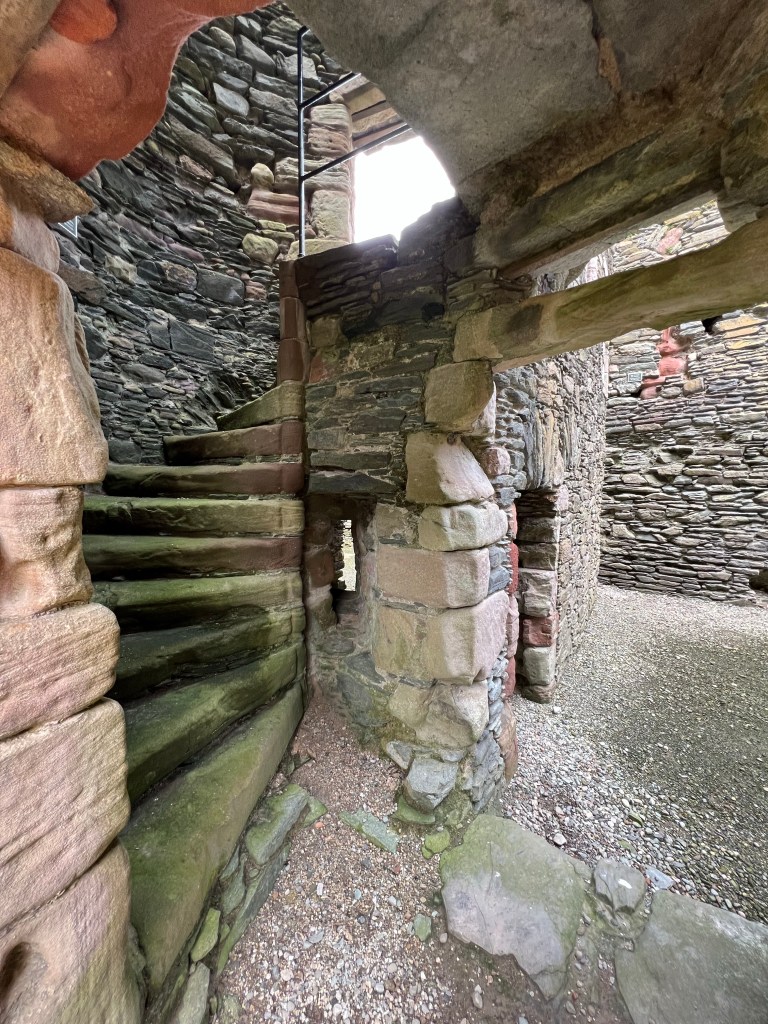
Finally, we were ready to explore the castle ruins. As in twelfth-century. As in arrow slits and towers and once being property of the Stewart Royal family, but now in ruins. So cool.
Scottish nettle and Lochranza castle History is part of the landscape hereLochranza CastleThe staircaseThe backdropLooking the other way
Walking back to the lodge, we went past a more modest set of ruins, Barking House, where sails, rope and nets were once treated for preservation in a bark solution called ‘cutch’ for the fishing fleet.
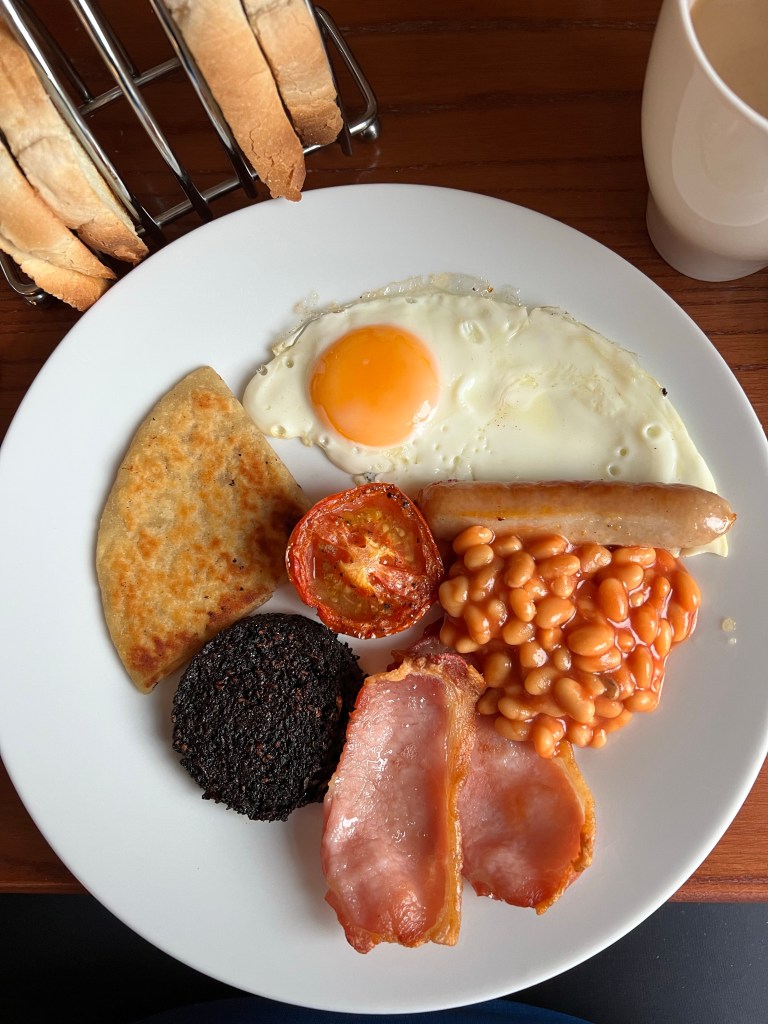
After a cozy night of sleep – this is way more comfortable than backpacking – we awoke to breakfast. Jen tried a “Full Scottish Breakfast” (minus the mushrooms), while Dave had porridge with “real Canadian maple syrup.”
A “Full Scottish Breakfast” adds fried mushrooms to this: tatty scone, fried egg, sausage, beans, back bacon, blood pudding, and a tomato.
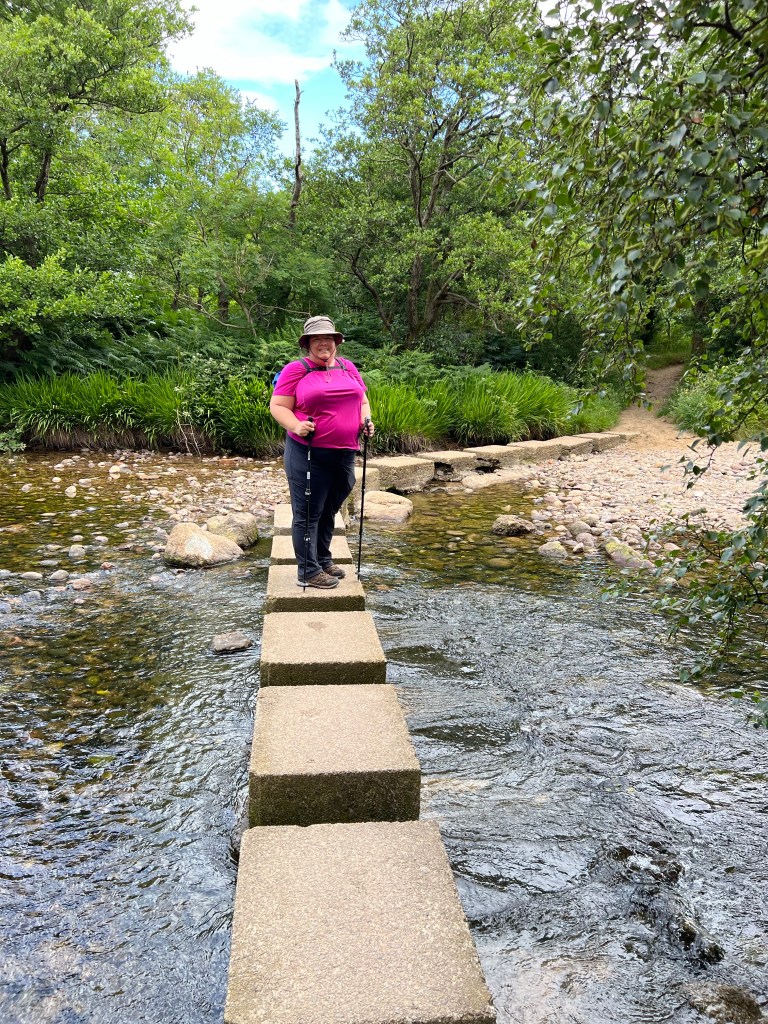
Our driver then shuttled us back to Sannox to begin our hike. After hopping across the stream on concrete blocks, we followed a path along the beach edge.
The start
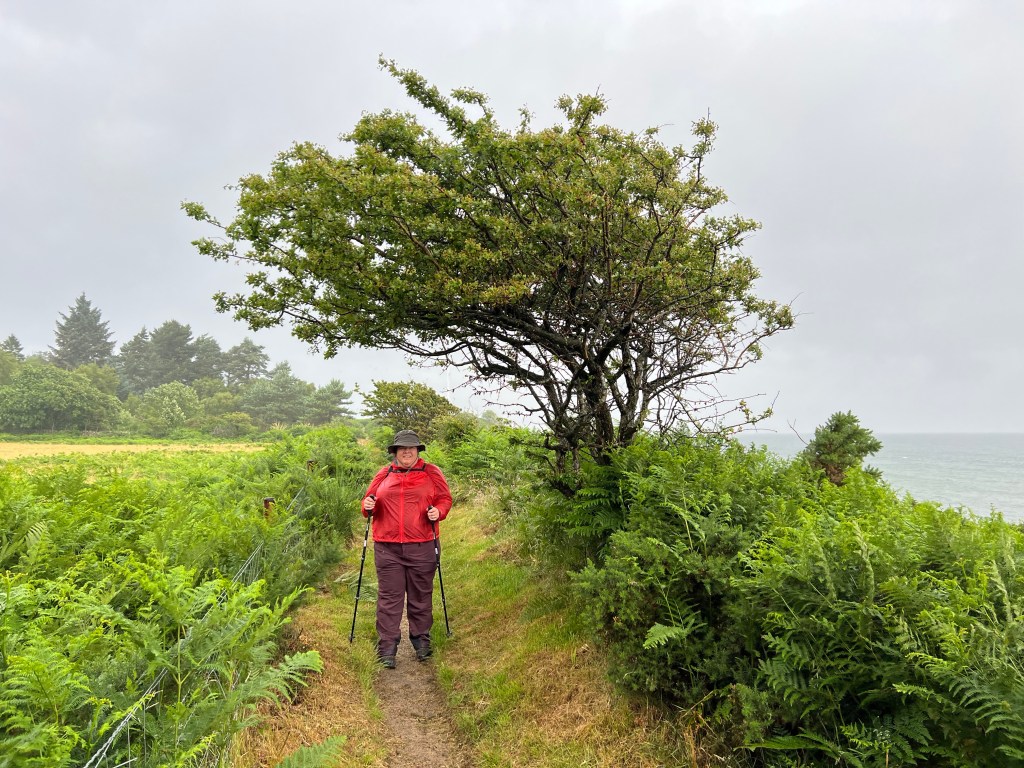
Eventually the path joined an old forest service road, and the walking was excellent despite the drizzle and wind that would plague us most of the day.
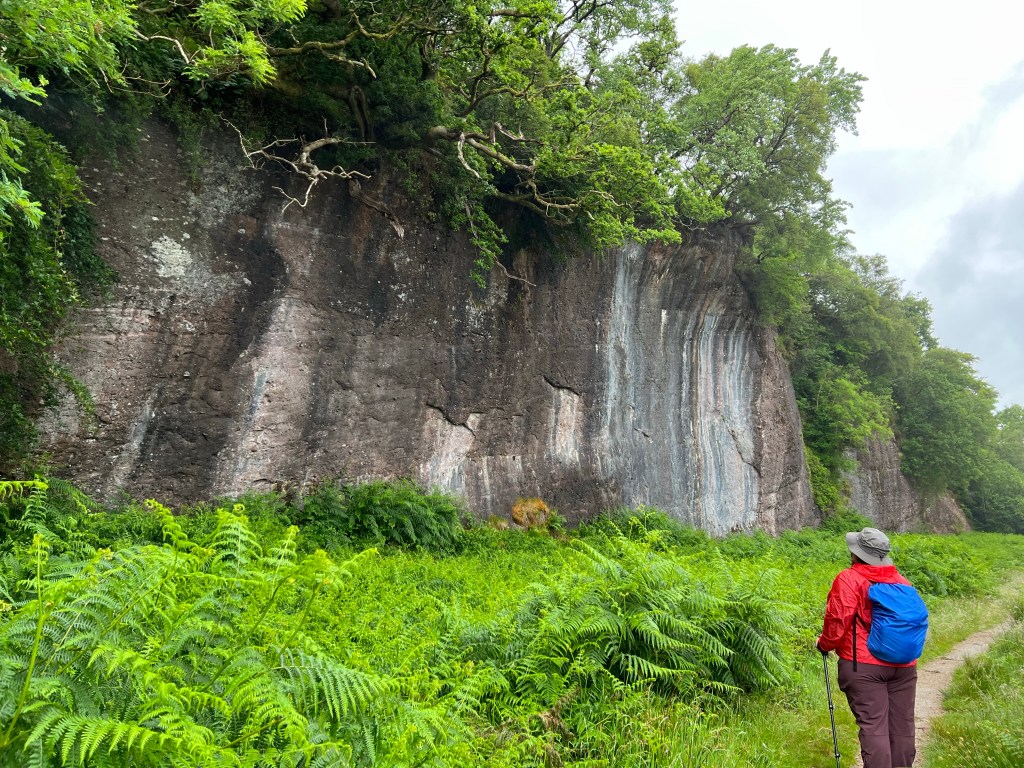
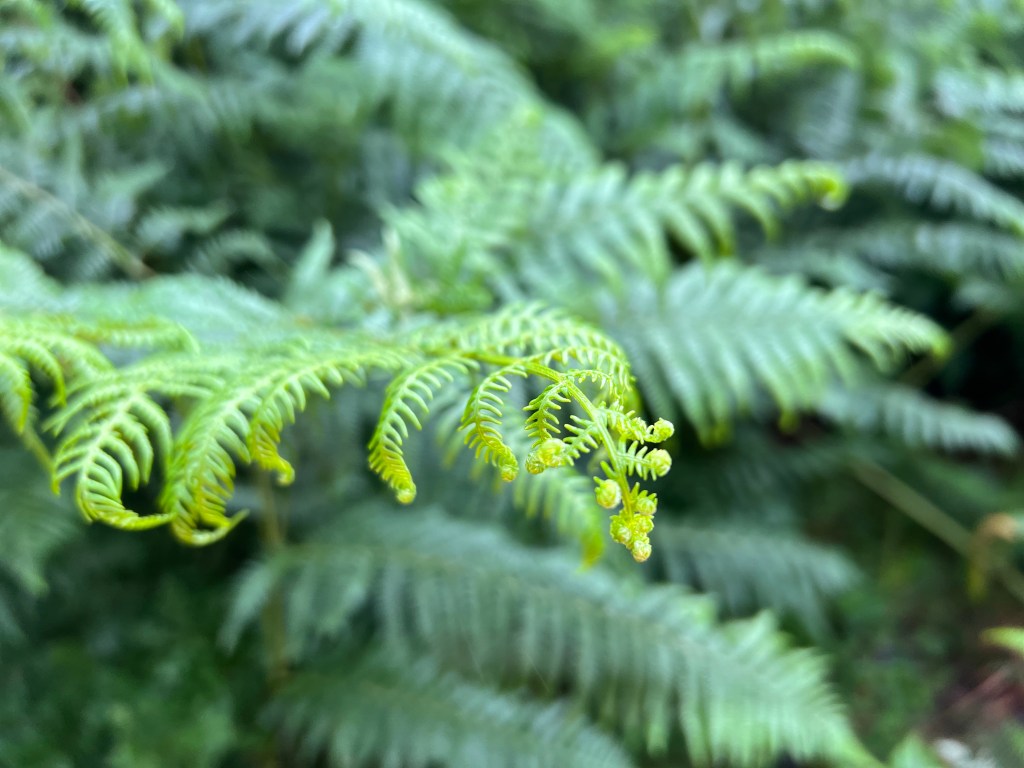
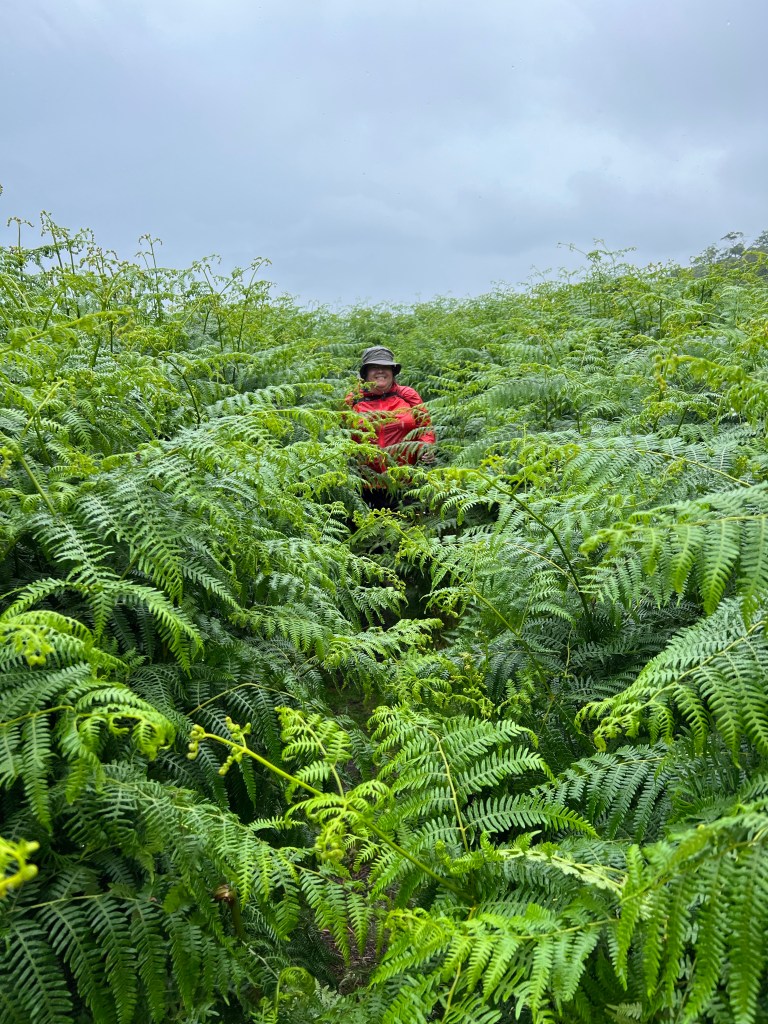
We *thought* this was a lot of ferns…A conglomerate wallBracken fern
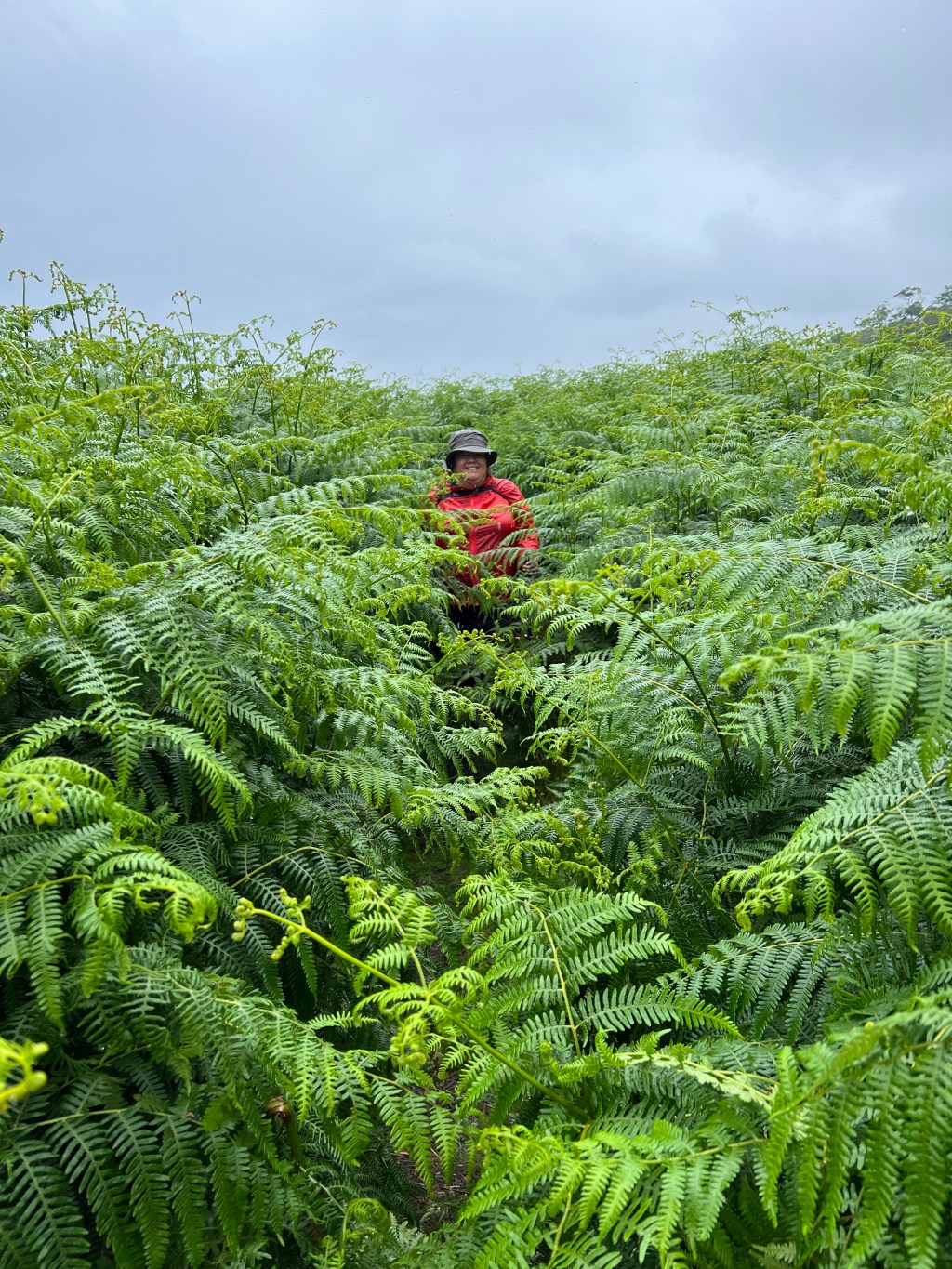
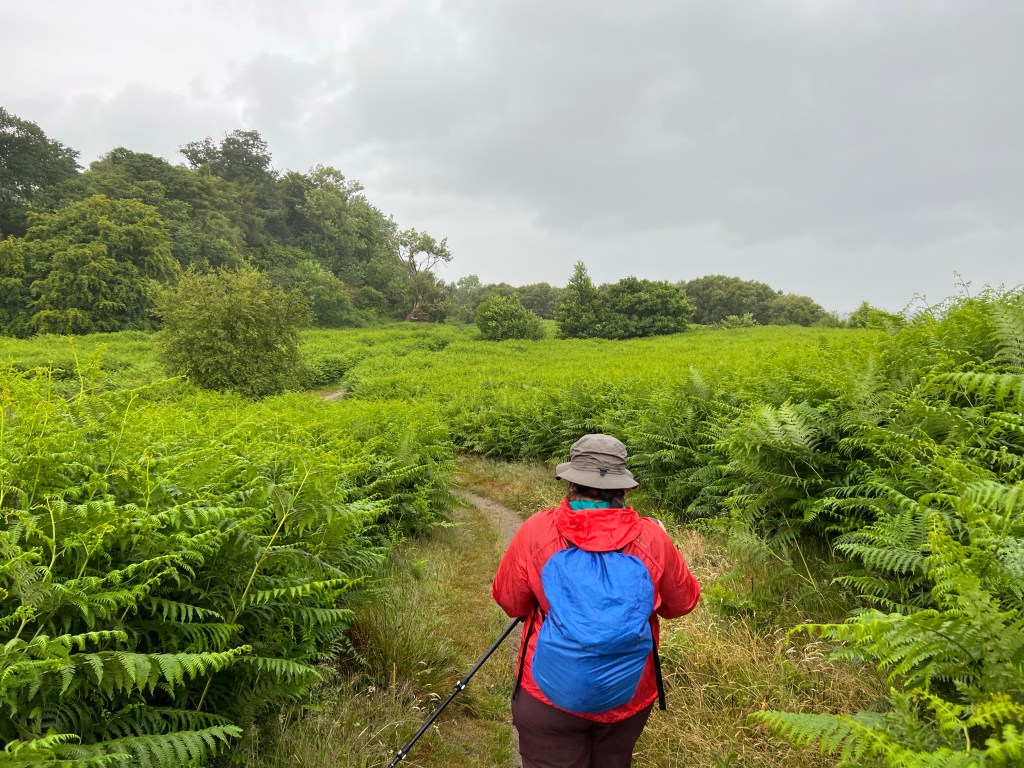
After some quick-paced progress, we started to slow down as the trail entered endless forests of bracken ferns, aka the car wash.
Misty momentsAn easy but faint footpathA caveDave took this from the trail, looking back at me several meters behind him on the trail
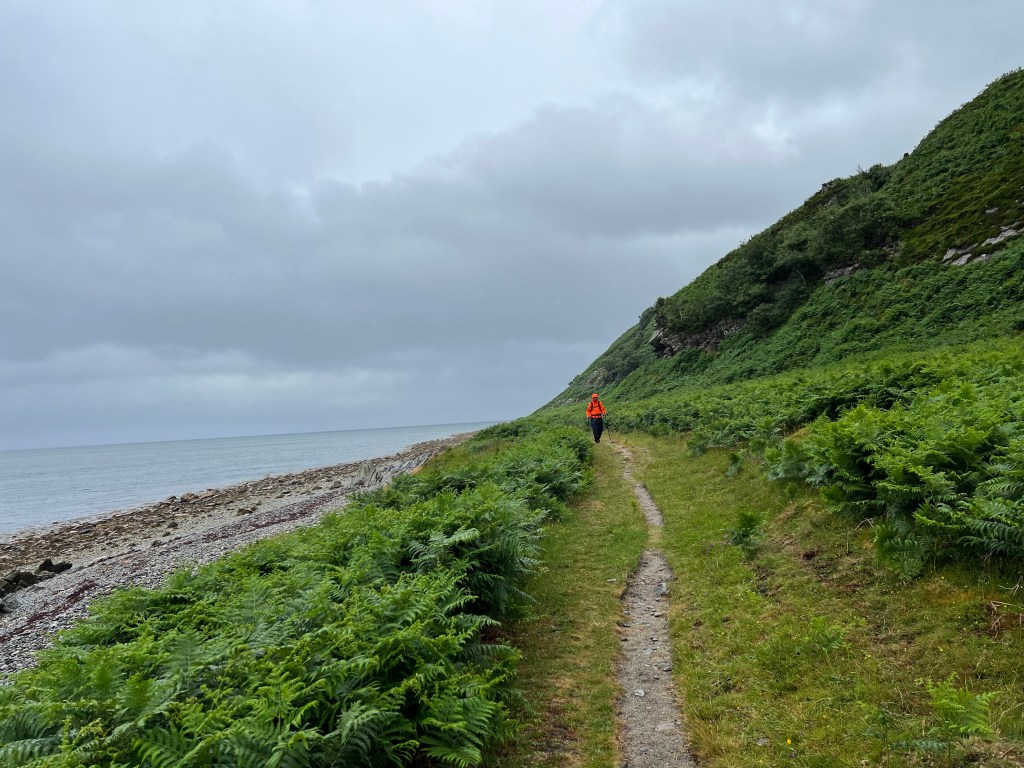
As we came to several headlands, the trail remained a trace through the ferns, though the footing got trickier as we stepped up and down slippery, wet rocks.
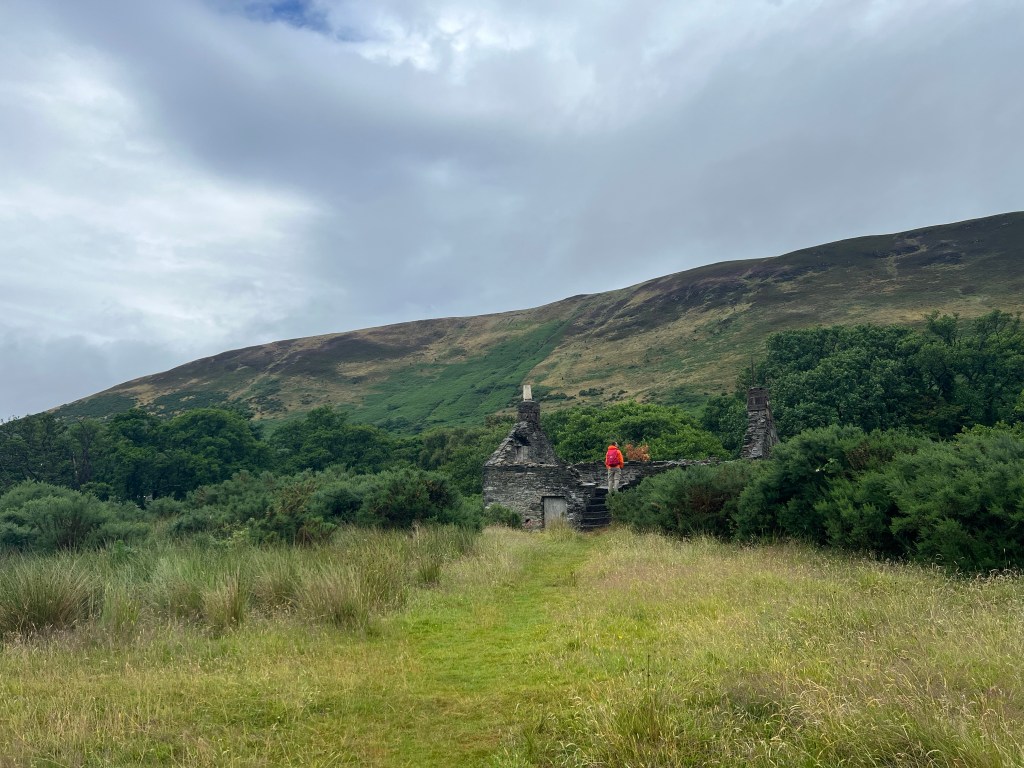
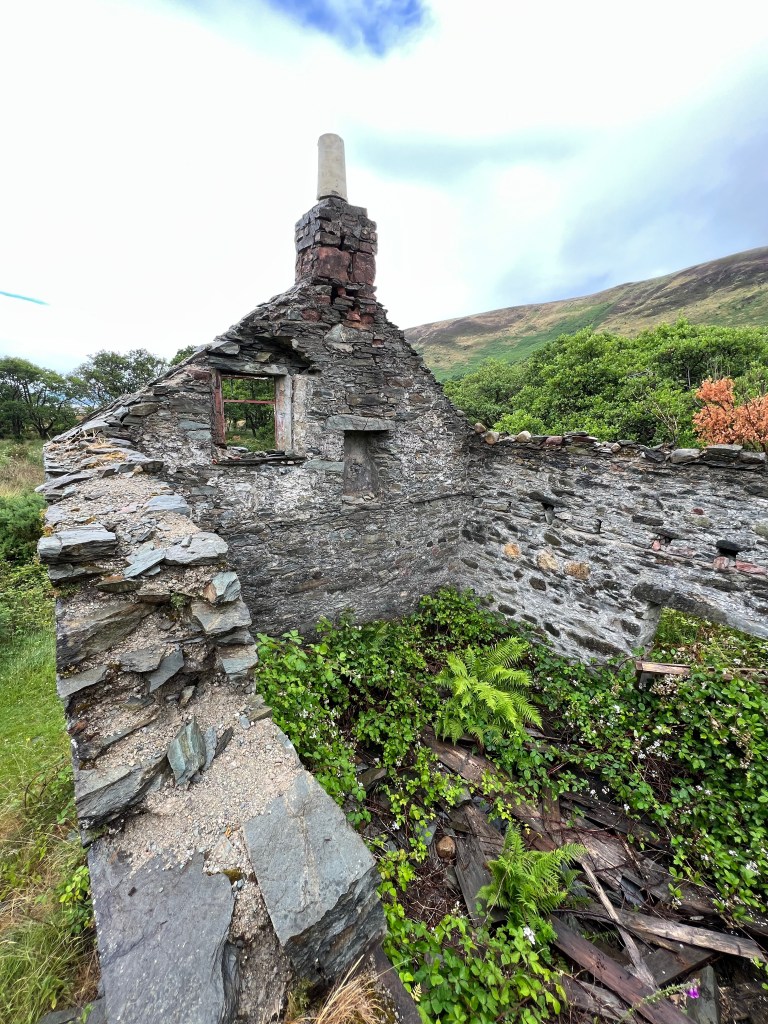
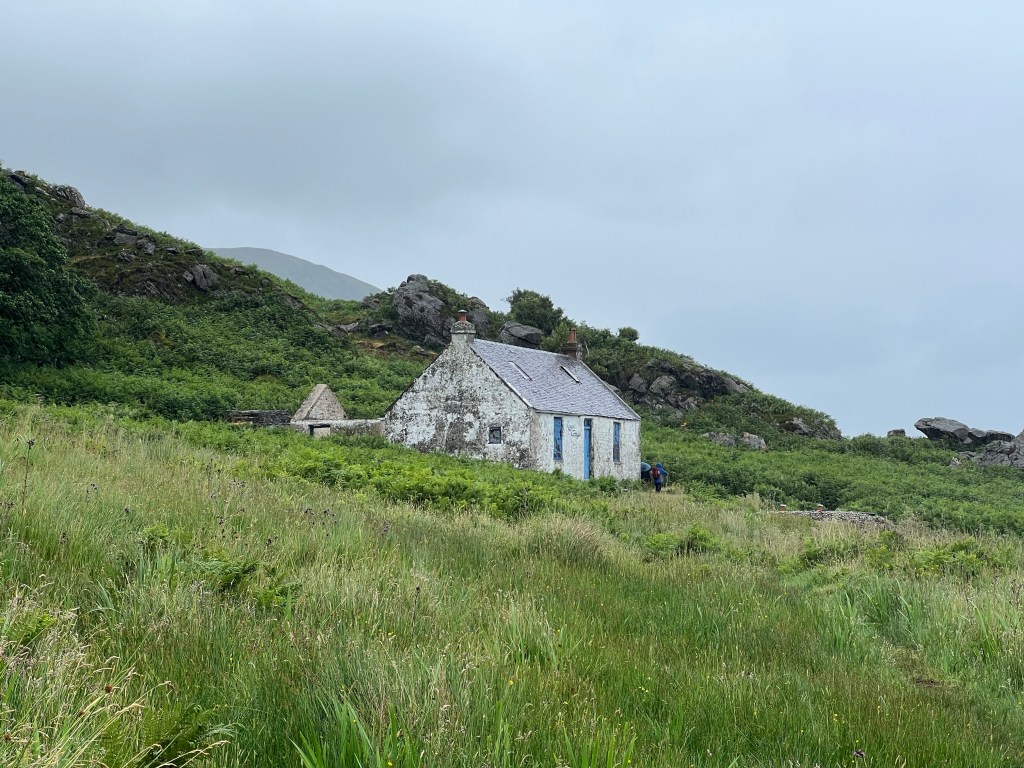
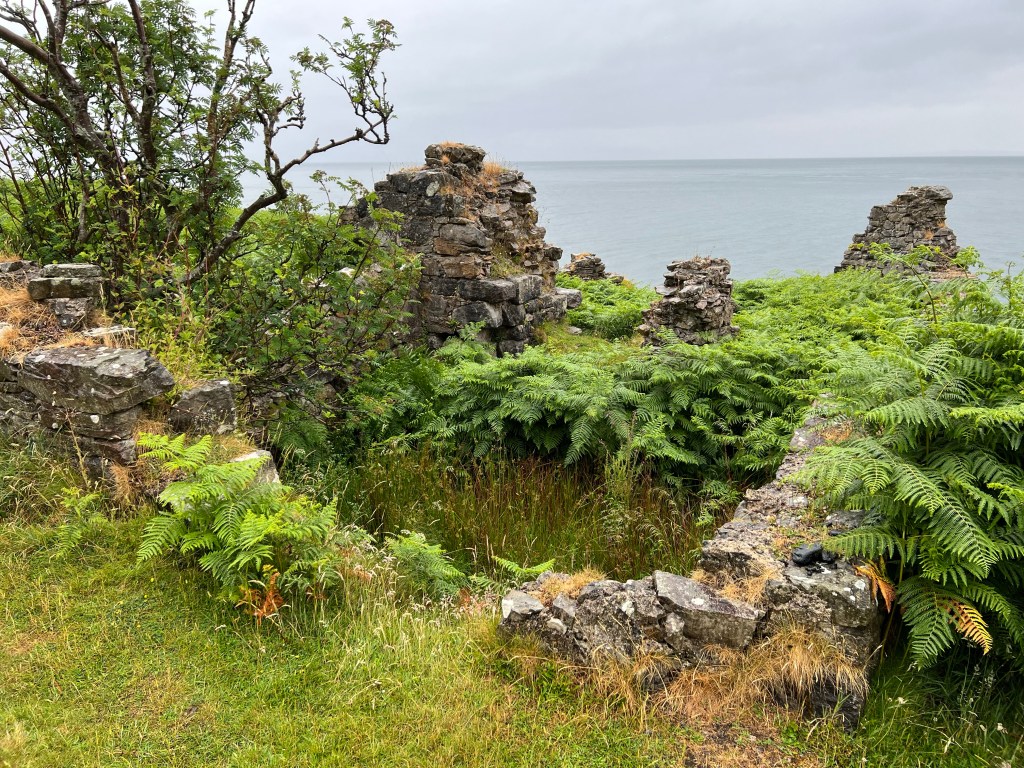
An old homeOld walls from when they worked a coal seam nearby
We eventually reached Hutton’s Unconformity, which I understand is pretty cool for geologists. The trail also improved here, which was cool for us, and we made progress back to warm showers and a hot meal.
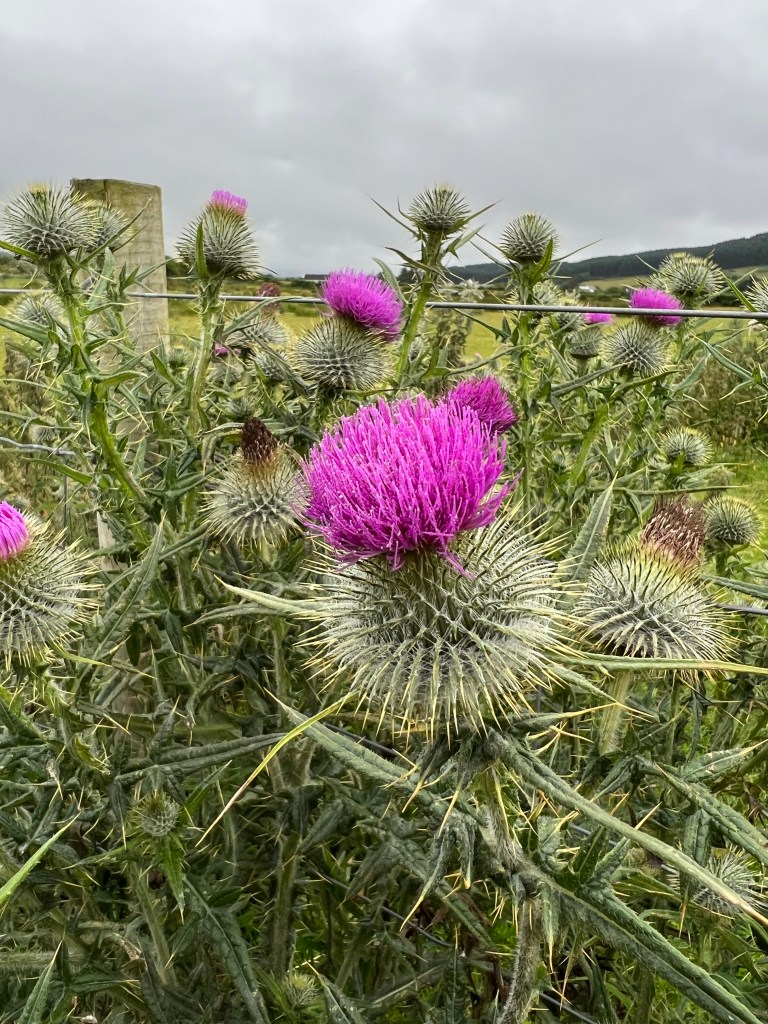
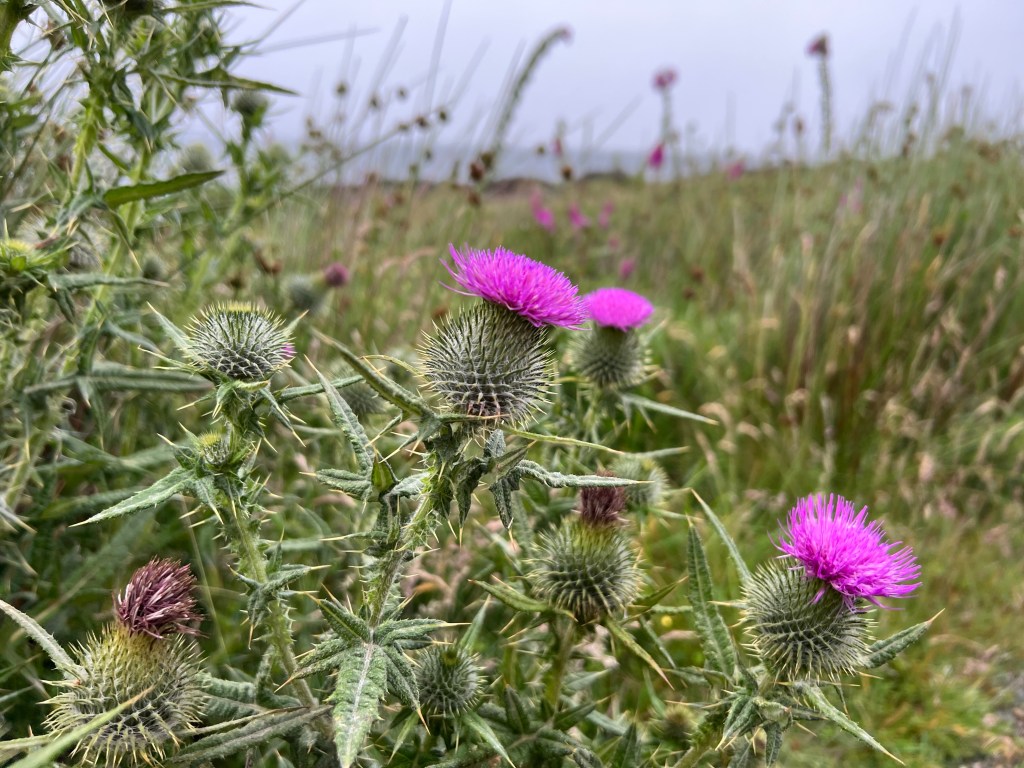
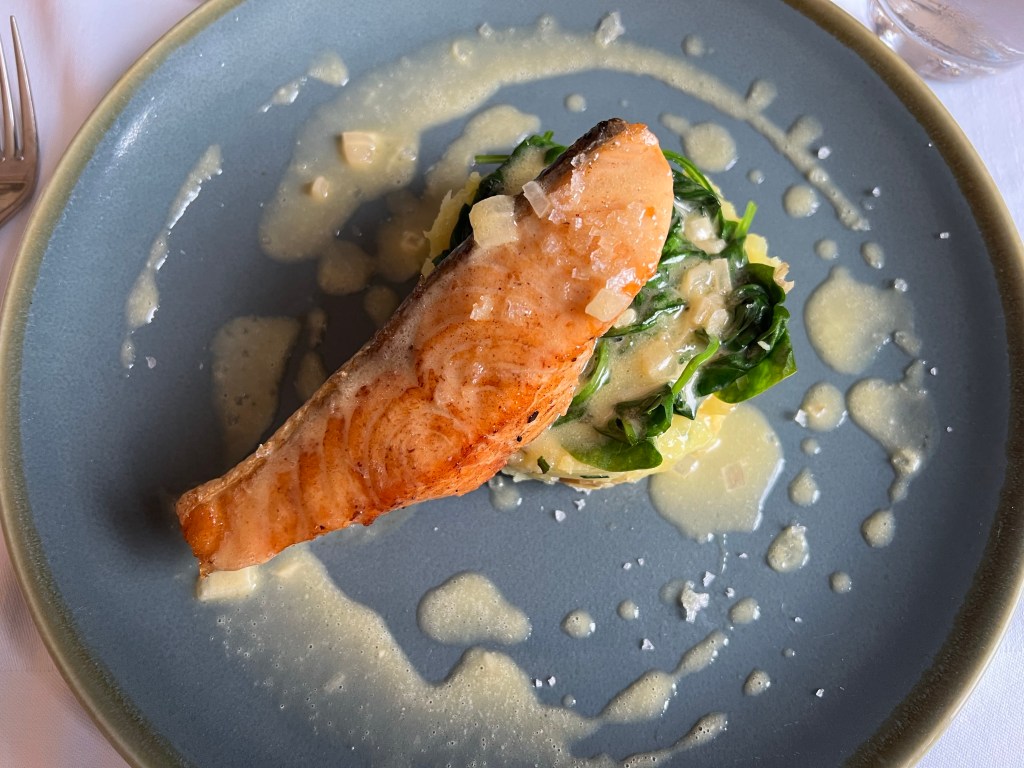
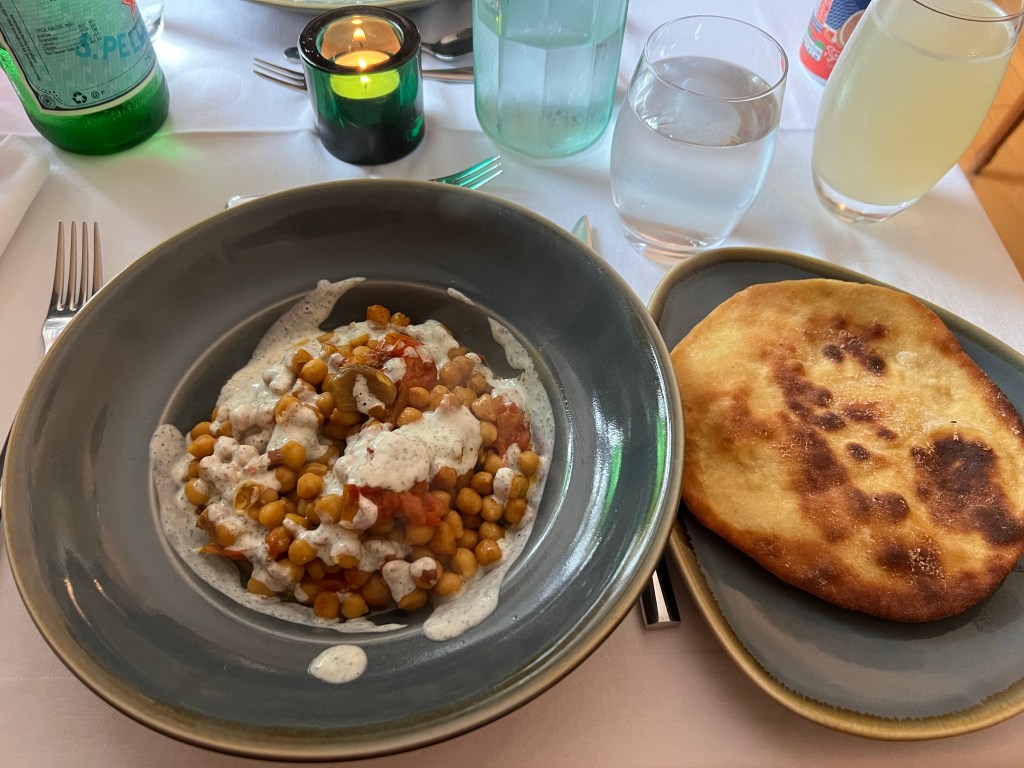
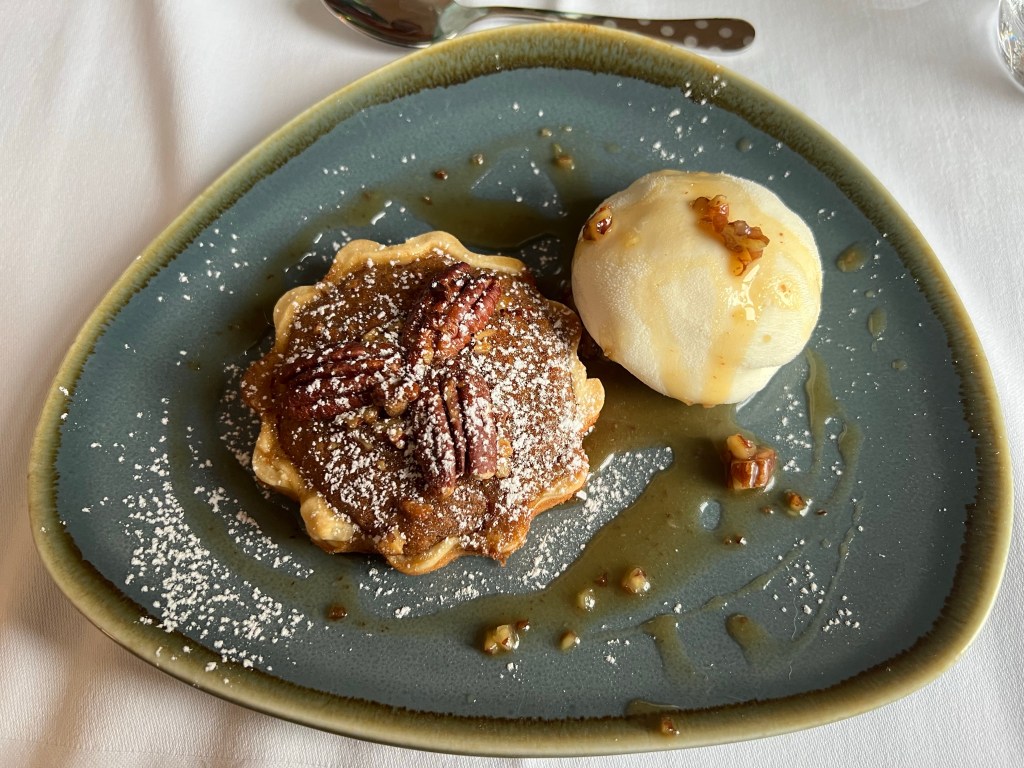
Great trail!Scottish thistleEnd of routeJen had Scottish salmon with potatoes, spinach and beurre blanc. Delicious. Dave had confit of chickpeas with tomatoes, mint yogurt, and homemade naan. We both had Arran Whiskey and pecan tarts with Arran ice cream for dessert. Yum!
Highlights un-photographed included two frogs, a gray seal, a mouse running across Jen’s toes, more oystercatchers, and cormorants.
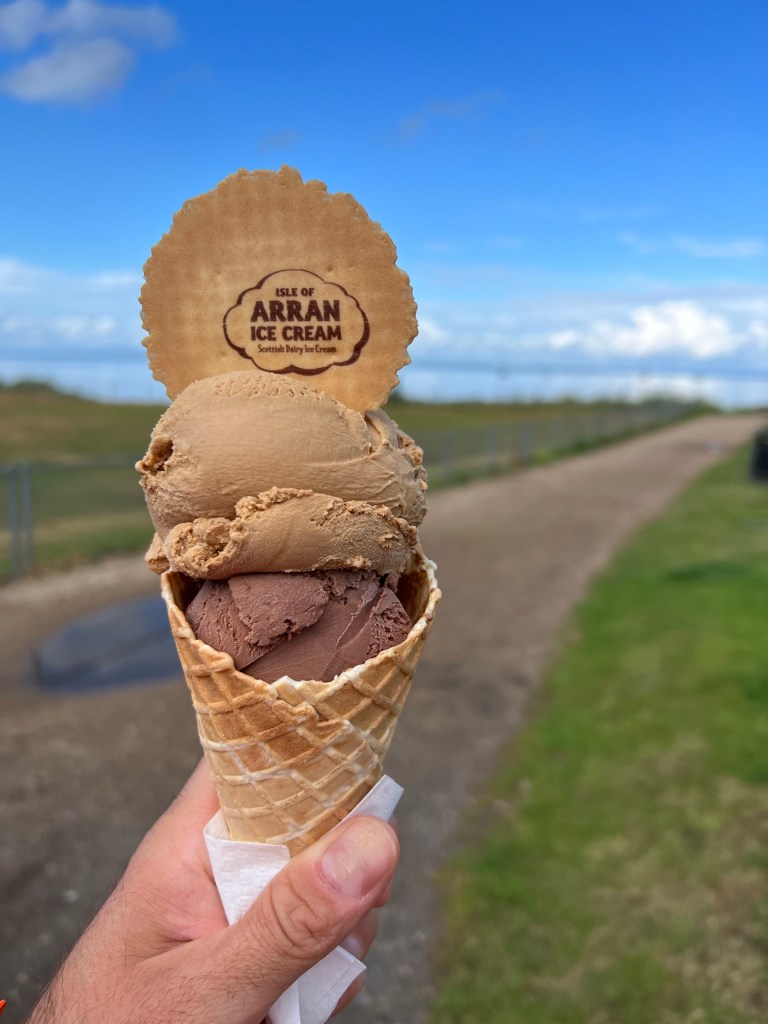
We’ll start with a bonus shot from last night. Check out THIS ice cream cone.
Cappuccino and coffee ice cream
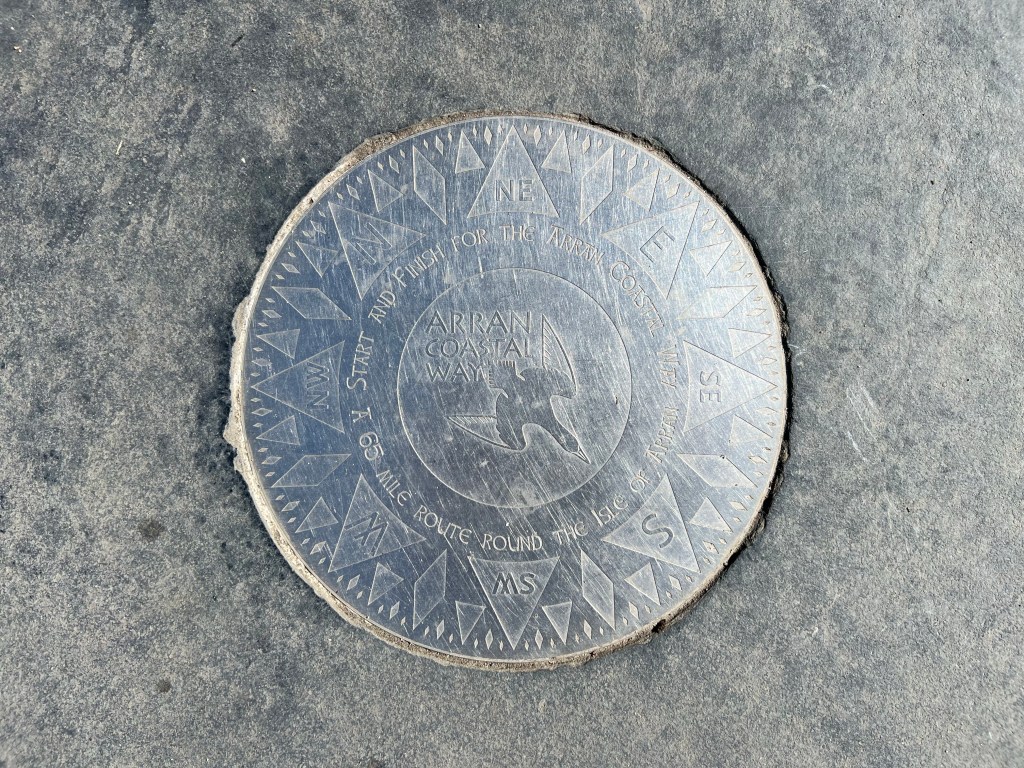
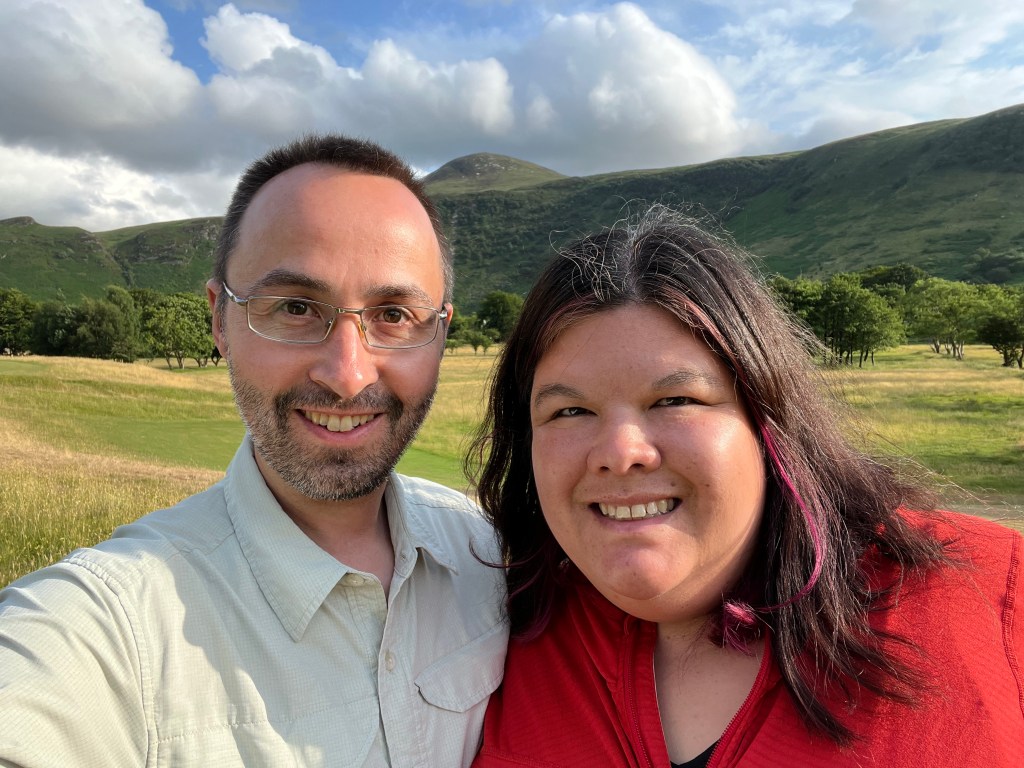
After a lovely breakfast, we started our walk in beautiful sunshine but not hot weather (16 degrees or so). After taking the obligatory photos at the official start point, we were off.
The official startUs at the start
The first stage of the trail is beachfront urban, and lovely. You look at Goat Fell – which you can summit as an optional difficulty-raiser – as you go. On this stage we saw a Grey Heron.
Goat FellLooking back to Brodick
The next stage starts climbing into the woods, towards Goat Fell. It was so green and mossy – it really felt like home.
Green garden
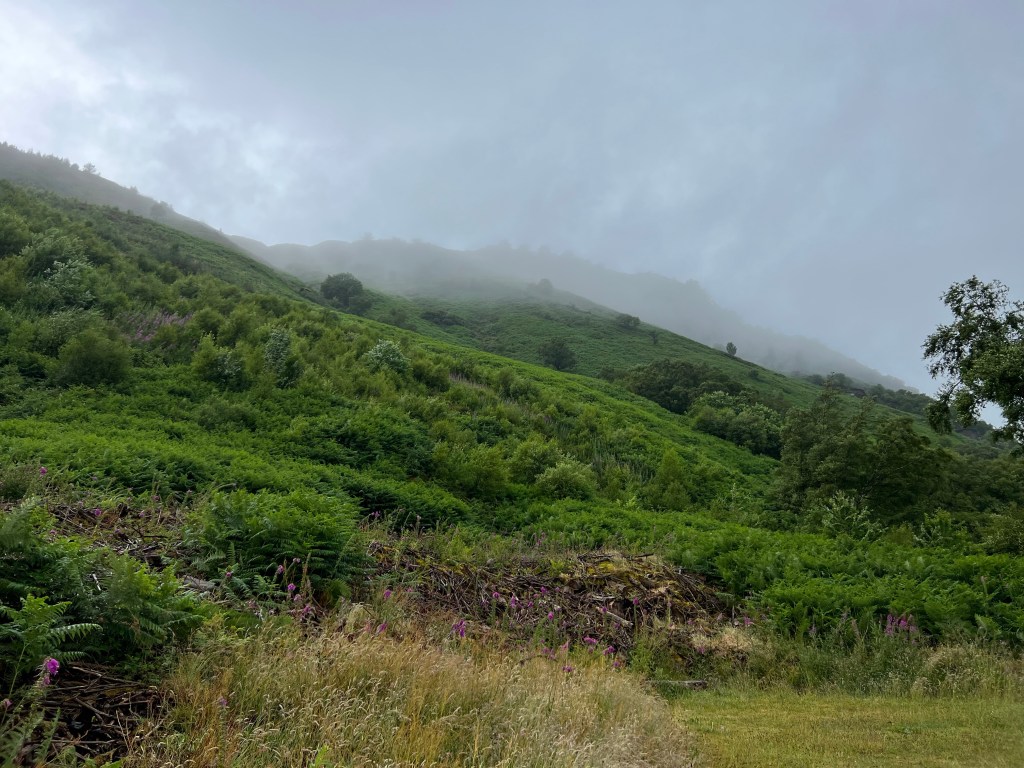
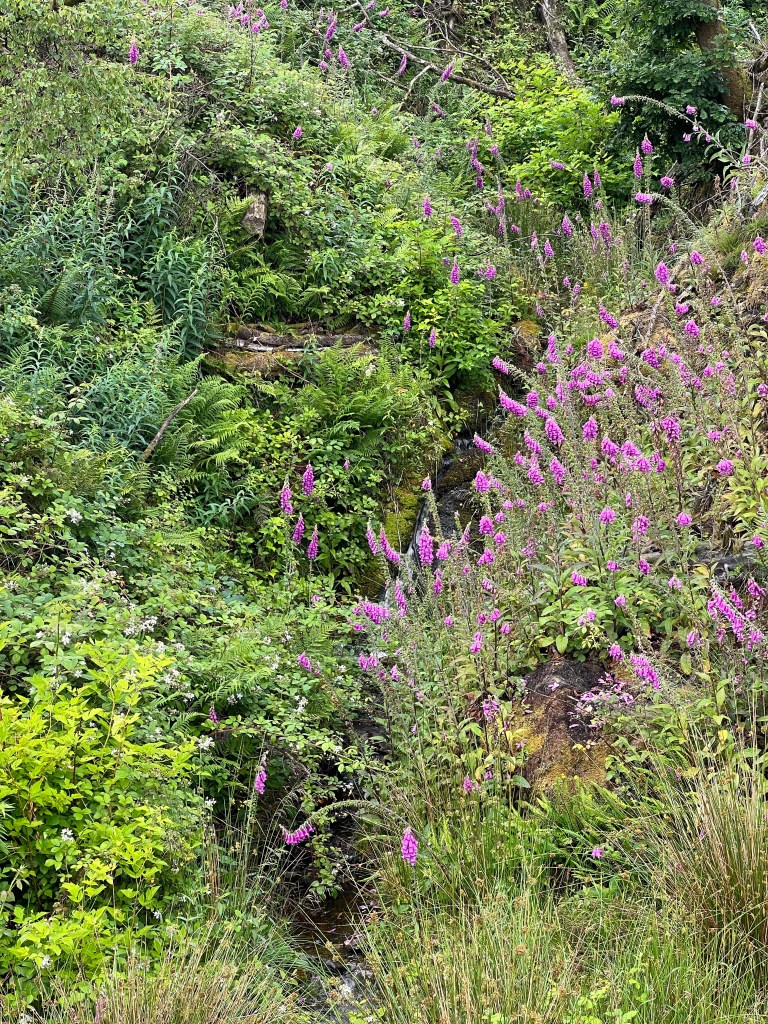
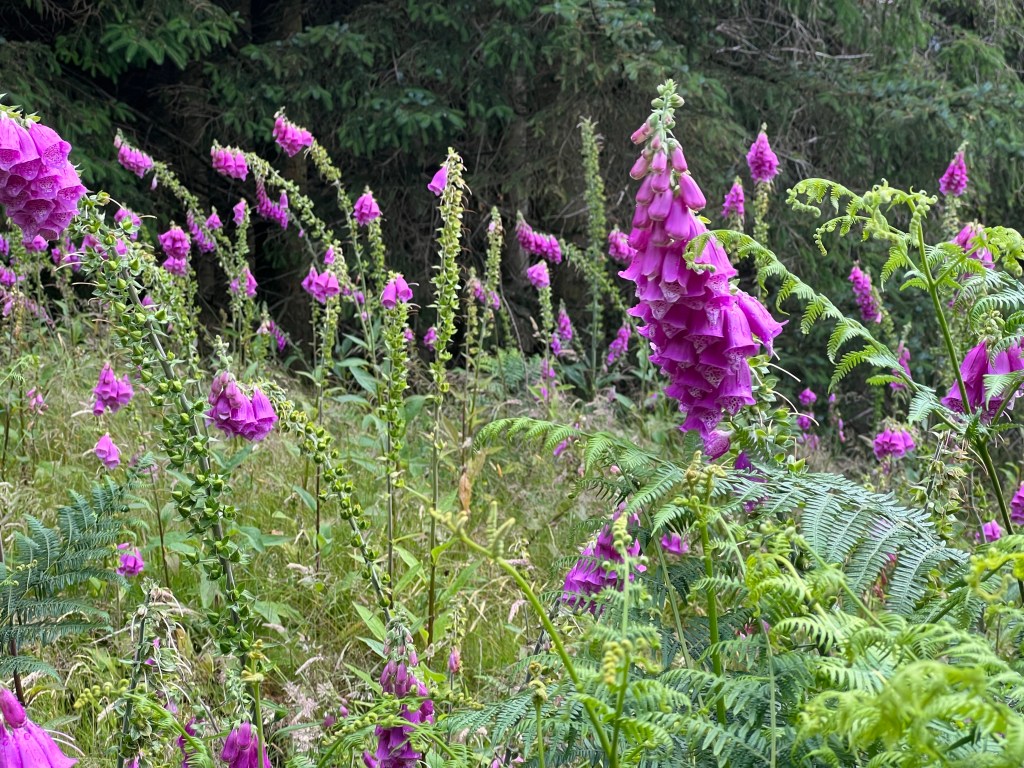
We eventually turn off onto a connector which skirts a clear cut, before joining a semi-active logging road. The flowers in the year after harvest were unreal. We also saw a Red Grouse. We received a bit of rain this section, but rain coats and wide-brimmed hats did their job.
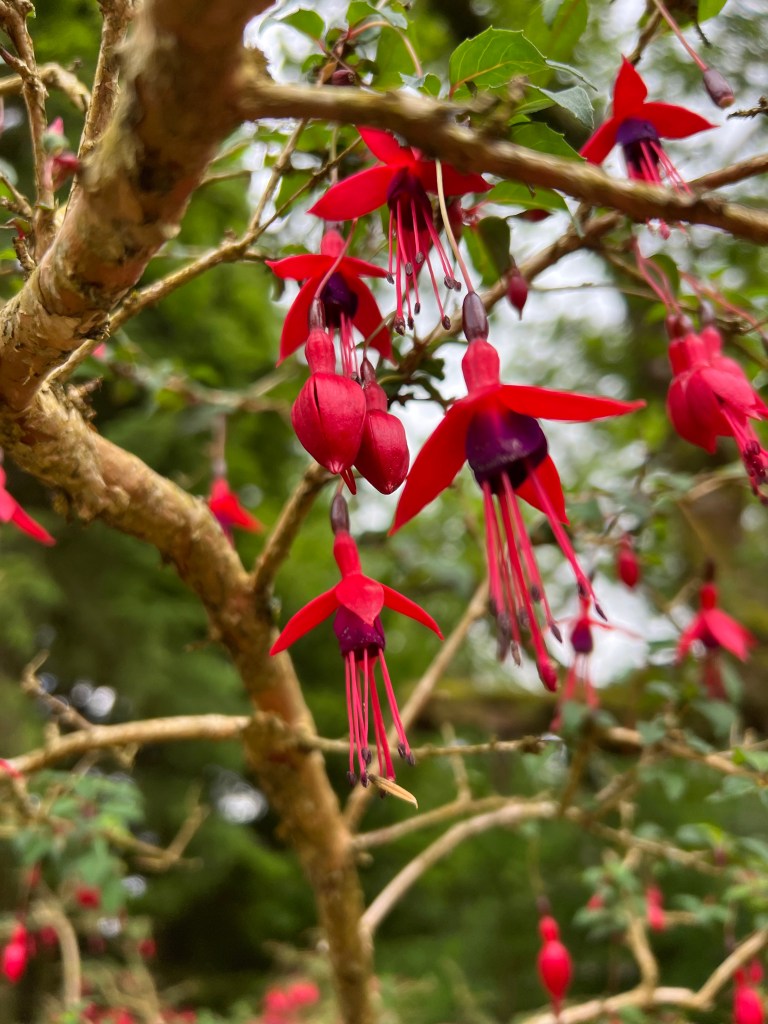
So much foxglove Foxglove!Fuchsia – an invasive growing wild, much like rhododendrons.
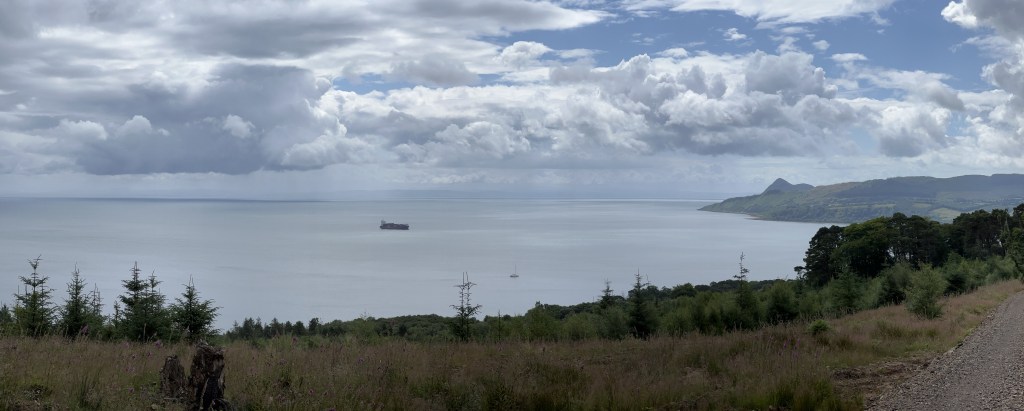
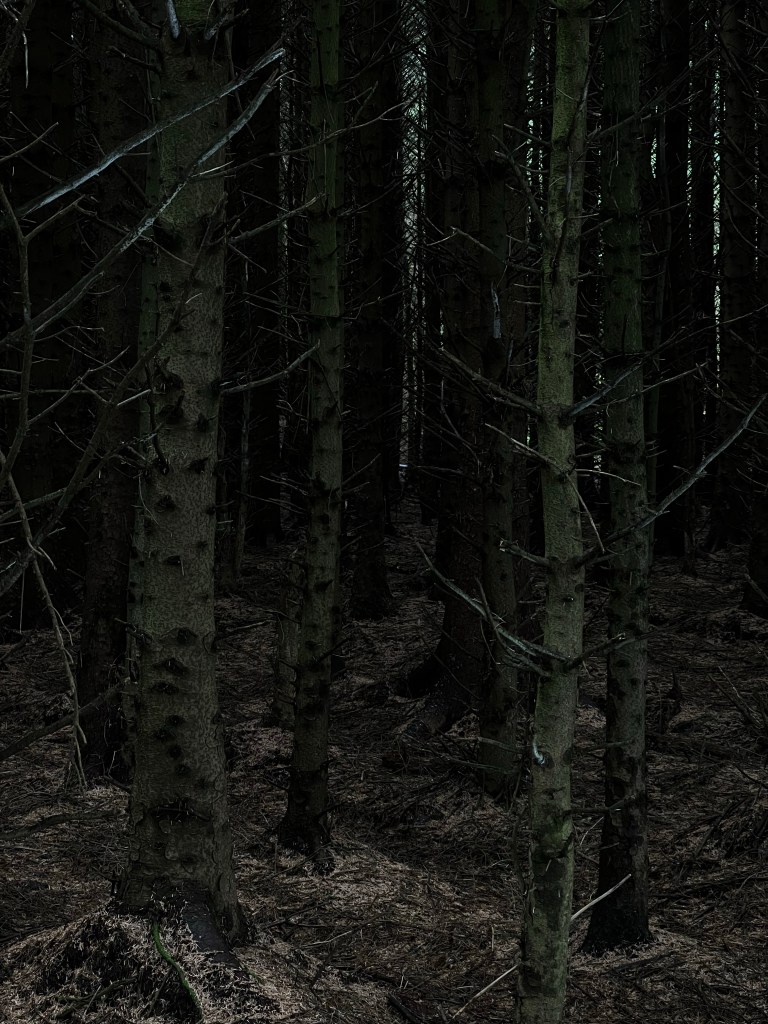
Joining a different gravel road, views of the water began to open up. Gorgeous! On the other side of the road was a farm forest, and it was creepy! Straight lines of bottom-dead trees, with stumps for branches and no underbrush due to a complete lack of light coming through the canopy.
The coastSpooky treesBeachside
We turned down another trail, which eventually led us to the ocean-side road. We ate lunch along the water, watching oystercatchers and their babies. We followed the road for the last section of our walk, to Sannox. In Sannox we found a cafe serving juice and homemade cake, which was so good we gobbled it before we took photos. Jen had Cranachan, made from whisky-soaked oats and crowned with fresh raspberries. Dave had chocolate (of course).
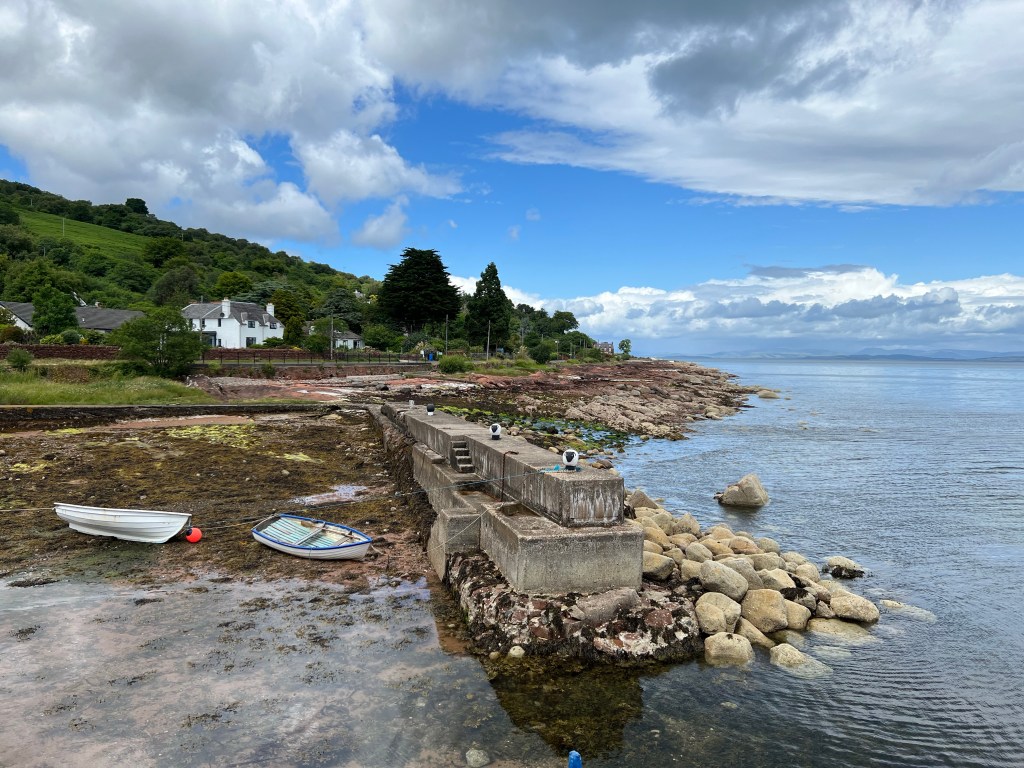
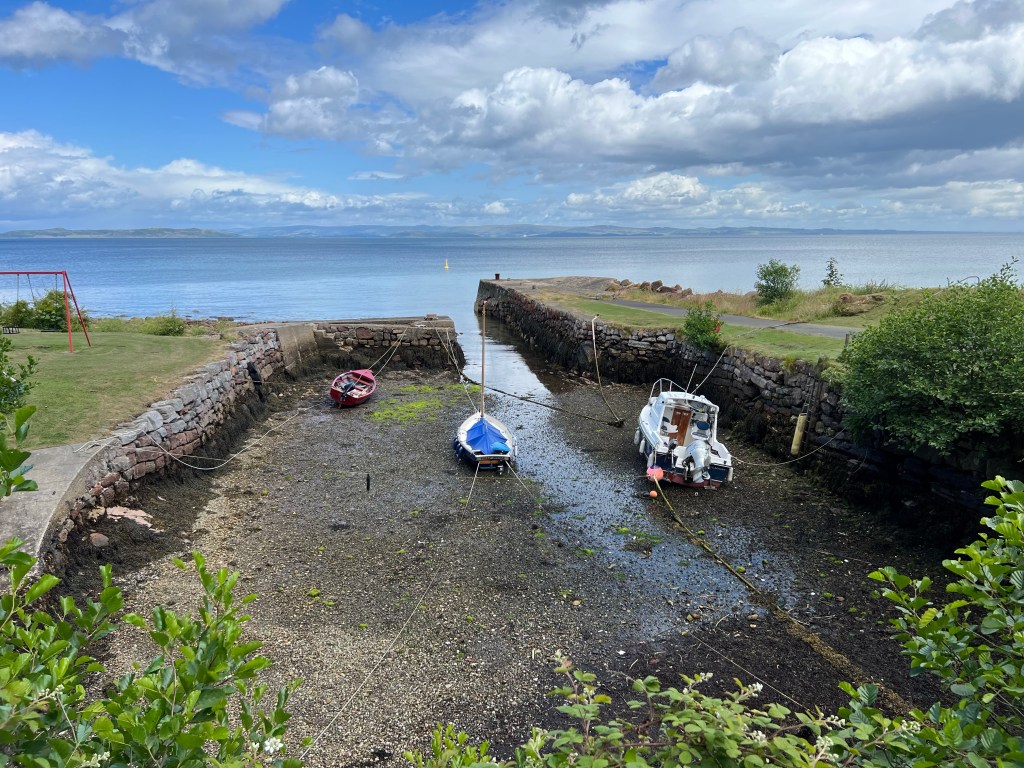
Tiny harboursAnother tiny harbourHopping to the cafe
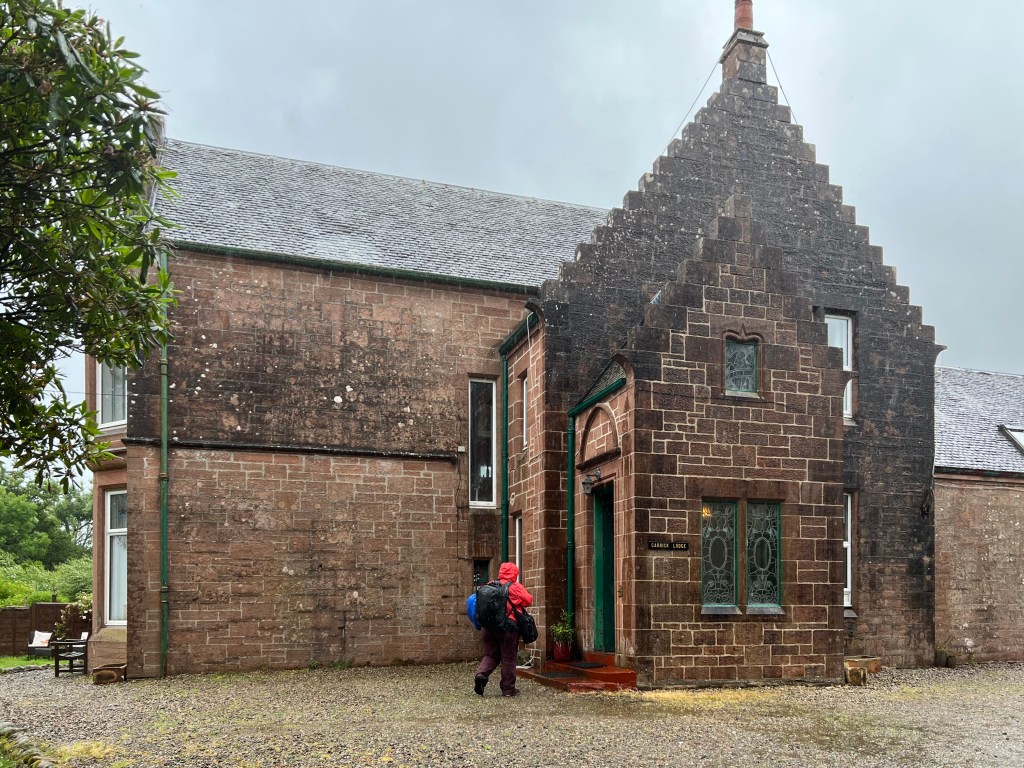
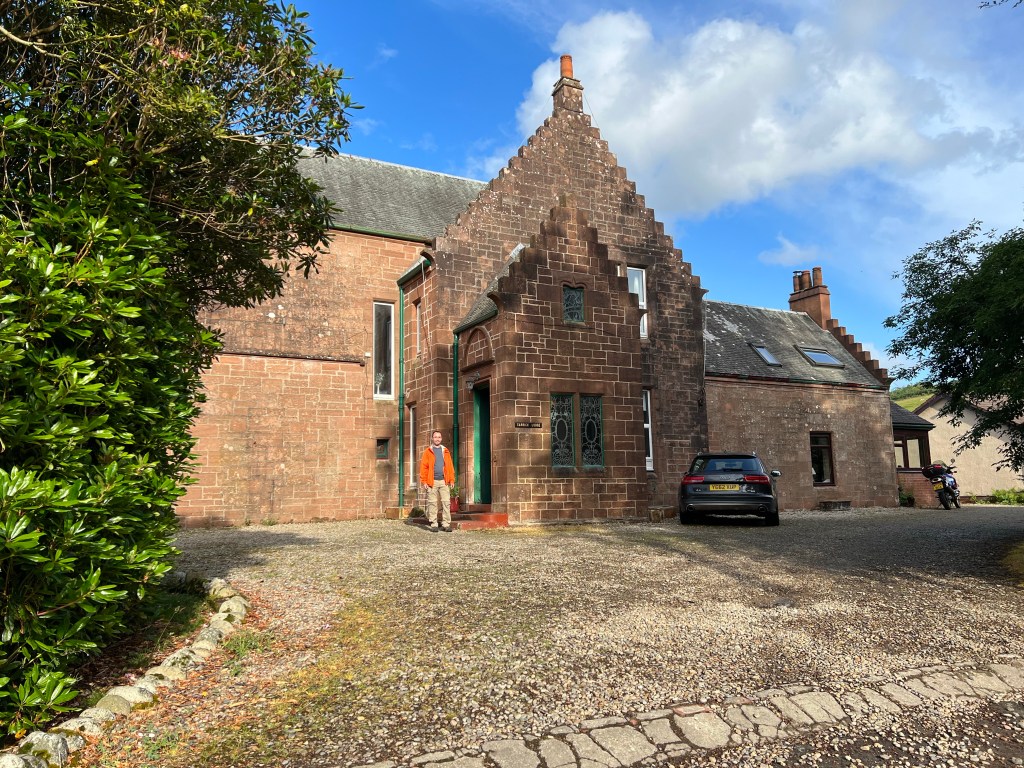
Dean, our driver, then picked us up and took us to Lochranza. We’re staying in a beautiful heritage building – a Victorian hunting lodge, to be precise, in a room with big windows to see the gorgeous valley around us. Amazing.
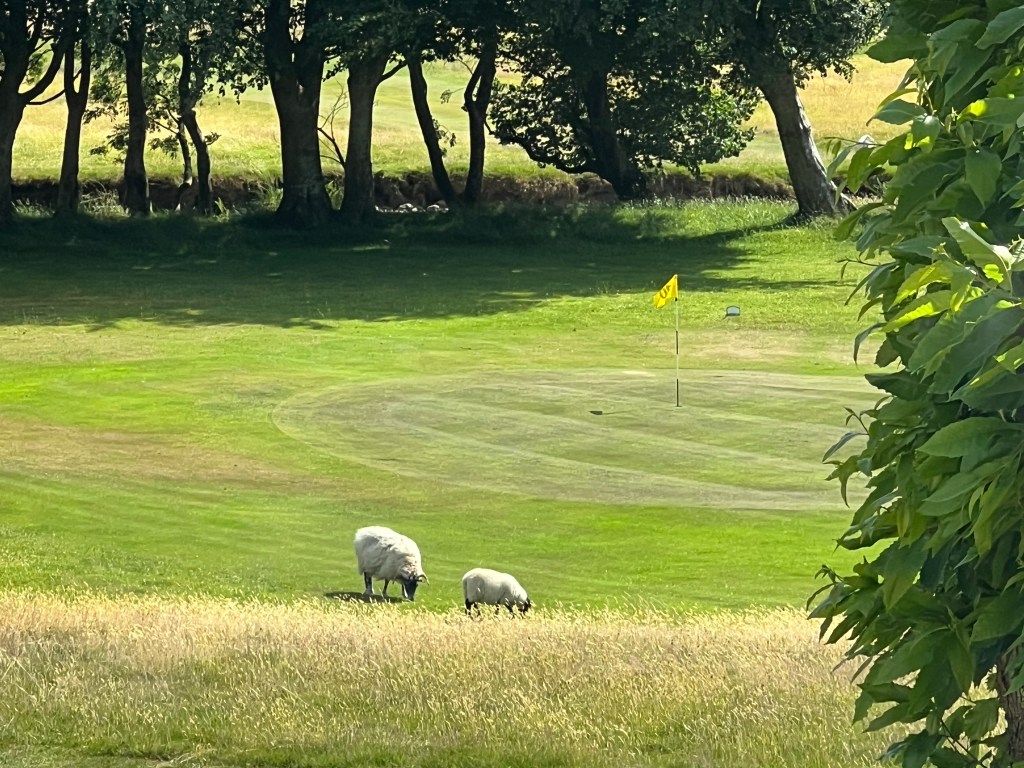
Sheep grazing on the golf course out our window
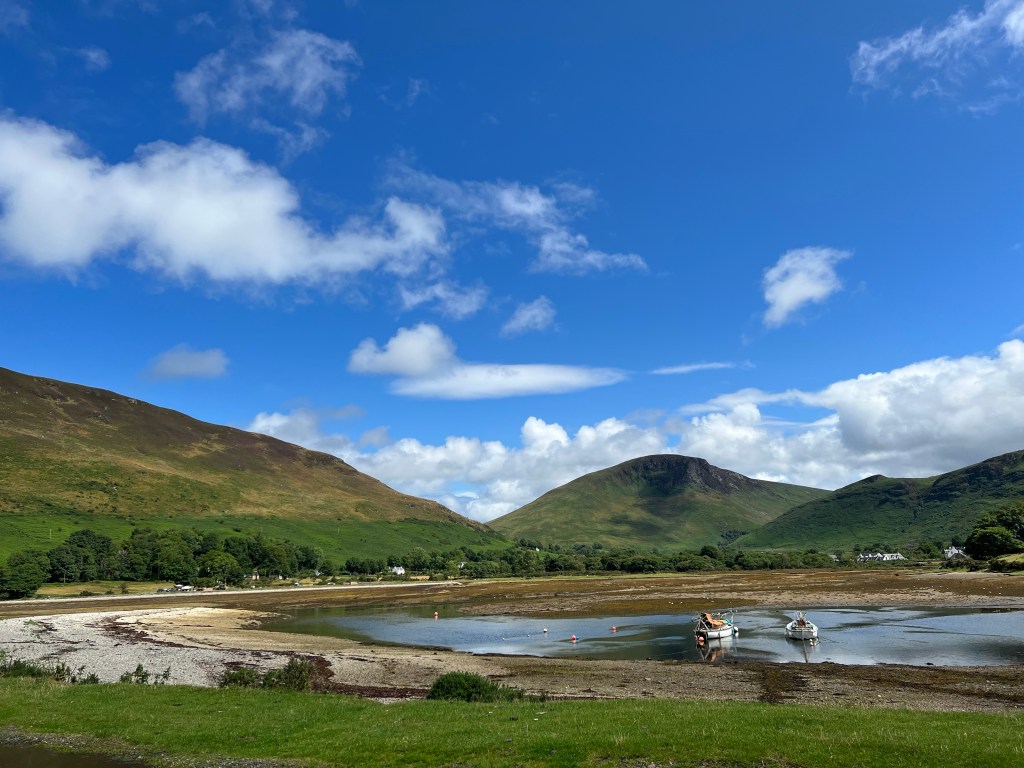
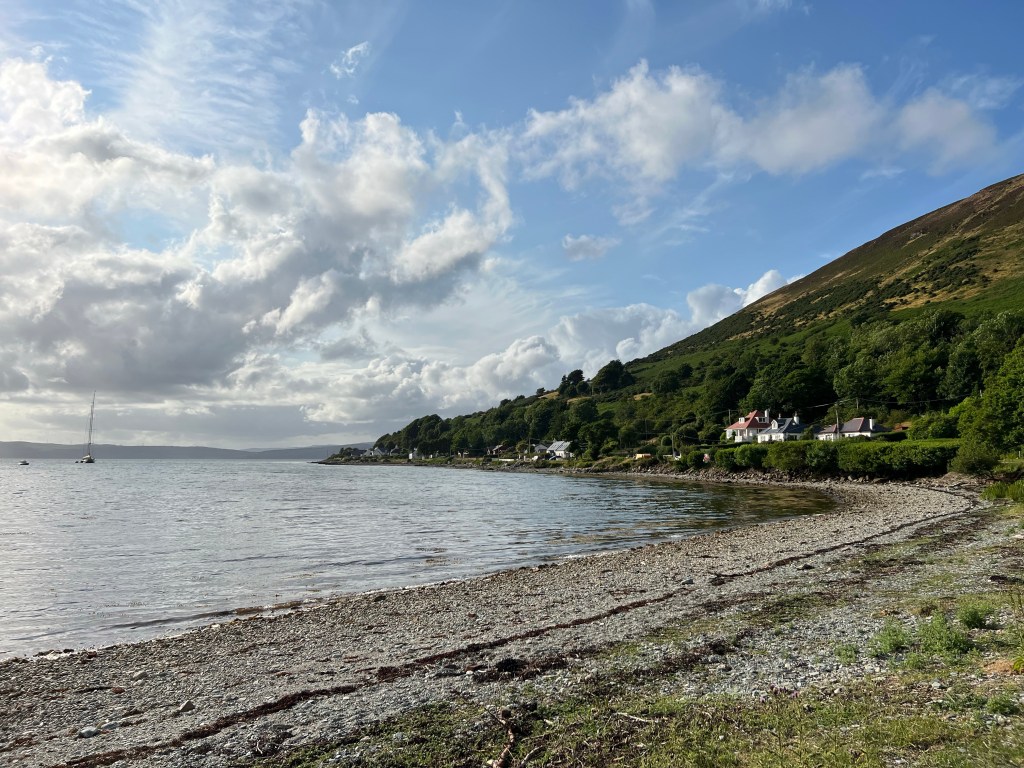
After dinner (which the proprietor kindly served us, even though they usually have Mondays off, since the only other restaurant that serves dinner suddenly stopped as of yesterday), we took a walk to the waterfront. This place is spectacular.
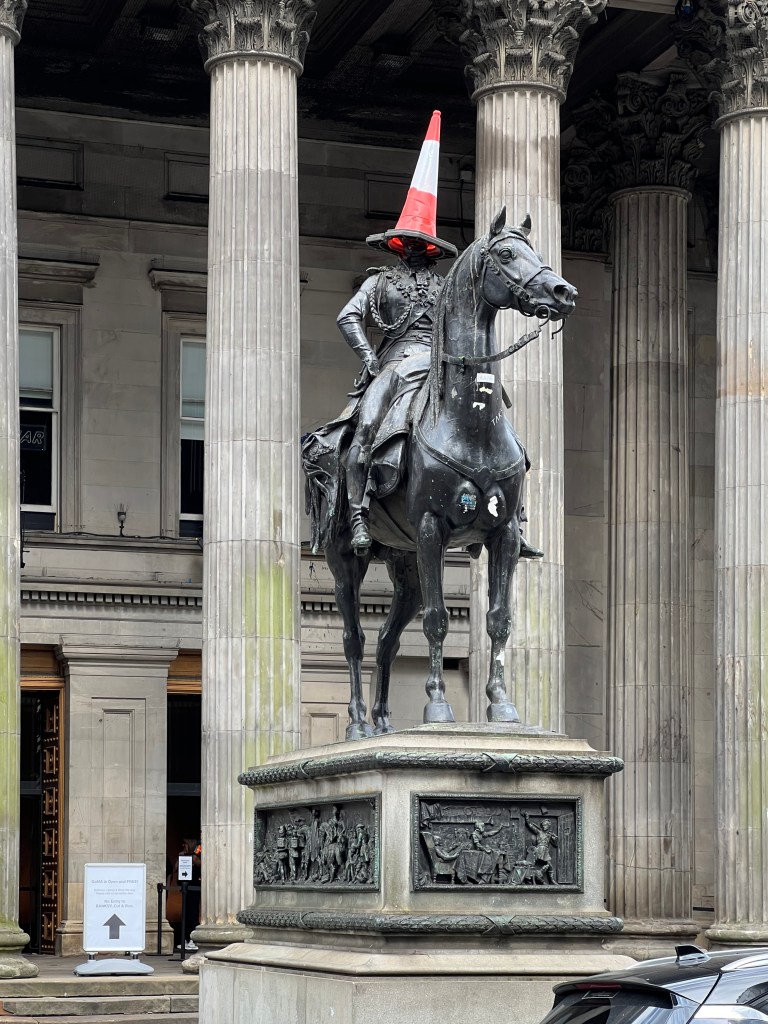
We had a leisurely start to the day, and a walk around the block, before heading to the station. One landmark we hadn’t remarked on previously was a mounted Wellington – with a cone on his head. Glasgow spends £10,000 a year removing cones from his head, yet there is always a cone – sometimes different than the day before.
“There’s a cone on your head” “Bonita!”
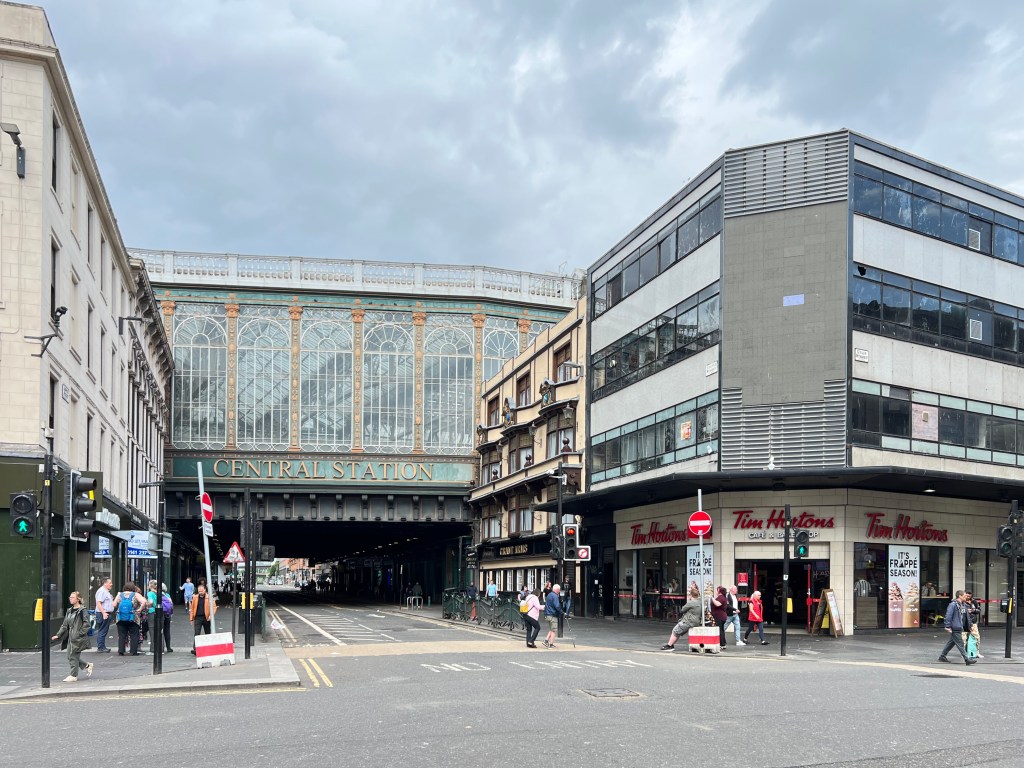
Getting to Central Station we were amused to find a Tim Hortons. Posters cited the “iconic” Iced Capp as available.
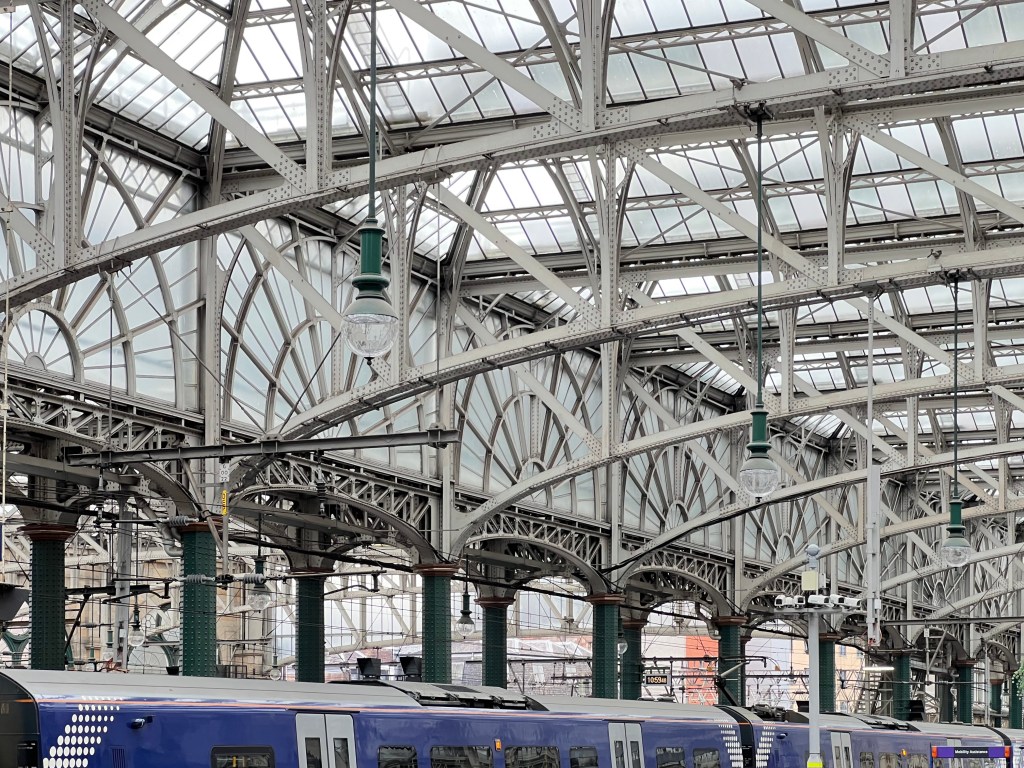
Tim’s at Central StationCentral Station
The train ride to Ardrossen was uncomplicated and comfortable, going through Stevenston, which amused Jen. The train lined up intentionally with the ferry, and we were off!
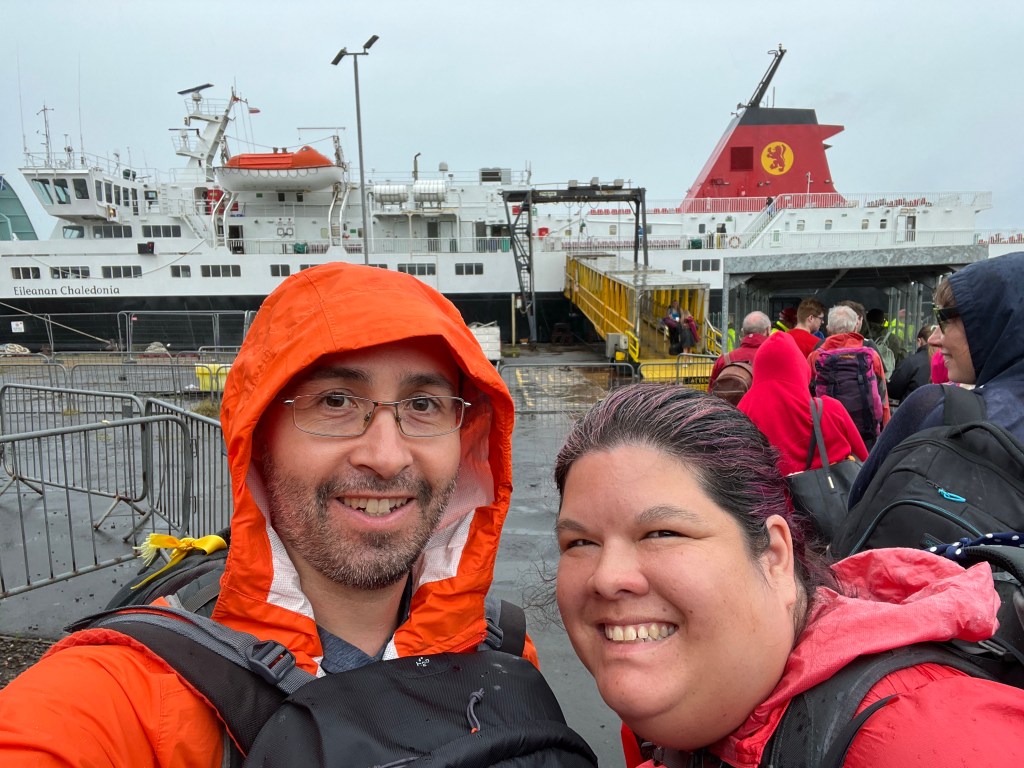
Getting on the ferry in light rainFrom the ferry
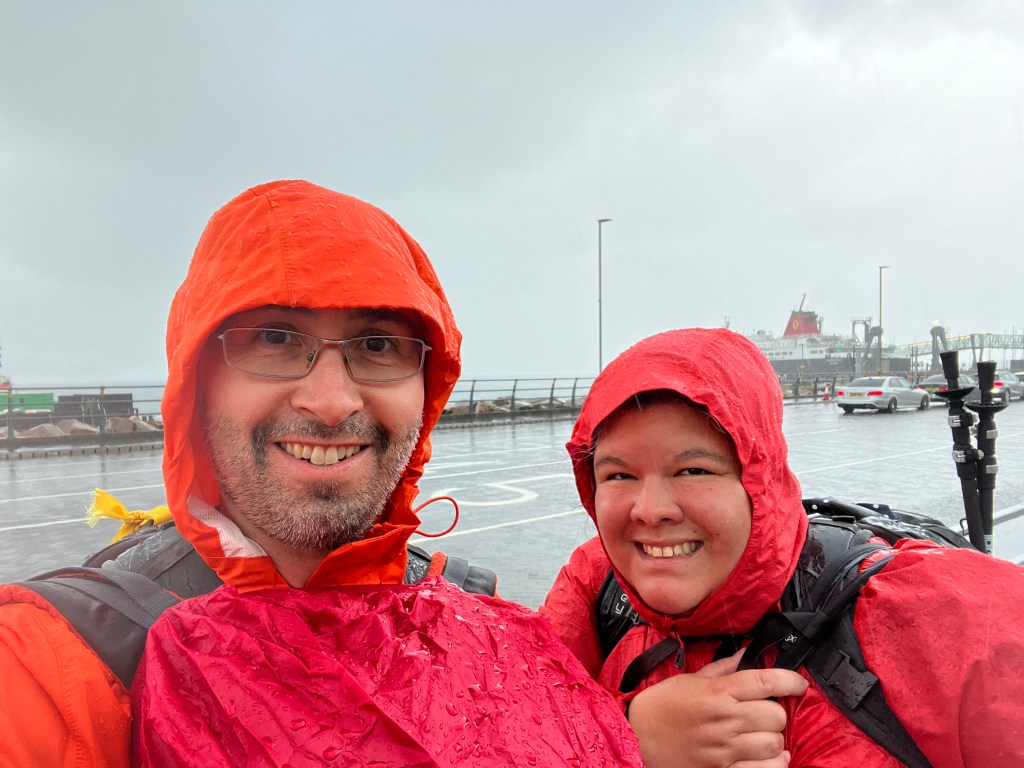
When we arrived at Brodick on the Isle of Arran, it was pouring rain. We geared up, and were still quiet drippy by the time we reached our accommodation some 600 meters away.
Getting off the ferry in pouring rainArriving at our abode
This portion of our trip was arranged by Gemini Travel (accommodations with breakfast, transfers, baggage transfers, and logistics notes). Jen generally does not give up control that easily, but they did a great job and knew how to make it all work. We look forward to it.
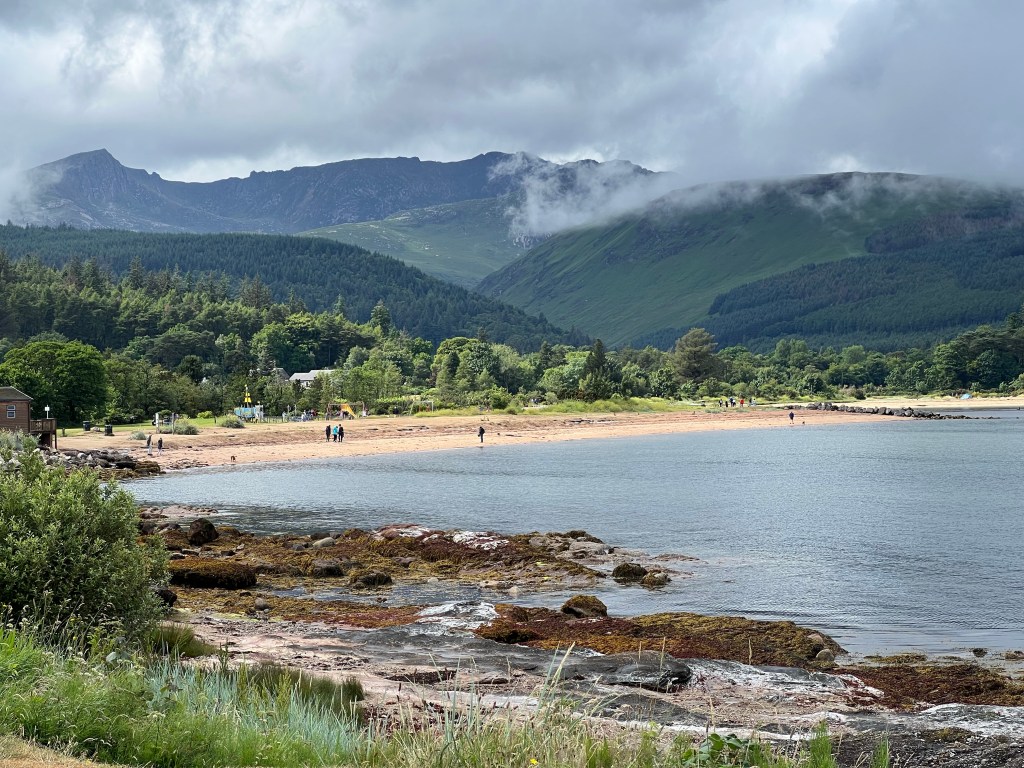
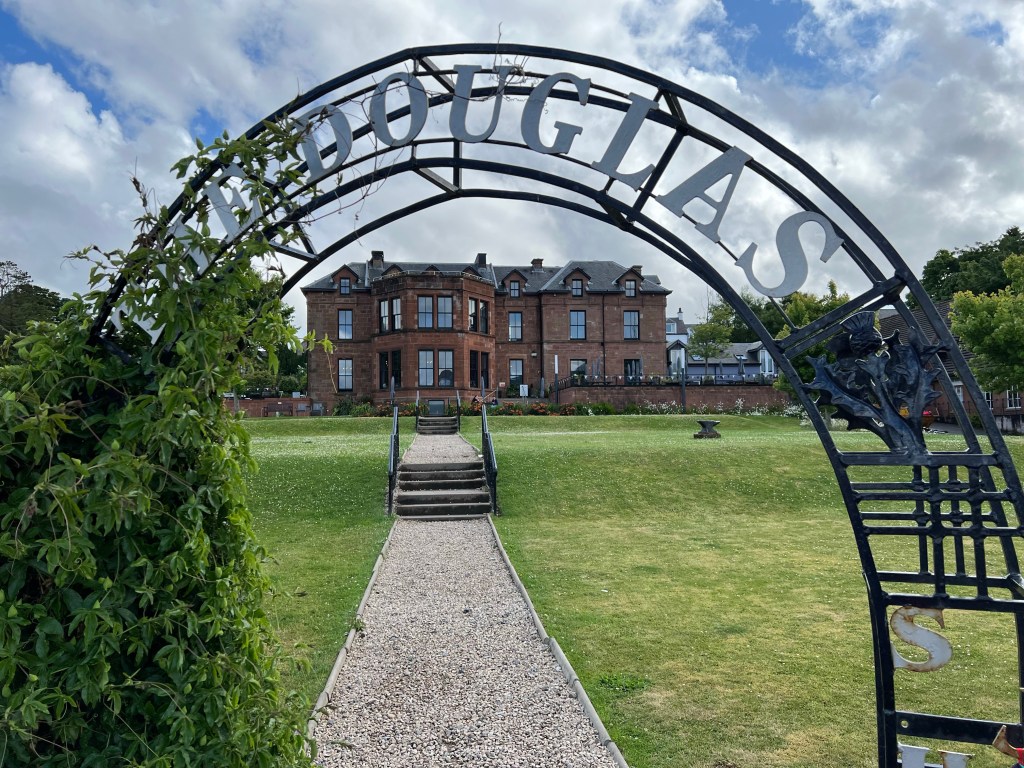
After settling and seeing the rain stop, we went for a waterfront walk before dinner at the Douglas Hotel bistro.
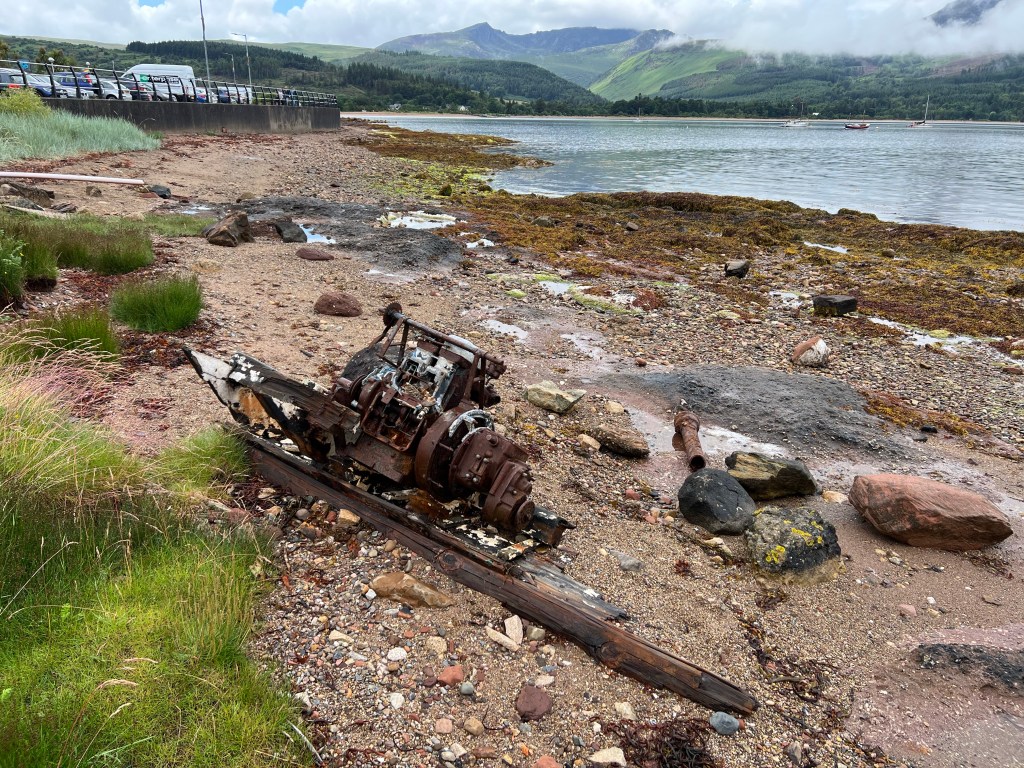
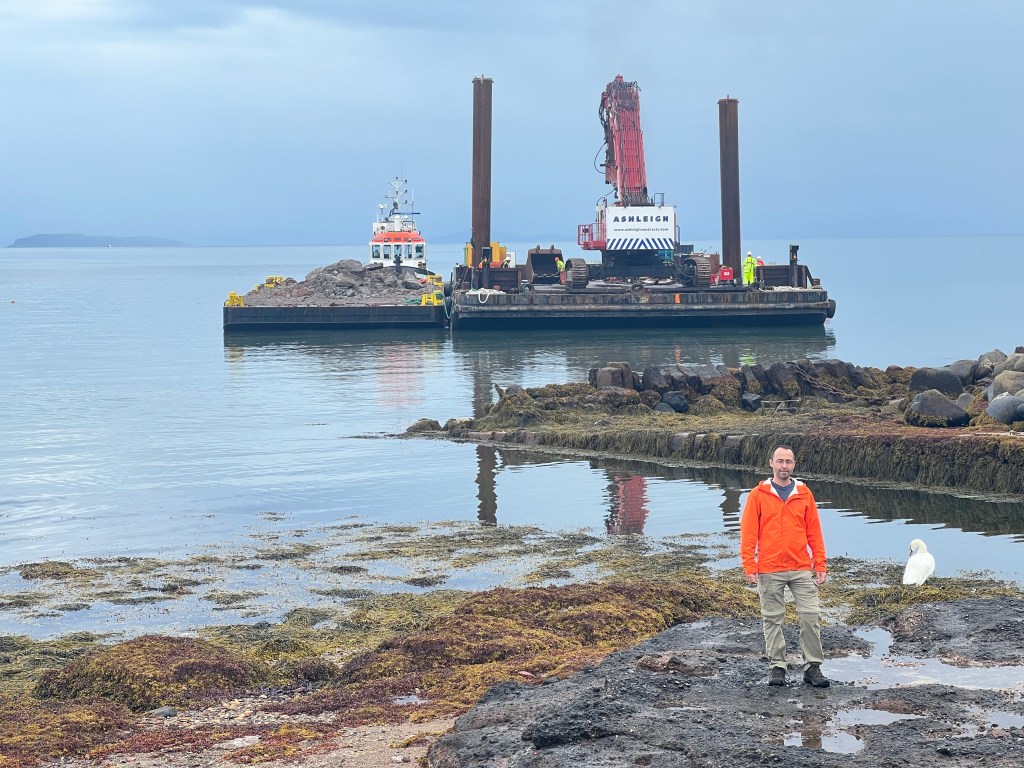
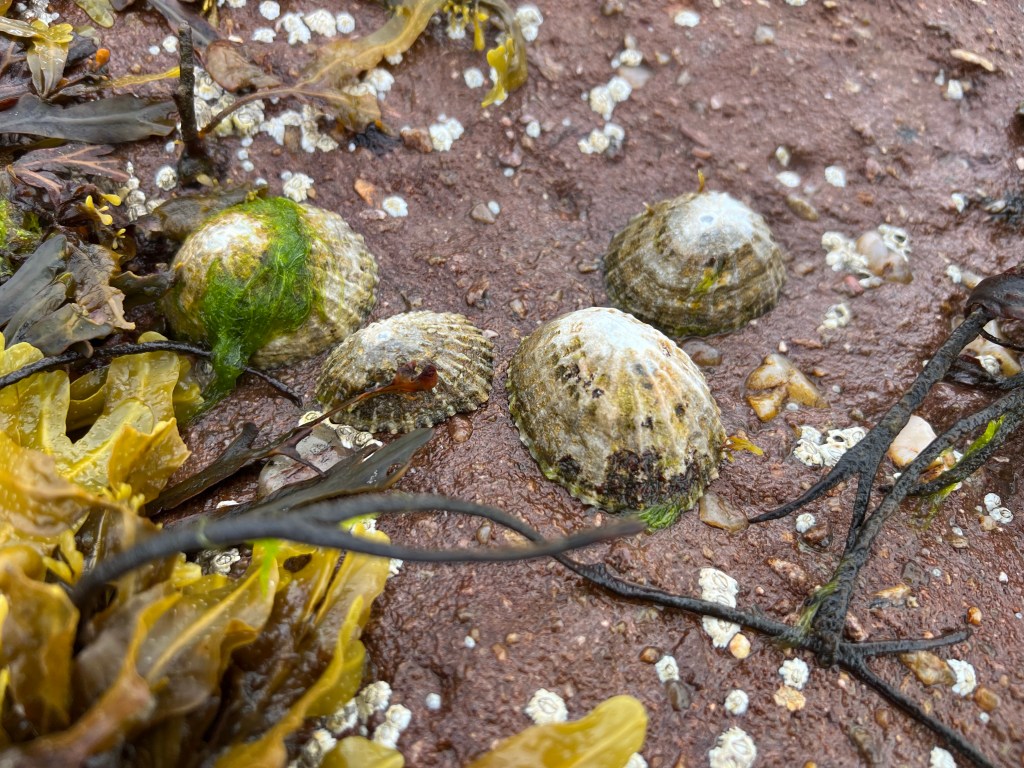
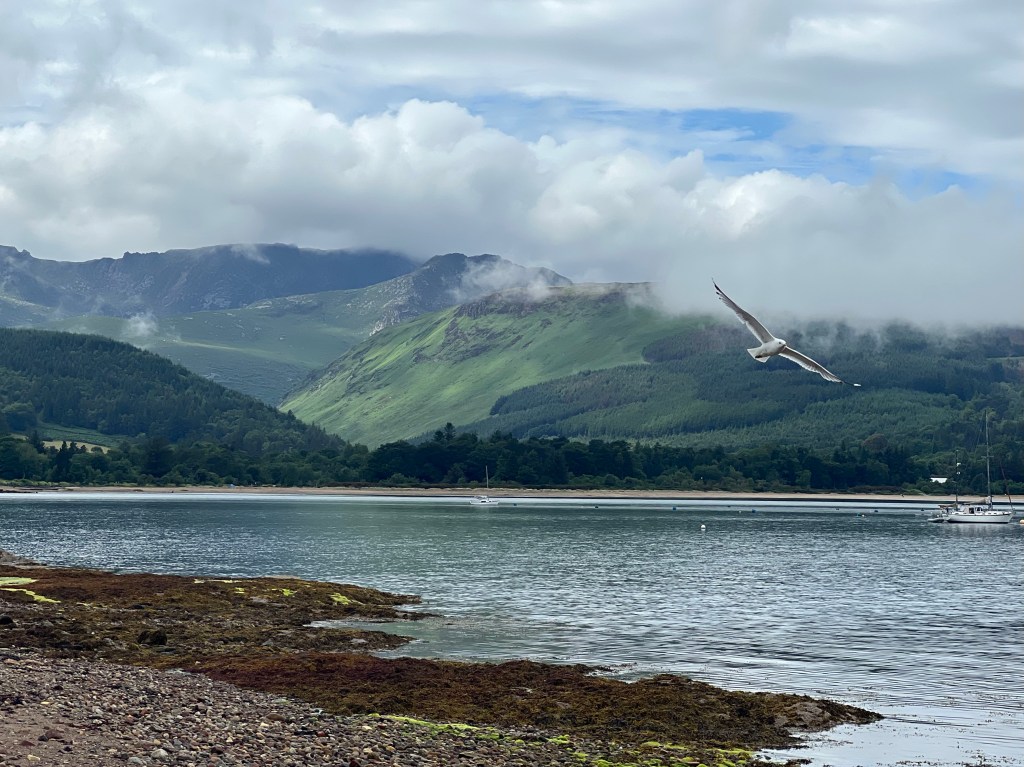
Beach debrisDave half beachcombing / half watching the dredgingLimpetsGoat Fell was shrouded in cloud, but Glen Ross beckonsThe beachscape
Post dinner was repacking for a hiking paradigm, and getting some good sleep in before our hiking adventures begin.
Dinner at The DouglasSunny at our abode for the night!
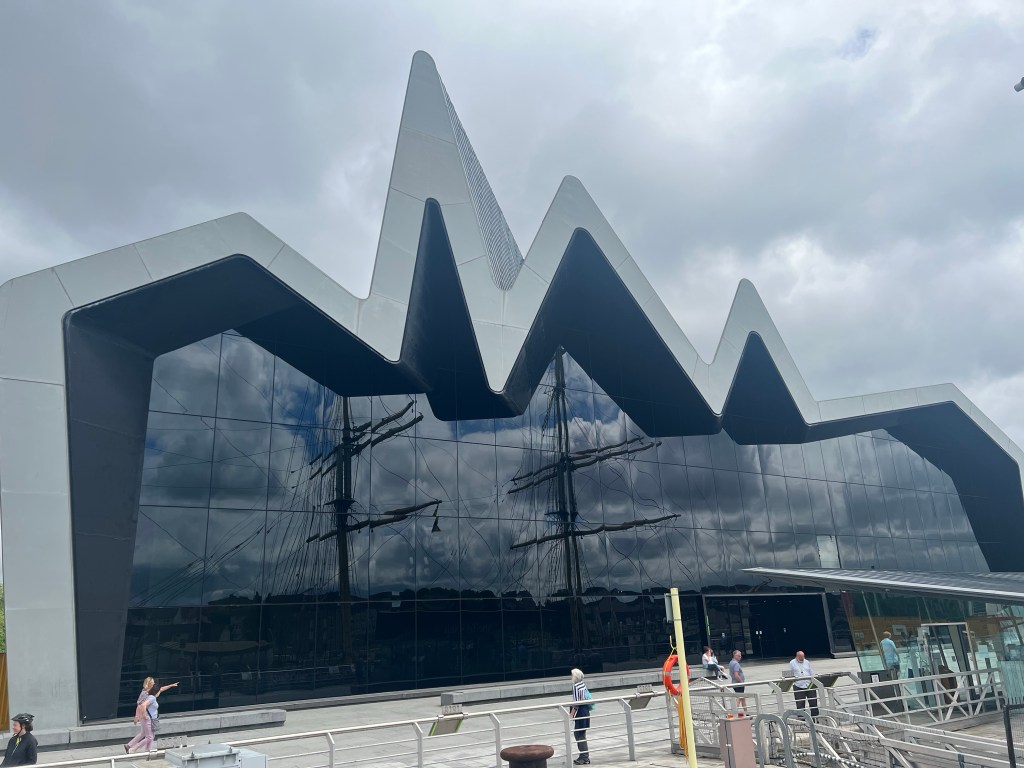
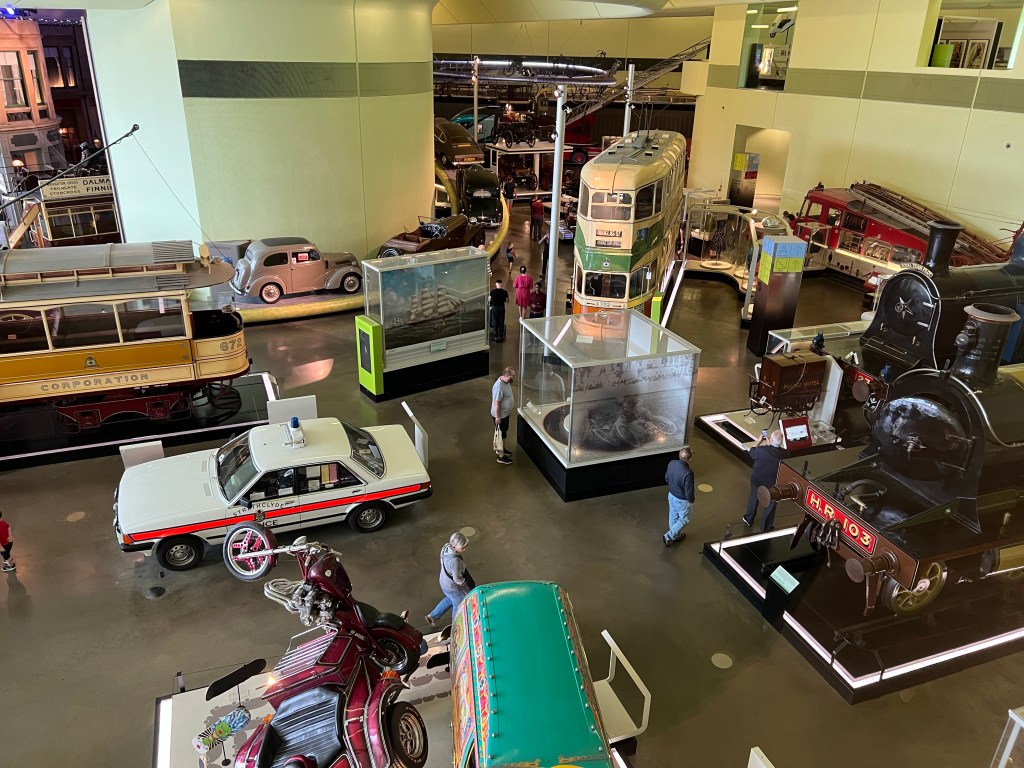
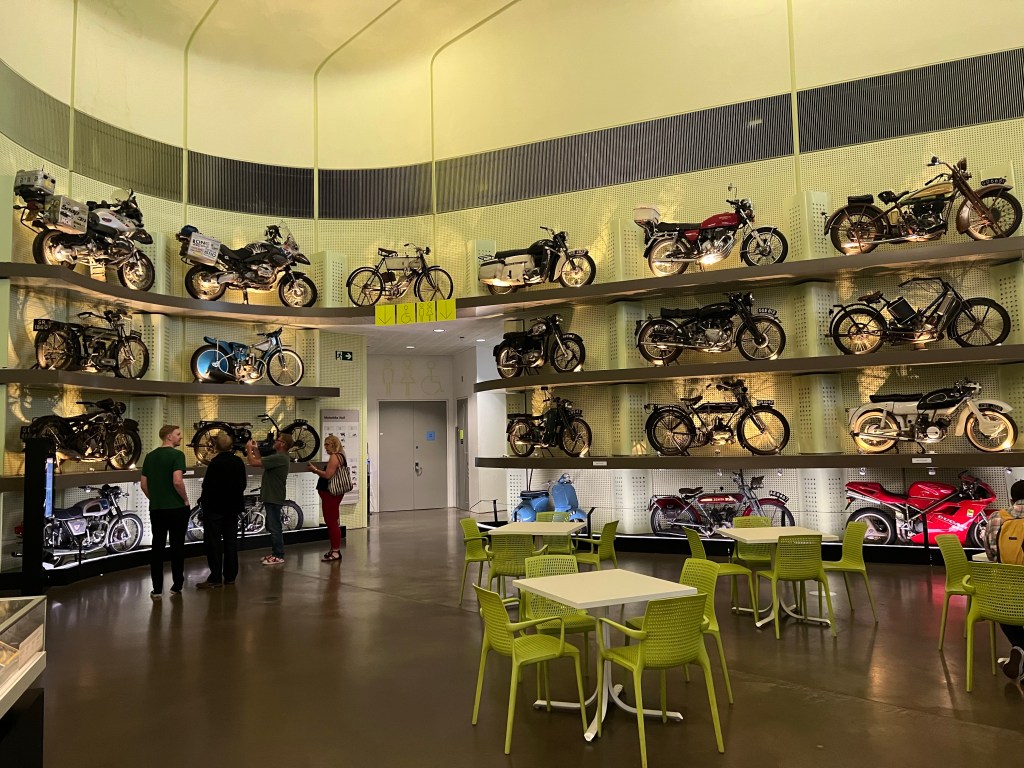
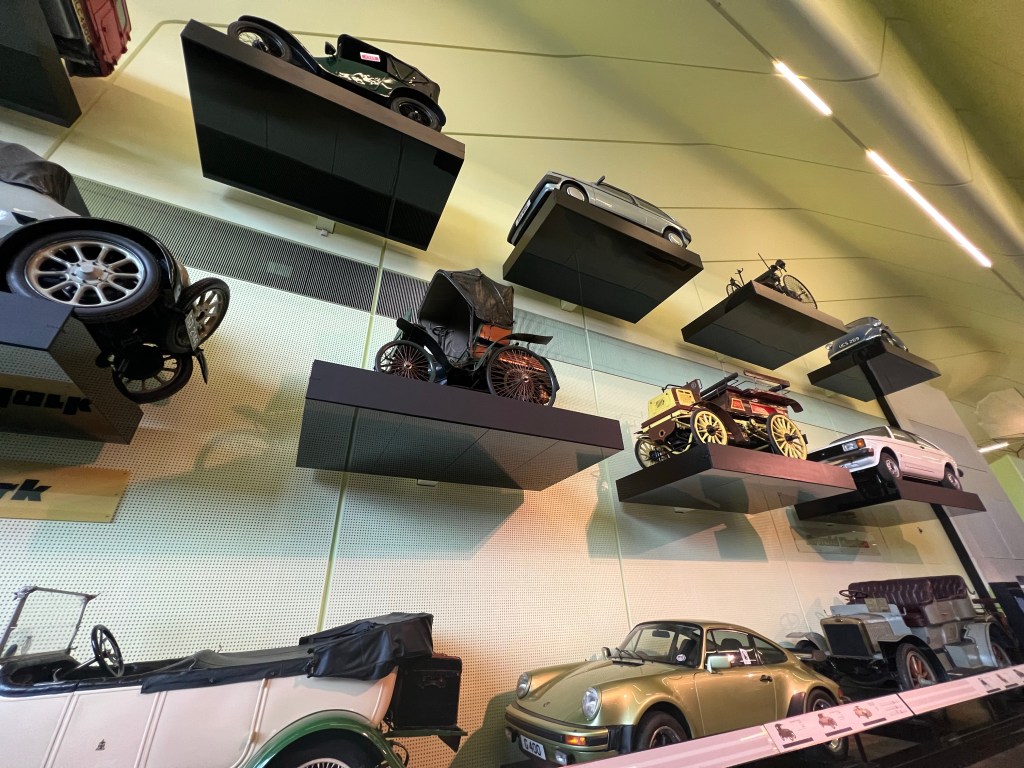
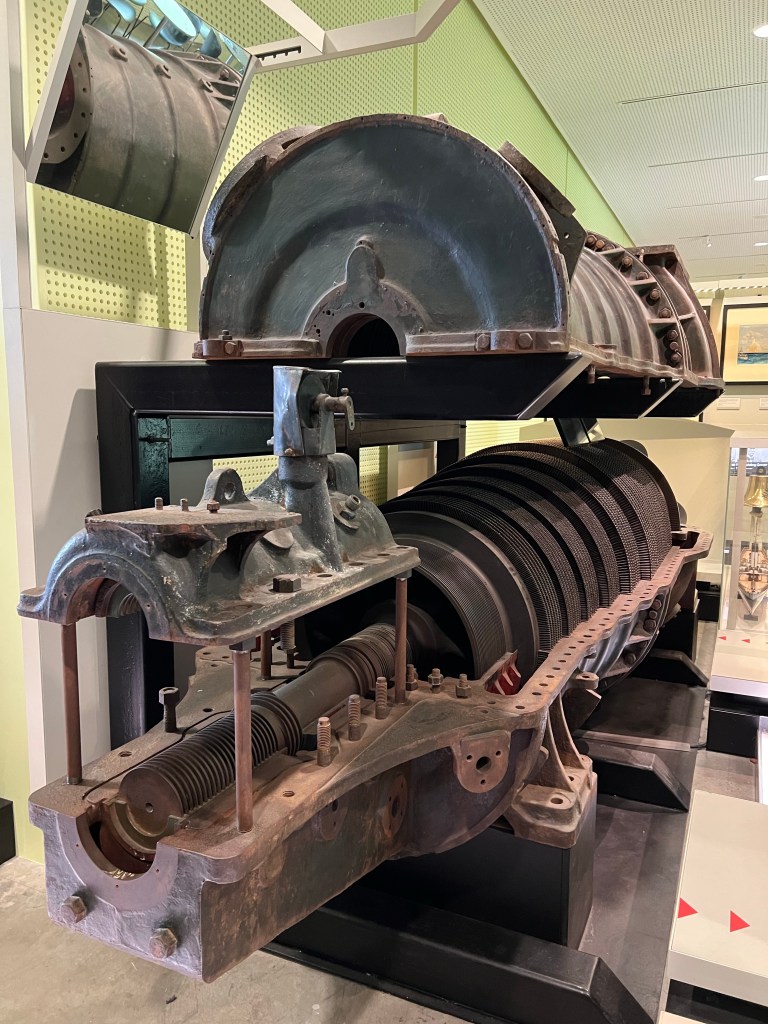
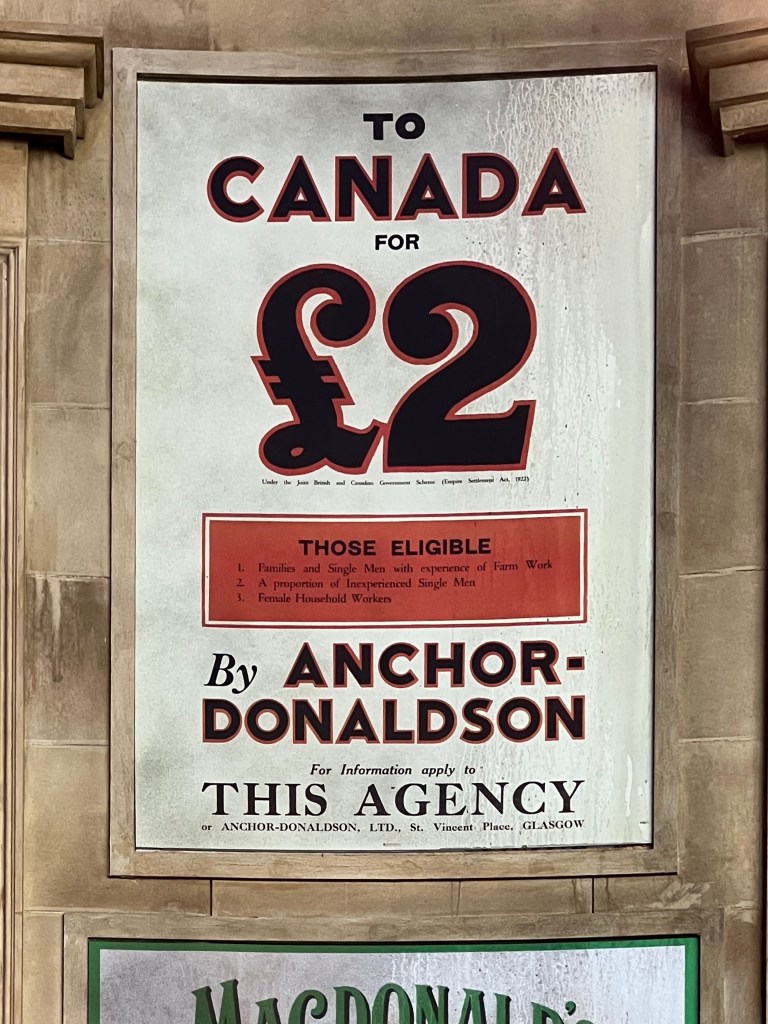
Today was an easy day to enjoy the city before heading off to Arran. After a leisurely breakfast, we walked to the waterfront and then along the waters edge for around 4 km, until we reached the Riverside Museum, a brand new facility celebrating transportation and technology.
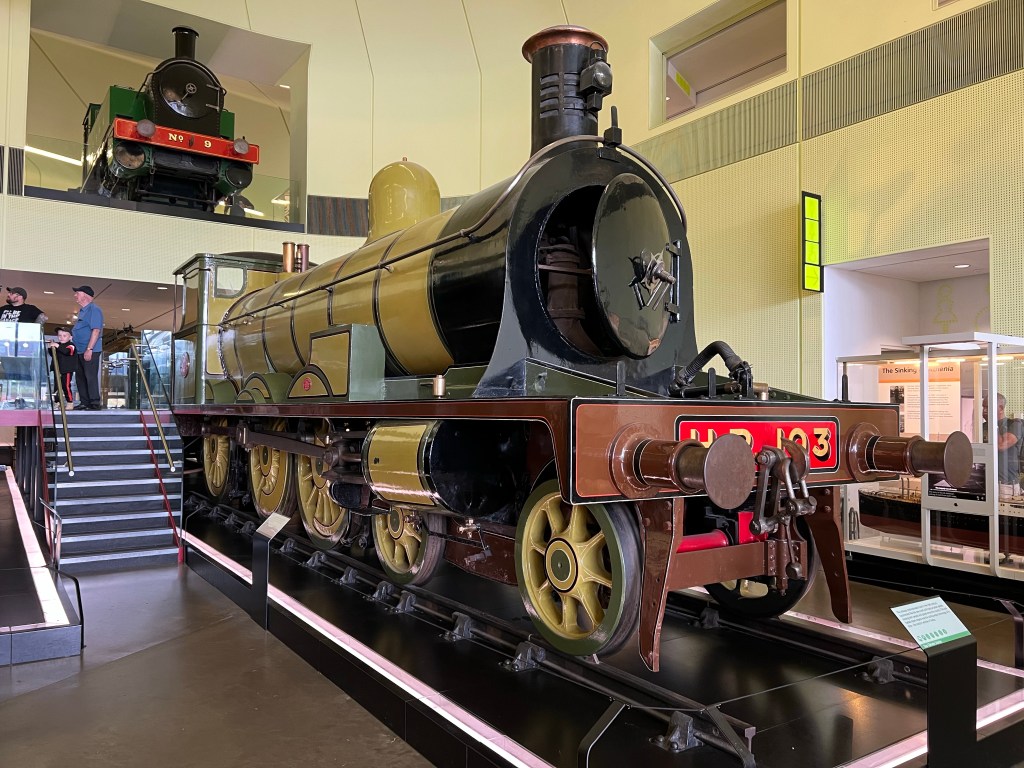
A view from the mezzanine A locomotive!The wall of motorcycles The wall of cars“This is one of three [1901] engines used to power [TS] King Edward. The engines sat side by side. Together they turned the propellers that drove the ship.” – interpretive signBest priced trip home ever
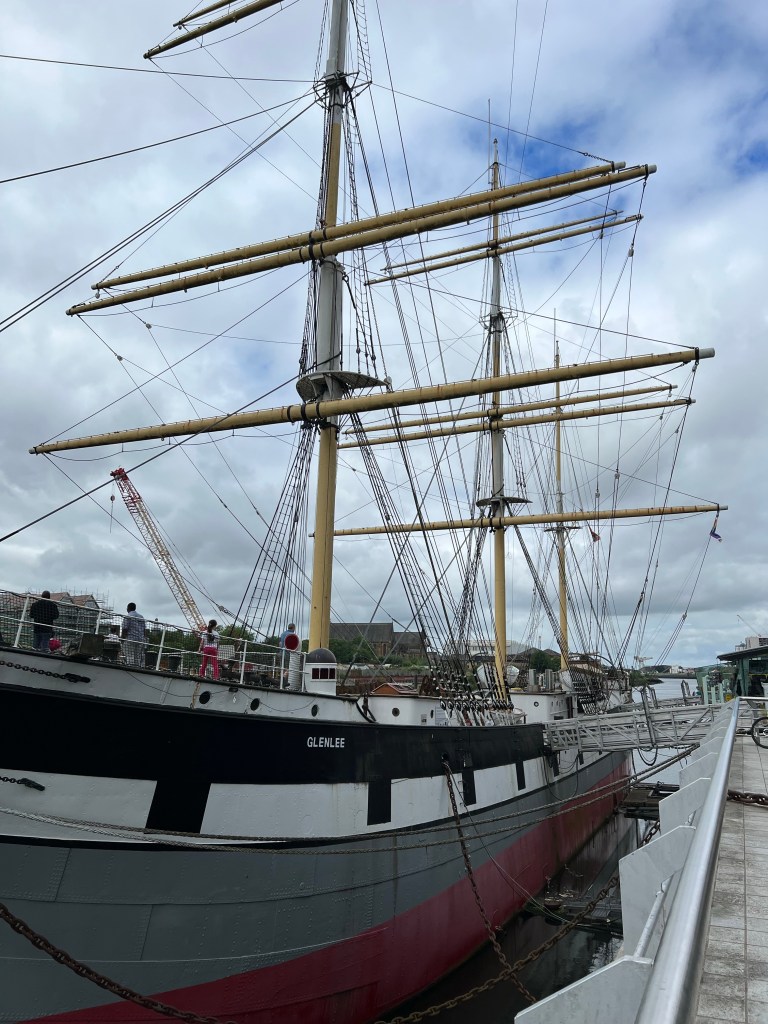
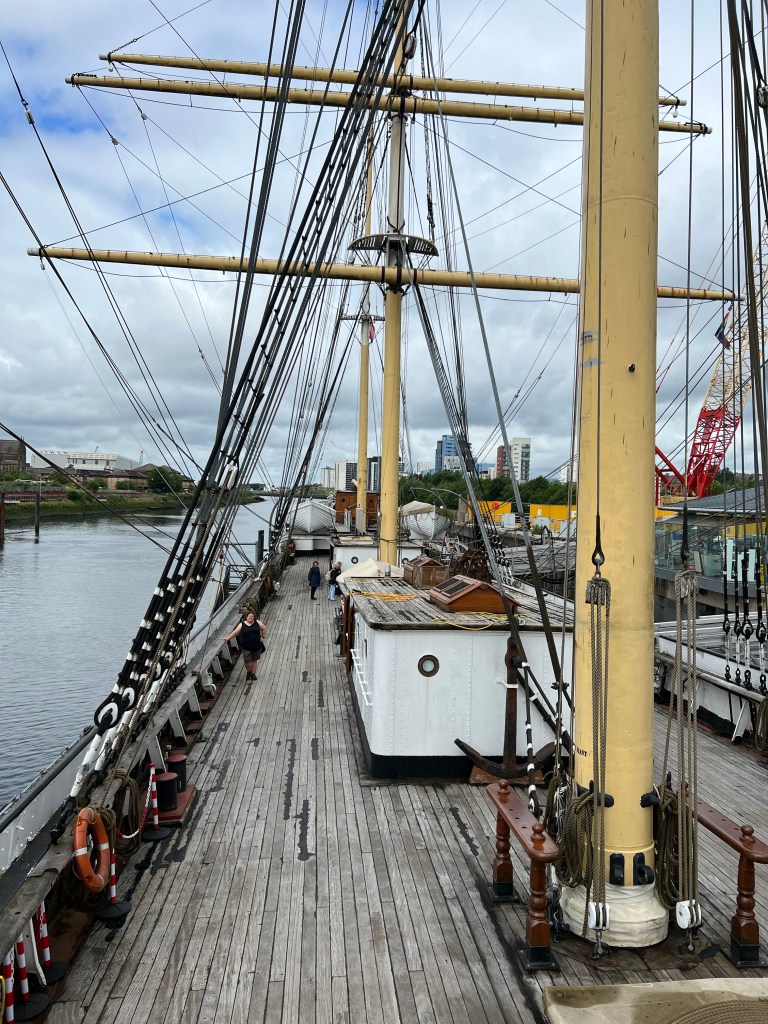
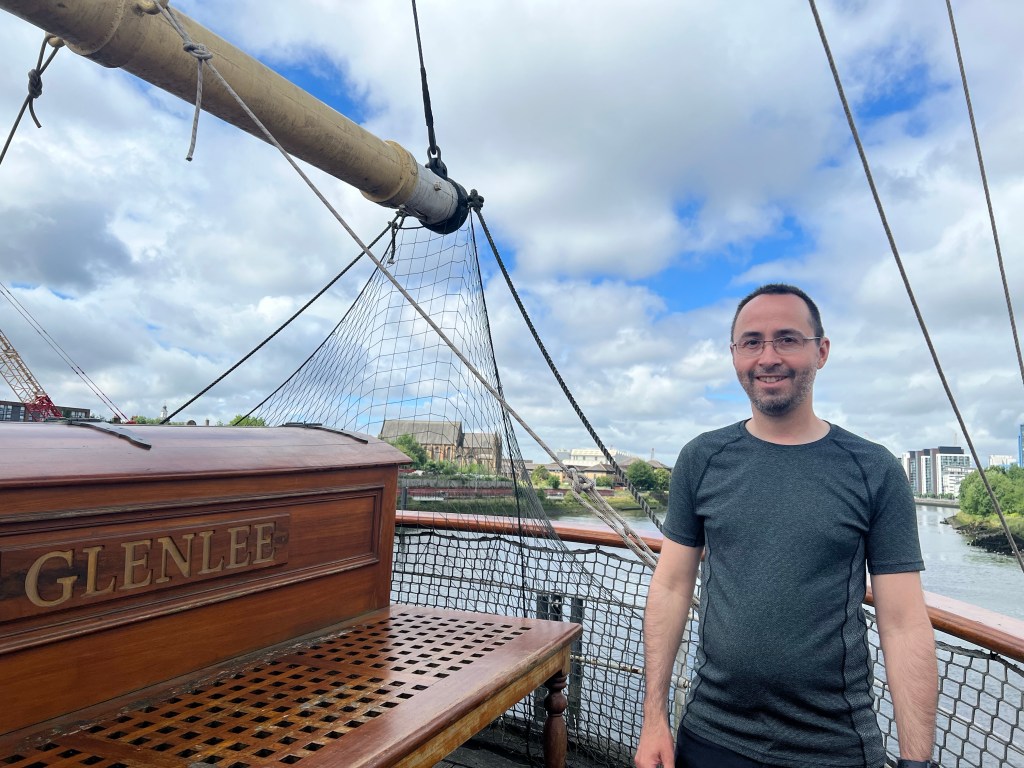
Alongside the Riverside was the Glenlee steel-hulled tall ship. She’s fully restored and set up to interpret the old sailing days – a really neat museum piece.
A tease of the boat in the glass of the museum The GlenleeOn deck!Looking downriver
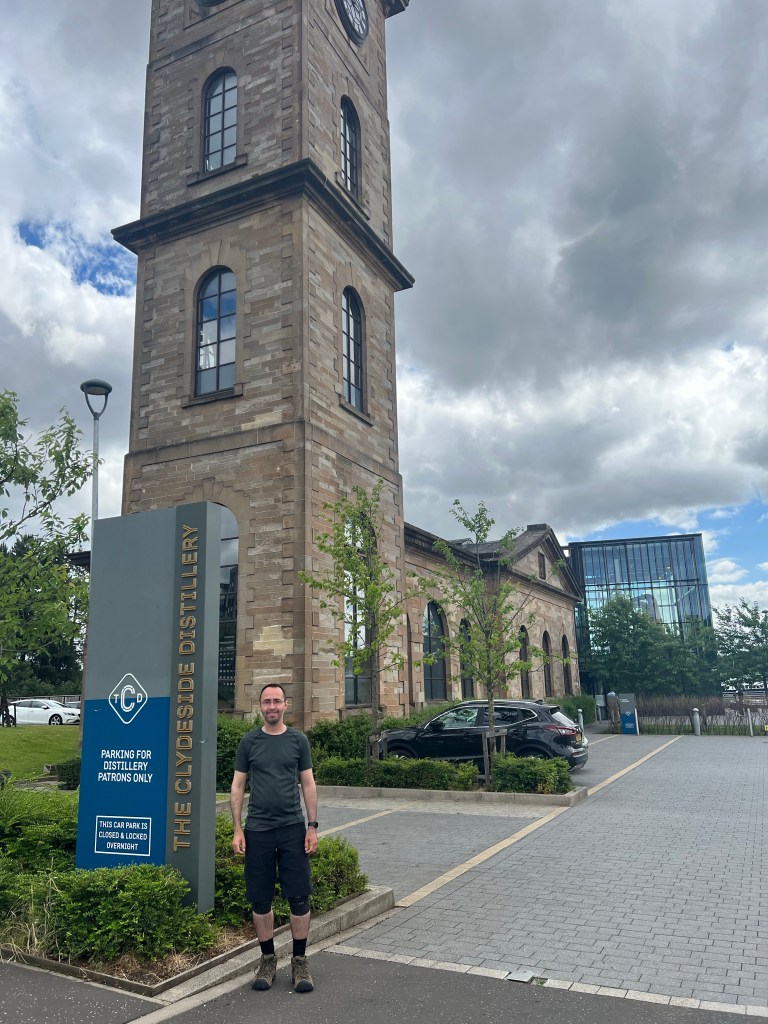
After the museum we went a short ways to the Clydeside Distillery. They have a cute cafe with delicious sandwiches and, of course, whisky. Dave did a flight of whiskies from several partnered distilleries, as well as enjoying a wee dram of one of Clydeside’s.
Clydeside DistilleryA flight of whisky: Ledaig 10 Cask Islay Kilchoman Sanaig Port Charlotte Islay BarleyCOP26
Walking back to the city centre, we were surprised to see how busy things were – then realized it was a sunny Saturday. We did some grocery shopping for our hike, and took the evening off to rest, relax, and pack.
Today we took another bus into the highlands. This time we went with Rabbie’s as they offered the best tour itinerary.
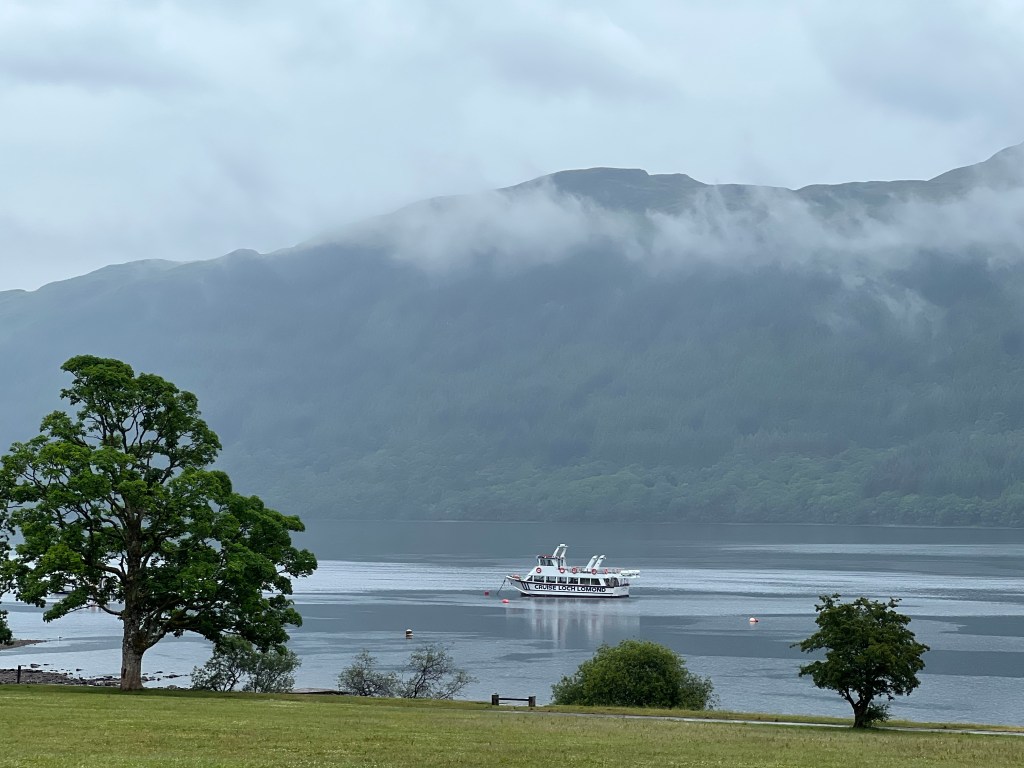
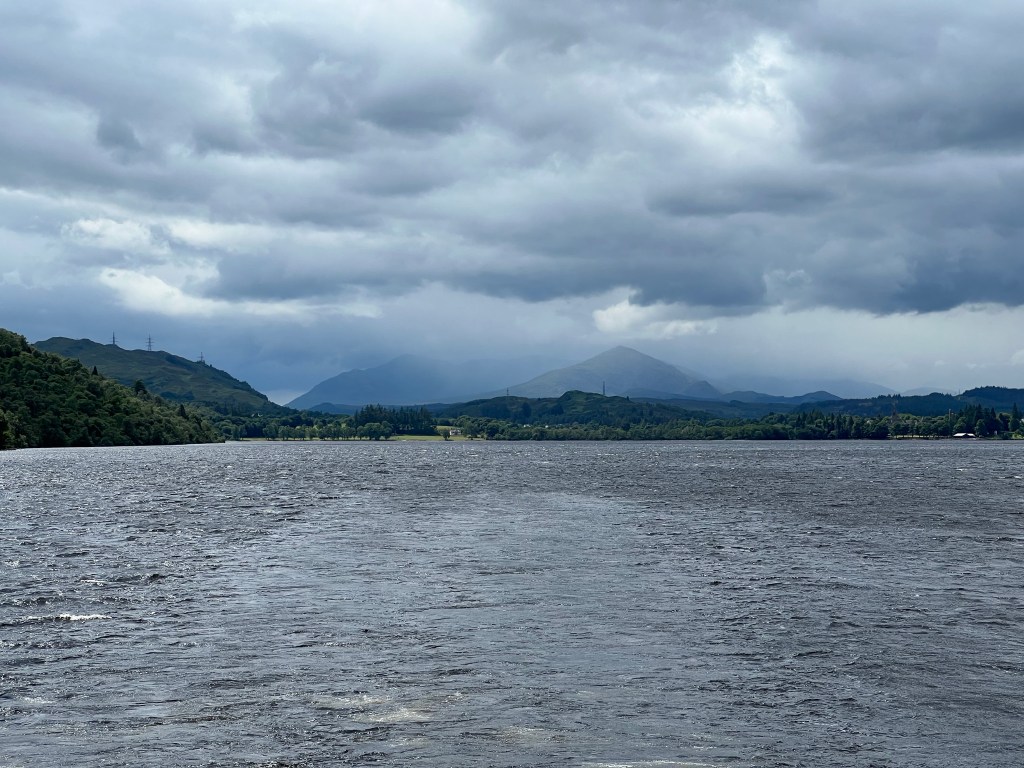
The first stop was at a different spot on Loch Lomond, mostly as a rest stop but also as a photo op. The rain was creating a misty look at the landscape.
Loch Lomond in the mist
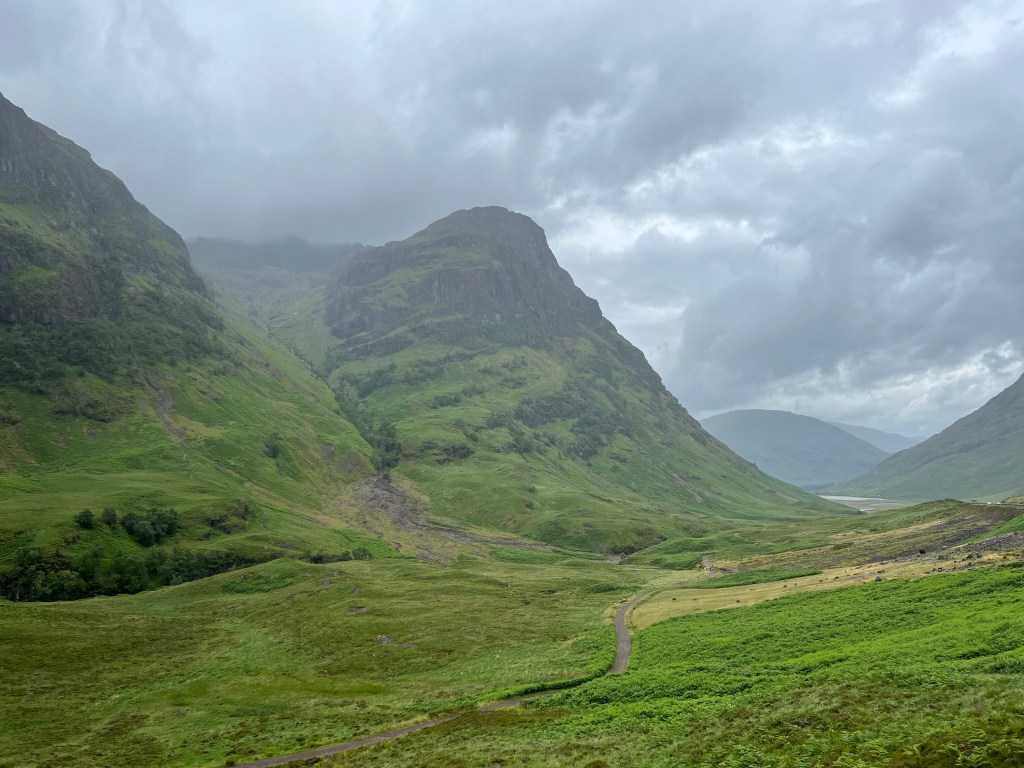
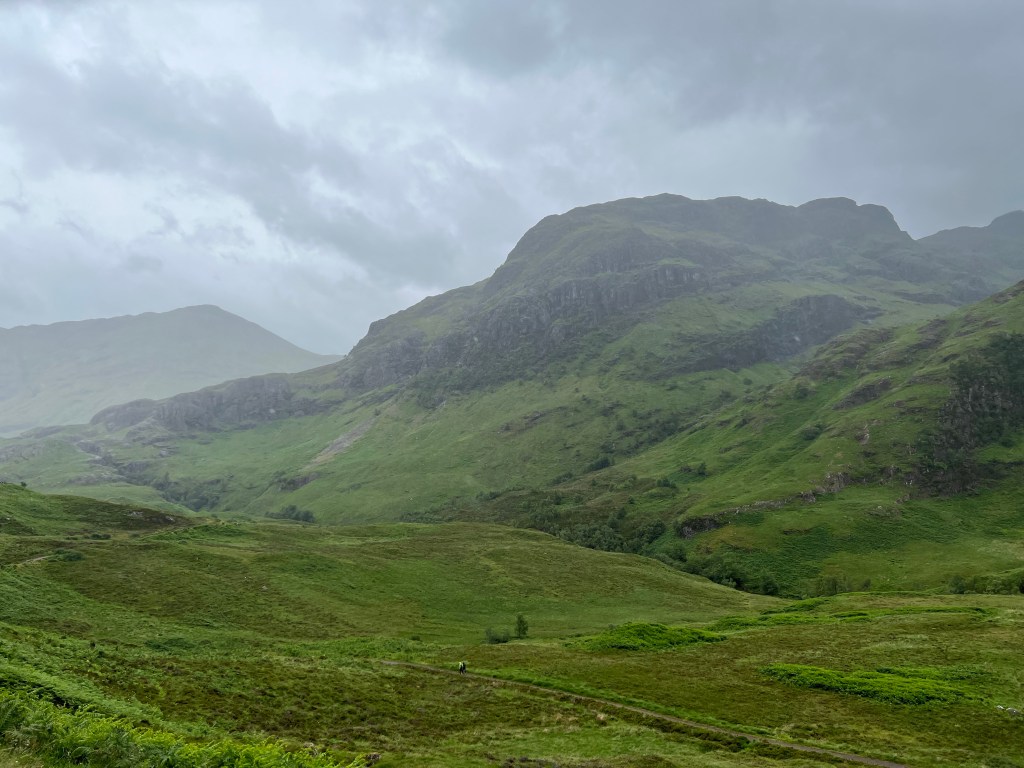
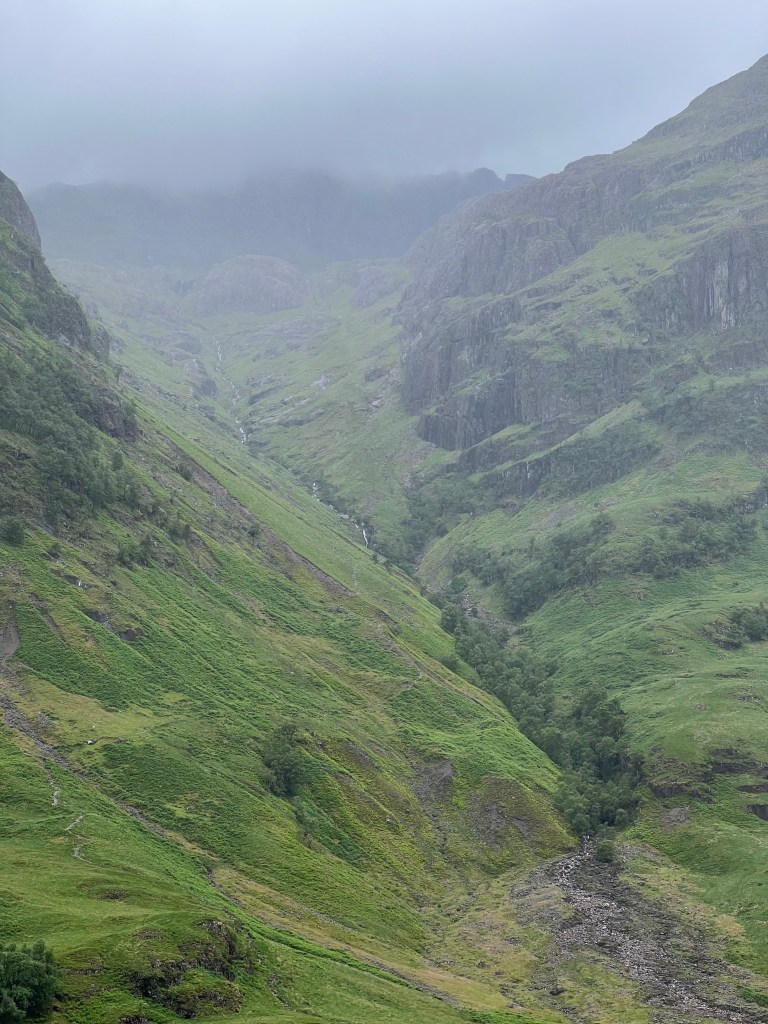
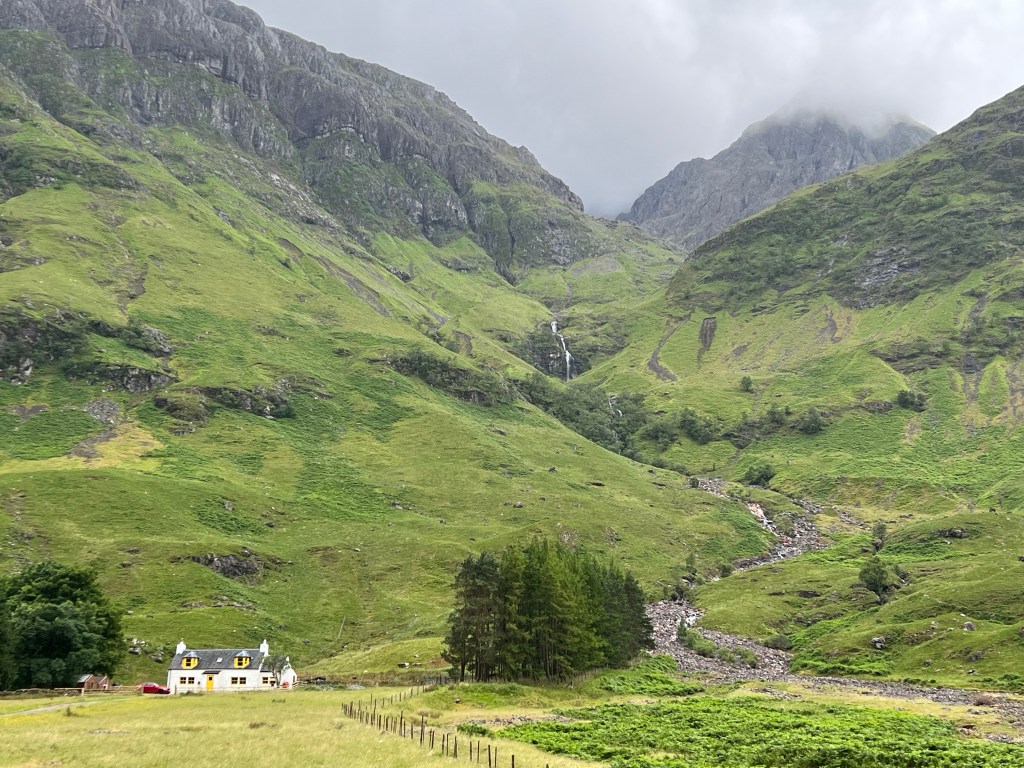
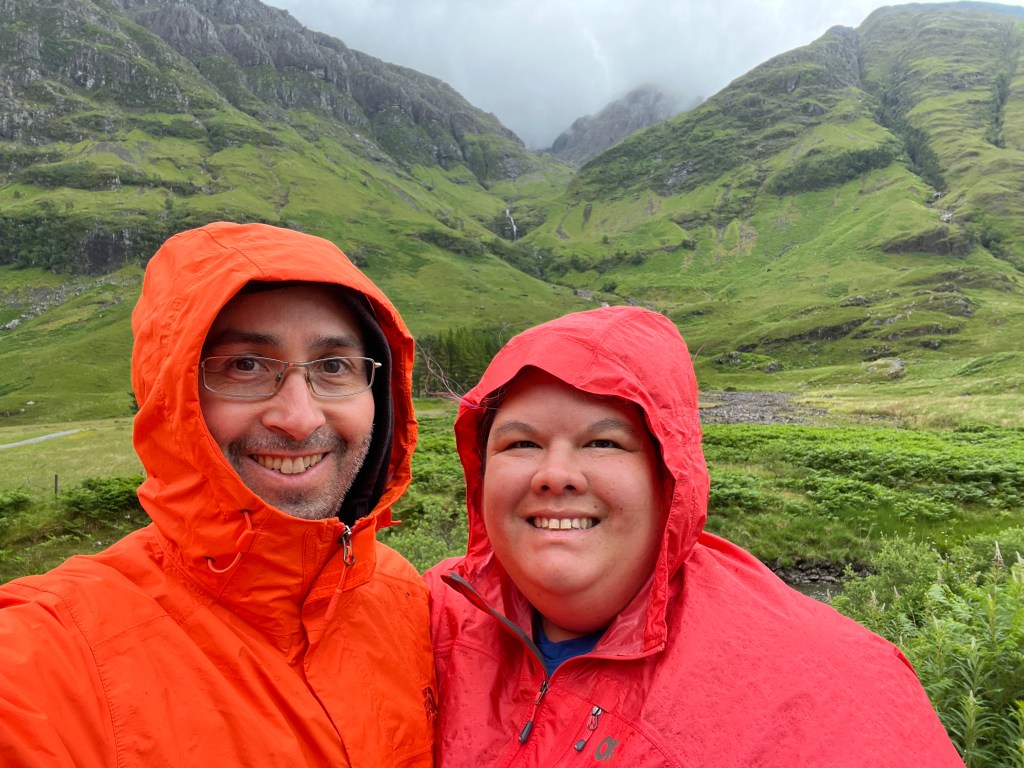
Next were a pair of scenic viewpoints of Glencoe, a historic and gorgeous valley.
Glencoe and the West Highland WayMoody mist echoes the bloody history of the place Amazing A photogenic dwelling and a waterfall are always winnersHappy but wet
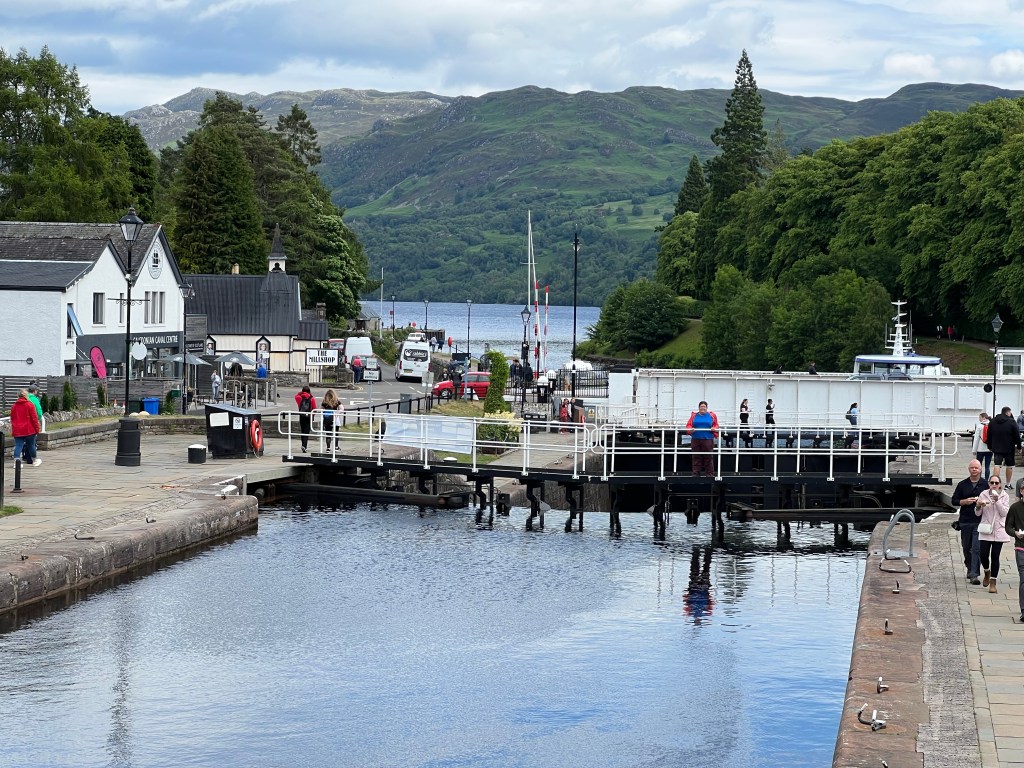
One more washroom stop and then we hit the longest stop of the tour: Fort Augustus and Loch Ness. We had time for a quick chippy lunch before heading out on a boat cuise of the Loch.
The canal system at Fort Augustus
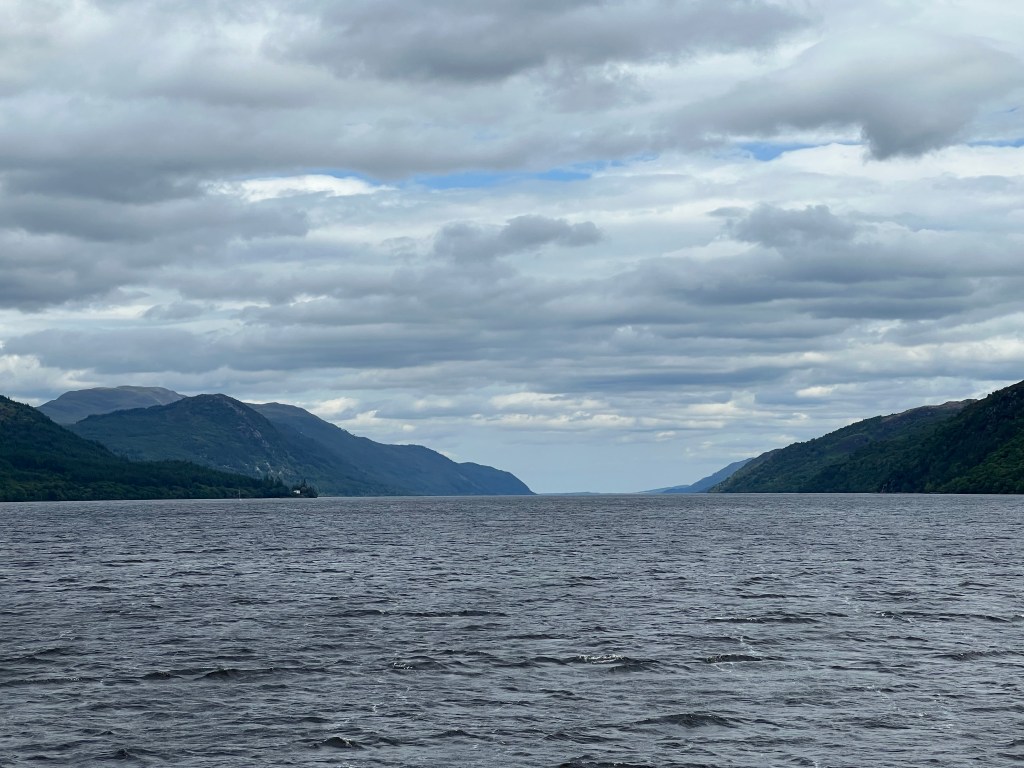
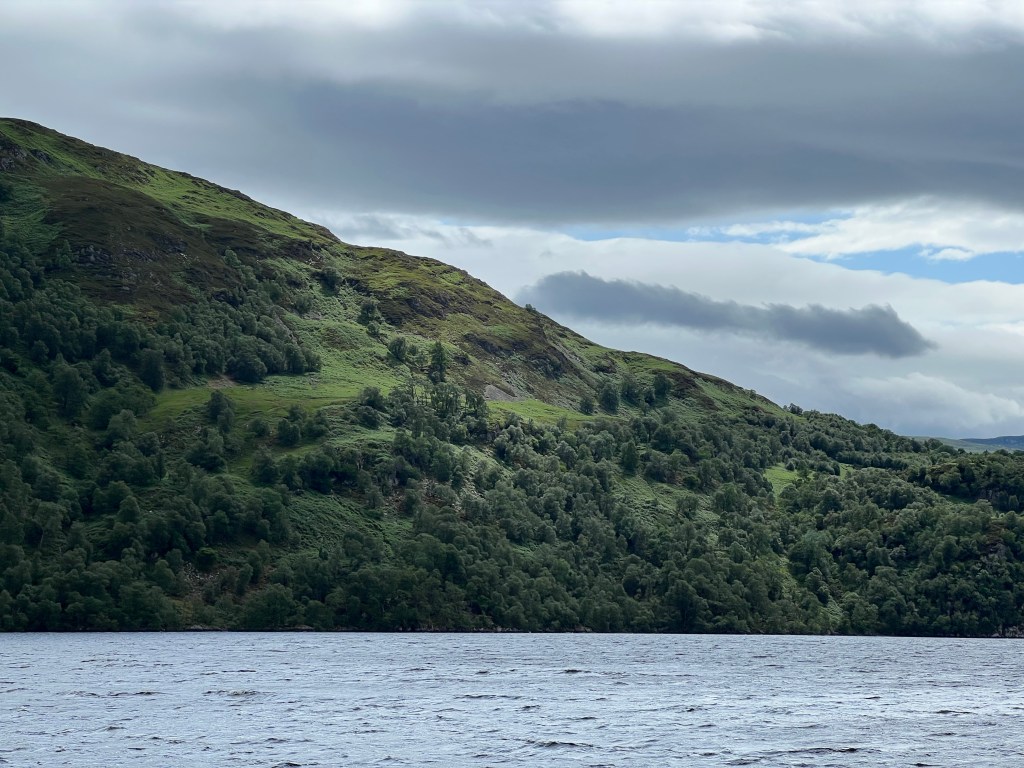
Nessie lore aside, it was fascinating to look at how different the land formations and forests are on either side of the loch – it’s on a fault line and each shore of the long and skinny loch is a different tectonic plate.
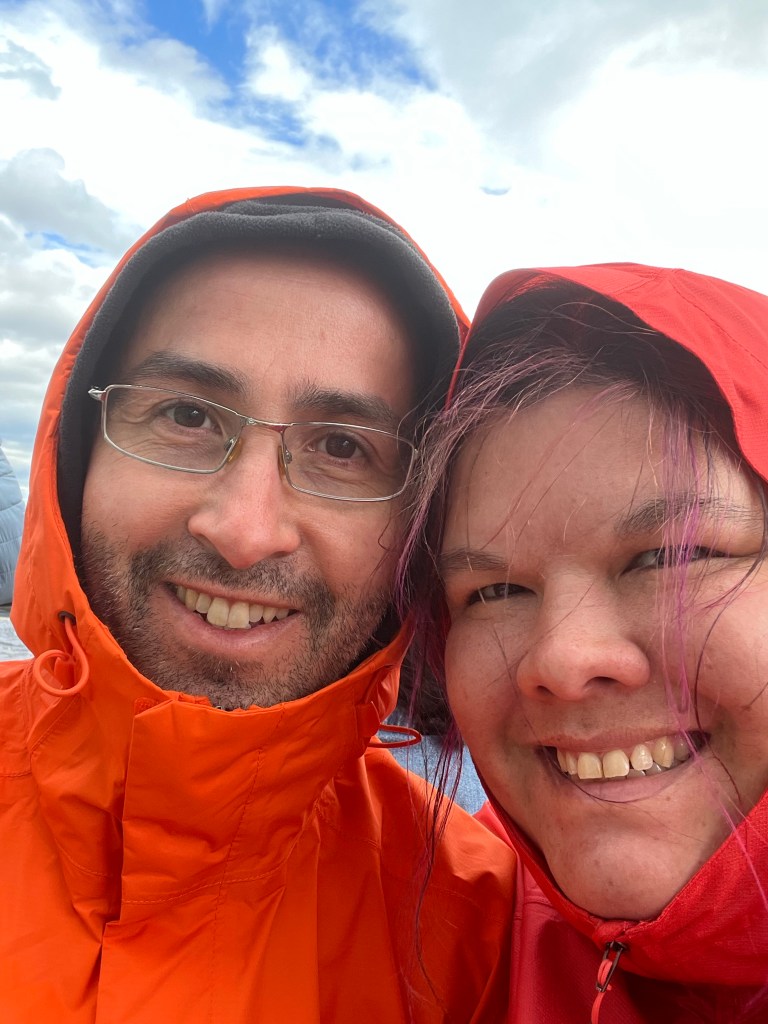
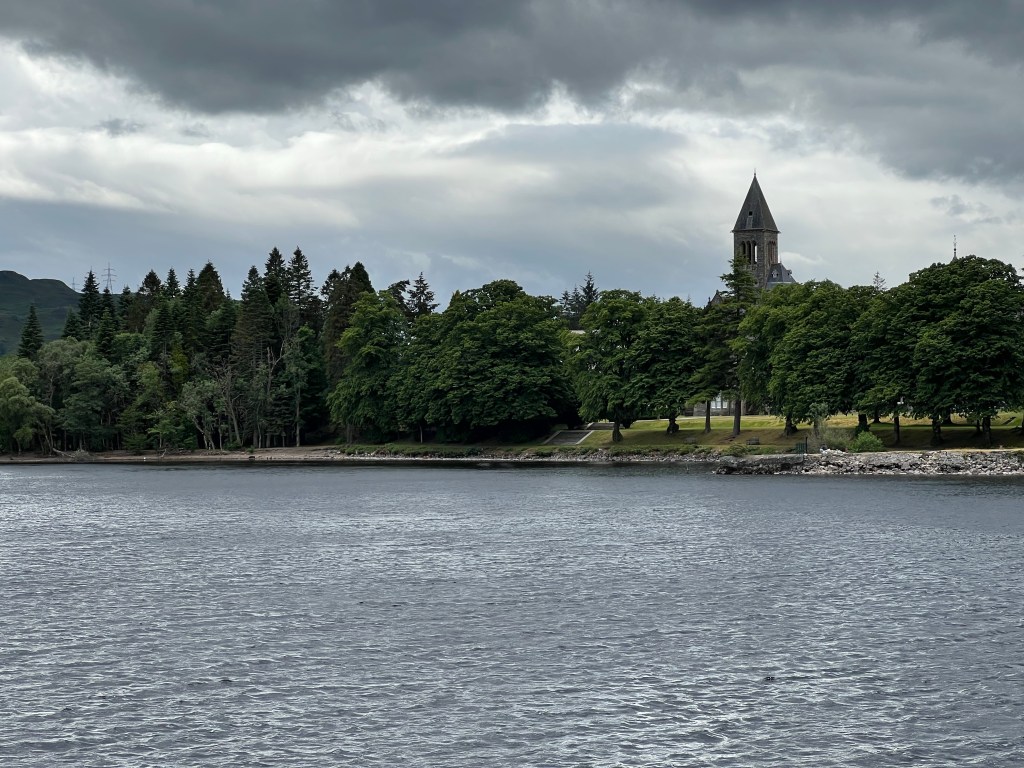
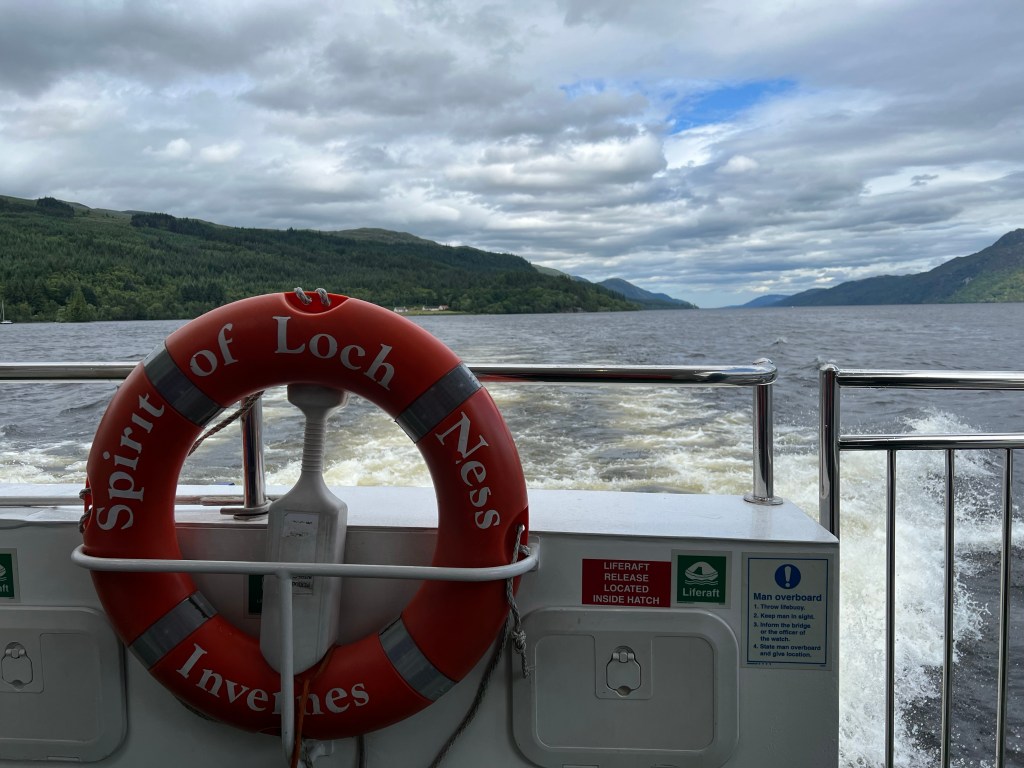
Loch Ness is long and skinnyThe rains added drama to the background but our ride remained dry (but windy)Rain gear to the rescueThe light came and went, teasing usTown is screened by treesThank you to the captain and crew of the Spirit of Loch Ness
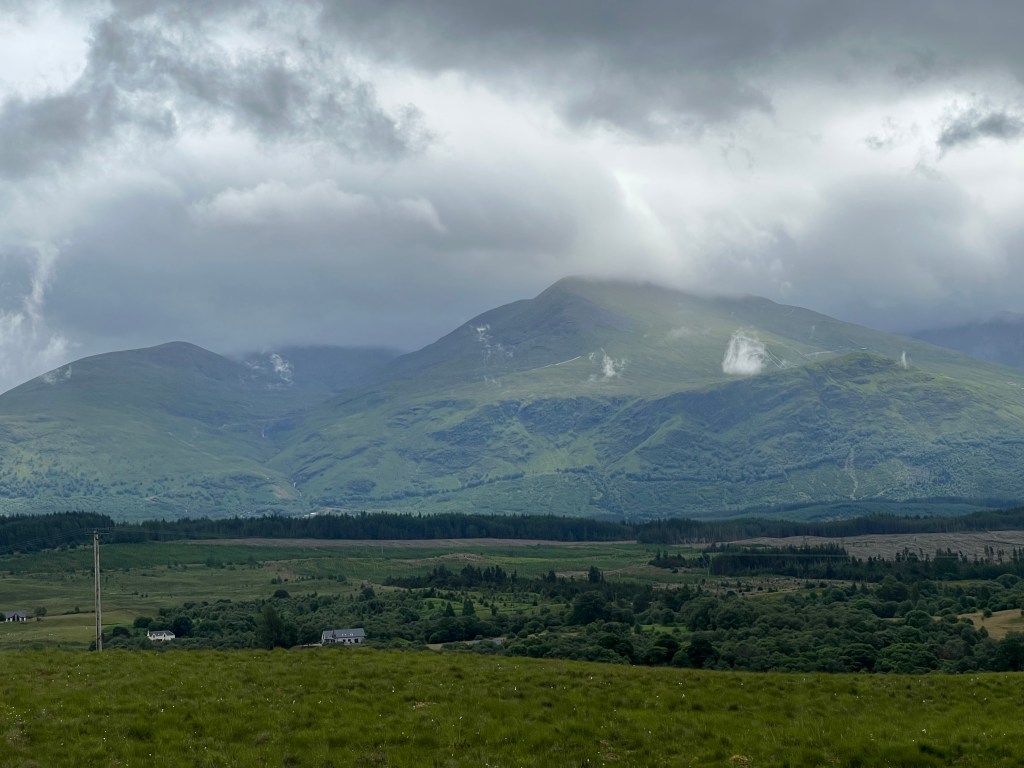
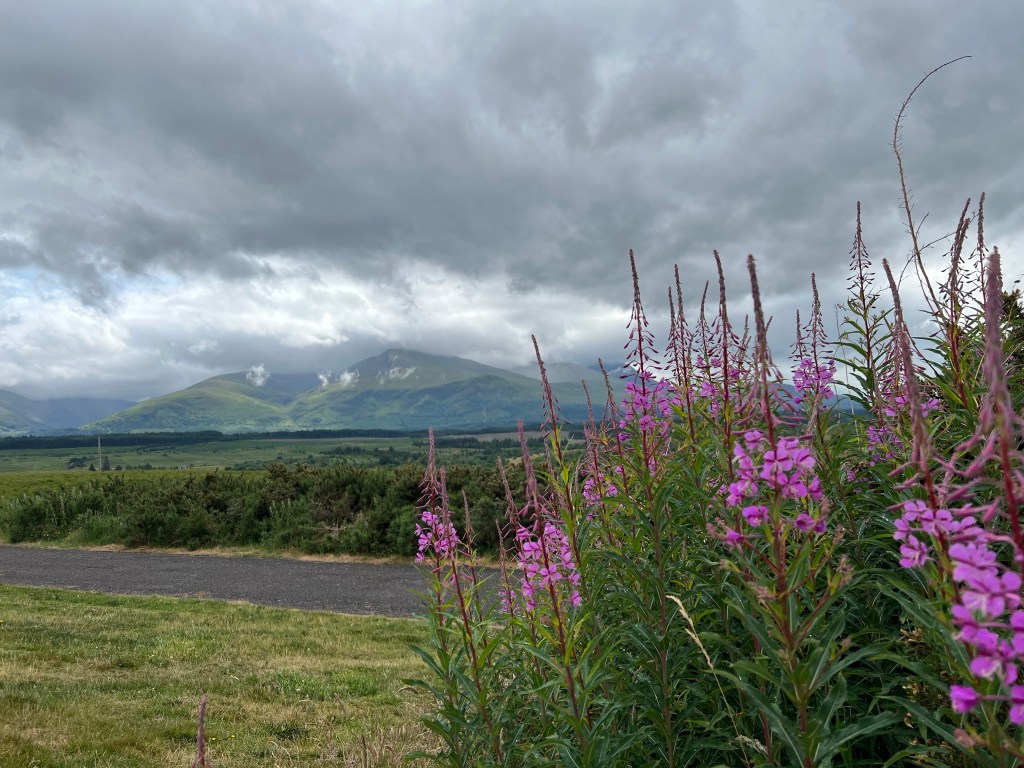
After Loch Ness we headed to a lookout with a view of Ben Nevis, the highest mountain in Great Britain. It’s not very high – not much more gain than Mt Frosty, on a shorter hike!
Ben NevisThey have fireweed, too! Contrary to Wikipedia, they also call it Fireweed
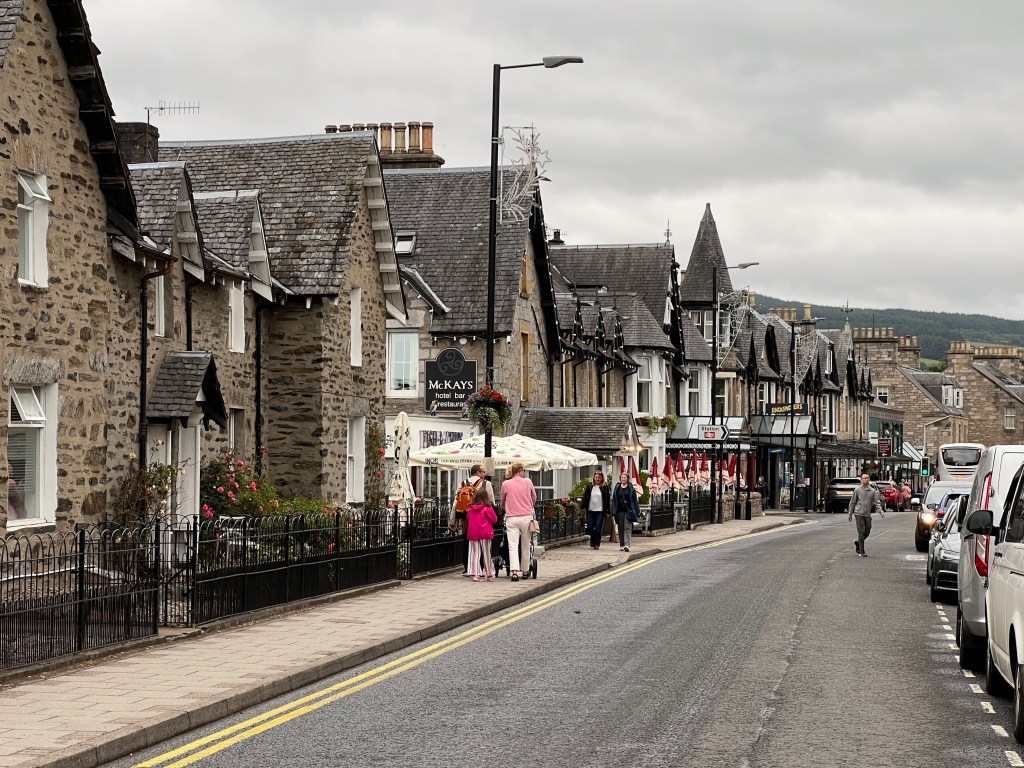
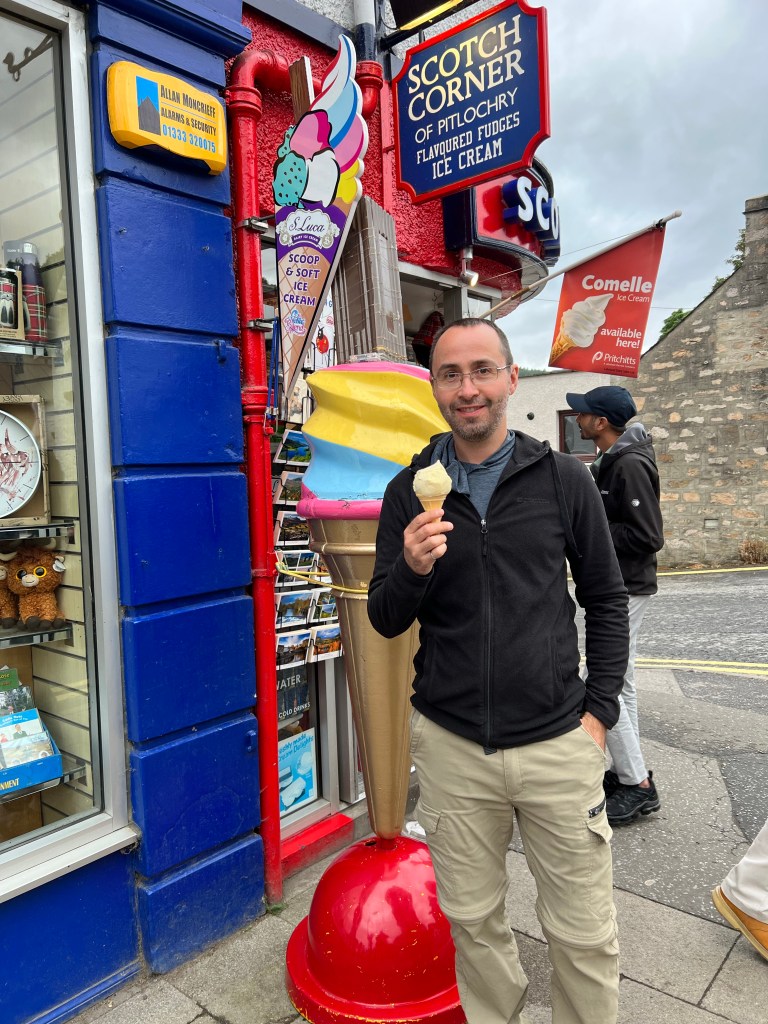
Another pit stop, then on the road until we reached the picturesque town of Pitlochry. Here we enjoyed local ice cream – Dave’s made with the local single malt whisky! Delicious.
The town of PitlochryWhisky ice cream
Our final stop was a small farm, to see some more hairy coos and sheep. Super cute!
Hairy coosSheep! There are more sheep than people in Scotland
Arriving back in Glasgow more than eleven hours after we started, we wearily went back to a local pasta restaurant before turning in for the night. 🏴
Today started at the train station, where we caught a train going east. Destination: Falkirk High Station.
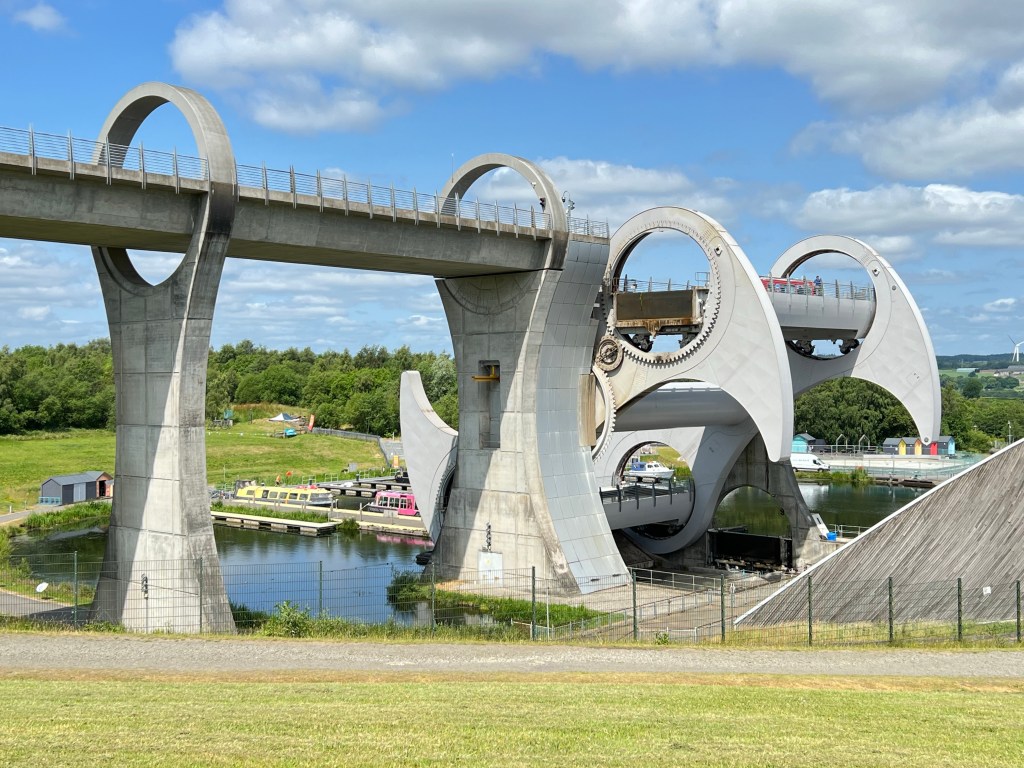
Over the past several years, we have been watching narrow boating blogs as a way to wind down. Falkirk is famous in the narrowboating community as the place where the Forth & Clyde canal connects to the Union canal with some pretty amazing engineering.
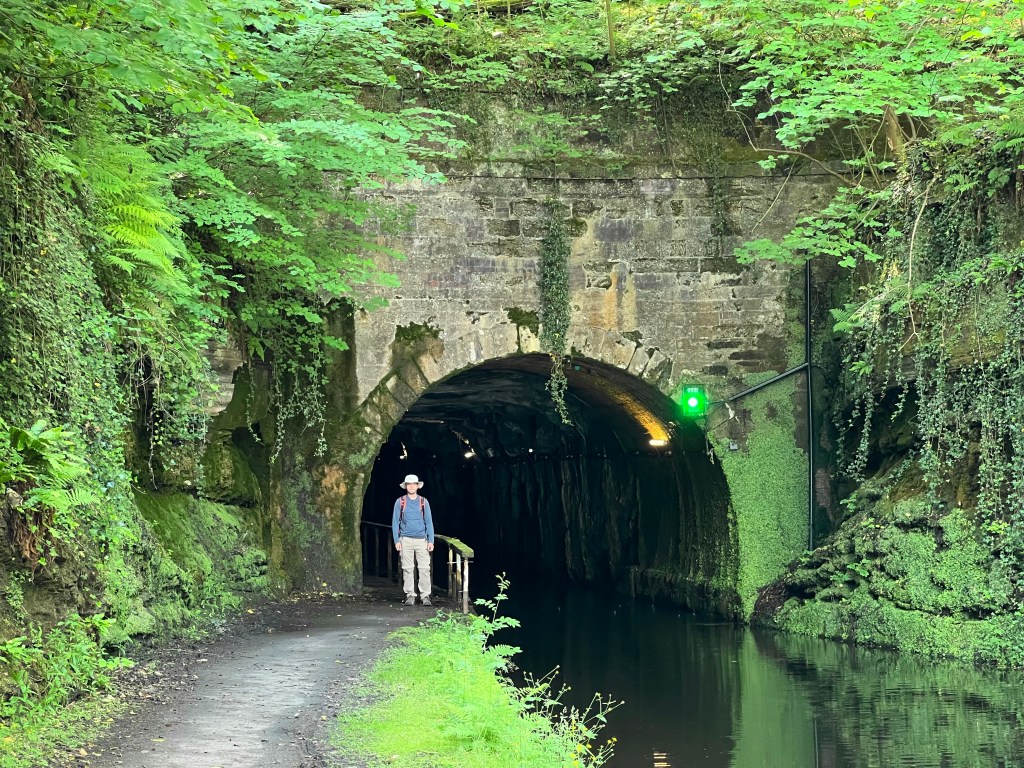
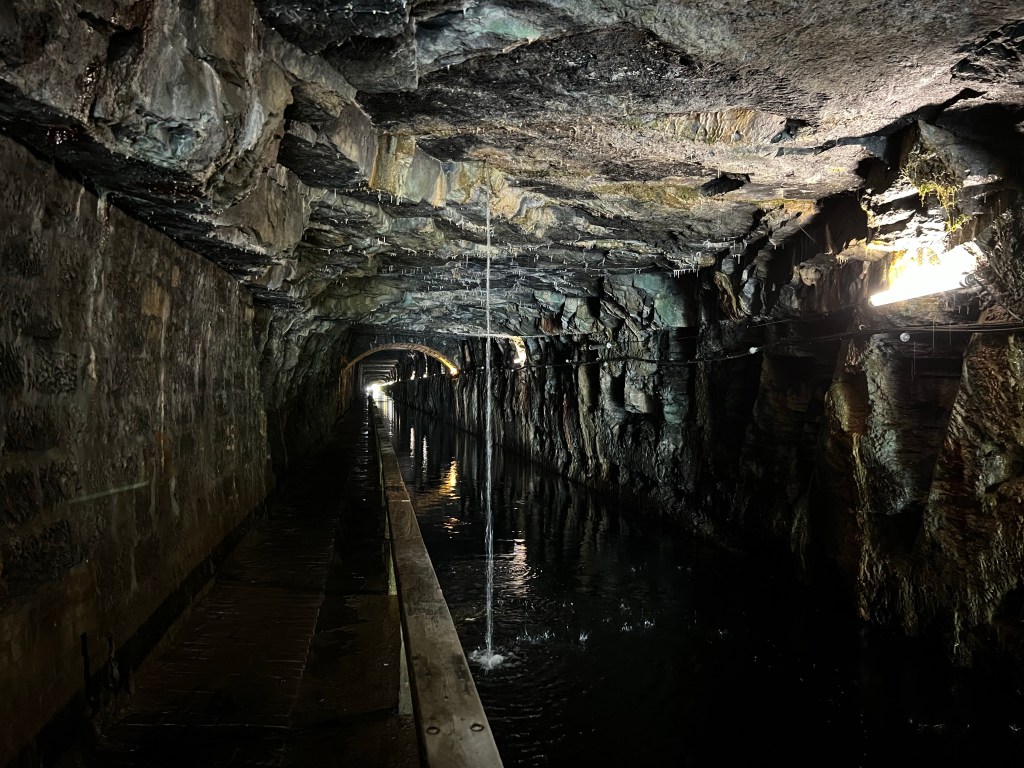
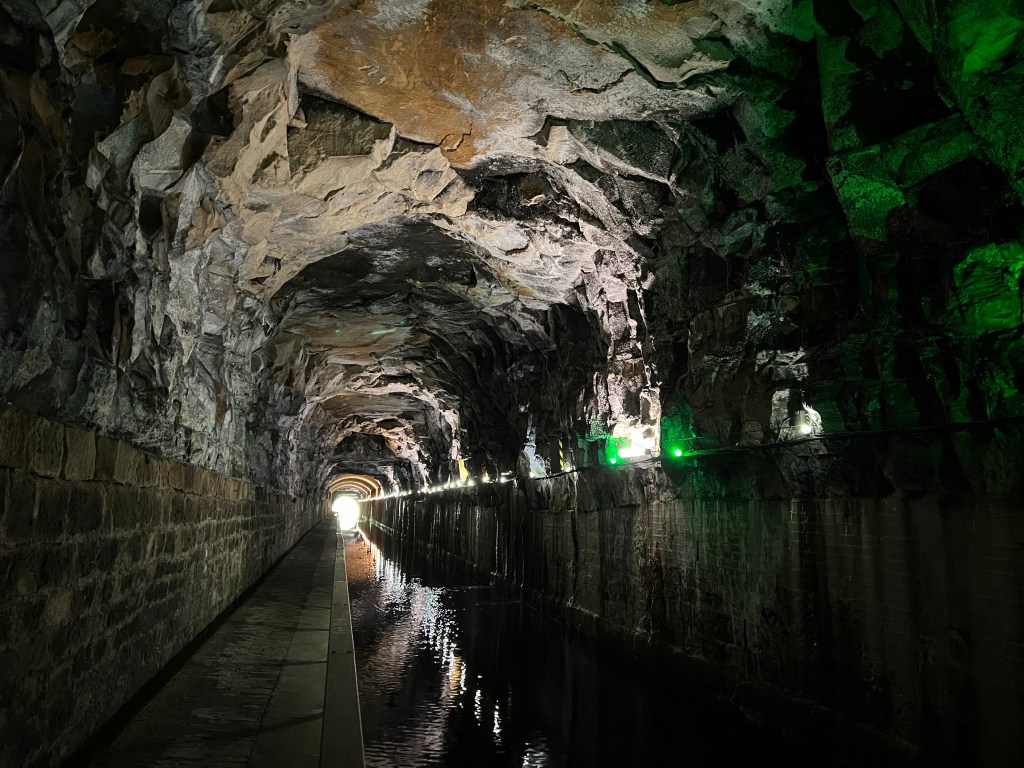
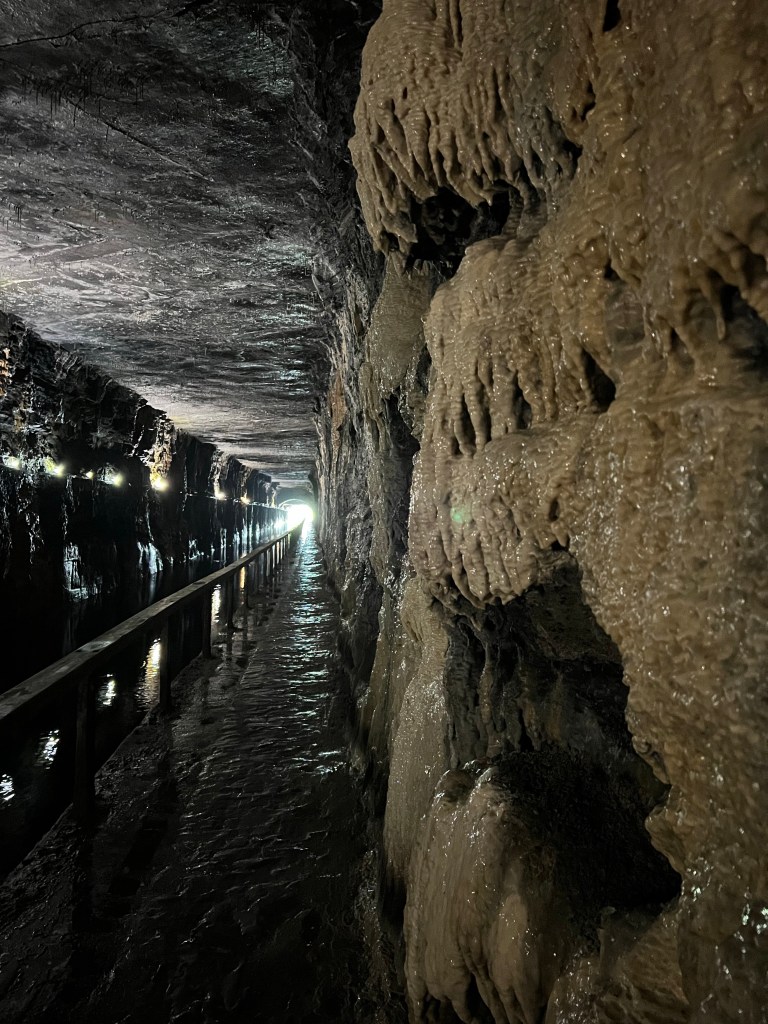
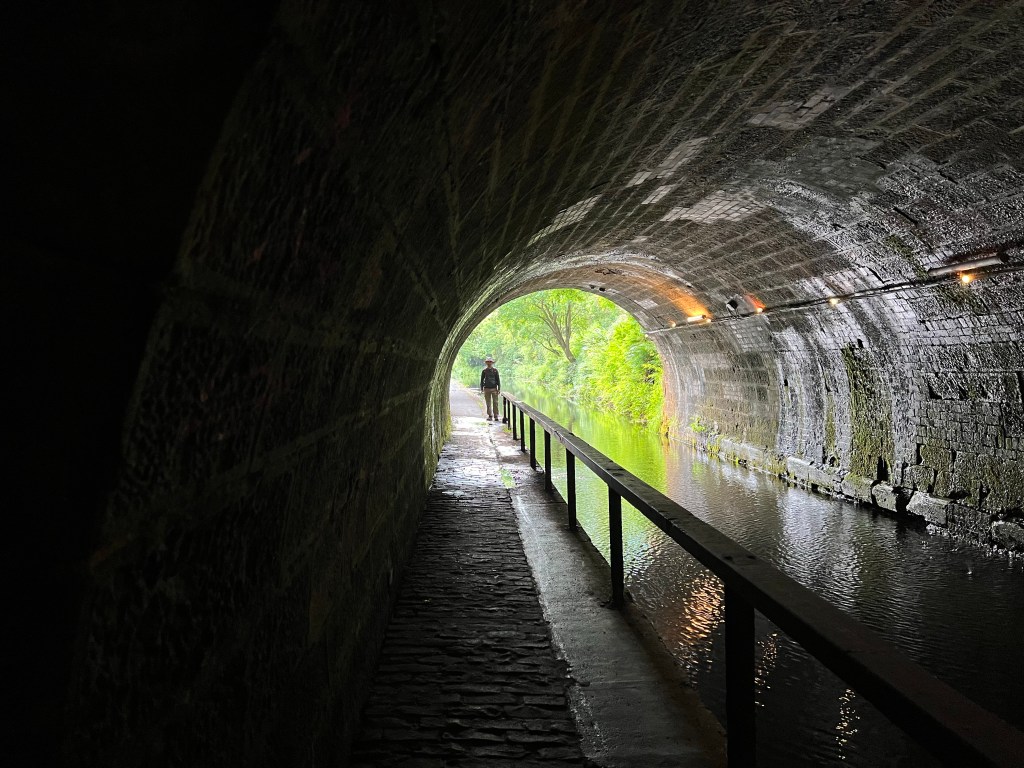
First, however, we had to get there. Falkirk High Station was very close to the Falkirk tunnel. 630 meters long, it is the longest in Scotland. Excavated from solid limestone, there are also shorings and changes to height and width as you walk along the towpath. The stalactites from around two hundred years of seepage.
The entrance to the Falkirk tunnelOne big dripTunnel exploration The result of years and years of seepageThe other end of the tunnel
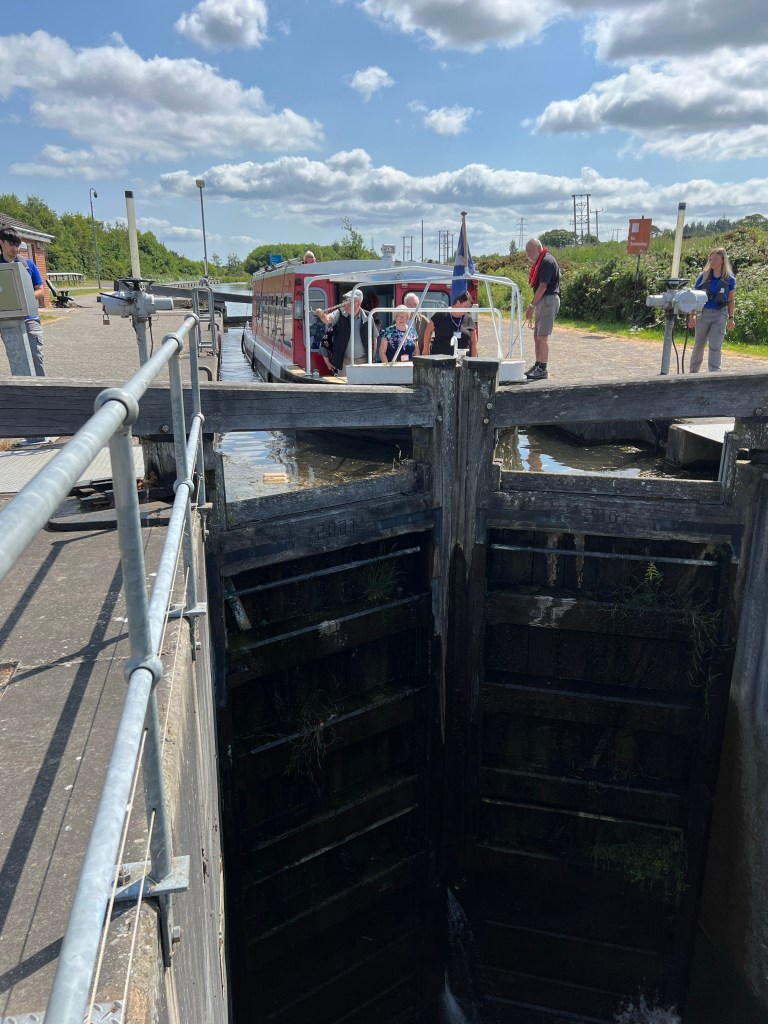
Tracing our way back through the tunnel, we meandered along the towpath, checking out locks, waving at boaters, and chatting with folks. Then came a much more modern tunnel, with fancy LED coloured lights.
It’s a big drop lock
<start non-engineer audience variant>
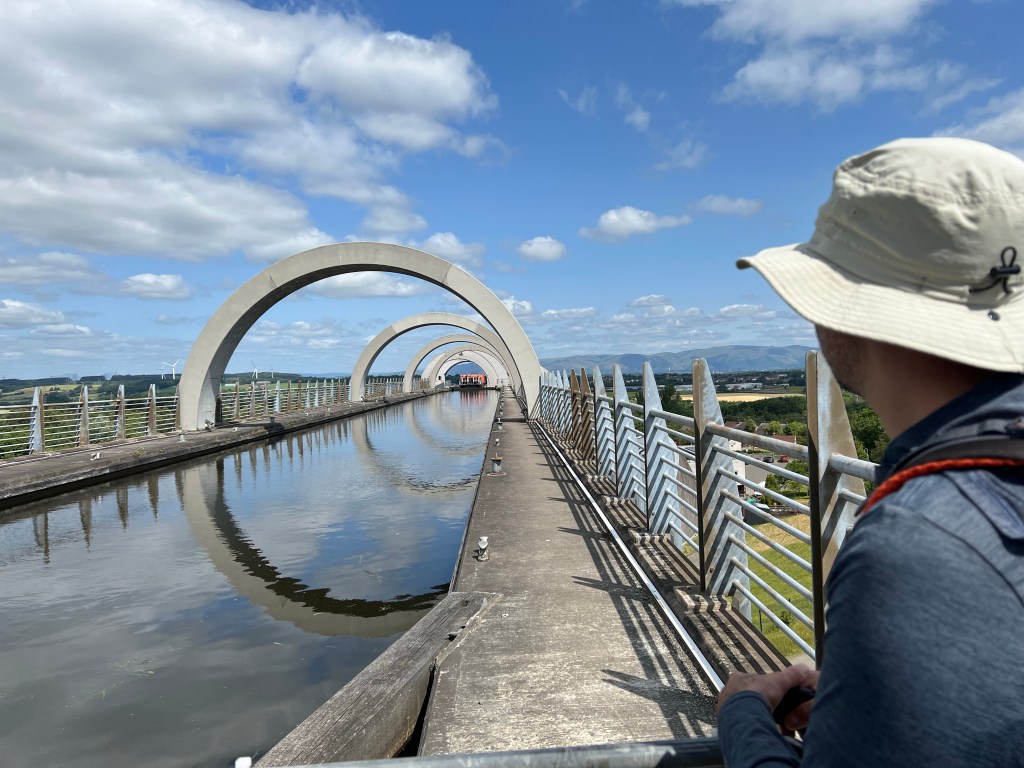
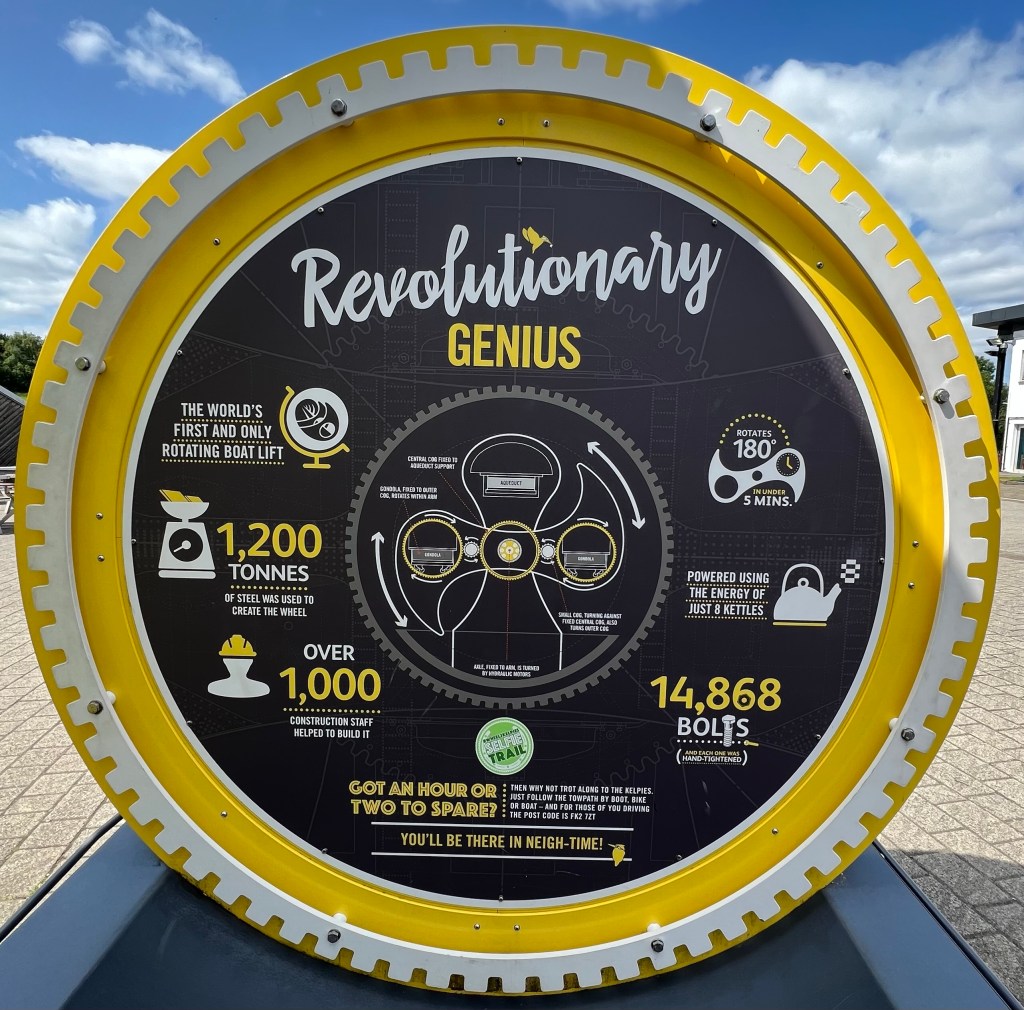
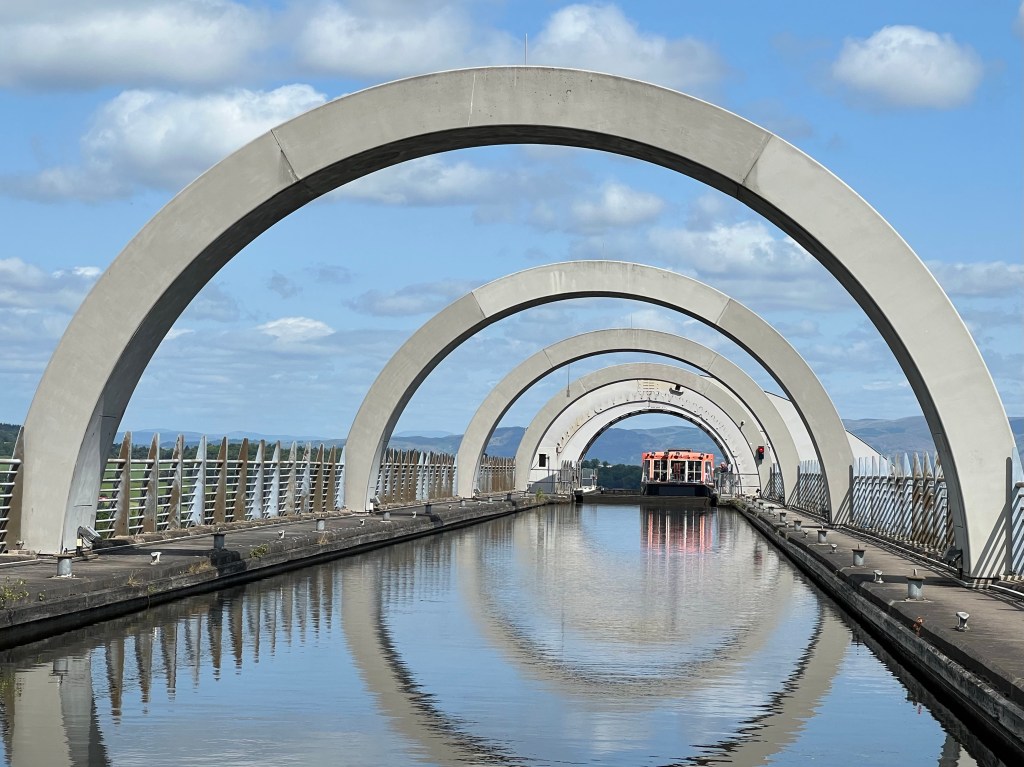
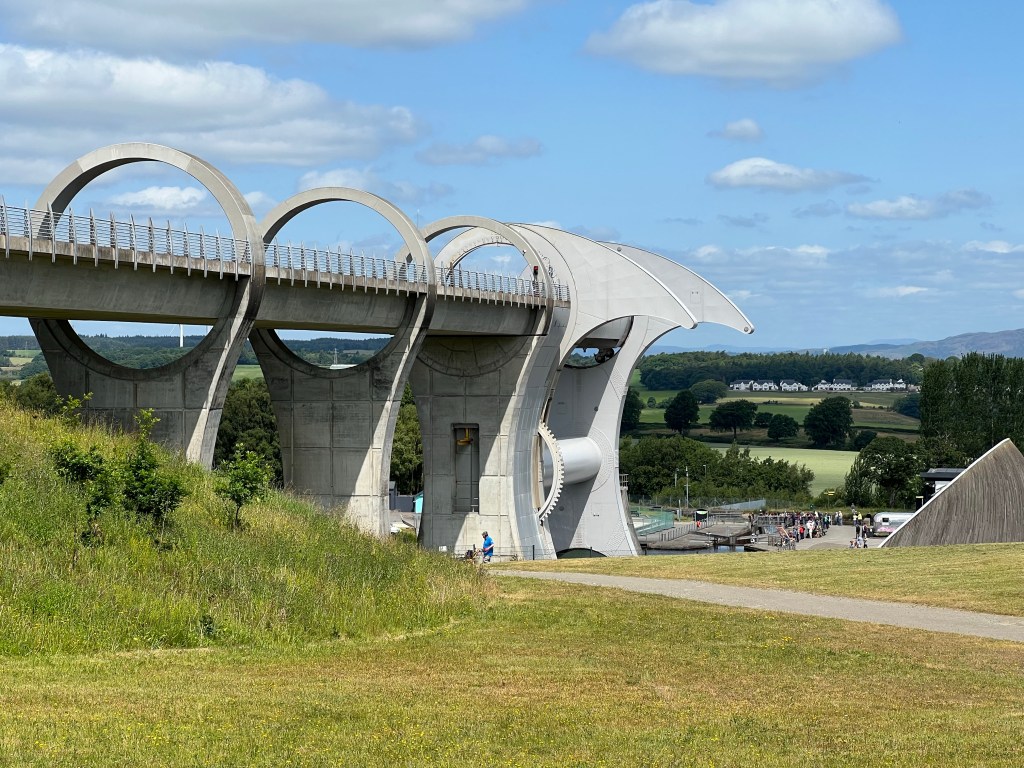
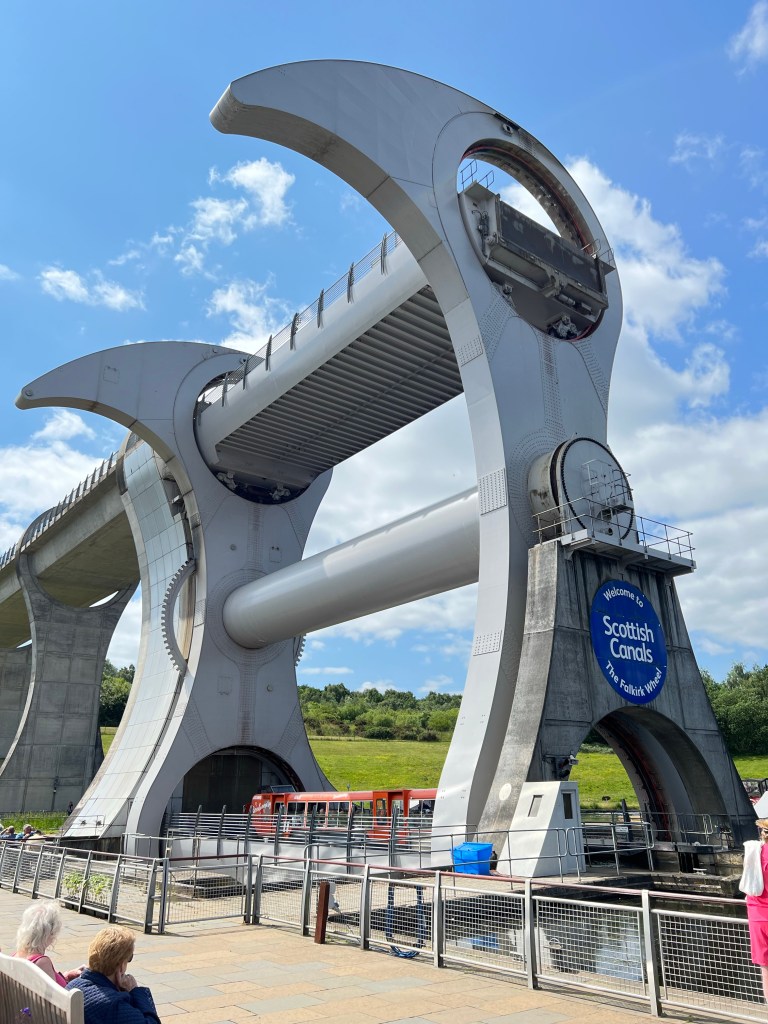
The Falkirk wheel is a giant, slow version of the classic rainbow PNE ride. A giant pan of water – big enough for two narrow boats – rotates up while a matching bucket rotated down. It’s on a geared system, and since the buckets are balanced, it takes little power to move – the same as boiling a kettle eight times. It’s absolutely ridiculous, but a neat piece of engineering.
<\variant> <start more technical variant>
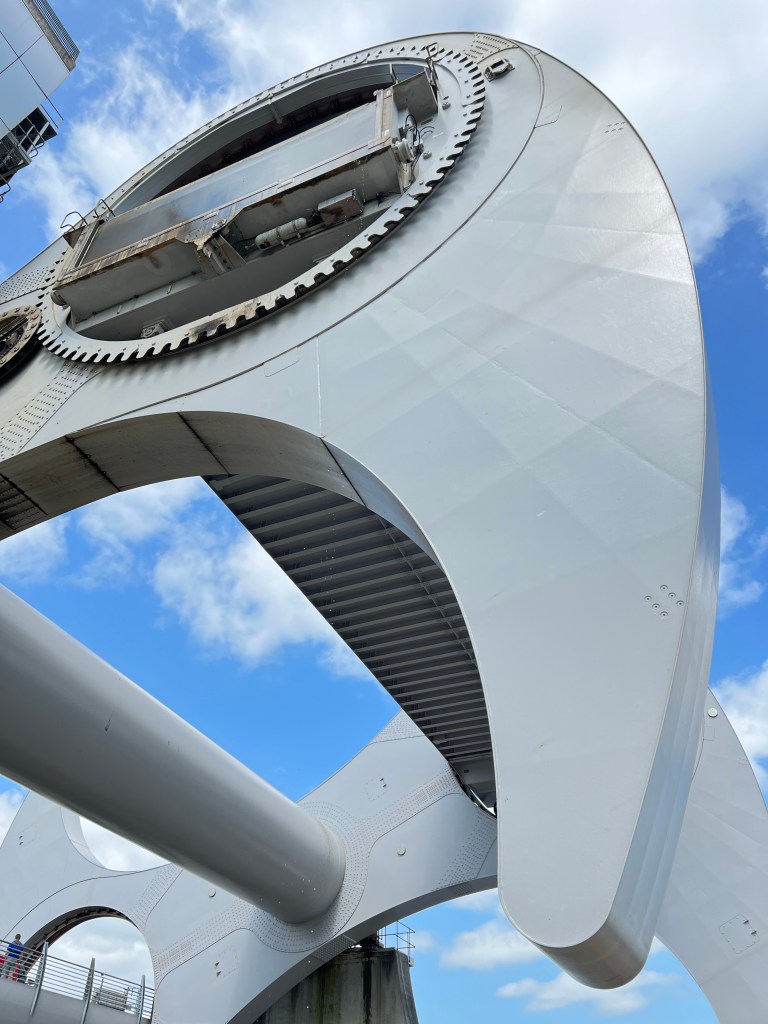
Part of a £84.5 million Millennium Link project to replace a defunct 11-lock system and rejoin the historic Union canal with the Forth & Clyde, the Falkirk wheel stands 35 meters tall and used 1,200 tonnes of steel. Each of the two gondolas hold half a million litres of water, but the vast weights only take 1.5 kWh to turn due to clever gear design and careful balancing. The design itself was inspired by the Celtic axe. Because of the stress reversals, the entire thing is bolted (instead of welded) together, using some 14,000 fasteners.
<\geek>
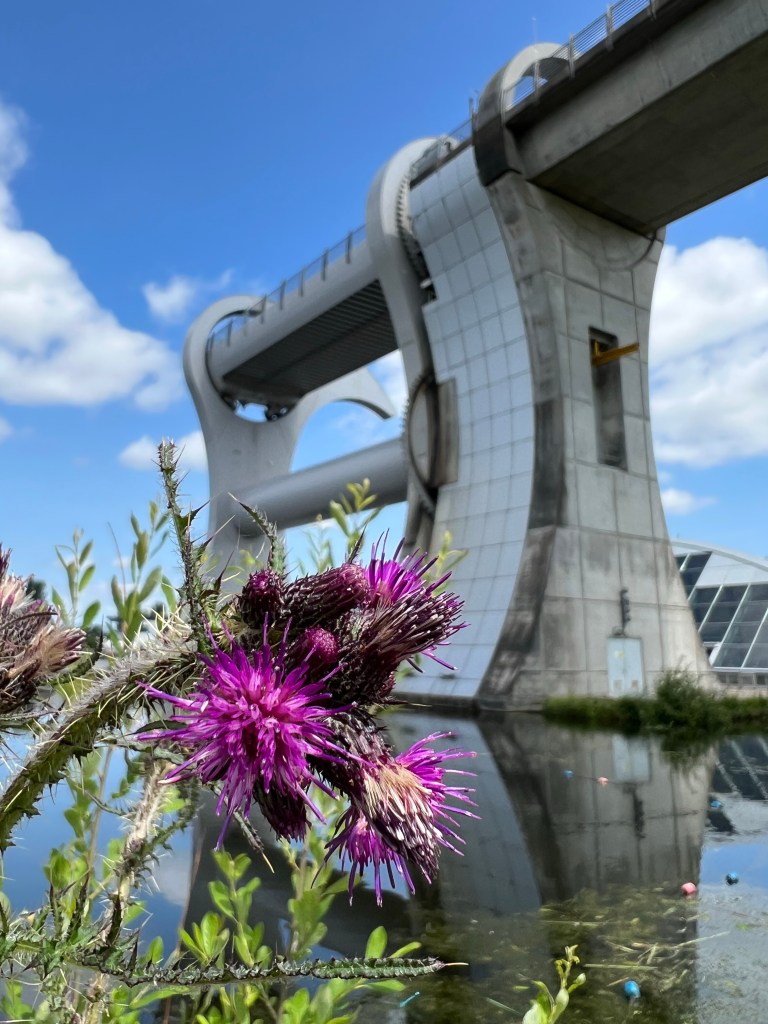
Dave checks out the aqueduct and lift from the top (Union canal)Even Jen admitted it was impressive and a nice bit of design work A wider view of the aqueduct and Falkirk wheelTurning!From the baseGears fit for a gondola Thistle
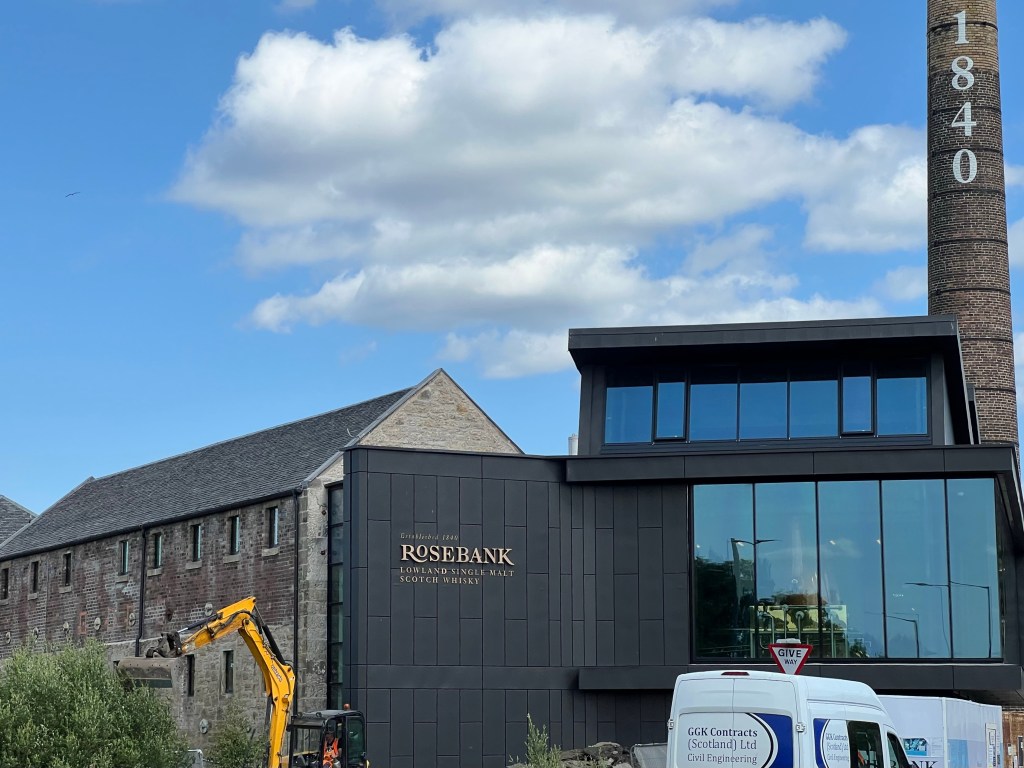
After the wheel and some snacks, we continued along the Forth & Clyde canal, walking on the towpath through industrial and residential areas, and stopping for lunch. We considered stopping at the distillery , but it was closed.
Temporarily closed
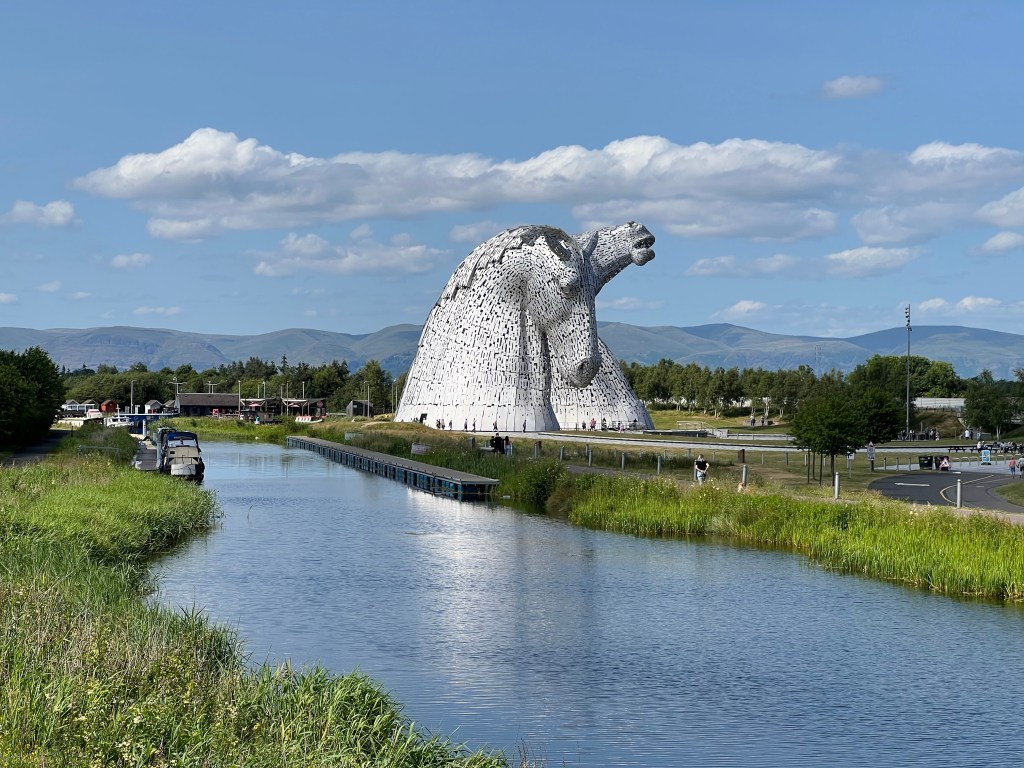
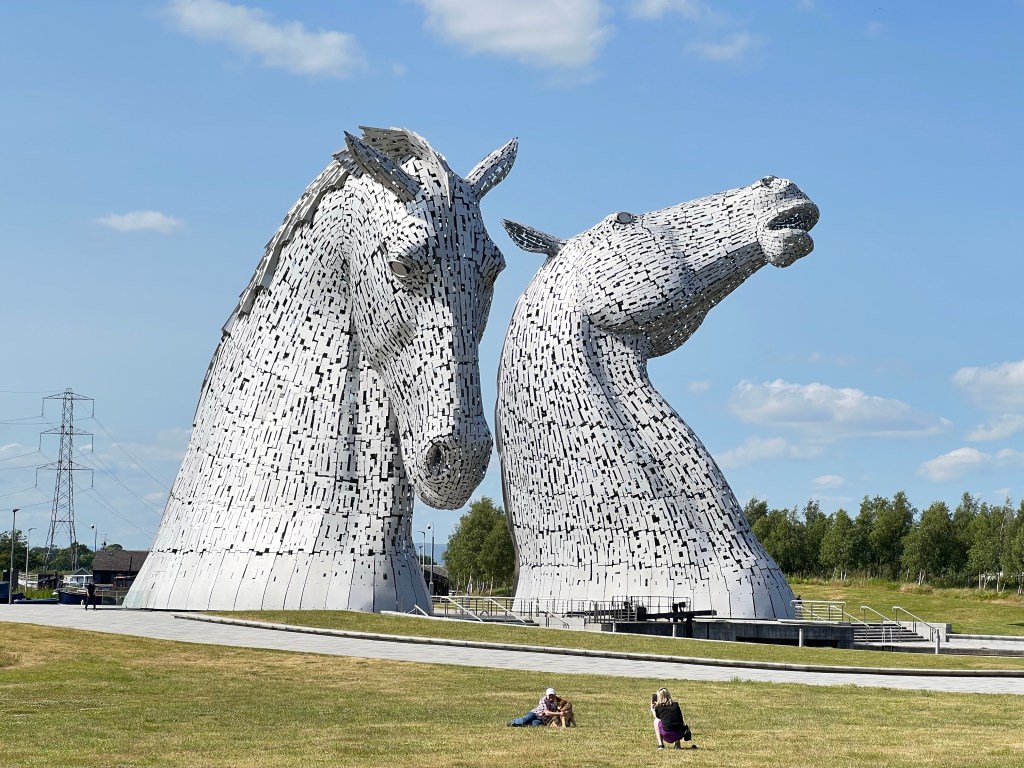
We then reached a point where we stopped dead in our tracks – the Kelpies were in sight.
The Kelpies
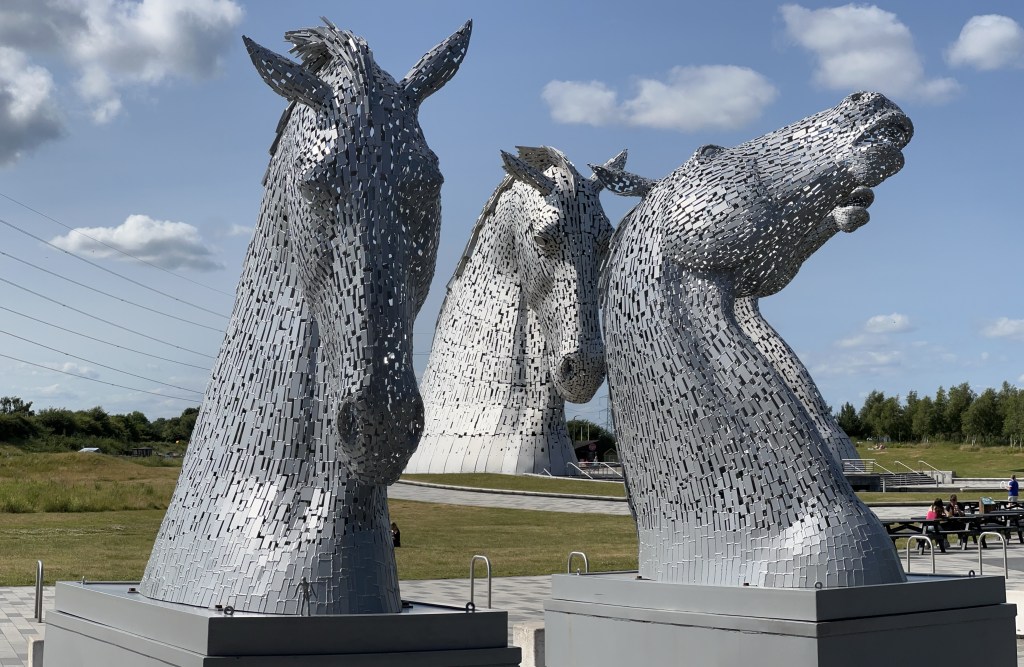
Although they appear as giant horse heads, they were envisioned as kelpies – Scottish spirits that can shift shape but often appear in horse form. There were actually two pairs of heads – the artist vision which was three meters high and made of welded plate, and what Dave calls the “engineers variant” – thirty meter tall structures with substantial inner structure and bolted plates cut to suggest the inspiration.
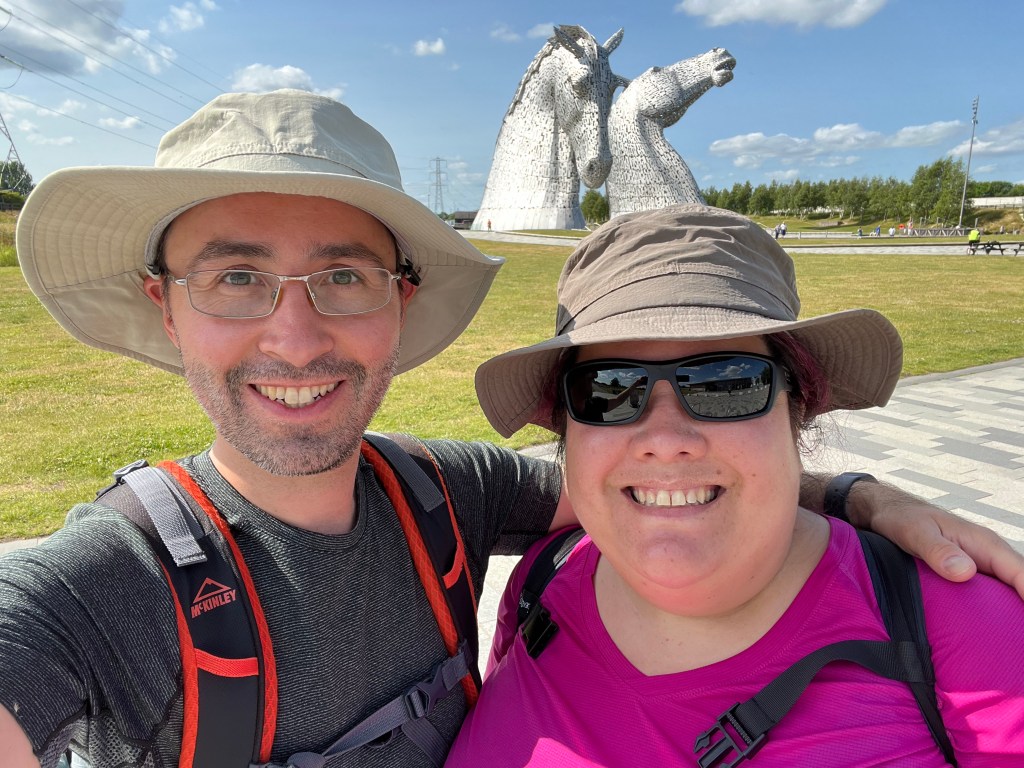
Foreground plinths are the 3m variants. Dave went for a confusing perspective Obligatory selfiePretty impressive! They do things big in Falkirk!
After the Kelpies we walked through Helix park and made our way to Falkirk Grahamston Station for the ride back to Glasgow. A long day, but a lovely one!
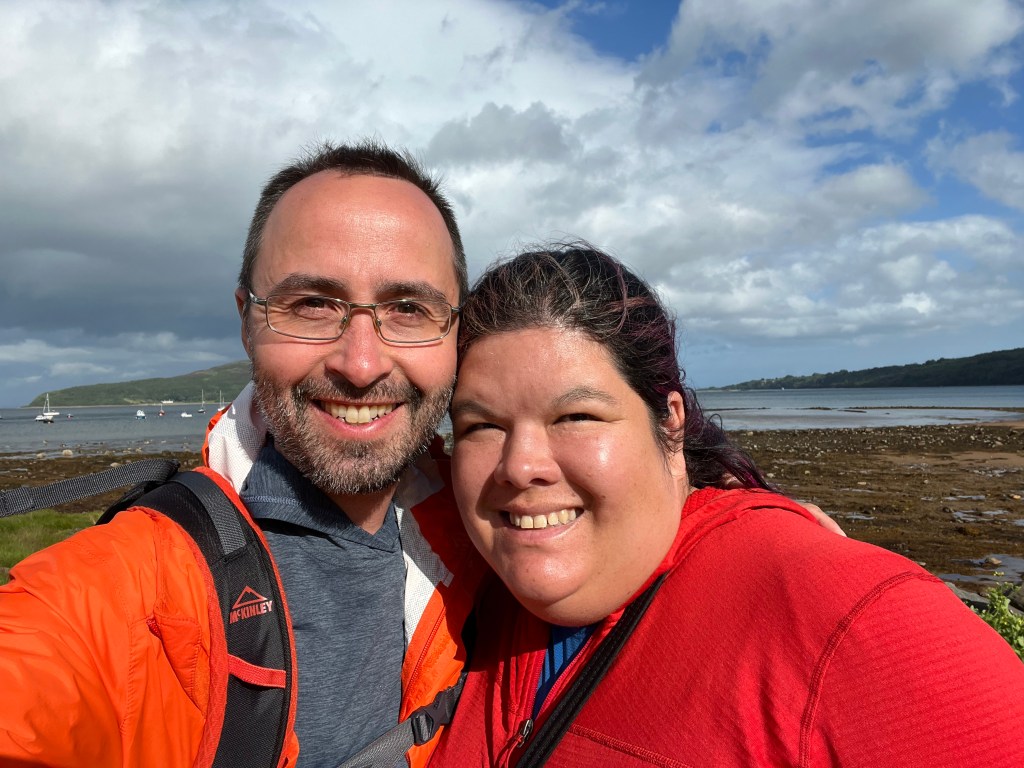
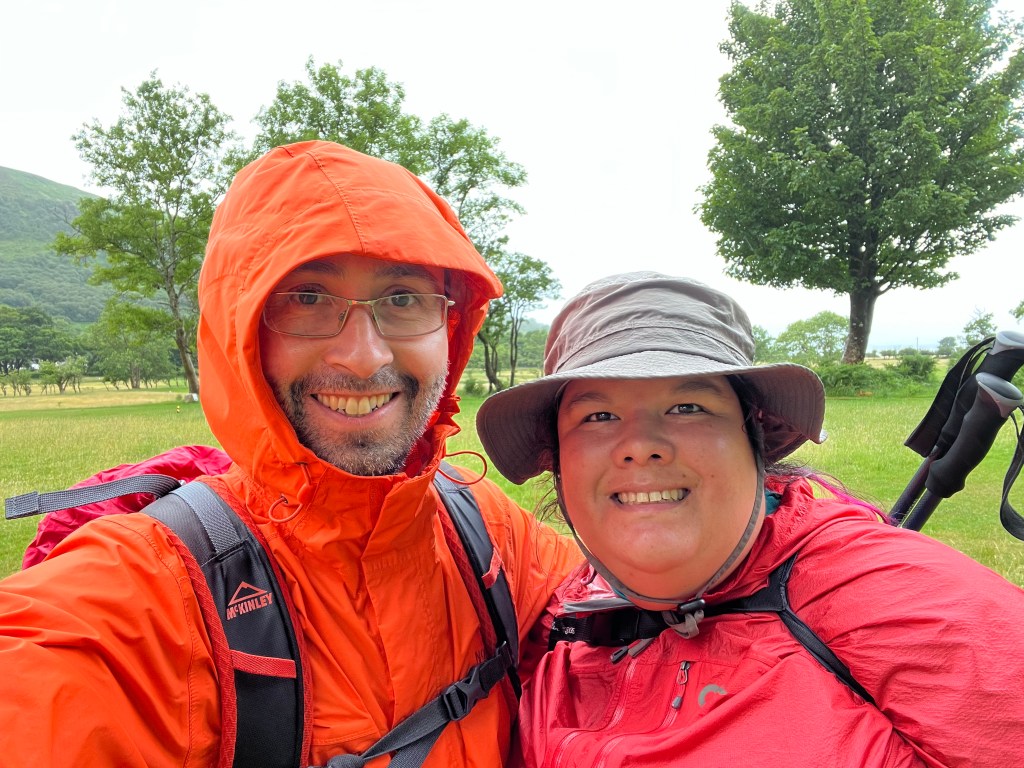

 Jen and Dave: Adventuring