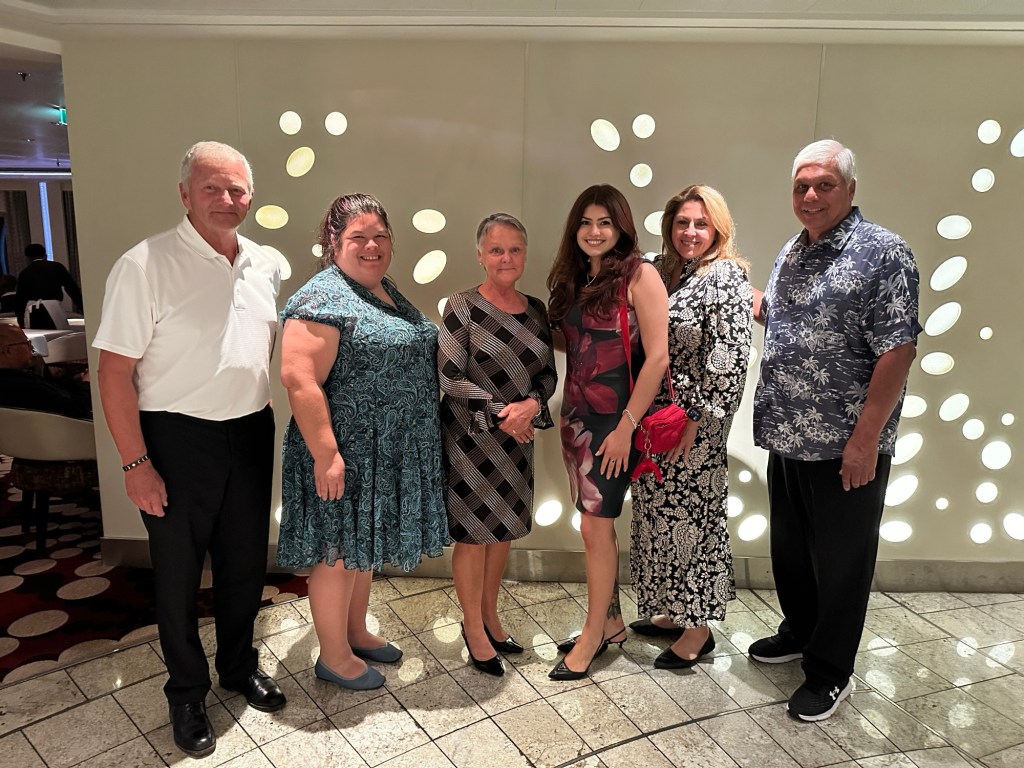
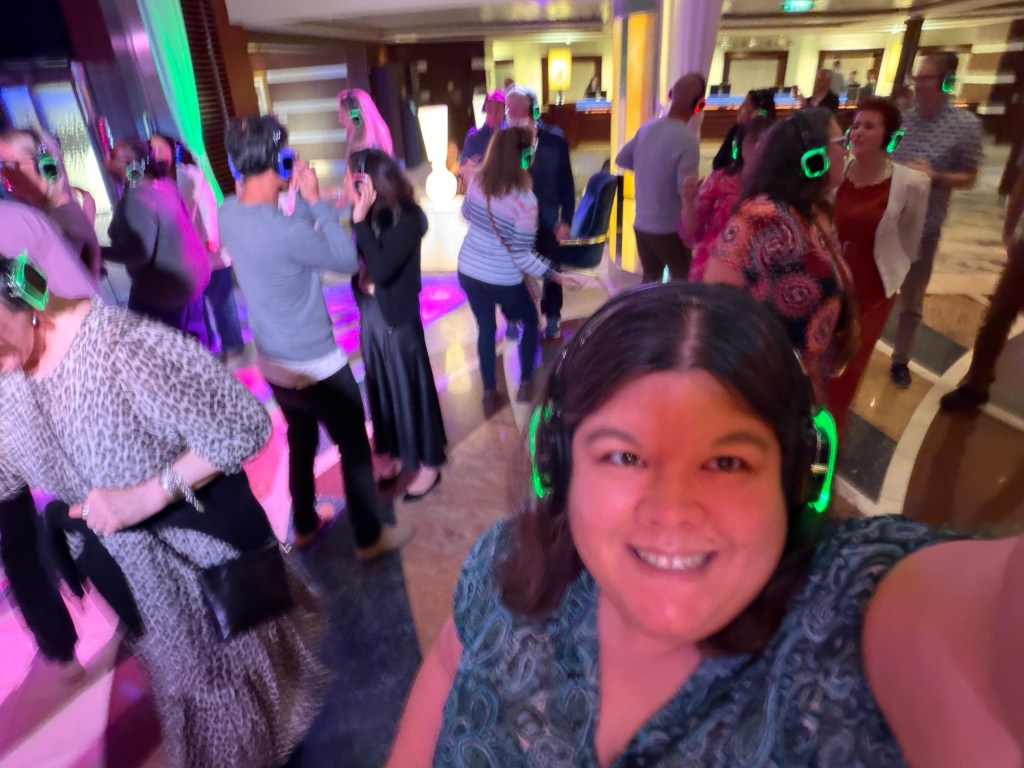
A quiet day to relax and unwind. Naps, pool-side loungers, crafts. A final dinner in the dining room, an excellent show, and dancing at the silent disco.
Embracing the journey.
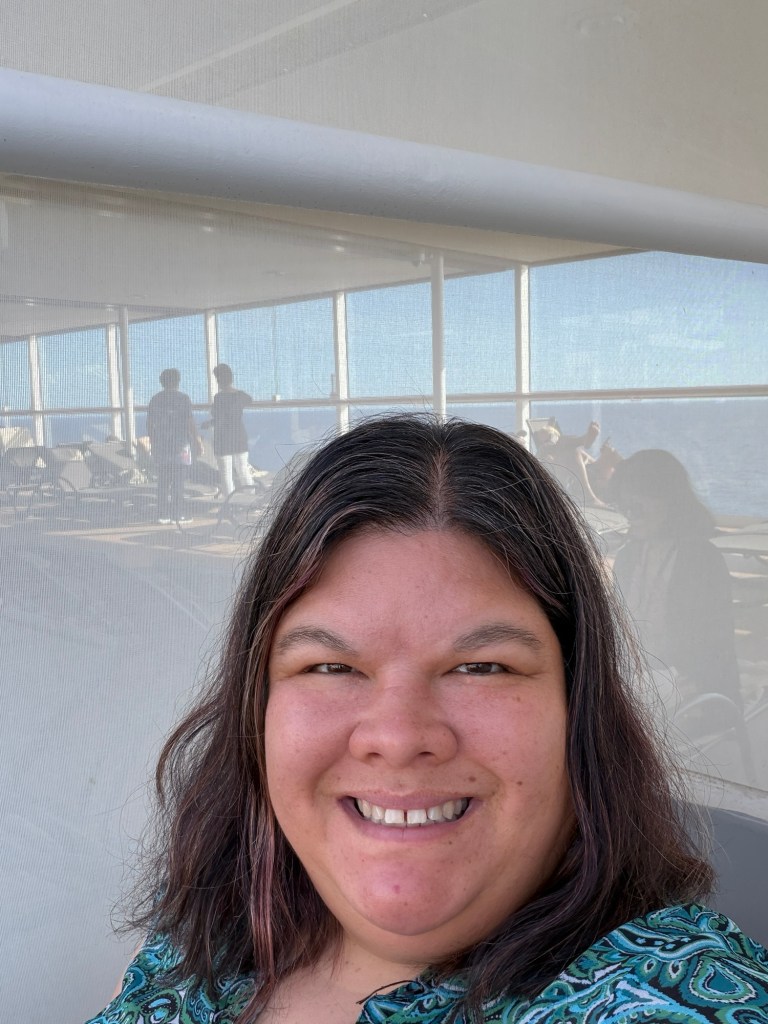
A quiet day to relax and unwind. Naps, pool-side loungers, crafts. A final dinner in the dining room, an excellent show, and dancing at the silent disco.
Today I took a ship’s excursion to Florence. It was a full day, bookended by long bus rides (just over three hours each way from La Spezia).
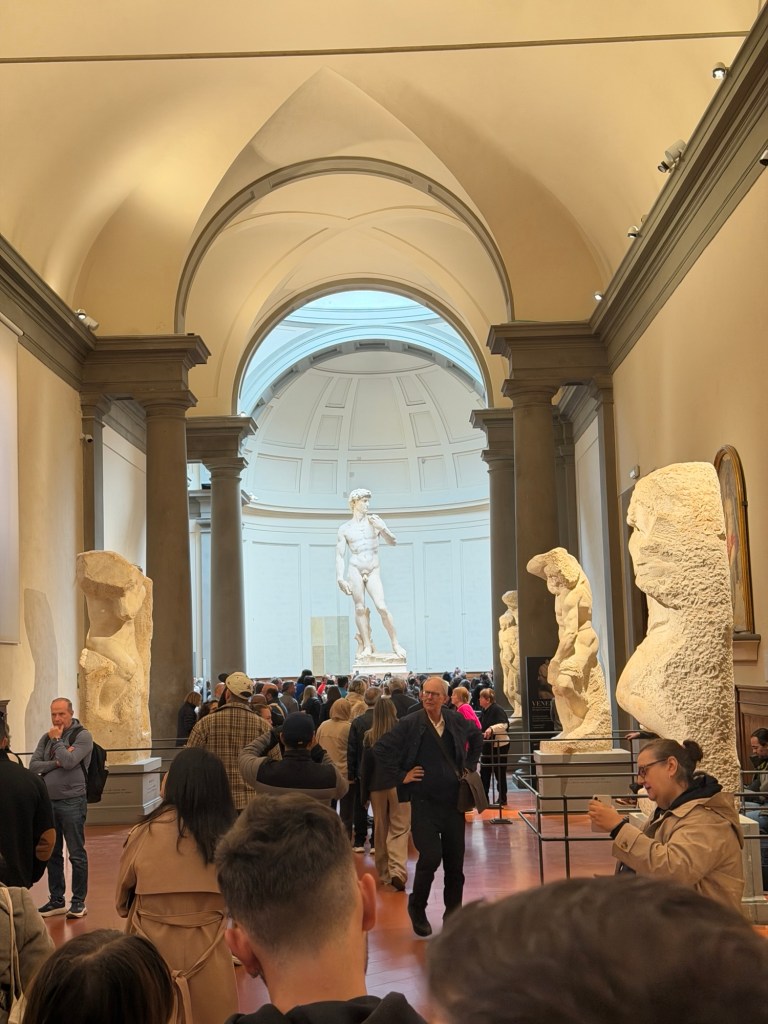
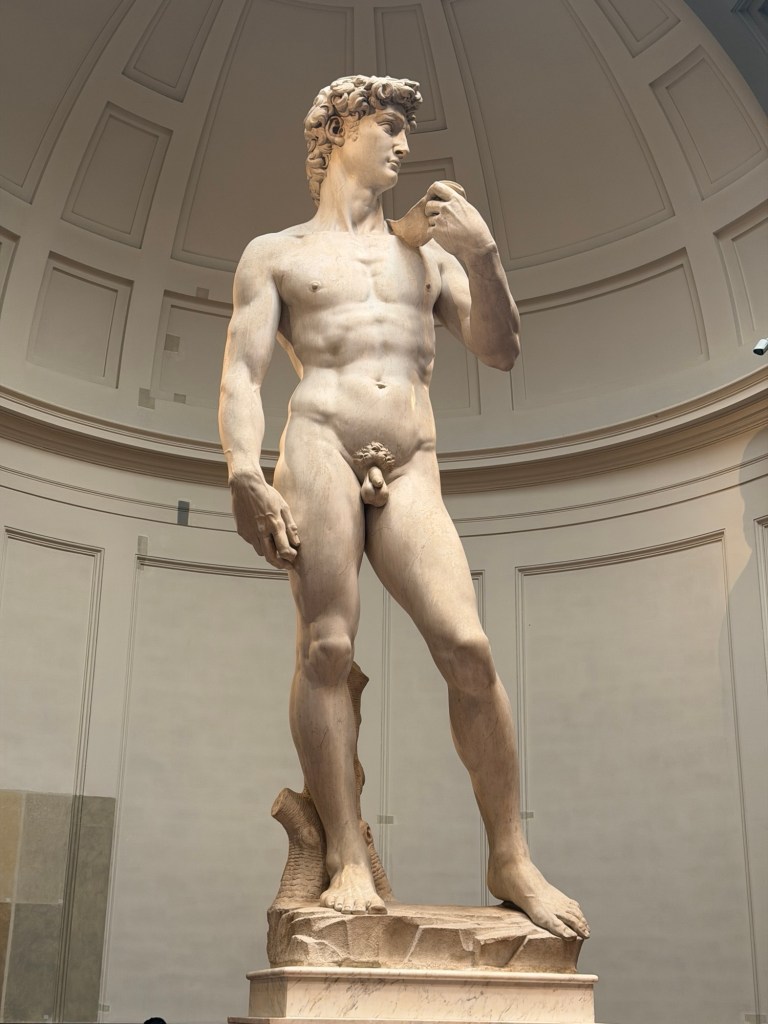
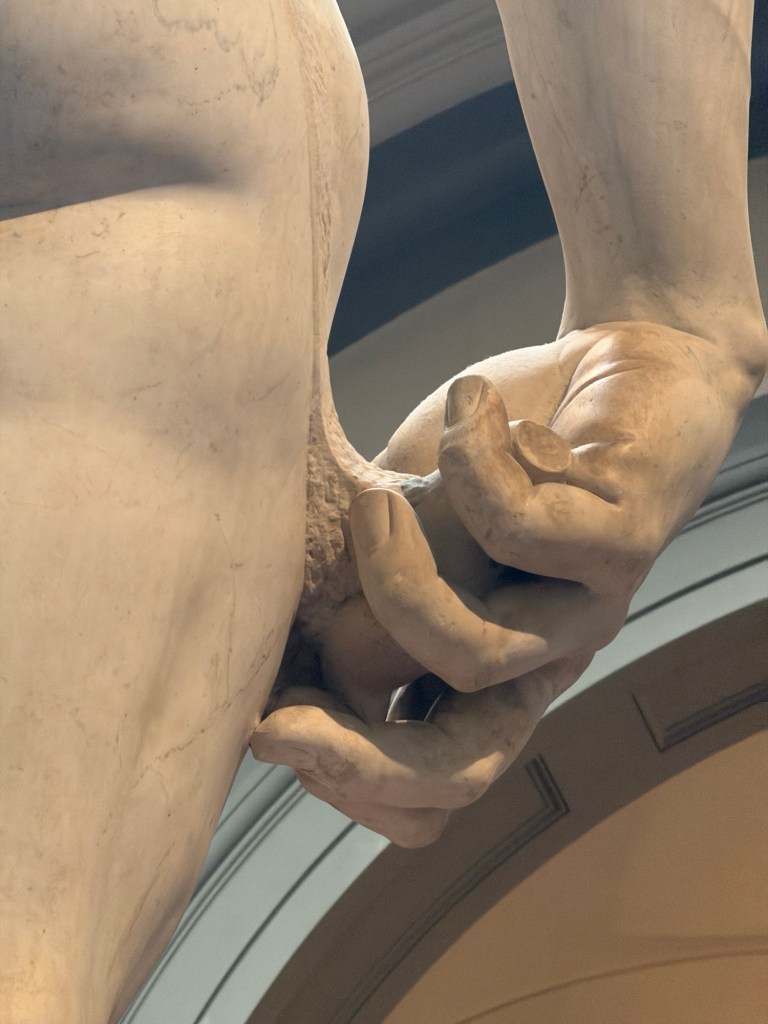
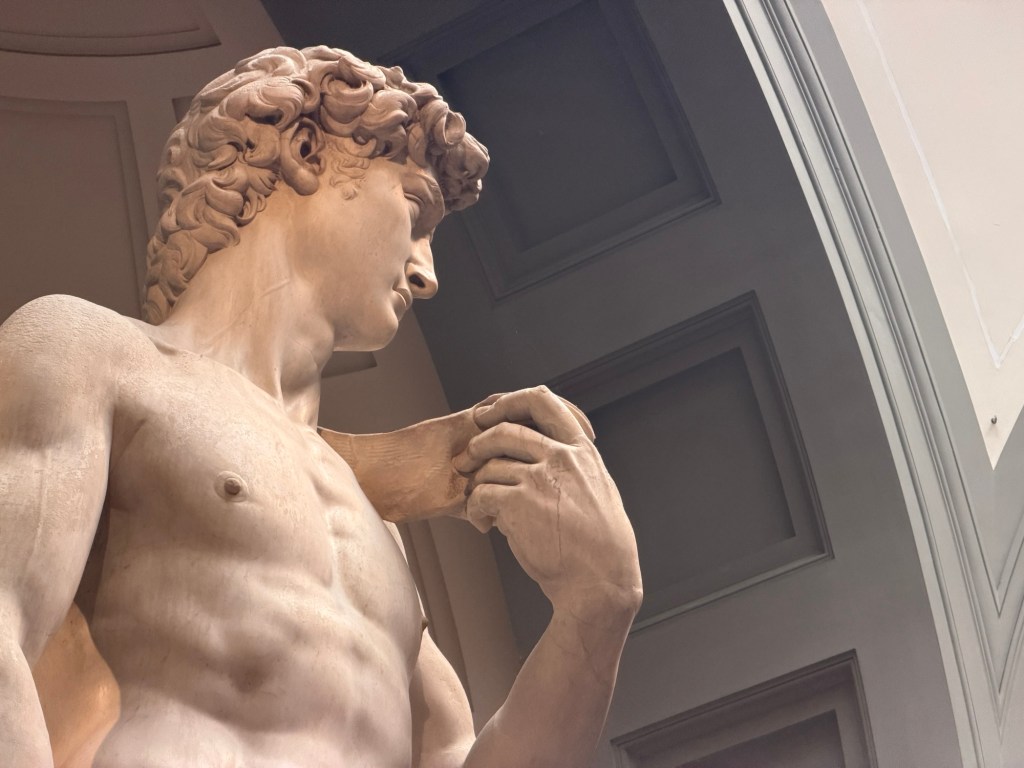
We started at Galleria dell’Accademia di Firenze, to view the original Michelangelo’s David. Spectacular. The workmanship, artistry and careful anatomical study are evident centuries later.
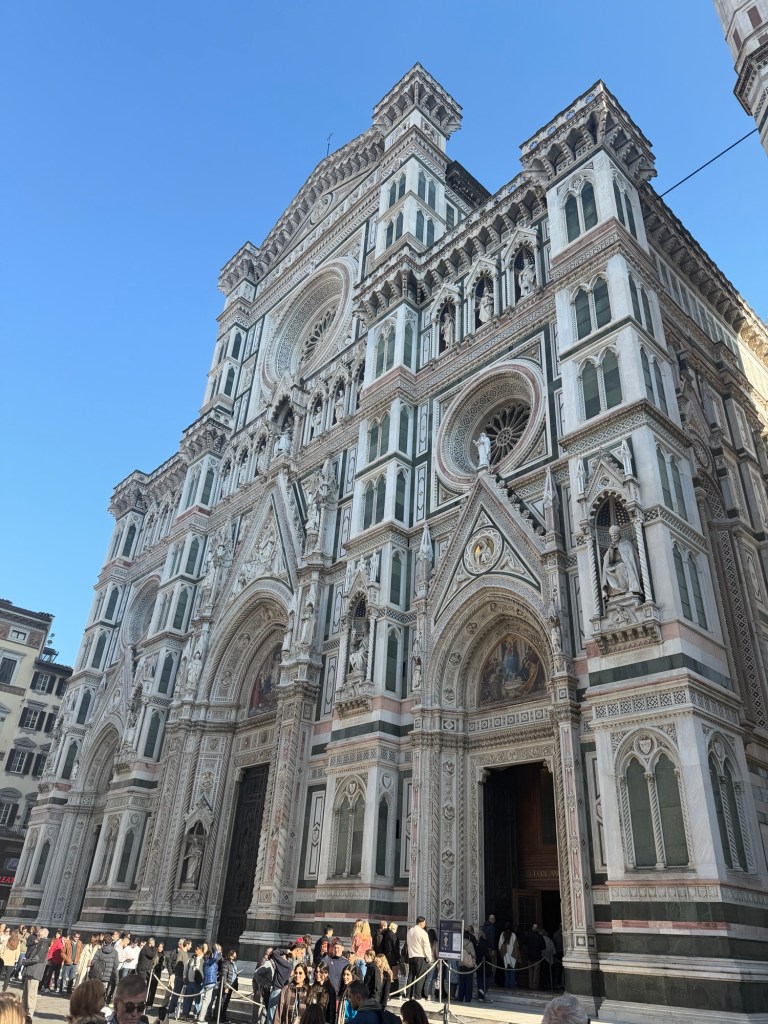
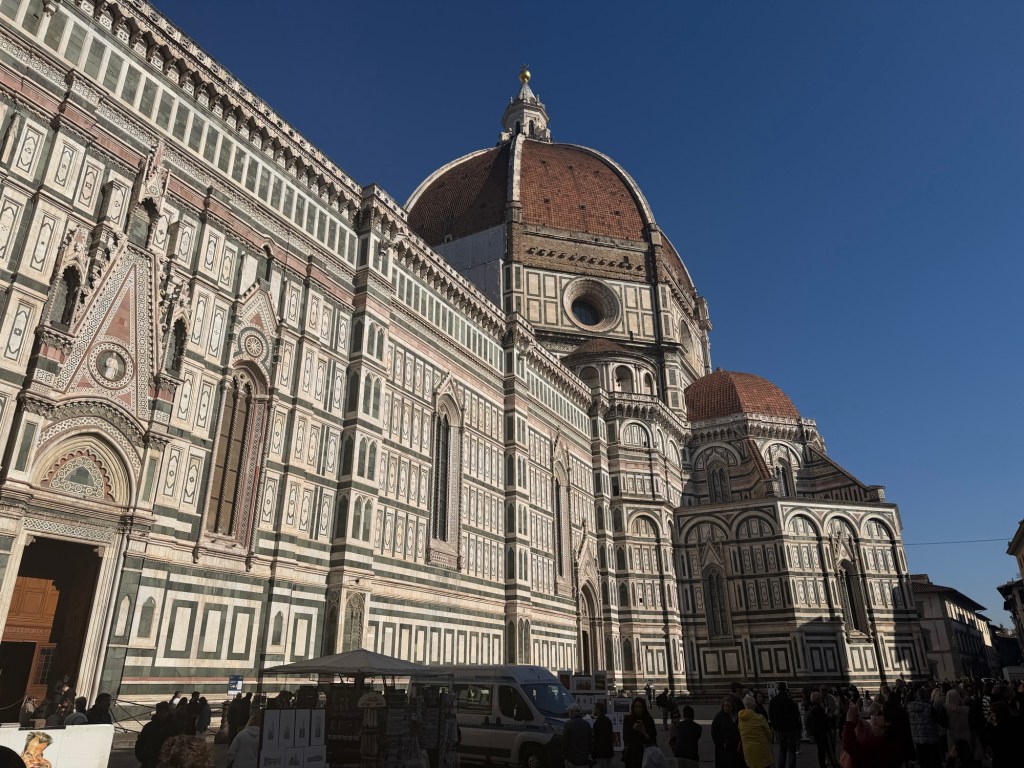
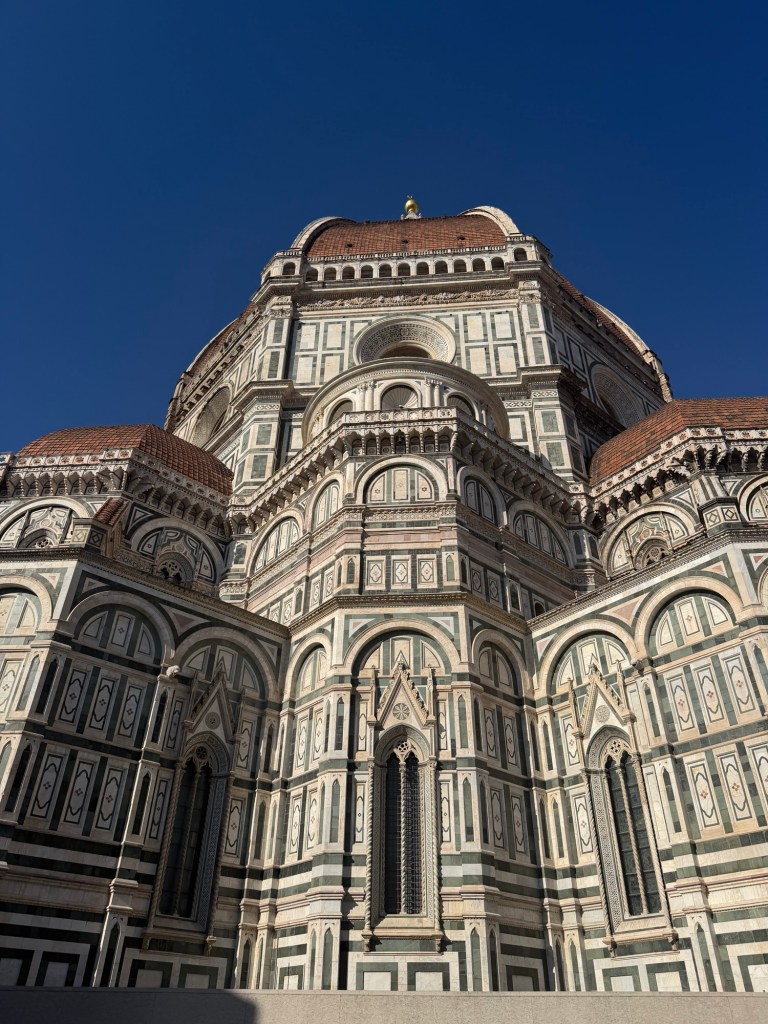
Next we walked around the outside of the externally-magnificent Cattedrale di Santa Maria del Fiore. The detail work of Florentian marble of white, green and red was impressive.
Following this was lunch – and much more of a treat than expected. Two types of pasta, fresh bread, biscotti, wine. More importantly, it was served in what was once the private rooms of Camillo Borghese, 6th Prince of Sulmona and Princess Pauline Marie Bonaparte – sister of Napoleon. The rooms were maintained as original to that time period- absolutely sumptuous.
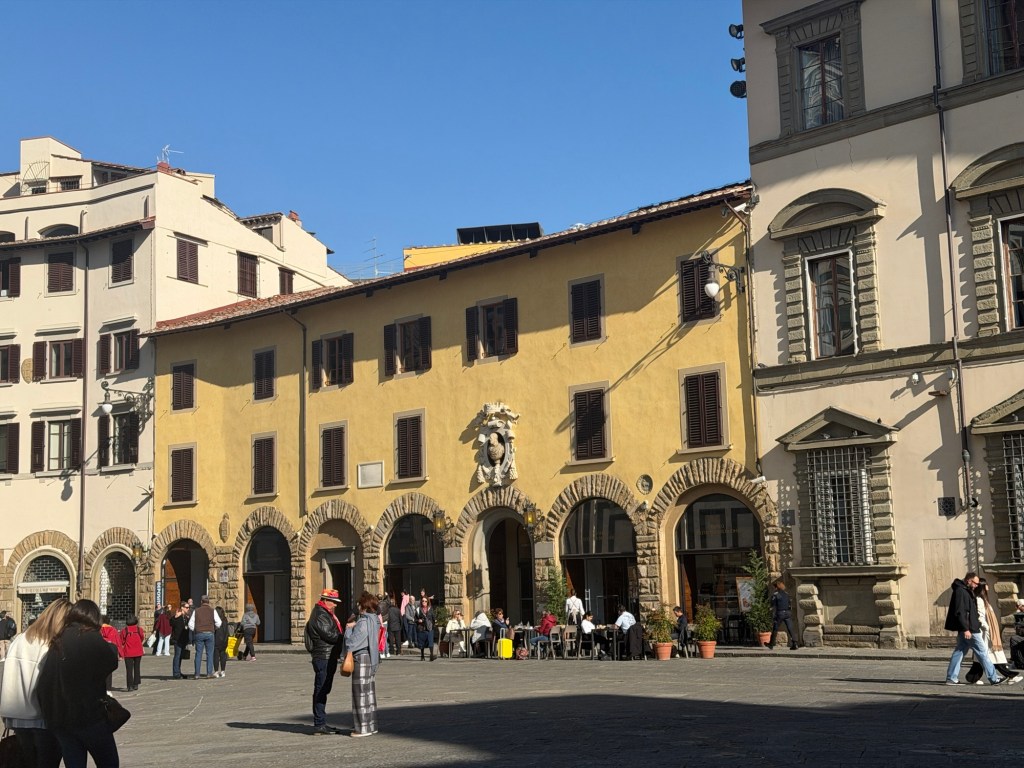
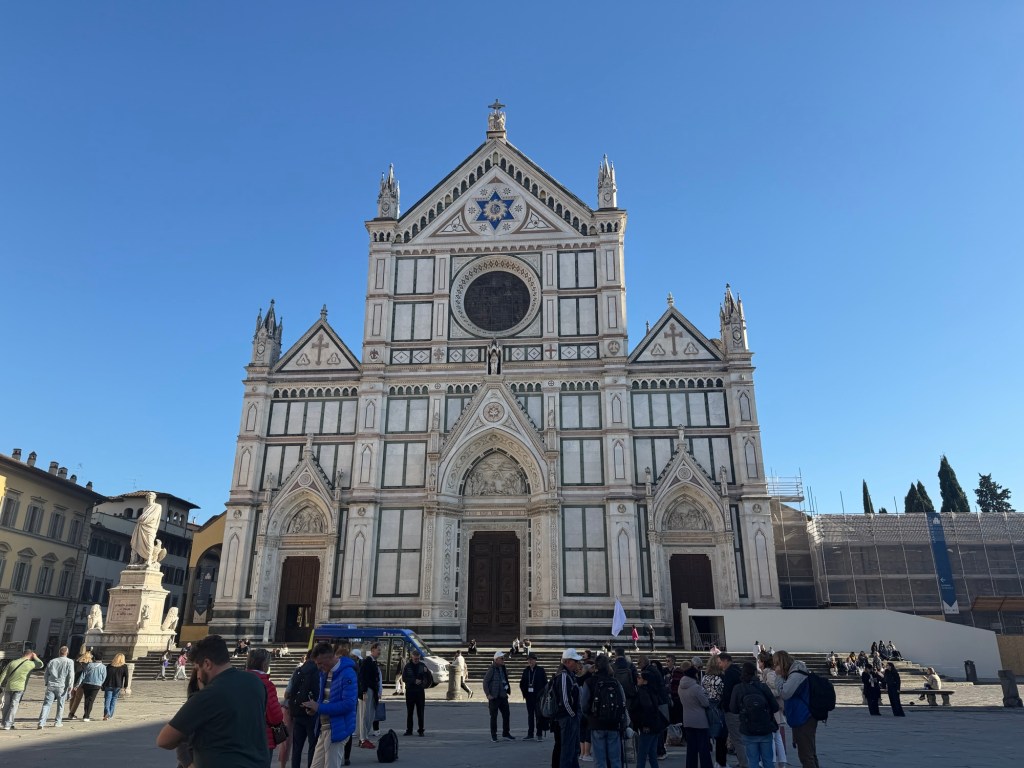
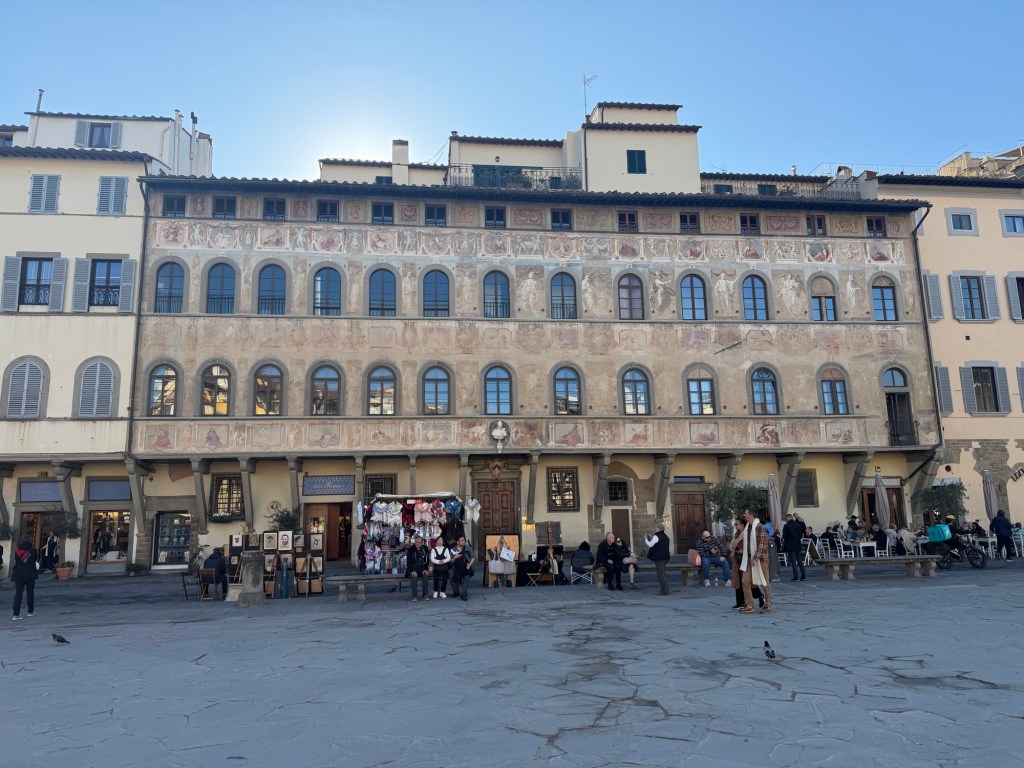
Next we visited the square with Basilica di Santa Croce di Firenze, which holds the tombs of Michelangelo, Galileo, Da Vinci and others. We had some free time to shop and explore here.
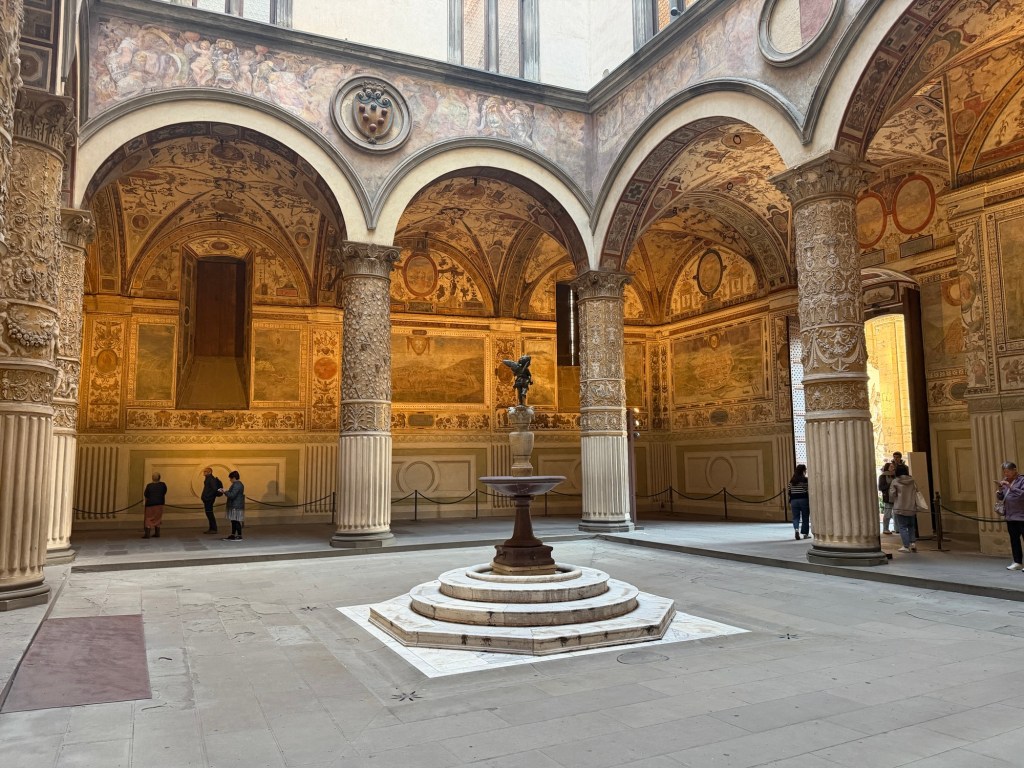
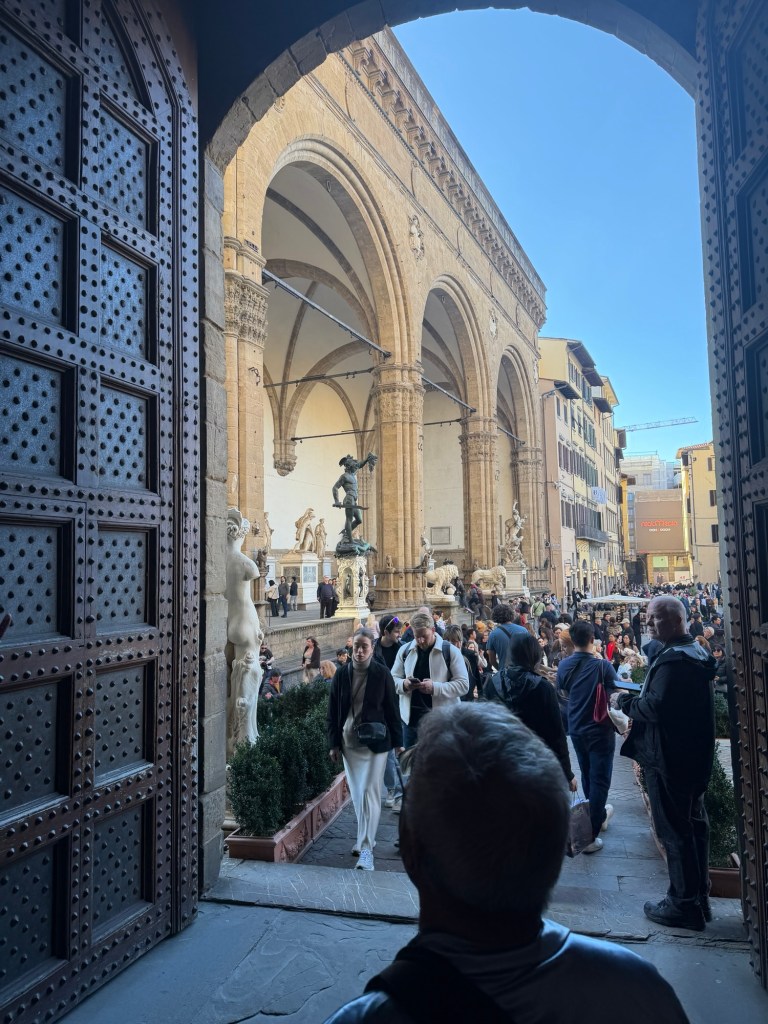
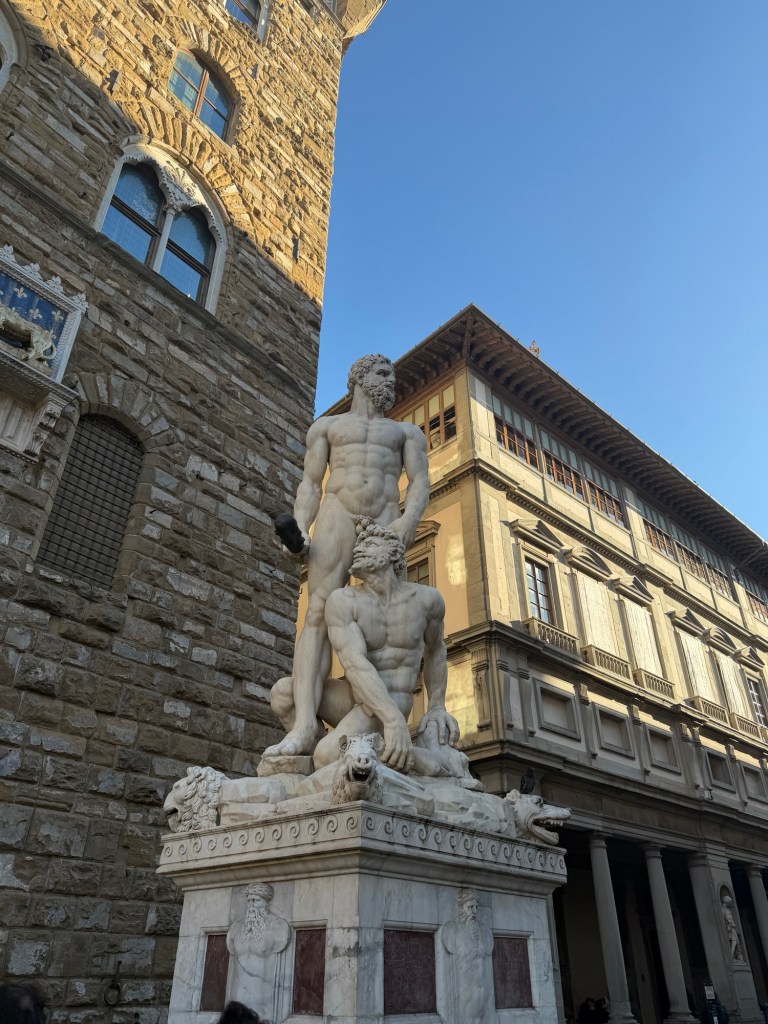
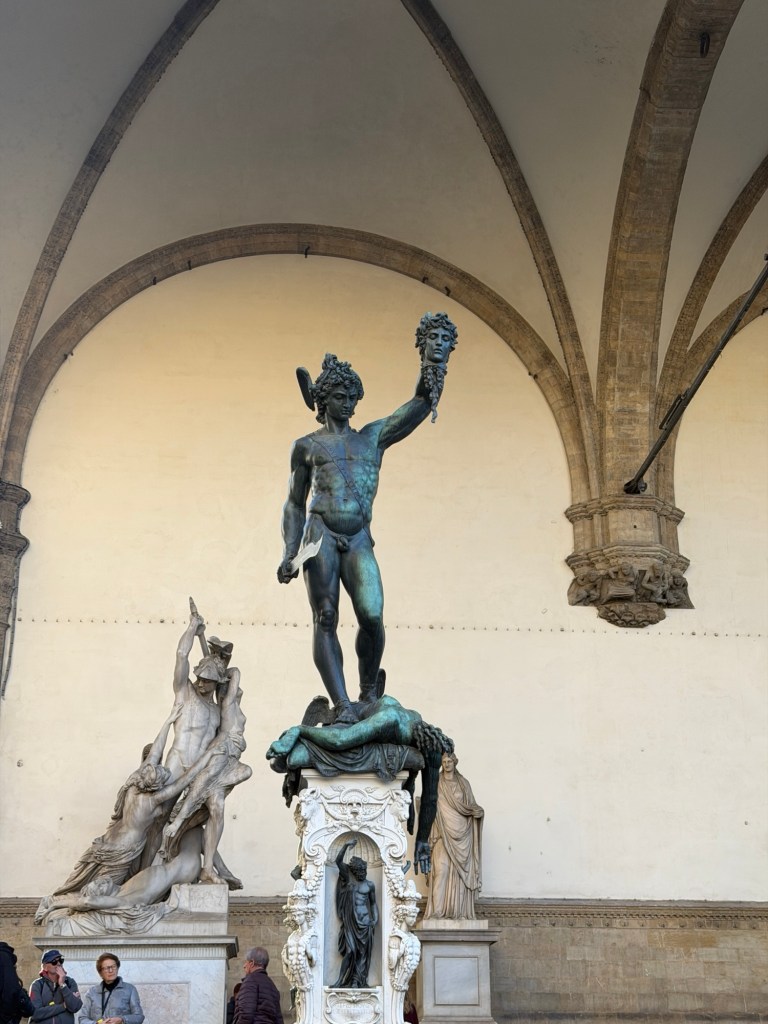
The next stop was a surprise – the city hall, Comune di Firenze. It had an exquisite entry area, highly ornamental. It was also the original home to David, and a replica now stands here while the original is safe indoors.
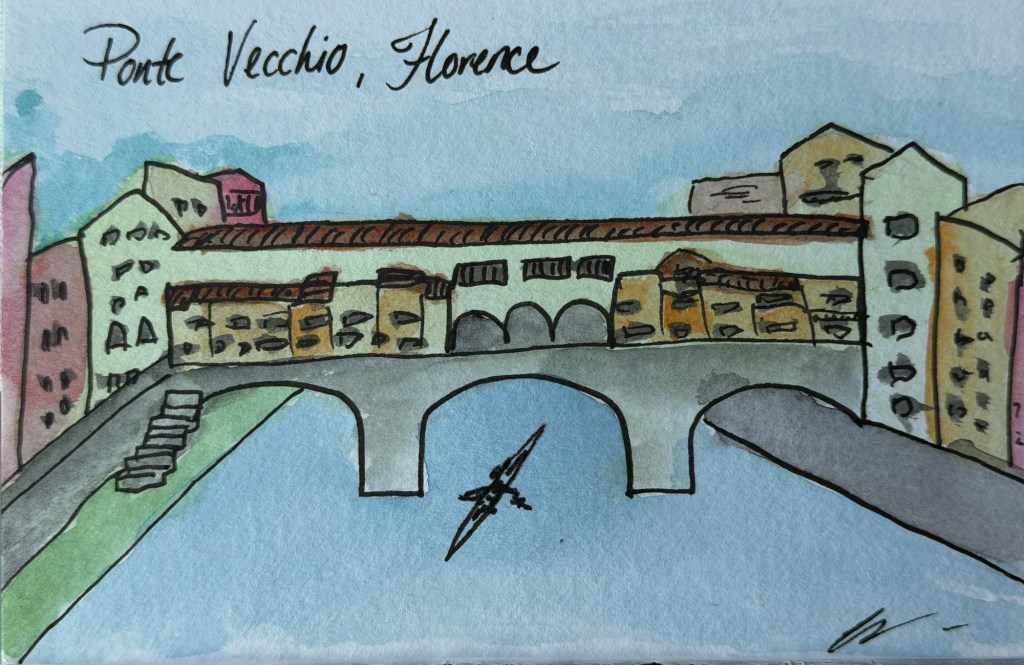
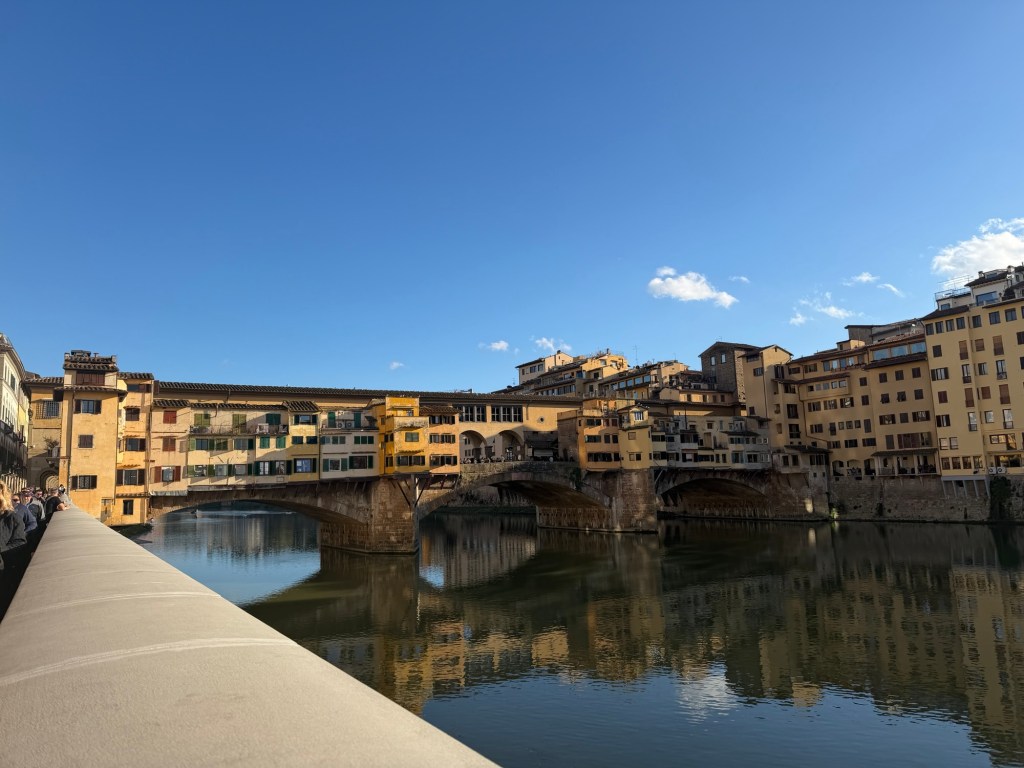
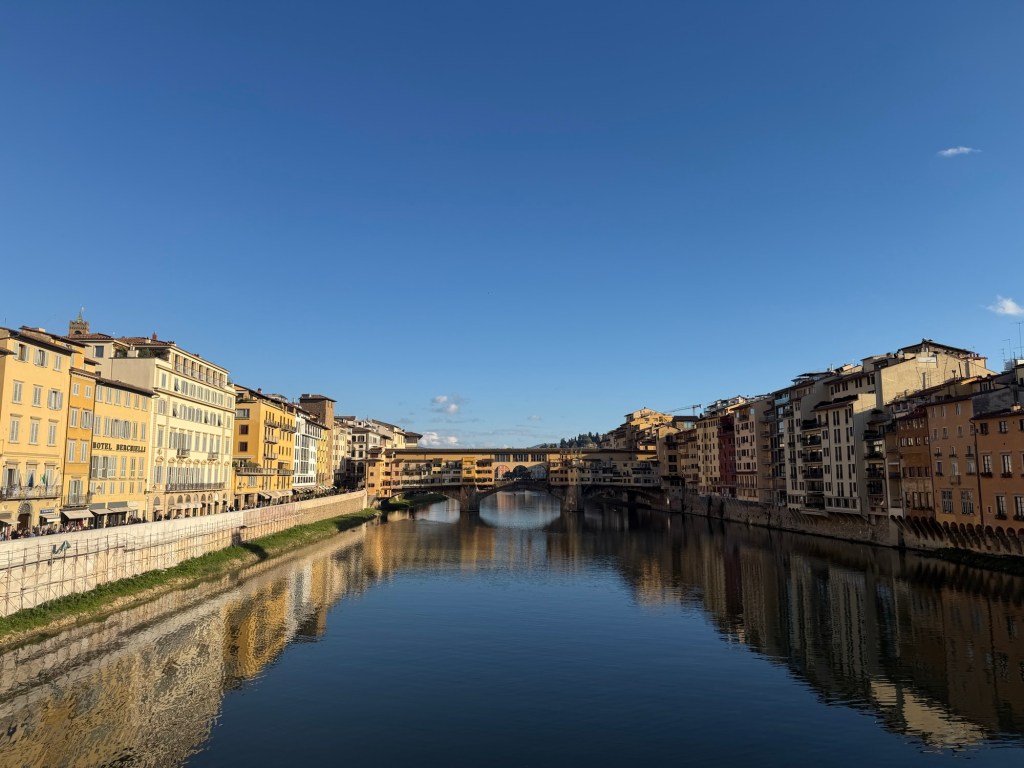
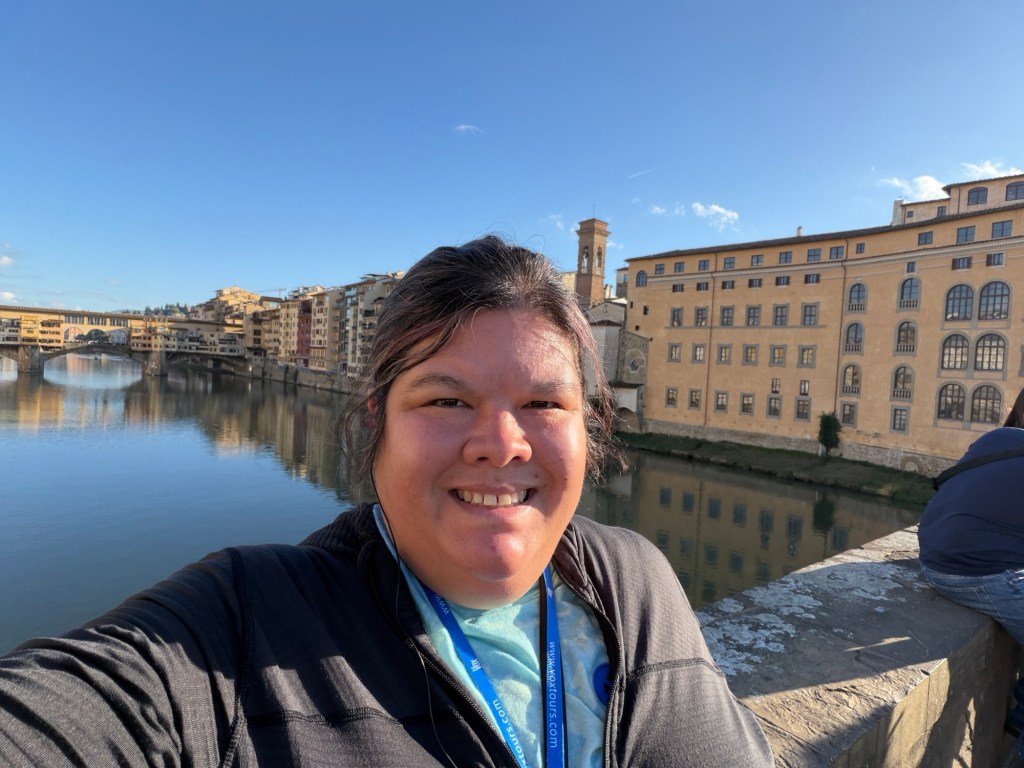
Our final stop was Ponte Vecchio, built in 1345, it was the only bridge to survive the WWII bombings.
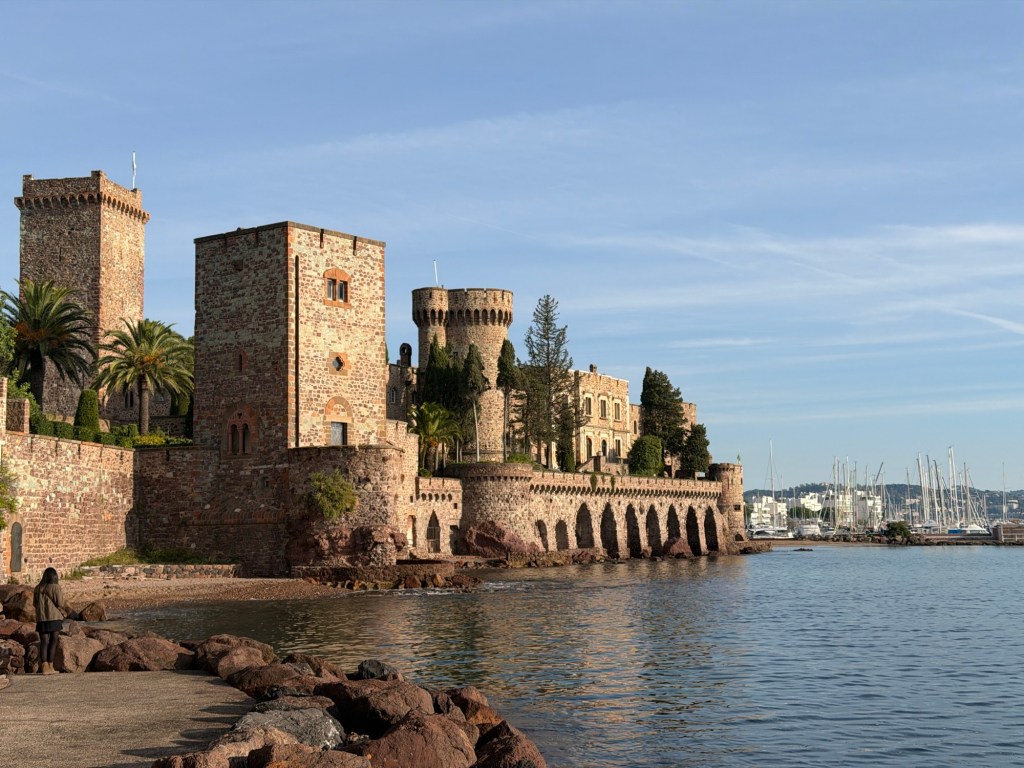
I was on the first tender of the morning for self-guided travellers, and watched the sunrise during the transfer shoreside.
My next connection was a city bus that serves the beaches. I rode west to the end of the line.
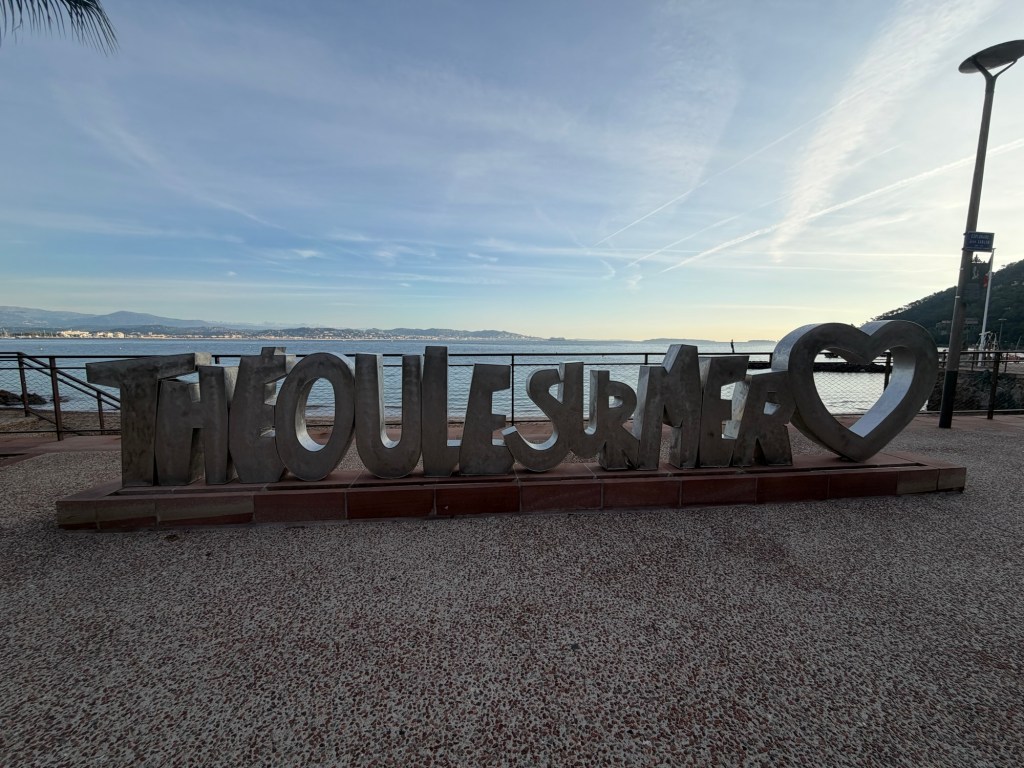
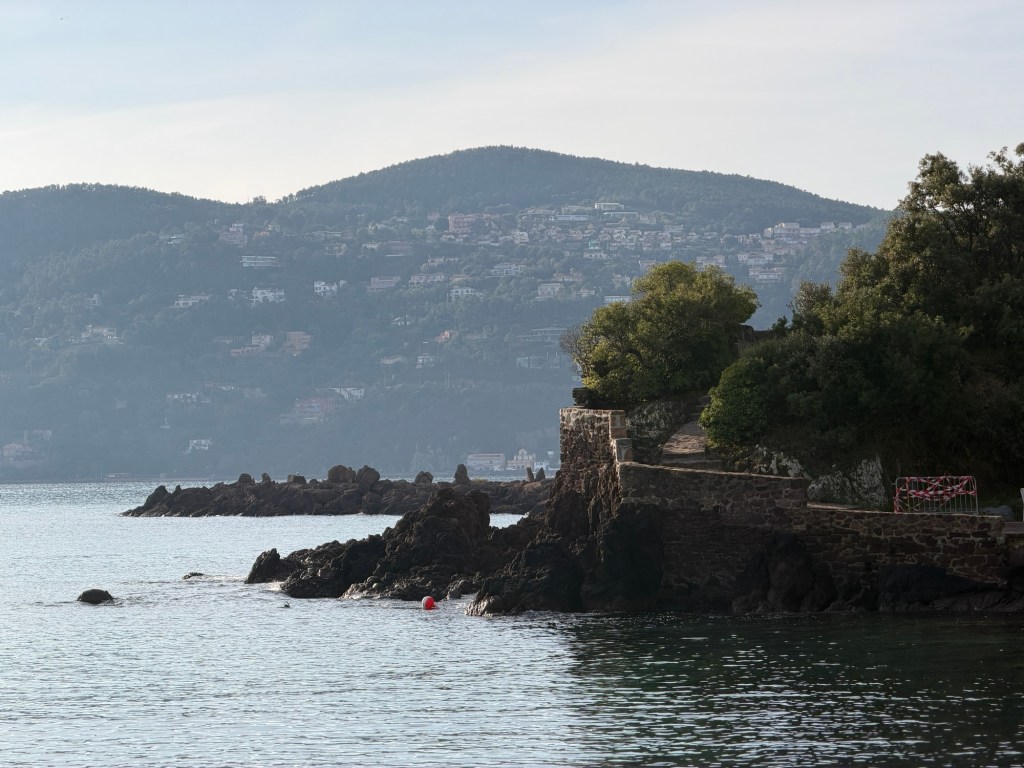
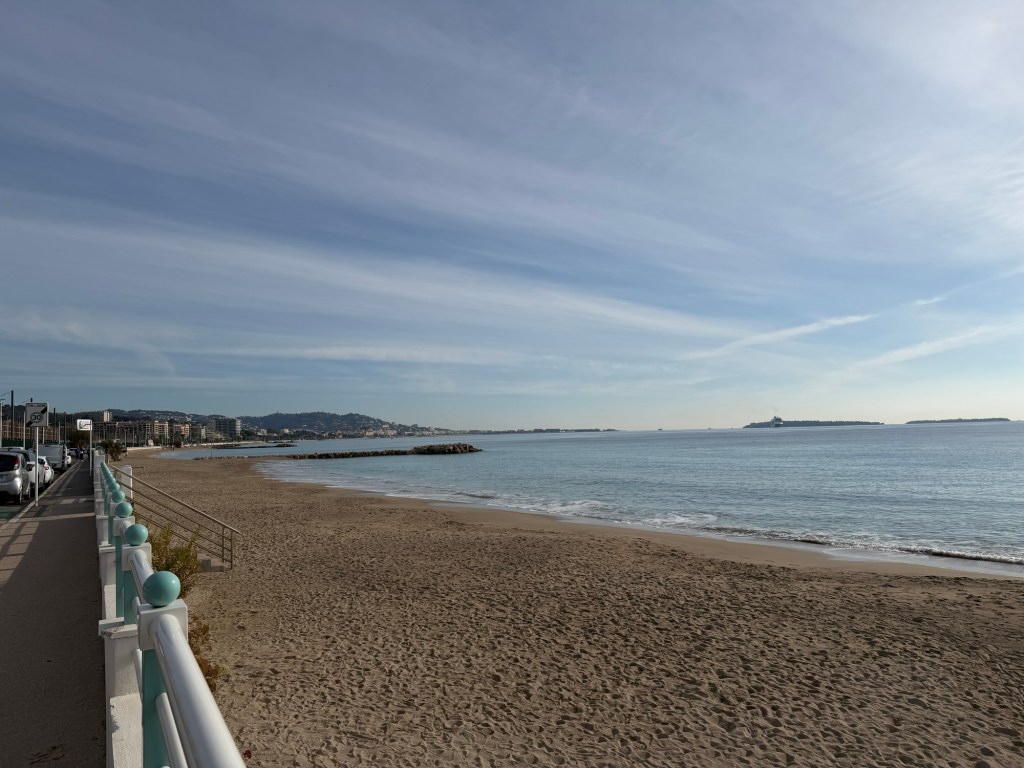
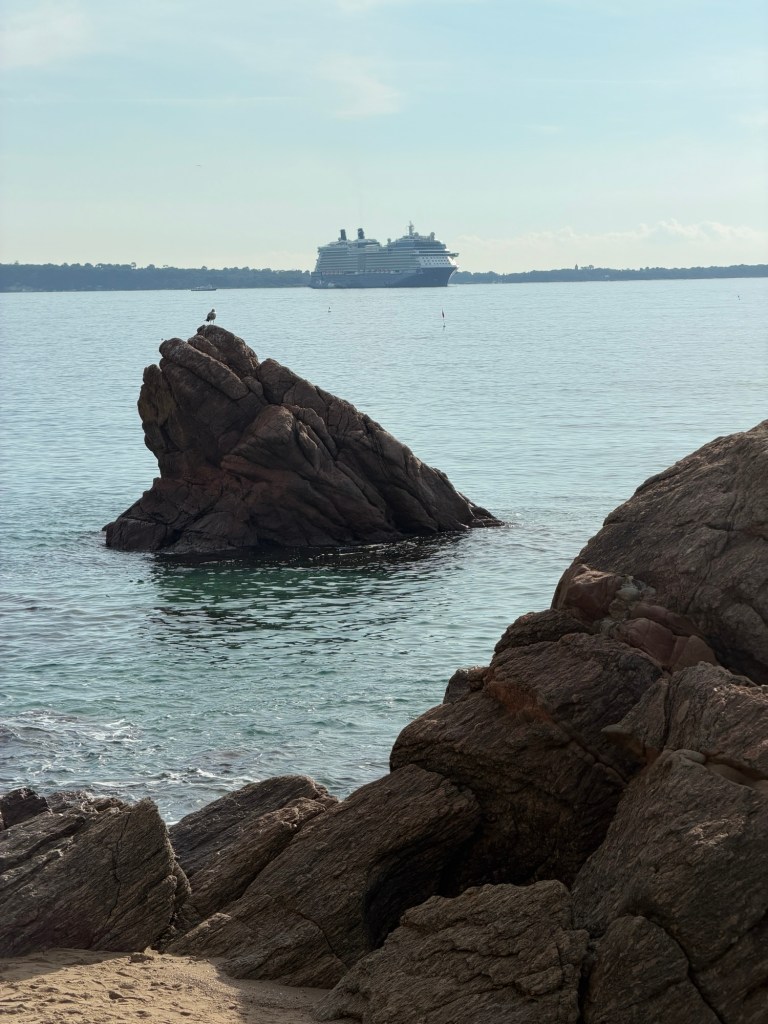
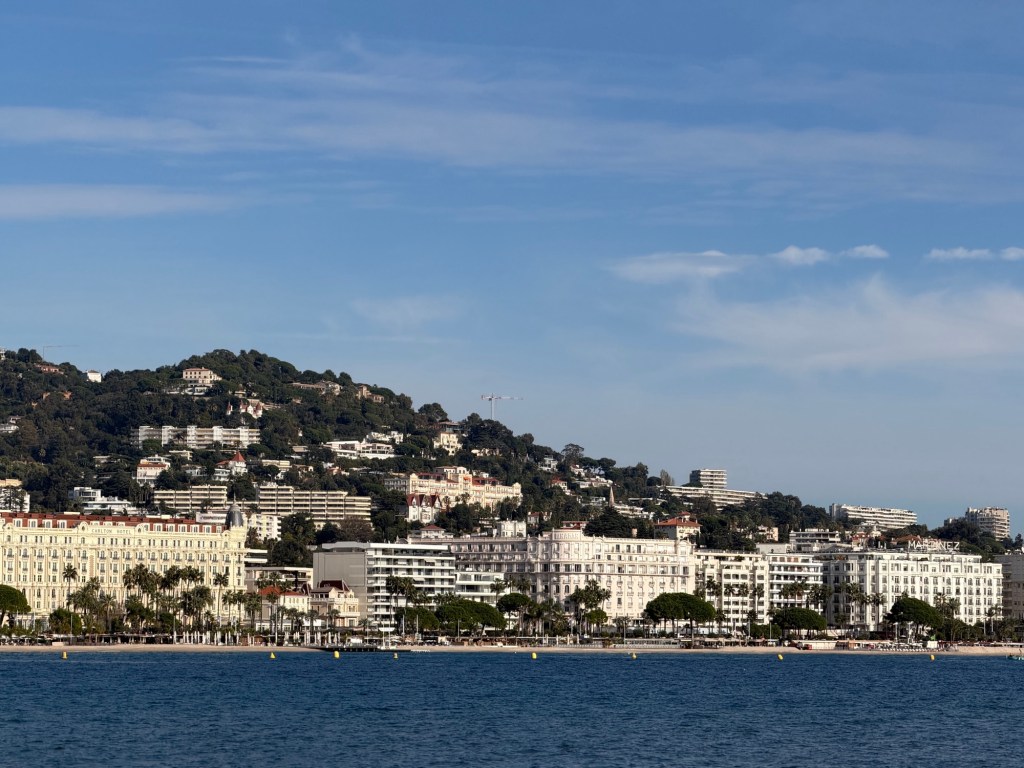
Then I walked back along the waterfront, tracing the light sand beaches and sparkling water. Some sidewalks were narrow, some wide; some paths were pavers, some sidewalk, some sand.
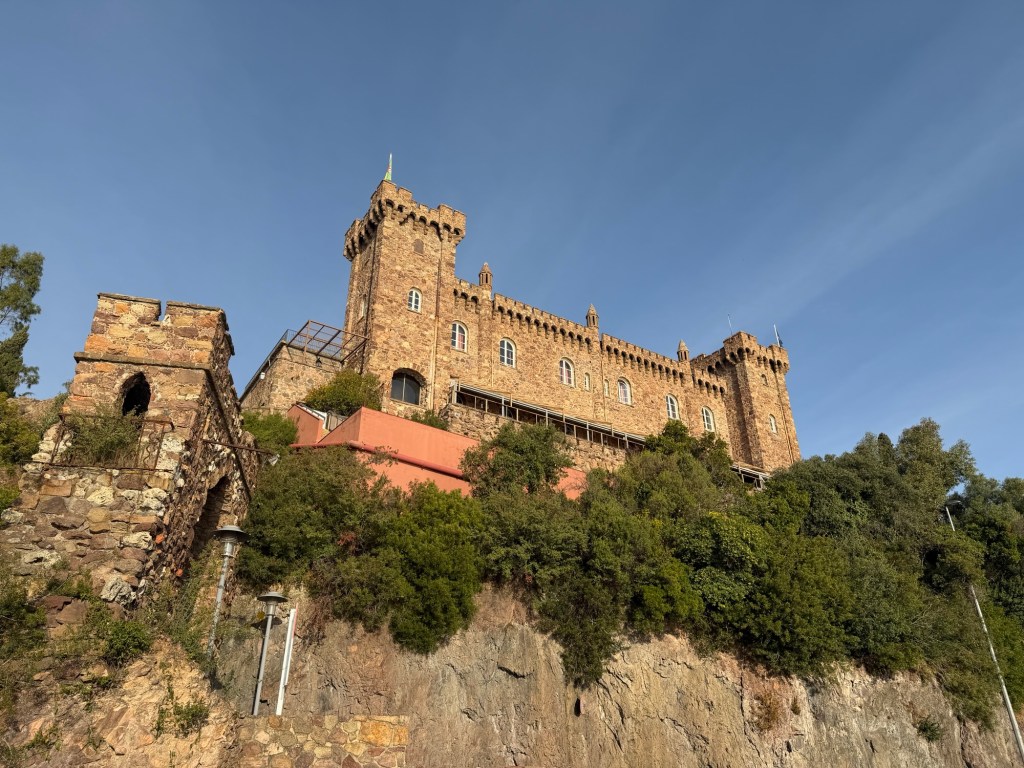
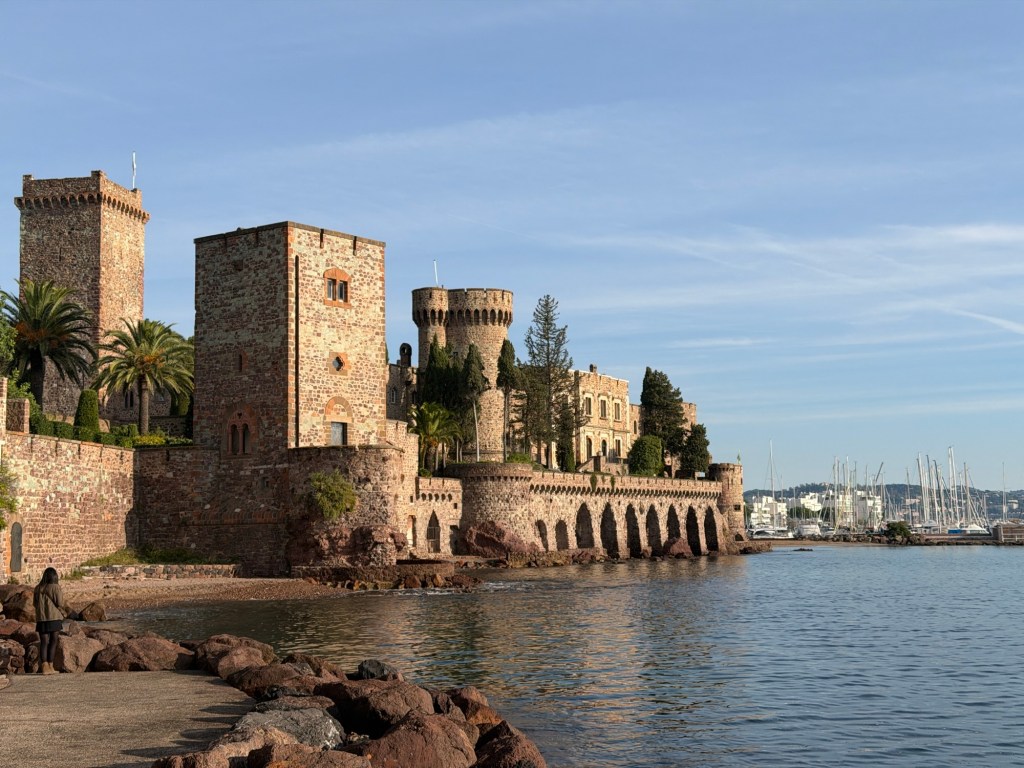
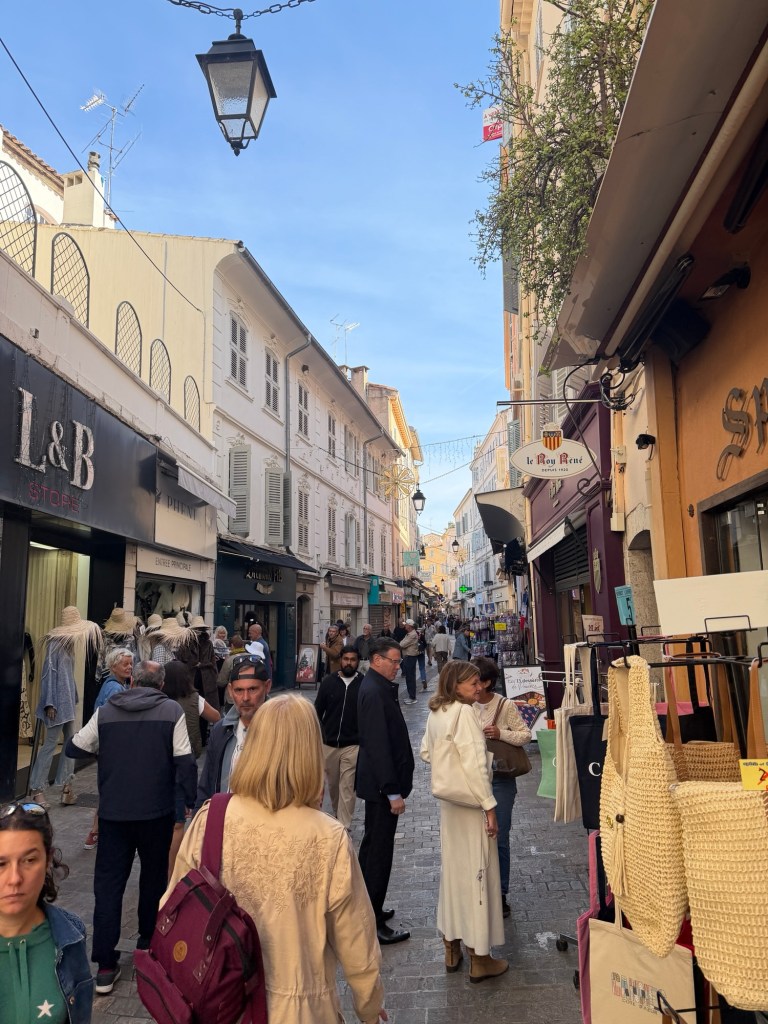
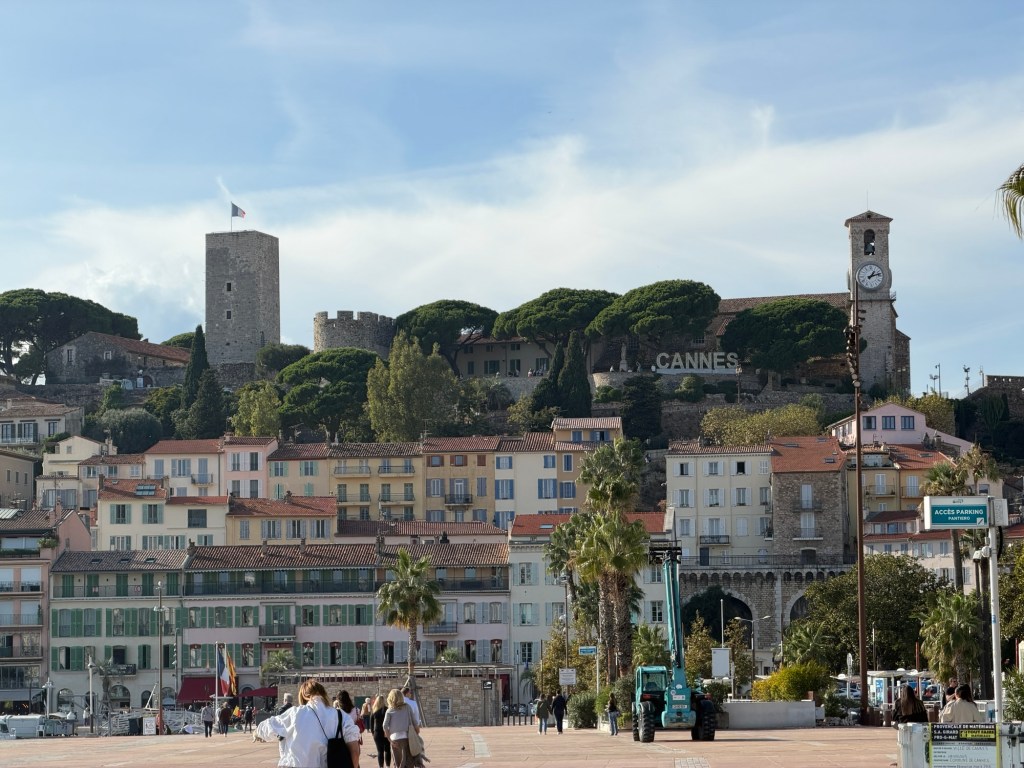
I walked through Theoule and Napoli and western Cannes. Then I was back at the port, then into the glitterati zone. Moving into the first street, every major brand in the world seemed to be represented. One in ten people stood out, looking like they had stepped out of Vogue. It was a weird experience.
I found a spot for some well-earned lunch, then wandered until I found a grocery store to buy more water.
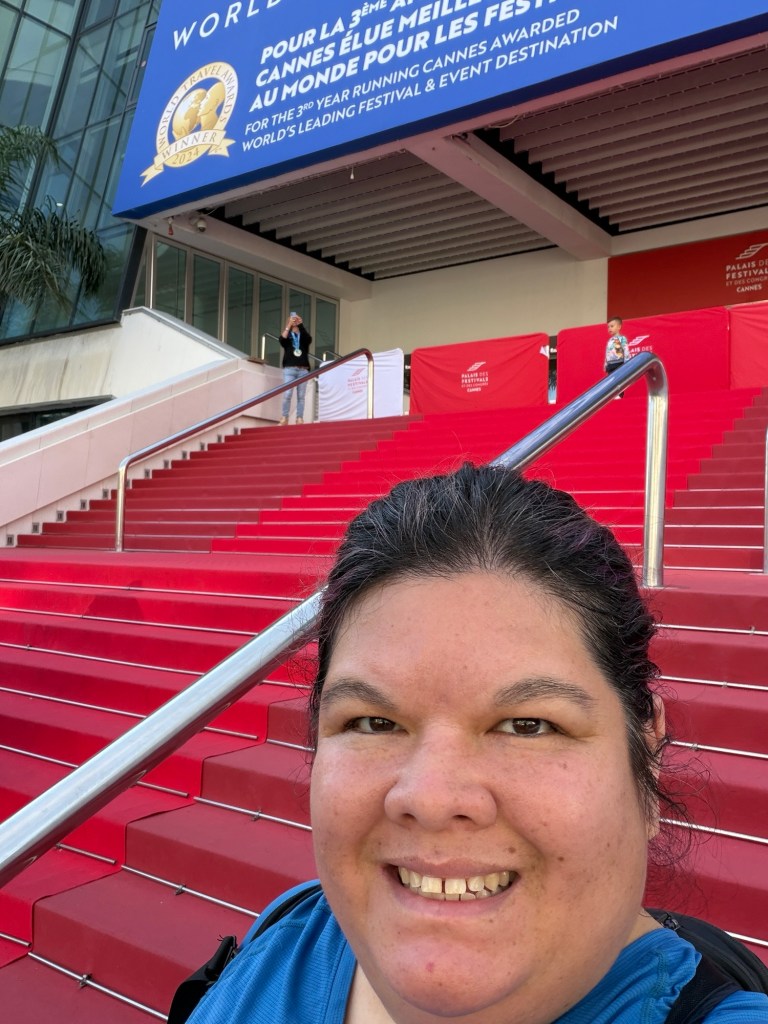
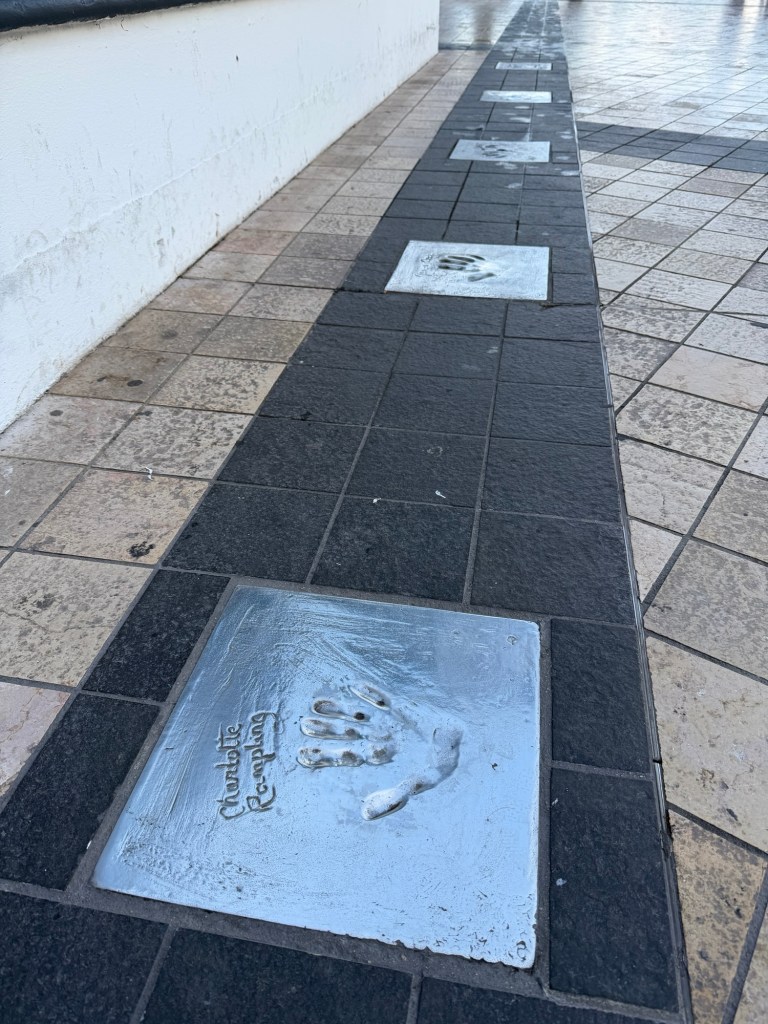
Rejoining the beachside walk, I started my trip back to the tenders. En route I found The Red Carpet, and handprints in paving stones.
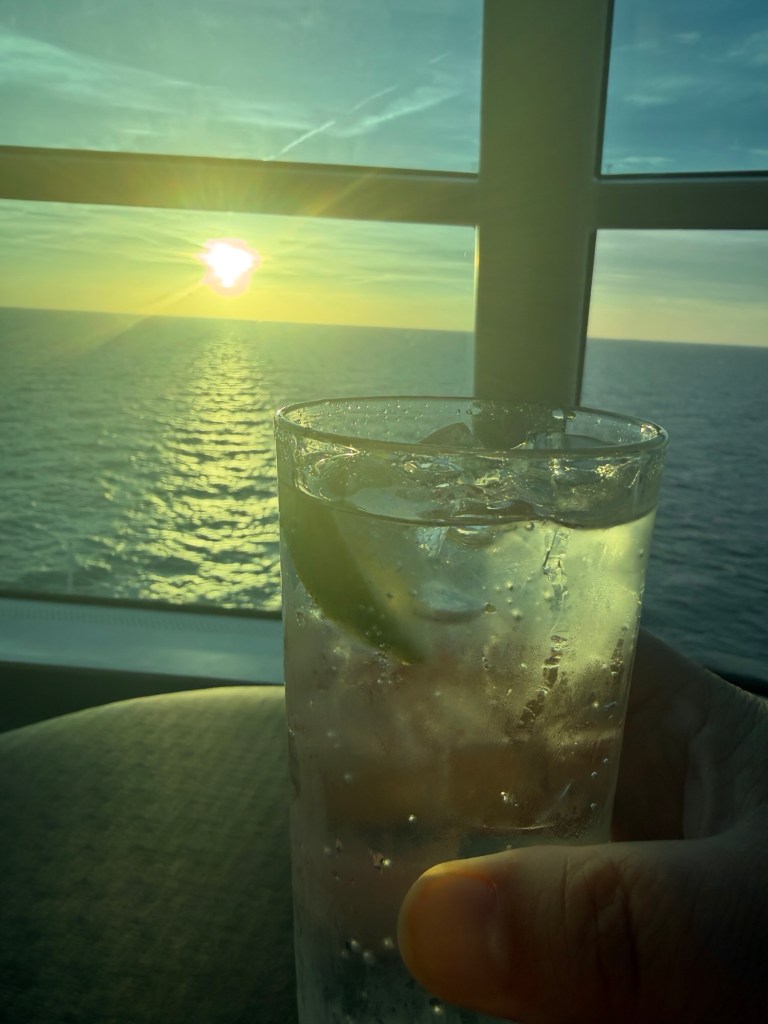
16.5 km, 4 hours walking. Definitely have earned a virgin piña colada on Deck 15.
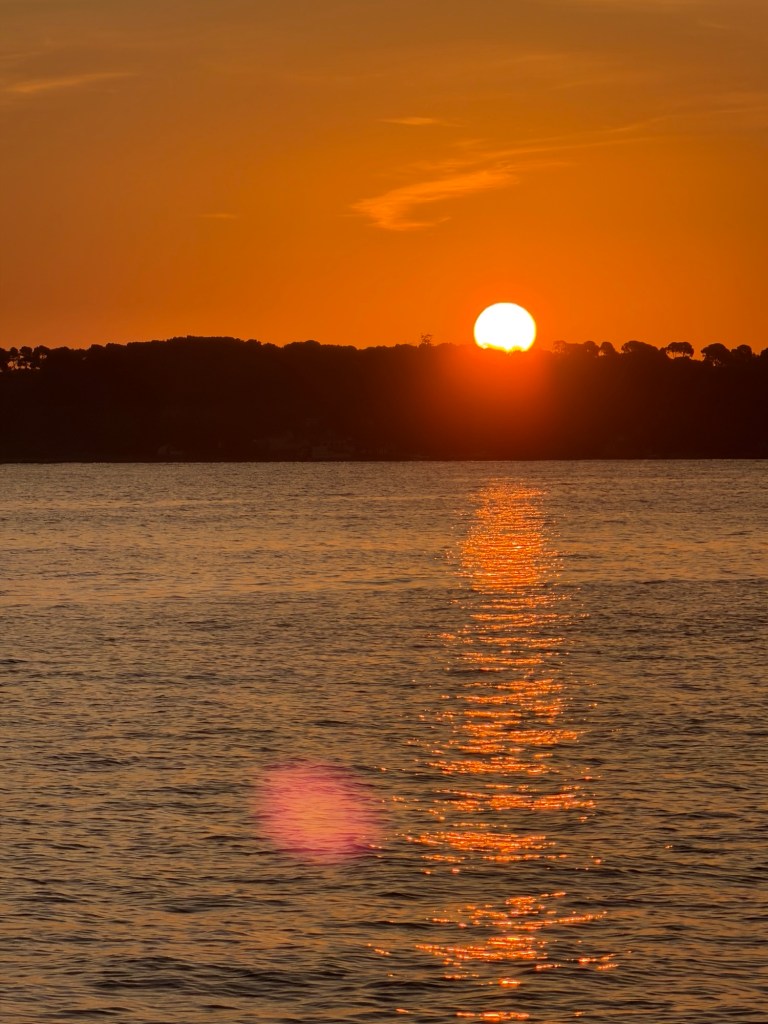
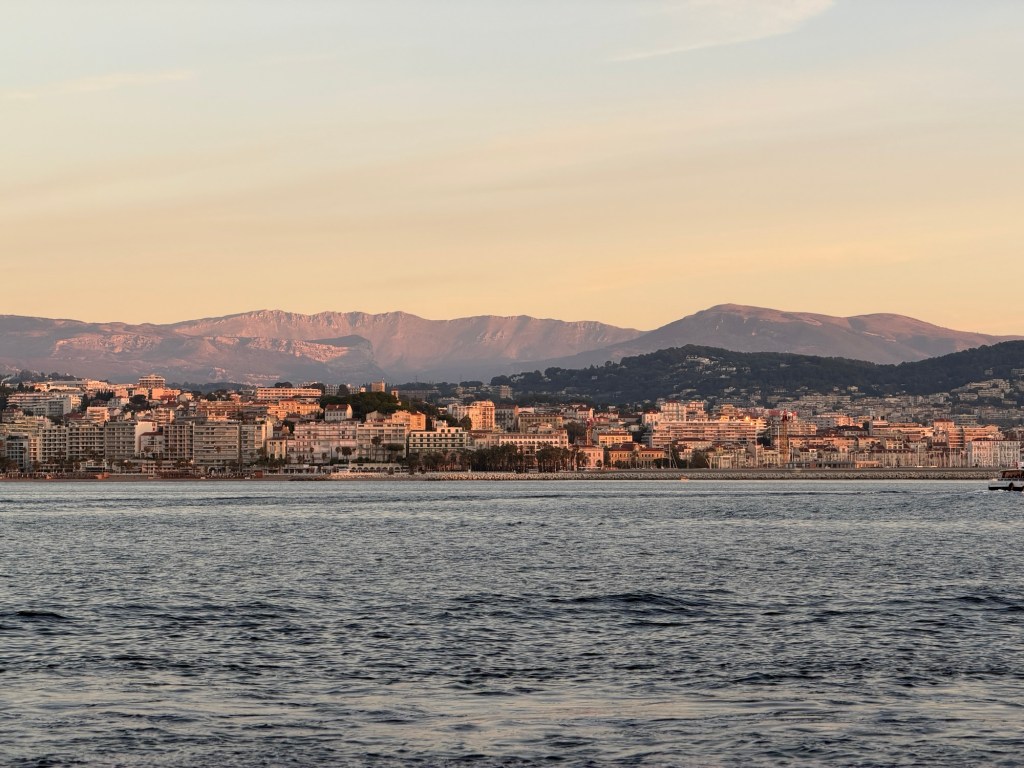
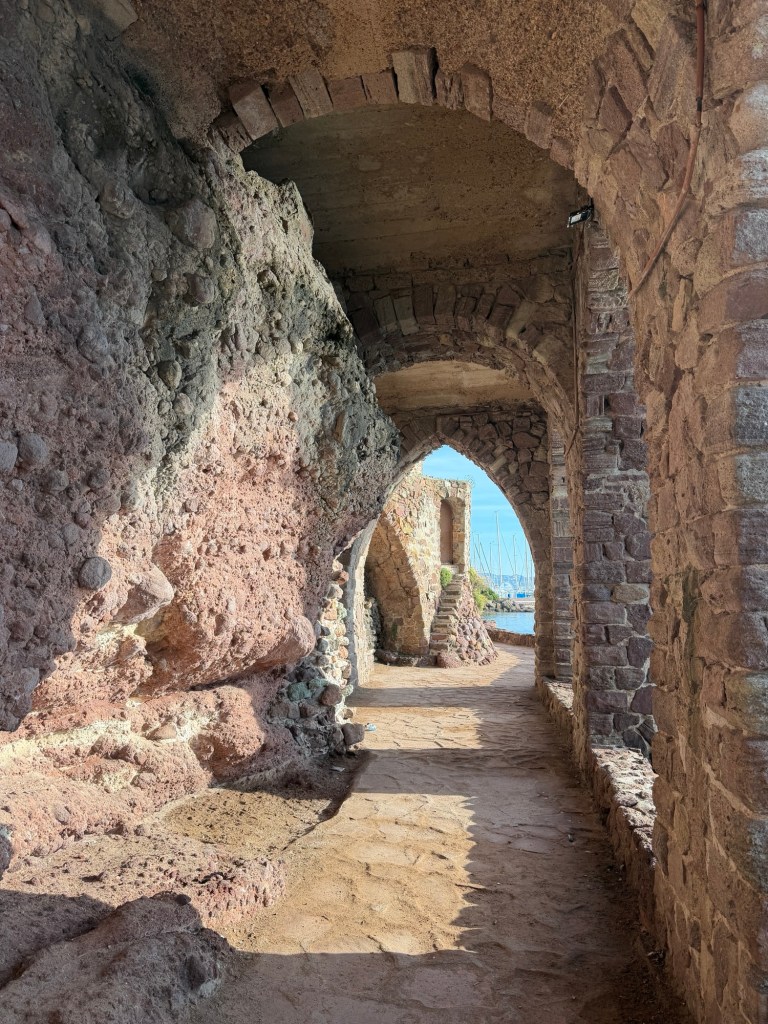
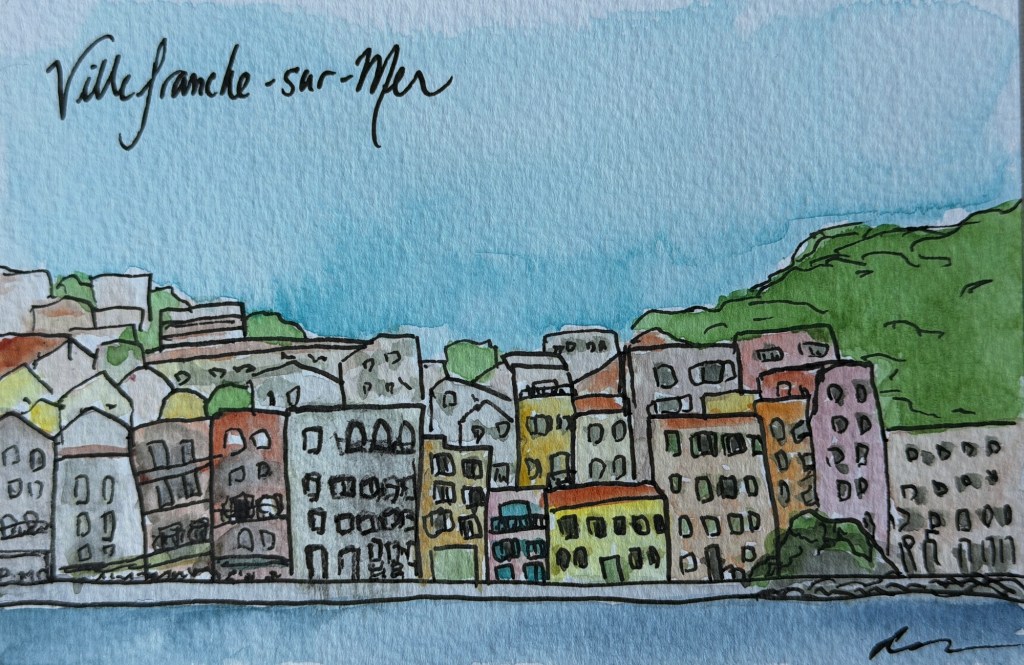
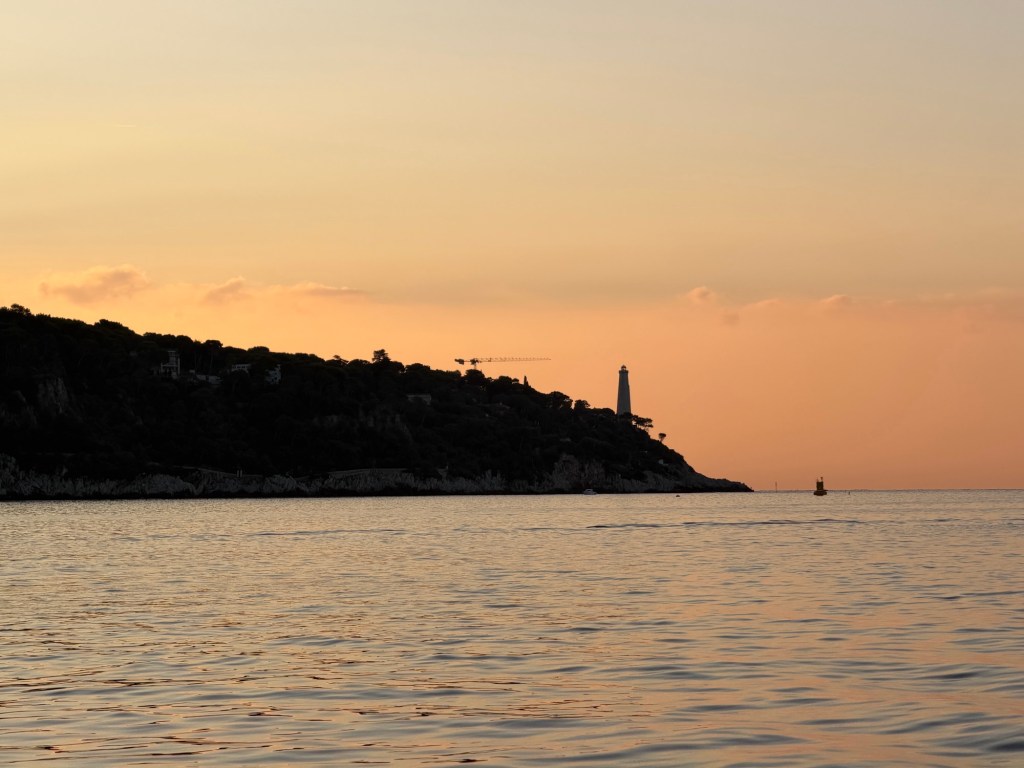
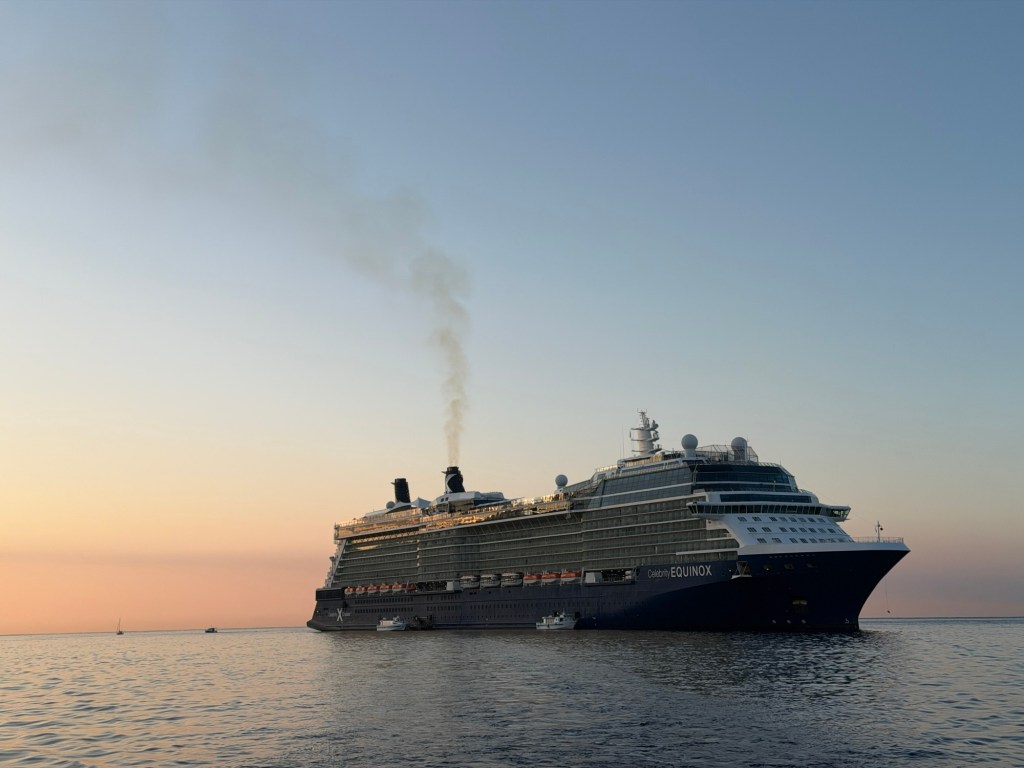
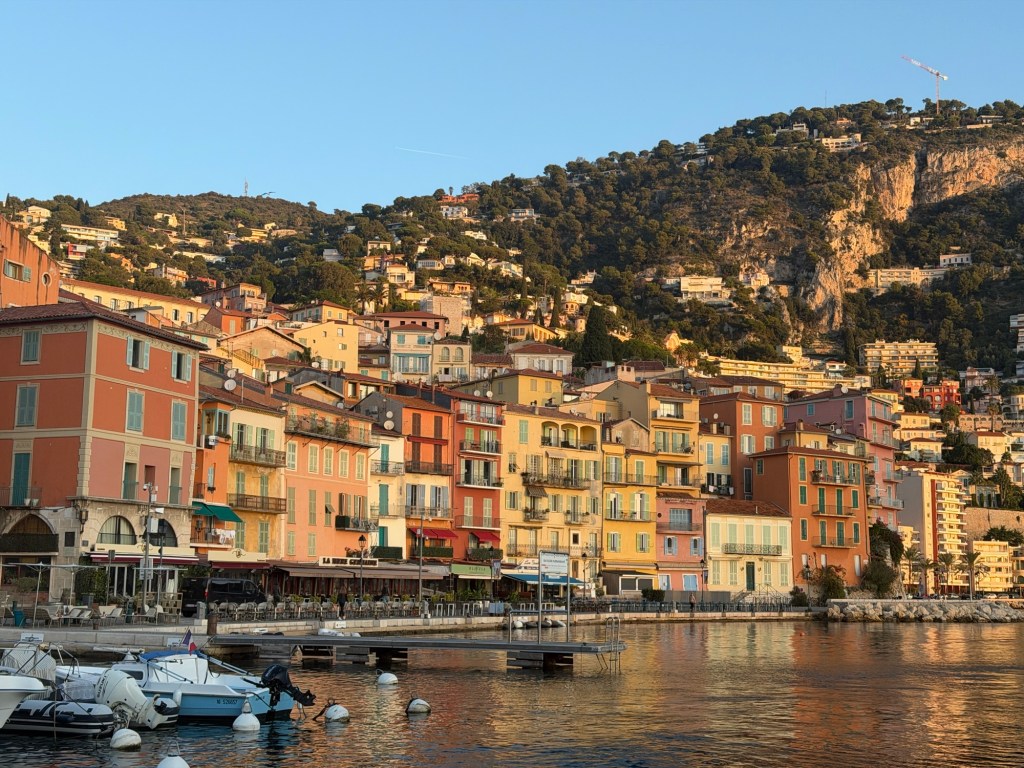
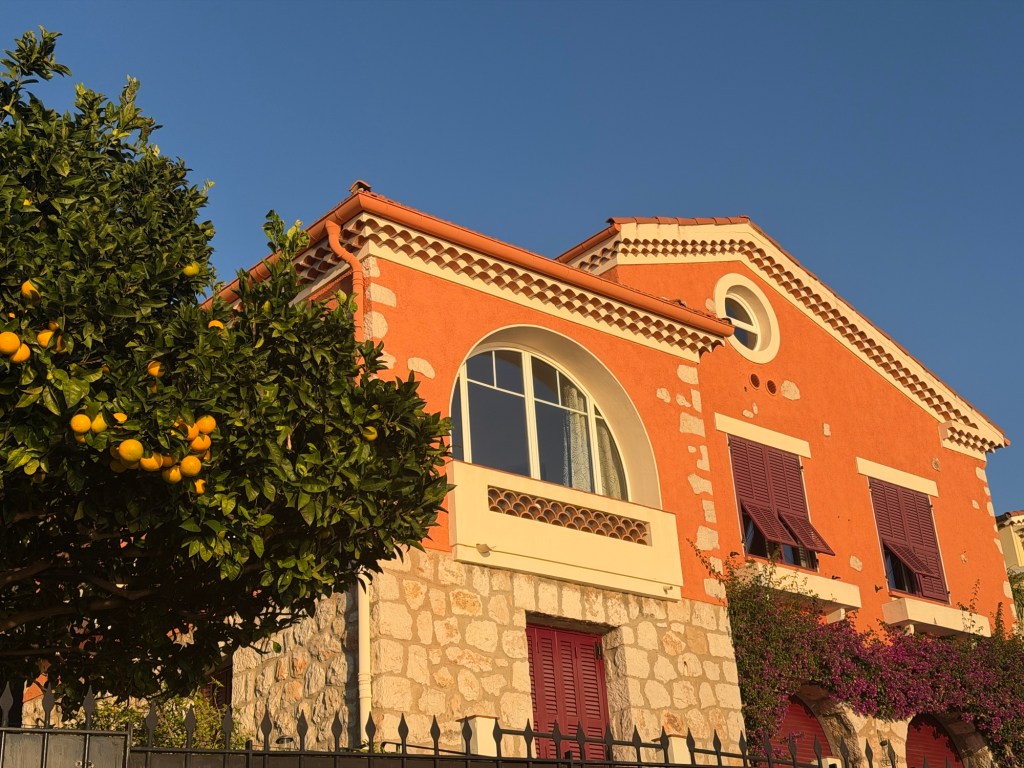
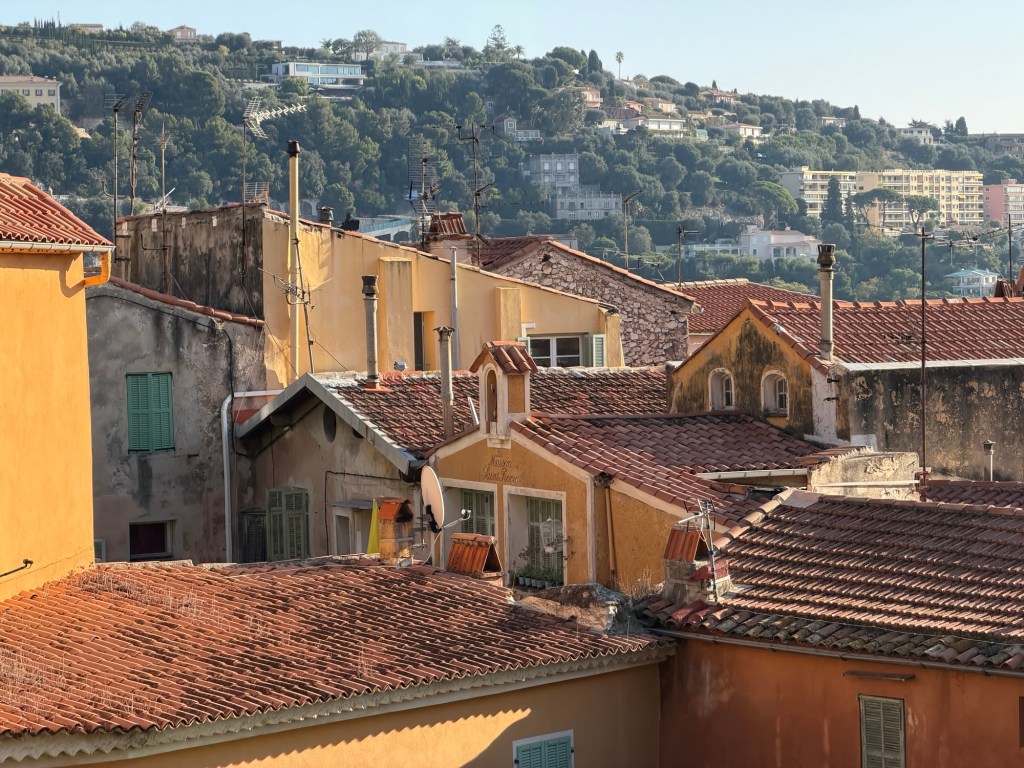
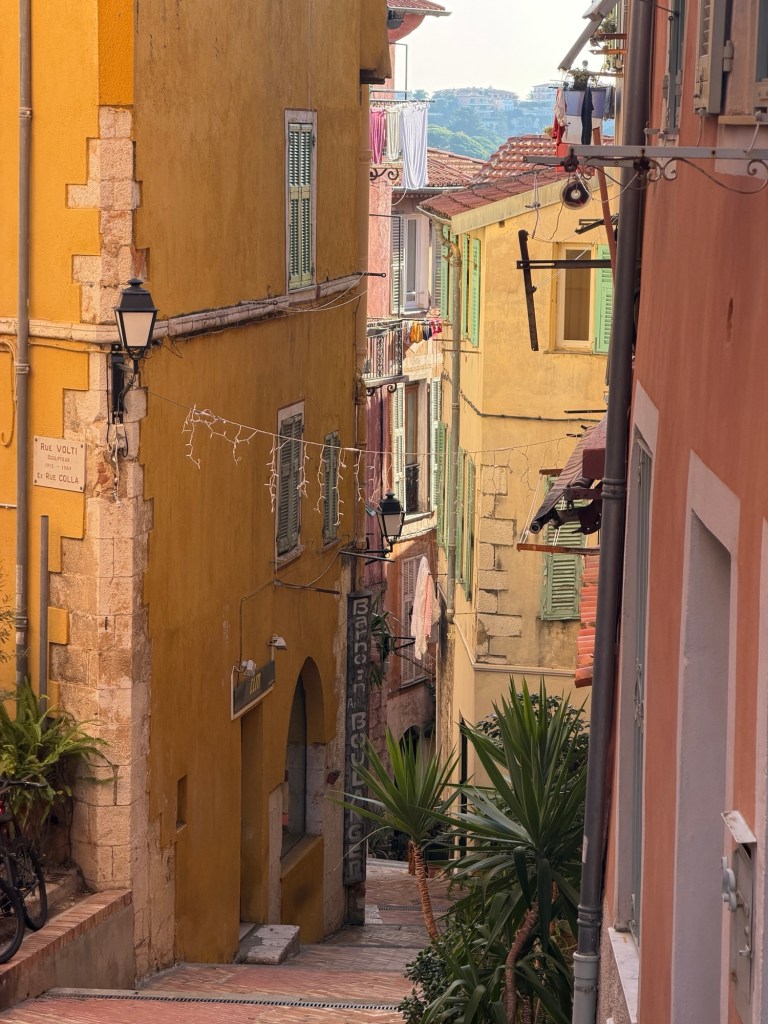
Today we anchored at Villefranche-sur-mer, a small but old suburb of Nice, France. Taking the tender to shore at dawn, I started hiking uphill. Winding my way through brick streets and steep staircases, I reached the hidden start to the trail.
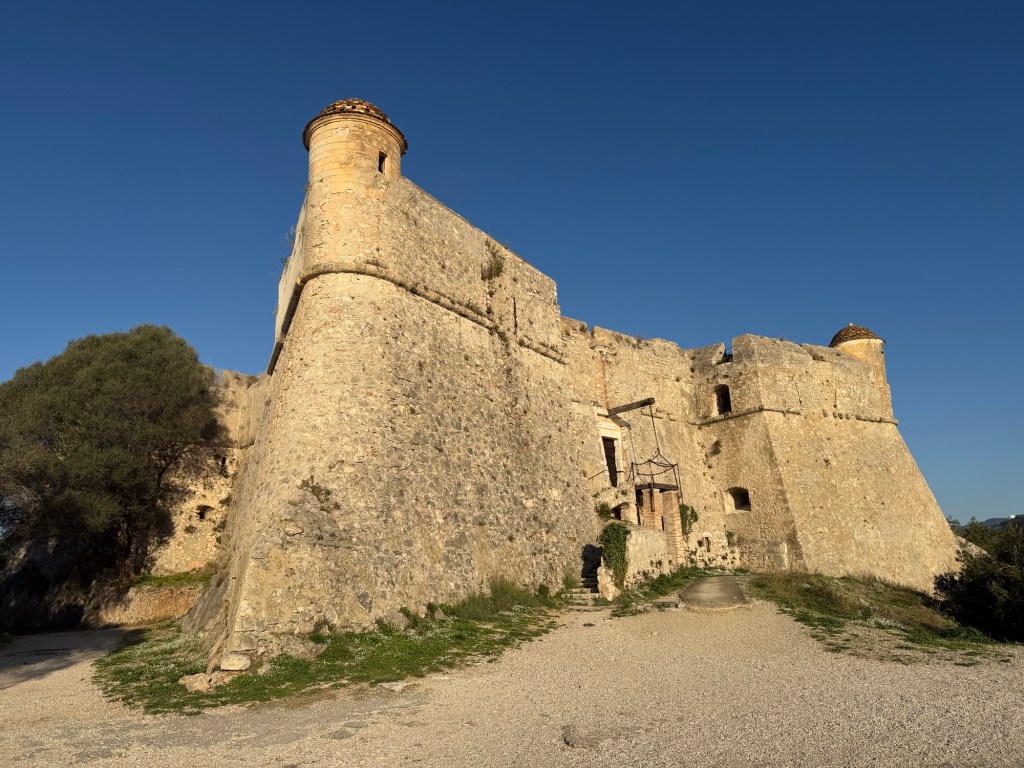
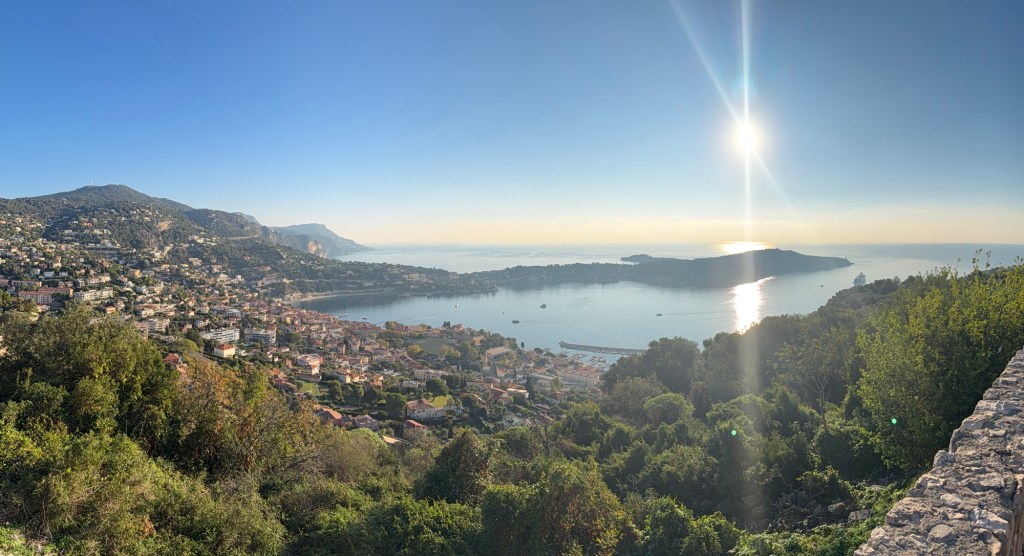
After an hour of climbing I emerged at Fort du Mont Alban. The view over the bay was magnificent, and I sat there in the still morning, appreciating the warm sun and cool stone. It was a good climb.
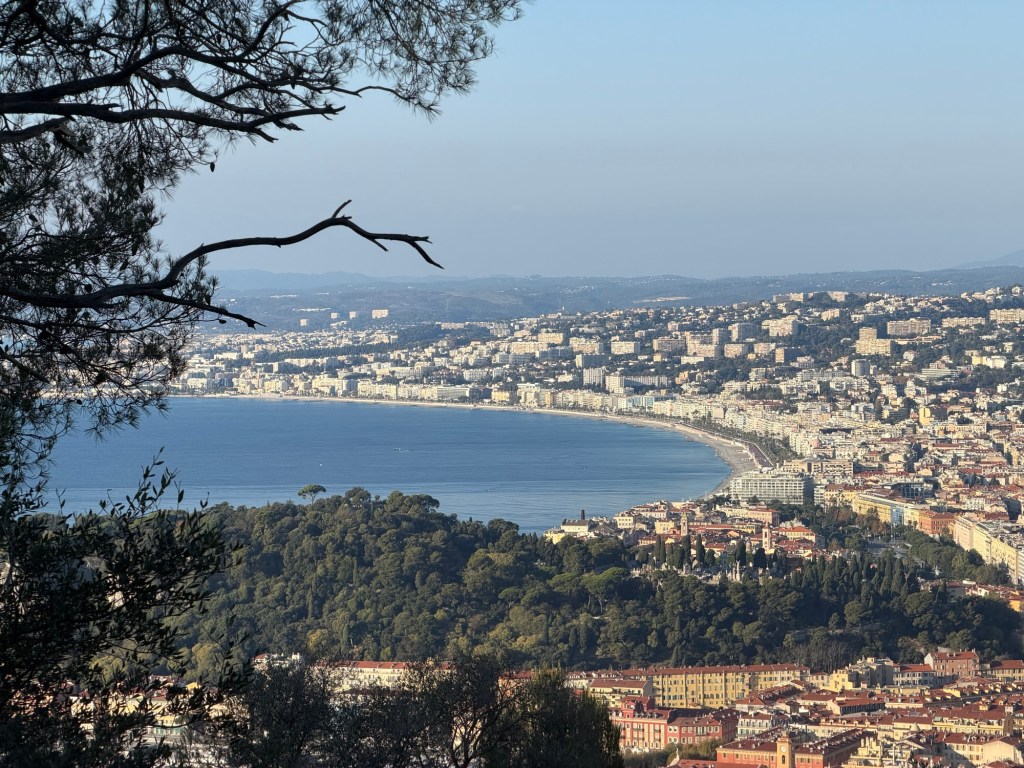
After fifteen minutes passed, the first tour bus pulled up. I bid farewell to the eastern view, and dipped behind the fort to gaze westward to Nice. Following a different path, I wandered and rambled back to town.
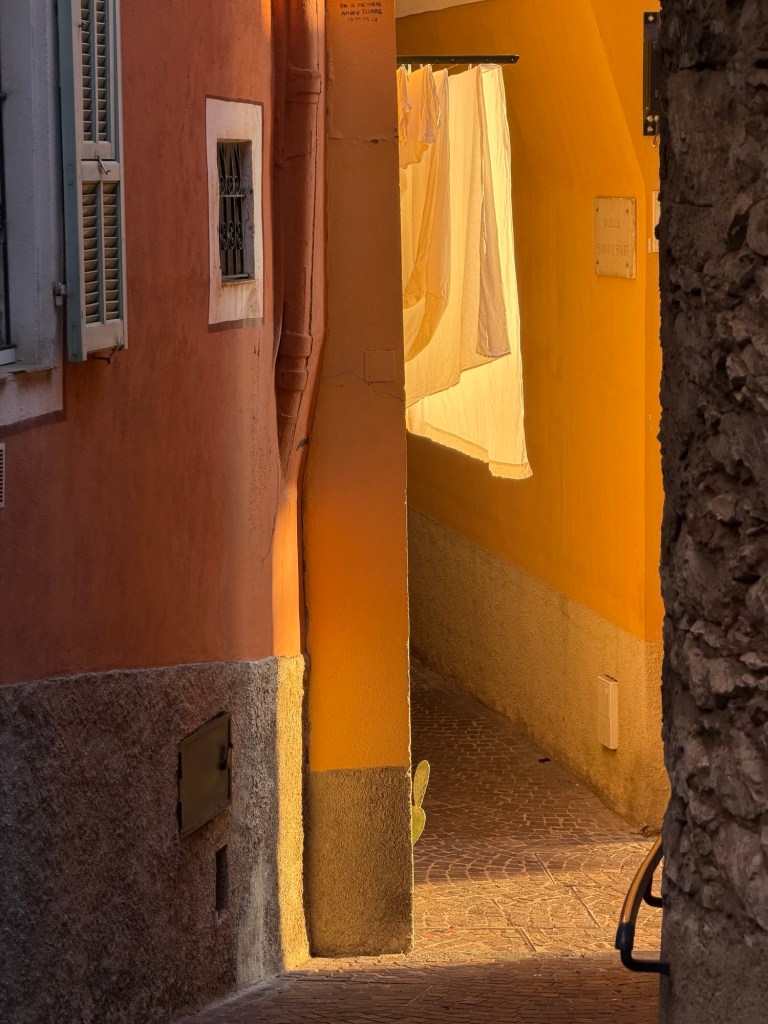
In the old section of town I wandered the streets, appreciating the architecture and the evidence of active and joy-filled lives. Potted plants, crisp white sheets drying outside the windows, shopkeepers sweeping the street front.
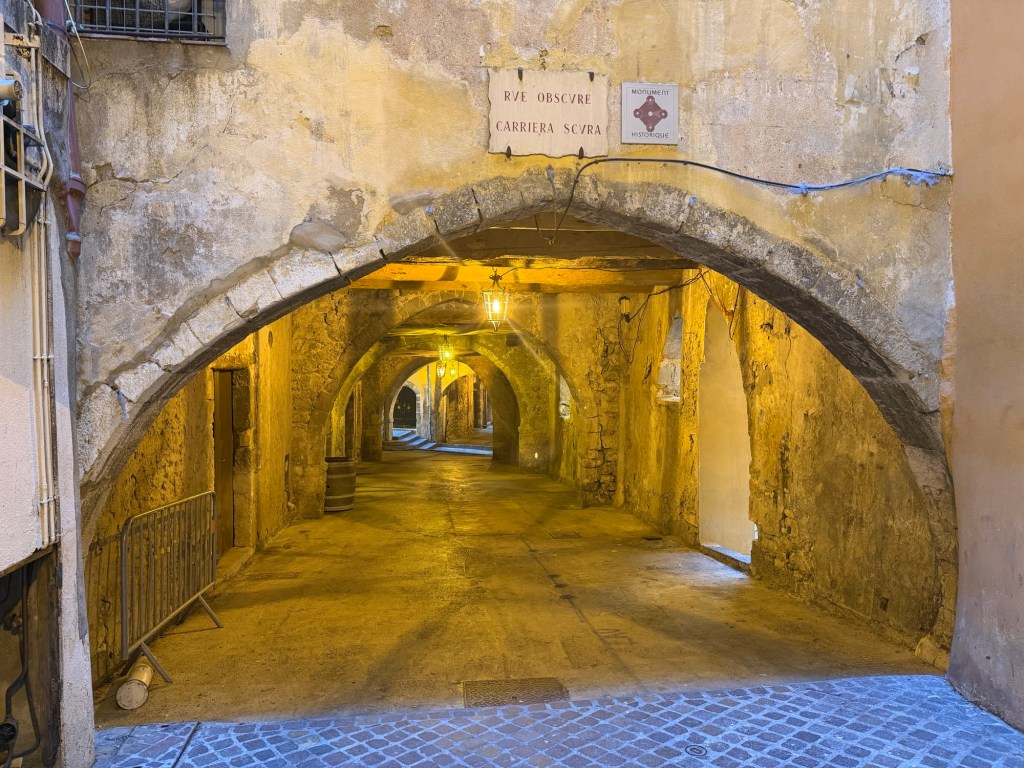
Rue Obscure was a particular delight, secretive and ancient.
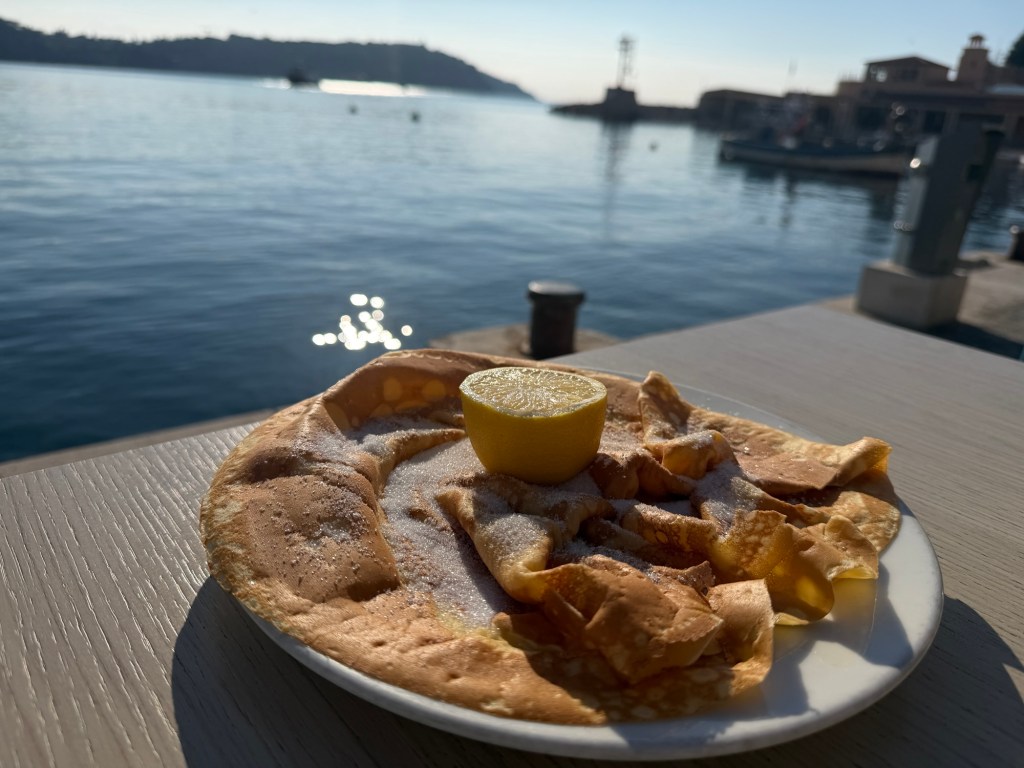
After, I walked the waterfront and settled at a waterside table for a local cafe. A crepe sucre et citron. Light, delicious, delicate.
All that was left was a journey by tender back to the ship.
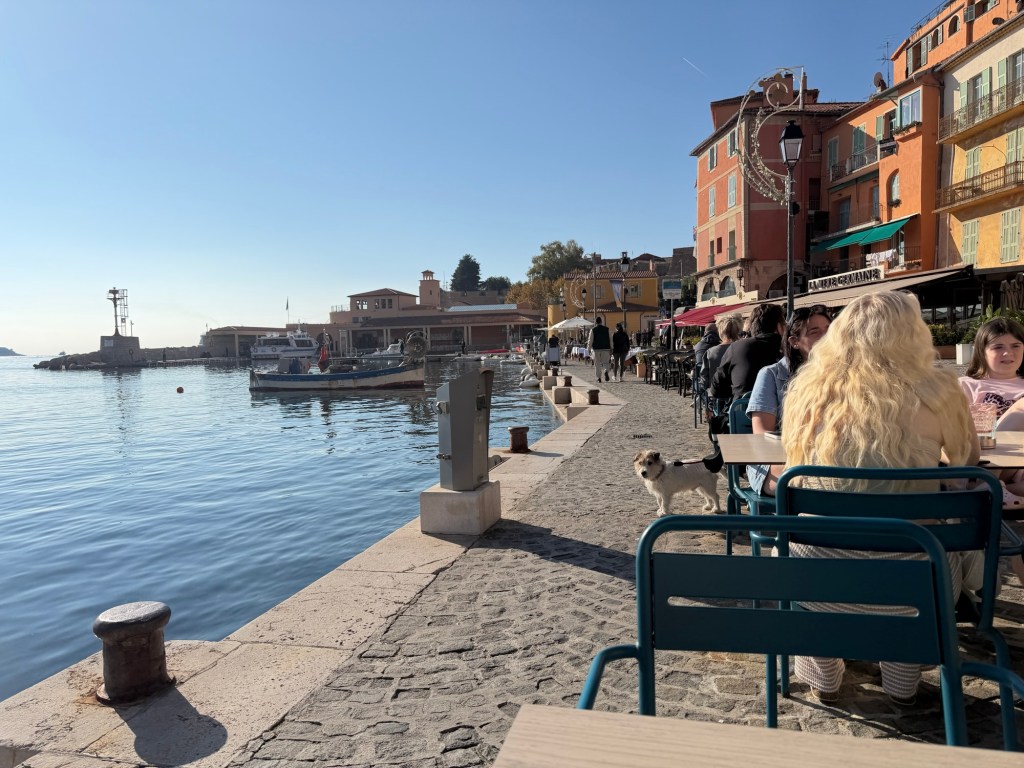
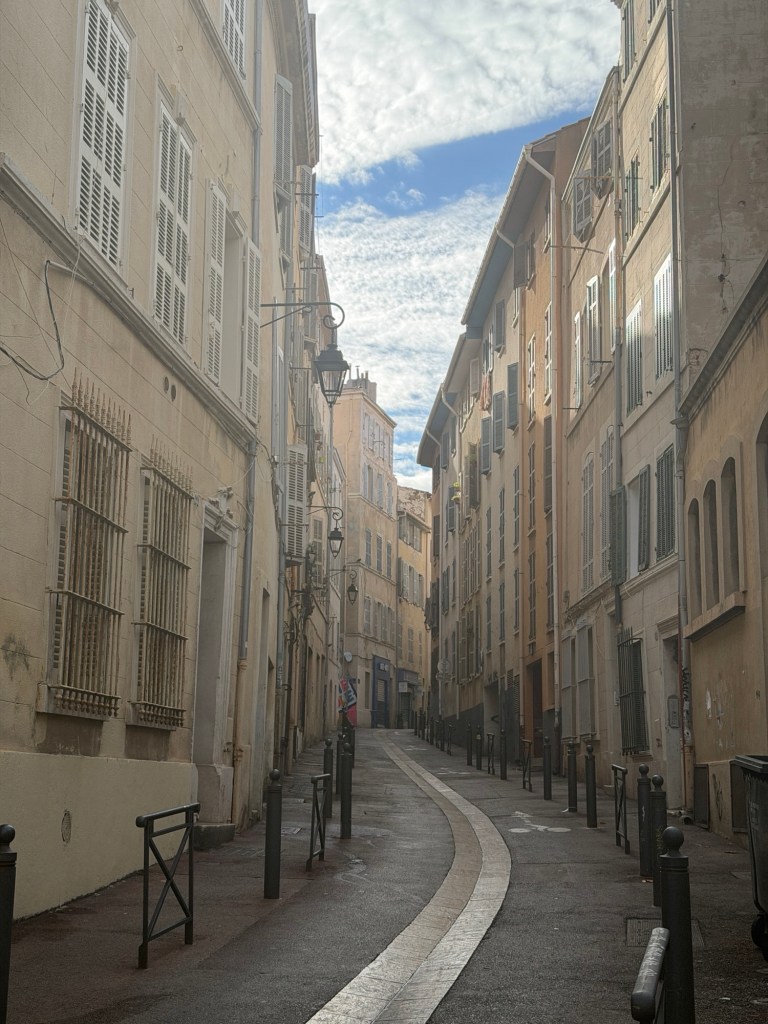
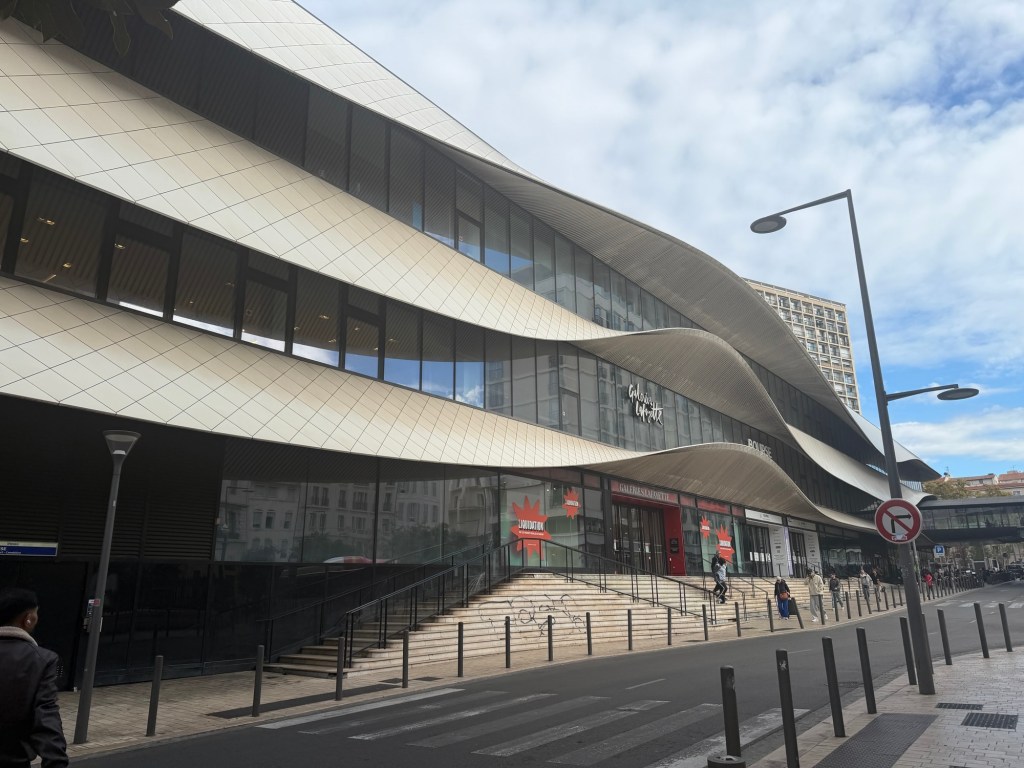
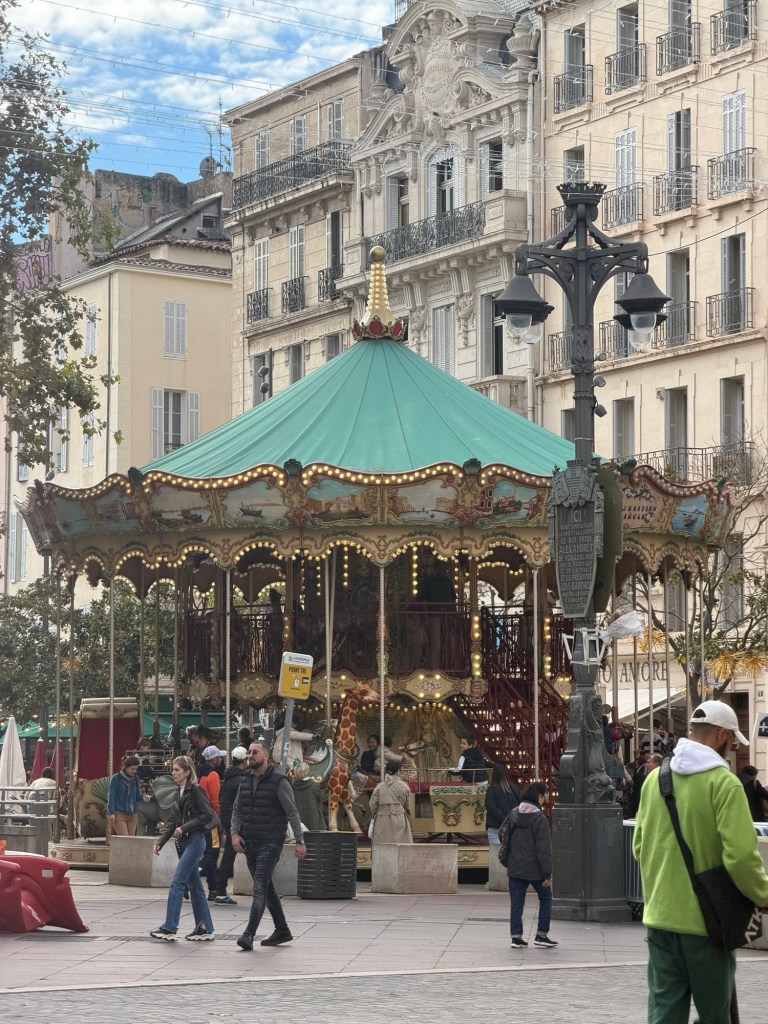
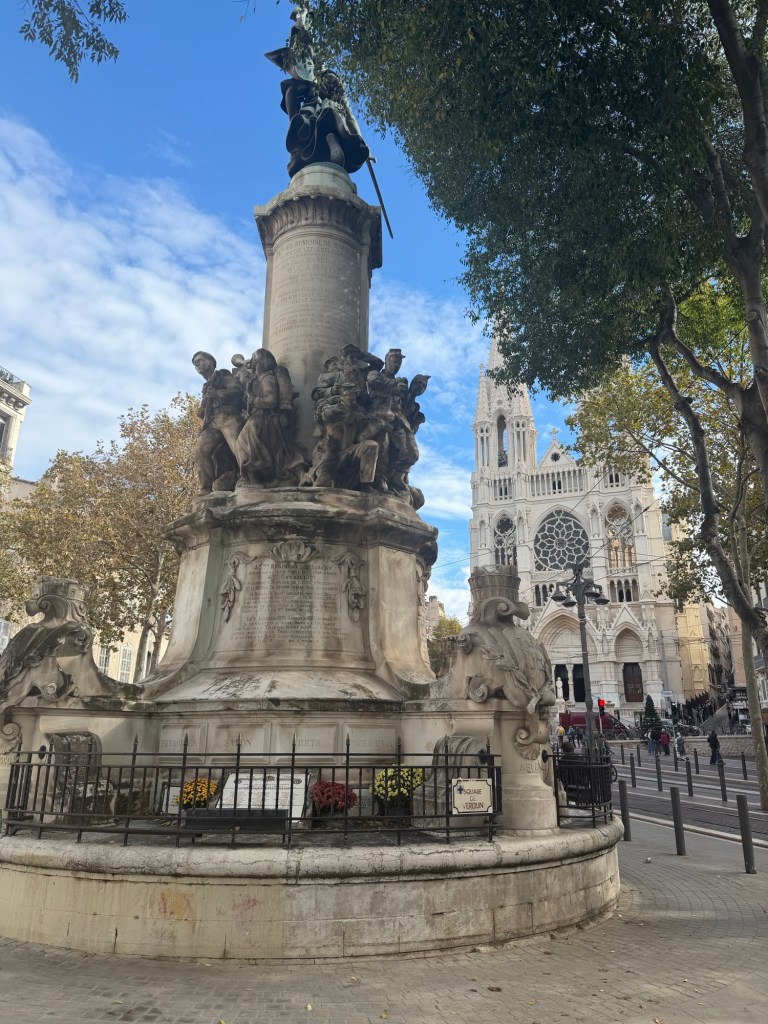
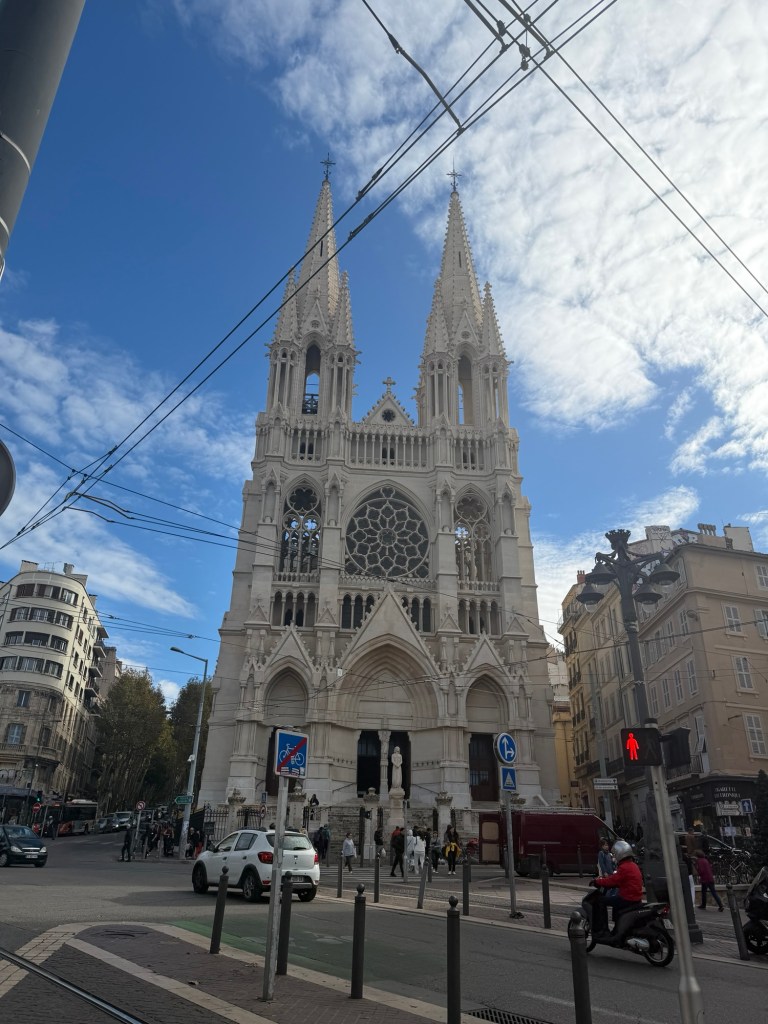
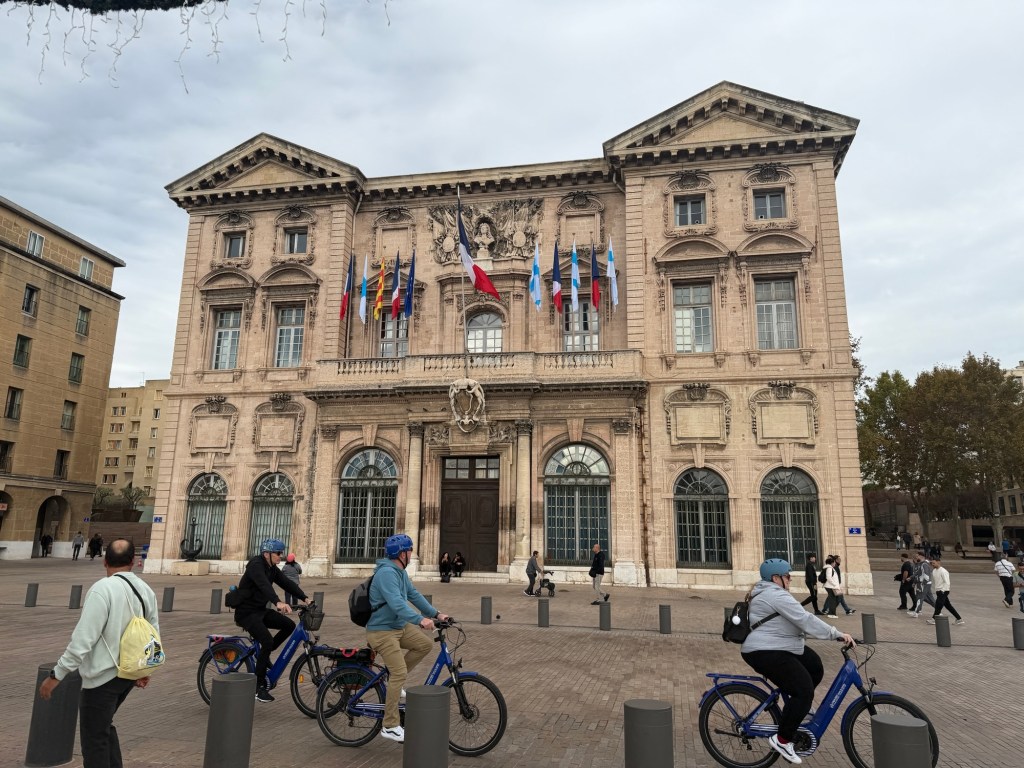
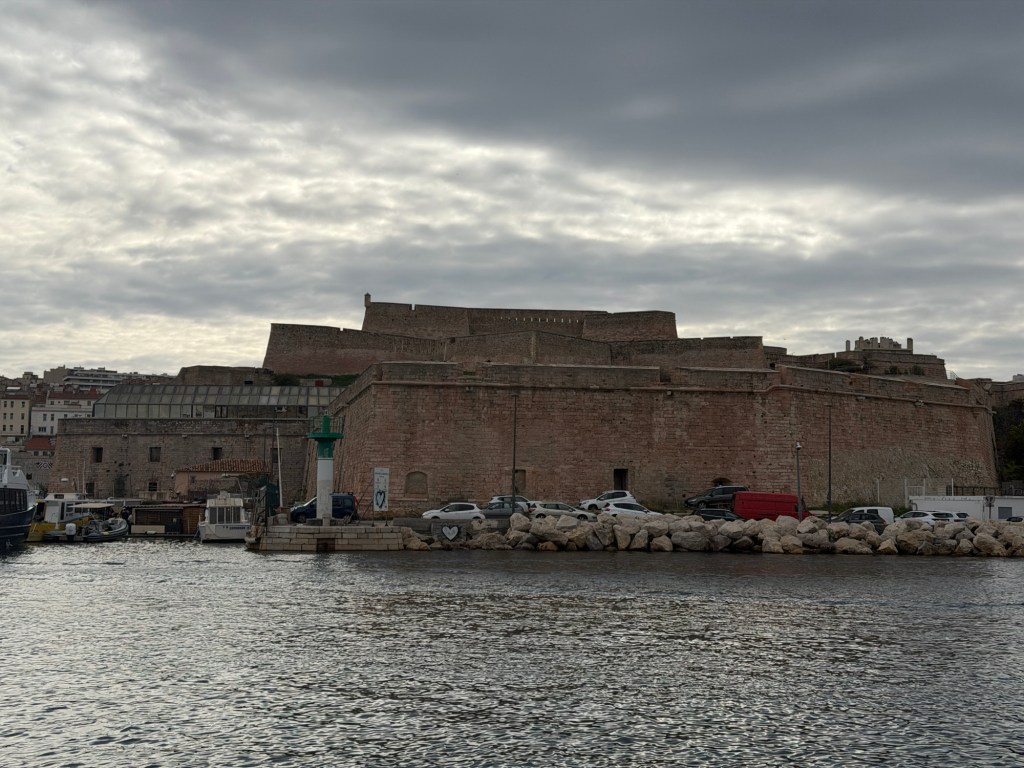
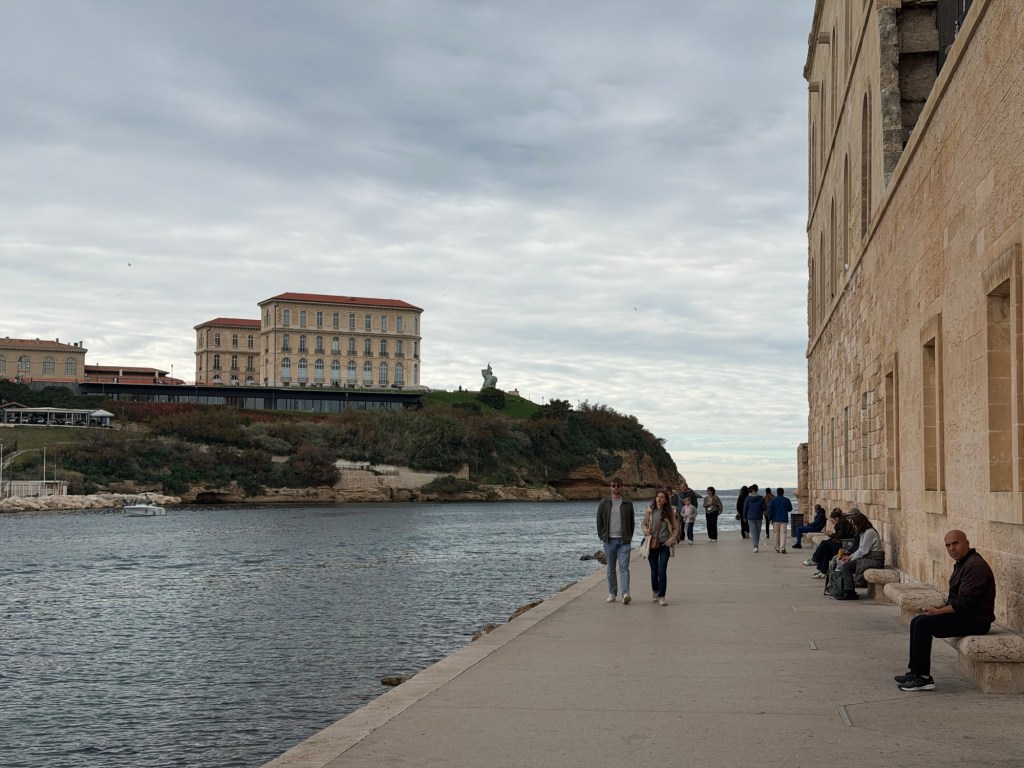
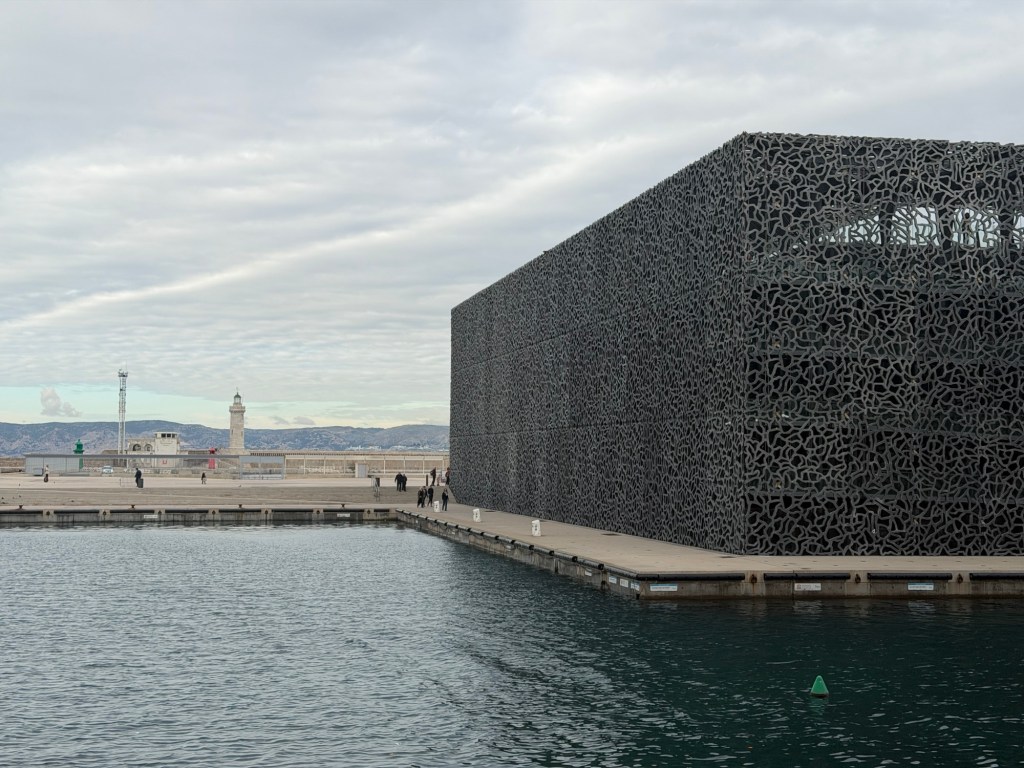
Today’s port of call was Marseille. I took the shuttle into town, and started exploring.
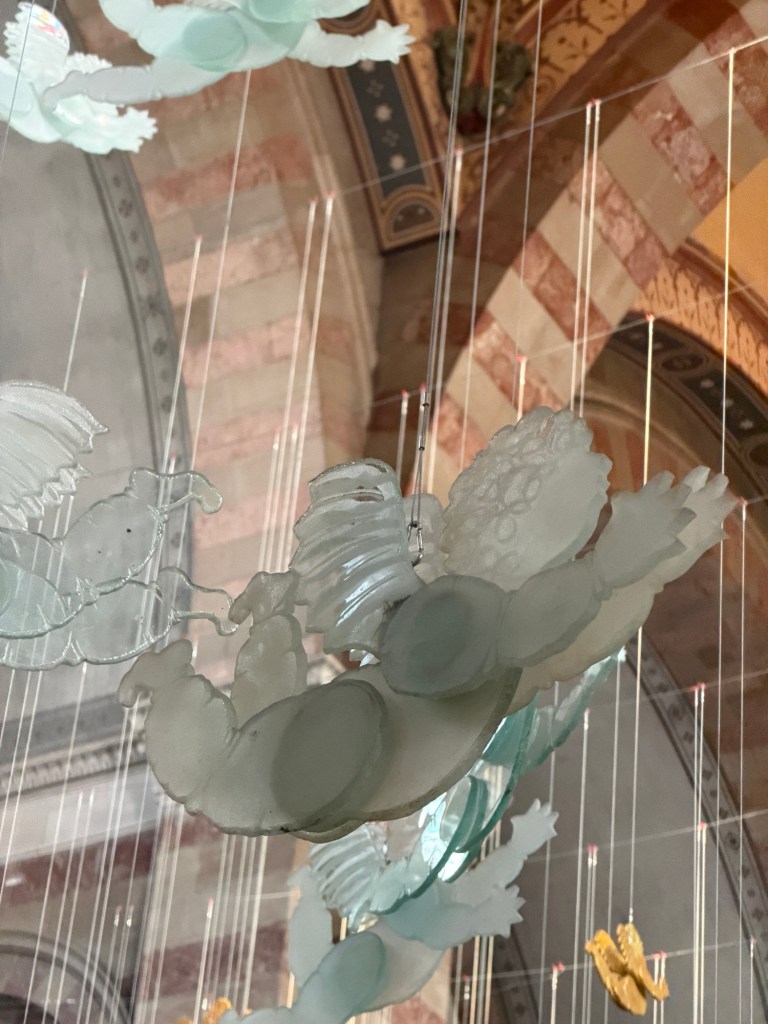
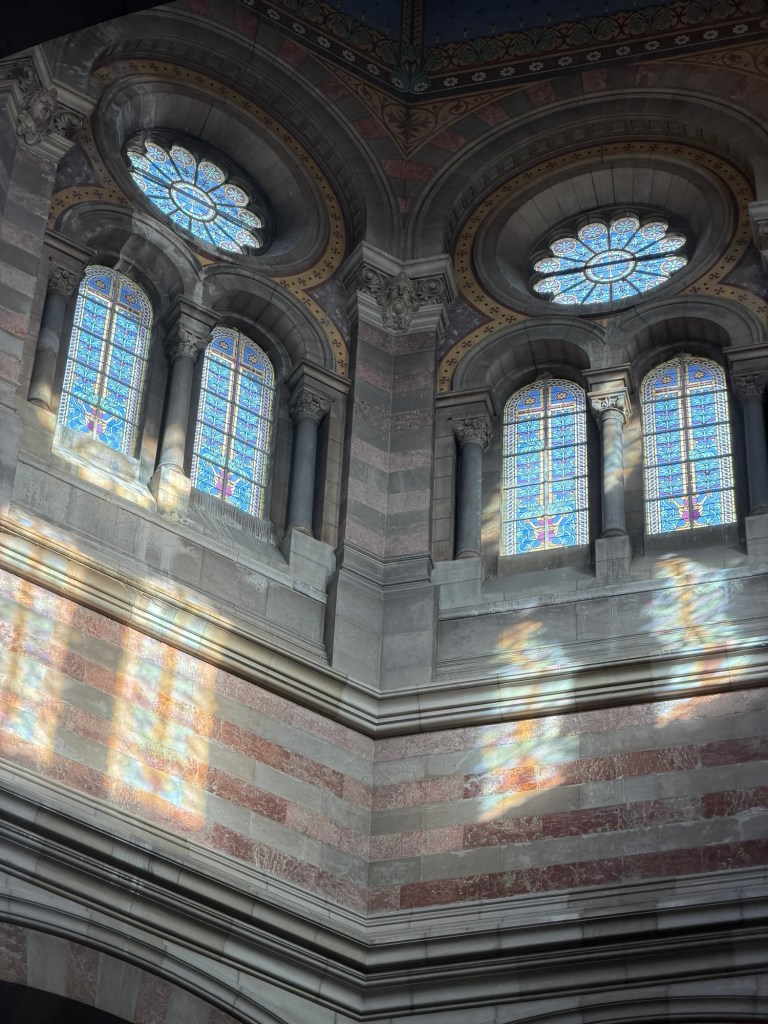
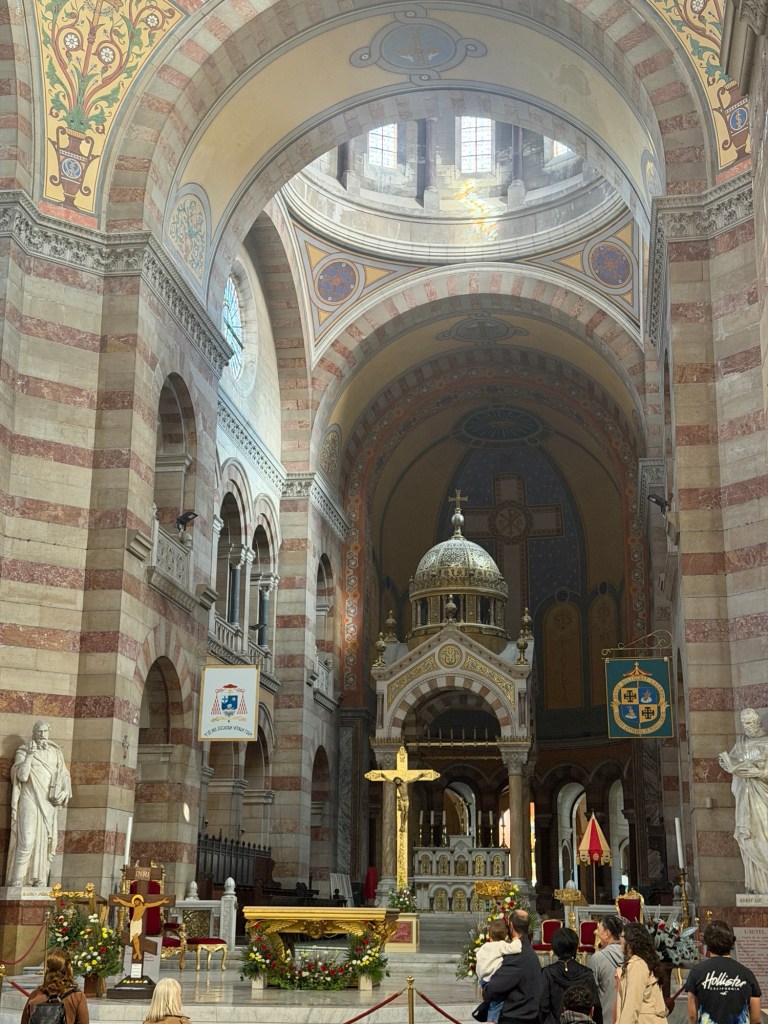
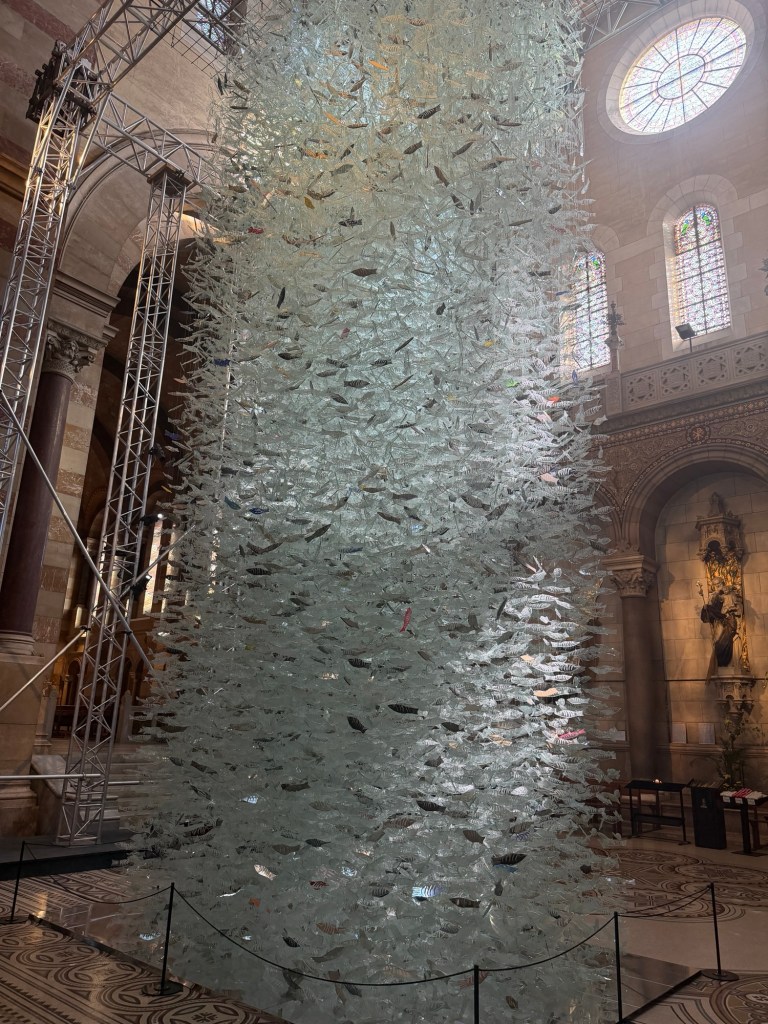
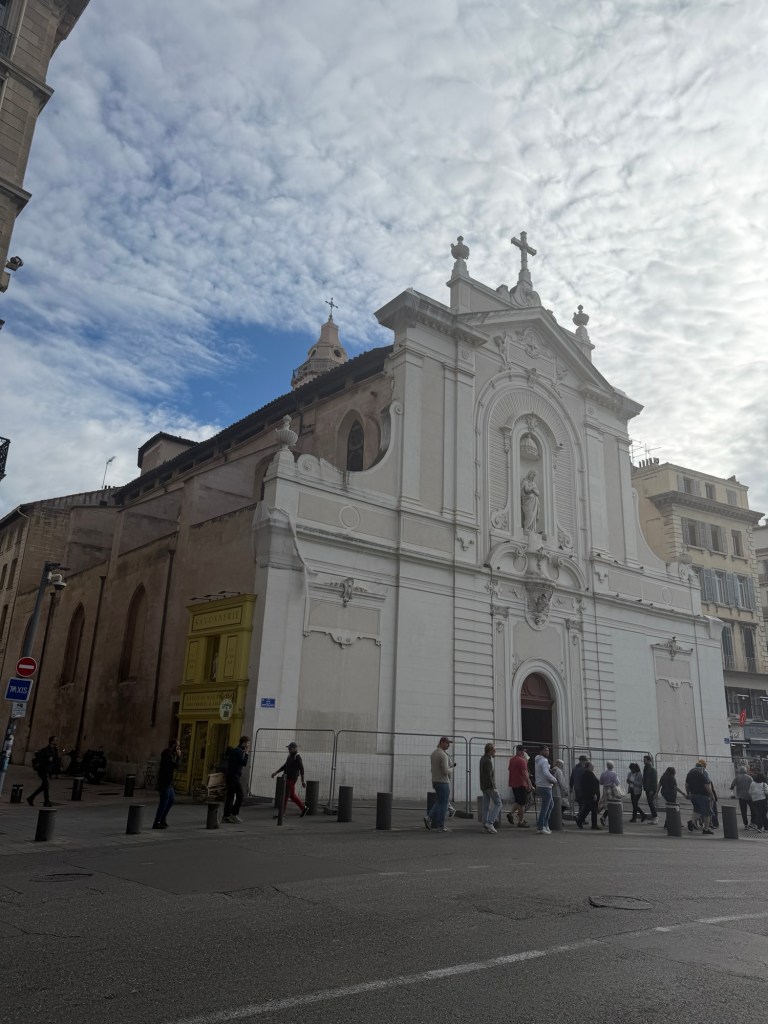
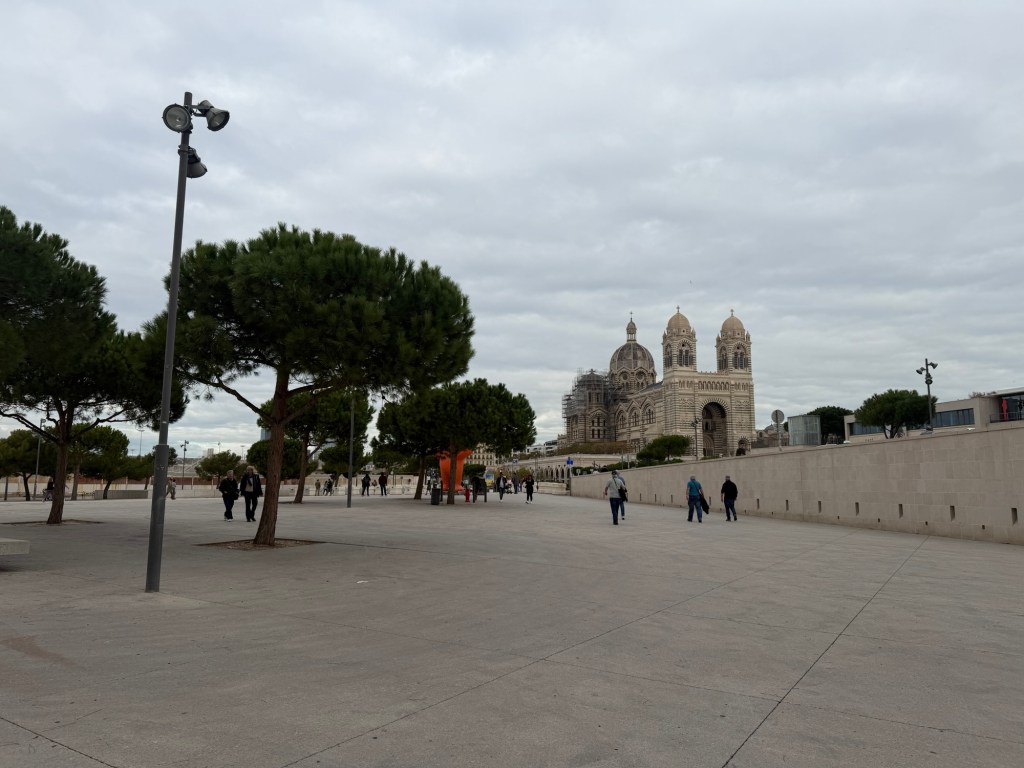
First was Cathédrale la Major de Marseille, which conveniently opened as I arrived. As a special bonus, it was hosting an art show of beautiful works of glass.
Then I started walking, once again navigating on vibes and winding my way through narrow streets and quiet squares. I found a few shops – including one selling their famous soap, and a place to buy a toothbrush (the one I brought was in bad shape).
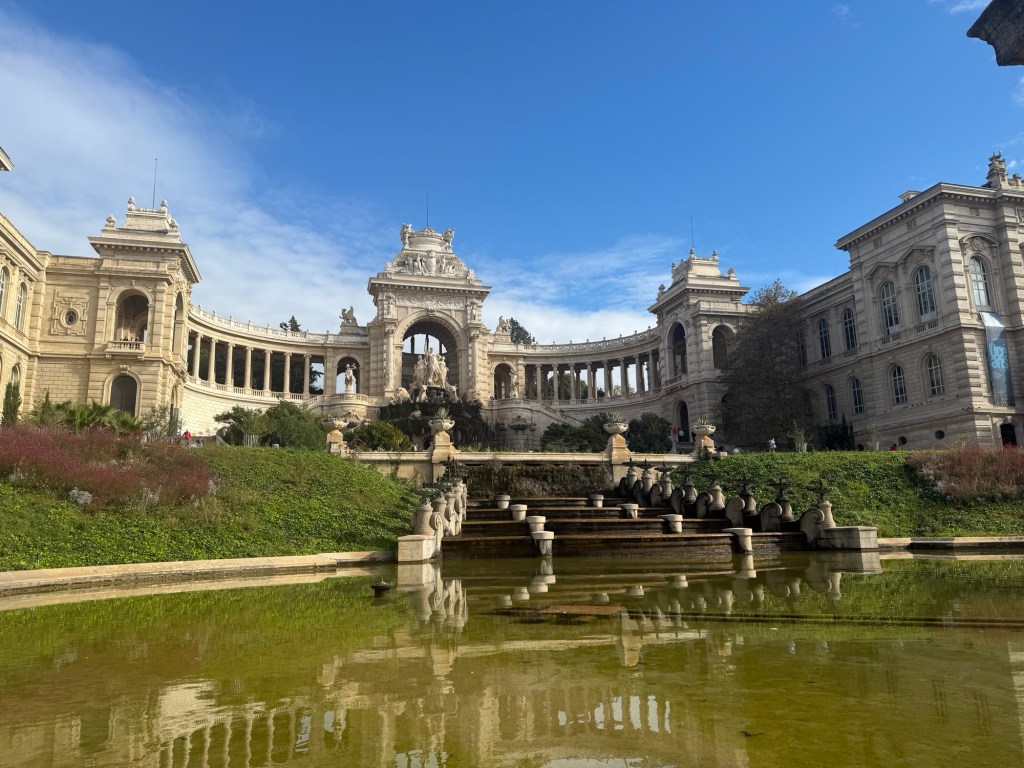
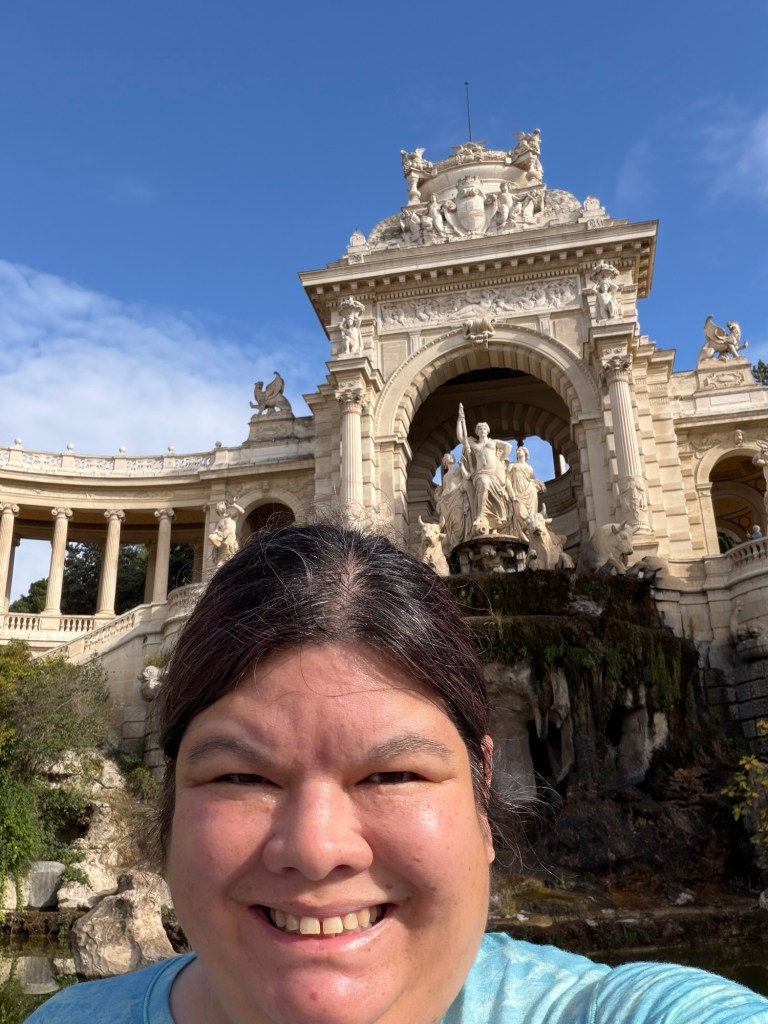
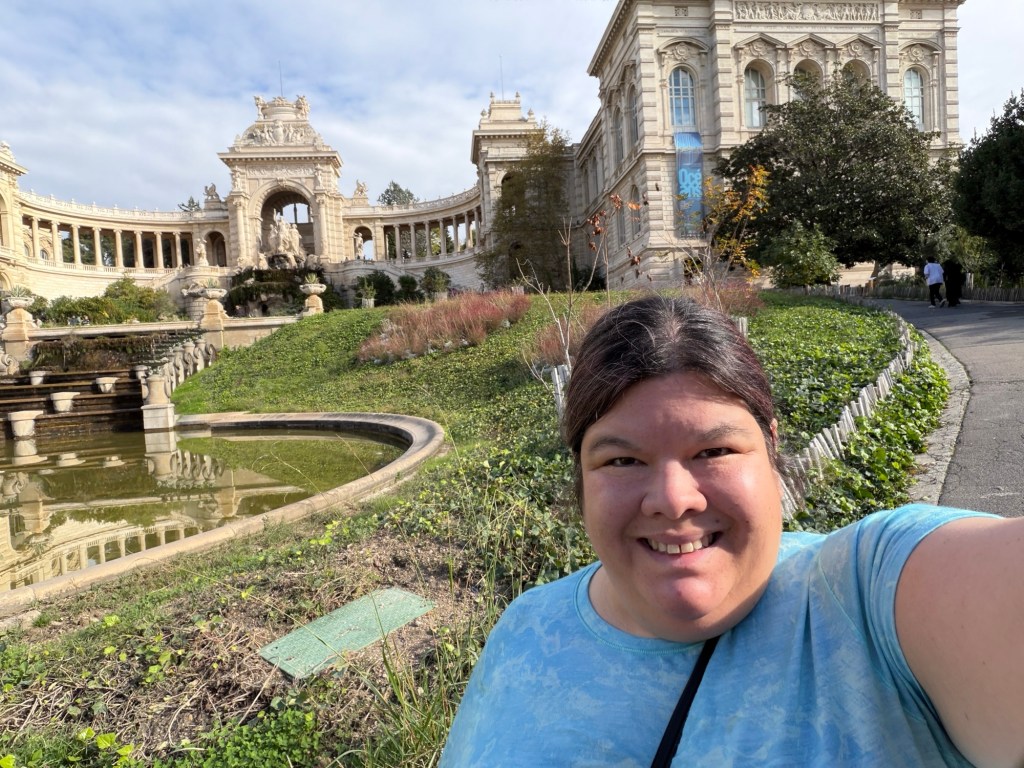
Hitting the bustling centre of town, I headed up the hill to the Palais Longchamp. A gorgeous celebration of the completion of a canal, I enjoyed the lush gardens before heading to the waterfront.
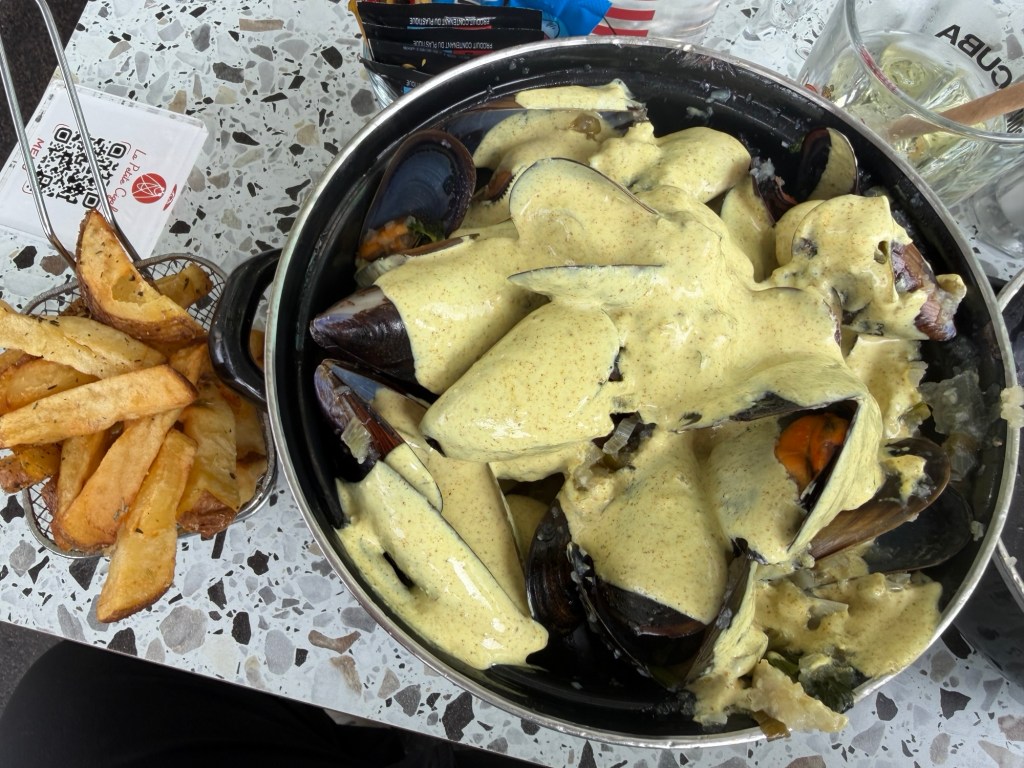
It was then lunchtime, and I found an outside table at a brassiere for “ formule moules frites maison,” a curry based mussels dish.
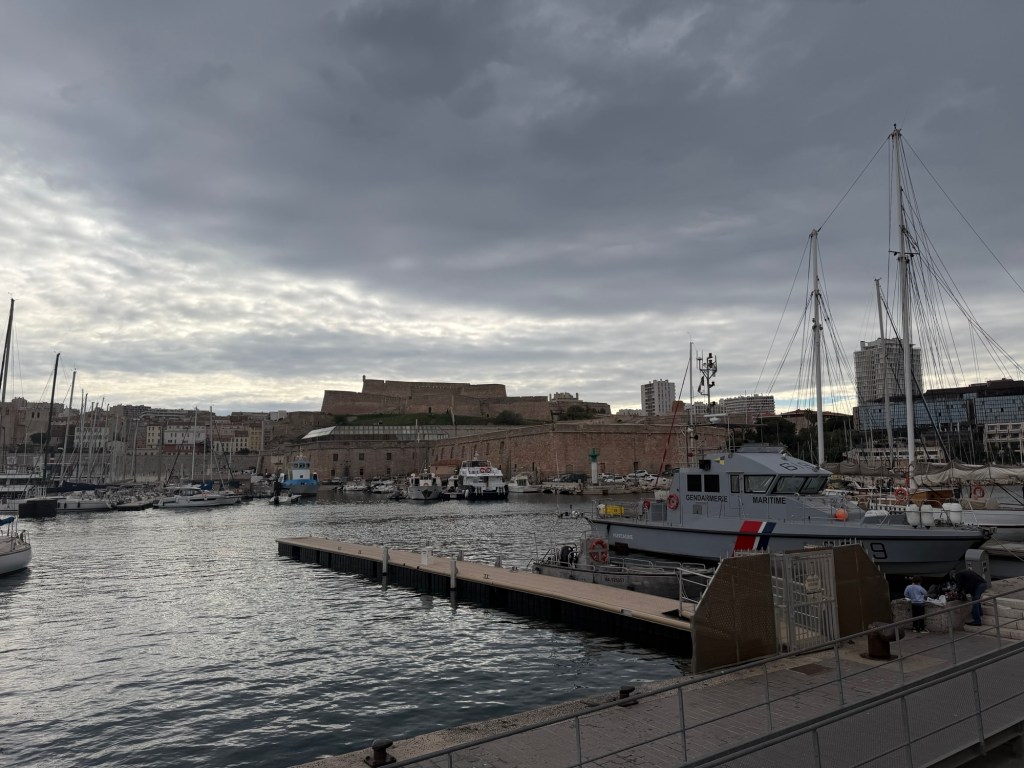
After lunch, I would my way along the waterfront pathway back to the shuttle pickup point. A wonderful day.

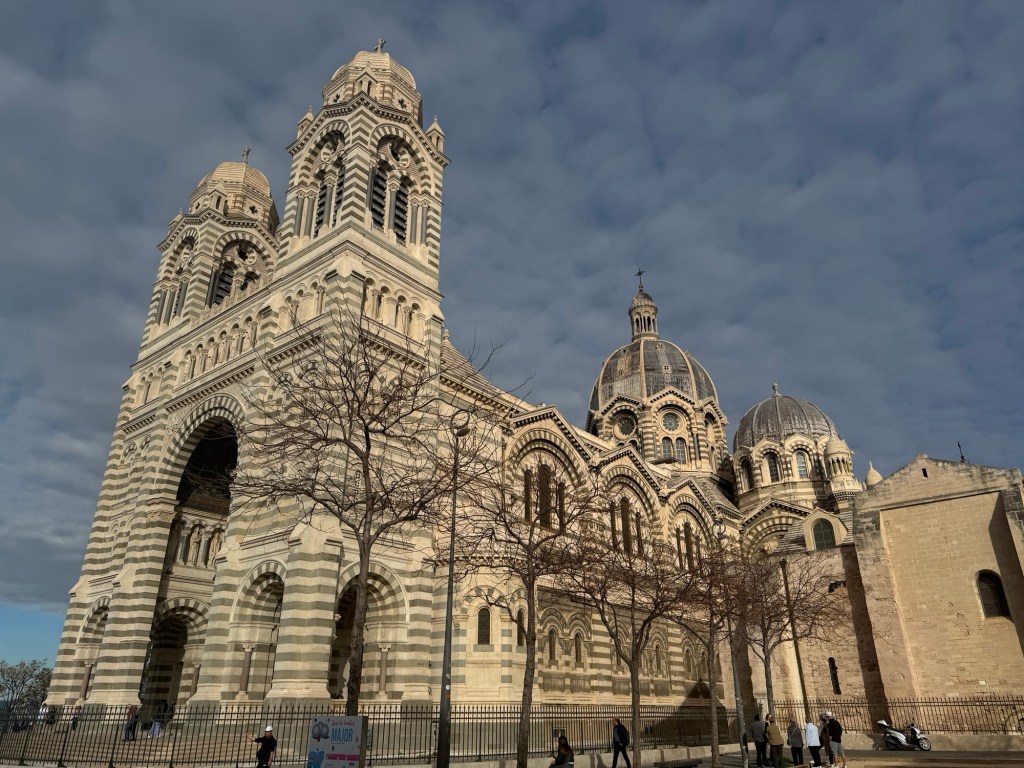
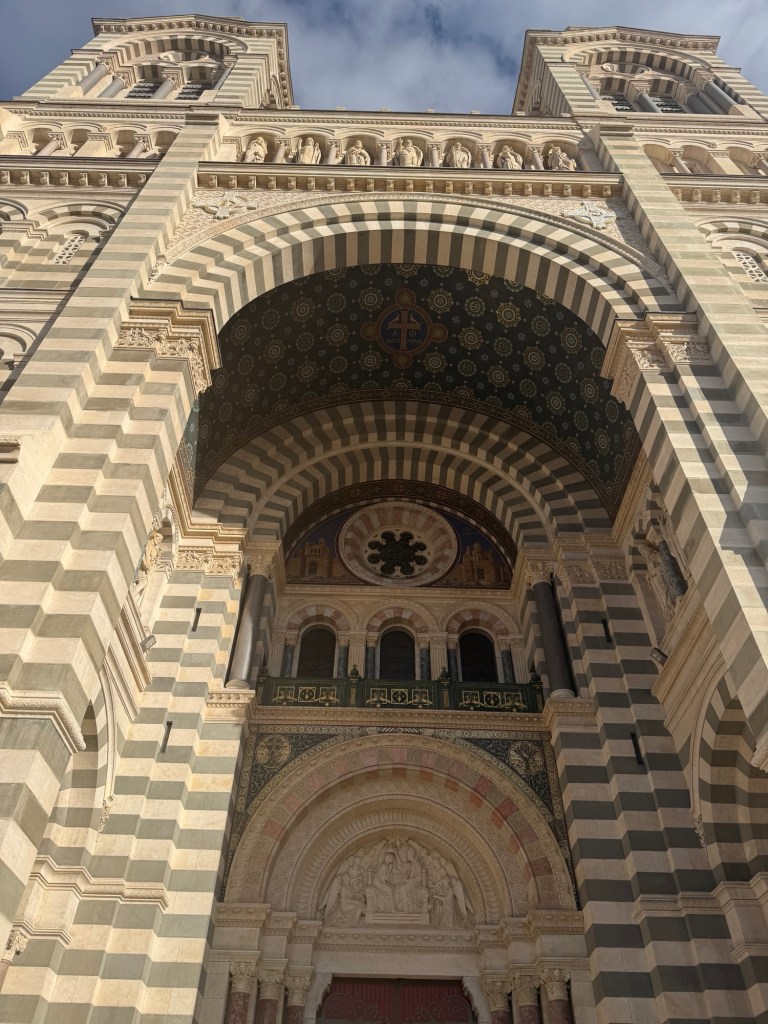
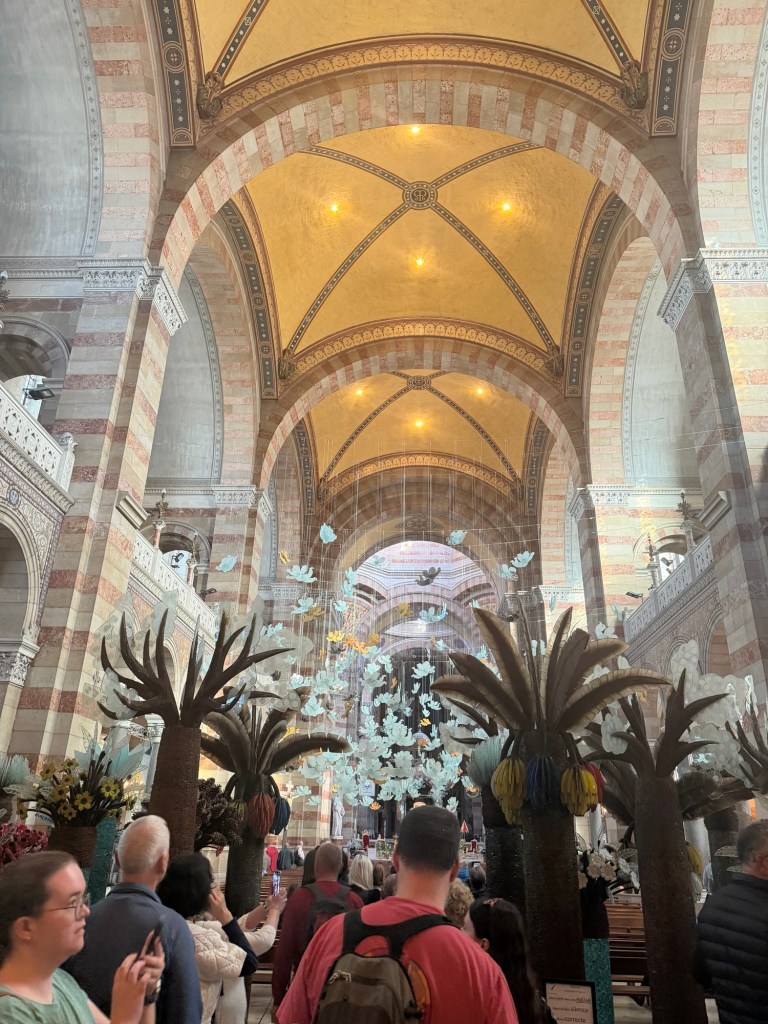

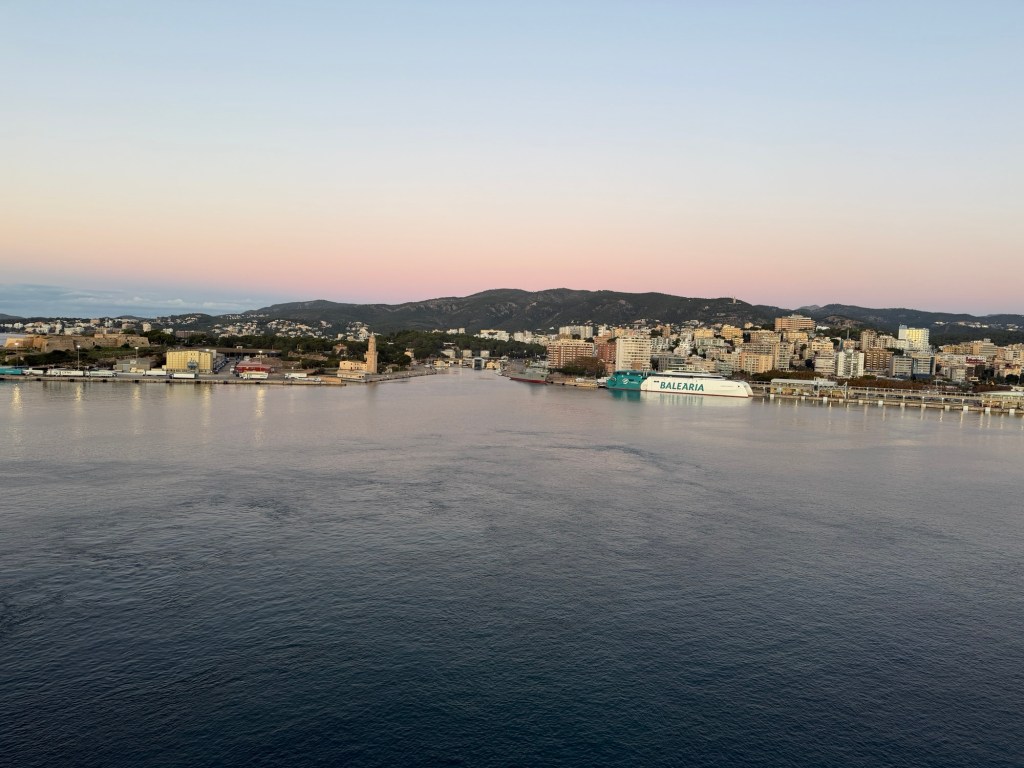
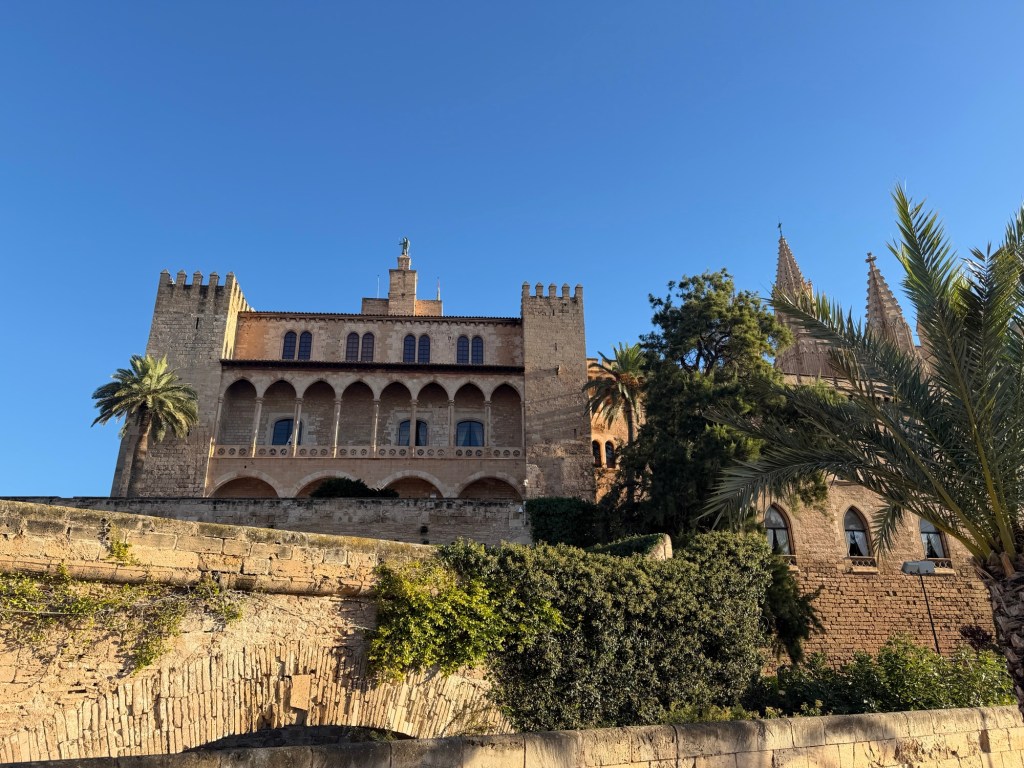
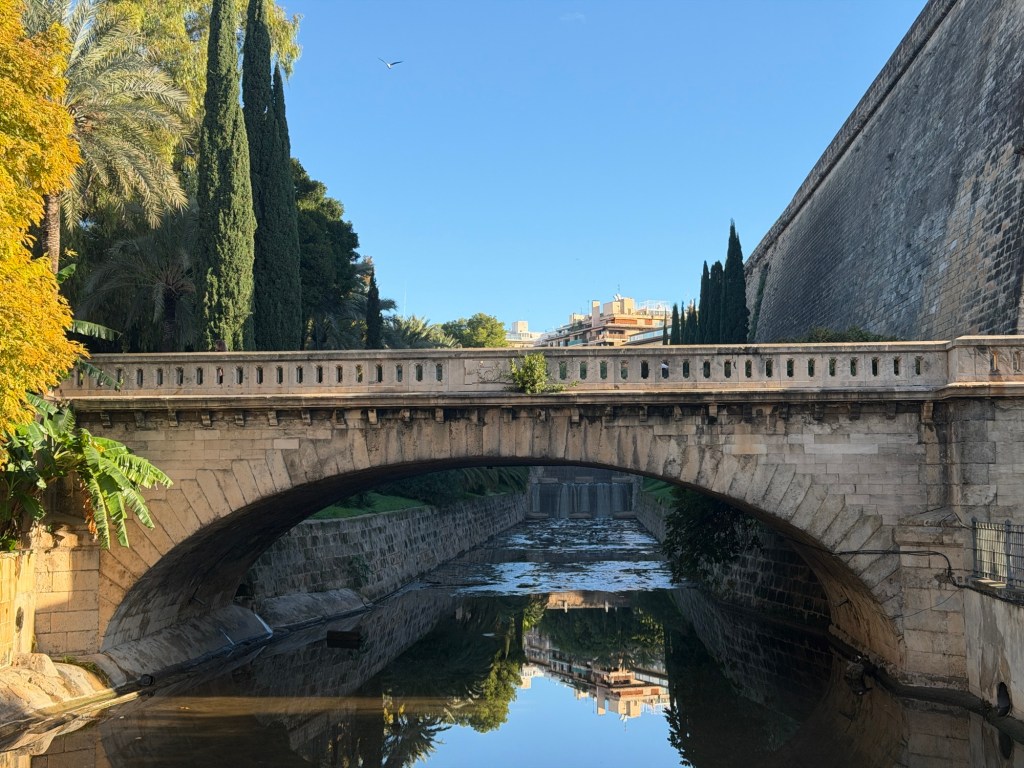
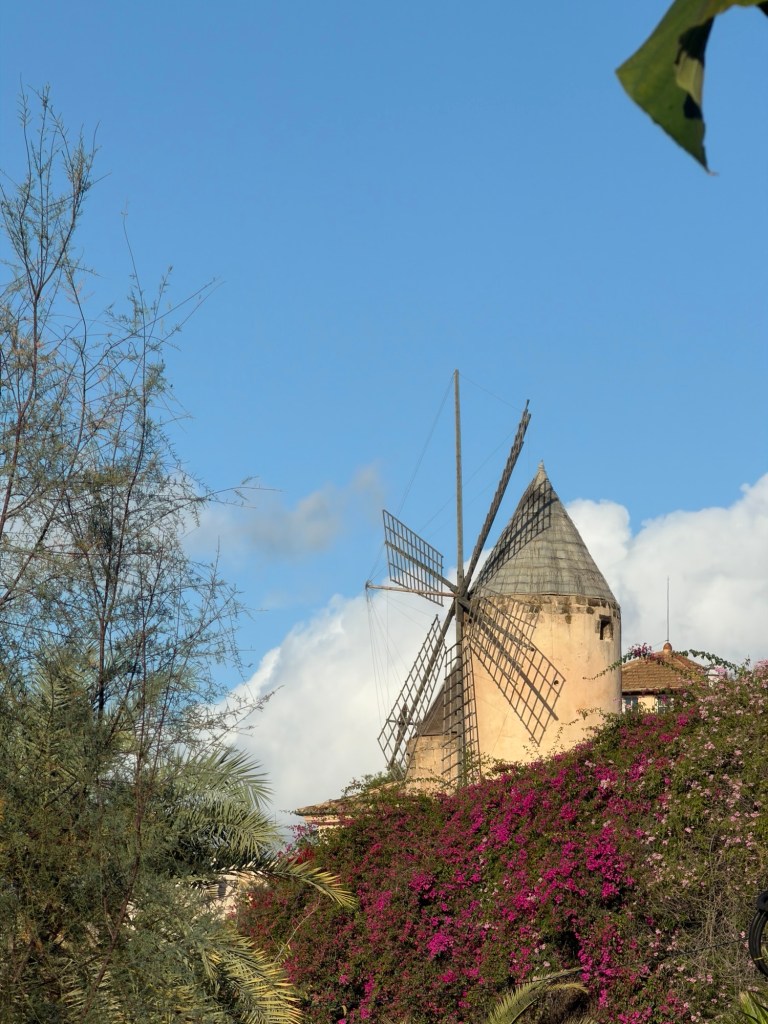
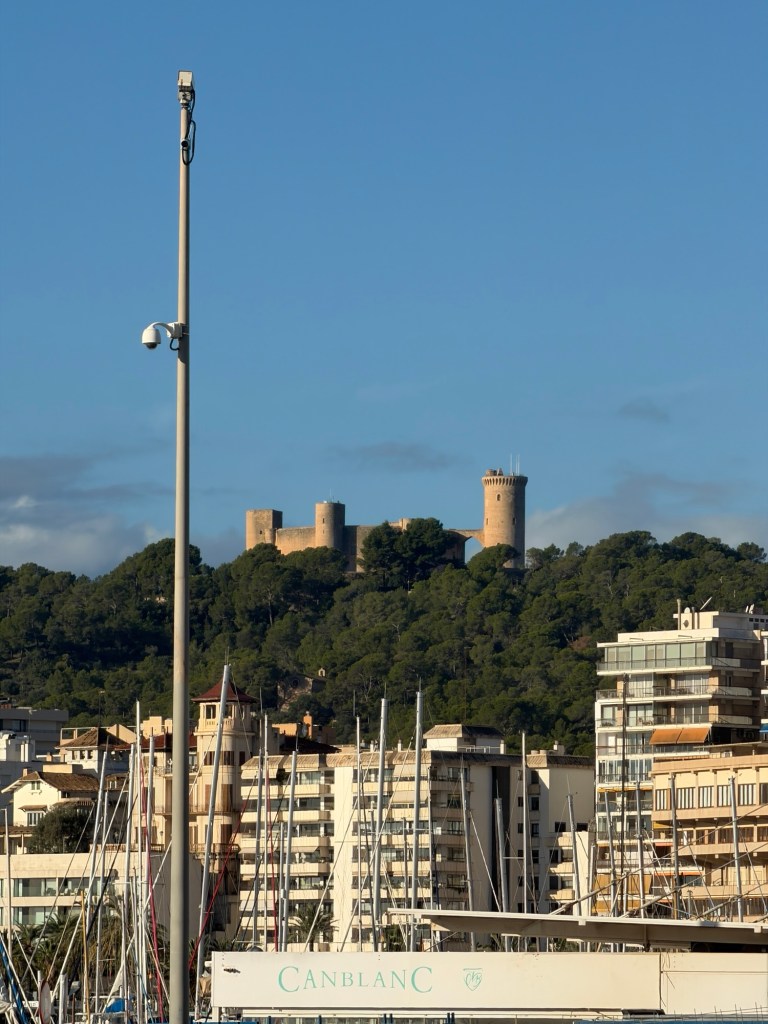
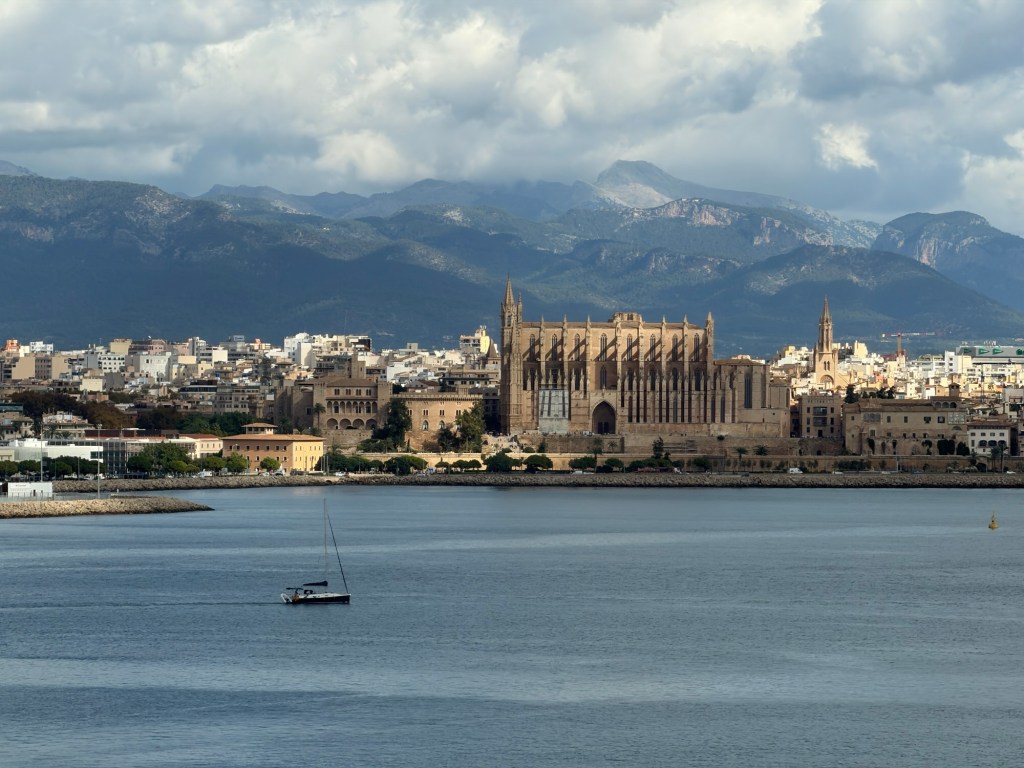
I woke today just outside the port of Palma, on the quintessential vacation spot of Europe’s wealthy, the island of Mallorca.
After an omelet and fruit, I disembarked and walked through the quiet port, one of the first off the ship. I saw a city bus going my way, and rode to the far side of town for an affordable €3.
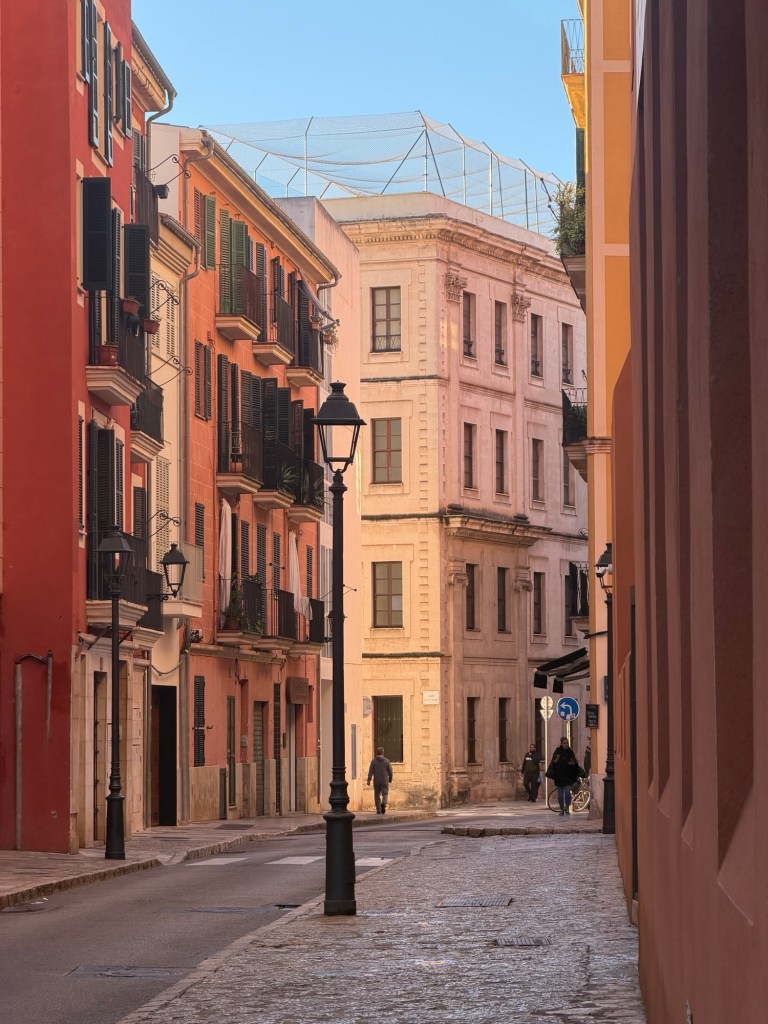
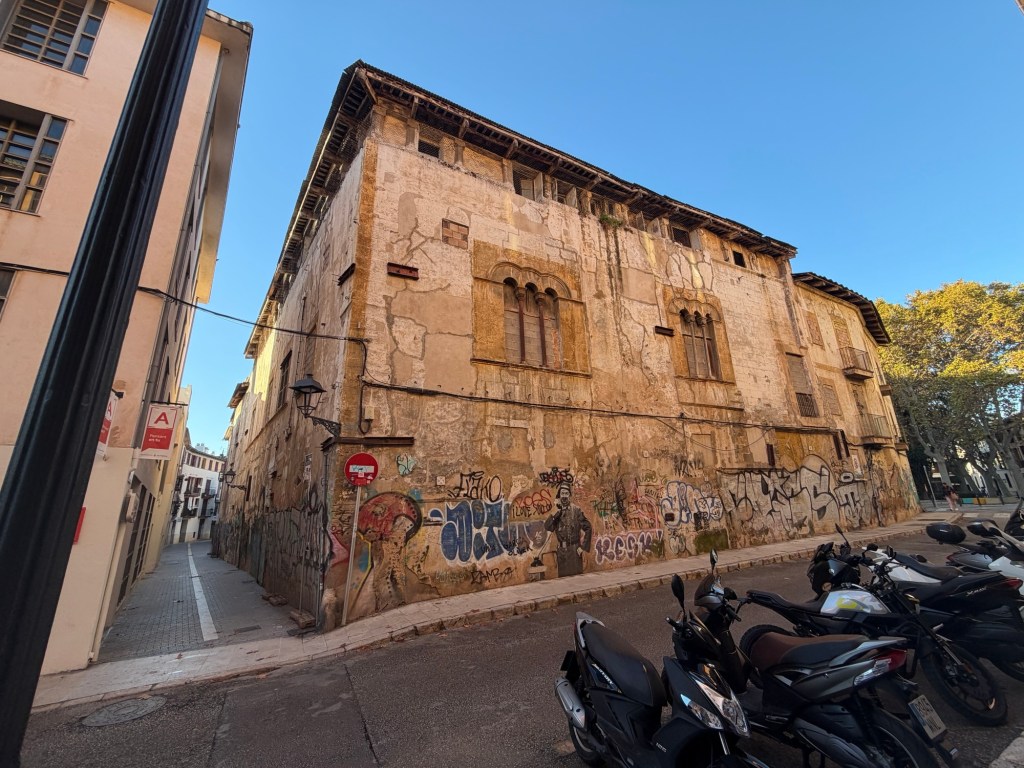
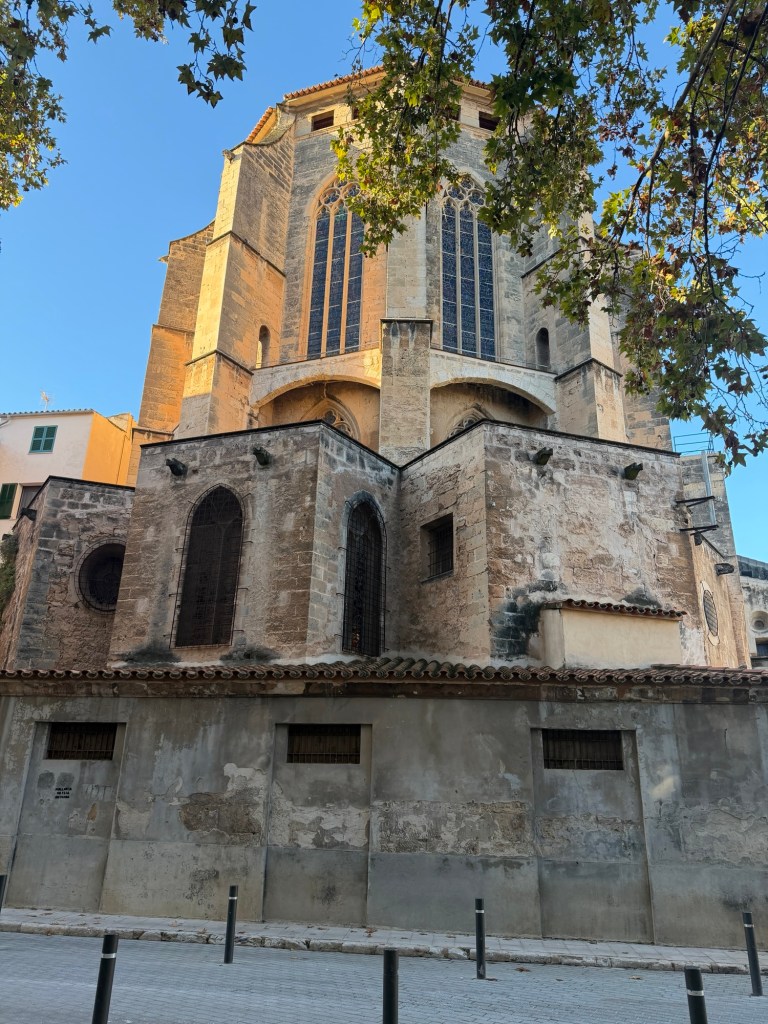
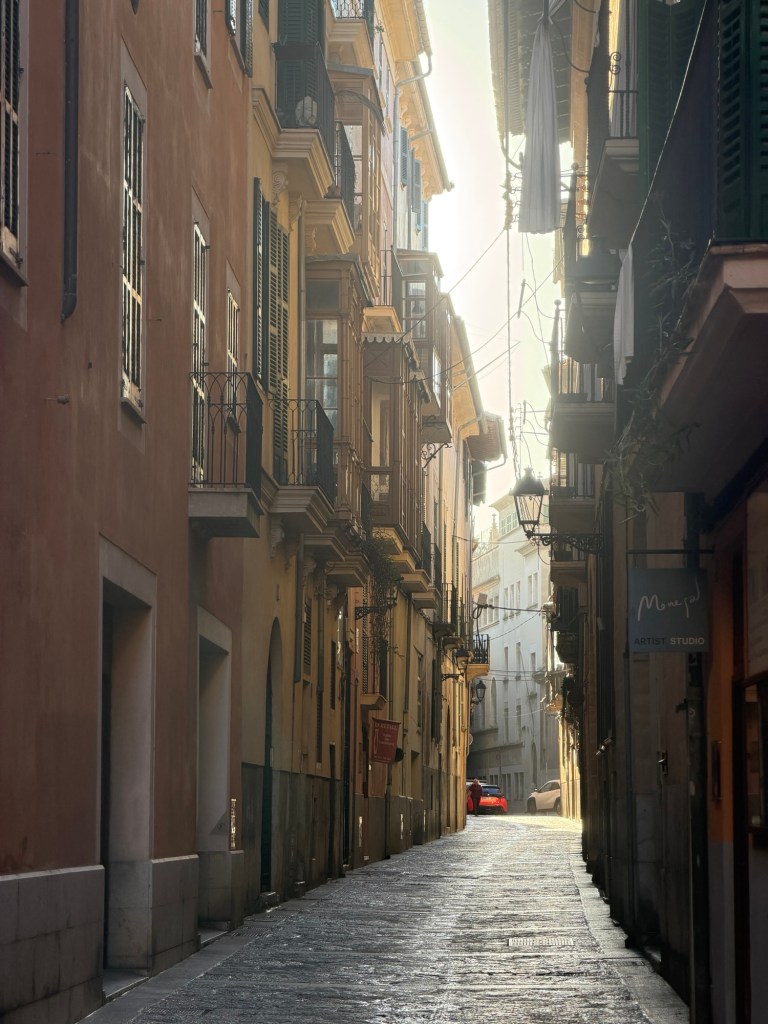
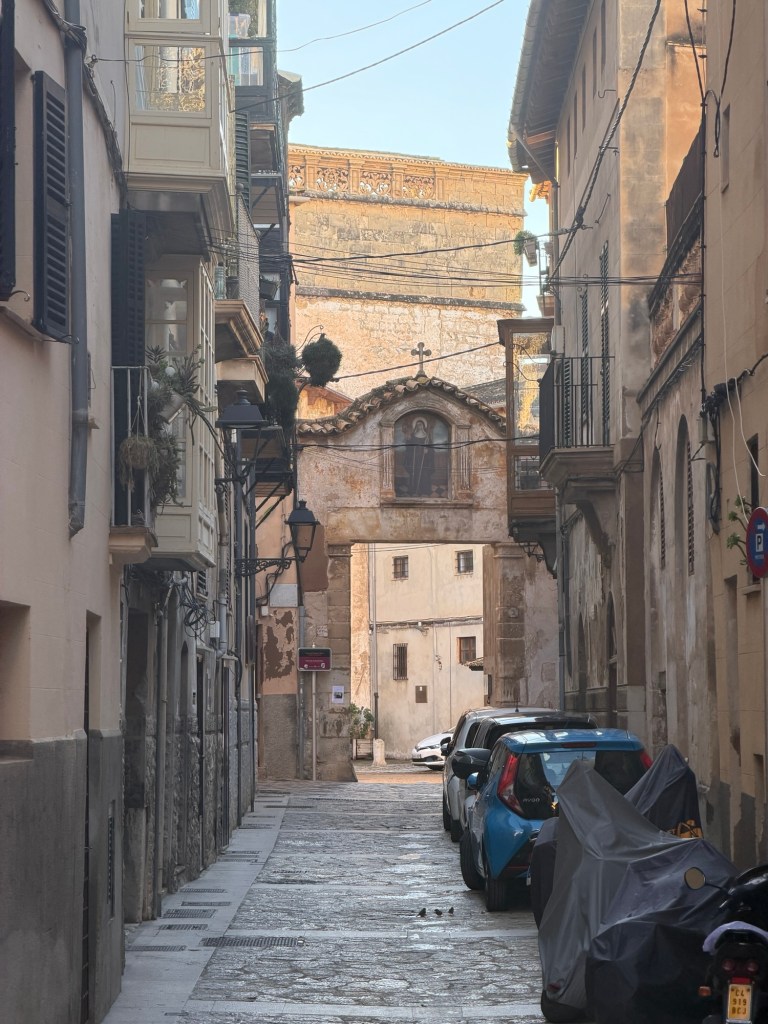
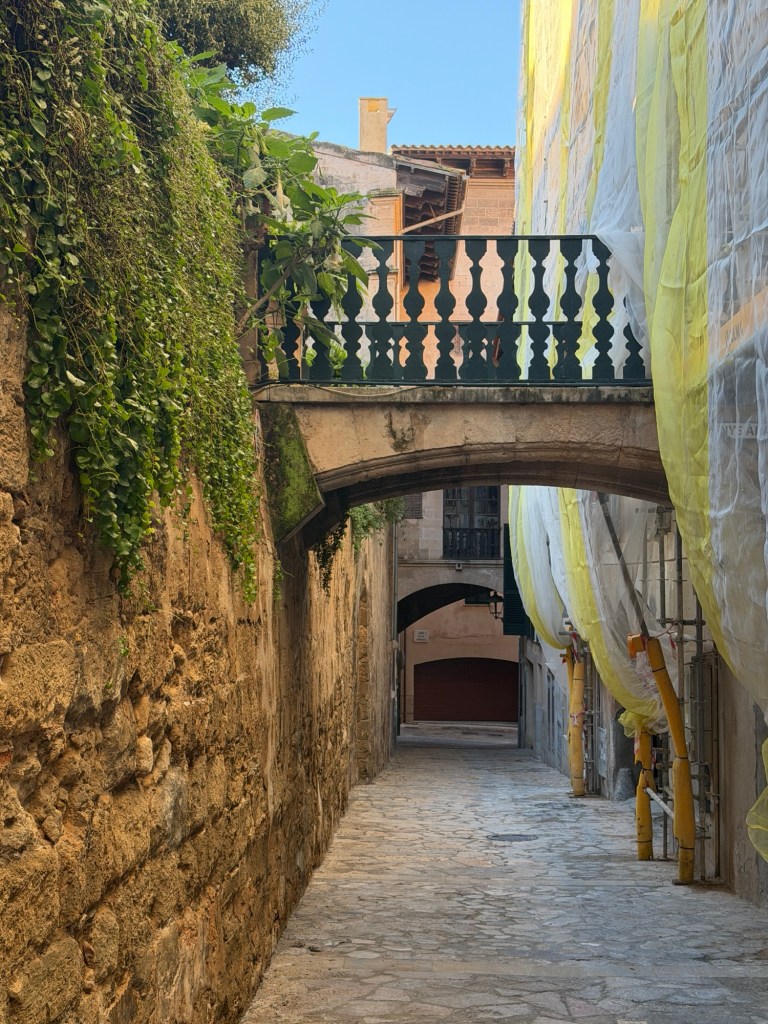
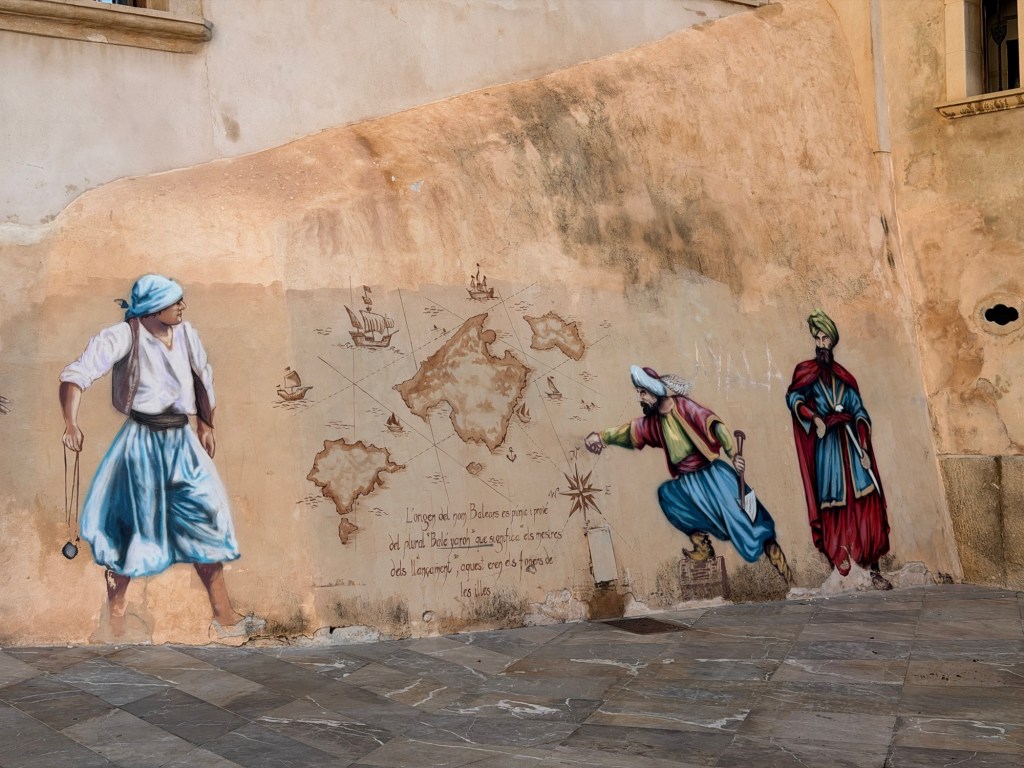
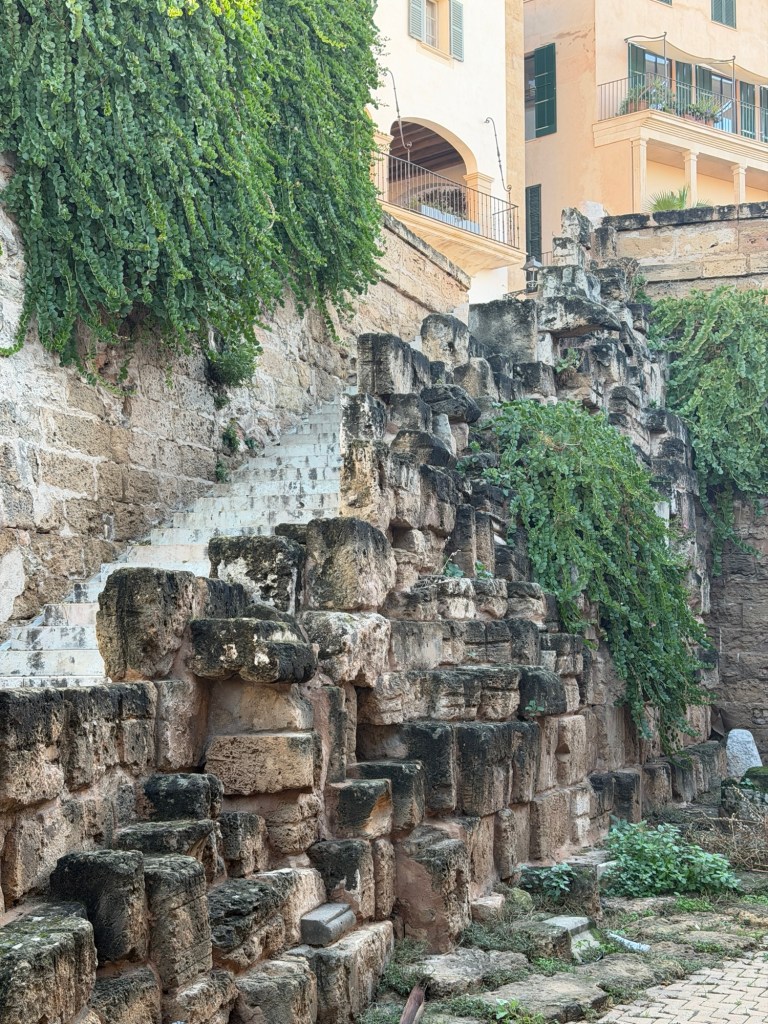
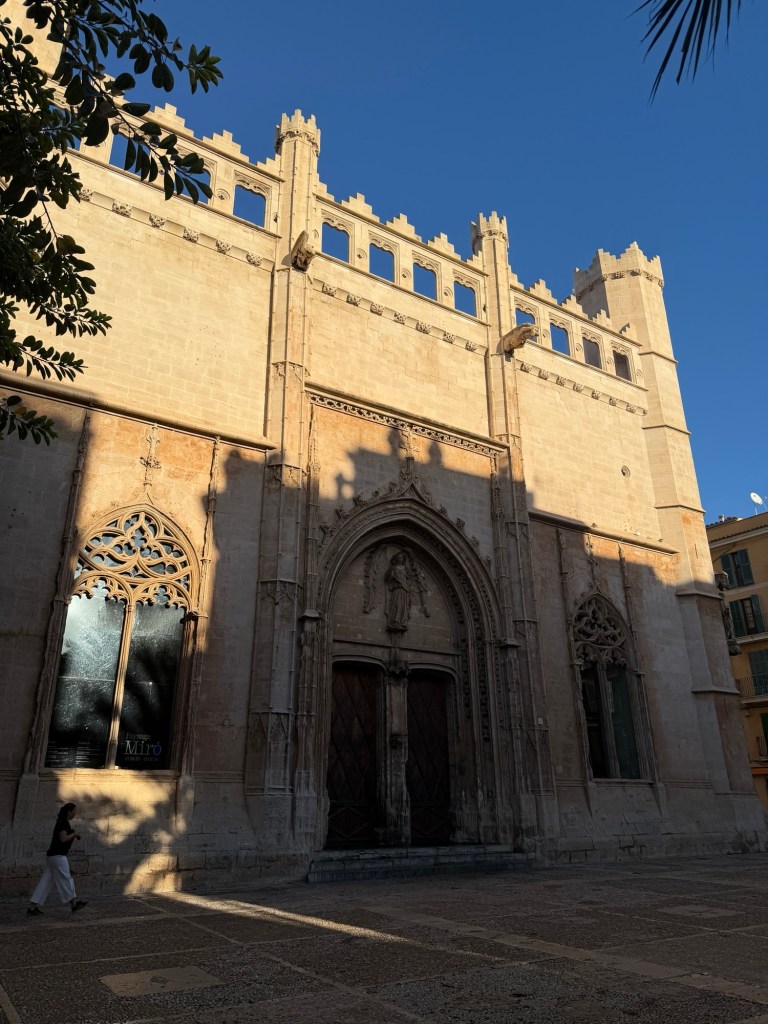
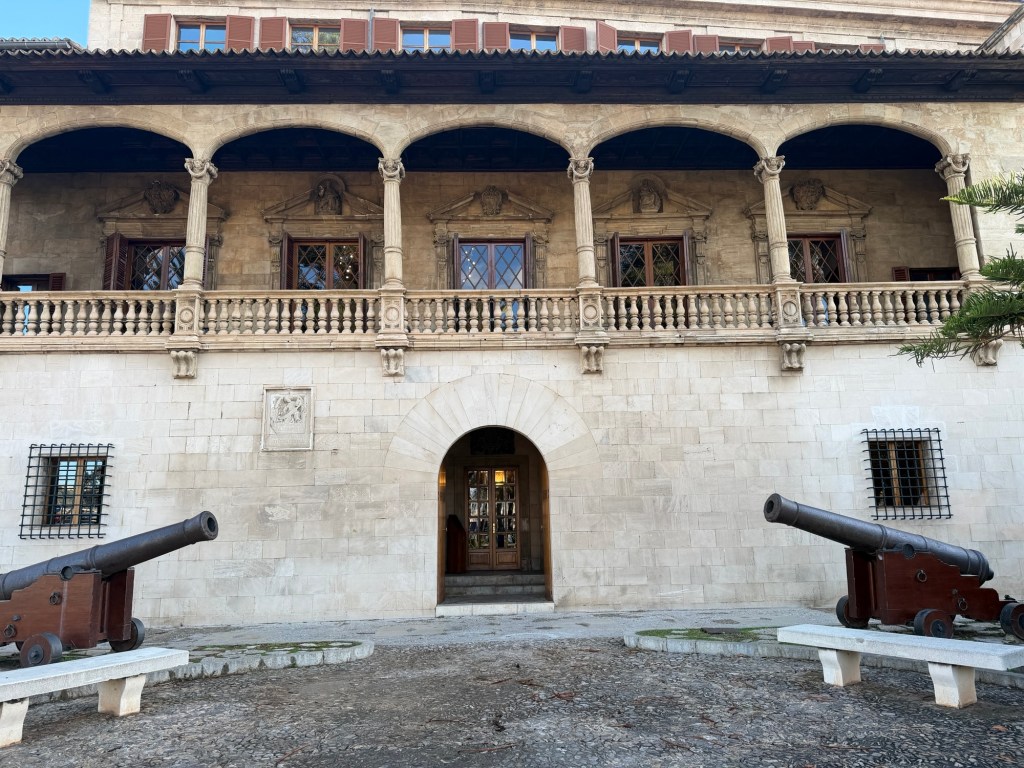
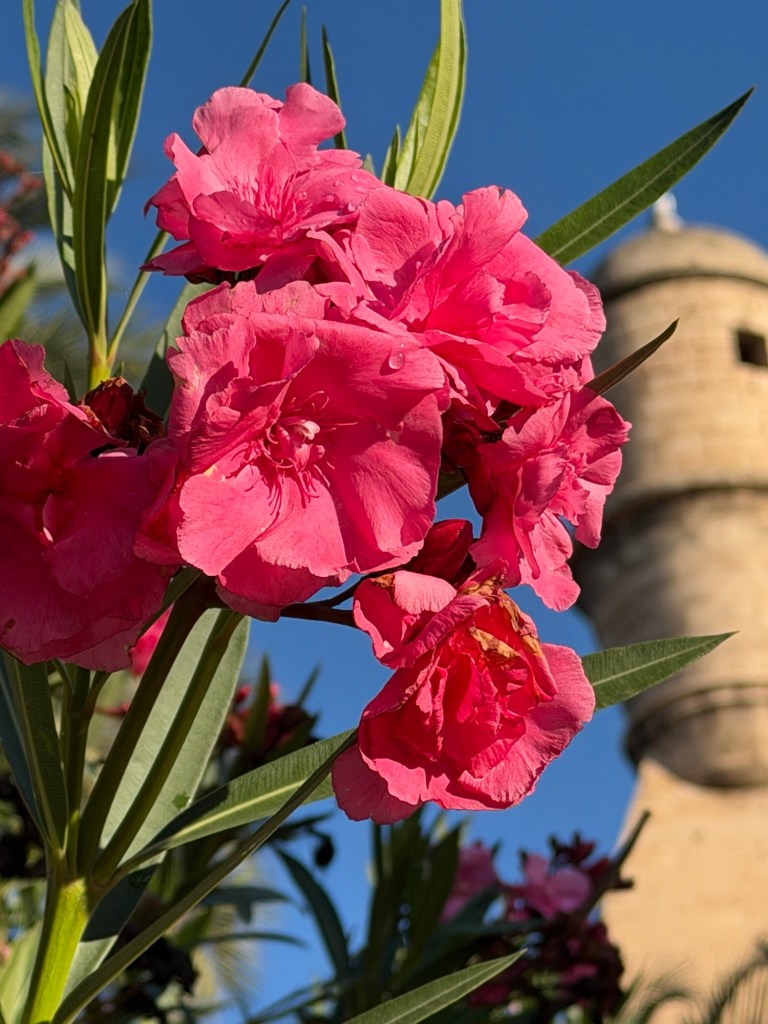
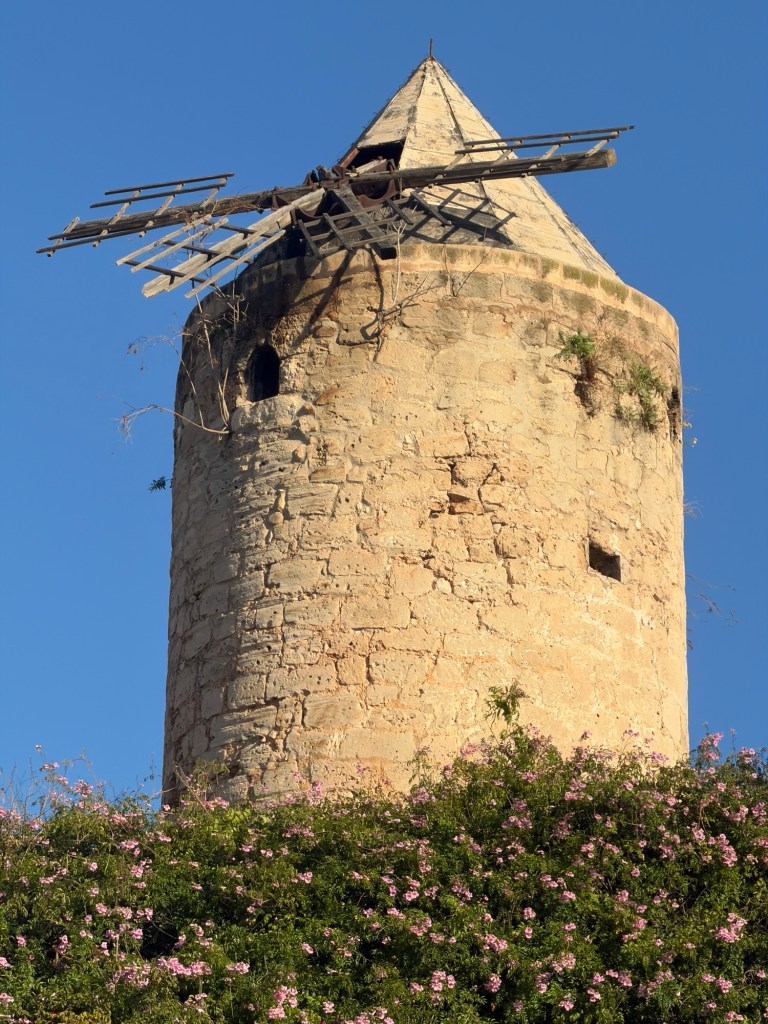
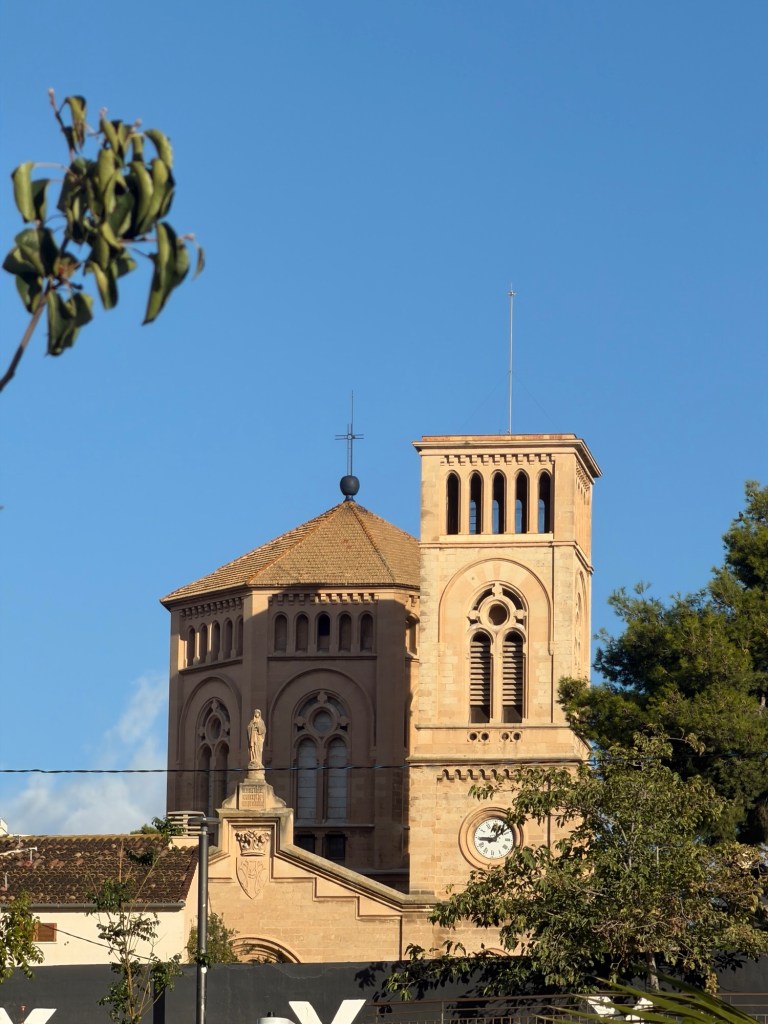
The morning was then spent winding my way through whimsical layers of architectural history, navigating mostly on vibes with my general direction dictated by the waterfront.
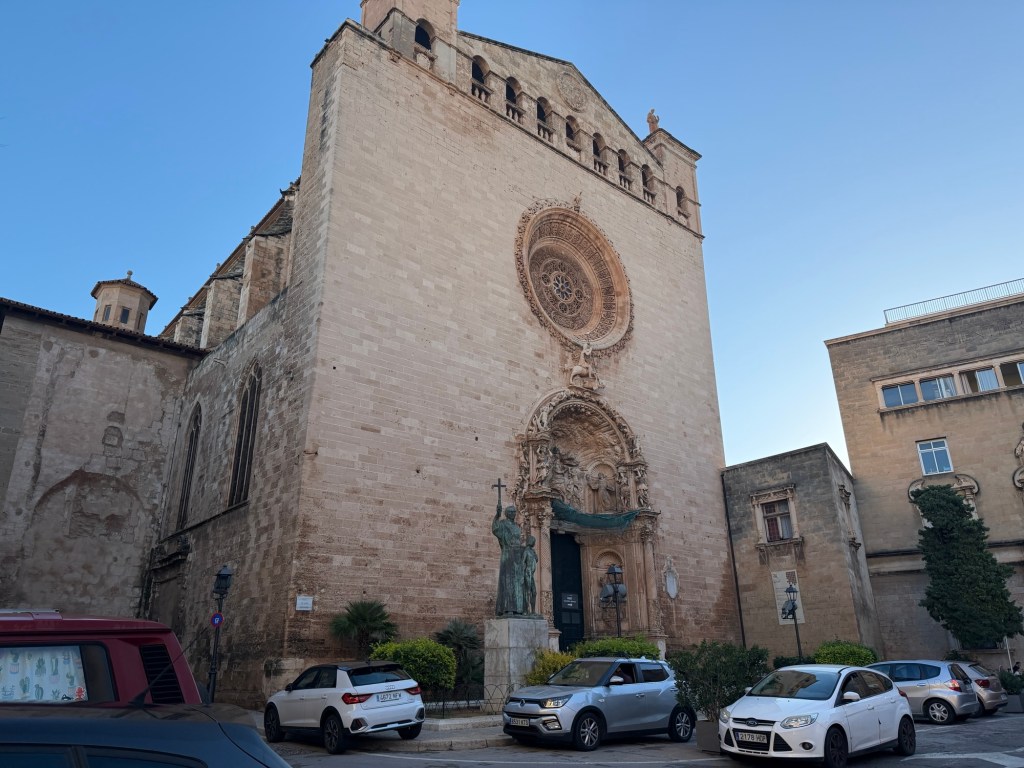
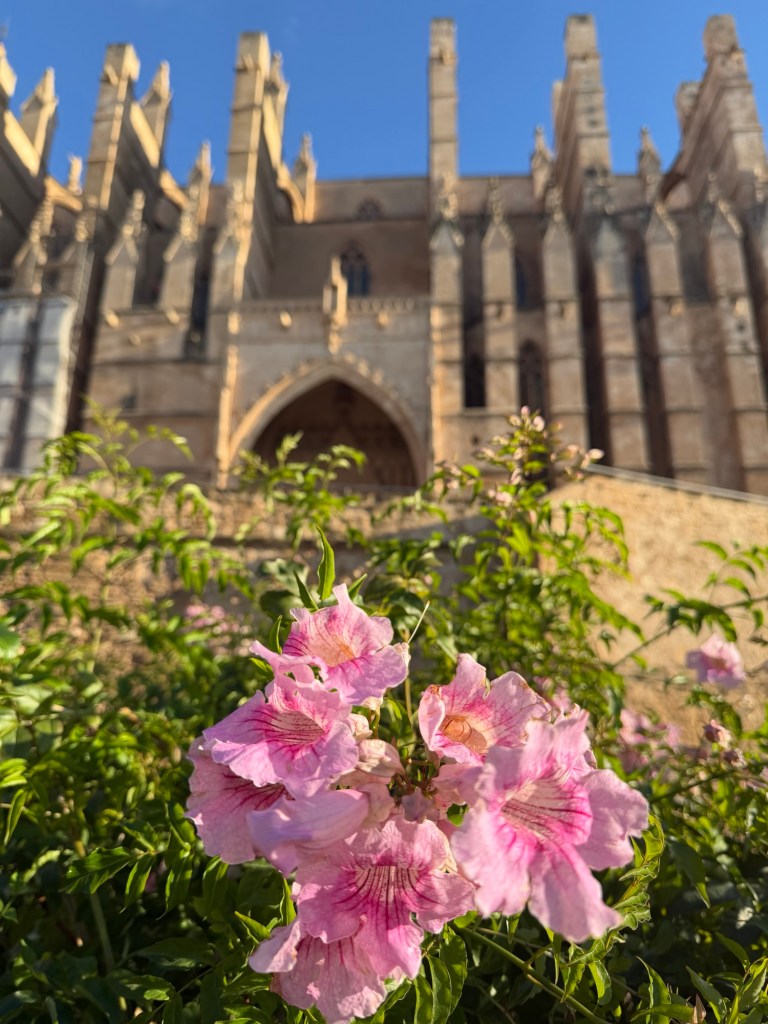
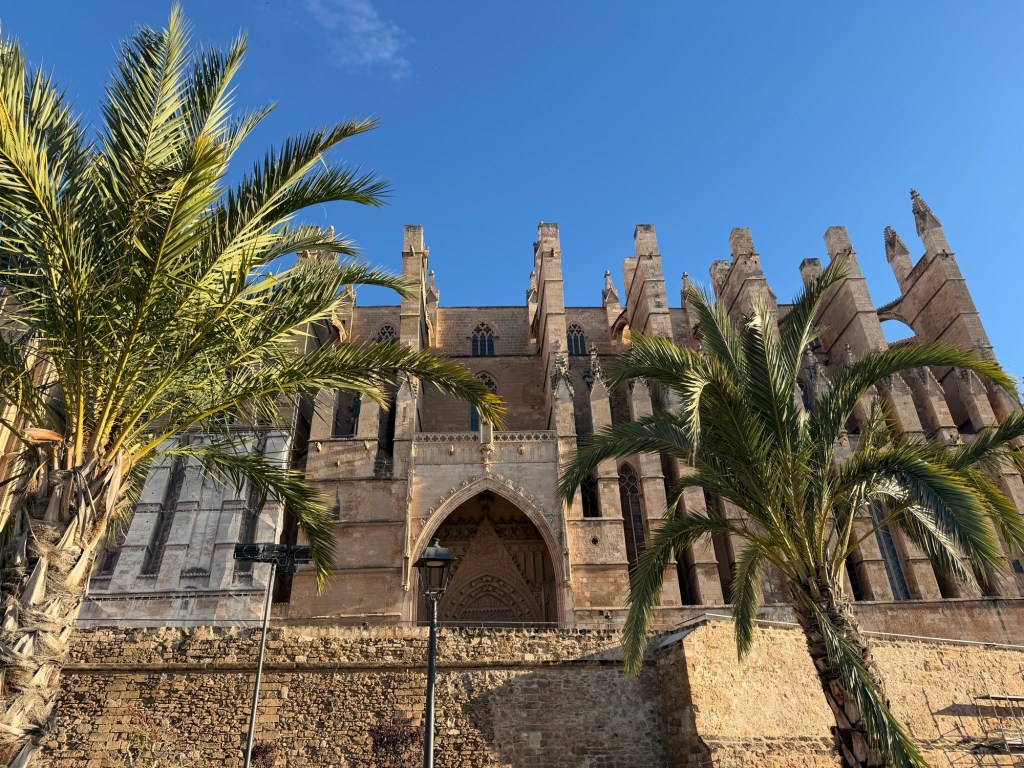
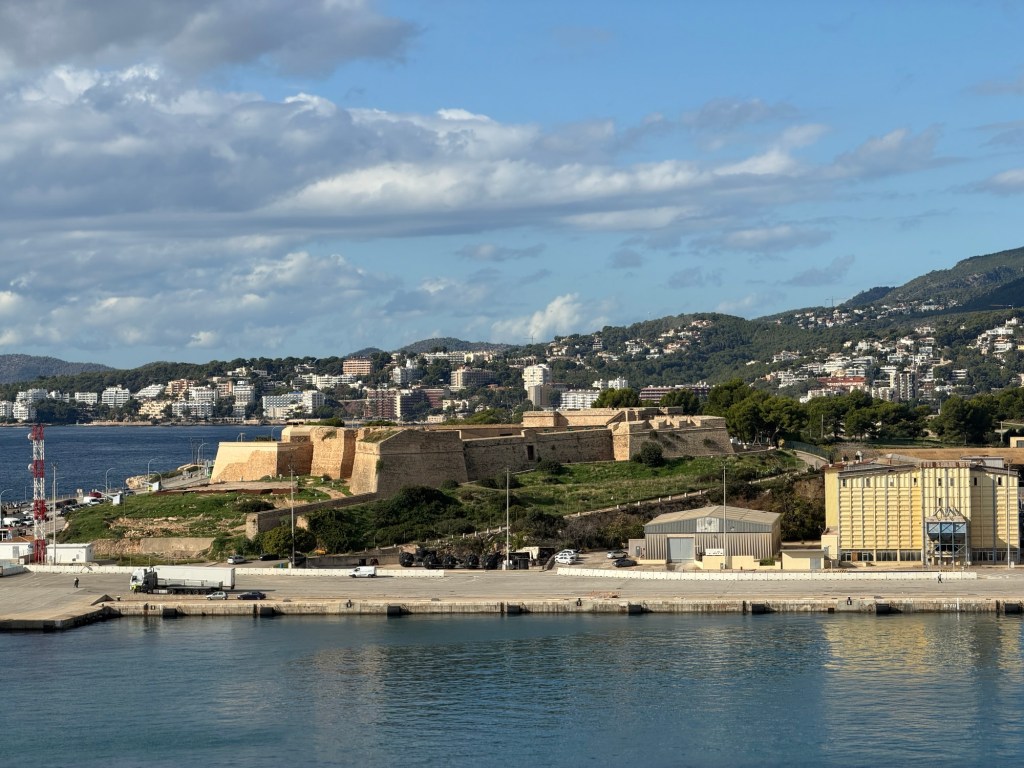
Notable buildings included Catedral-Basílica de Santa María de Mallorca, Palau Reial de l’Almudaina, and (not pictured up close) a historic naval base.
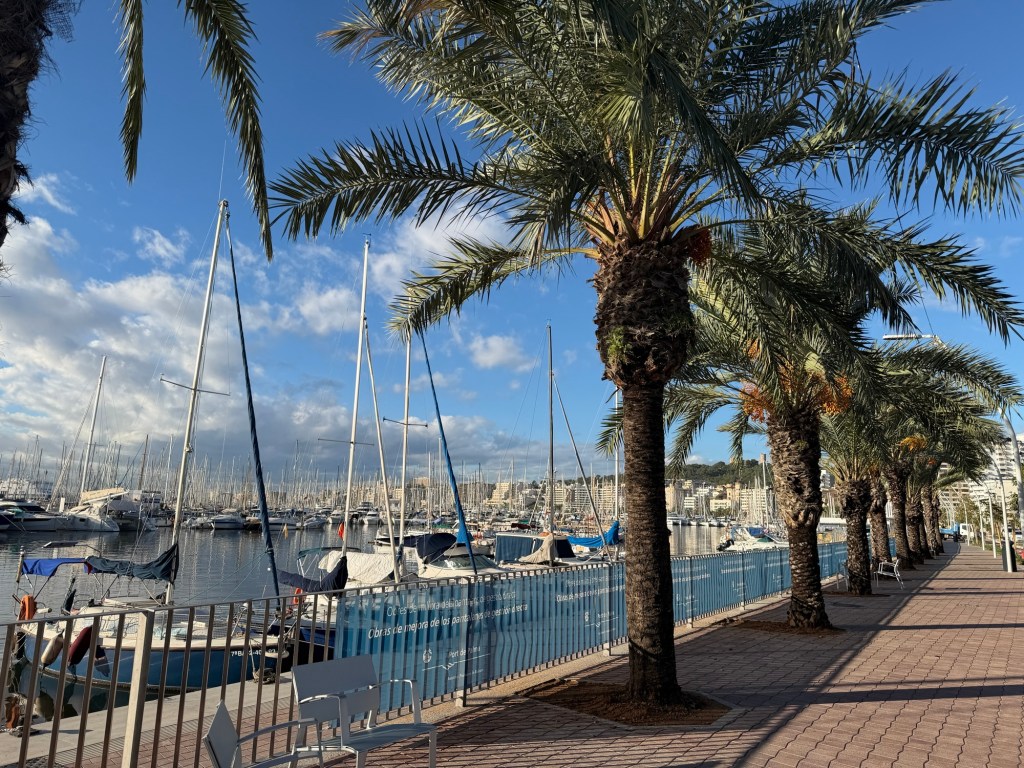
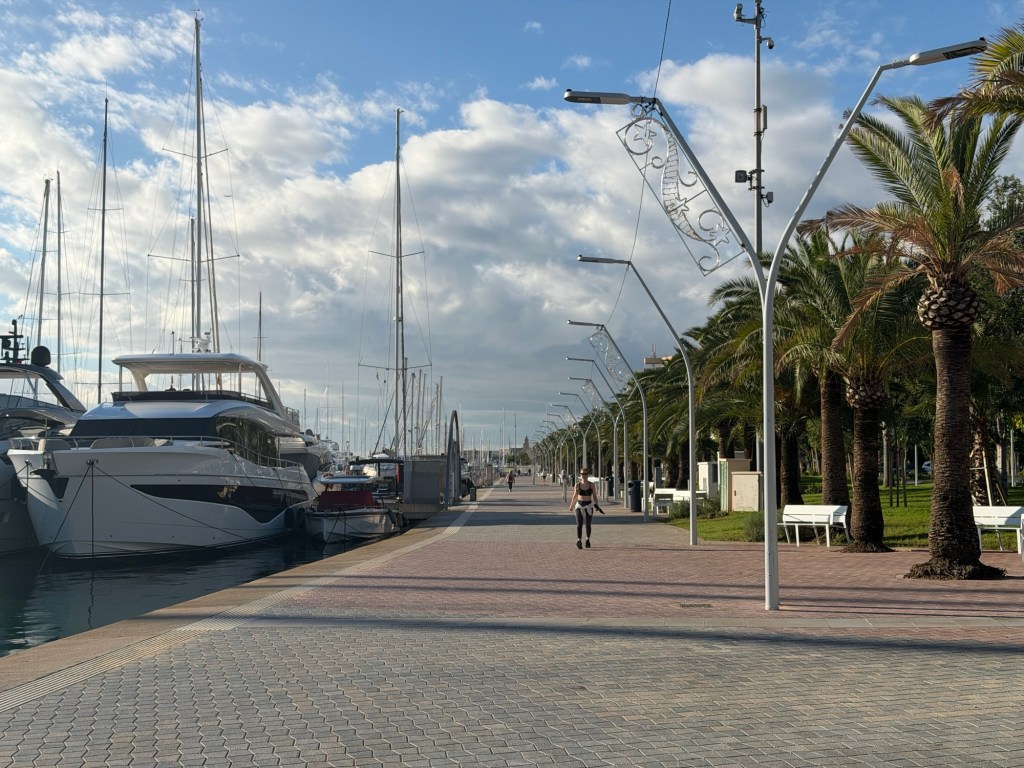
After satisfying my eyes in the old town, I made my way to their seaside path, a wide expanse lined with palm trees, with a parallel off-road bike path. It was popular, with many enjoying the moderately warm (16 degrees), sunny weather.
(The day is still young, but we leave port in early afternoon and I only have service landside, so I’m posting now).
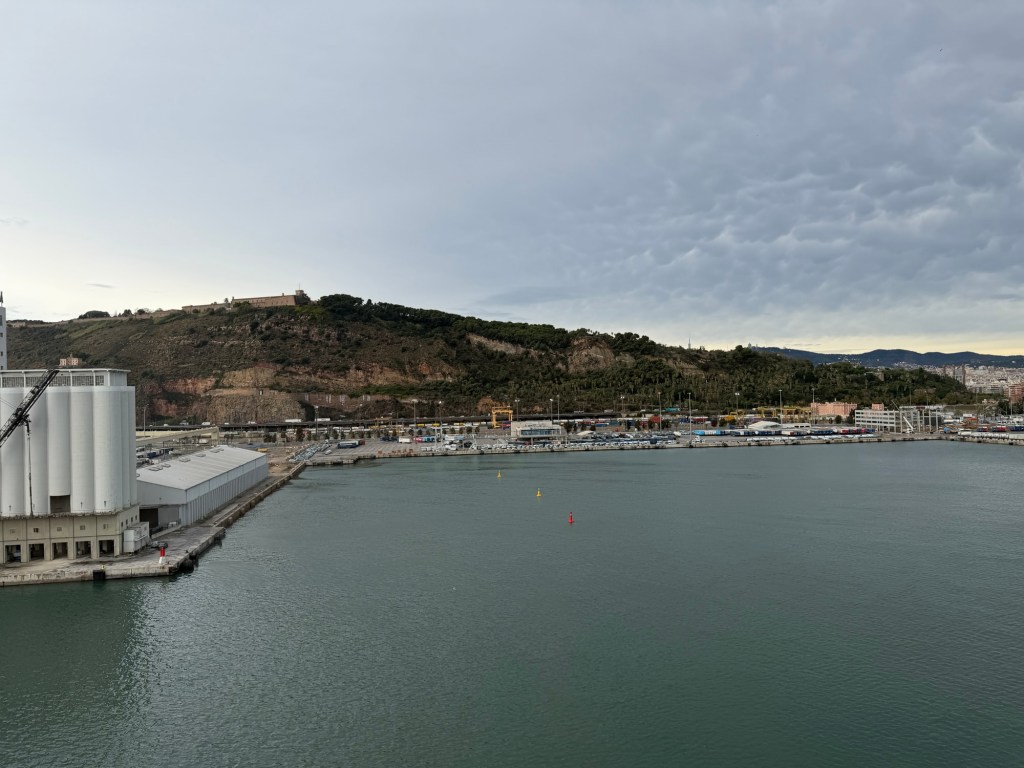
The morning woke me with thunderstorms, and rain flooding the streets. After a quick breakfast and a wait for the worst of the storm to pass, I pulled on my bag and backpack, and started the walk to the ship. My umbrella broke, but the rain was not bad by Vancouver standards (severe storm warning by Barcelona standards) and I had my rain jacket. The streets were empty, and it was actually a lovely 75-minute walk to the ship.
Check-in was unremarkable, and I was on the first group let aboard. I enjoyed a lunch of salad, hummus, marinated tomatoes, feta and fresh breadsticks before dropping my bags in my room and exploring the ship.
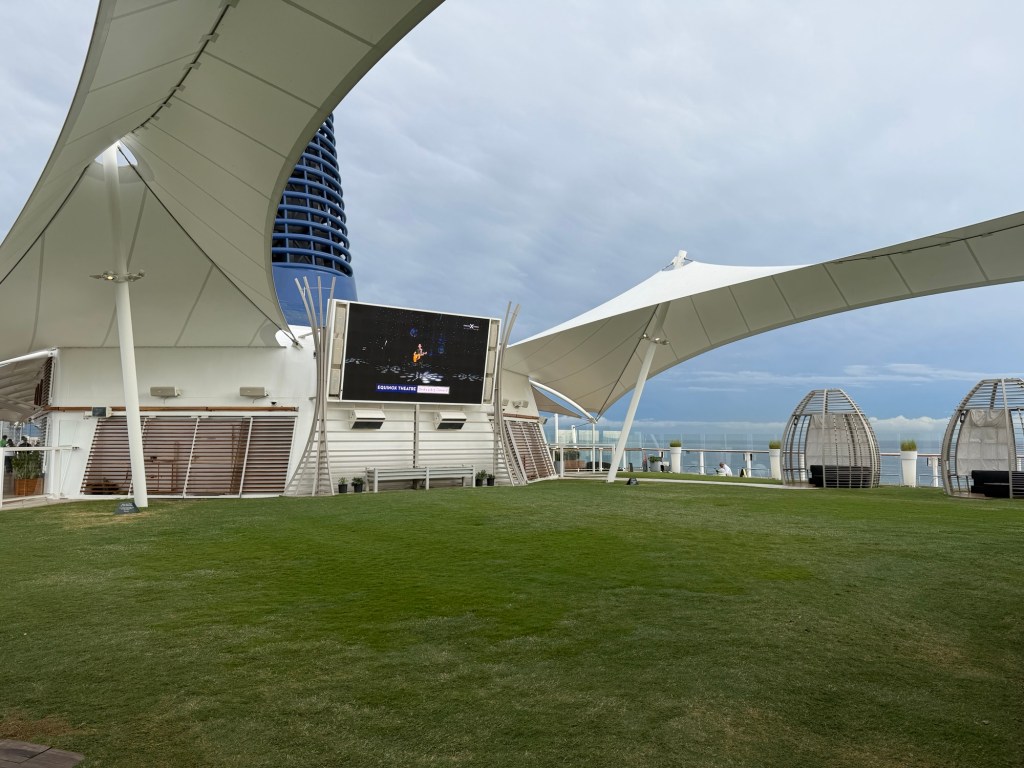
The afternoon passed uneventfully, resting in the now-out sun beside the pool, unpacking, and generally poking around.
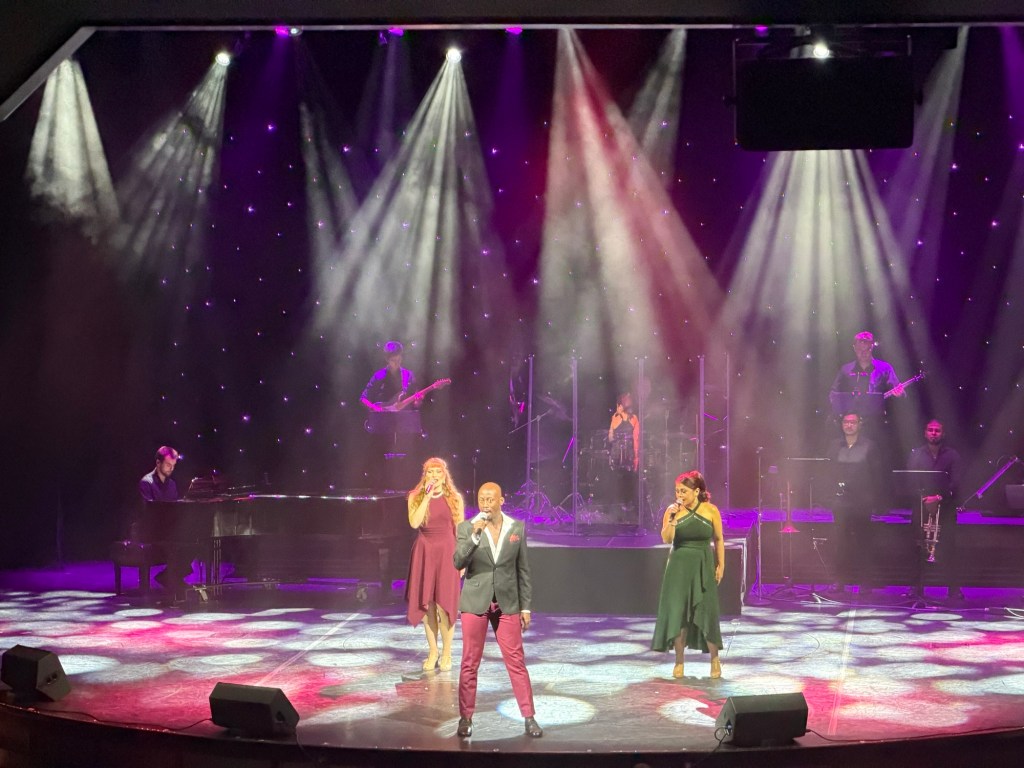
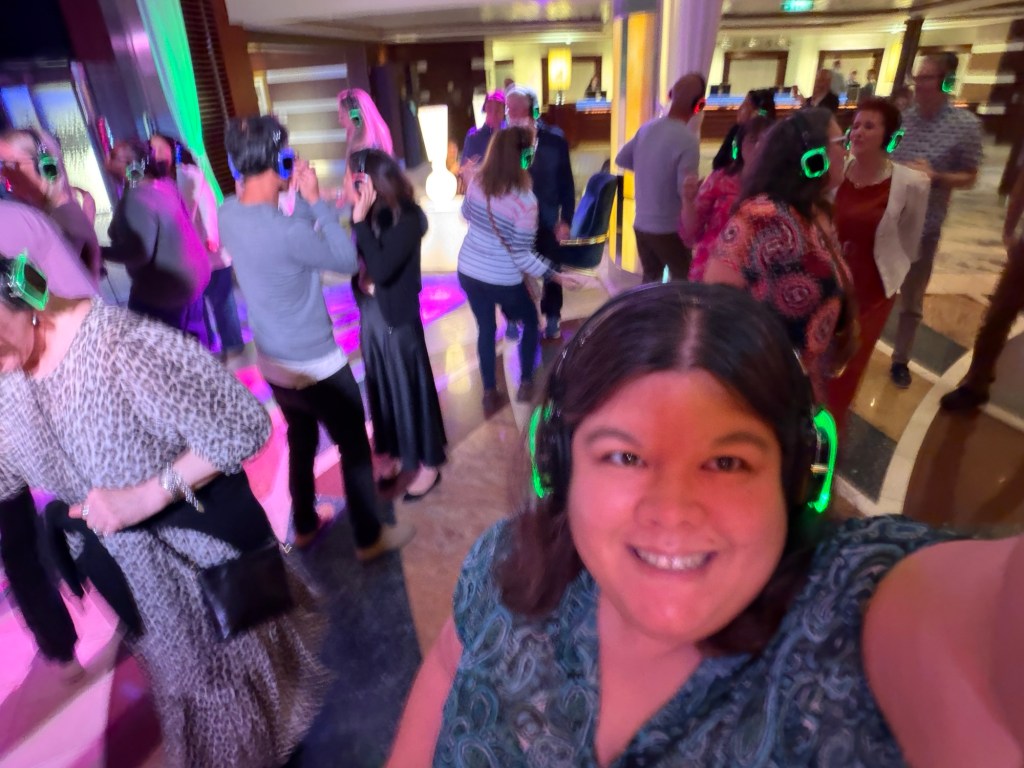
Dinner was delicious- shrimp cocktail, prime rib, and a chocolate cherry mousse. The evening included a band, a cabaret show (Broadway-style), and silent disco.
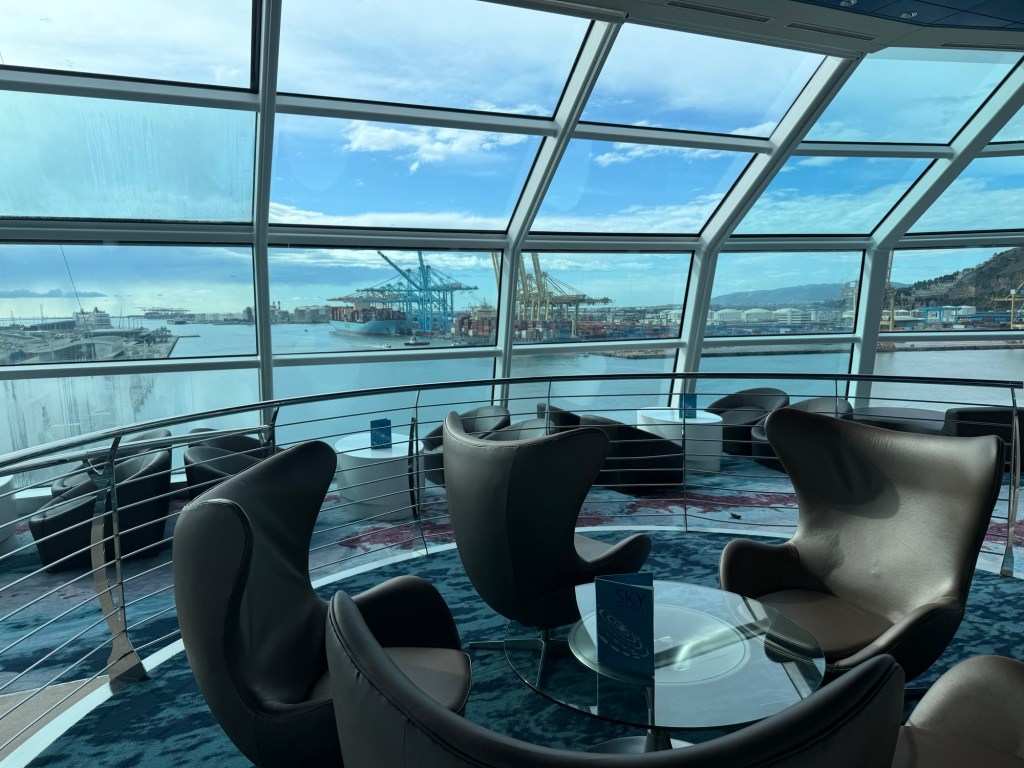
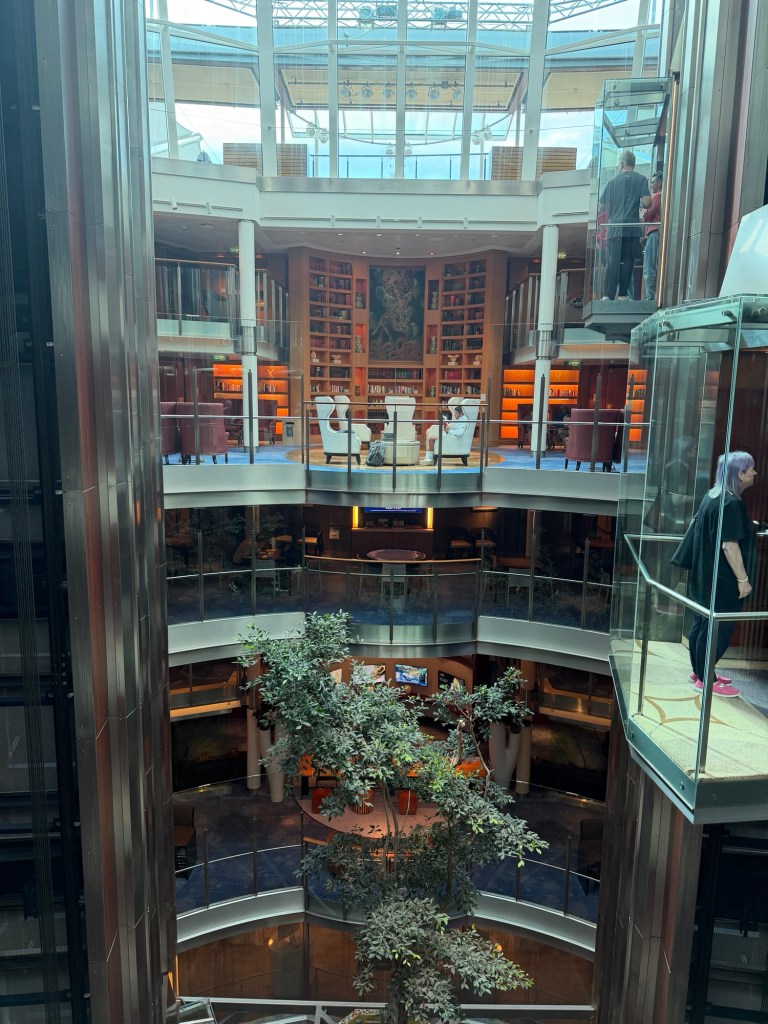
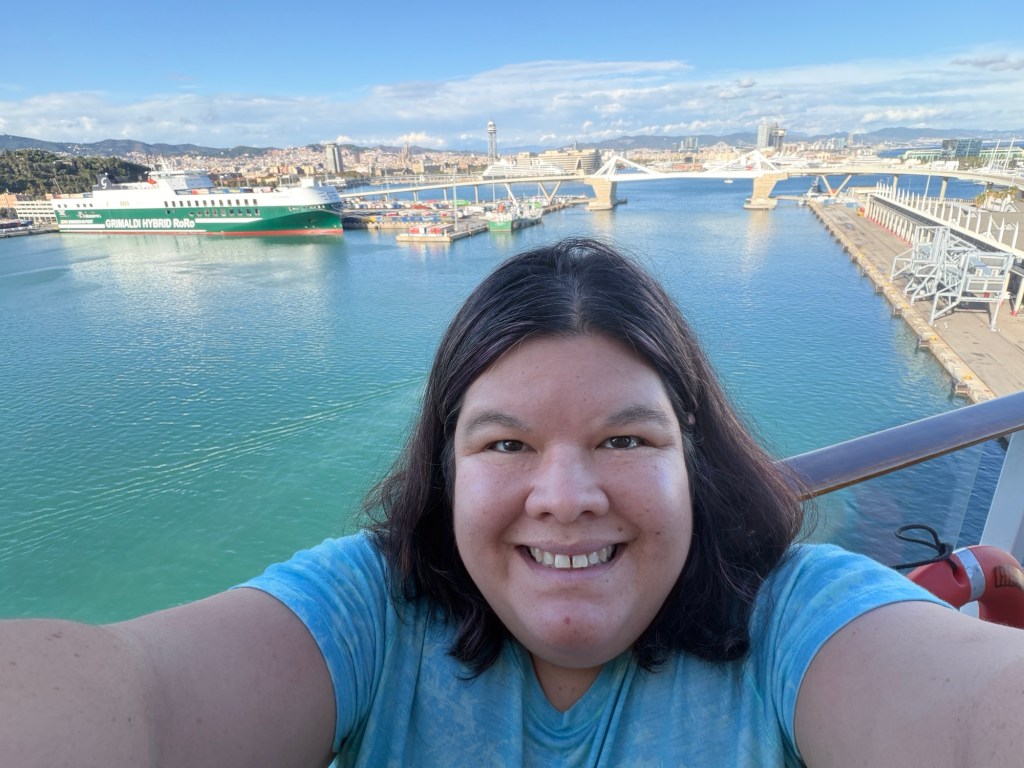
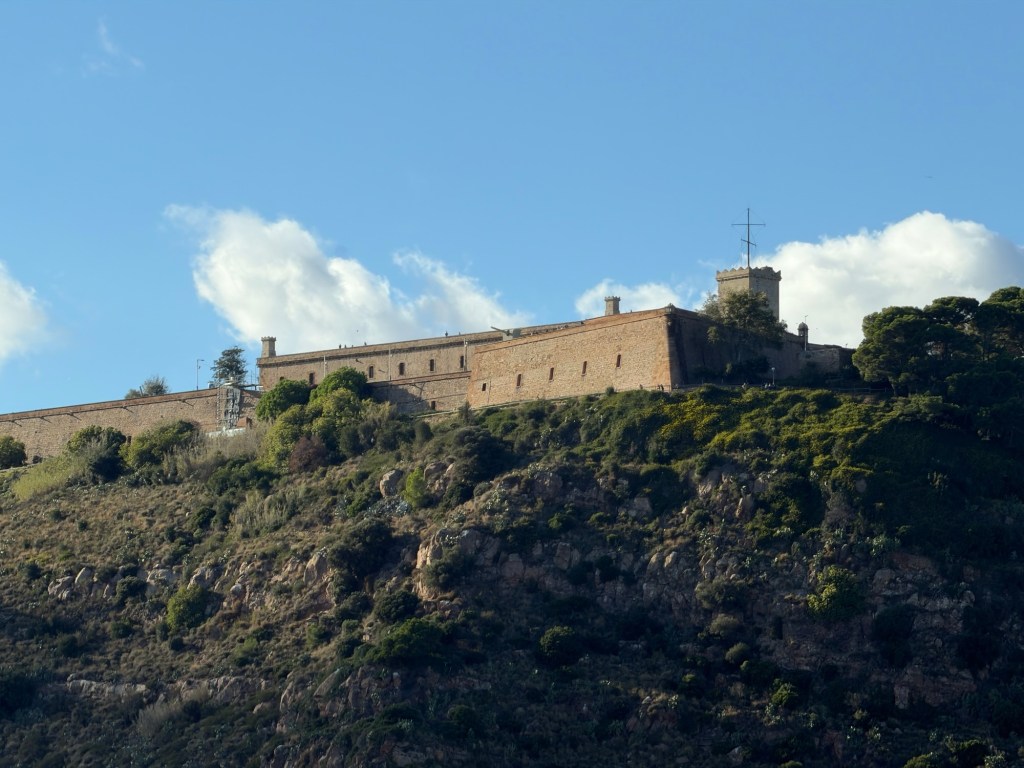
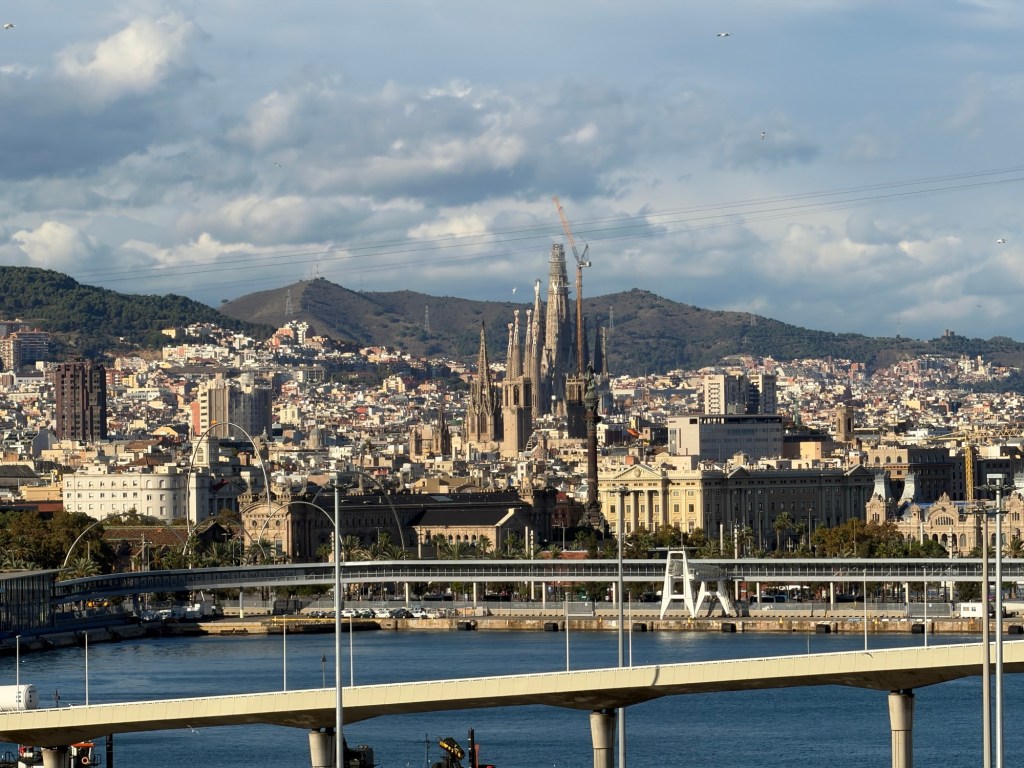
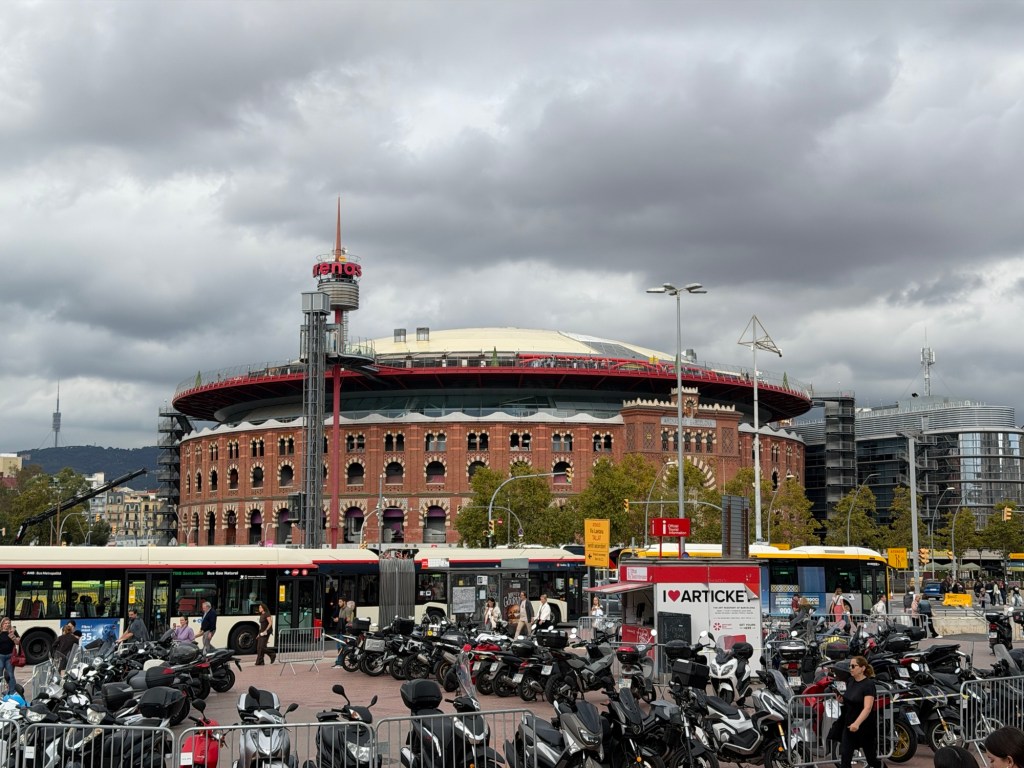
After a bit of a sleep in, I had hotel breakfast before heading out. I wandered down to the port, where I caught the Hop On, Hop Off bus for a tour of the city. Great views and a good overview of the history.
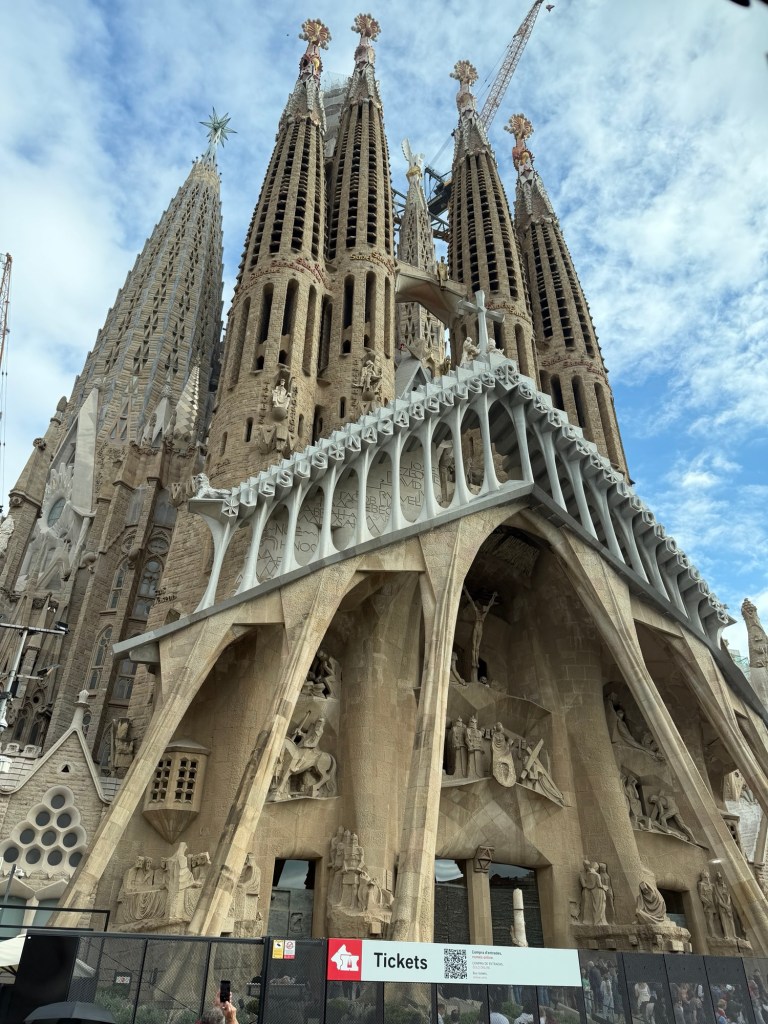
One stop of note was Sagrada Familia, a church famously under constant construction and now the tallest in the world.
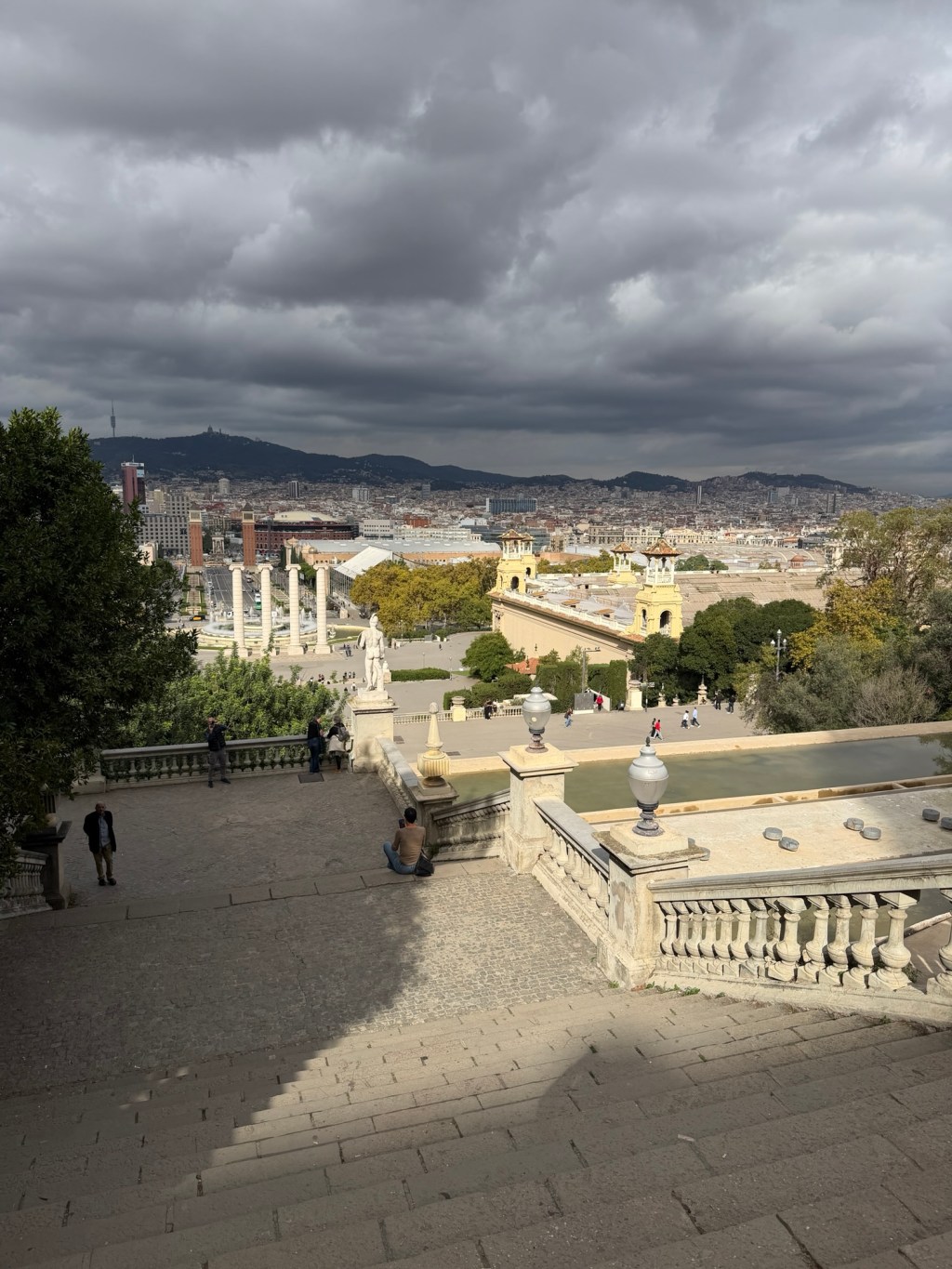
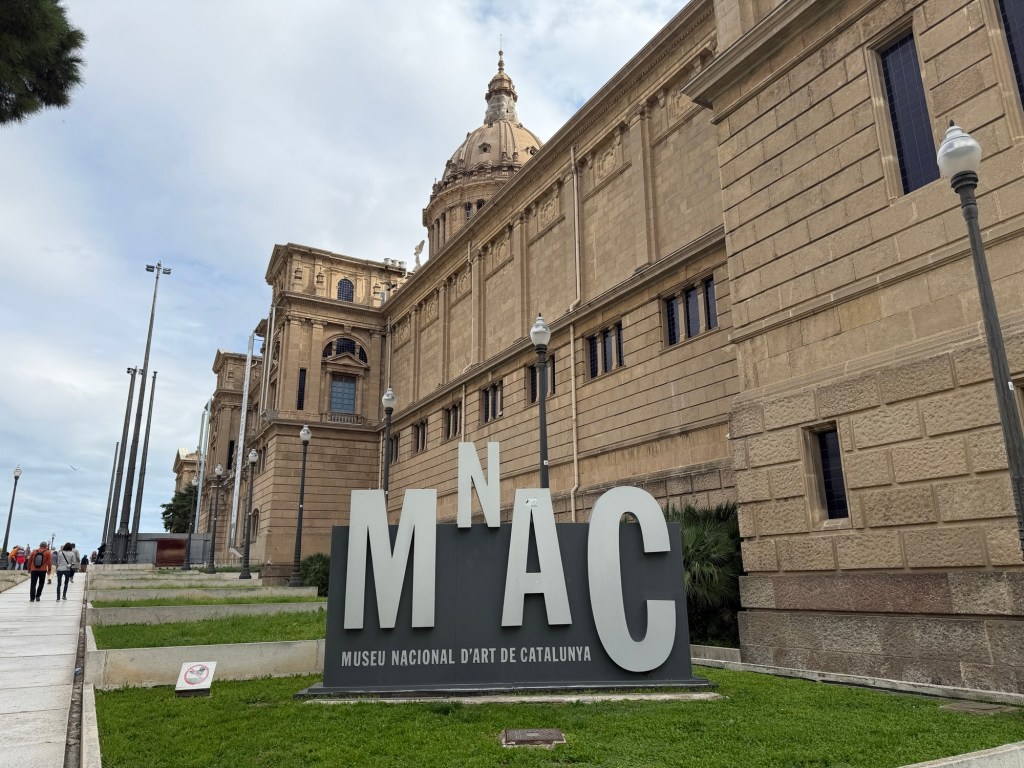
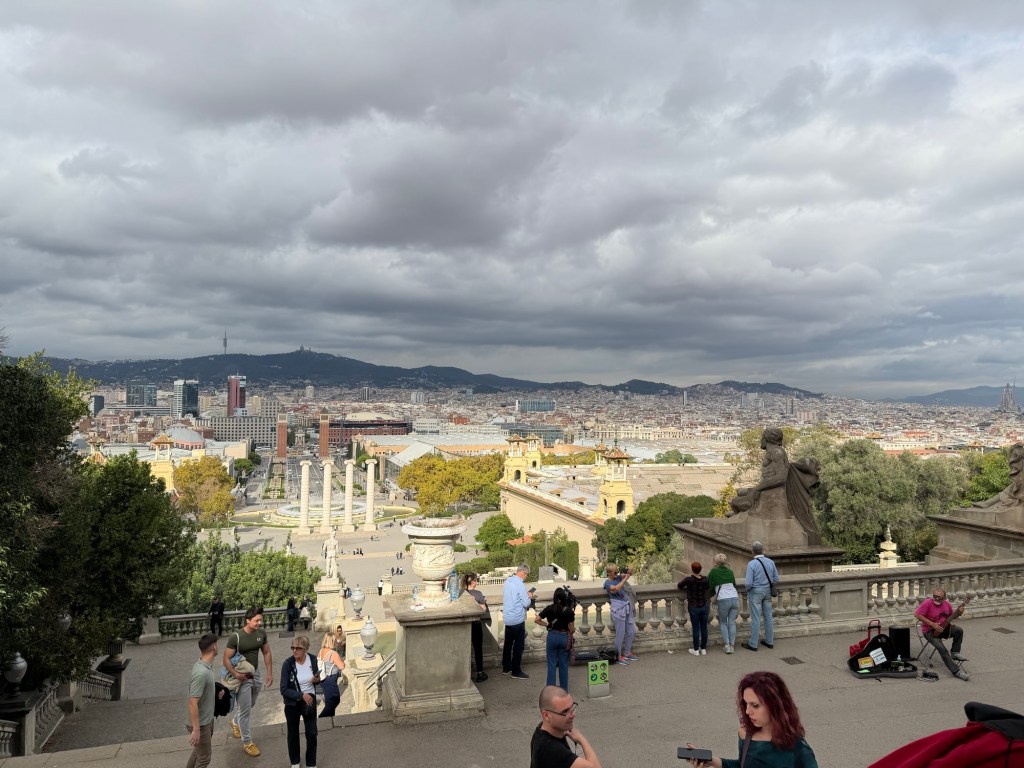
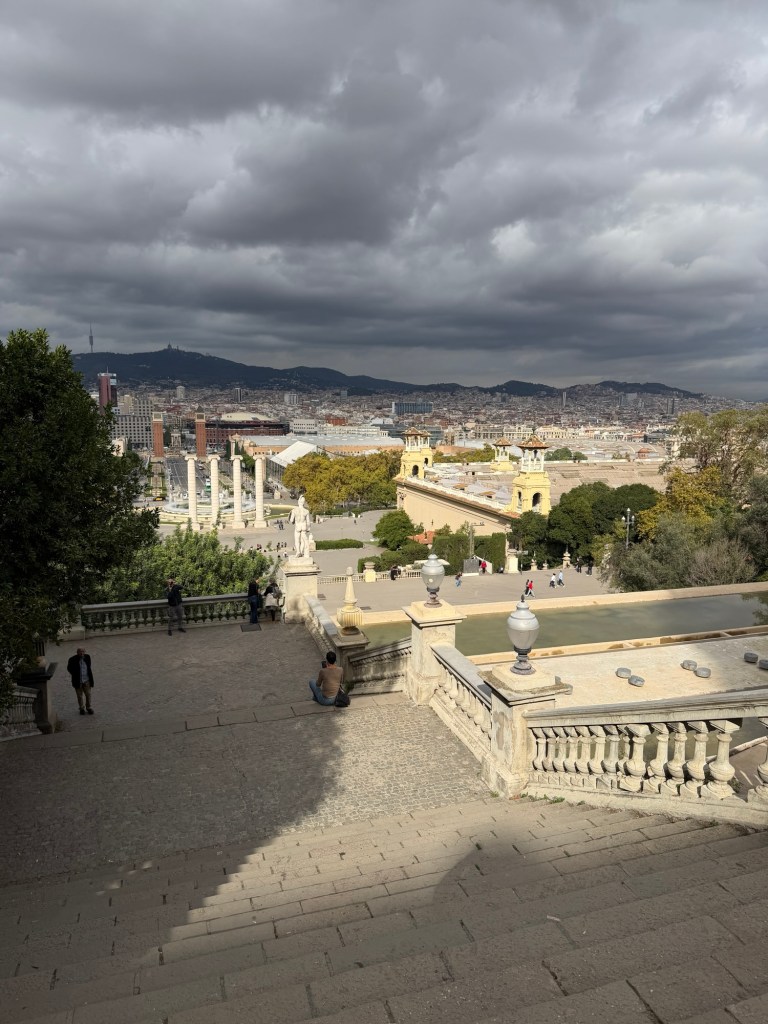
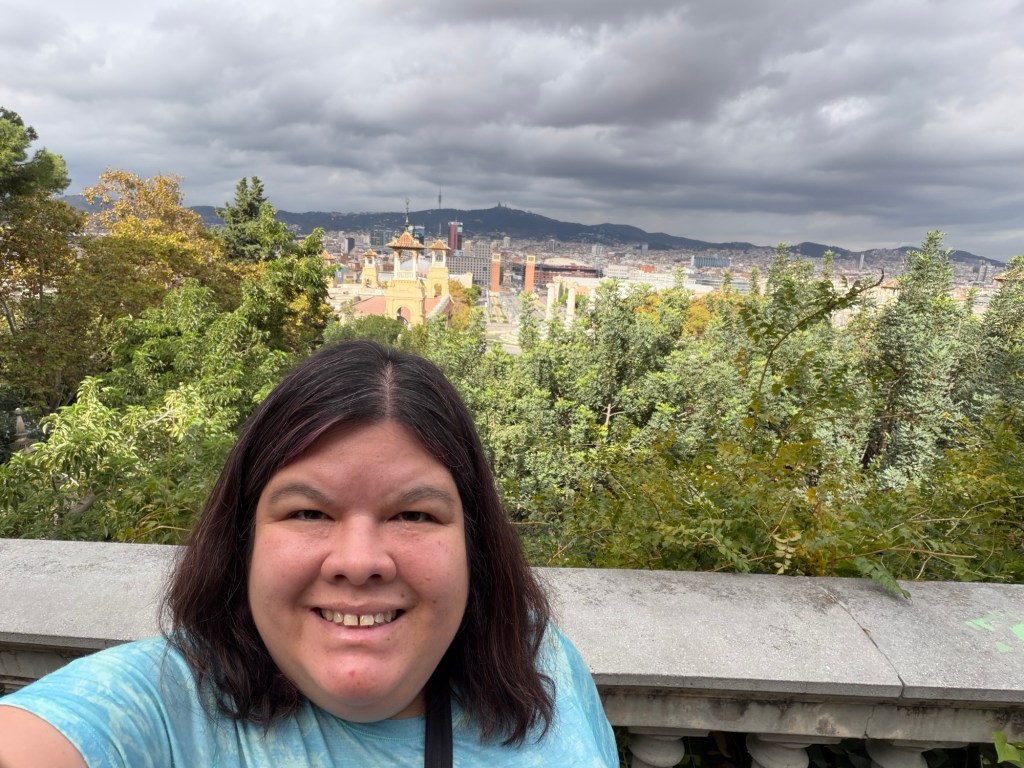
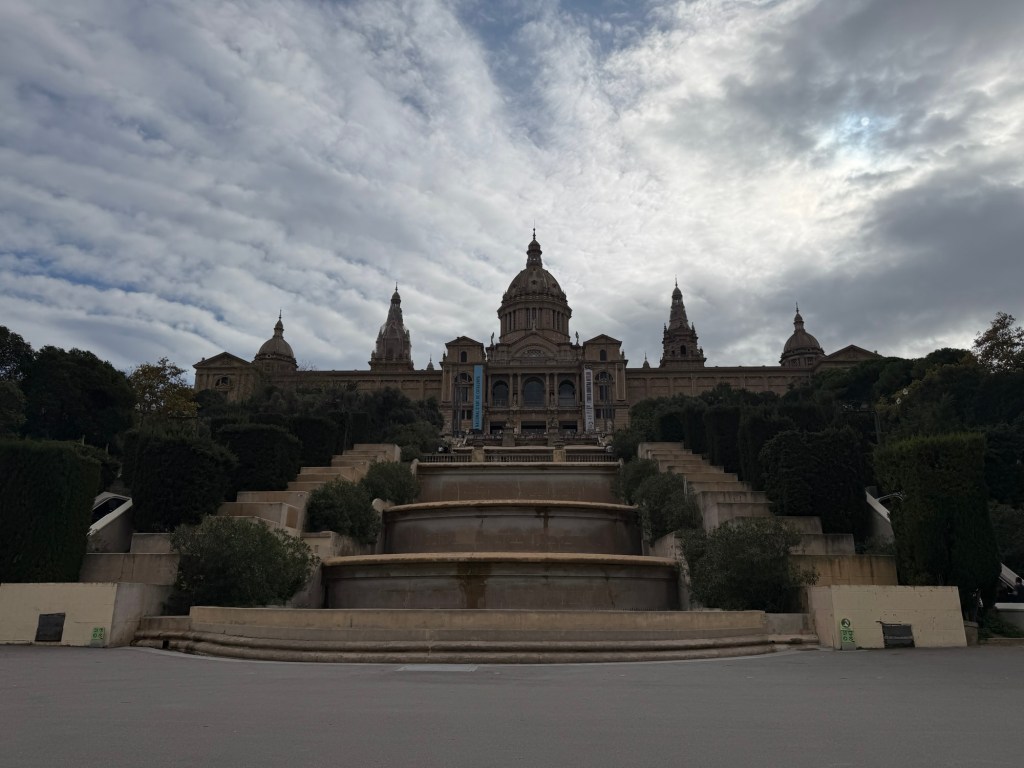
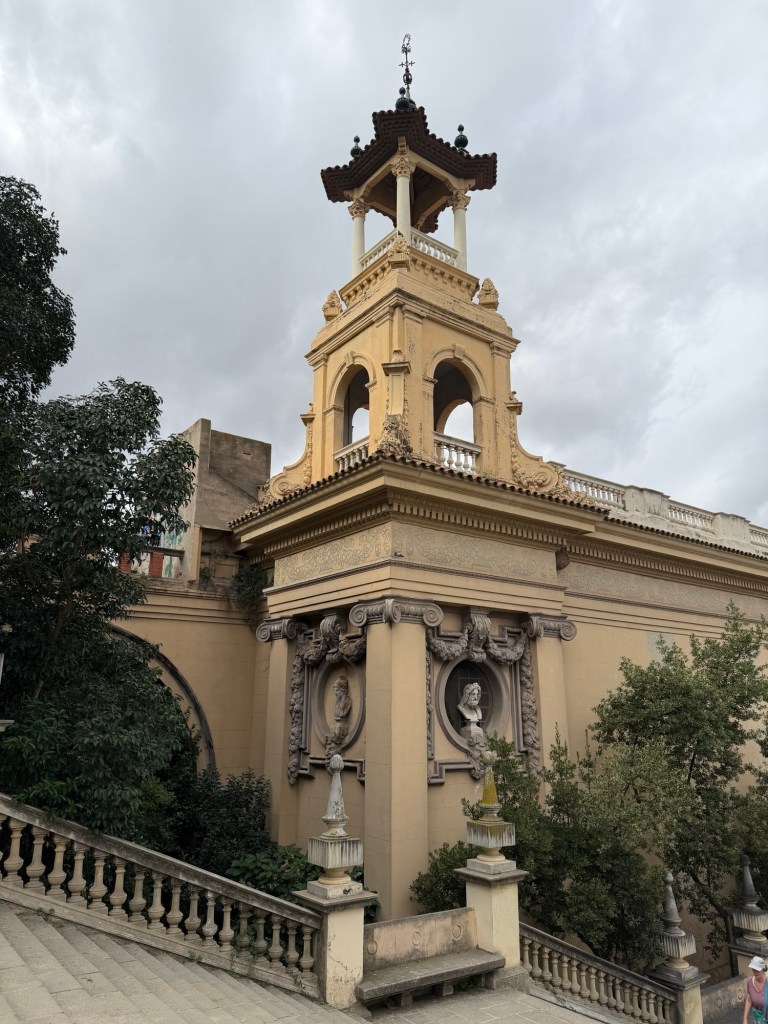
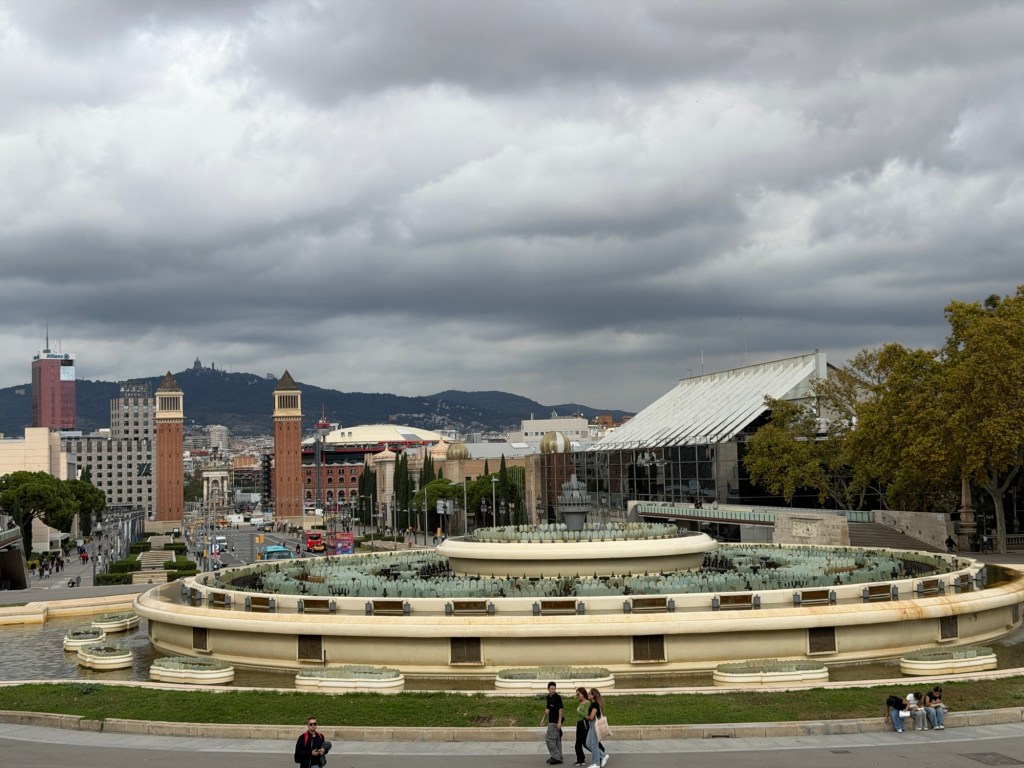
After the full loop I repeated a few stops to get off at MNAC, the Museu National D’Art de Catalunya. Impressive architecture. From here I wandered the route to the Magic Fountain, then to the city.
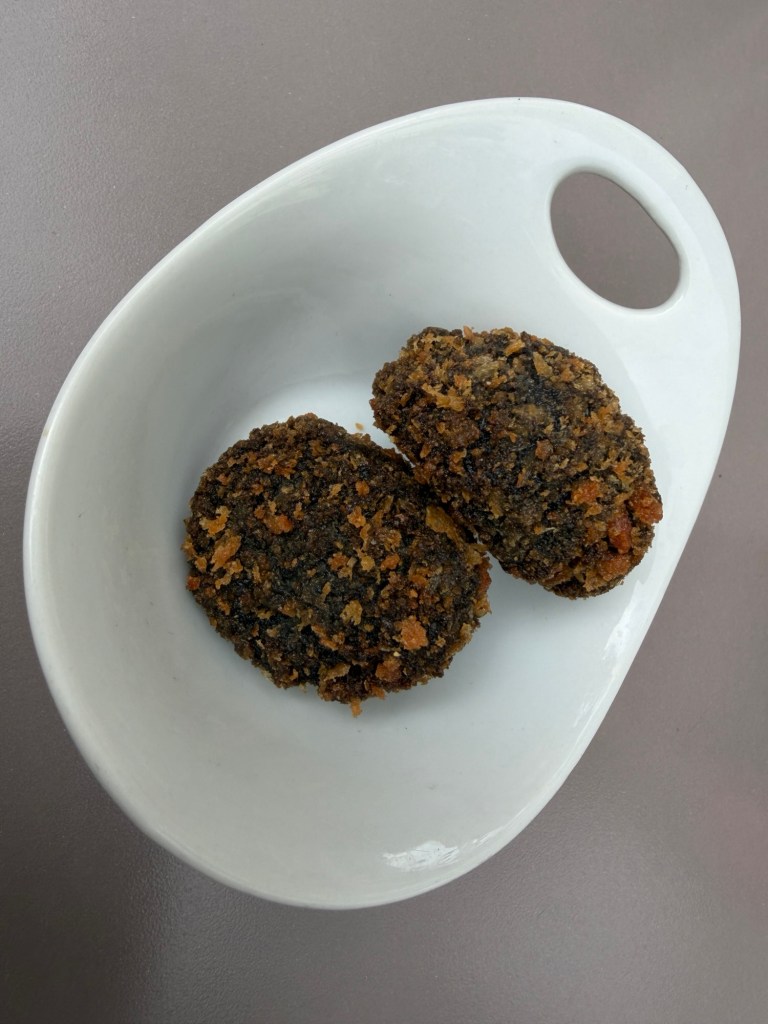
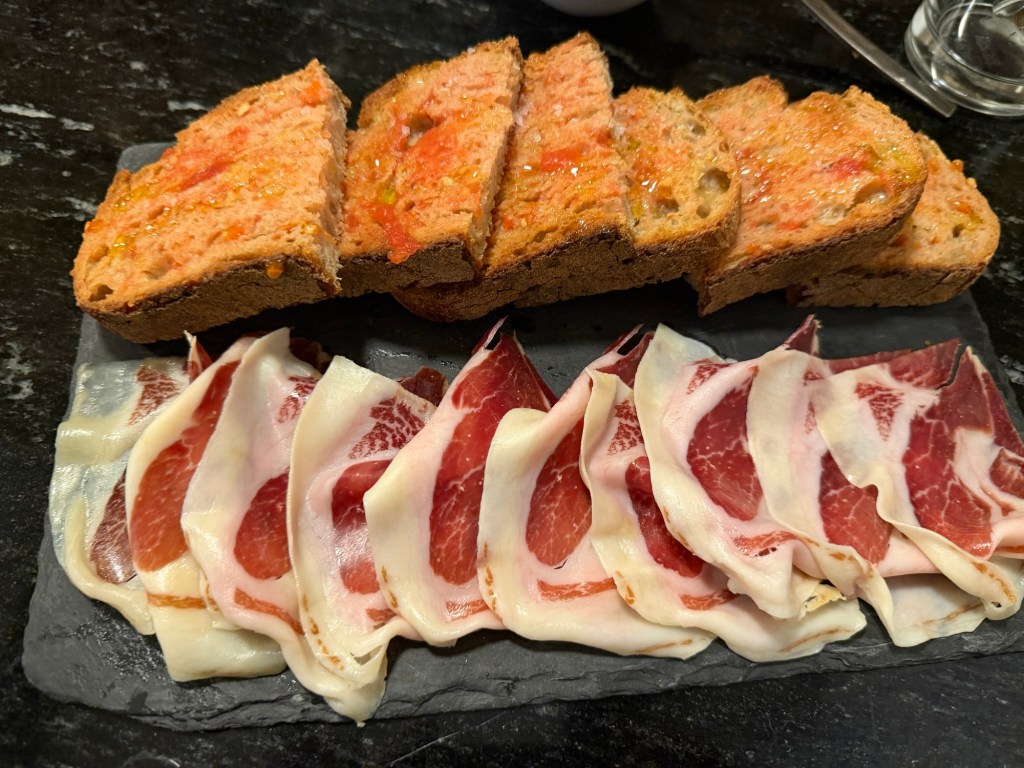
Winding my way through the streets, I found a promising restaurant in a plaza for a late lunch. I started with squid and cuttlefish croquettes, which weren’t my thing, before it started raining and I moved to inside seating. Here I tried the famous Iberia ham, which is much like prosciutto, with fresh bread spread with tomatoes in olive oil. Delicious.
As the rain subsided momentarily, I wound my way back to my hotel, stopping at a corner grocery store. As I was rather tired, I rested and relaxed in the room, snacking on cheese and crackers and berries from the grocery store.
Just Jen travelling this time. After some airport delays on both flights that meant I made my connection in Frankfurt, I have arrived on the Carrer de Roser and my hotel.
Upon arrival I had a quick nap before venturing out to a small shop on a nearby pedestrian street for some tapas. Sitting a terraza, I enjoyed some light tapas: a caprese salad and a take on chicken tacos.
Tonight is for sleep – tomorrow for exploration!
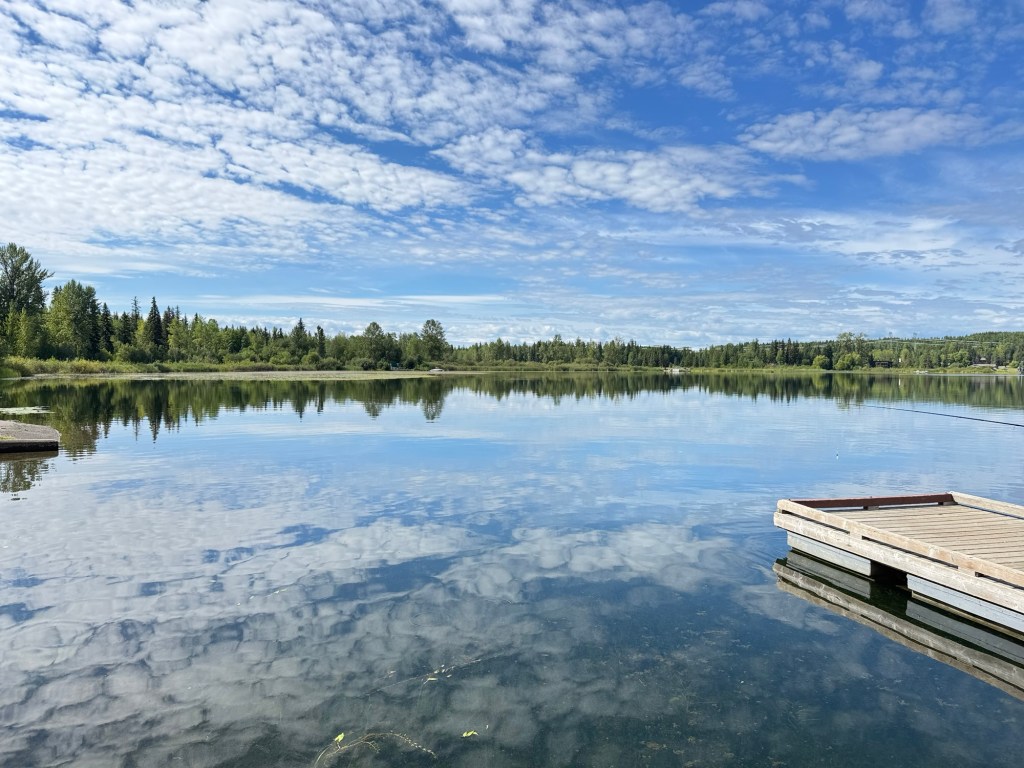
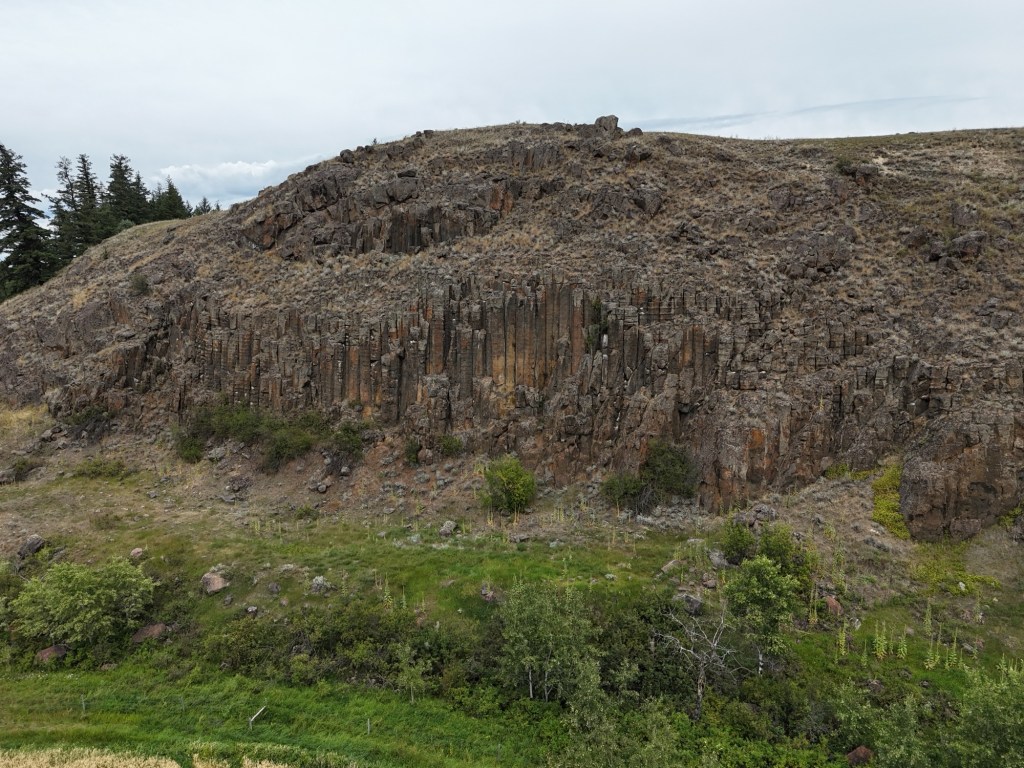
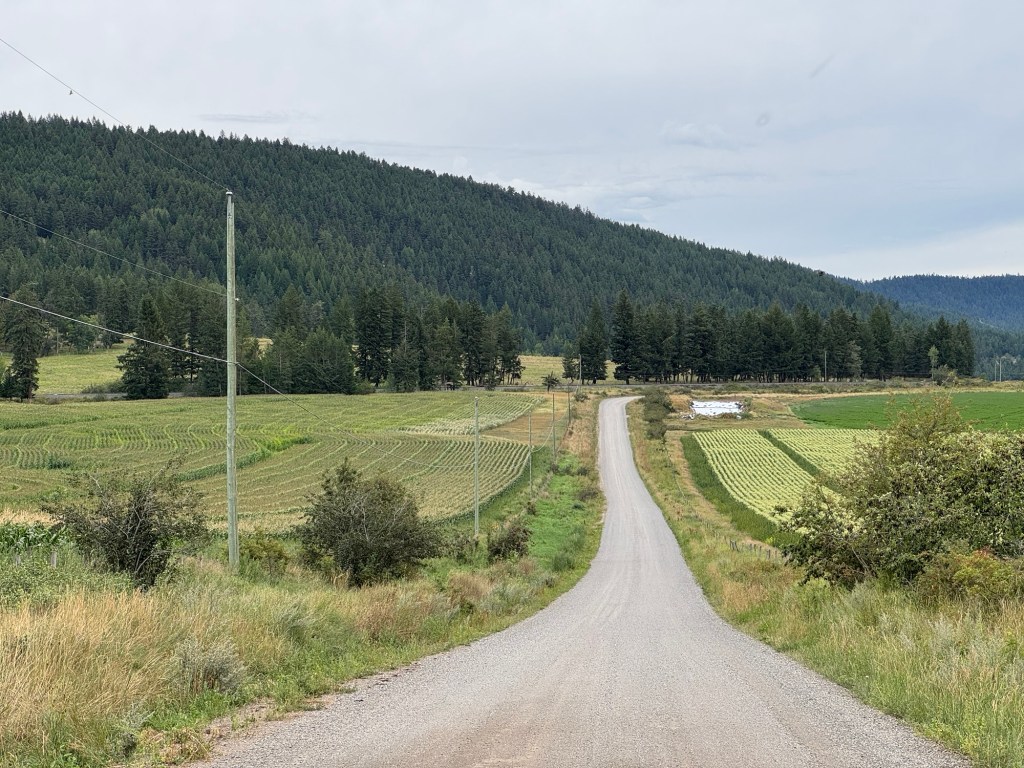
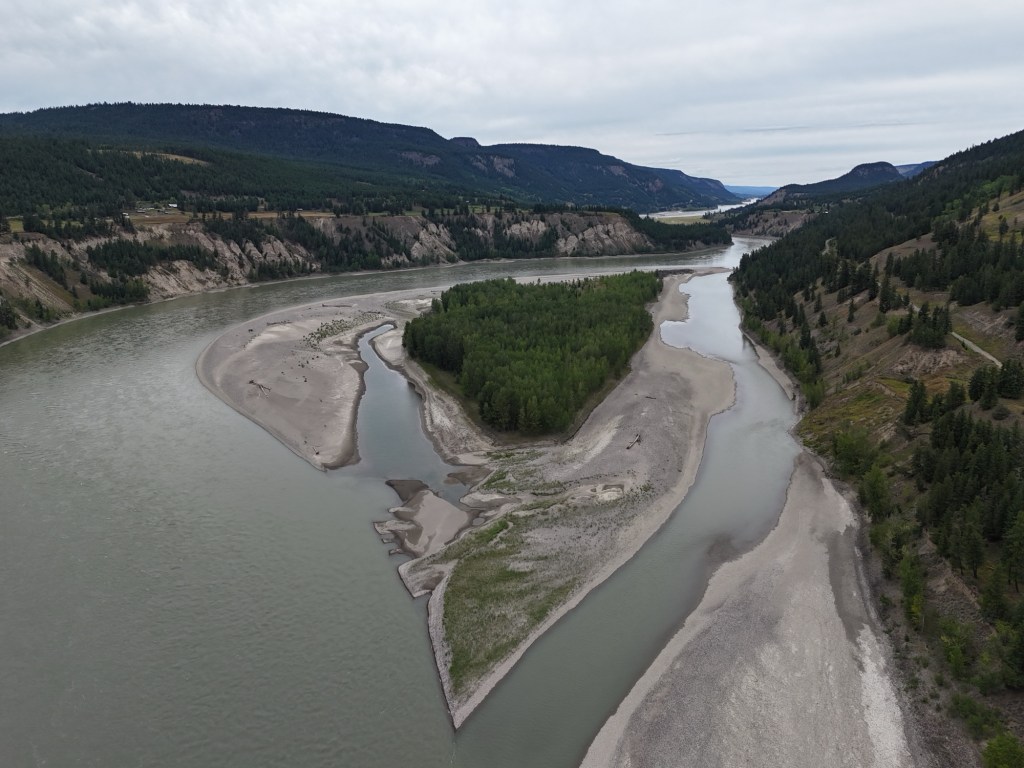
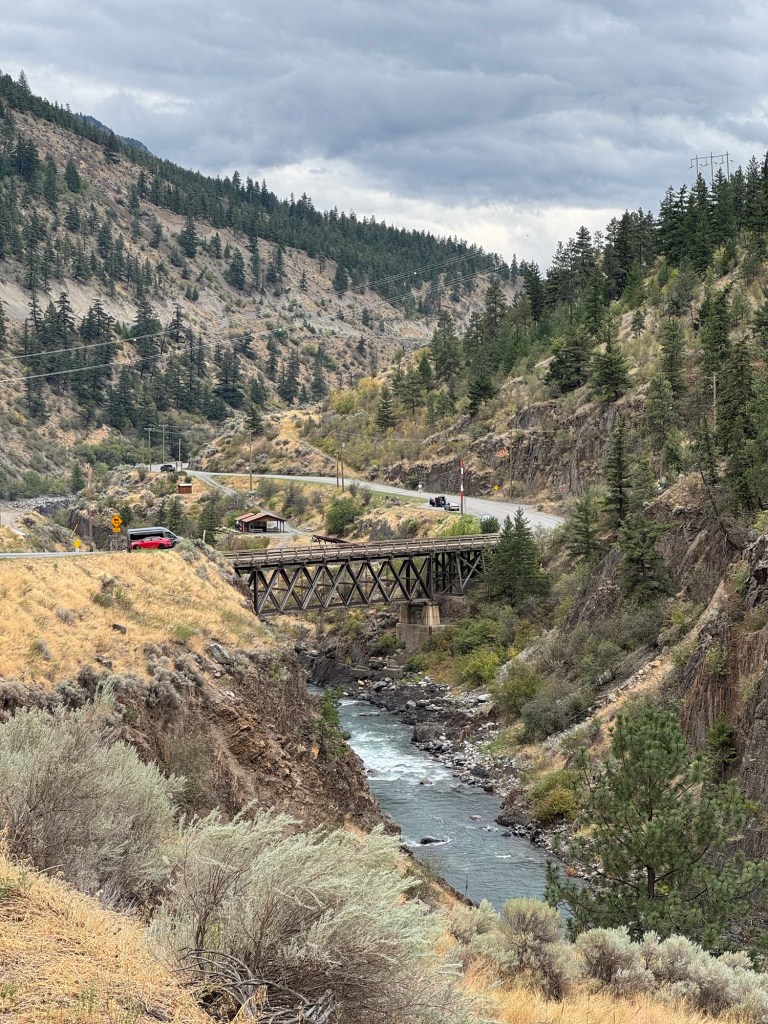
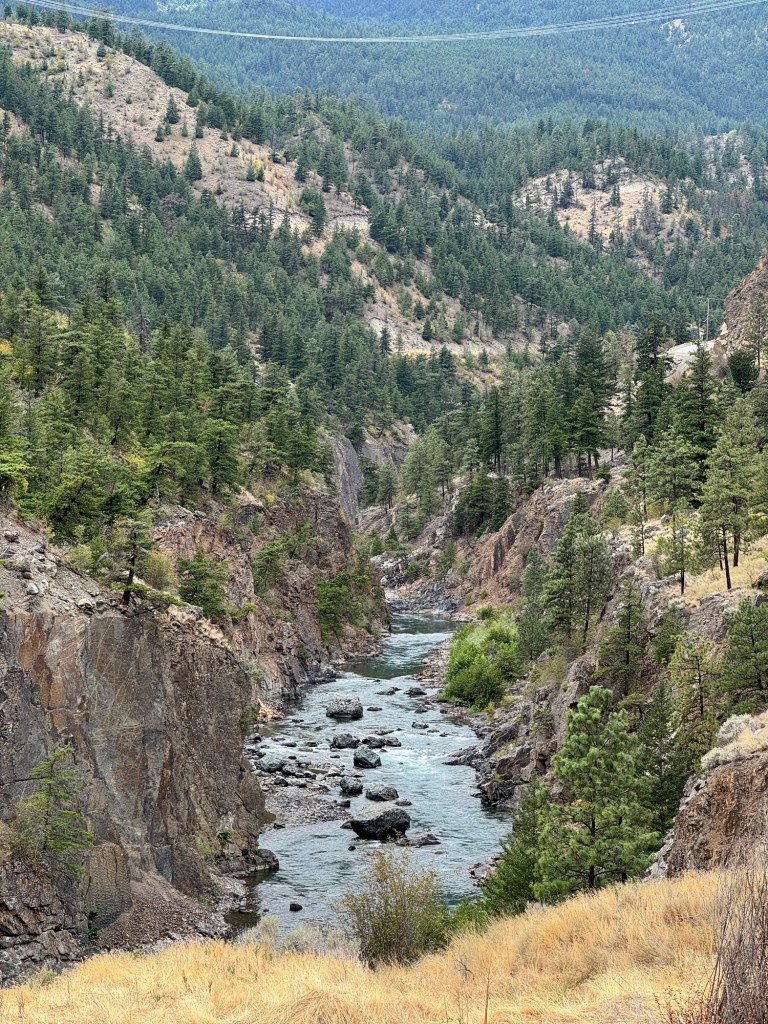
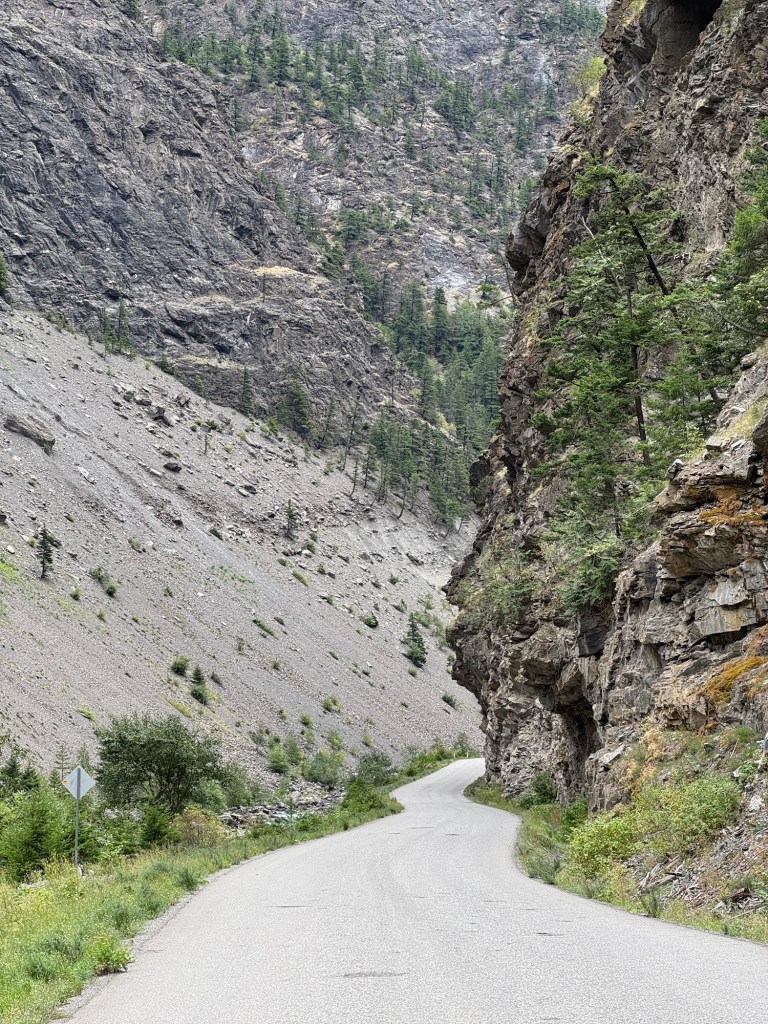
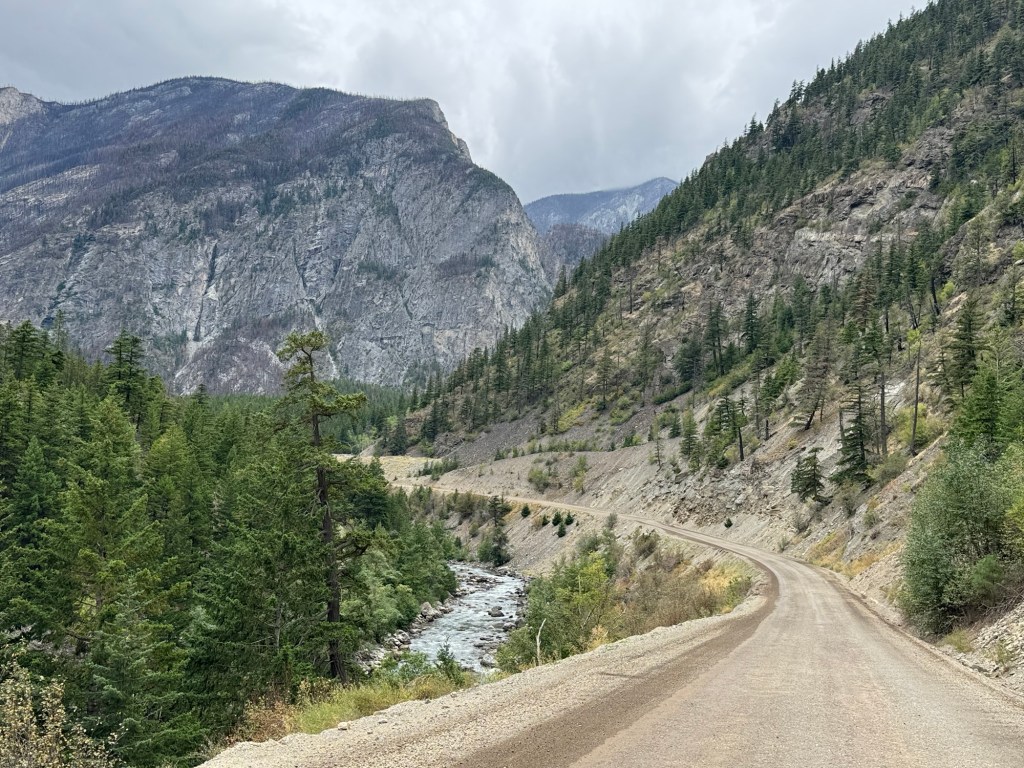
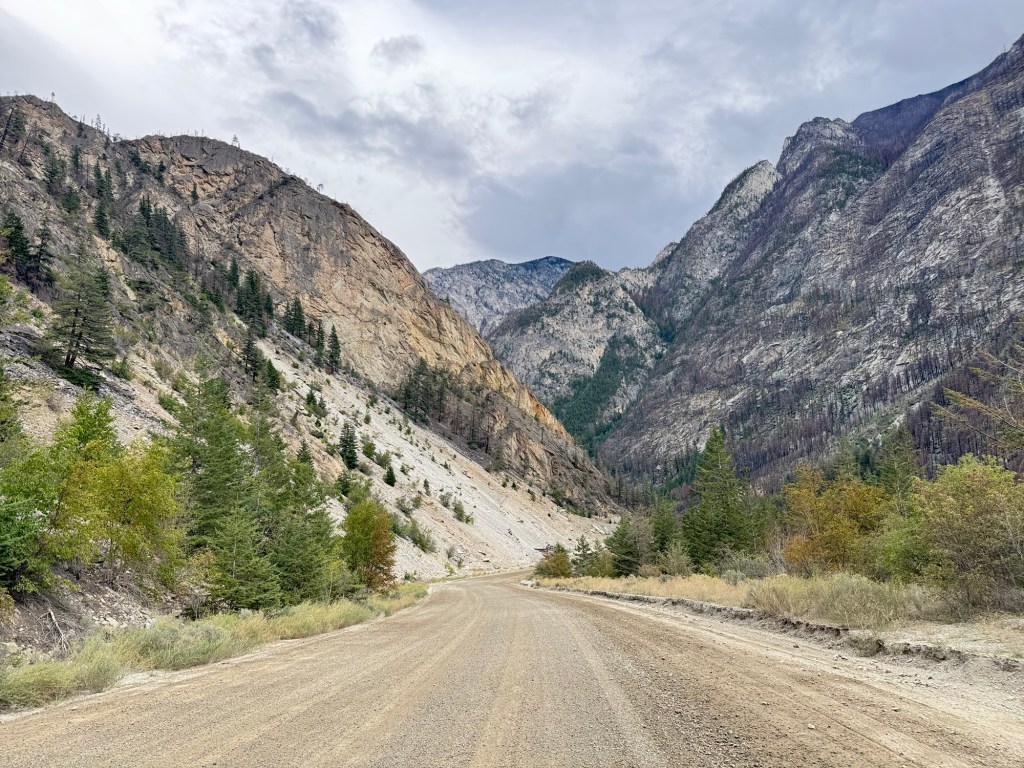
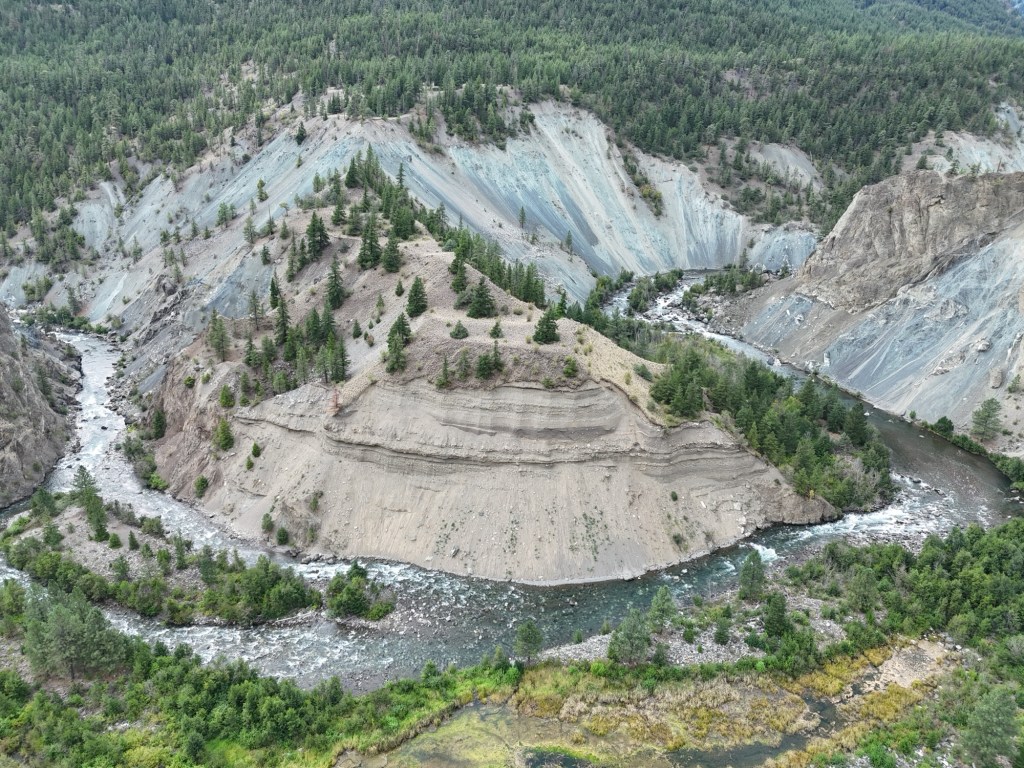
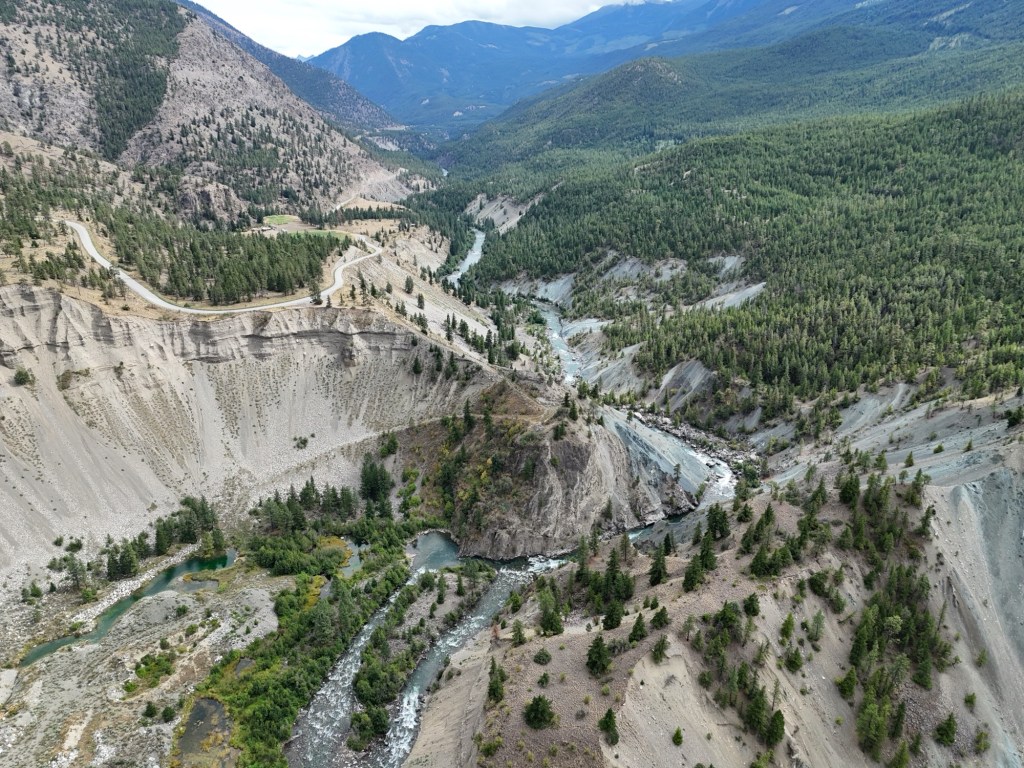
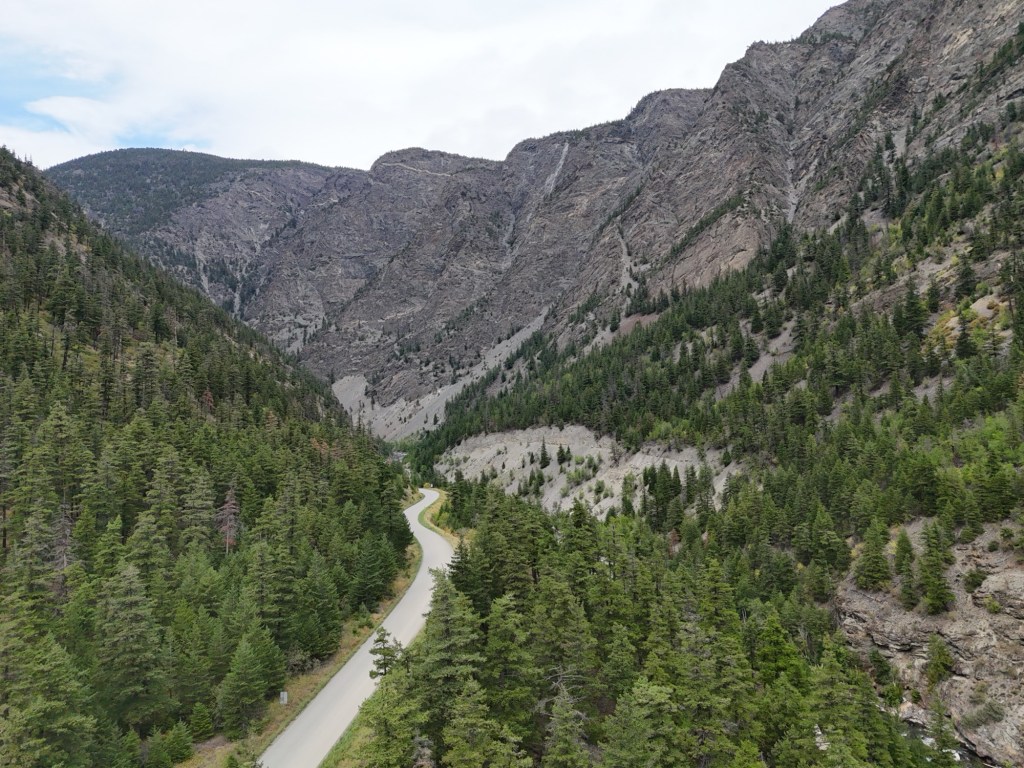
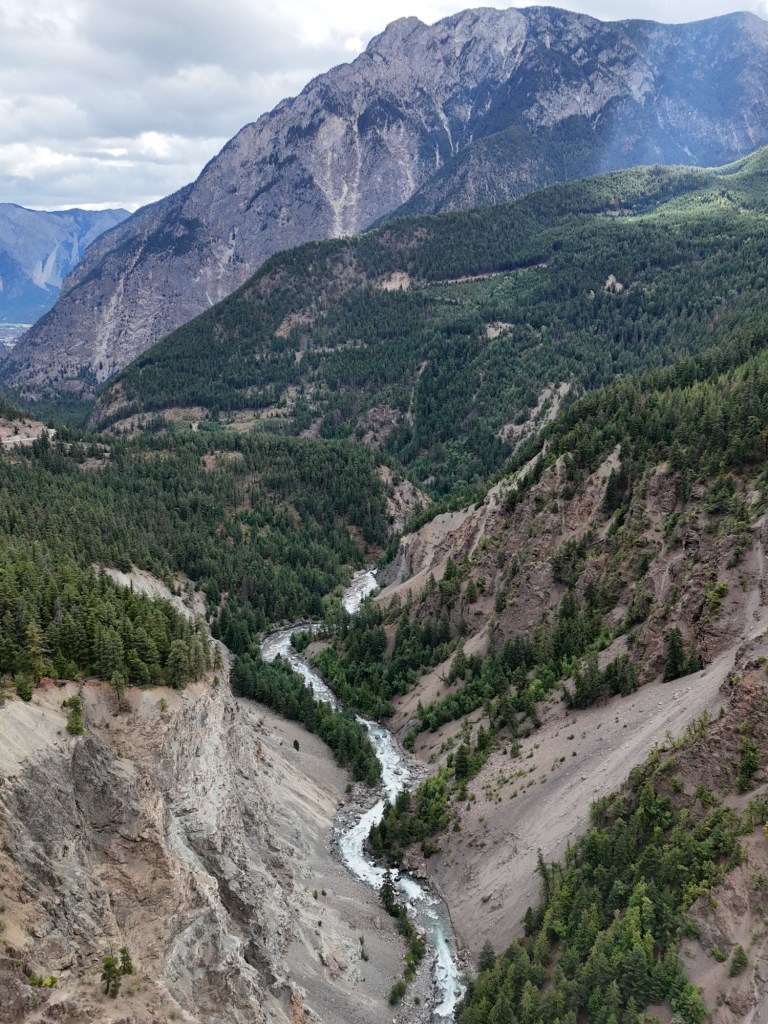
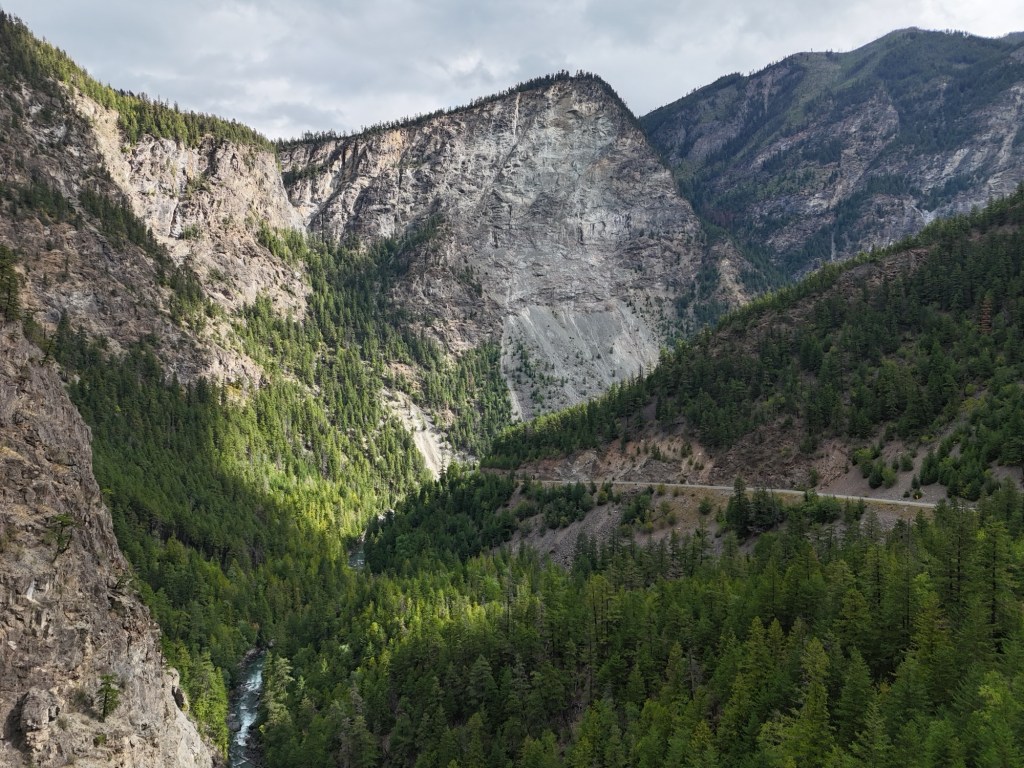
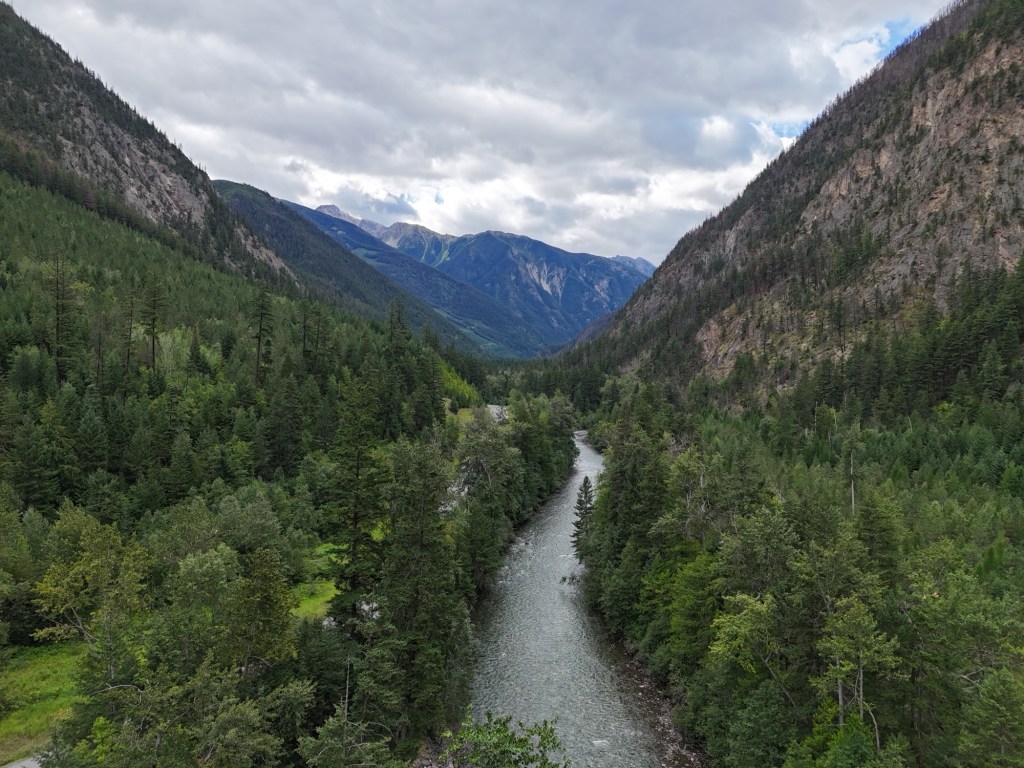
After dropping Jen at the airport, Dave drove on to Ten Mile Lake, where he camped in the back of the Ford. The next day he continued south, taking the scenic choices each step of the way and stopping frequently for drone flights.
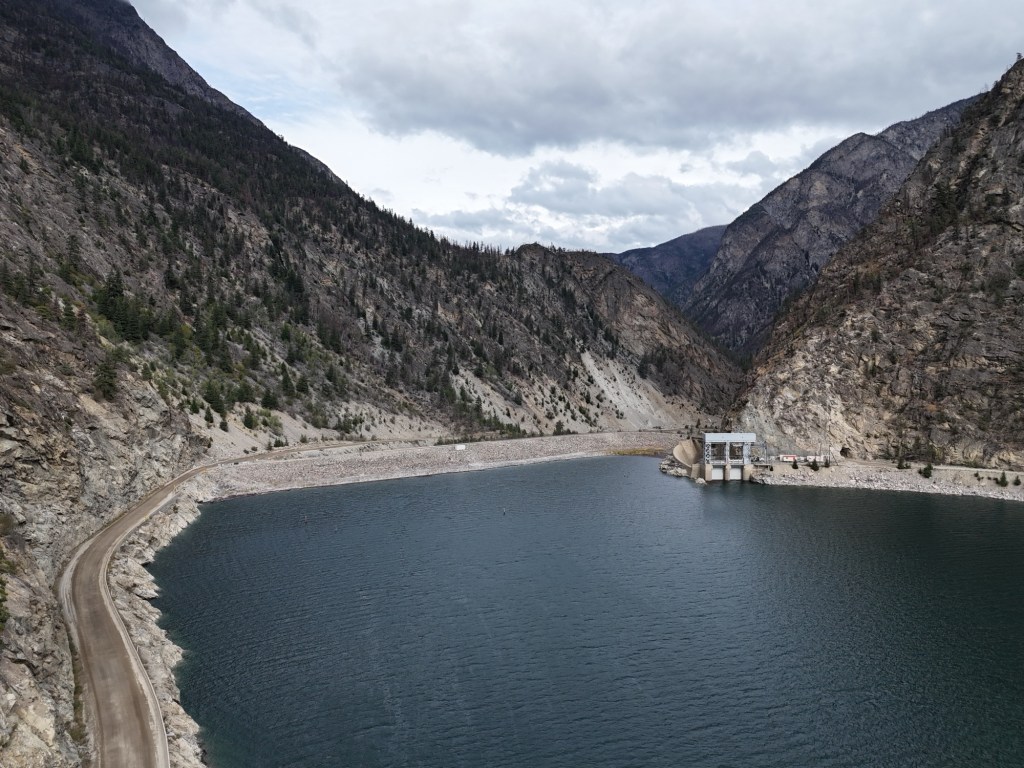
After a night at Marble Canyon, he took the road to Gold Bridge, passing the Terzaghi Dam. After visiting the quaint, tiny town, he returned the same way, heading to the Seton Dam campground for the night.
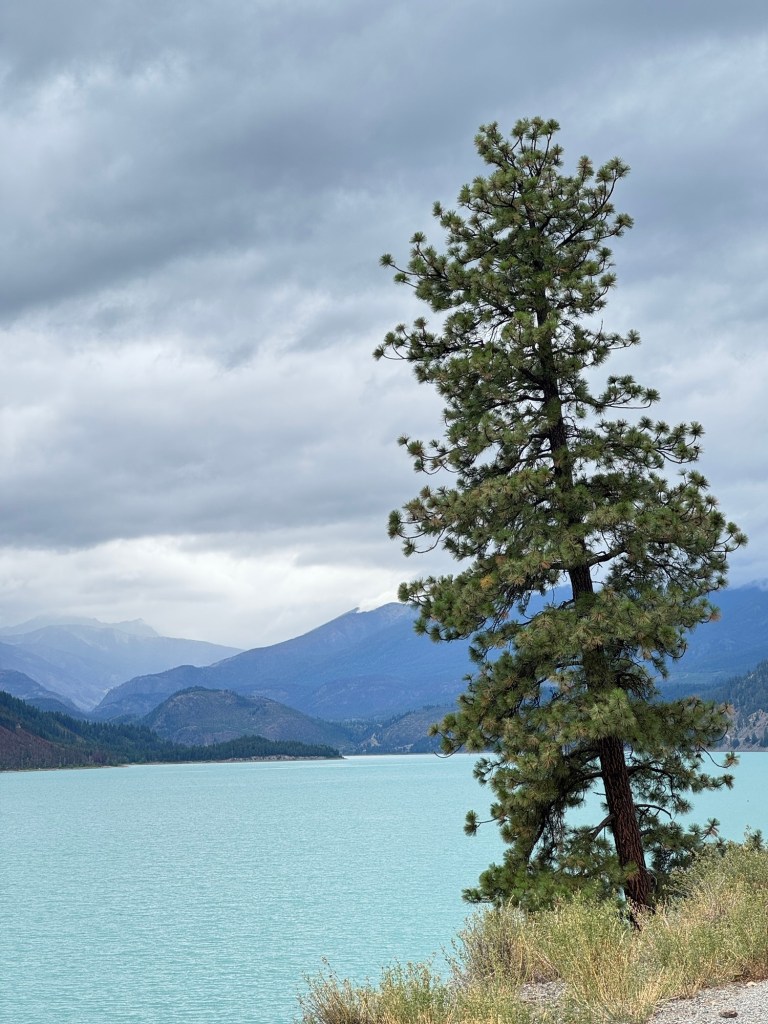
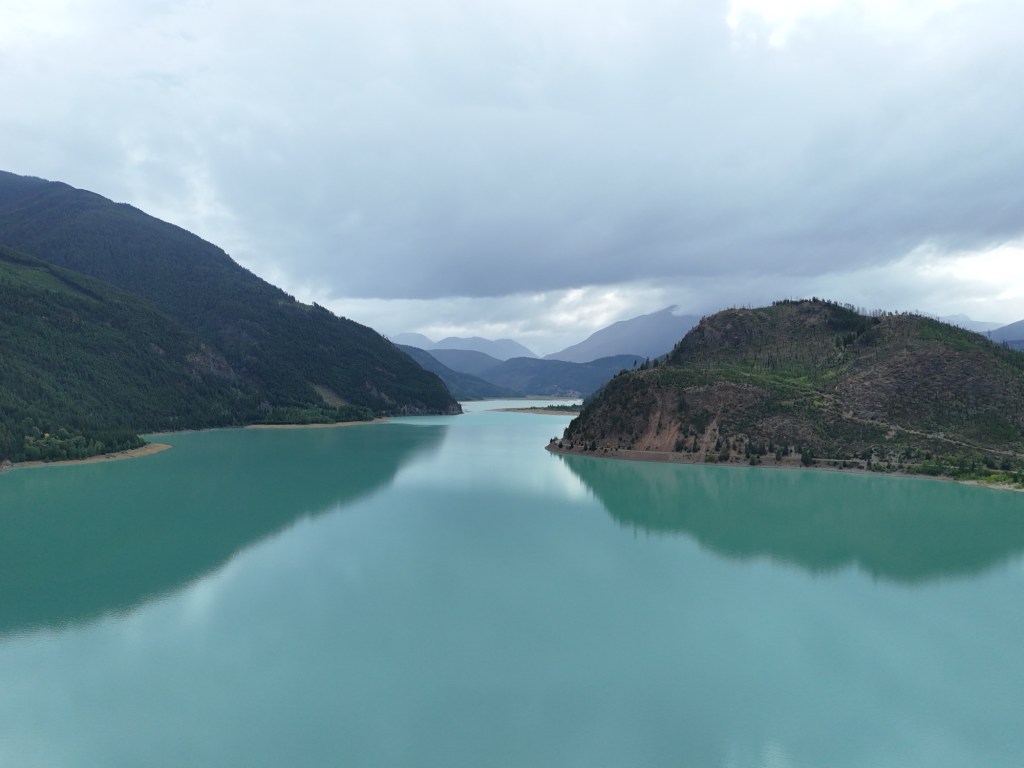
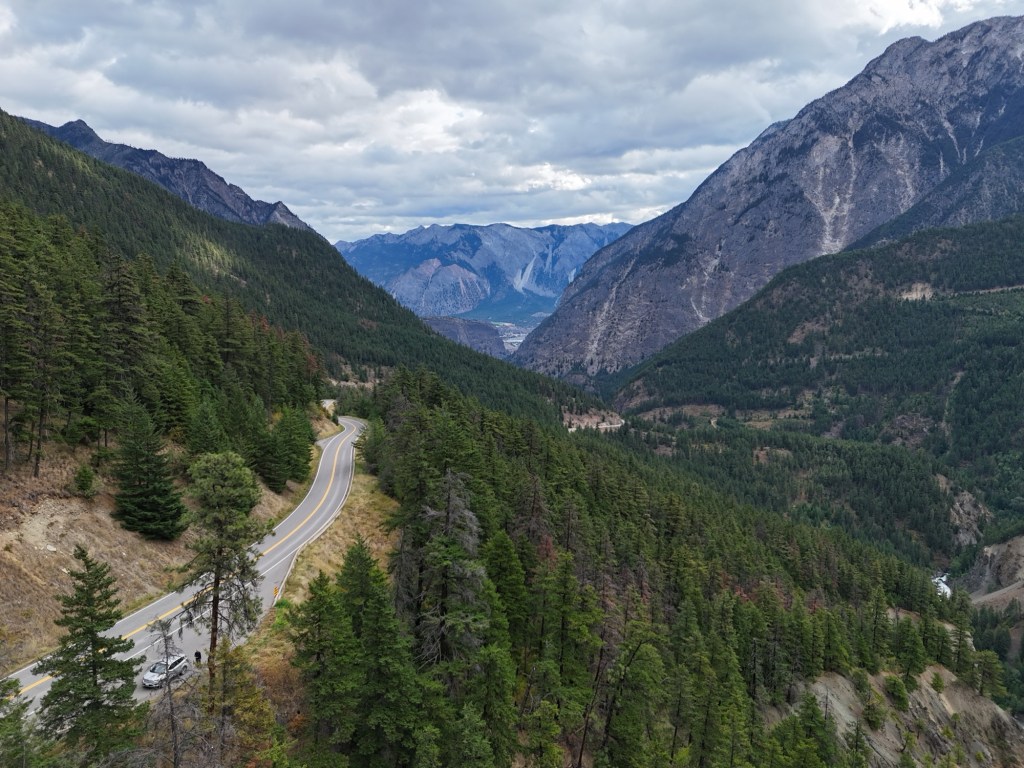
The Duffey Lake road was his route home, passing Pemberton. The beautiful turquoise of Carpenter Lake was a highlight.
Then – home sweet home!