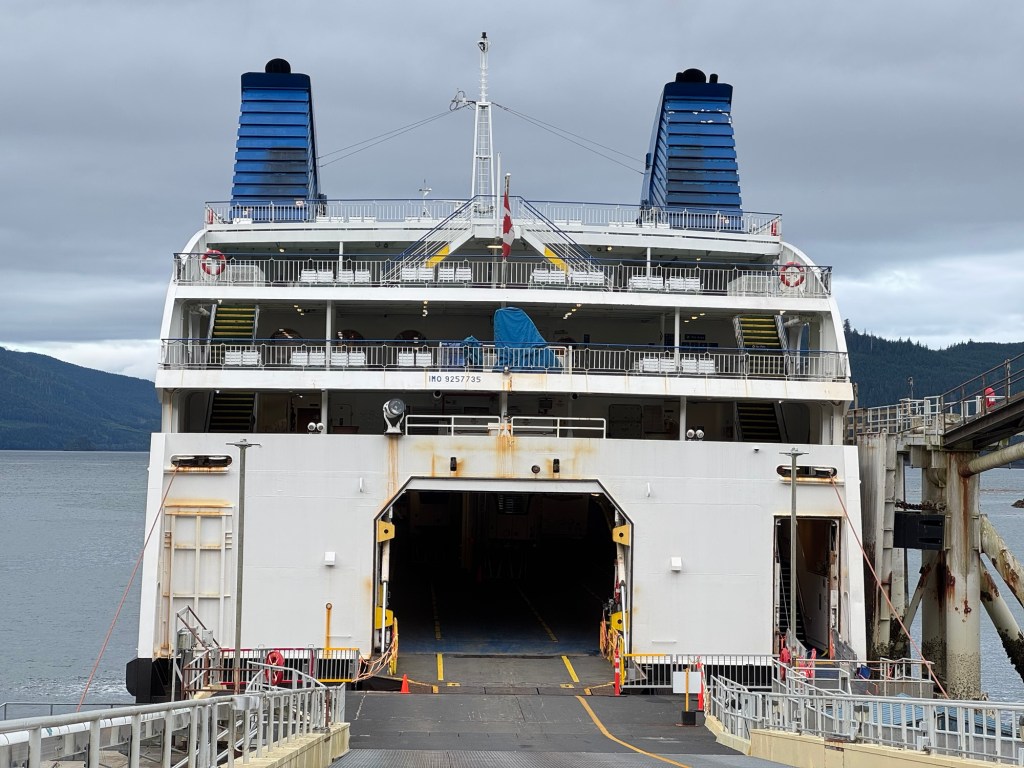
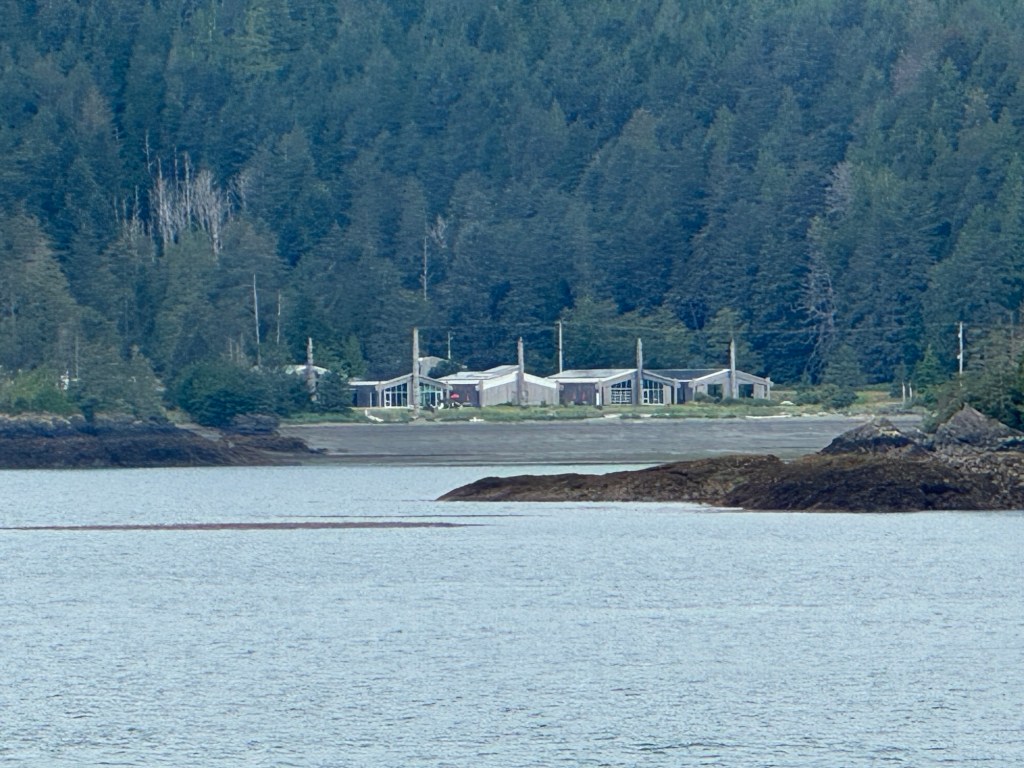
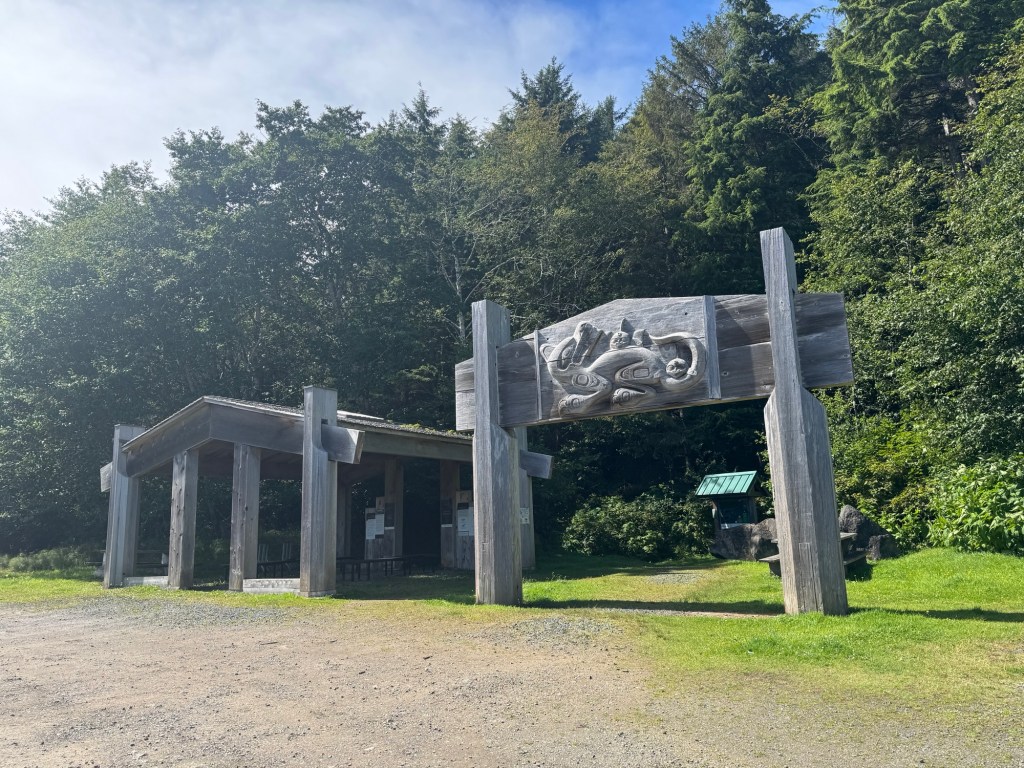
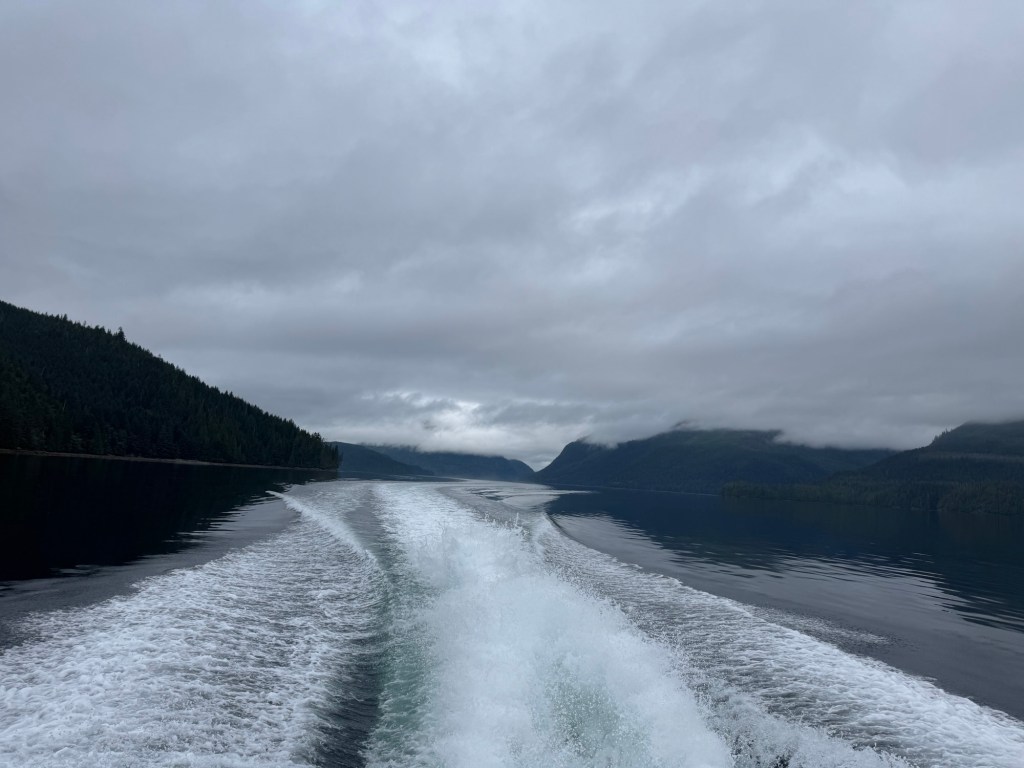
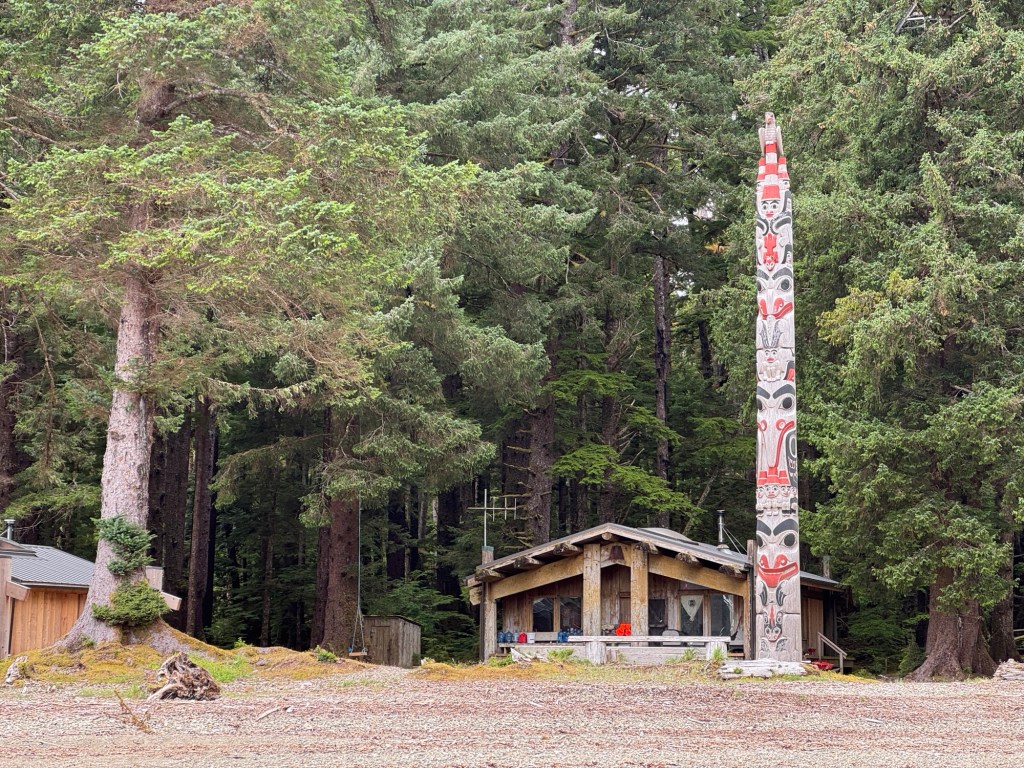
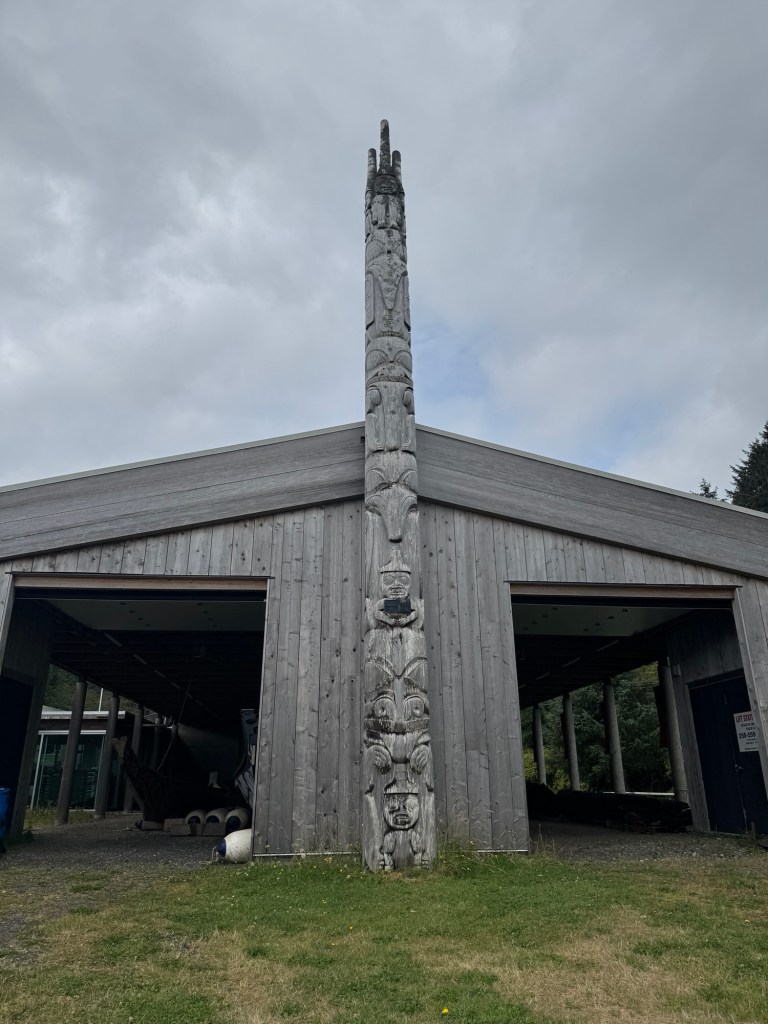
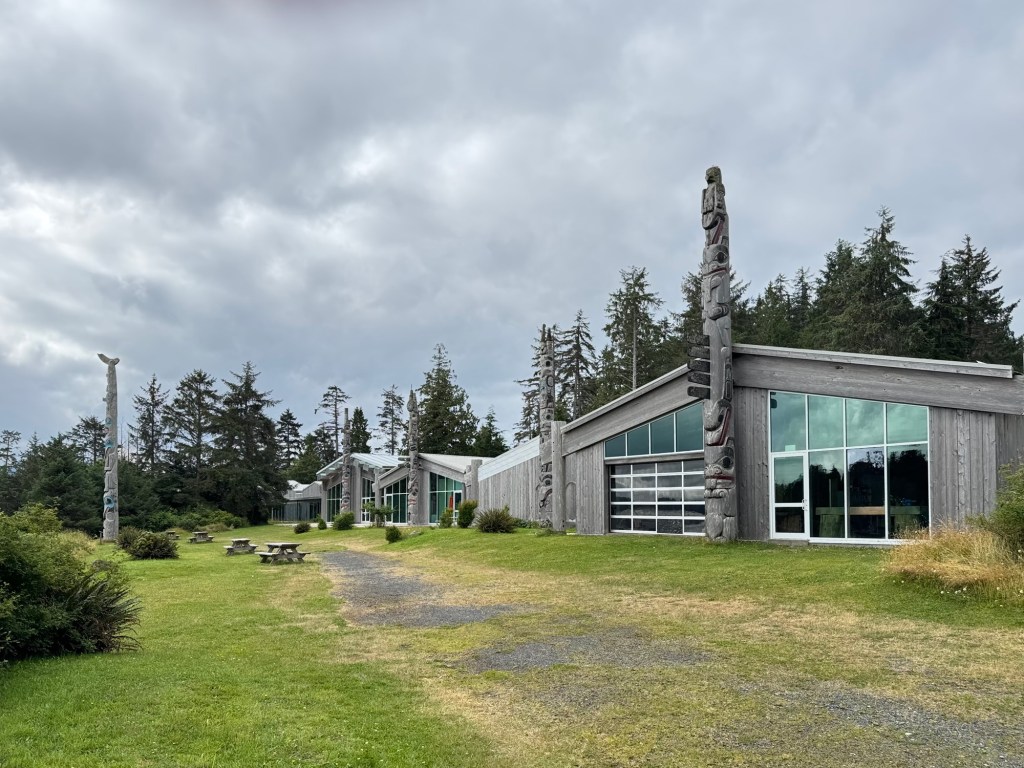
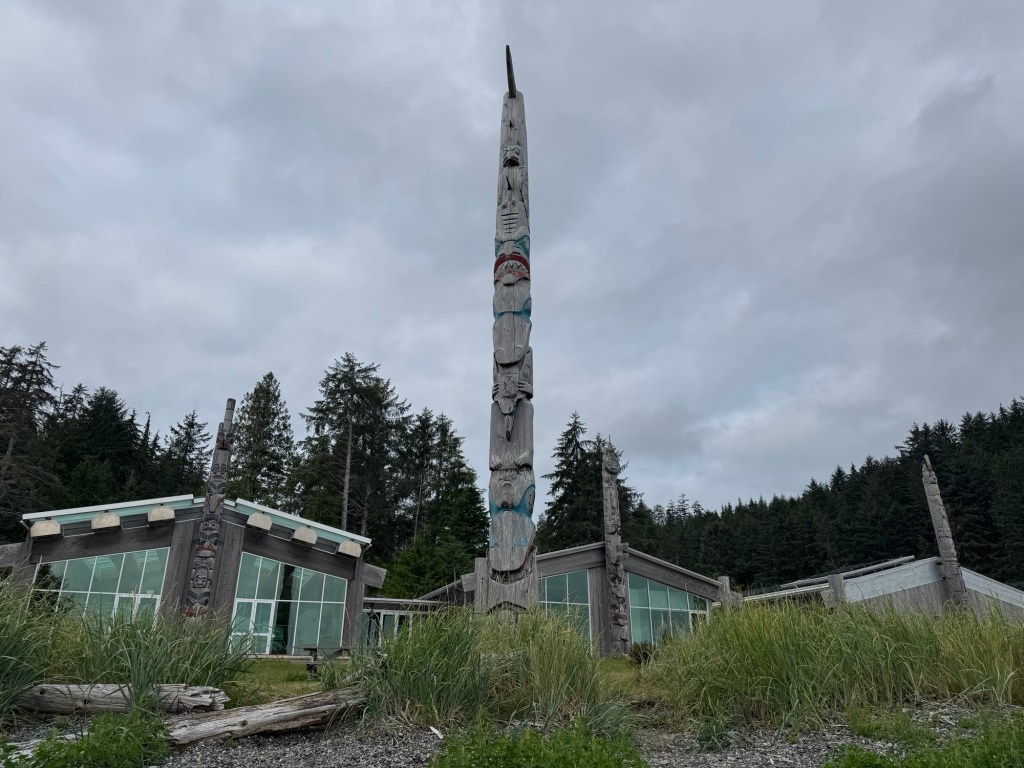
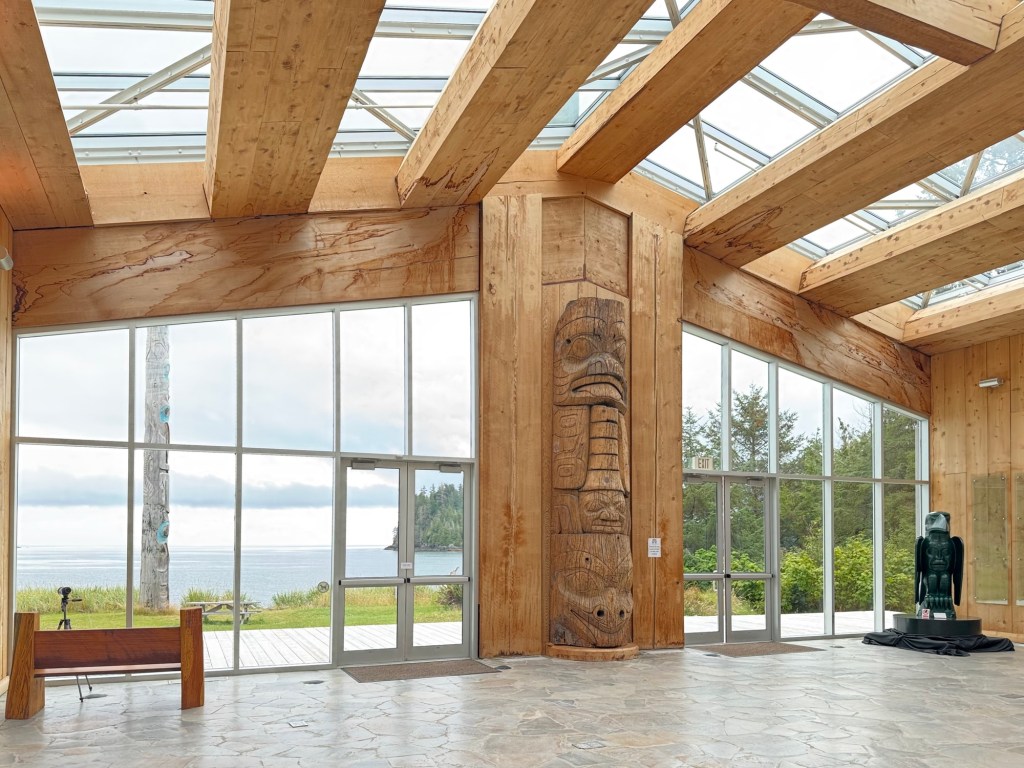
This morning we said goodbye to the eagles and the ravens. We said so long to the beaches and the views, and the emptiness. Until next time whispered the longhouse buildings and poles of the Haida Heritage Centre. Boarding the Northern Adventure, we bade a fond farewell to Haida Gwaii, as we returned to the mainland.
Northern ferries are unlike the Vancouver Island routes. Check in closes ninety minutes before sailing, and loading takes an hour. The ship’s maximum capacity is five hundred, including crew, and there are comfortable seats and tables with chairs – and enough of both for everyone to have one of each. The attitude difference is summed up, I think, in the free amenities: a water bottle filled with station and a public microwave.
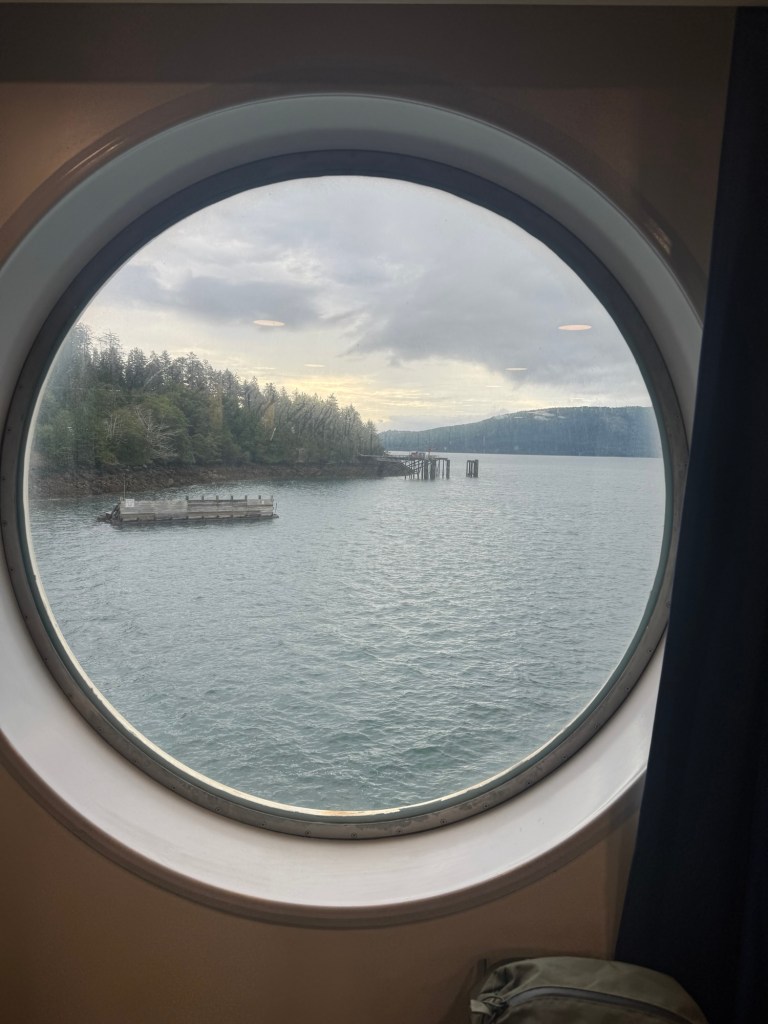
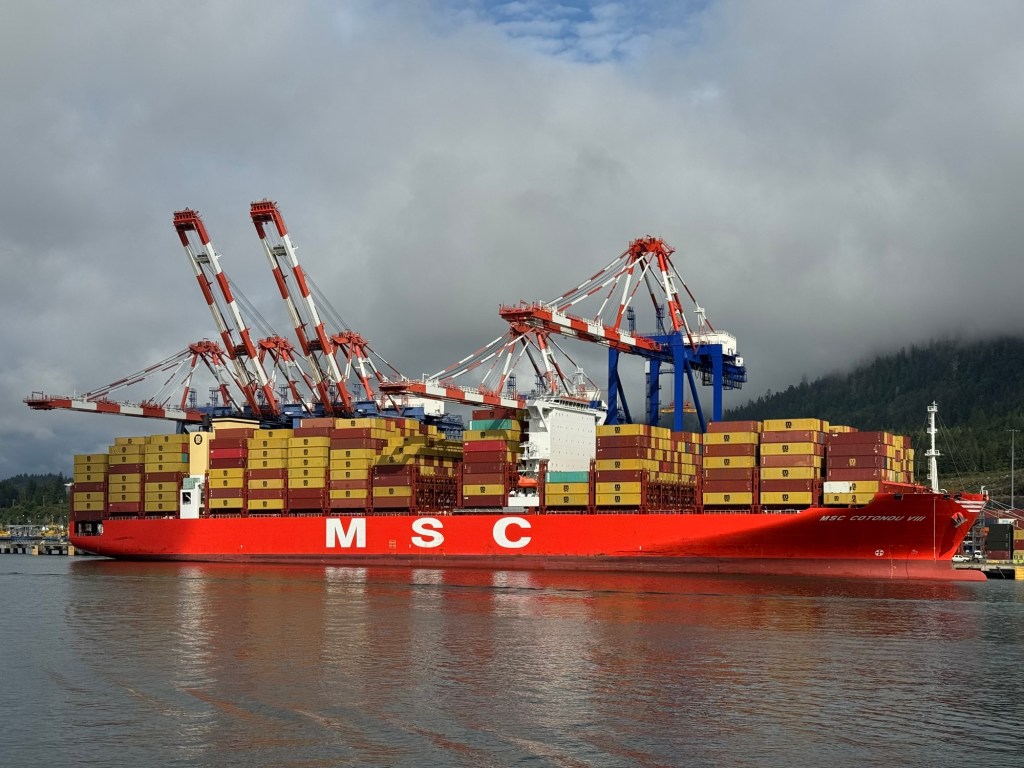
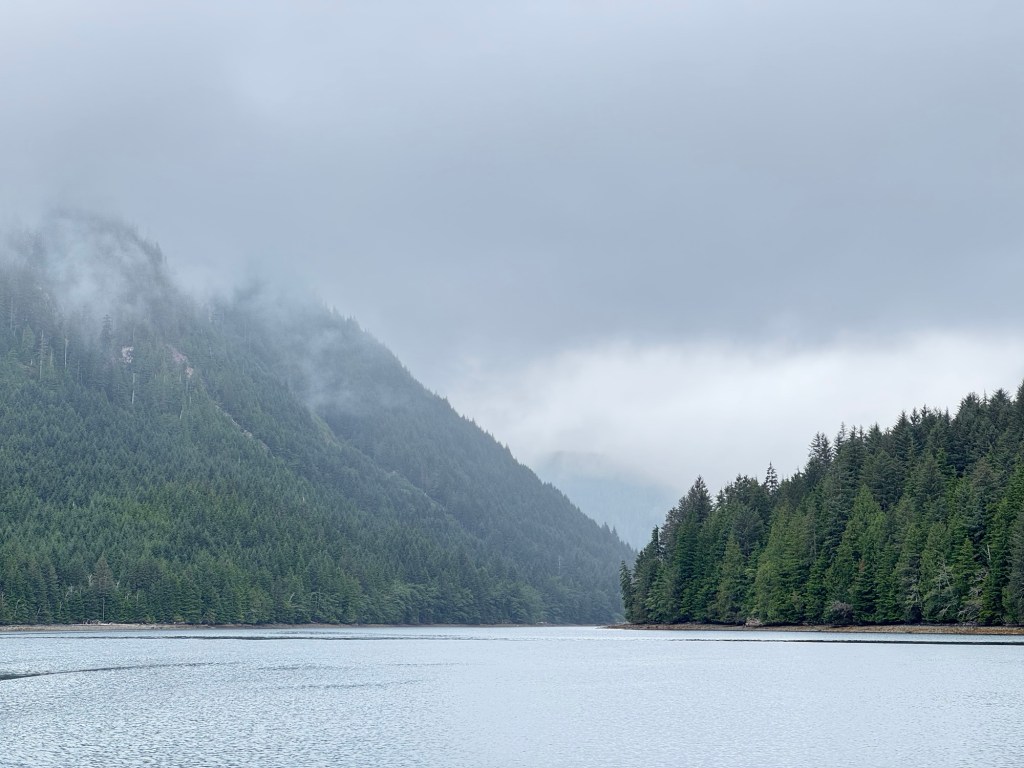
After a day of games, study (on Dave’s part), and watching downloaded videos, the islands outside of Prince Rupert came to view. We sailed past the container port and tugboats, and then we were returning to the vehicle deck.
Once off the ship we grabbed takeout, fruit from a fruit stand, and checked into our hotel. Early night tonight – lots of driving tomorrow.
Today we had separate objectives. Dave’s was to summit Sleeping Beauty (too technical / too much exposure for Jen); Jen’s was to add some relaxation to vacation.
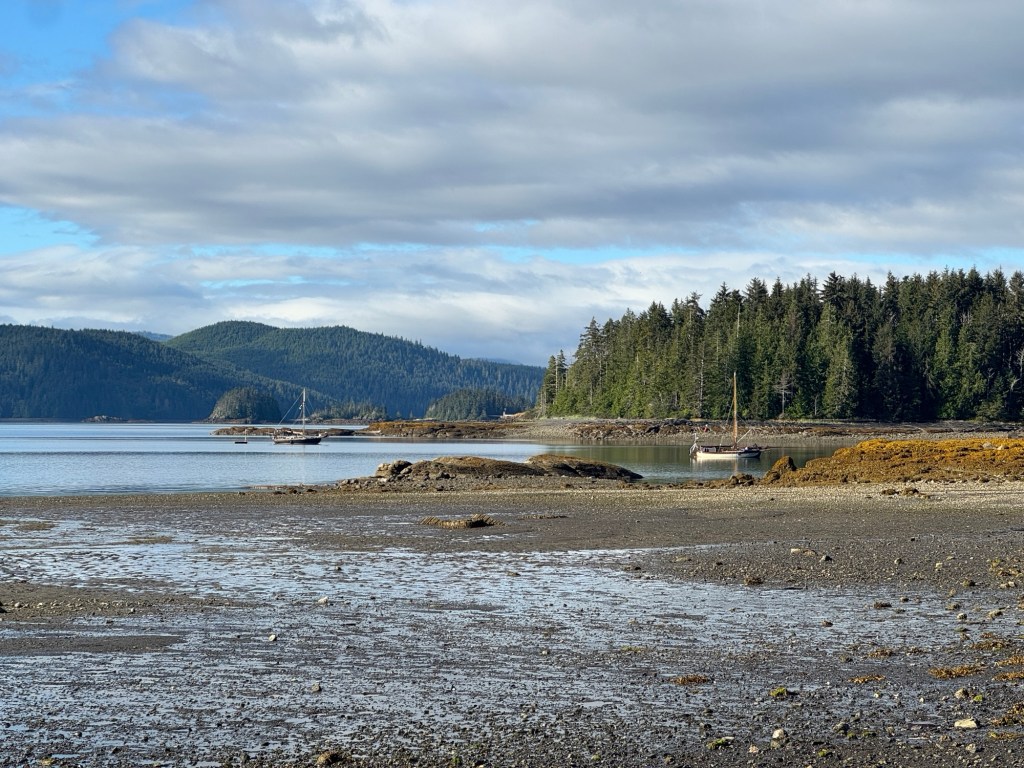
Jen started by walking into the village, and doing some low-tide beachcombing. Next was to check if the coffeeshop was selling sourdough today – it wasn’t, but she got a decaf latte and took it to the gardens by the wharf, where she watched eagles, ravens, barn swallows, crows, and a cedar waxwing. A visit to the visitor centre to browse came next, then a trip to the grocery store and a wander back to our abode.
A few chores – mostly packing up – and a nice sit on the deck with a cold drink took up the early afternoon.
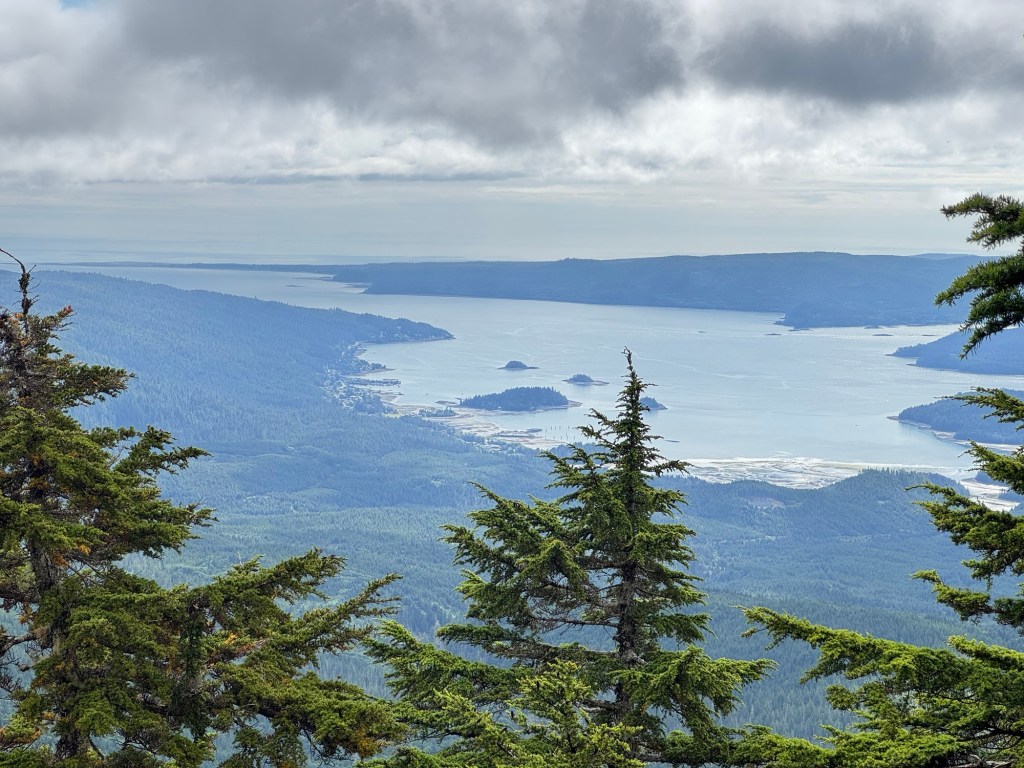
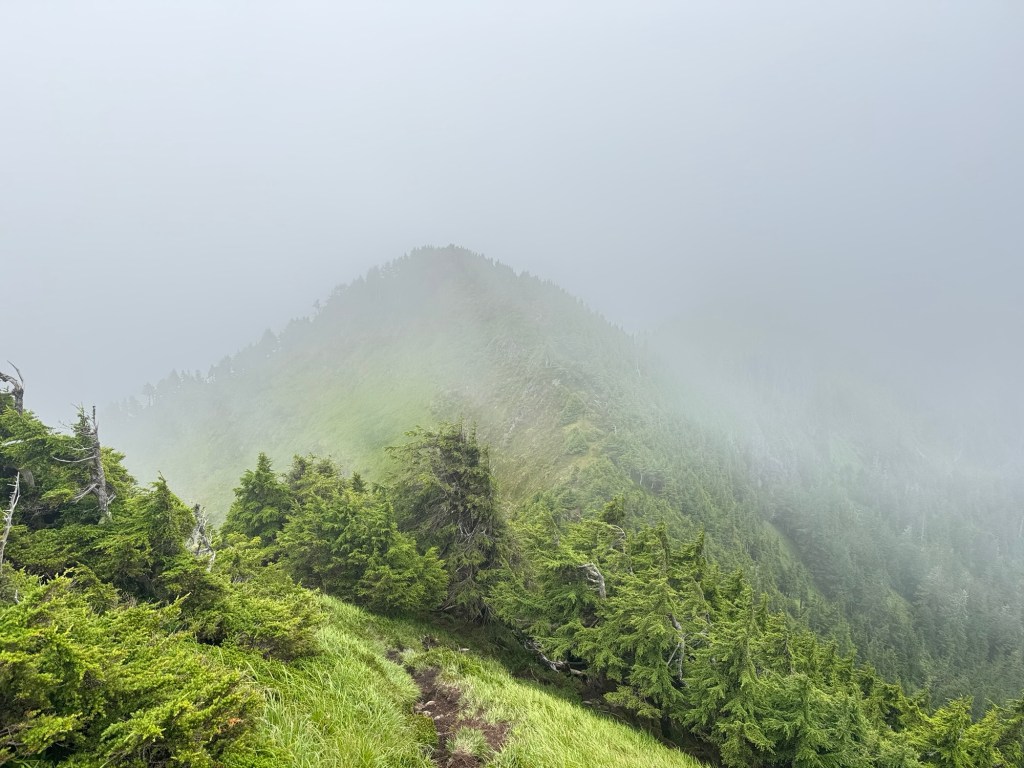
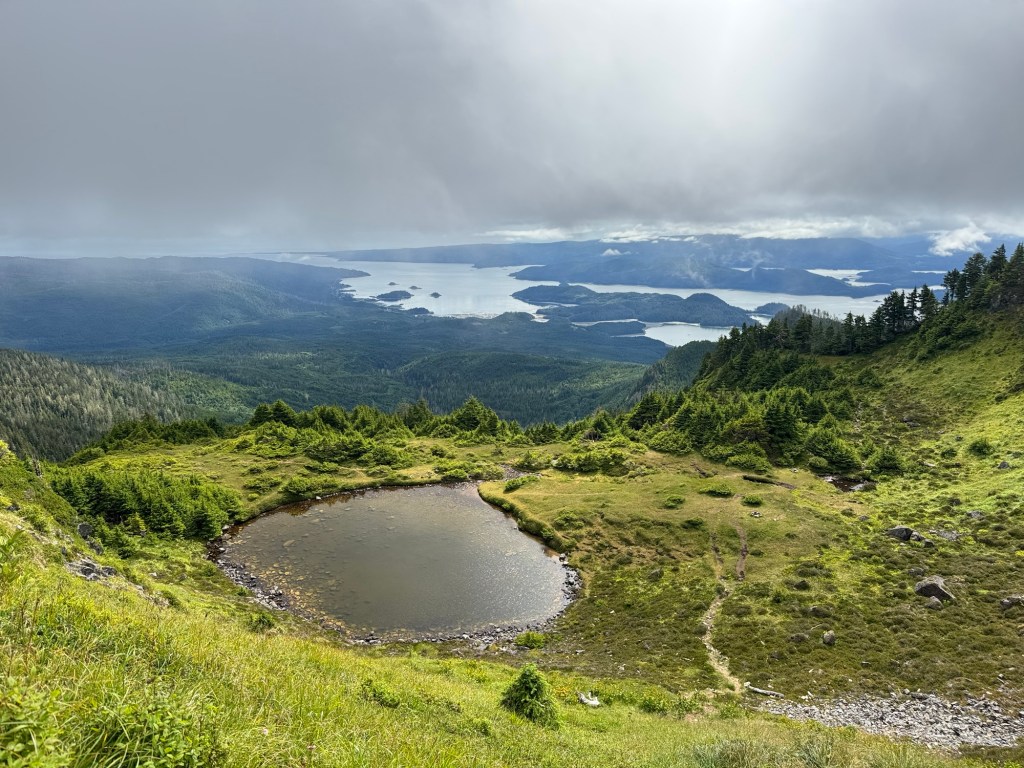
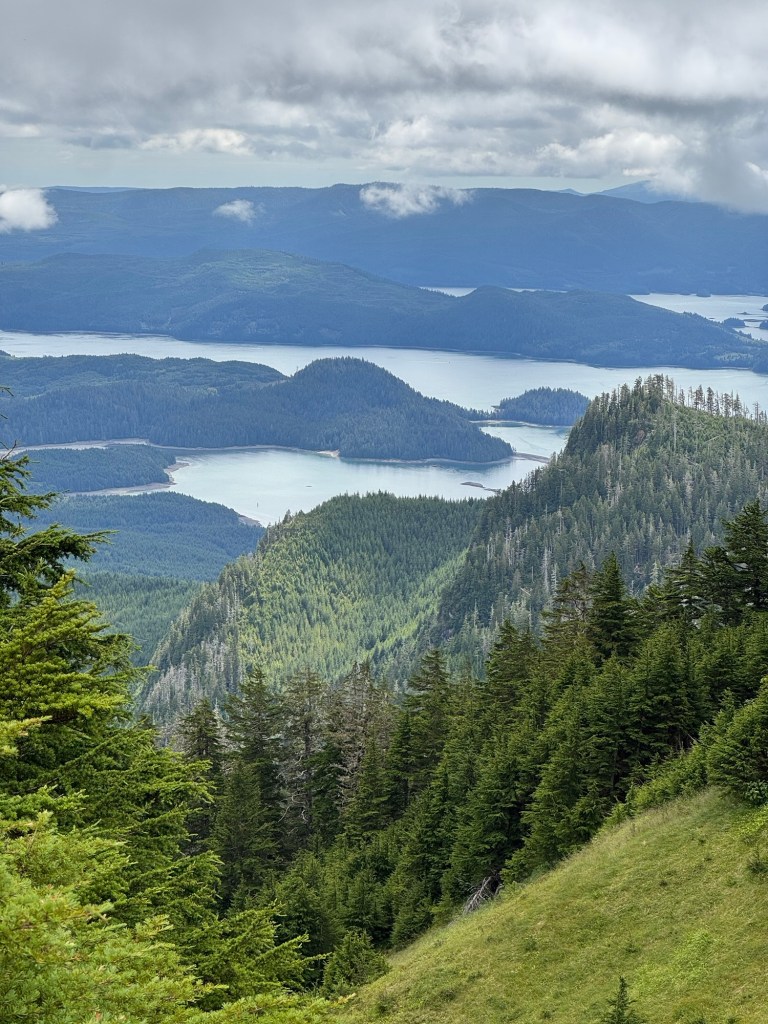
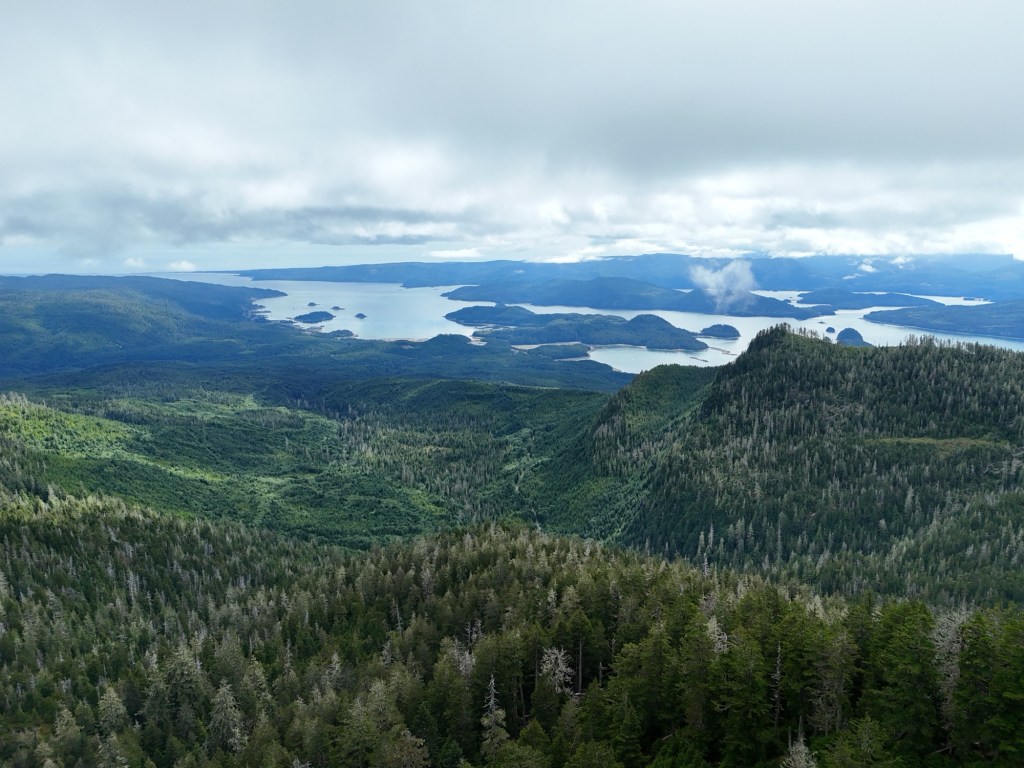
Dave’s hike was coined Sleeping Beauty by the locals as the mountain looks like a woman’s face in profile. A short drive on forest service roads brought him to the trailhead. It’s a steep trail, with lots of root-y steps, and some scrambles assisted by fixed ropes. The views from the top can be incredible, but he was surrounded by cloud and strong winds at the summit.
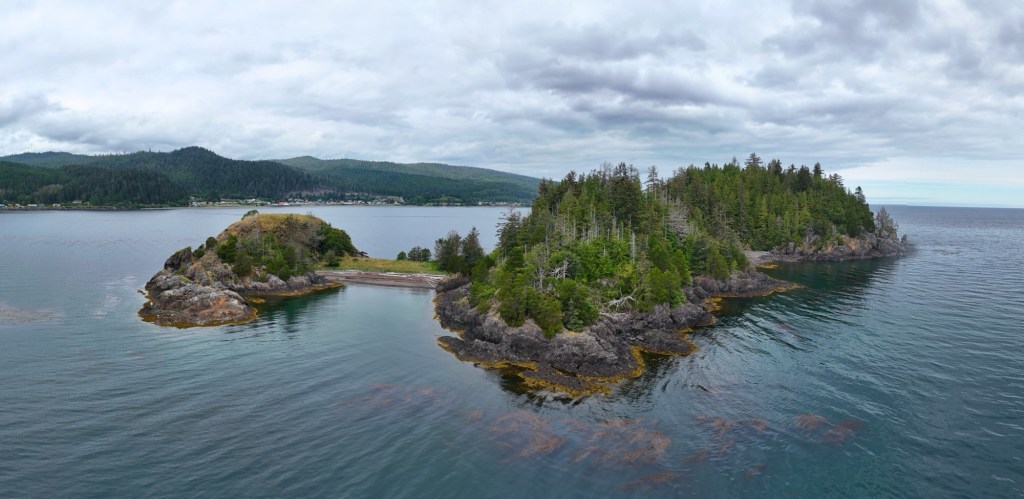
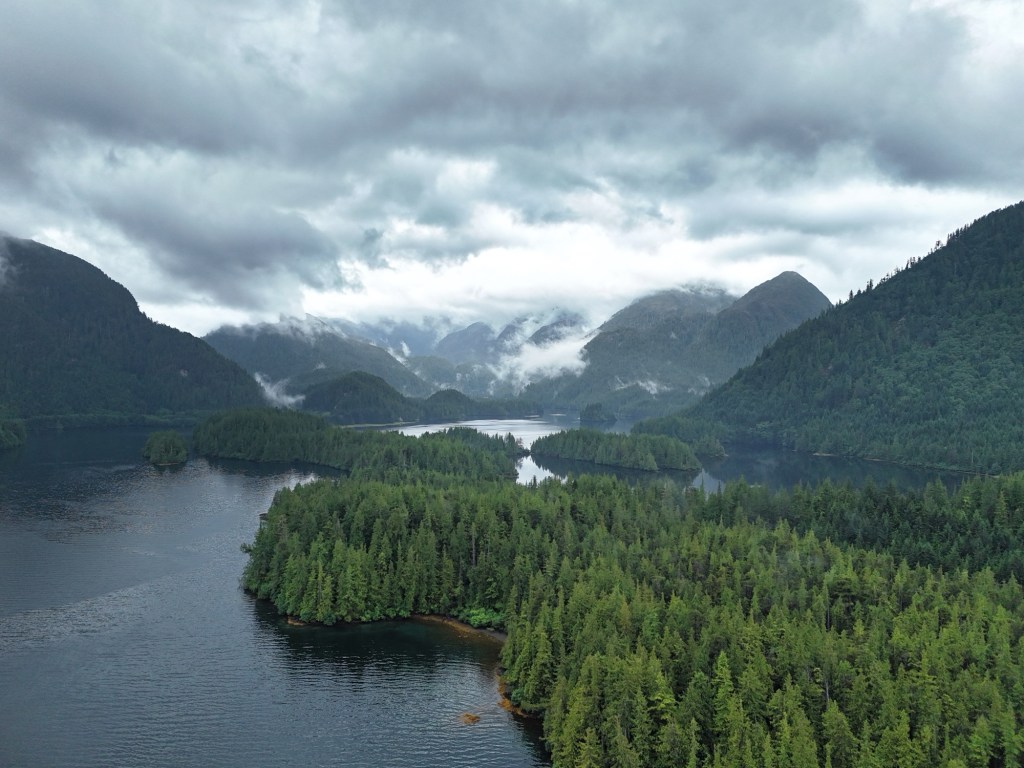
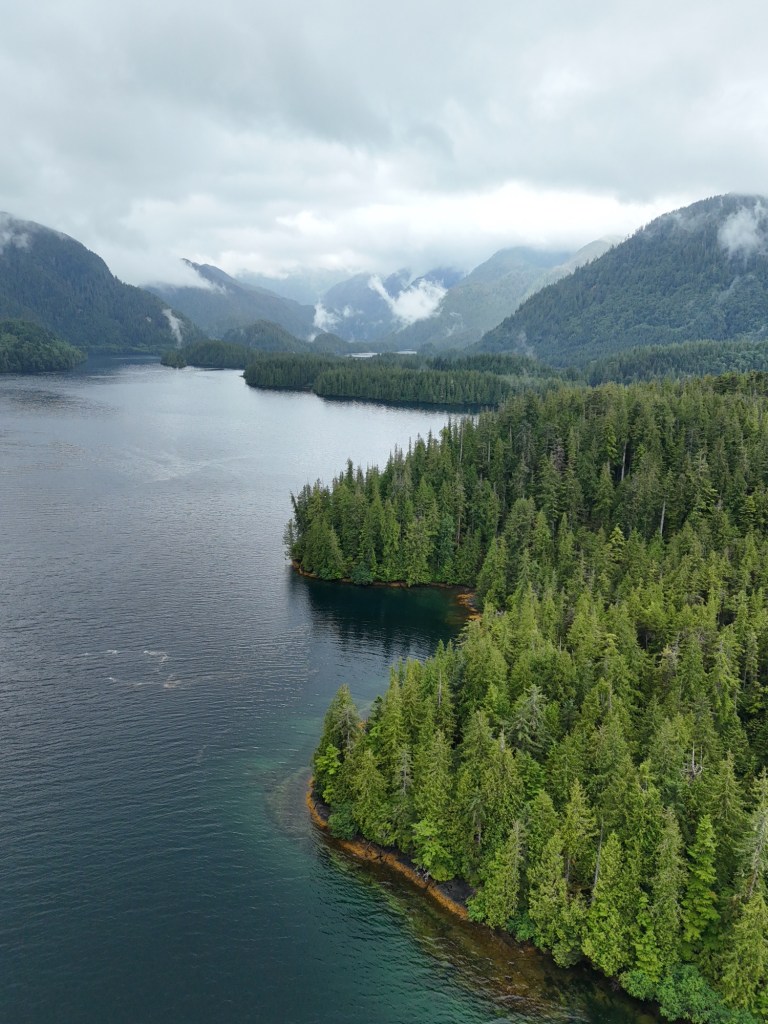
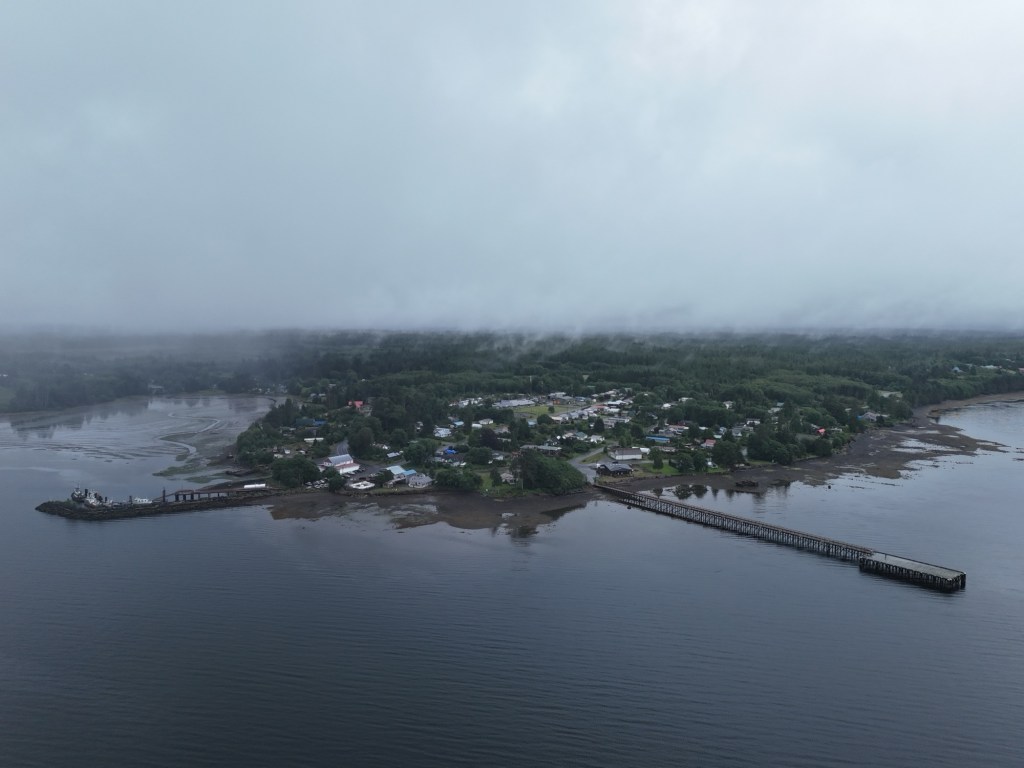
He ate his lunch in the bowl, and did some drone flights.
Late afternoon was relaying our stories to each other and a bit more relaxing. For dinner, we’re headed for fish and chips on the dock. It’s open nine hours a week. It’s incredible how many businesses here have limited and sometimes changing or arbitrary hours. But figuring out the timing was worth it. Fresh Haida Gwaii Ling Cod and twice-cooked chips. Yum.
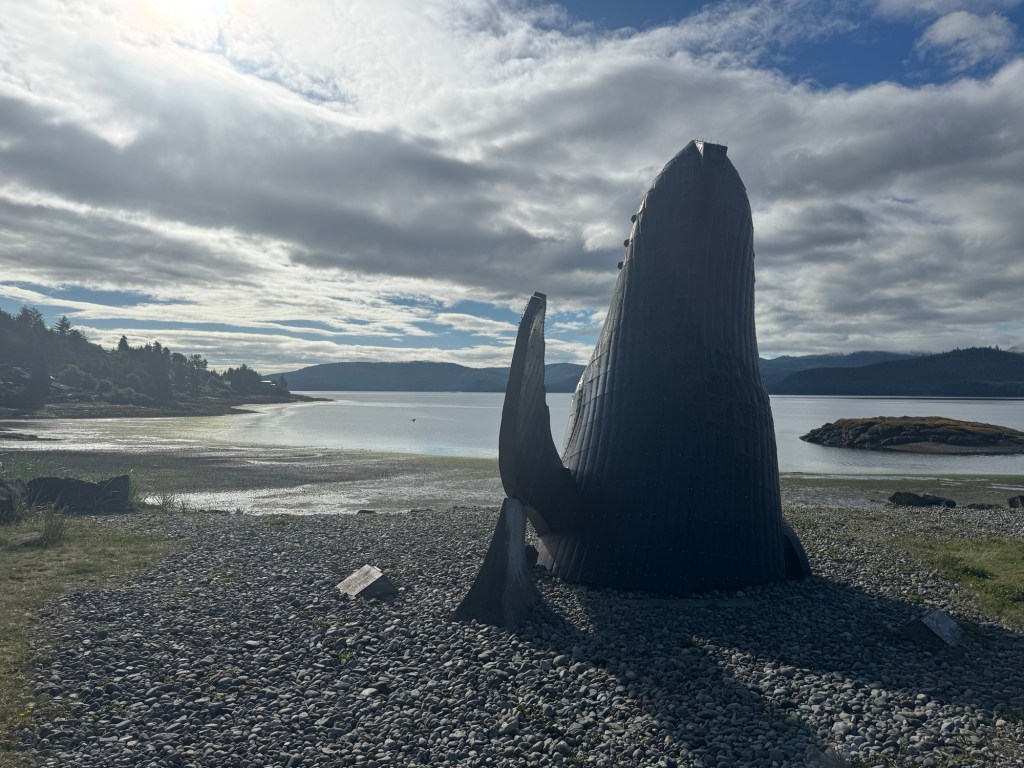
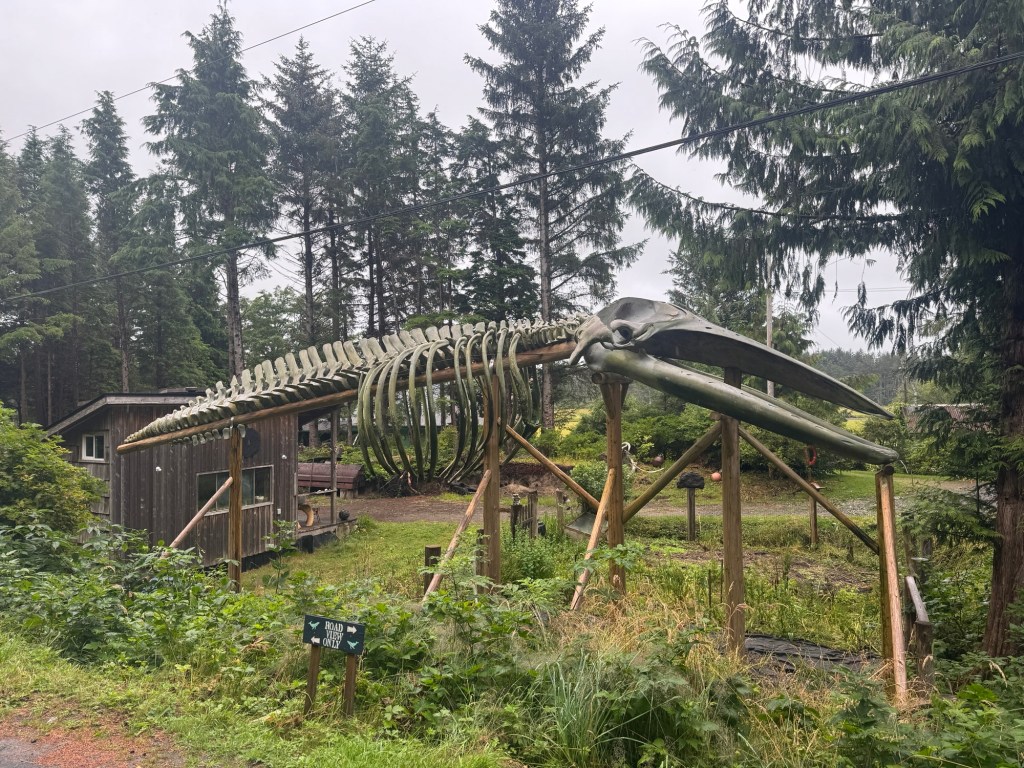
Jen’s beachcombingA humpback whale sculpture beside the Visitor Centre
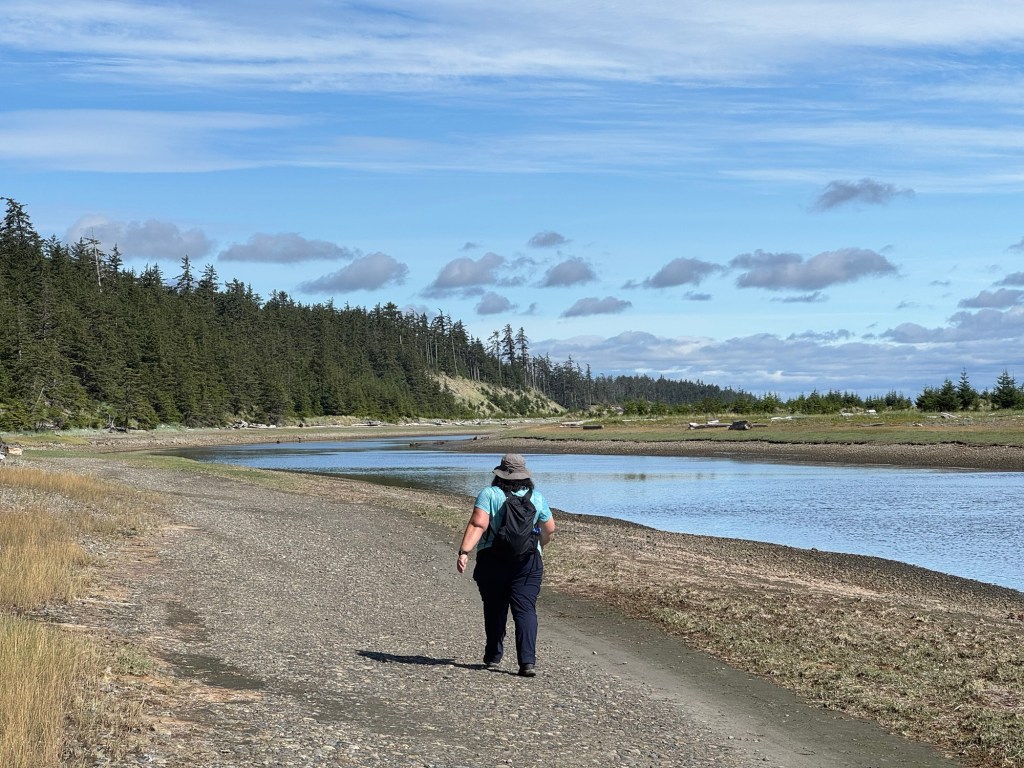
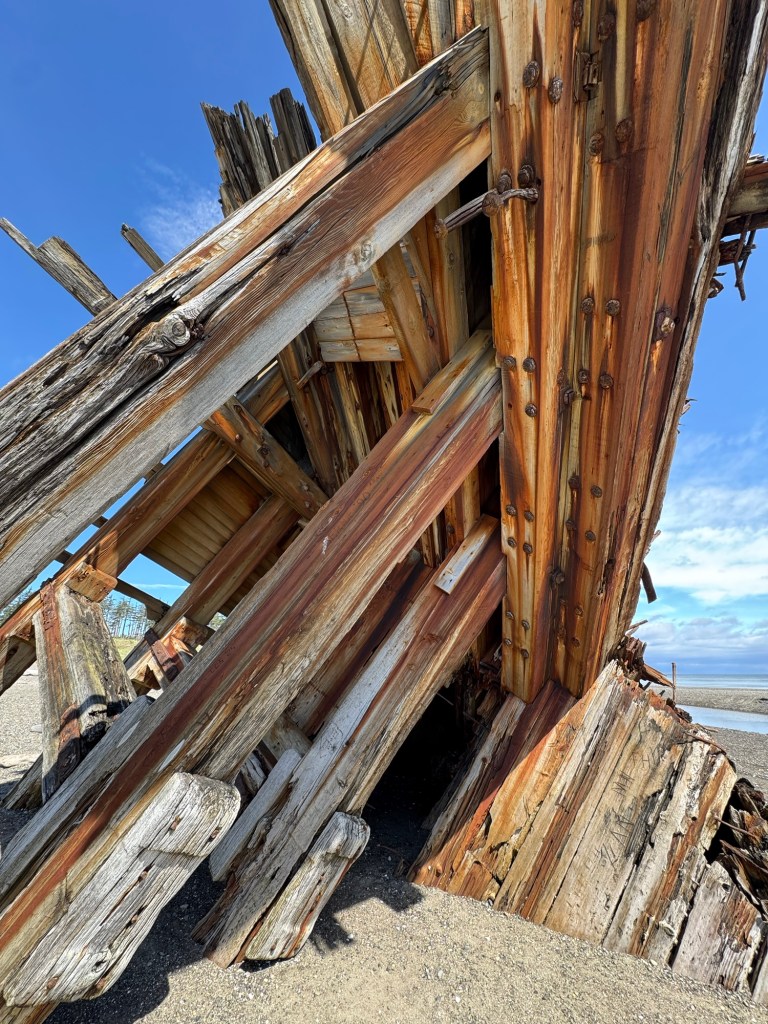
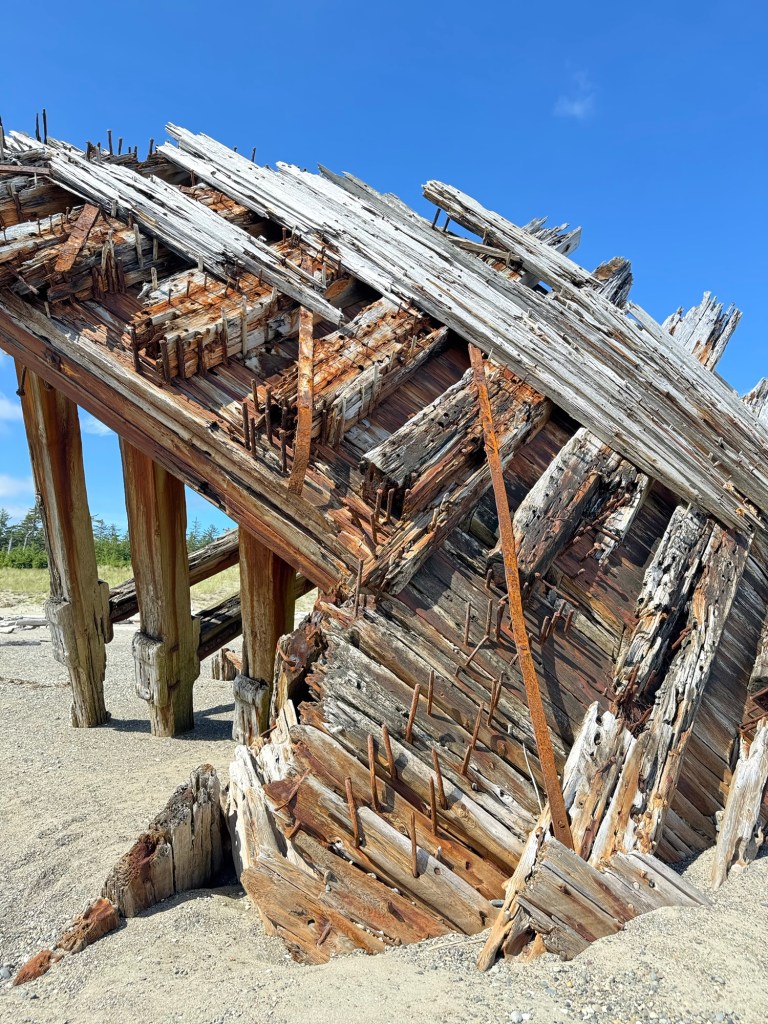
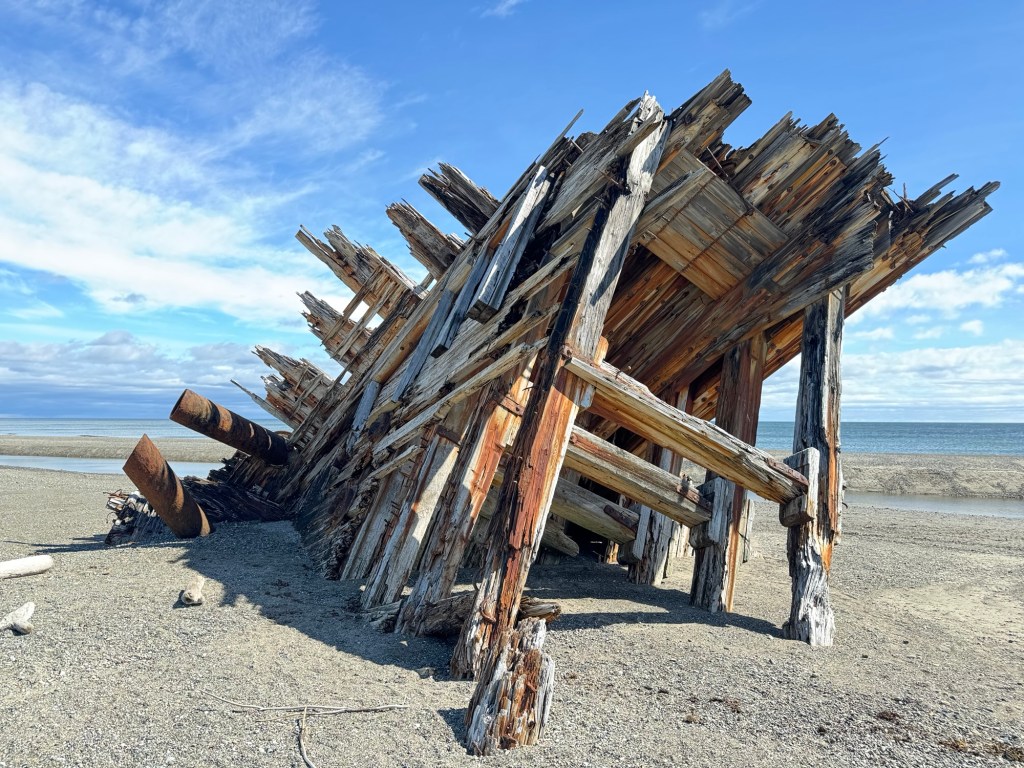
Today we visited the south-eastern section of Naikoon Provincial Park, near Tlell, for a 12.5 km walk to the shipwreck Pesuta (1928). She was a self-loading log carrier, 264’ long.
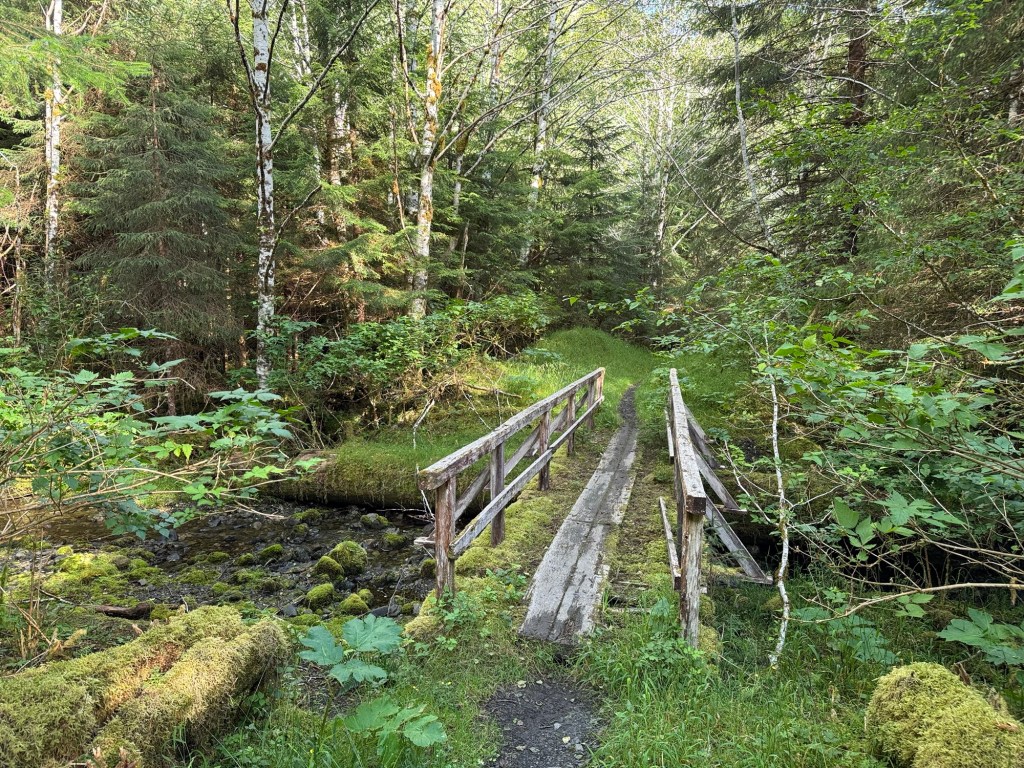
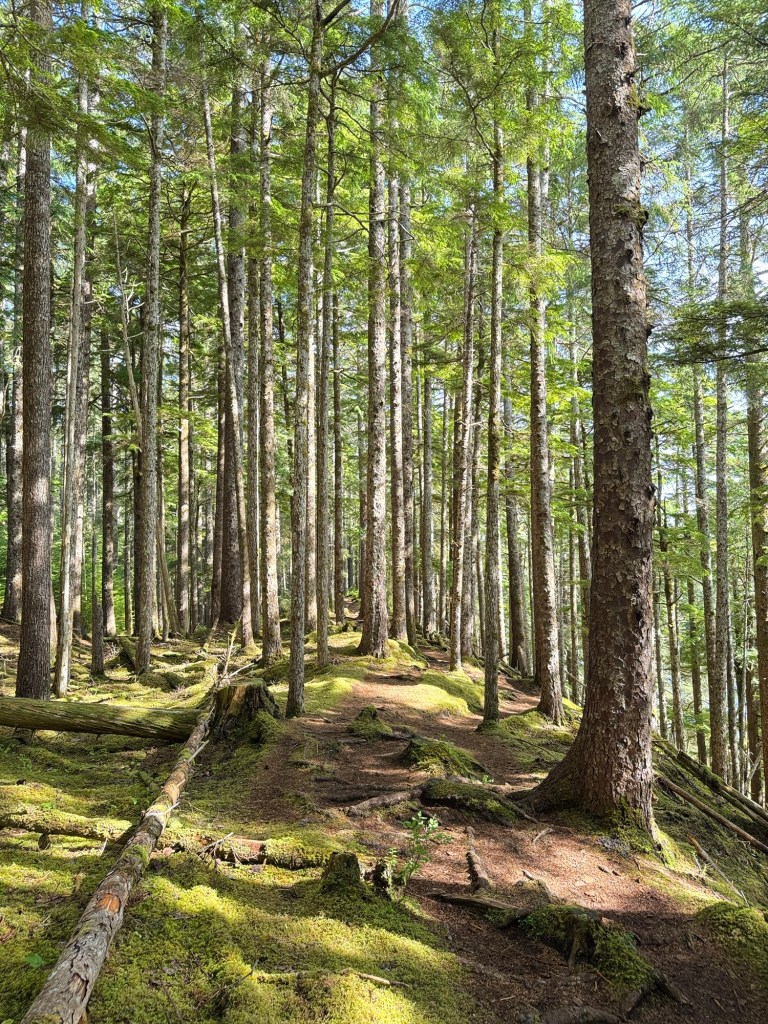
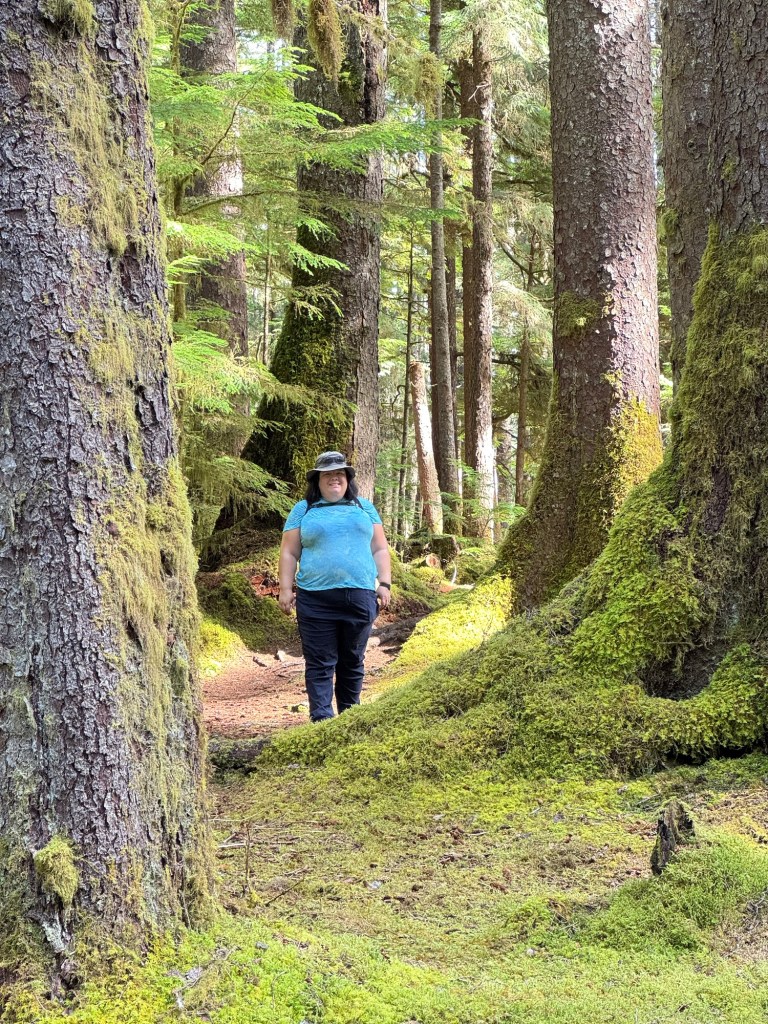
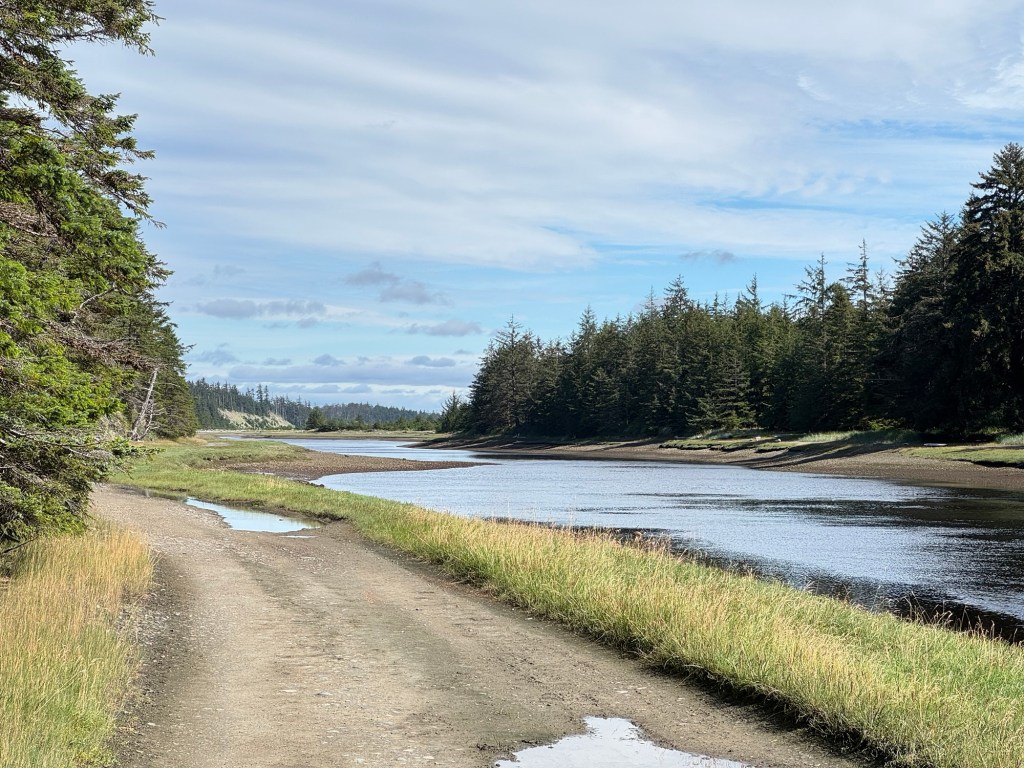
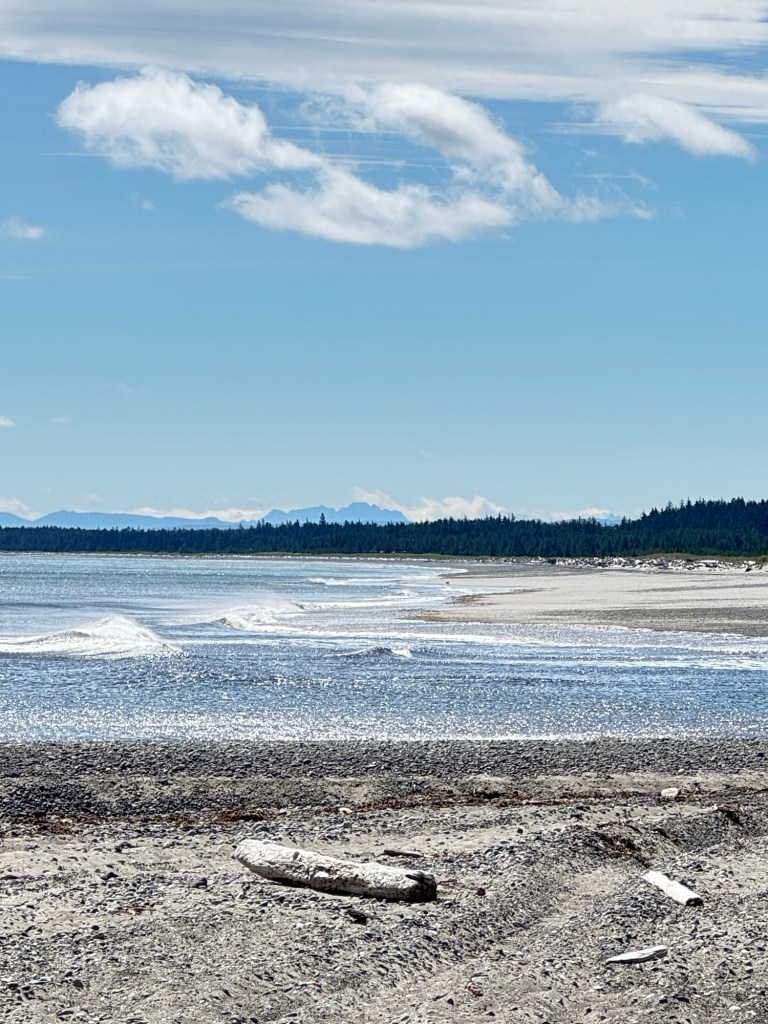
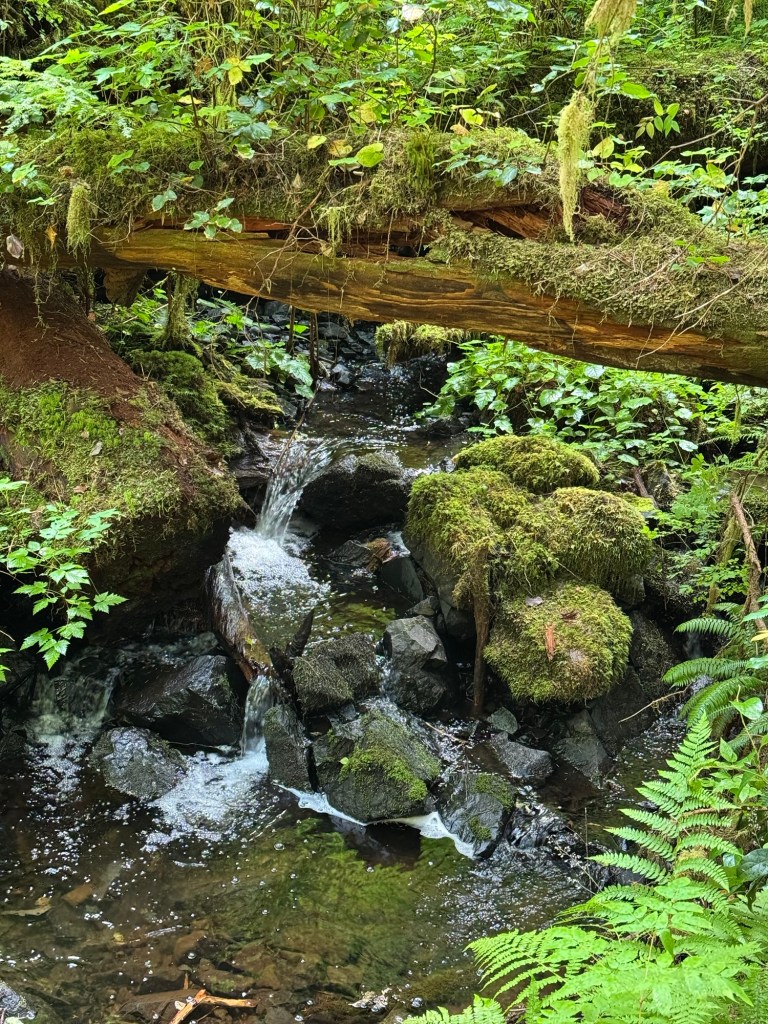
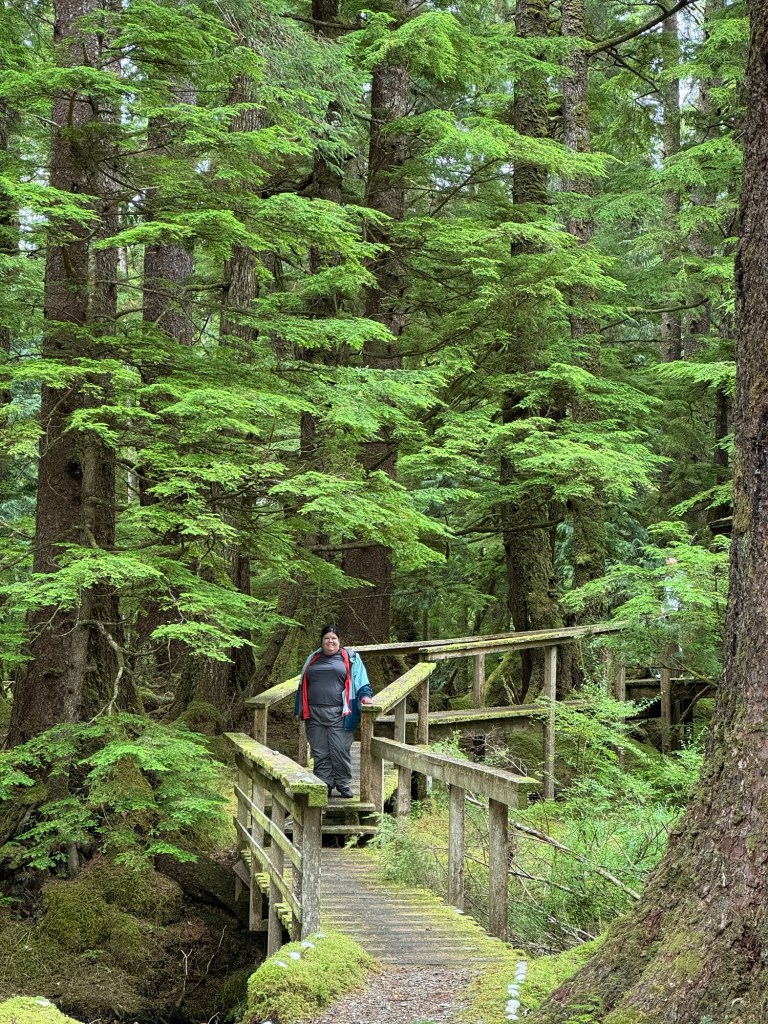
The trail starts in the woods, following Tllaal Gandlaay (Tlell River) through mossy and lush forest. After two kilometres, the trail descends to the bank of the tidal river, which it follows for approximately three more kilometres. The last kilometre is on the beach.
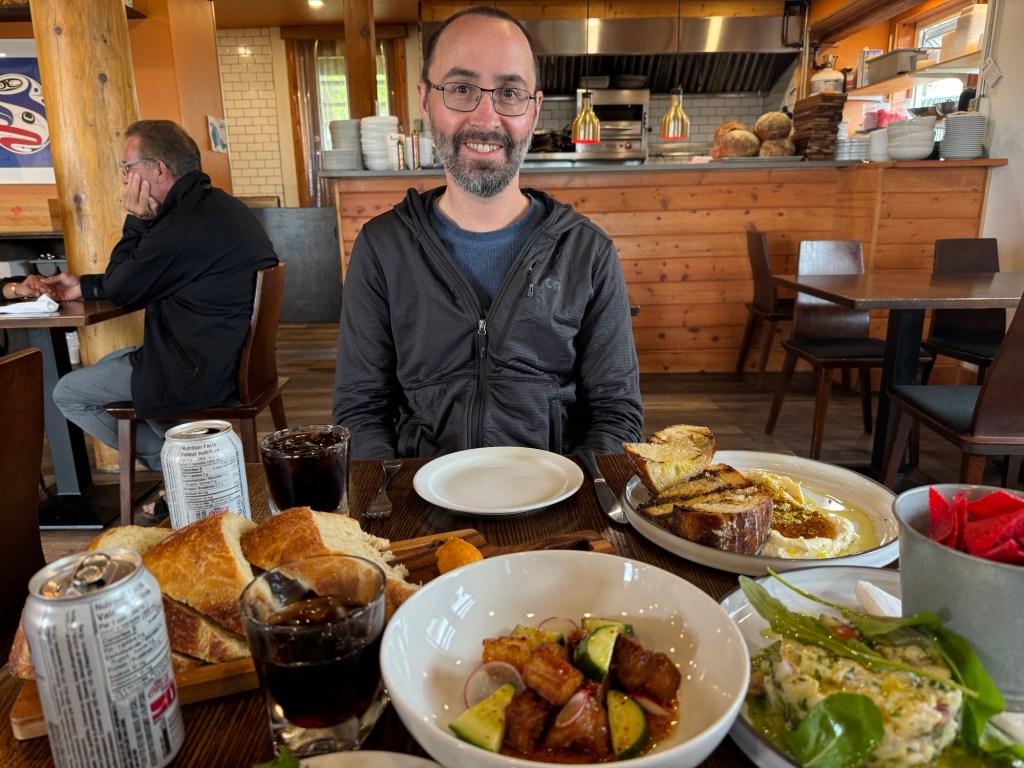
After snacks and photos at the wreck, we retraced our steps. Dinner is at Blacktail, the fanciest restaurant on the island with the best sourdough bread.
Pork belly bites, halibut ceviche, ricotta with hot honey and pistachios, and sourdough with spicy garlic butter.
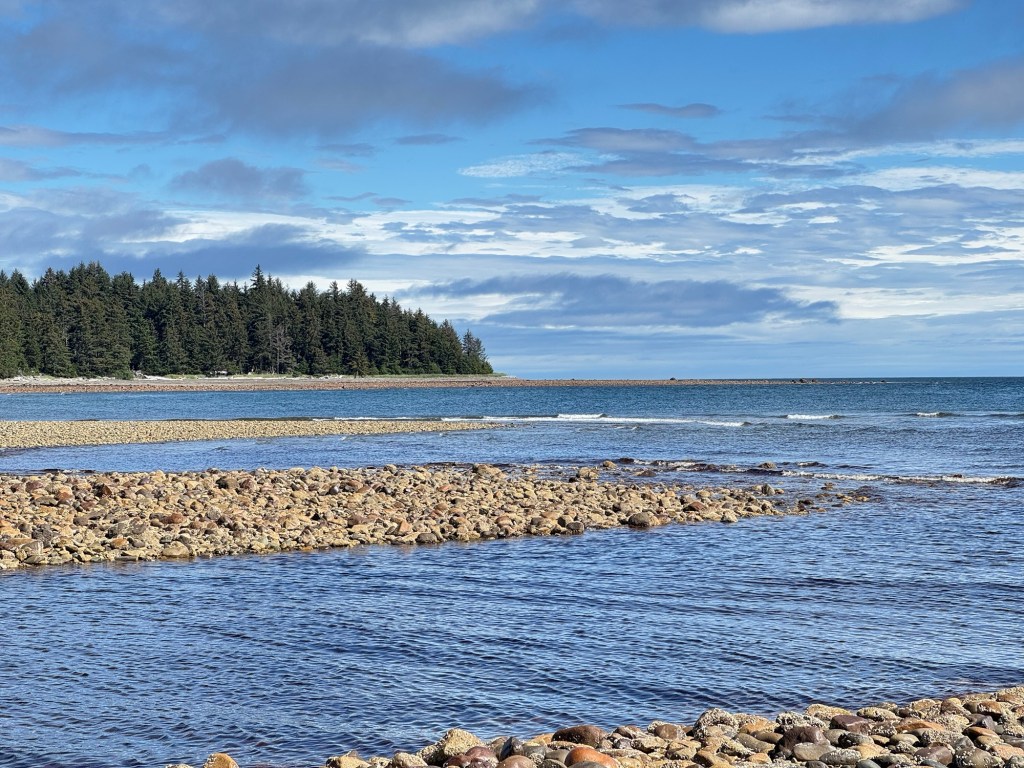
We slept in this morning. The rain was pounding. By ten things switched and sun poured through the windows, so we packed up a picnic and went to the beach.
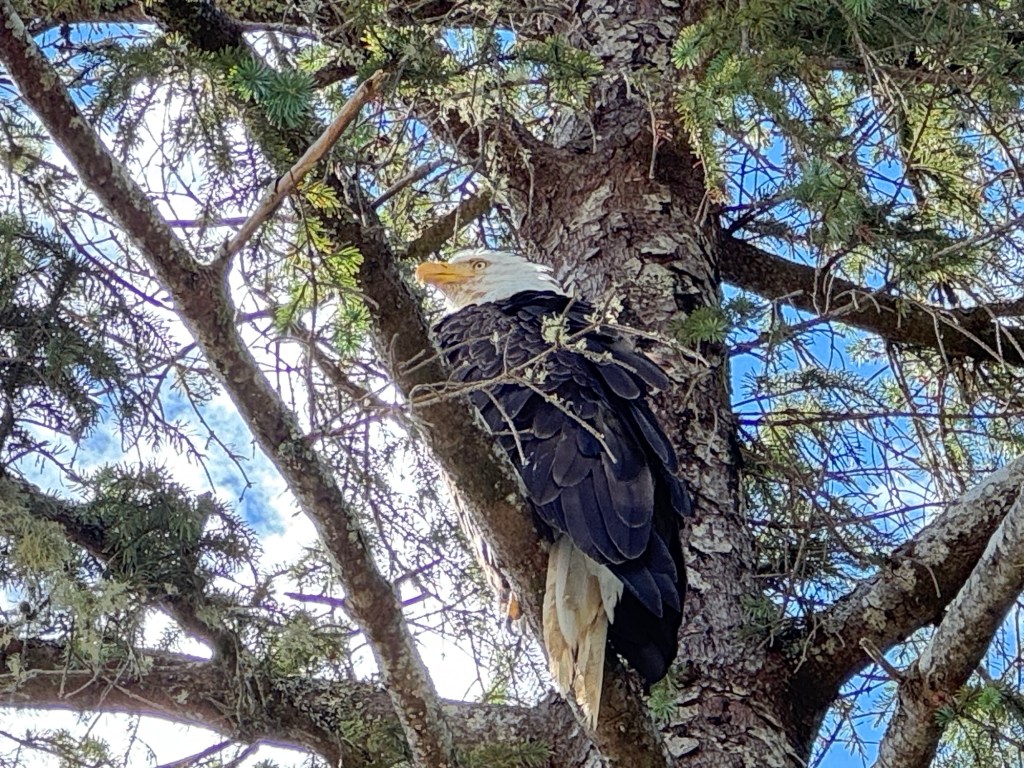
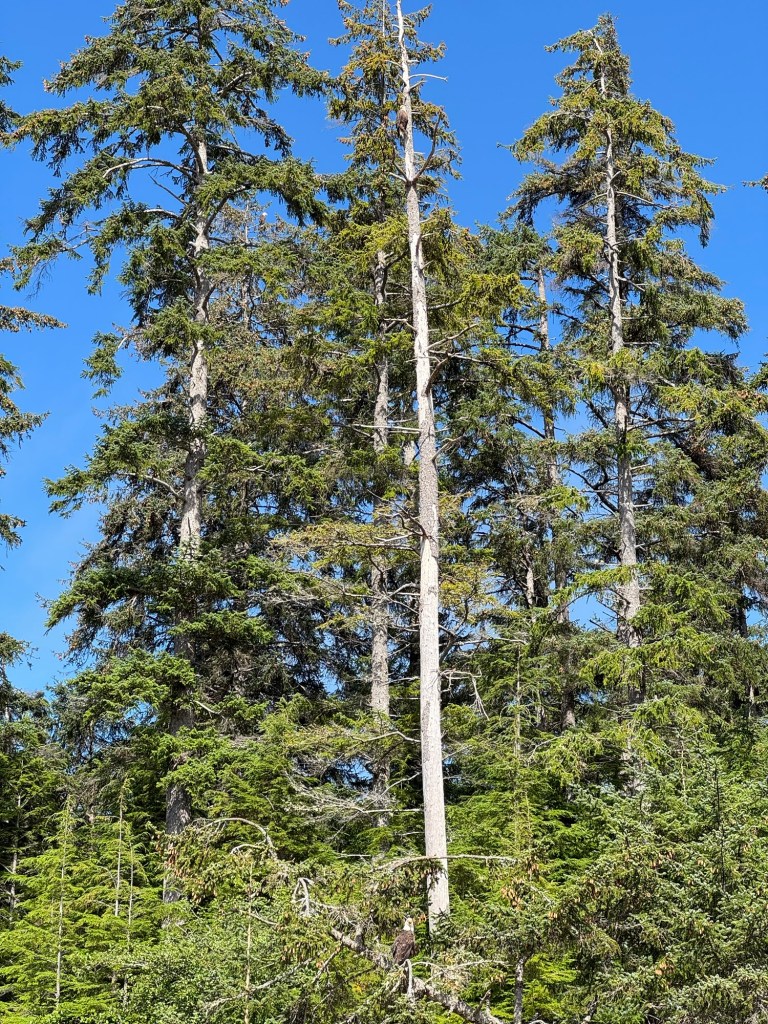
One thing that cannot be overstated about Haida Gwaii is the density of bald eagles and ravens. From where we sat on the beach there were three visible bald eagles close by, and another one we could hear but not see. Ravens matched them in number, with their distinctive croak echoing on the rocky shore. Pretty wild! Also spotted was a kingfisher, an endemic sub-species of Stellar’s Jay, chickadees, sparrows, and crows.
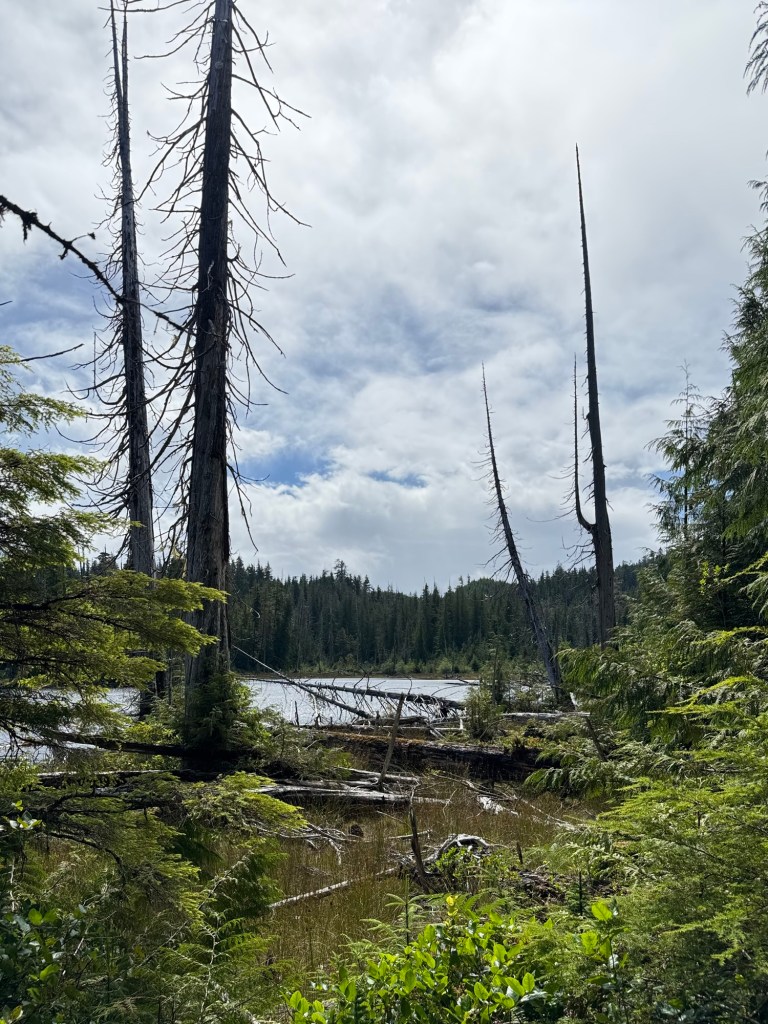
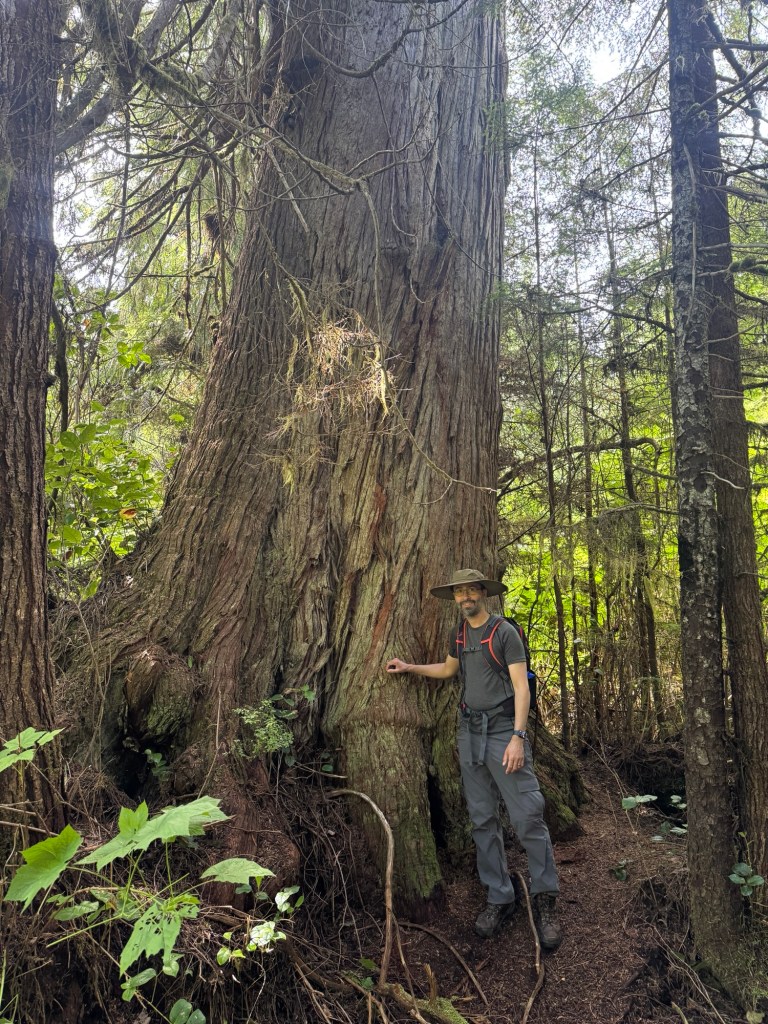
After our picnic we went to the Guuhlga Siiwaay K’iiwaay (Spirit Lake Trail). An interpretive trail in Skidegate, it starts in second generation forest but climbs to a beautiful lake surrounded by old growth forest, including some giant Western Red Cedars. What a beautiful and informative walk.
In addition to information about the plants along the trail and their traditional uses, a sign shared the story of Waasguu, who lived at Spirit Lake and hunted orcas and villagers, and about how Sacred One Standing and Moving killed Waasguu and healed his brothers.
After our walk, we attempted to buy groceries or get dinner, but everything was closed for the music festival in Tlell. We had brought backup meals, however, so that became the solution.
Good spot for a picnic Can you spot the three bald eagles in this photo?Entrance to Spirit Lake trailWestern Red Cedar
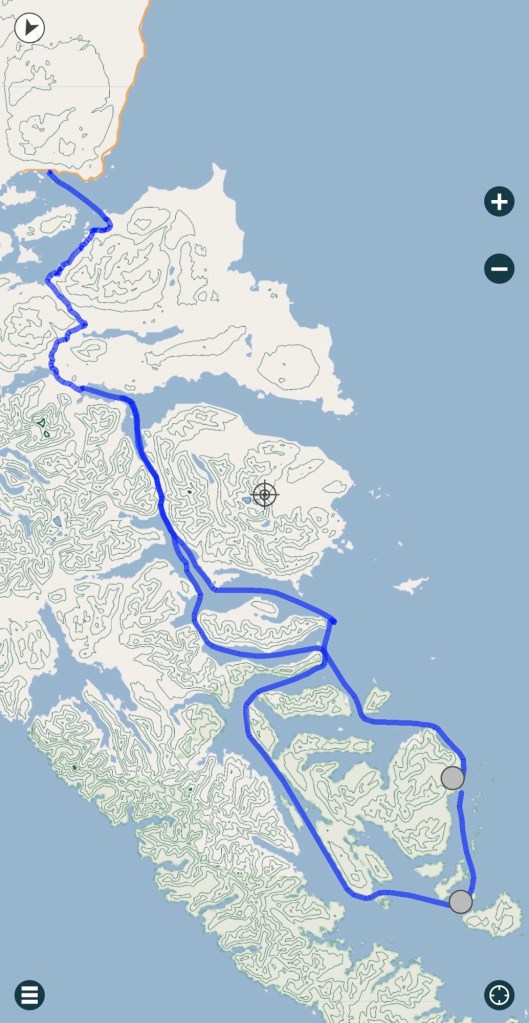
Bright and early this morning we went to the Daajing Giids dock, where we were warmly greeted and outfitted with life jackets. Haida Style Expeditions was taking us out today, albeit on a modified route due to the conditions.
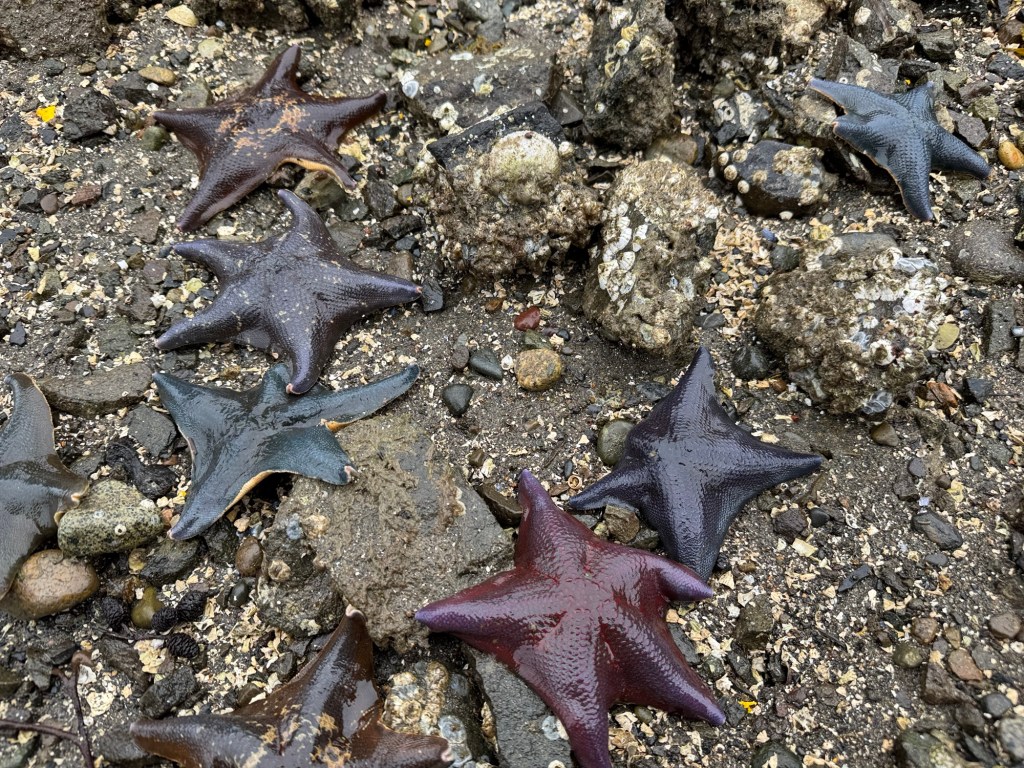
We first boarded one boat to cross to Sandspit, landing amongst bat stars and oysters, then took a van to Moseby Camp (they normally travel entirely by boat but the sand bar was rough). On the way, we saw Taan (black bear). Once at the dock, we headed to the beach, where the kids of the group delighted in catching and squishing invasive European Green Crabs, which are a threat to the native shore crab species.
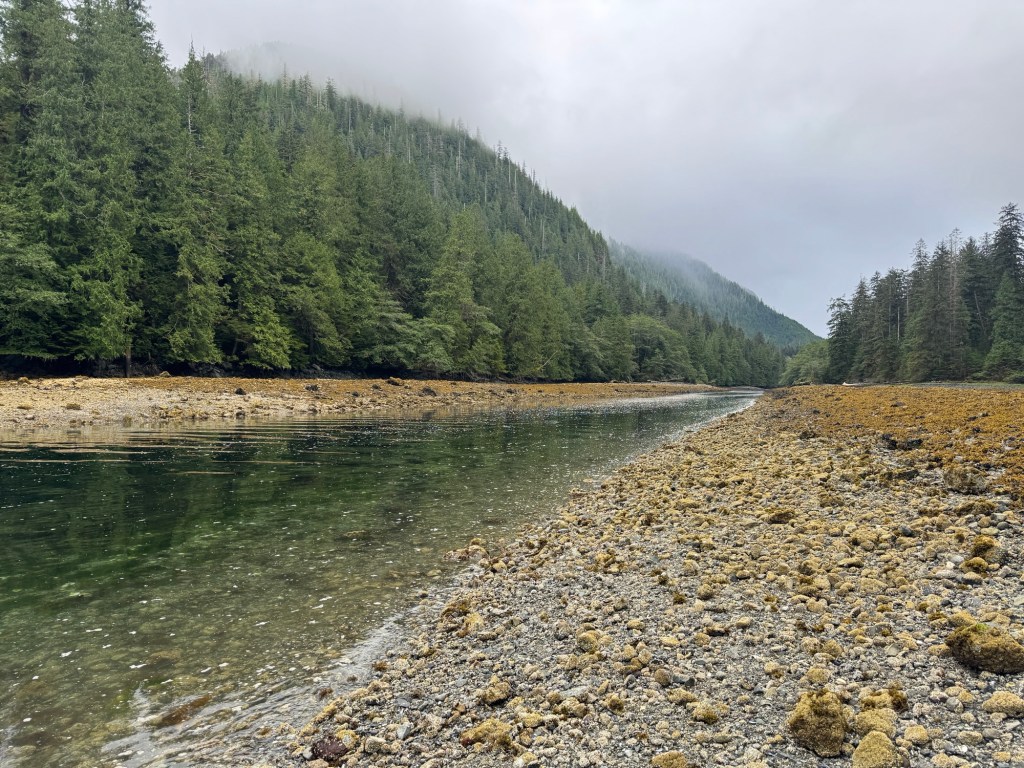
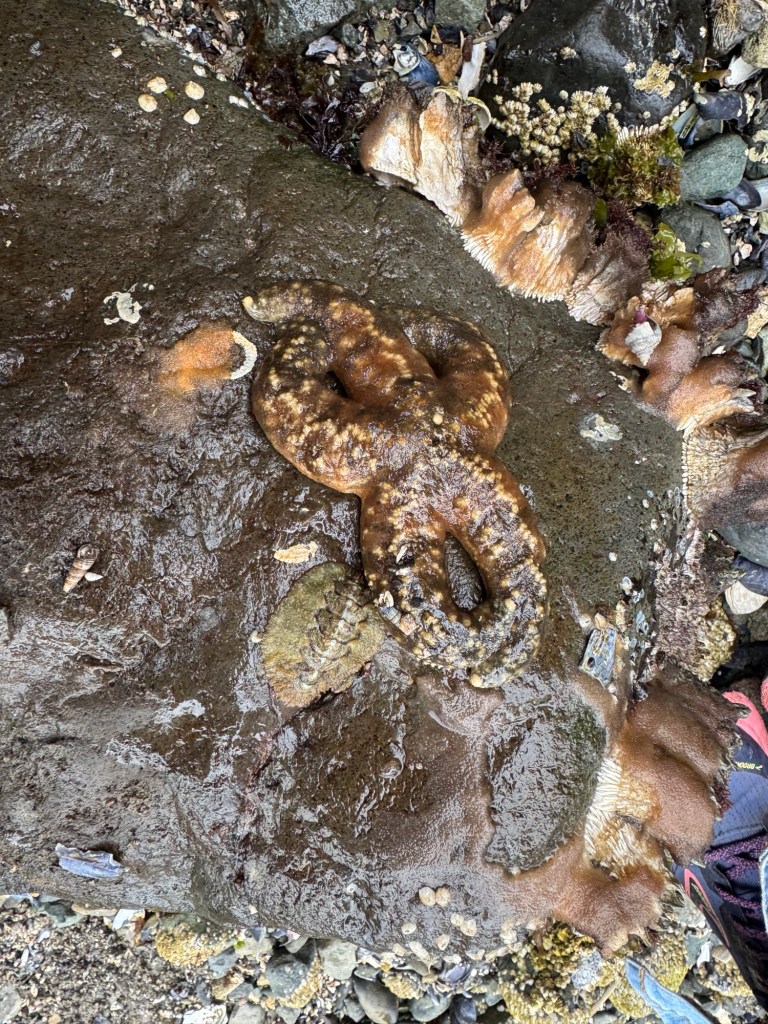
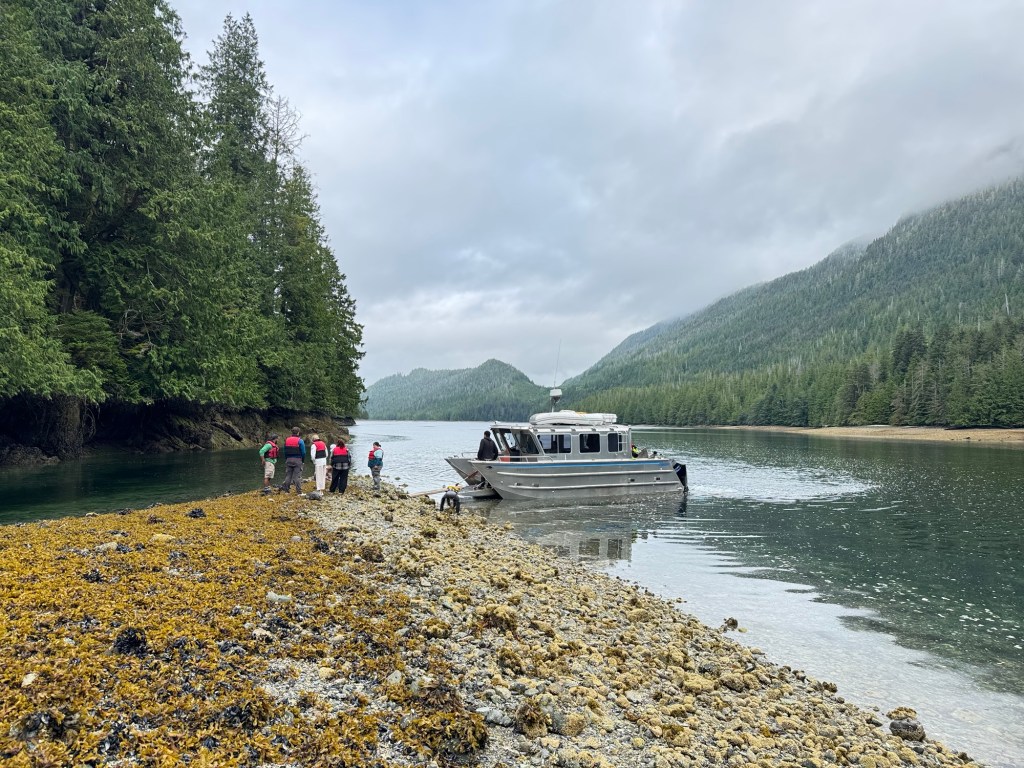
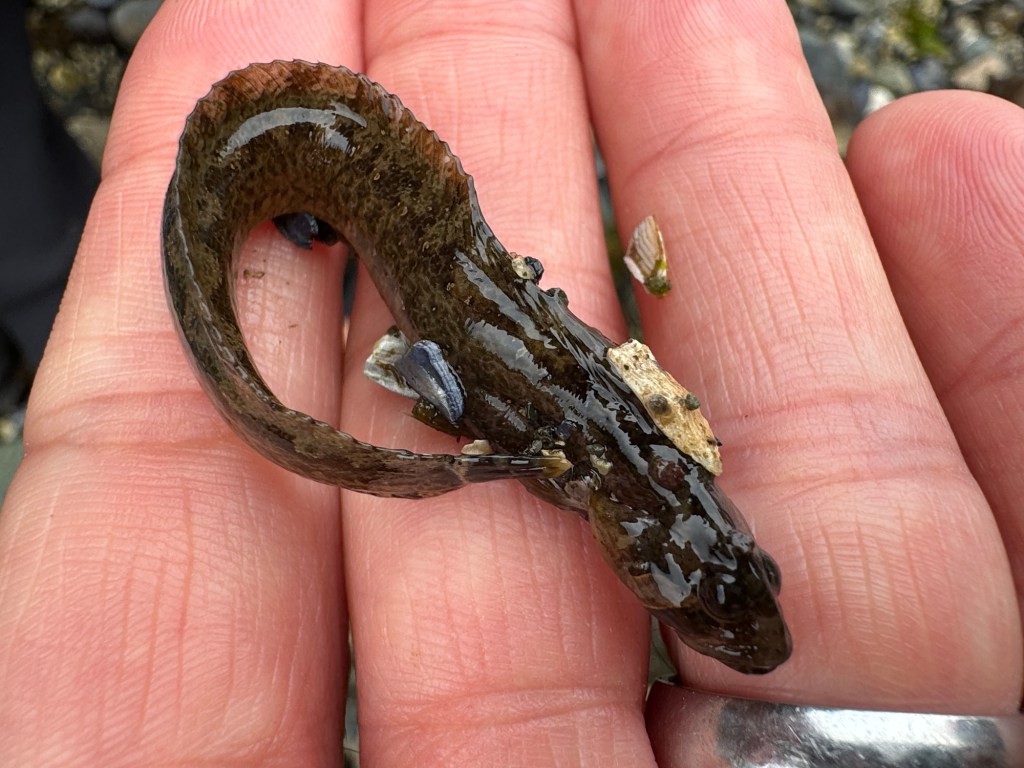
Heading out on our main boat ride, captain James and mate Carter navigated our way through Princess Louise Inlet. Here it was too shallow, so we checked out sea stars, chitons, and prickleback called High Cockscomb on a rocky bar while we waited fifteen minutes for the tide to rise.
Continuing on our way, we were lucky to see a Taan foraging on the beach, humpback whales, and orcas.
At Hlk’yah G̱awG̱a (Windy Bay), we were honoured to be greeted by an 85 year old Haida Watchman, who serves as one of two caretakers in the summer. Xiila, our Haida interpreter, told us the importance of this place, where the Haida Nation and Government of Canada eventually came to an agreement to form Gwaii Hanaas National Park Reserve (though it took logging protests and the arrest of elders to get there).
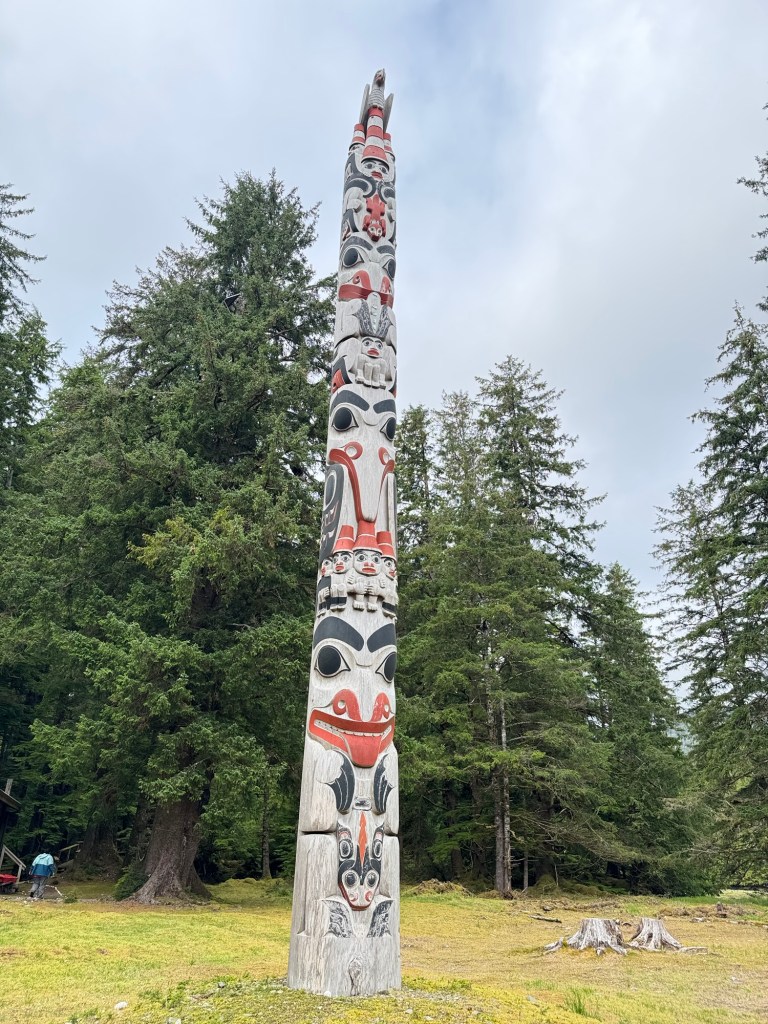
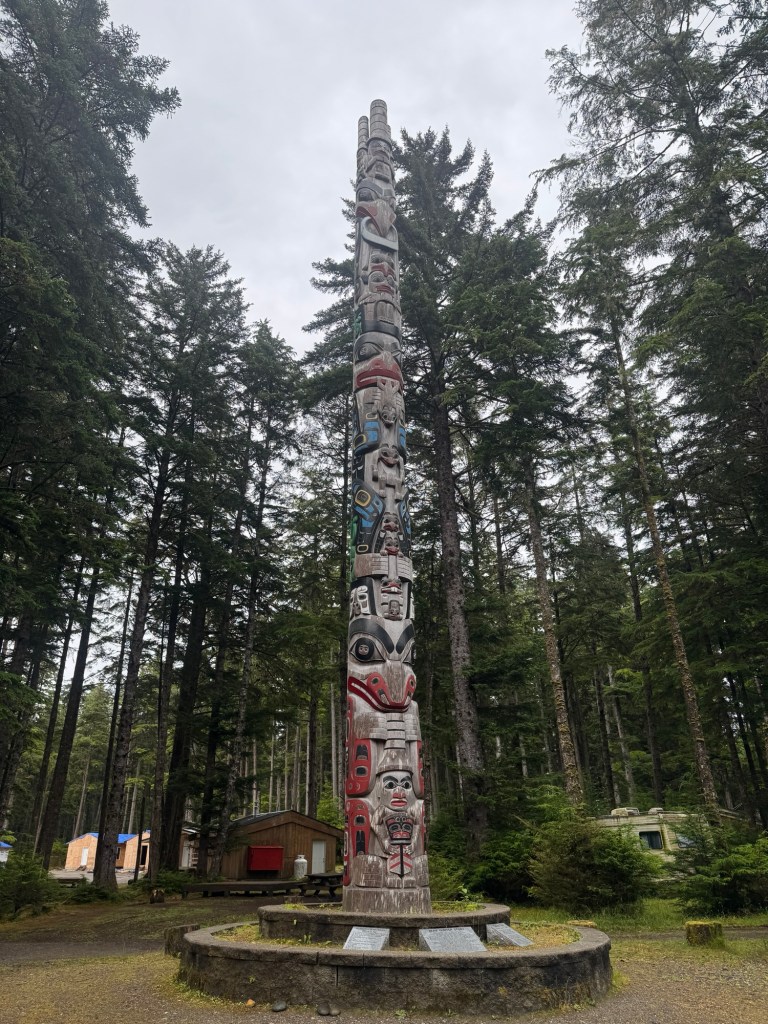
For the twentieth anniversary of the historic agreement, Xiila’s brothers were commissioned to carve a pole to tell the story of what had transpired. The human figures in the middle, wearing gumboots, represent the main protest figures, with the barefoot figure representing the ancestors that were there supporting them.
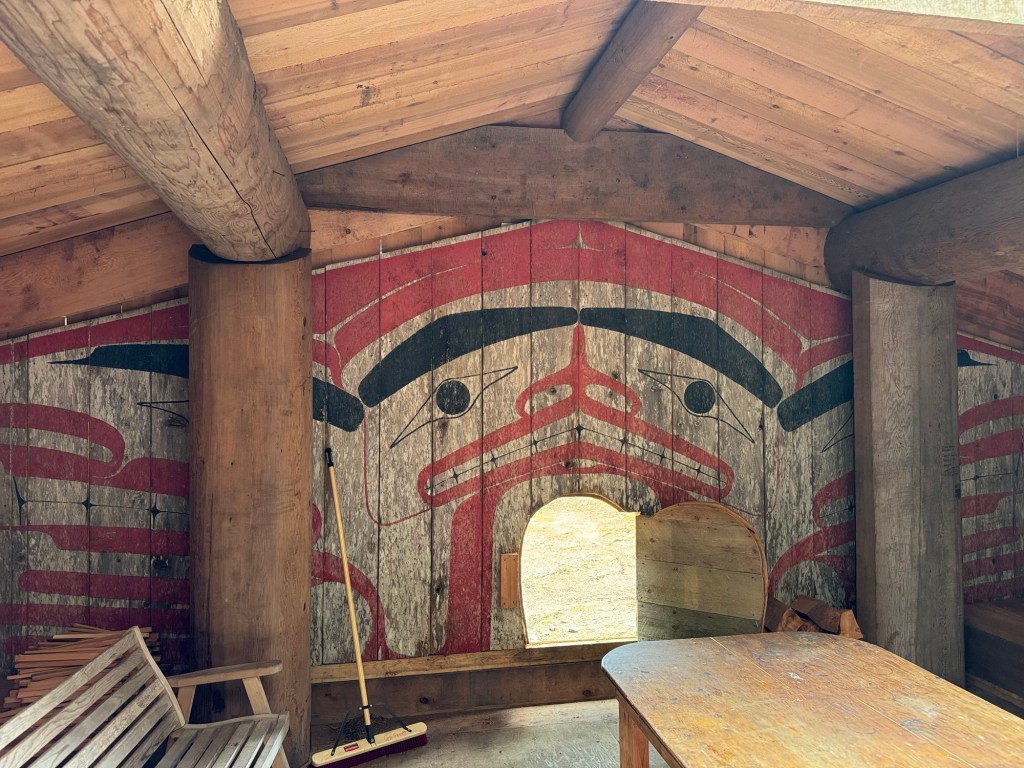
Also at Hlk’yah G̱awG̱a, we saw a beautiful longhouse (with art from a former building inside) near the Watchman’s cabin, for visitors to get out of the weather.
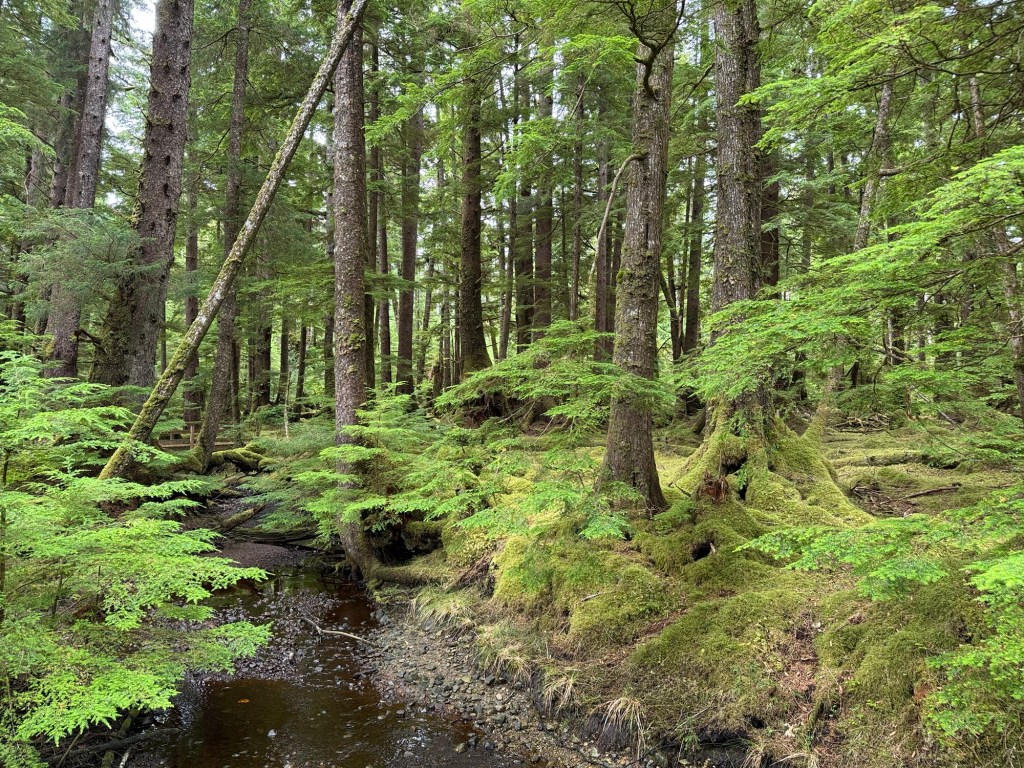
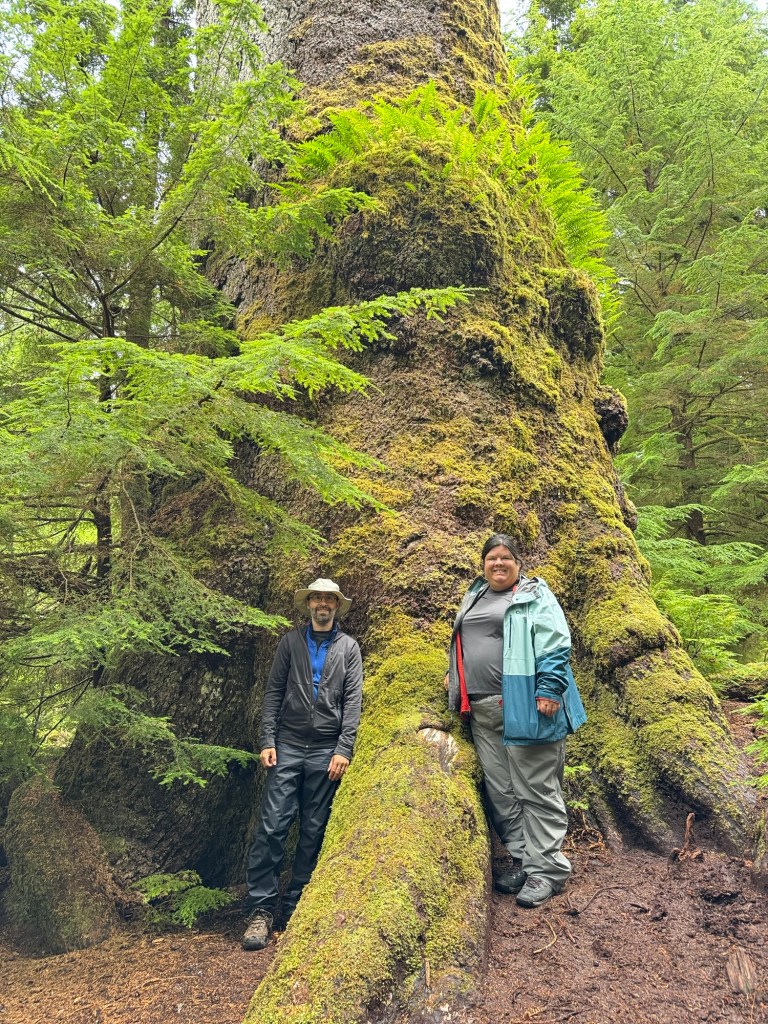
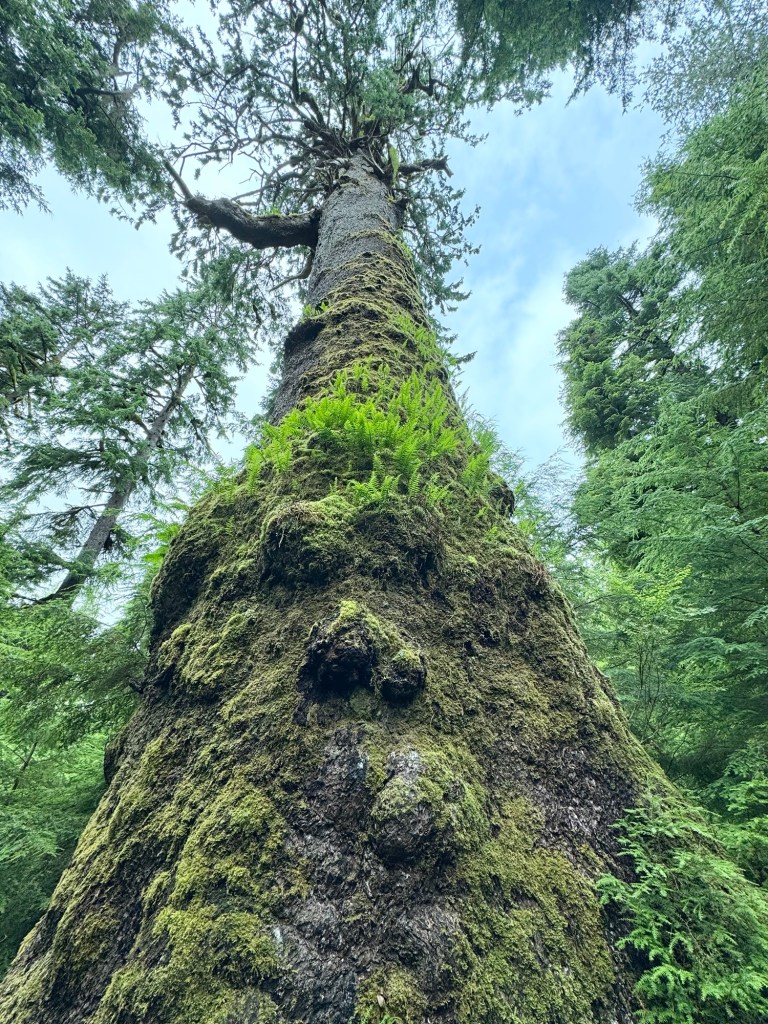
Across the stream, we went on a short walk through the woods to an example old growth spruce tree. It was massive!
Returning to the boat, we were served a lunch of white Spring salmon and breaded halibut, both grilled, with many sides.
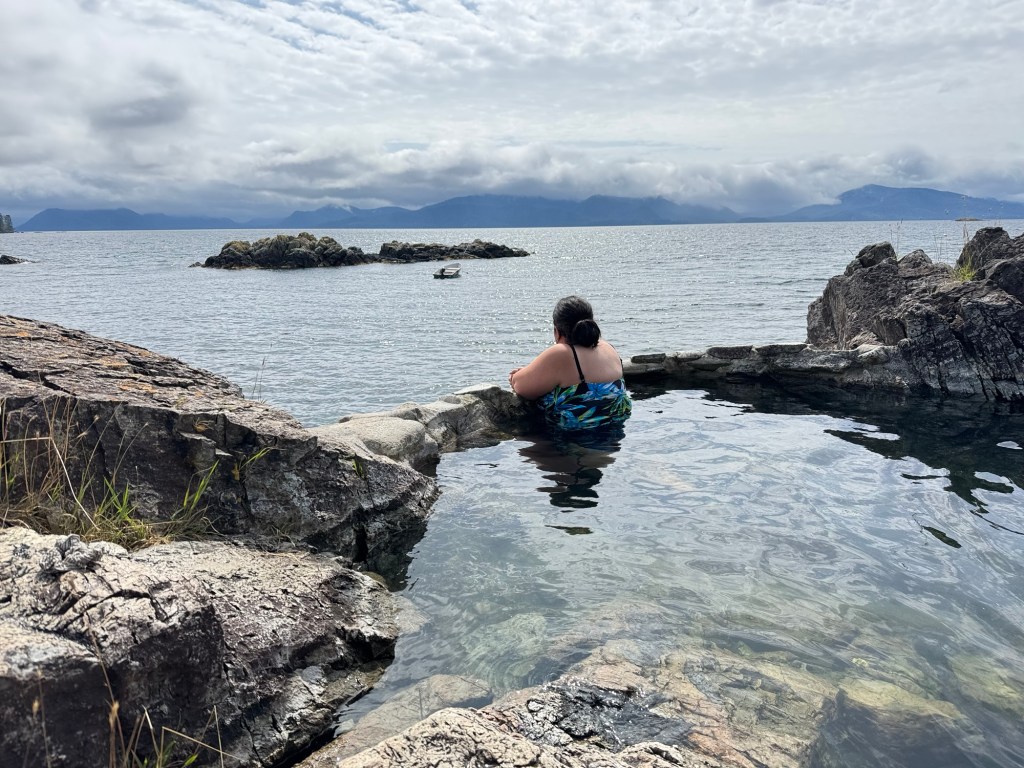
The next stop was G̱andll K’in Gwaay.yaay (Hotsprings Island). We learned from Xiila that the hotsprings were known but not what made this island special to the Haida. Here, the sea bed was rich with food, so it was an important harvesting location for scallops, abalone, sea urchins and more.
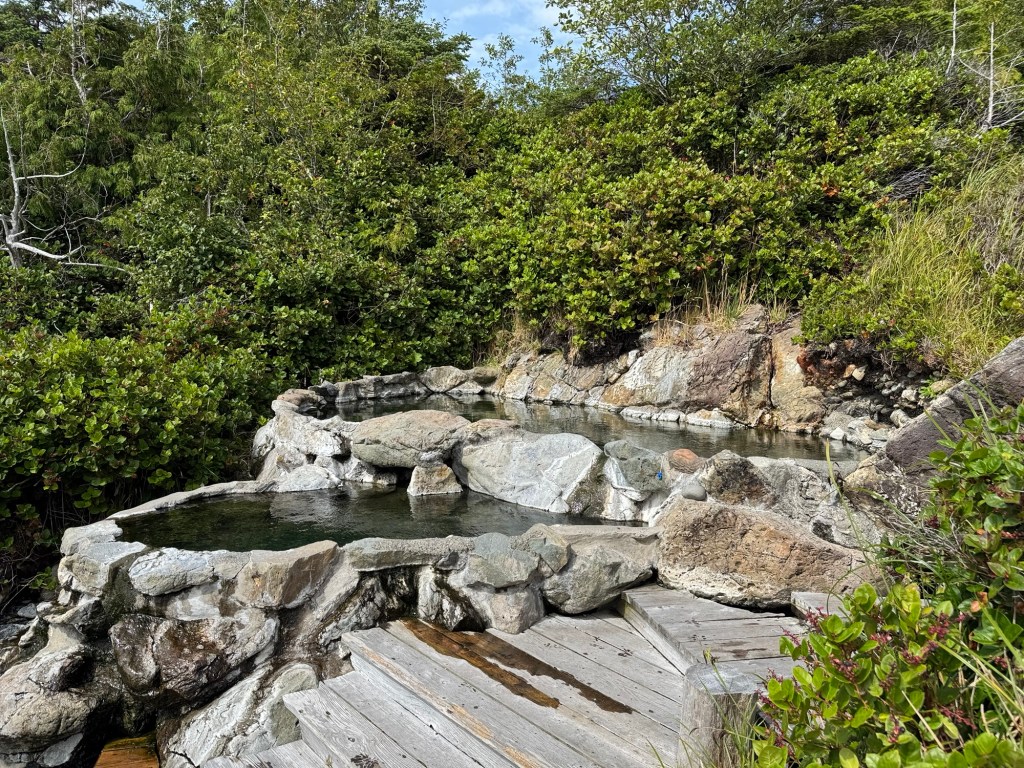
The hot springs, however, were amazing. Perched on the cliff between the ocean and the forest, the pools were warm and incredibly inviting. A perfect way to relax.
Too soon, it was time to pack up and retrace our steps towards the Daajing Giids docks. We napped a bit and watched more whales, and spotted more Taan.
An amazing day.
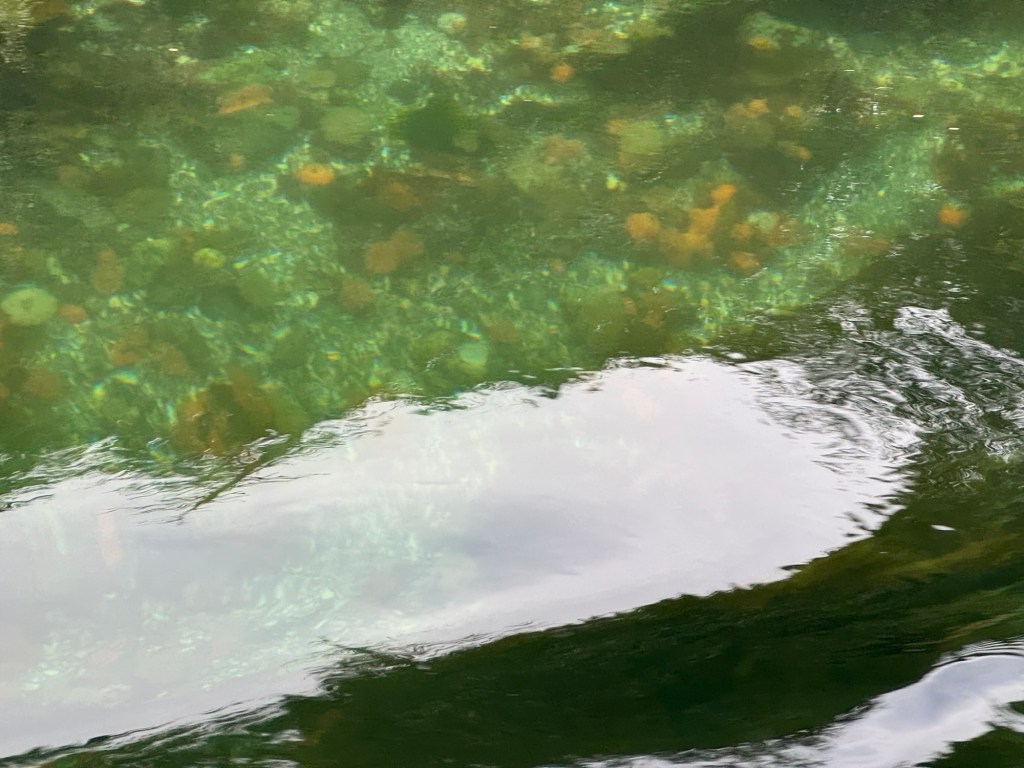
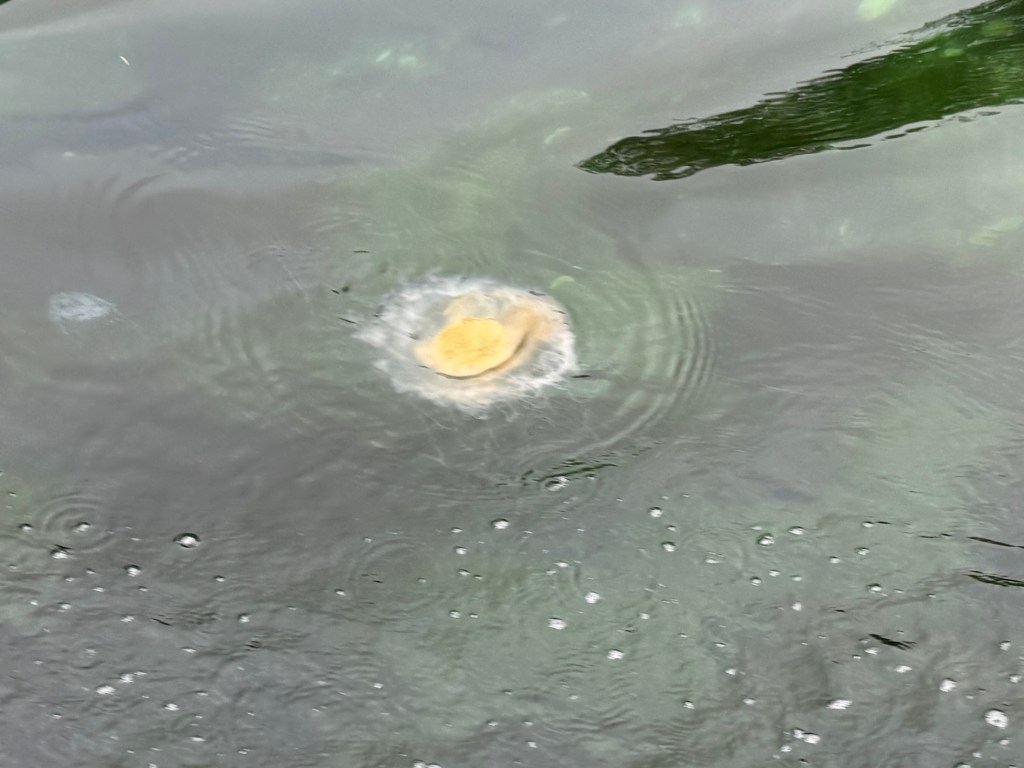
Bat starsPrincess Louise Inlet Mottled star, northern hairy chiton, acorn barnacles High Cockscomb Reminded us of SkookumchuckEgg-yolk jelly
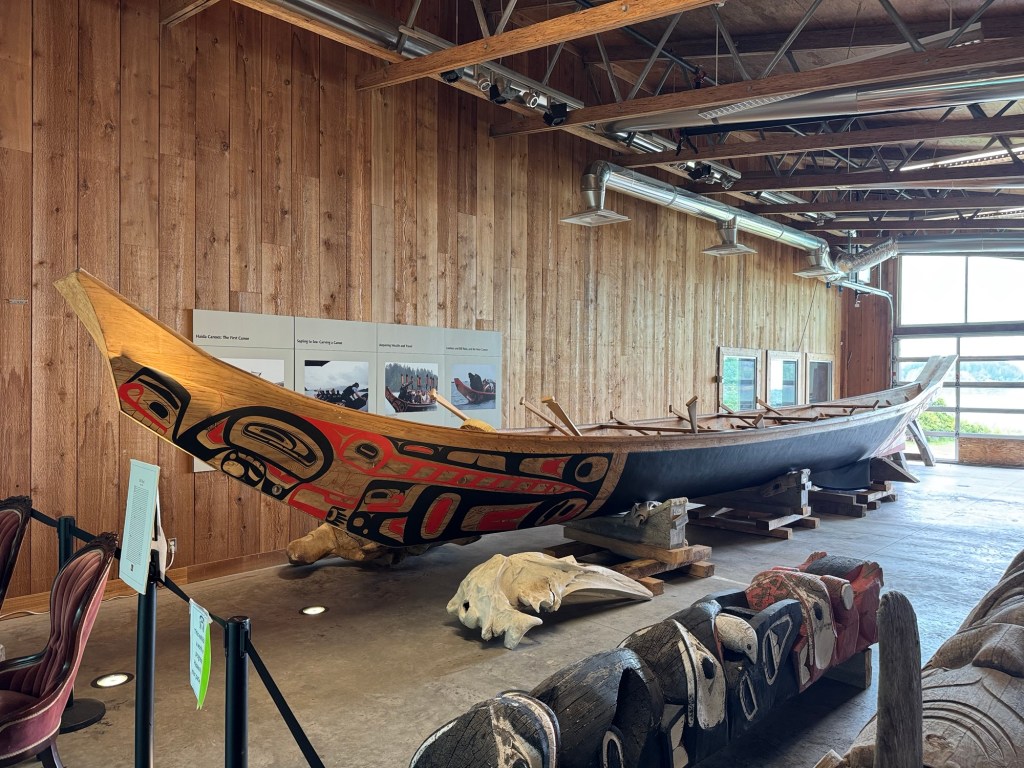
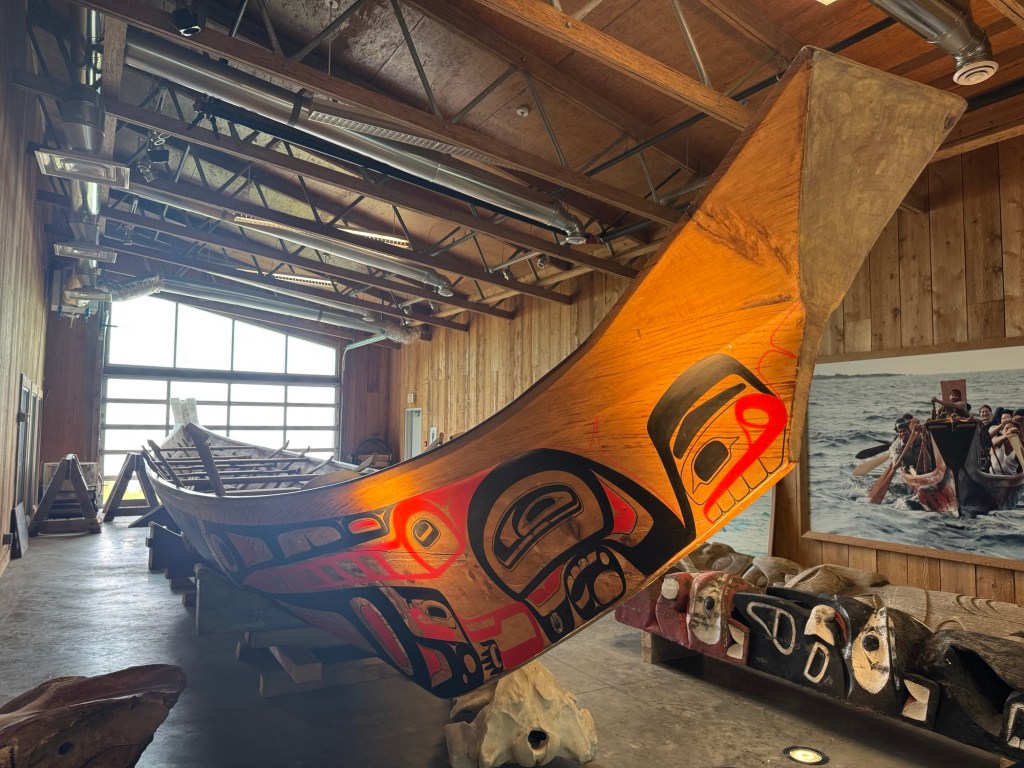
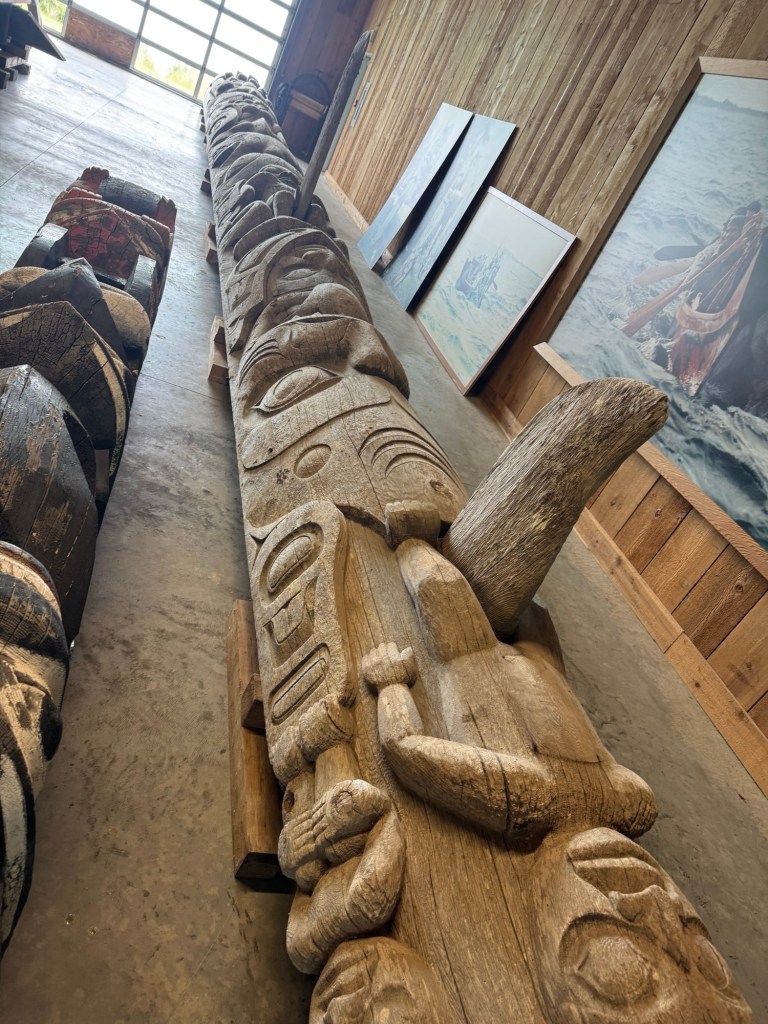
This morning we visited the Haida Heritage Centre, a wonderful museum and place of learning about Haida history, colonial impacts, and present day culture. Most of the museum did not allow photos, but highlights included the weaving of aay aay, a collection of argillite carvings (a rare stone found in Haida Gwaii that is reserved for Haida artist use), and of course lootaas, a fifty foot war canoe carved by Bill Reid (pictured).
After the museum we visited a few shops and wandered the waterfront, enjoying local albacore tuna poke, and had a restful afternoon at our accommodations. Tomorrow is a big boat trip, and we needed time to prepare and be well-rested.
Last night ended with a disappointing message – our booked trip to SGang Gwaay (Ninstints) had to be cancelled due to forecast gale force winds. So a new plan was needed.
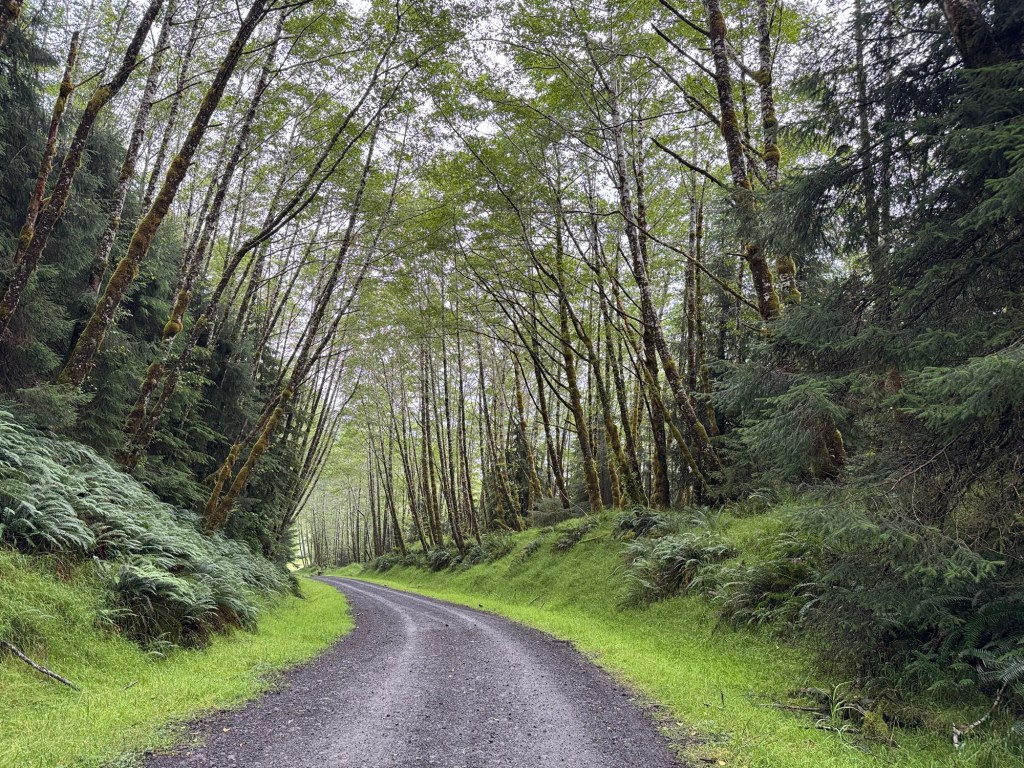
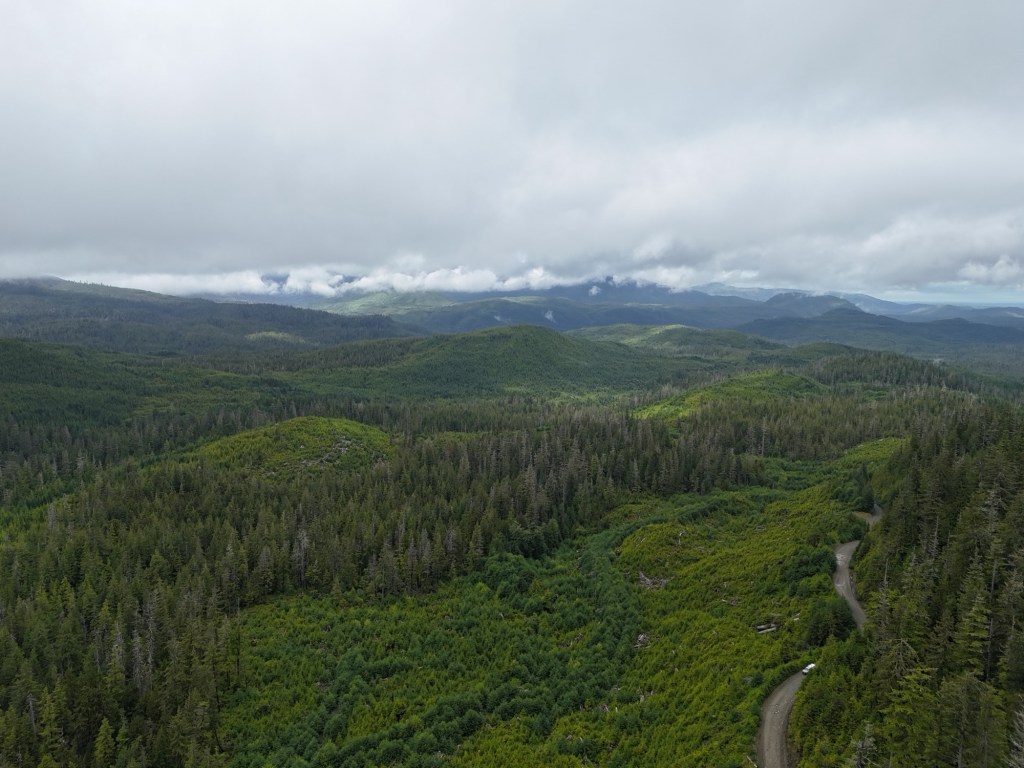
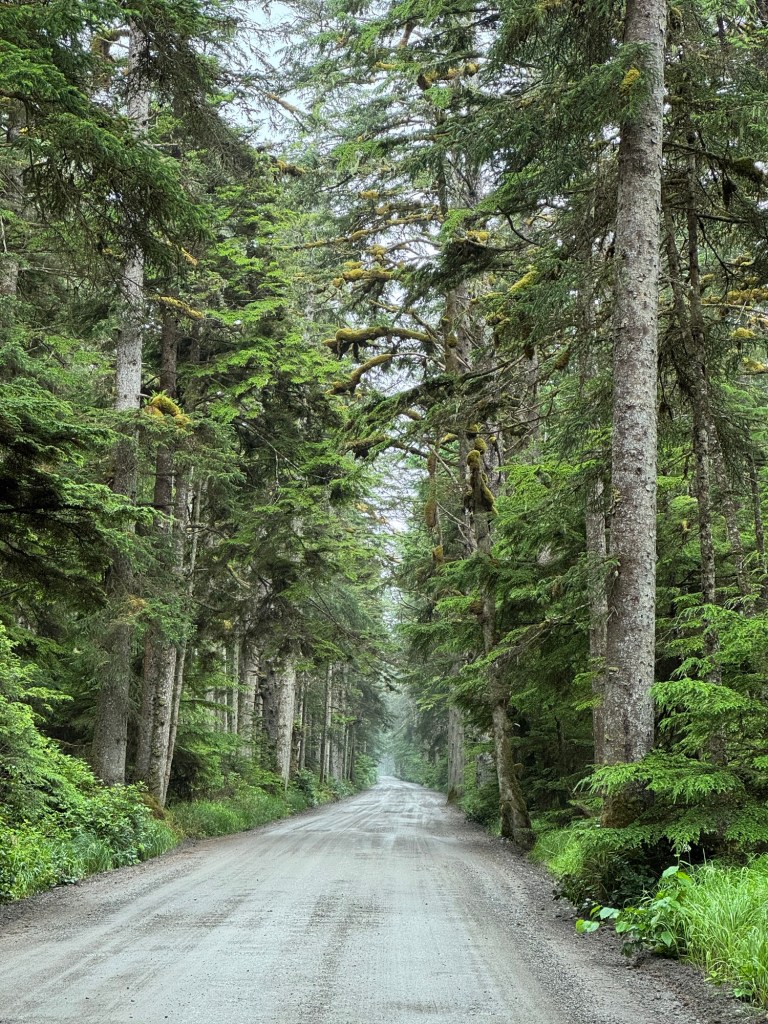
After making a quick breakfast, we hopped in the car and headed down logging roads to Rennell Sound. The road was a bit rough, but the forest was beautiful and green (outside of logging areas). This area was logged some time ago, so the only traffic was other recreation users, and the logged areas were filled with young growth.
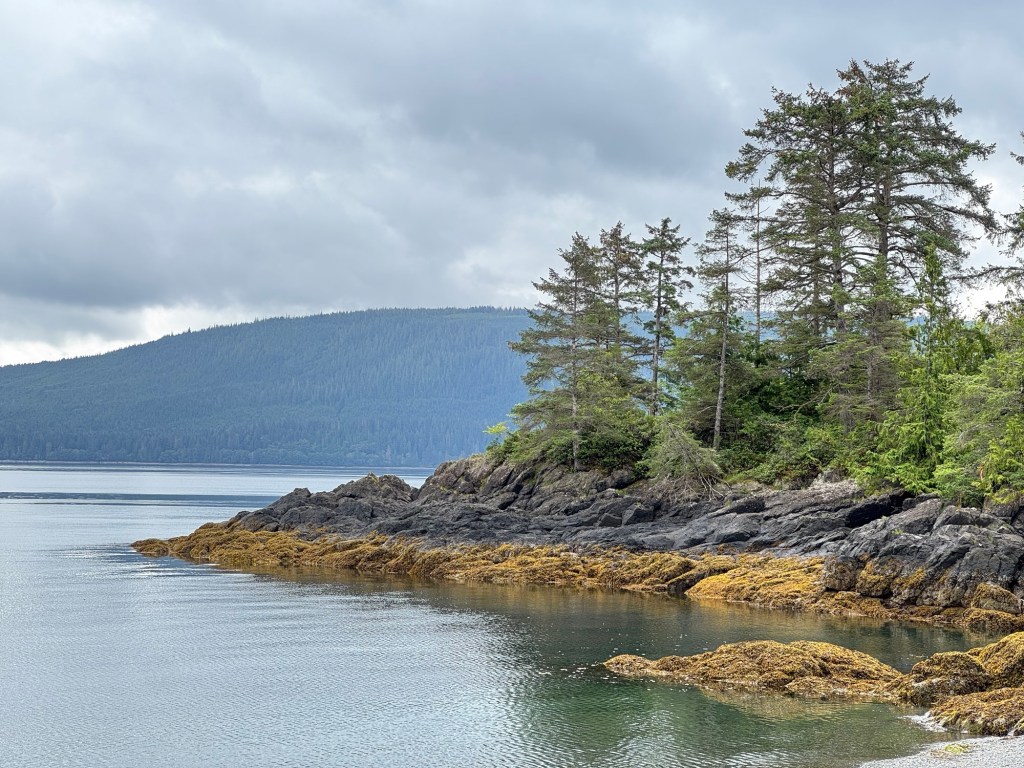
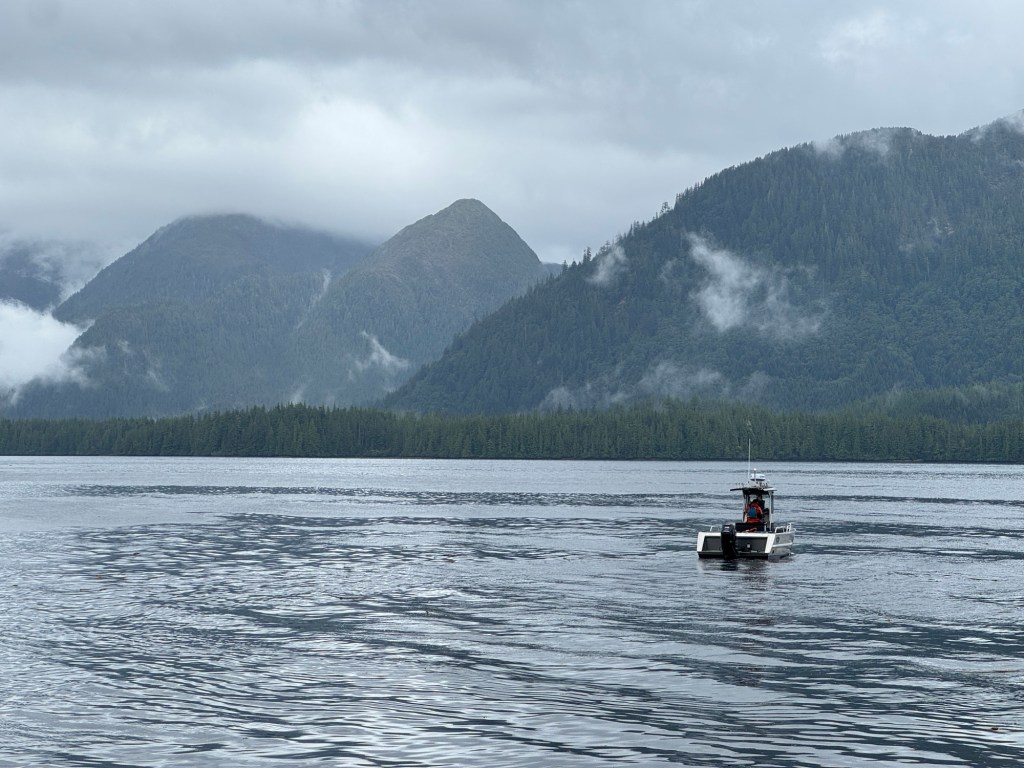
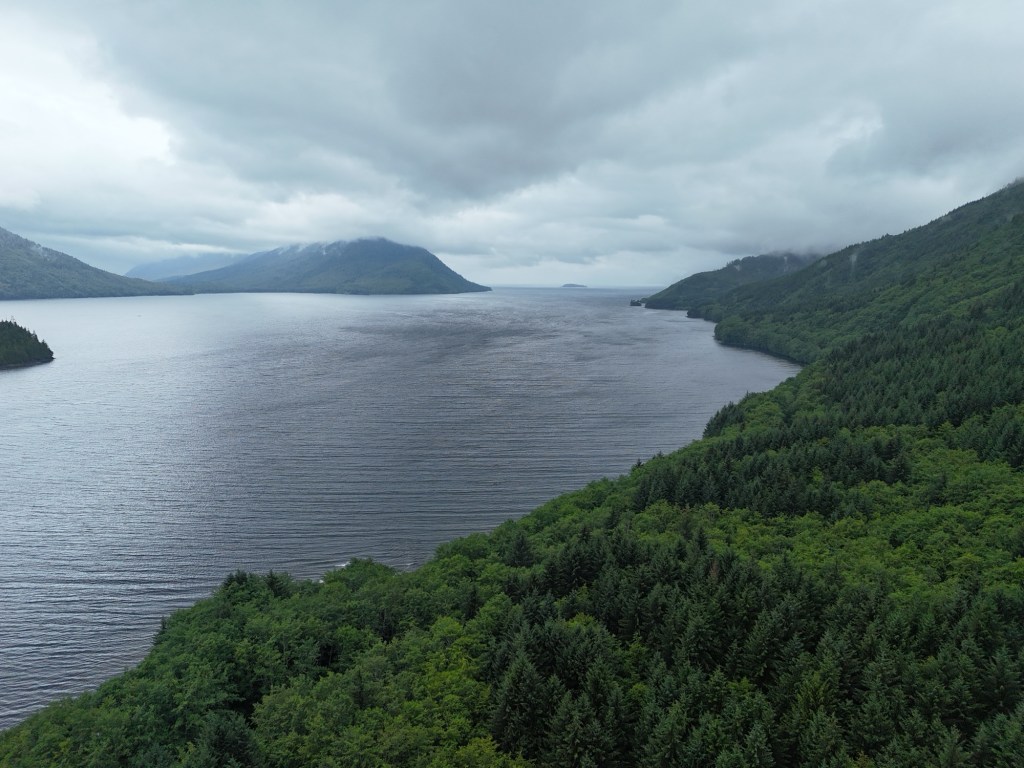
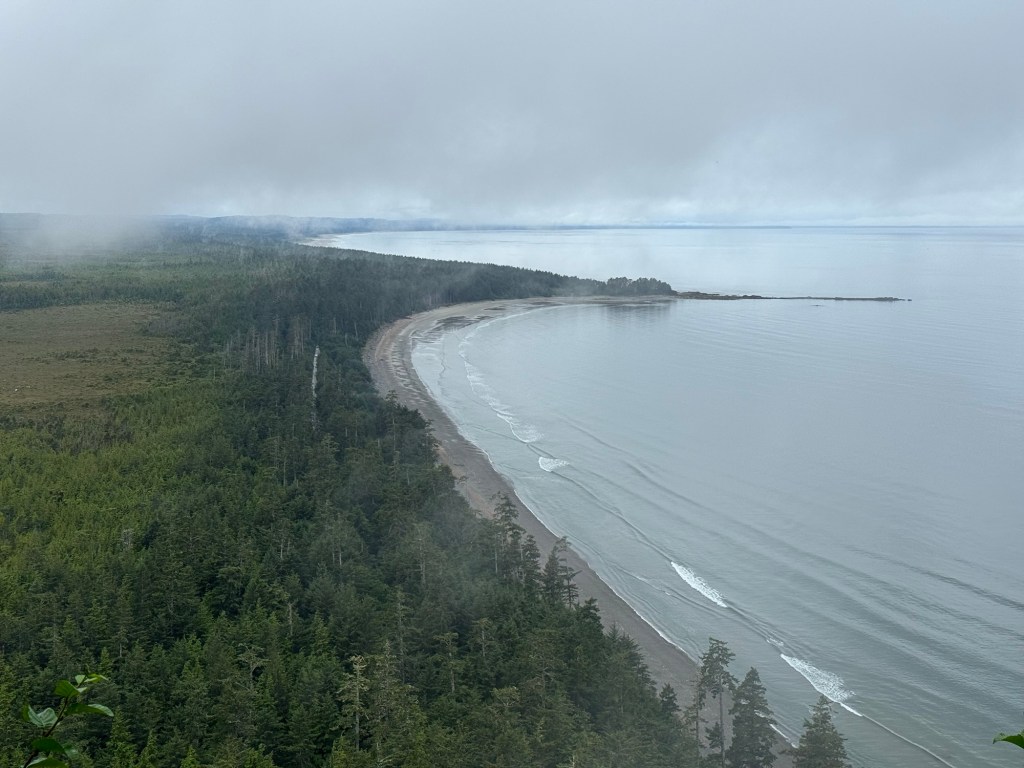
Reaching Rennell Sound, we parked at the beach and enjoyed the view. Layers of rolling hill, partially obscured by clouds and fog, and calm seas.
This is apparently a favourite place to fish from, with many boats staged near the boat ramp. We watched one launch, and it was clear the calm waters and steep beach made it ideal.
Not much beachcombing due to the steep beach, but while Dave took several drone flights, Jen did a watercolour sketch and read a book.
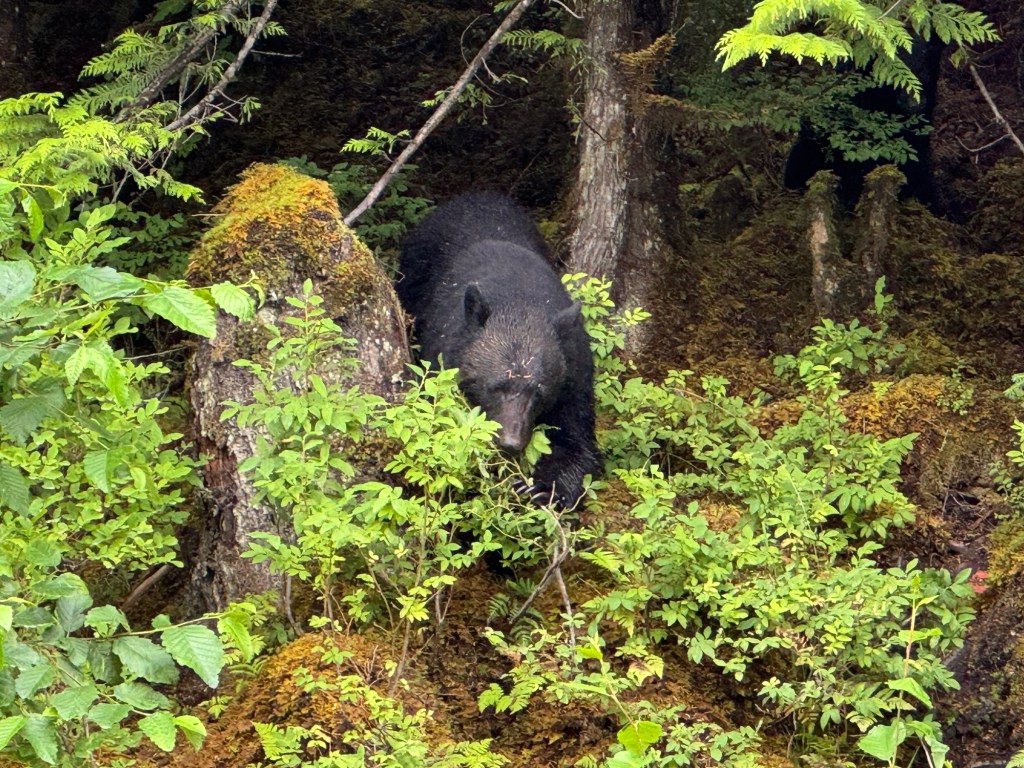
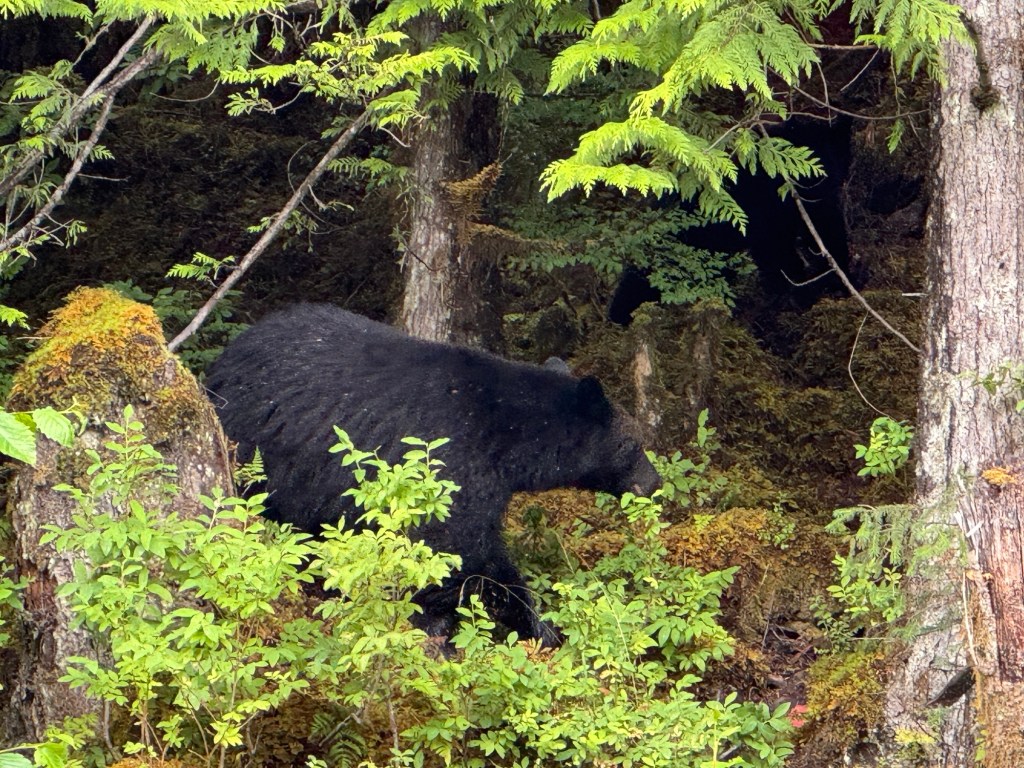
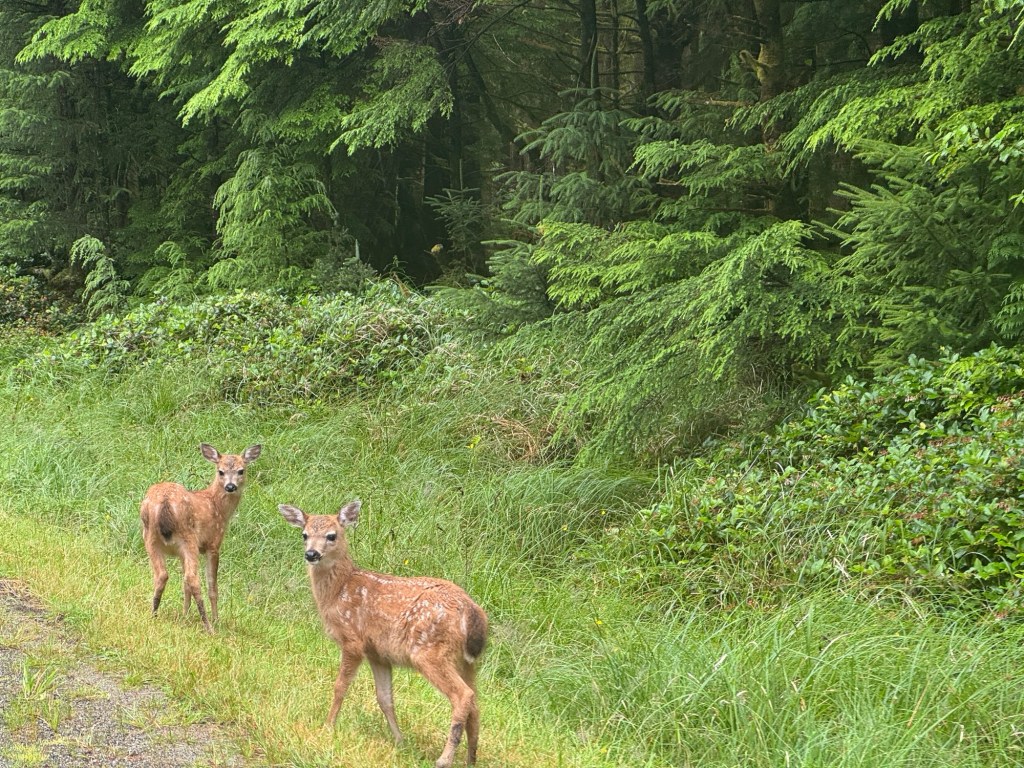
On the way back to town we saw two Taan! A mother and cub. Taan are a subspecies of black bear unique to Haida Gwaii. They are big – the biggest black bear in North America- with large jaws adapted to intertidal foraging.
Upon reaching town, we visited an artist/crafter pop up. Some cute and unique things are coming home with us!
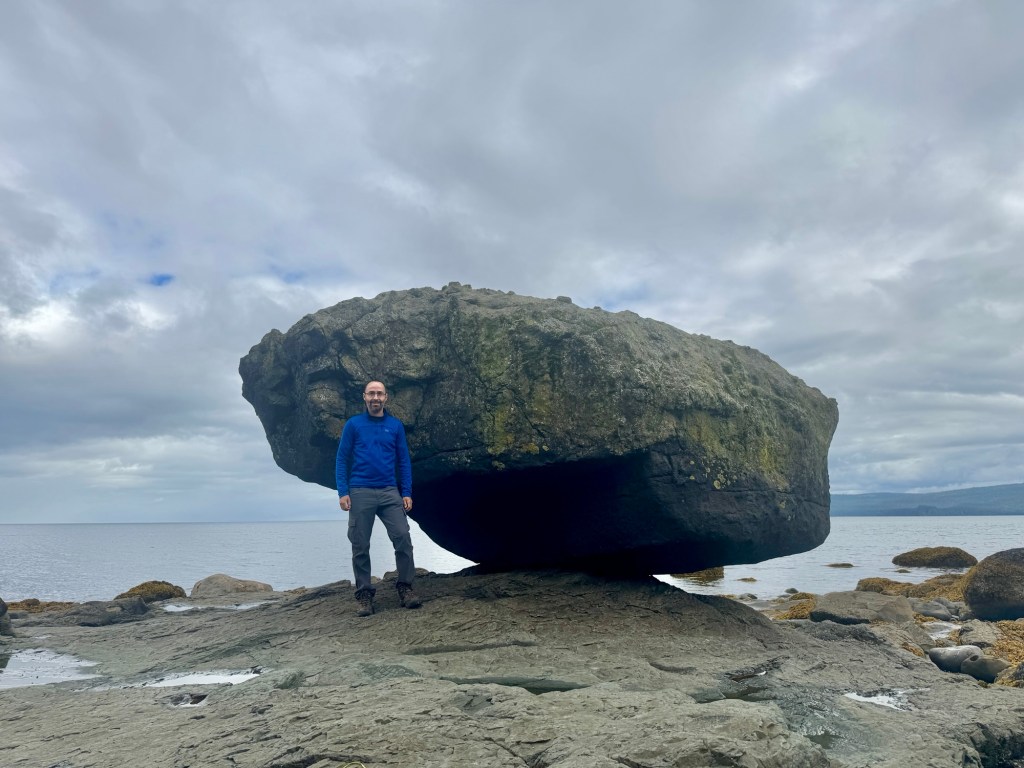
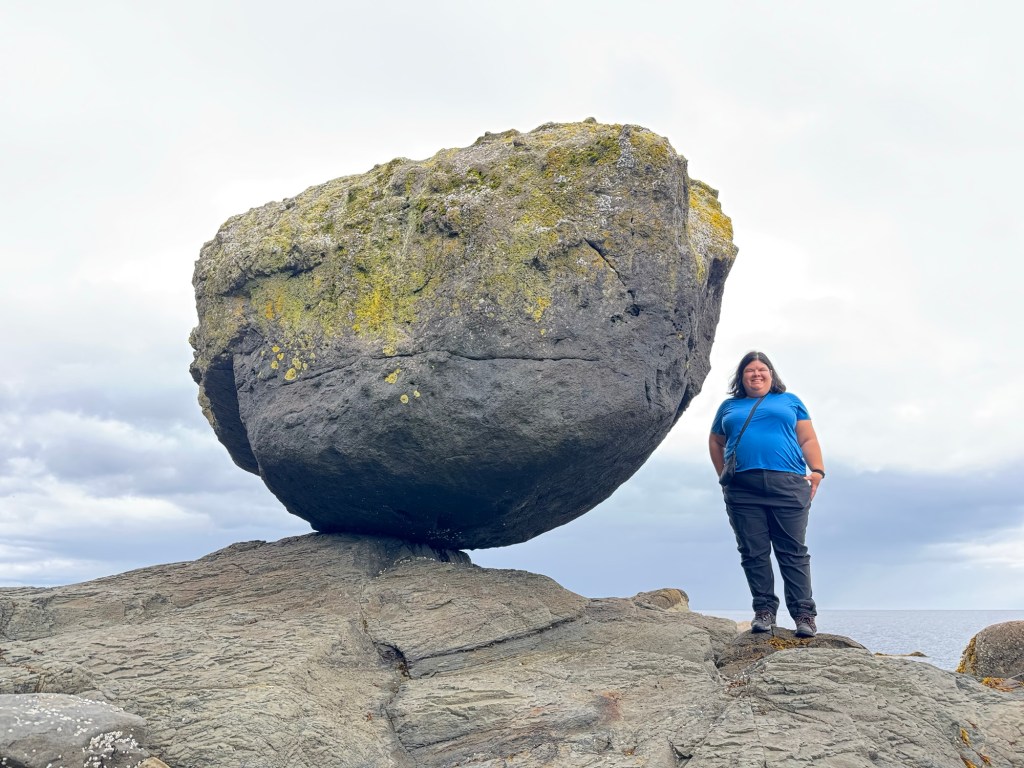
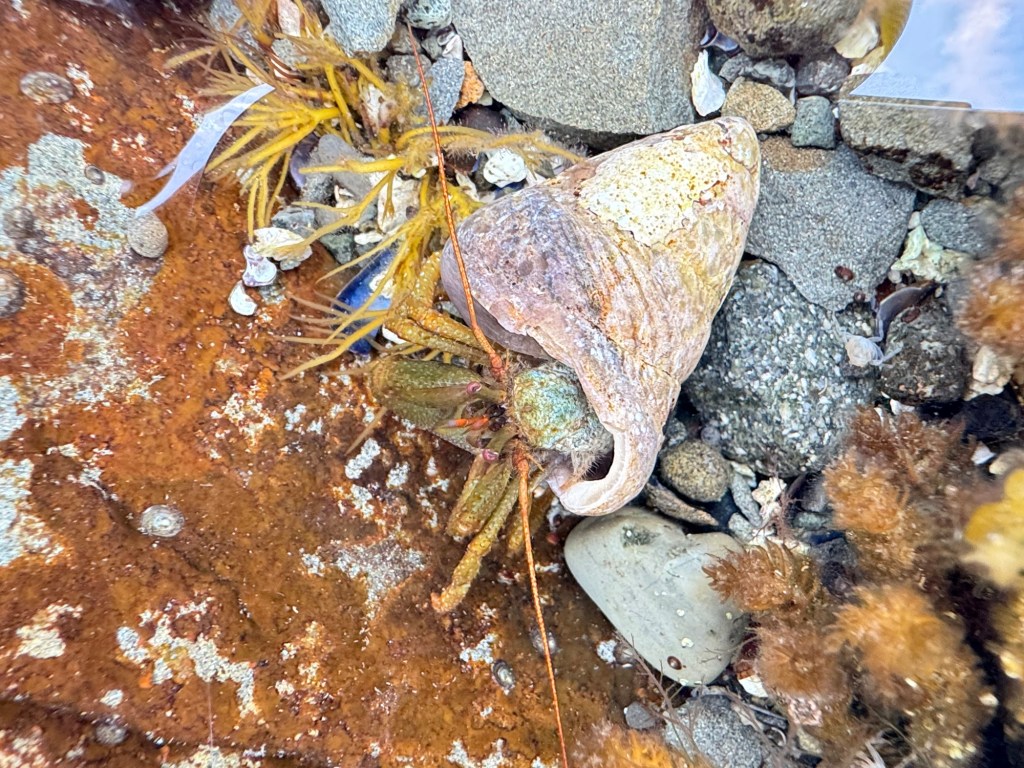
The penultimate stop of the day was Balancing Rock, which (strangely enough) is a large rock that appears to be balancing. The tide was mostly in, but Dave still found a limpet and a hermit crab in amongst the rock kelp.
Last stop was the grocery store, before returning to our accommodations to make a comforting meal of Chinese sausage fried rice.
After a delightful breakfast of French toast with salal berry jam and coastal huckleberry jam, we packed up and said farewell to Old Masset.
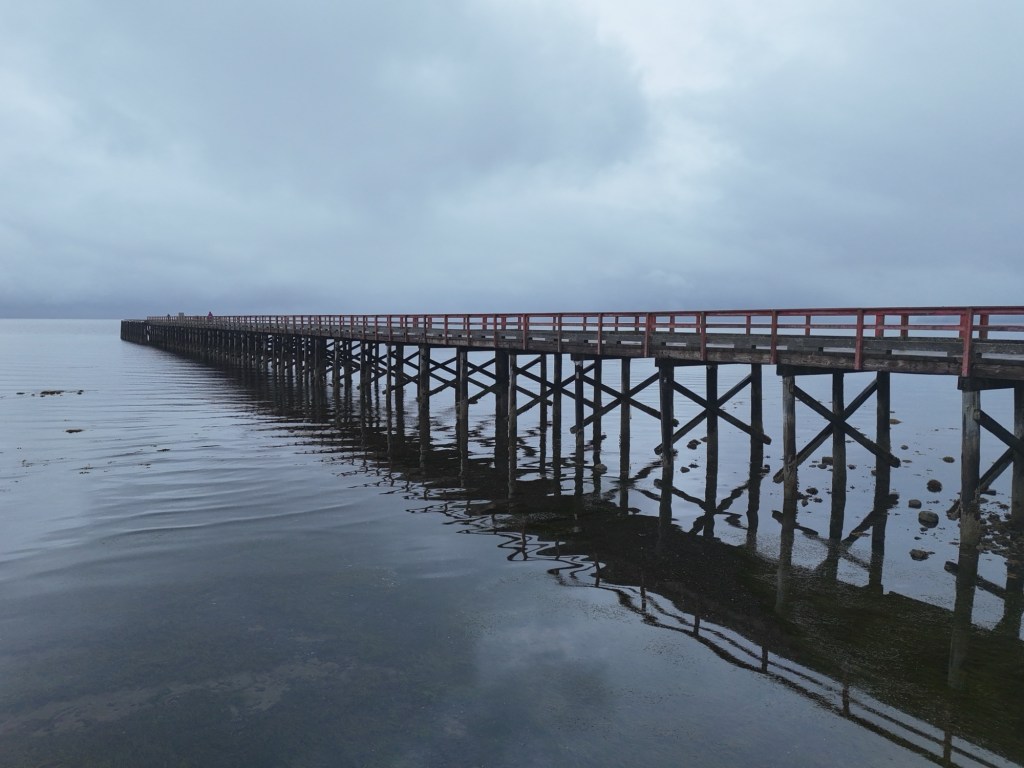
Our first stop was in Port Clements, where we drove through town and walked the Rainbow Pier. We were excited to watch a belted kingfisher – a lifer for both of us – and observed an unflappable eagle perched on a large boulder. Dave also took a short drone flight.
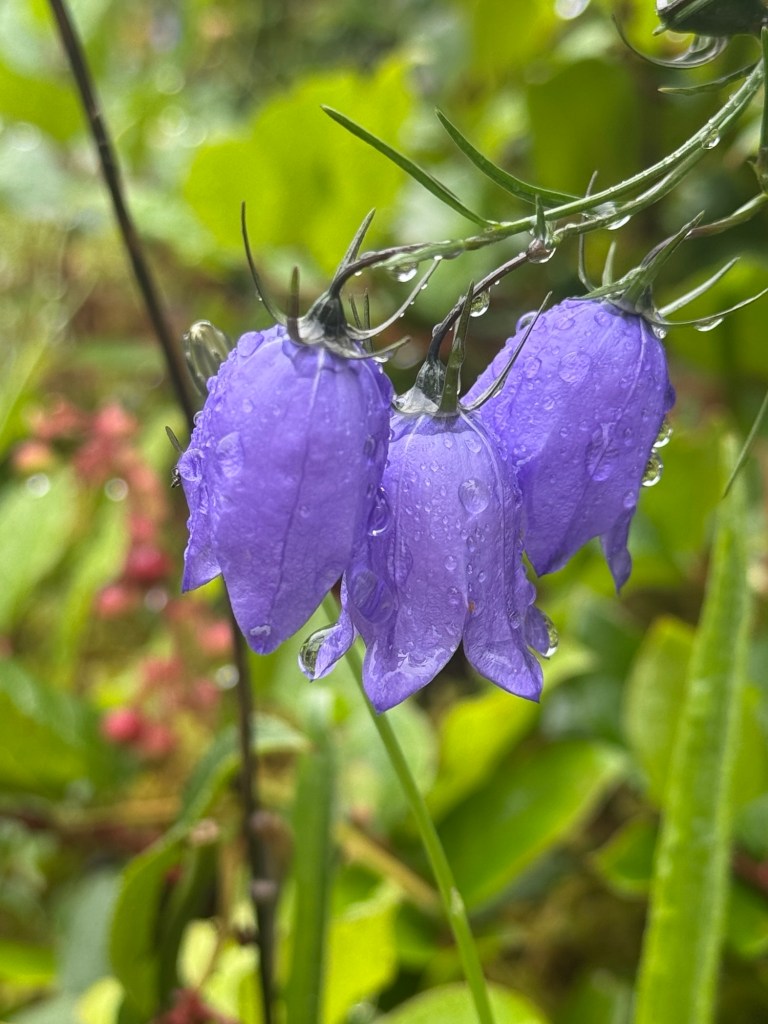
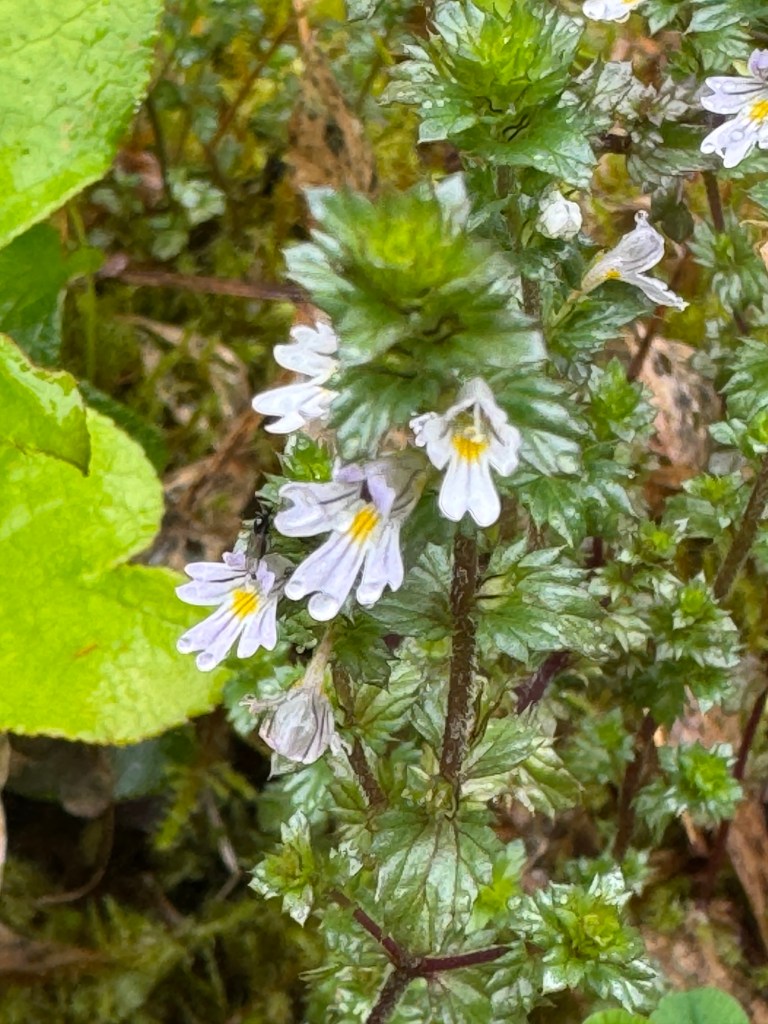
Next we stopped at the beach at the south end of Naikoon park. As we walked the dunes we saw some very pretty wildflowers.
Crystal Cabin was the next stop, mostly because Dave’s coworker recommended the food truck stationed there, Charters. It was unfortunately closed. The gallery was much higher end and less random than Jen remembered, so onwards we travelled.
Shortly south on the highway was St. Mary’s Spring. The namesake carving is no longer there, but Jen remembers visiting decades ago with her friend Marcie. It was said if you drank you would return. Jen took a sip for each of them, in Marcie’s memory.
Our last stop was the wharf area of Daajing Giids (known for a short while as Queen Charlotte City), where we attempted and failed to find lunch. Everything was closed! We bought a ball of sourdough- which turned out to be exceptionally tasty- and headed to our accommodations for a week here.
This is the nicest place we’ve stayed, yet not the most expensive. A beautiful suite, adjacent to the garage of a home, with everything one could hope for. Called the “Live Edge Suite” it has live edge wood accents throughout the two story studio apartment. A full kitchen, bar counter, and bathroom are below. Above, bed, desk, and walk-in closet. We immediately felt comfortable and pampered.
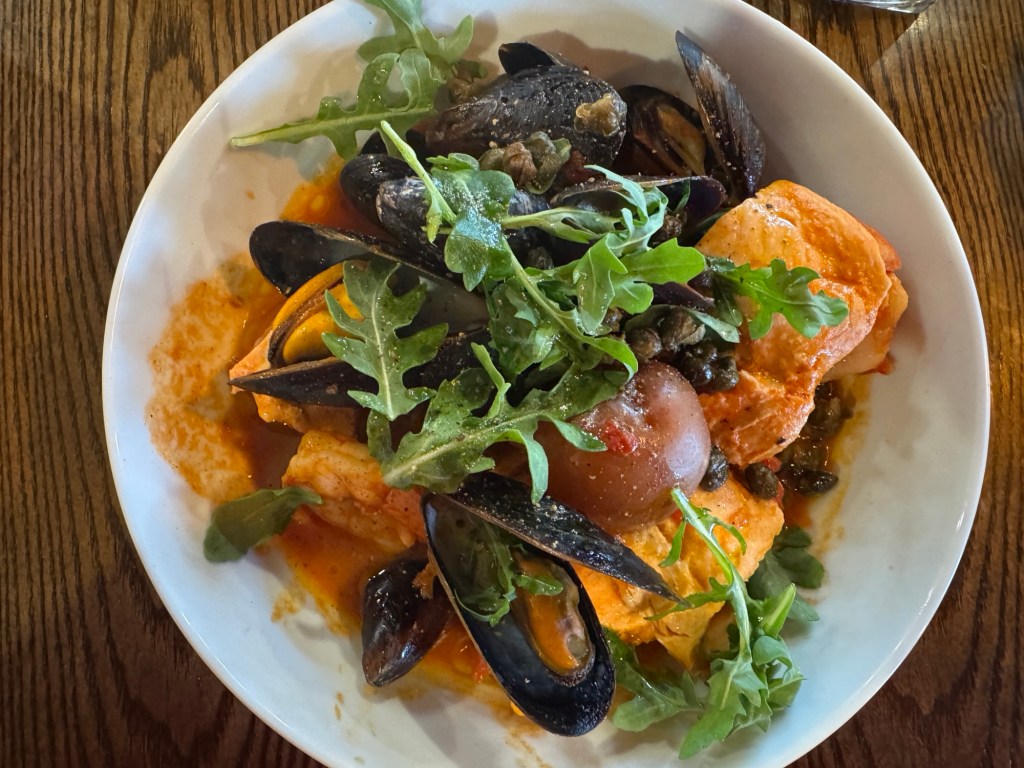
Dinner was also a swanky affair at what’s apparently the hottest restaurant in town, Blacktail. A line had already formed when we arrived at quarter to the opening hour, and not everyone in line at opening got a table (with many having to sit outside or face long waits). We enjoyed a house-made grilled sourdough with ricotta cheese, hot honey and pistachios to start. Dave has pasta bolognese, and Jen the fisherman’s stew. So delicious.
We slept in today as breakfast was at nine. Served family-style, we enjoyed coastal huckleberry pancakes and fruit salad with the other guests and our hosts.
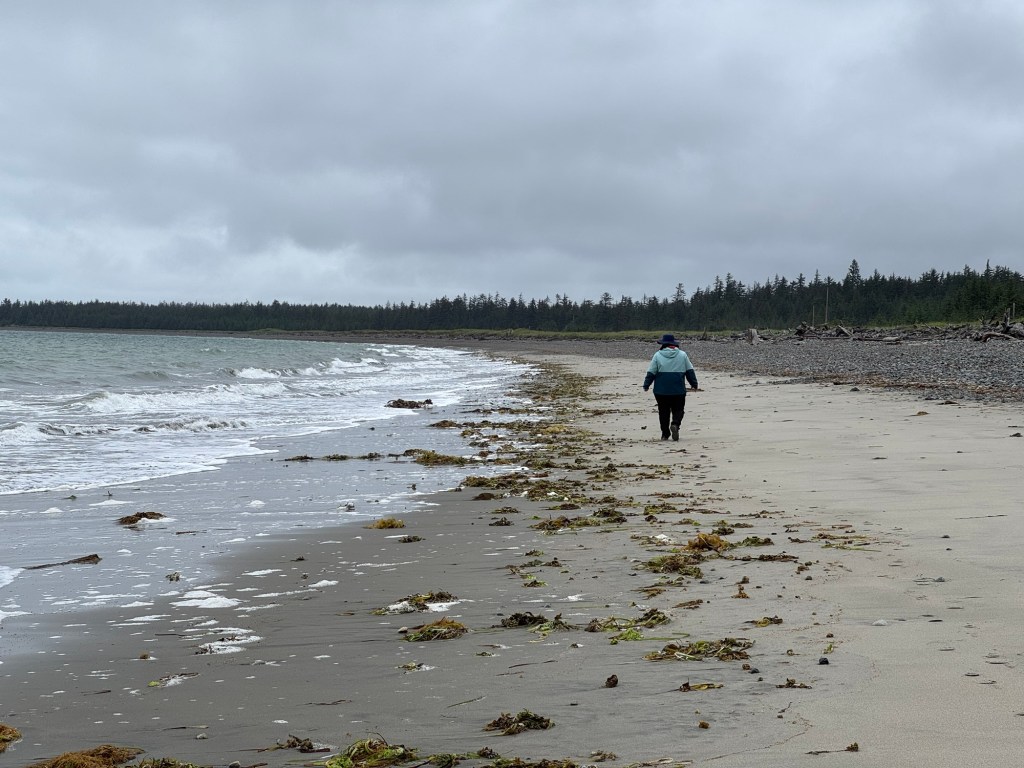
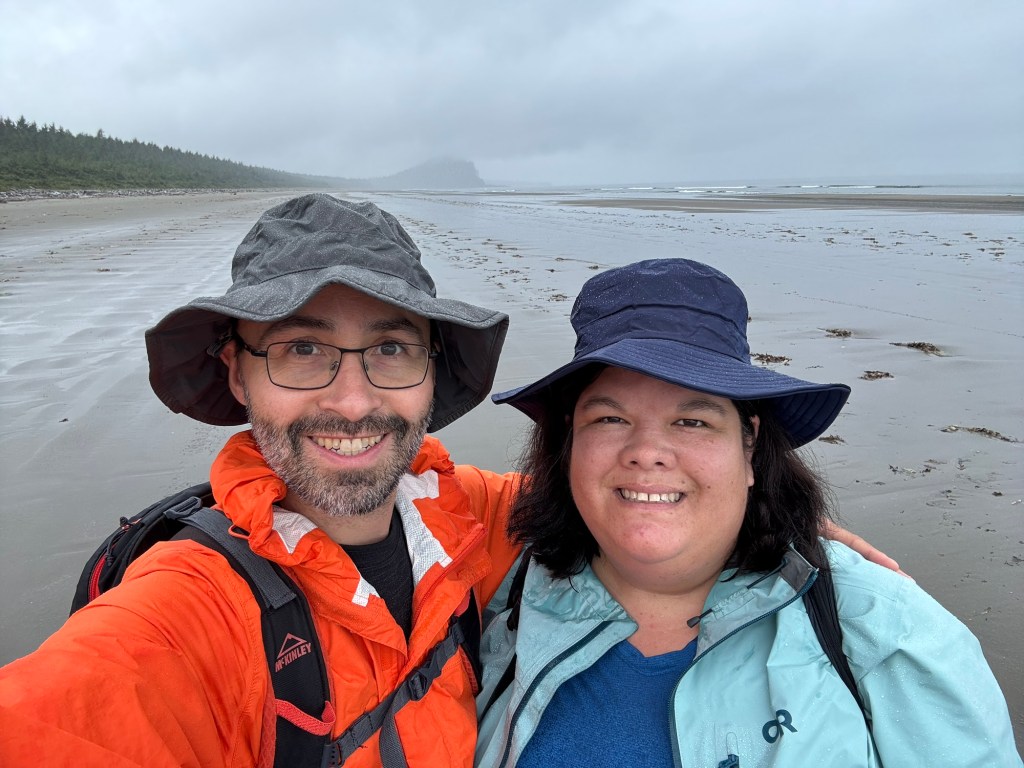
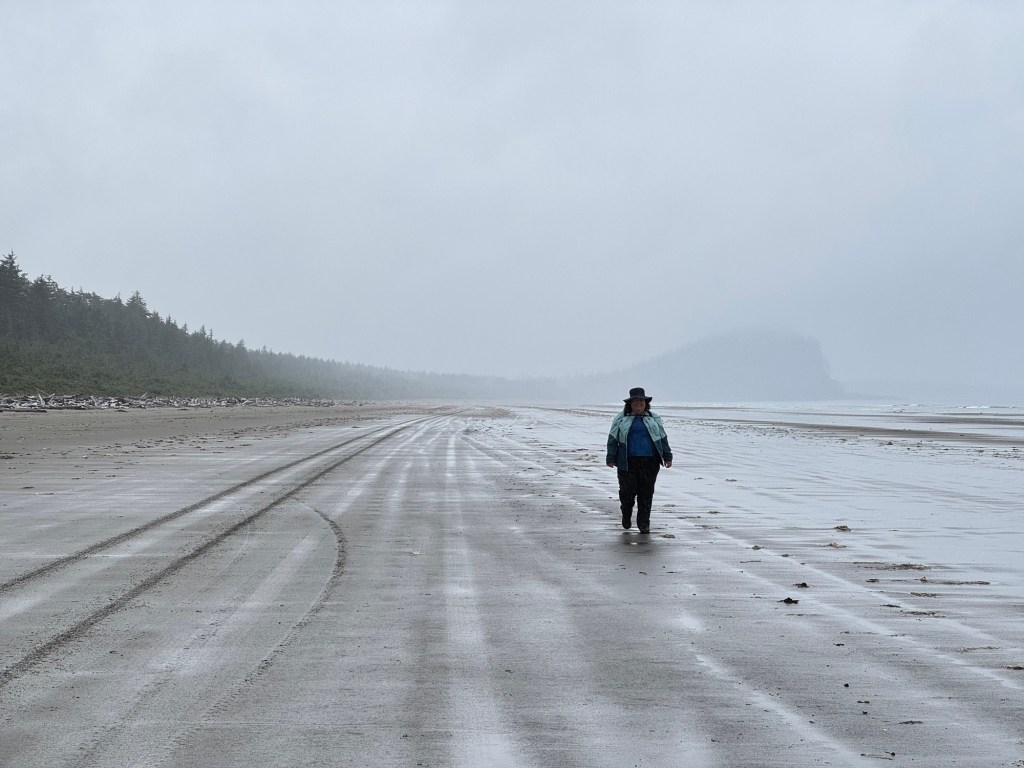
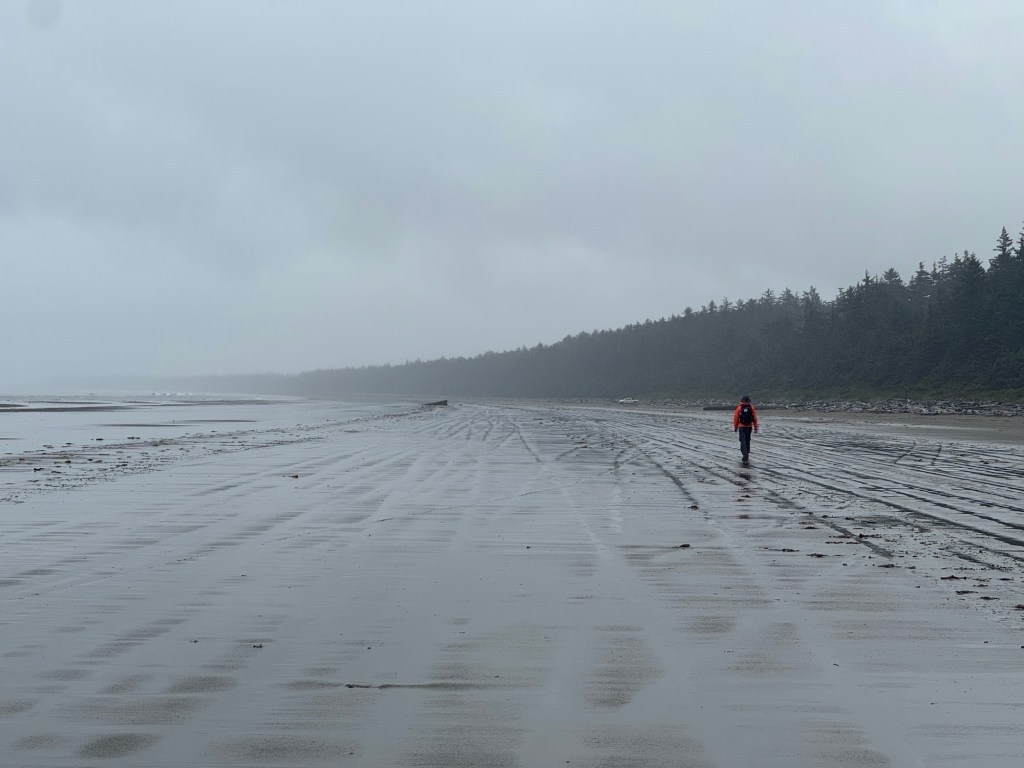
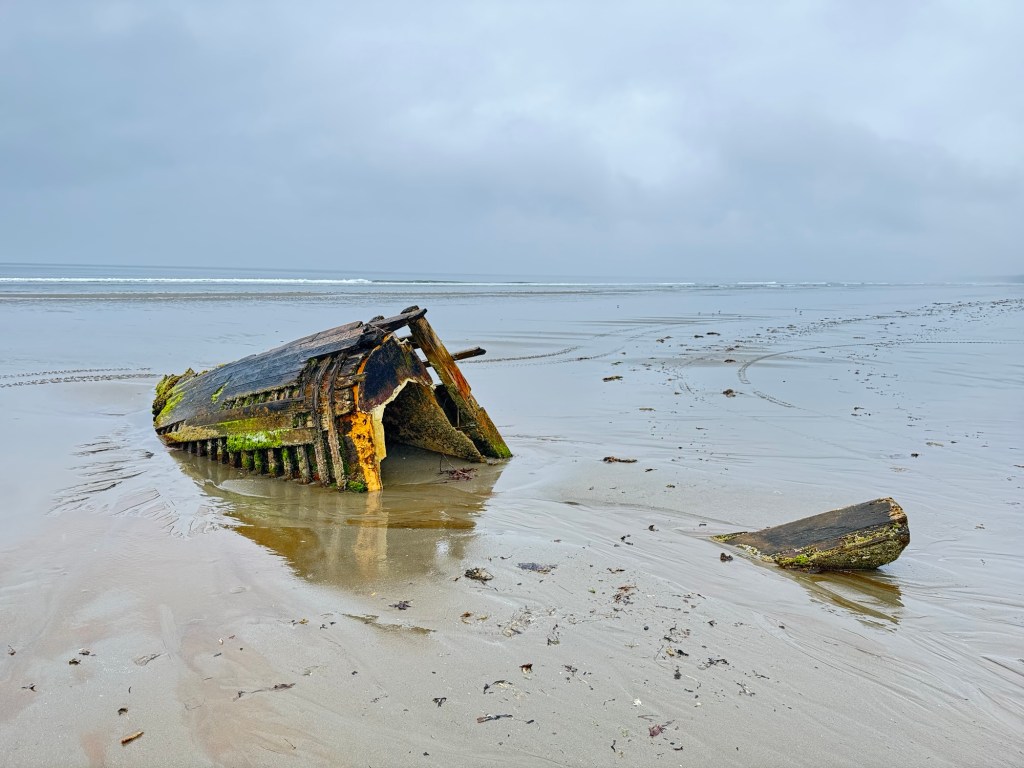
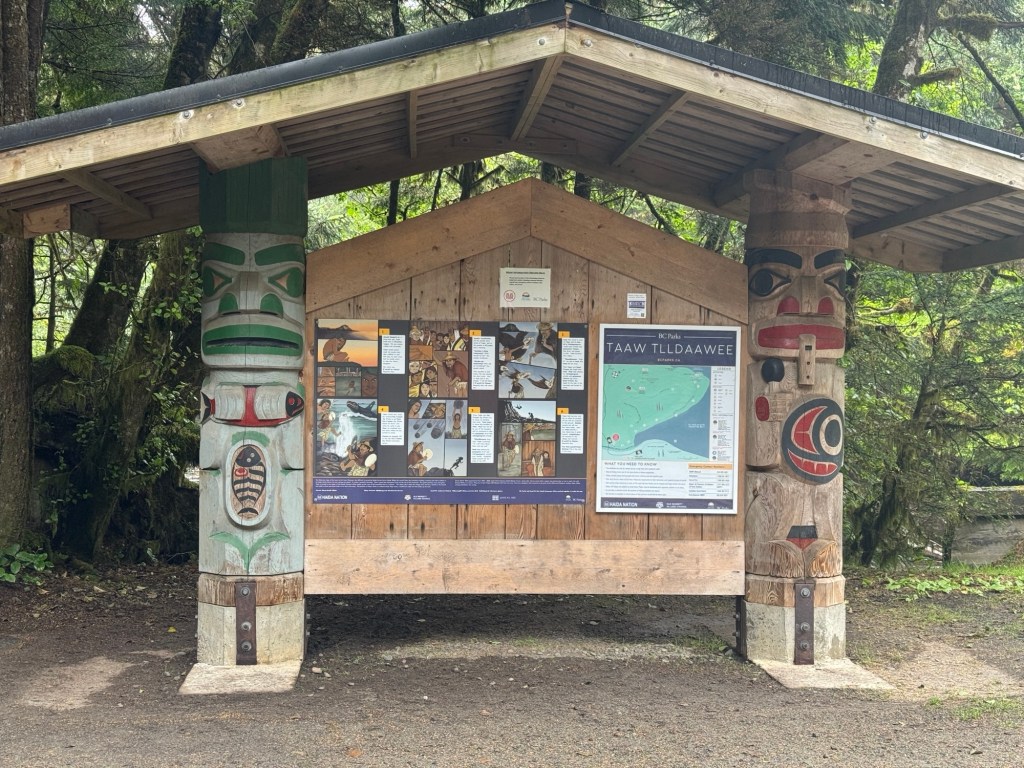
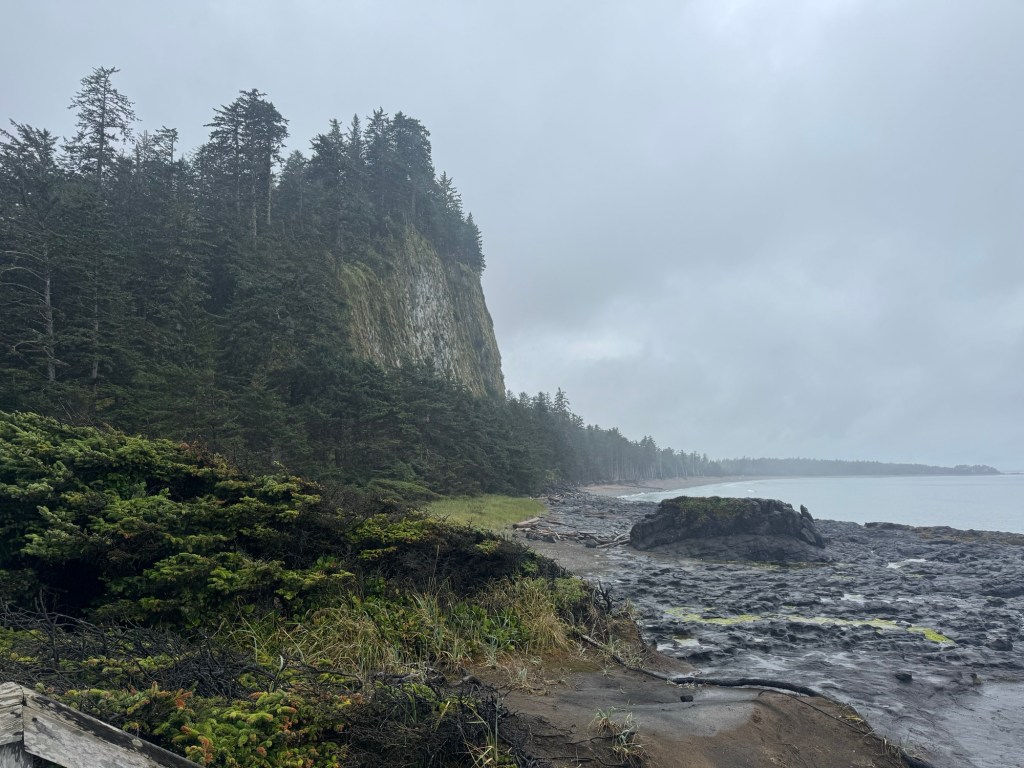
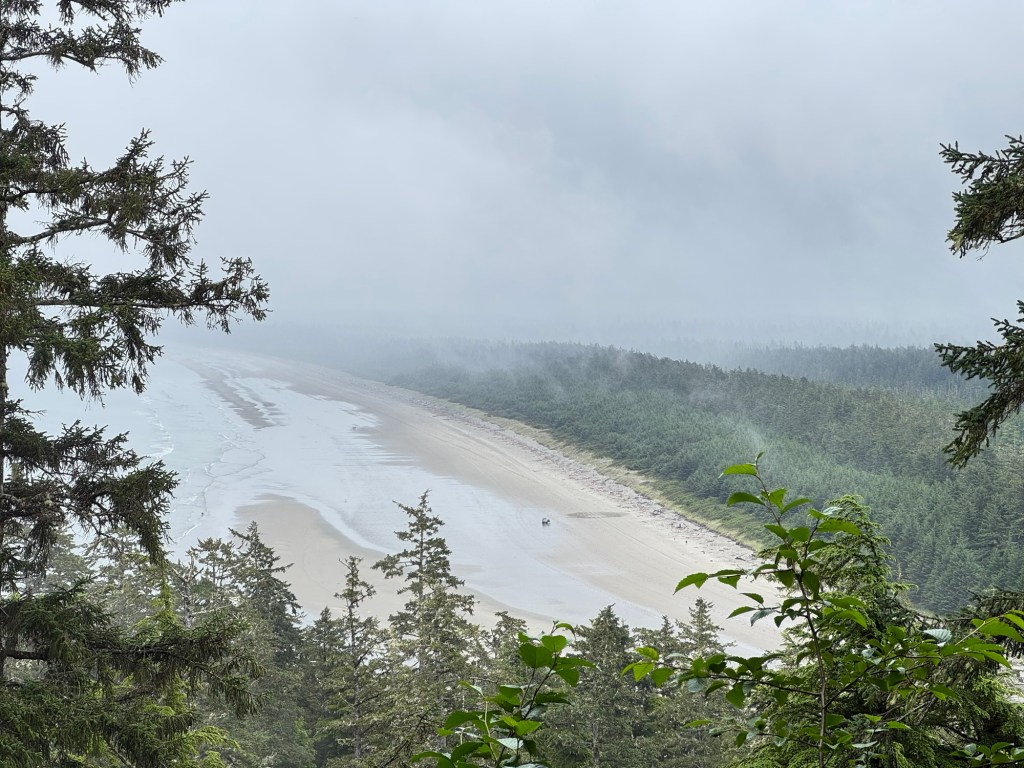
Our first stop of the day was North Beach in Naikoon Provincial Park. This sandy beach stretches for ten kilometres across the northeast of Haida Gwaii’s Graham Island, from Taaw Tlldaawee (Tow Hill) to Rose Spit. We walked about halfway, to a relatively modern shipwreck, before retracing our steps.
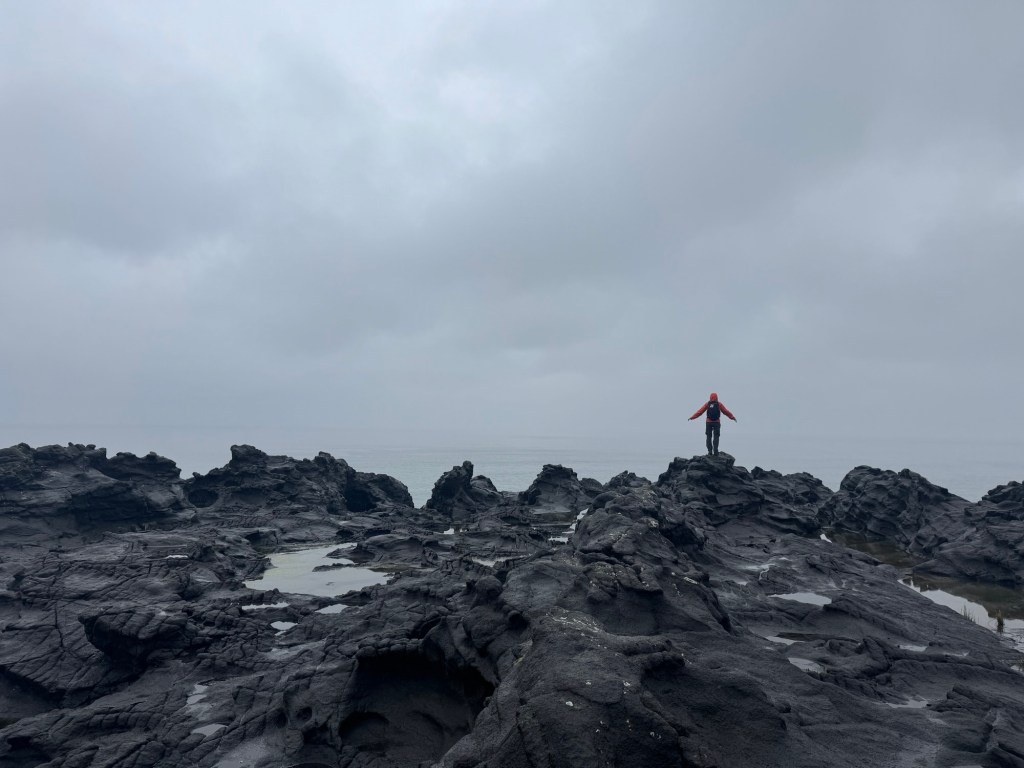
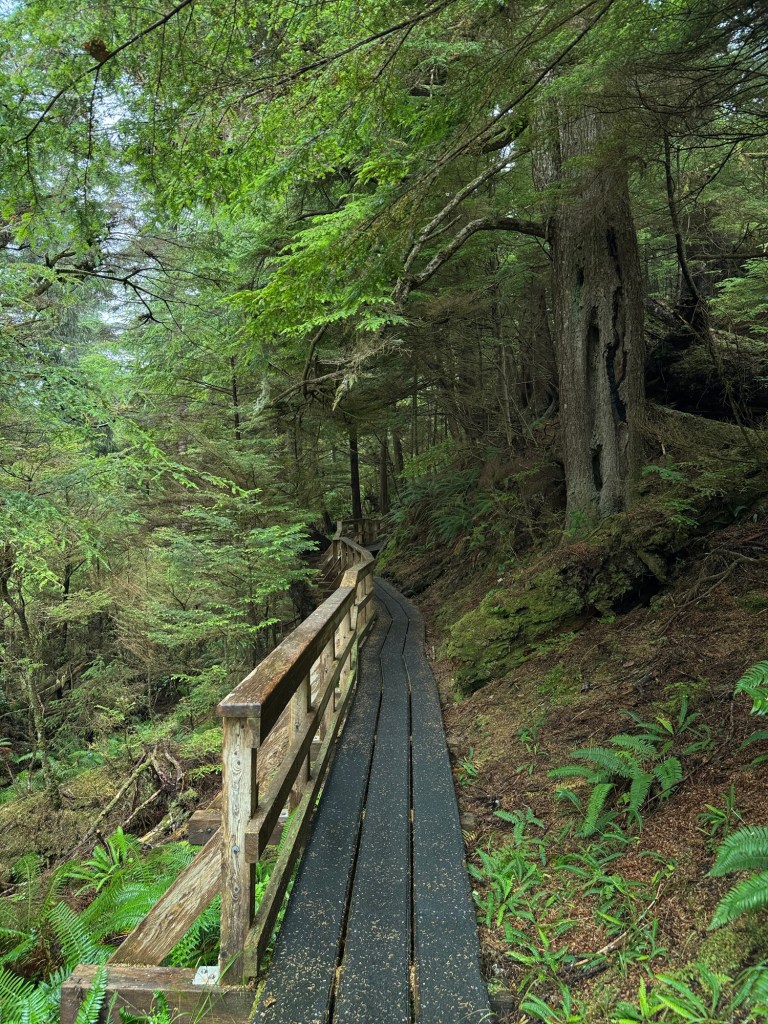
Next, we explored the boardwalk along Taaw Tlldaawee itself, through verdant forest to rocky outcrop. A blowhole adds drama and cultural importance to this spot. Jen then took the boardwalk back to the car while Dave summited the unique rock formation, formed by a volcanic cinder cone’s columnar basalt standing up to the weathering of the last ice age on the ocean side, while the hill was carved away.
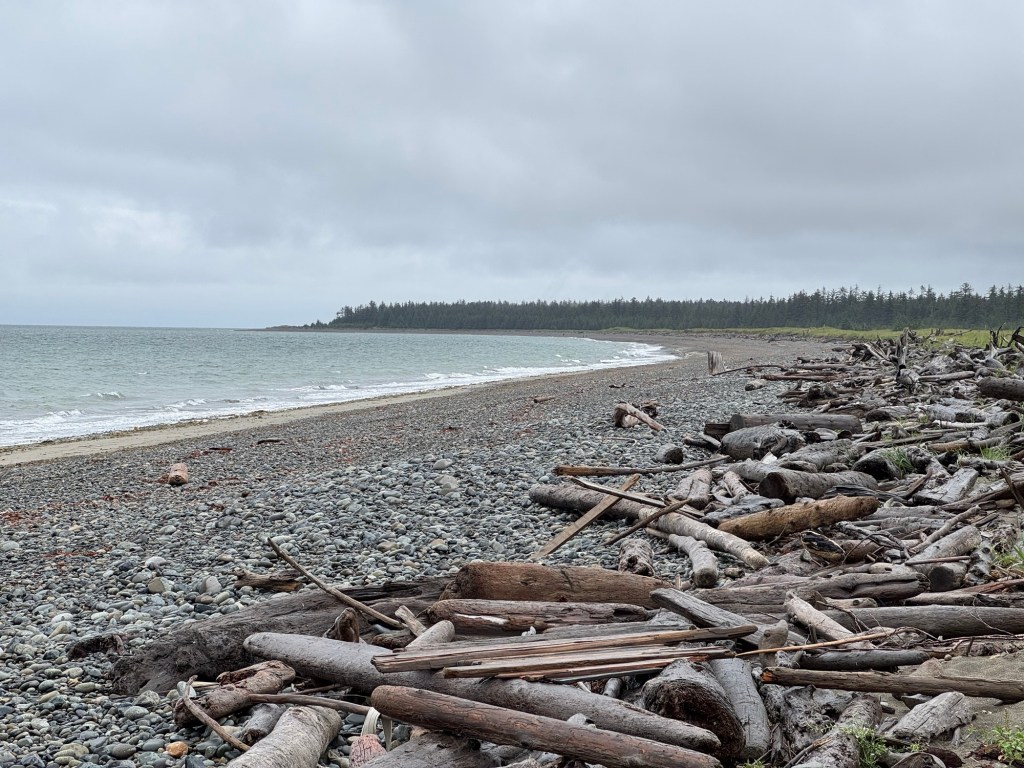
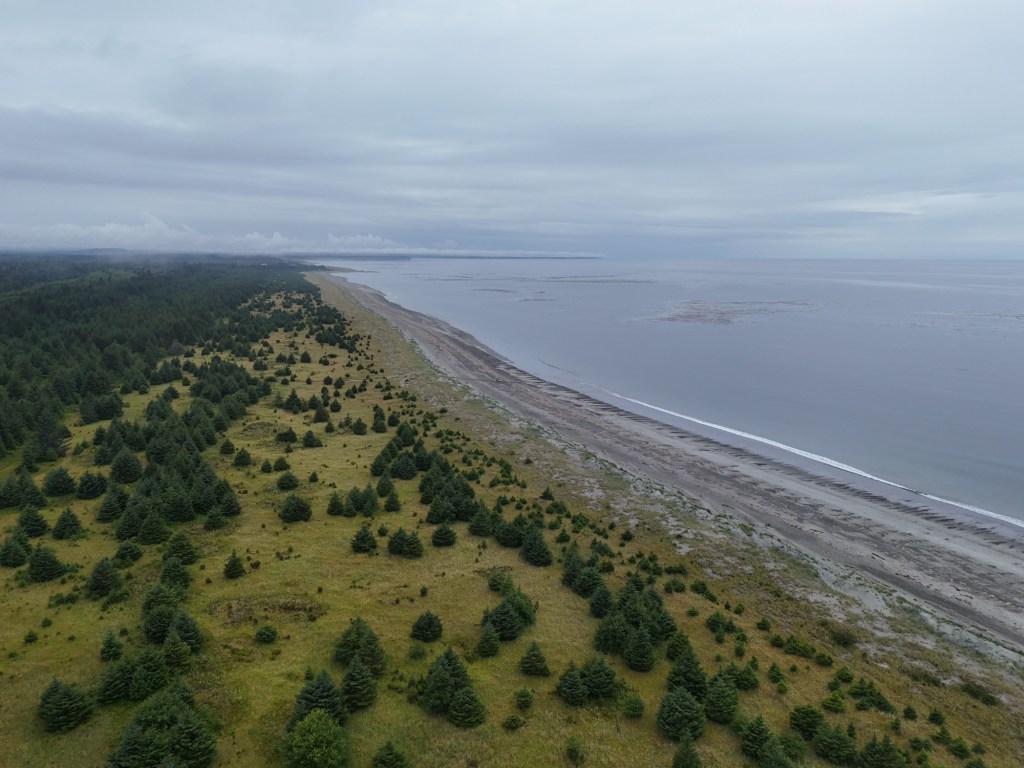
Northern park explored, we then exited the park and found another beach to explore, where Jen could hunt for agates and shells while Dave took a quick flight with his drone.
Ravenous, we found the only open place in town (most things closed for B.C. Day), a pub serving appetizers. We had a quick meal, then went for a drive around Masset and Old Masset (the later of which is on reserve).
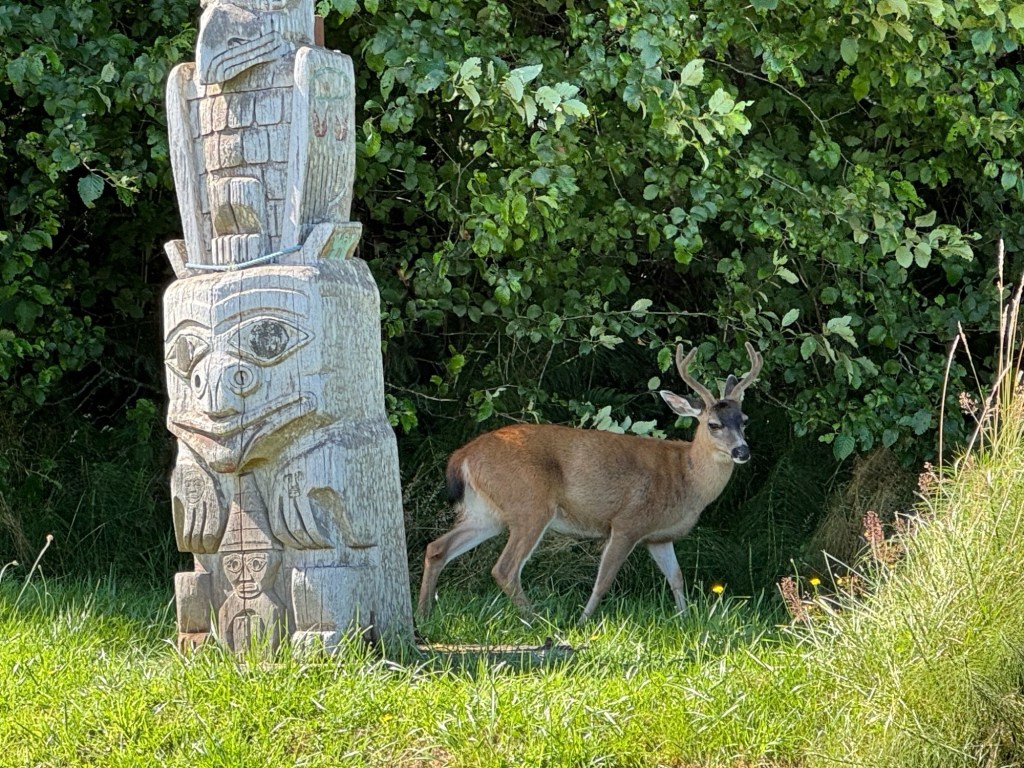
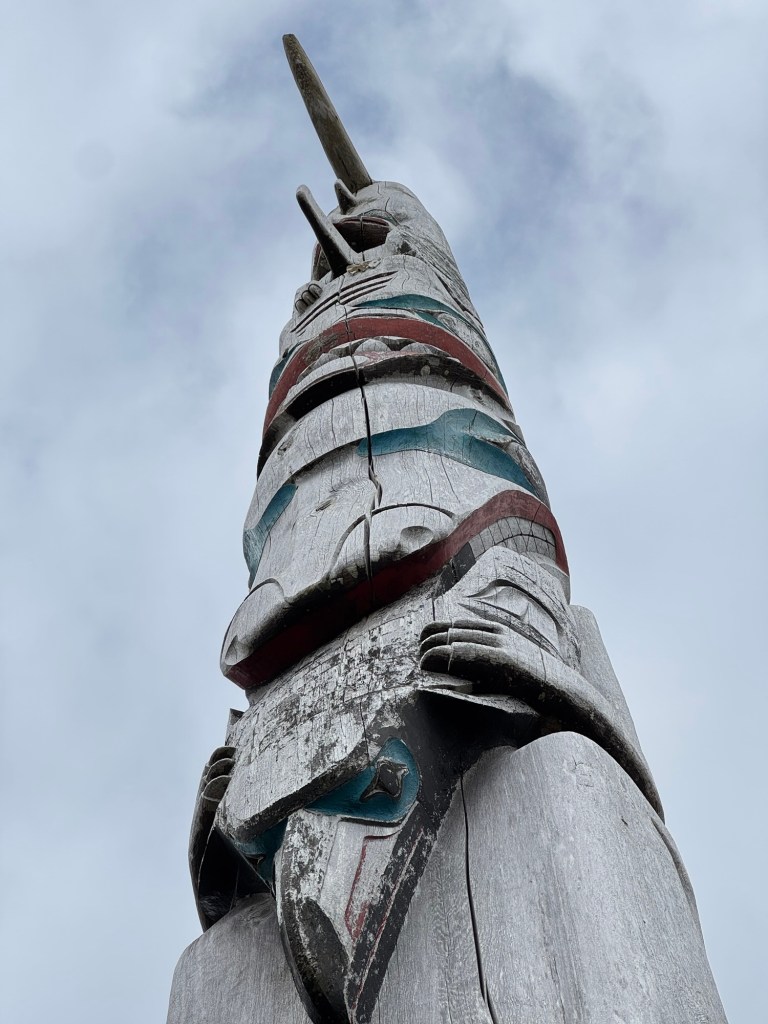
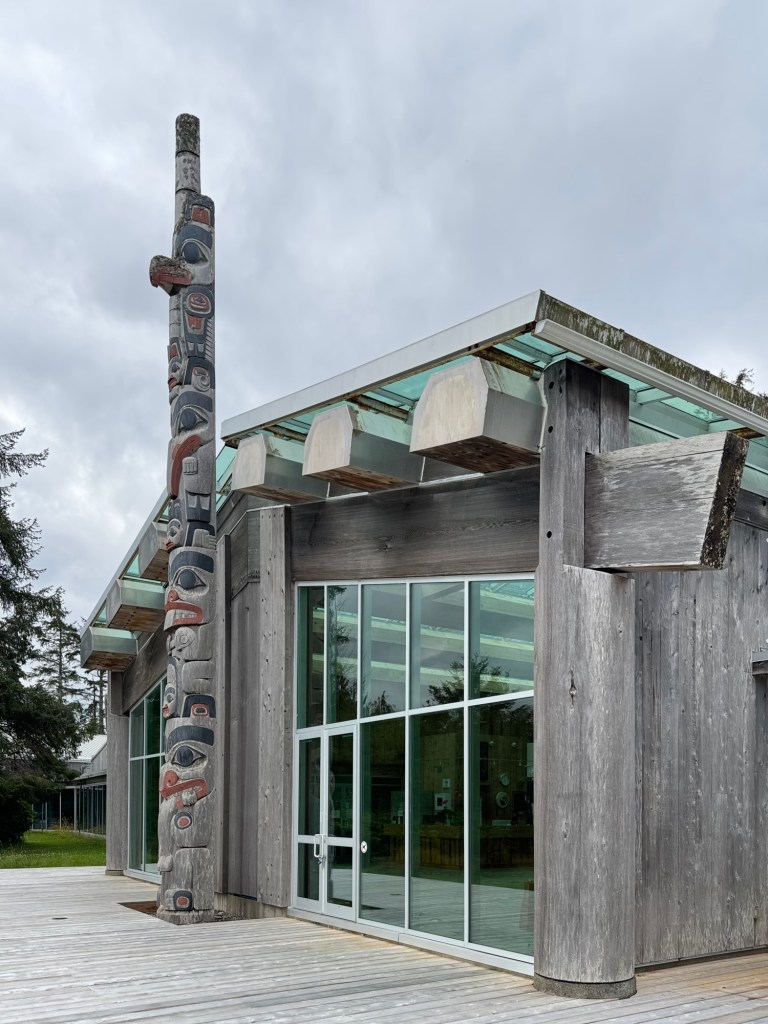
The thing that struck us is how alive and present the Haida culture is, despite the obvious and terrible impacts of colonialism. Poles are considered living members of their community, and are present at community buildings, institutions, and at private homes alike. Many buildings are longhouses or are constructed to reference these iconic structures. Art is everywhere, and the language is on street signs and throughout the area.


 Jen and Dave: Adventuring