Today started at the train station, where we caught a train going east. Destination: Falkirk High Station.
Over the past several years, we have been watching narrow boating blogs as a way to wind down. Falkirk is famous in the narrowboating community as the place where the Forth & Clyde canal connects to the Union canal with some pretty amazing engineering.
First, however, we had to get there. Falkirk High Station was very close to the Falkirk tunnel. 630 meters long, it is the longest in Scotland. Excavated from solid limestone, there are also shorings and changes to height and width as you walk along the towpath. The stalactites from around two hundred years of seepage.
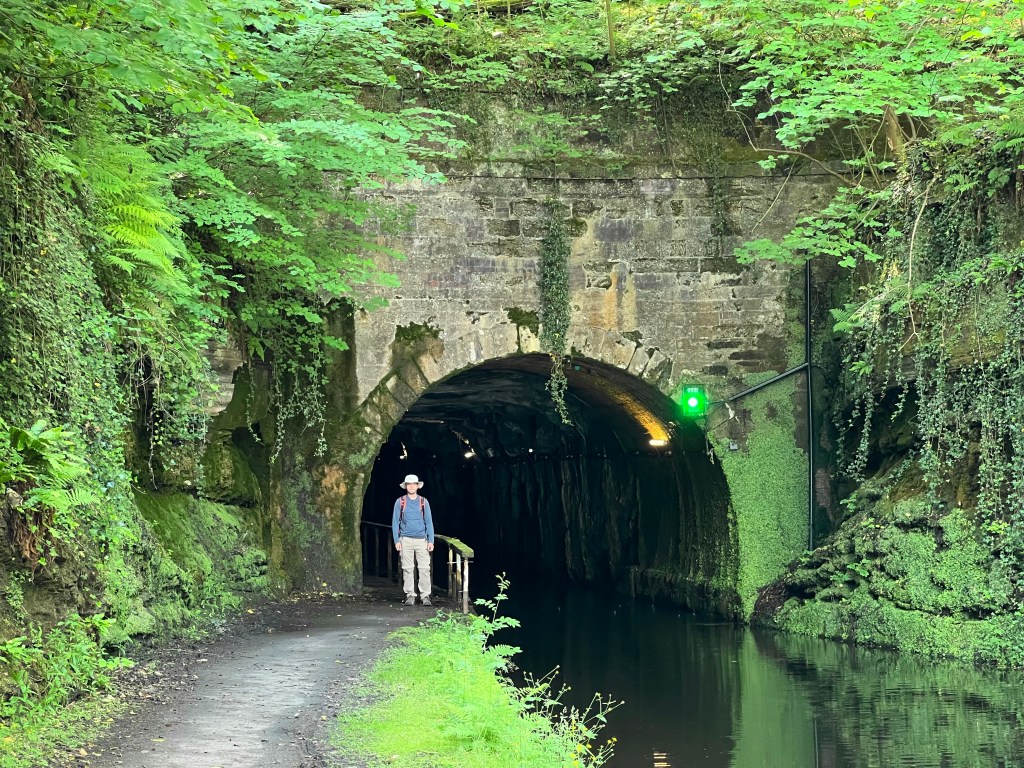
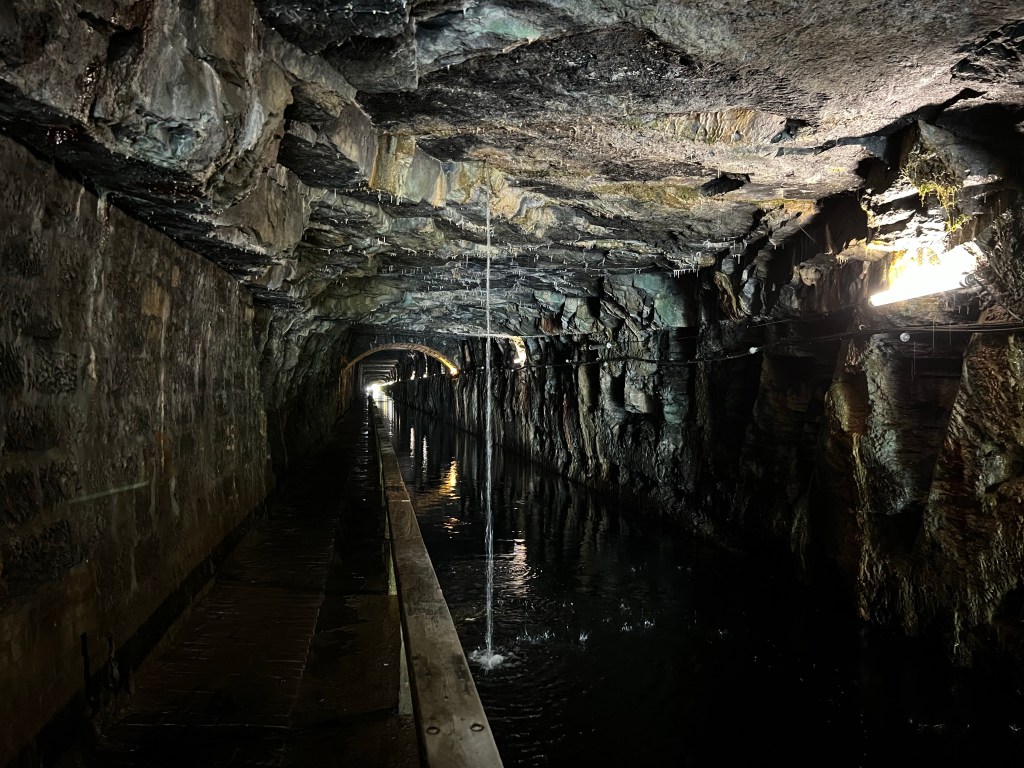
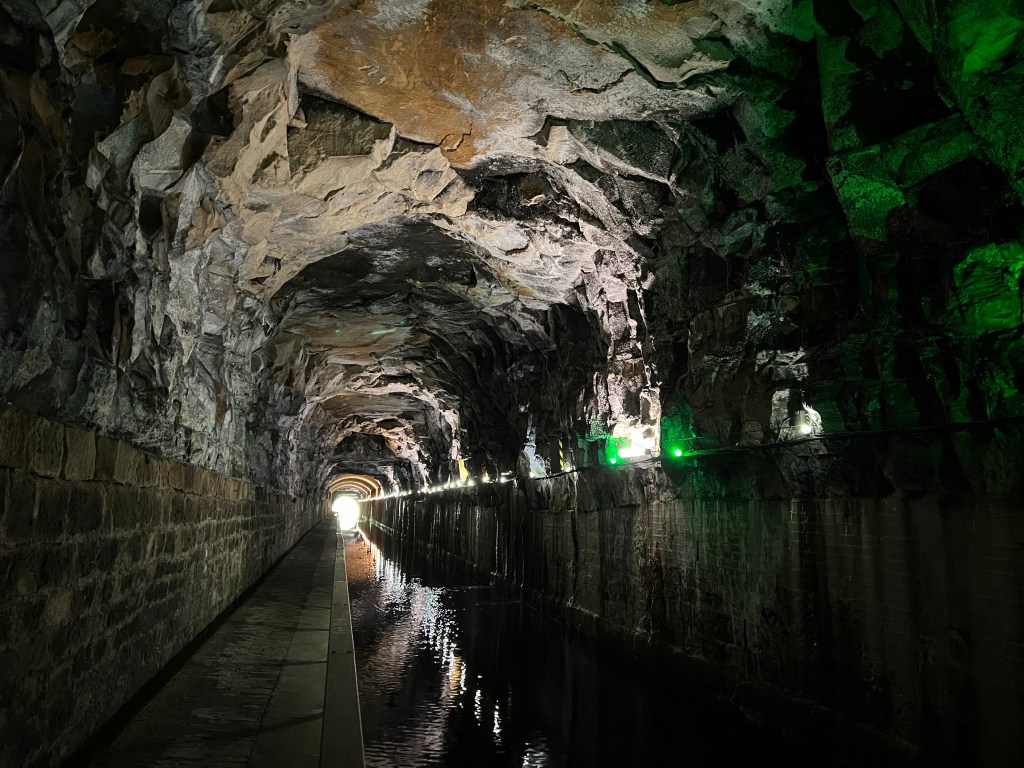
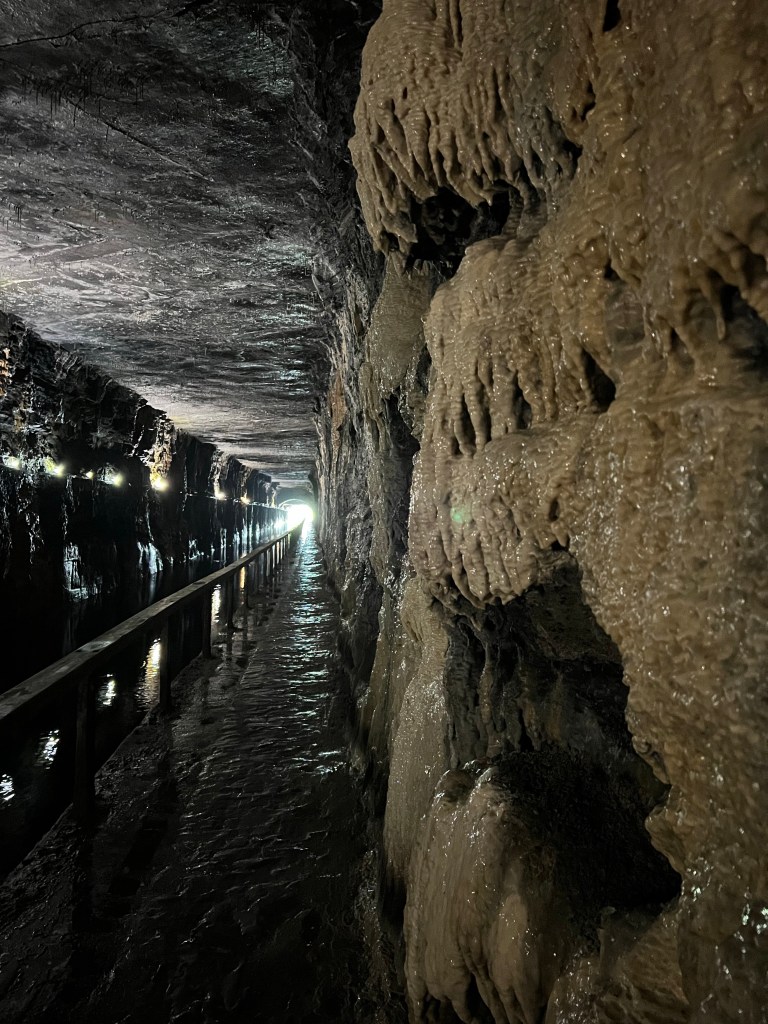
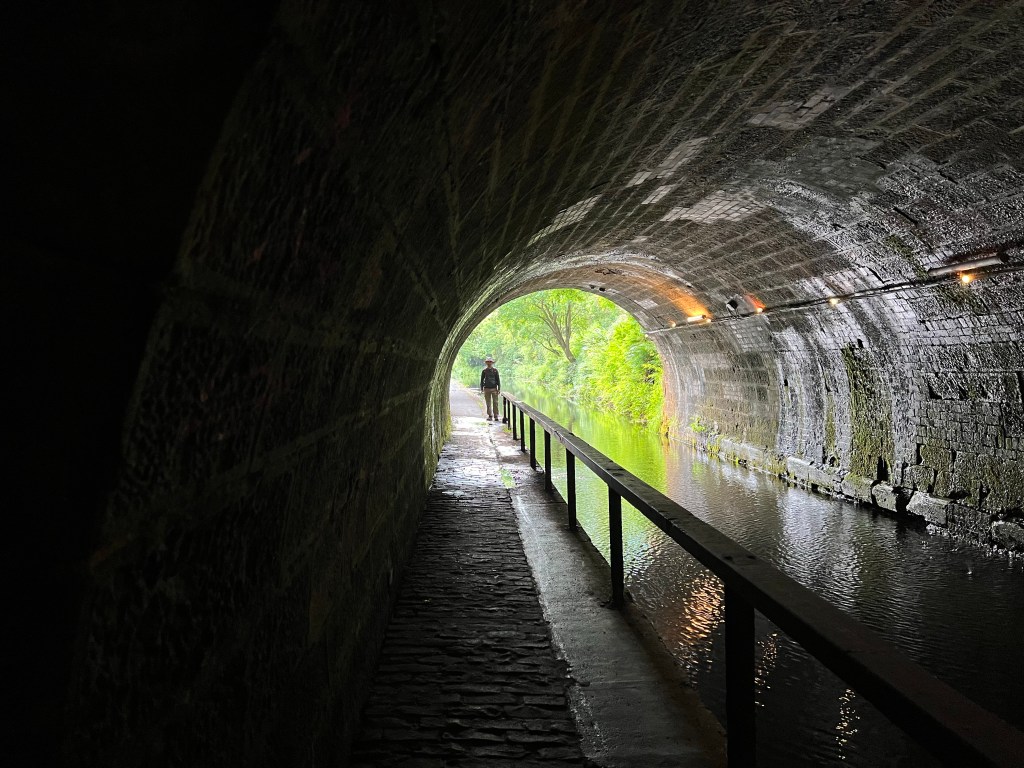
Tracing our way back through the tunnel, we meandered along the towpath, checking out locks, waving at boaters, and chatting with folks. Then came a much more modern tunnel, with fancy LED coloured lights.
<start non-engineer audience variant>
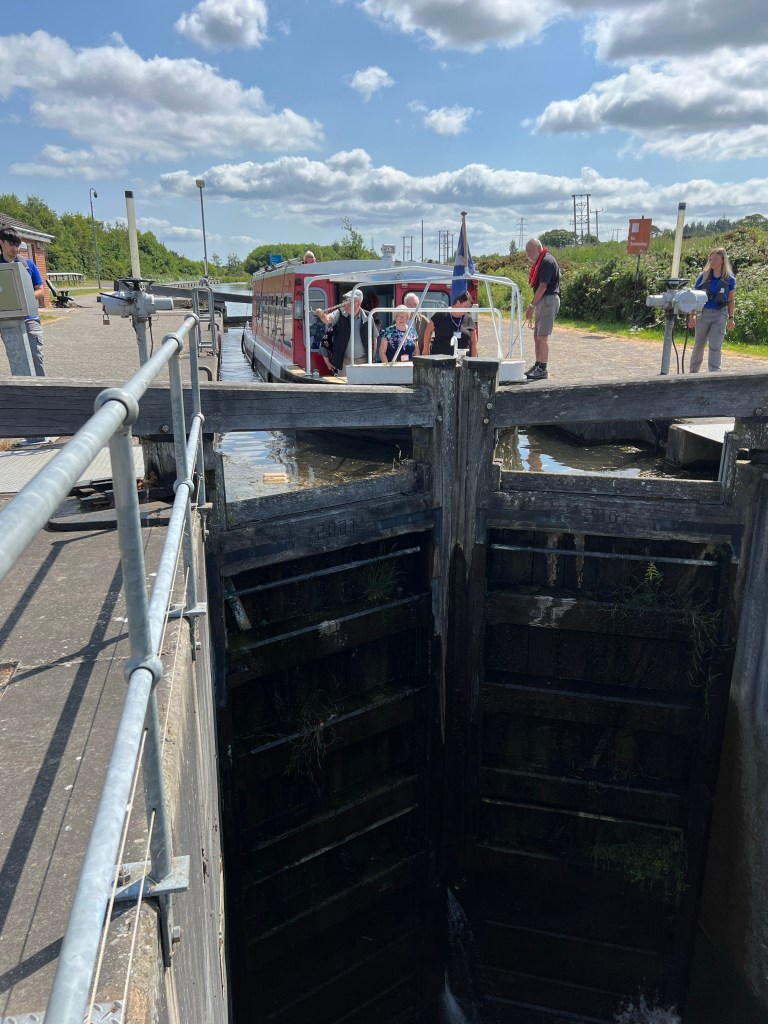
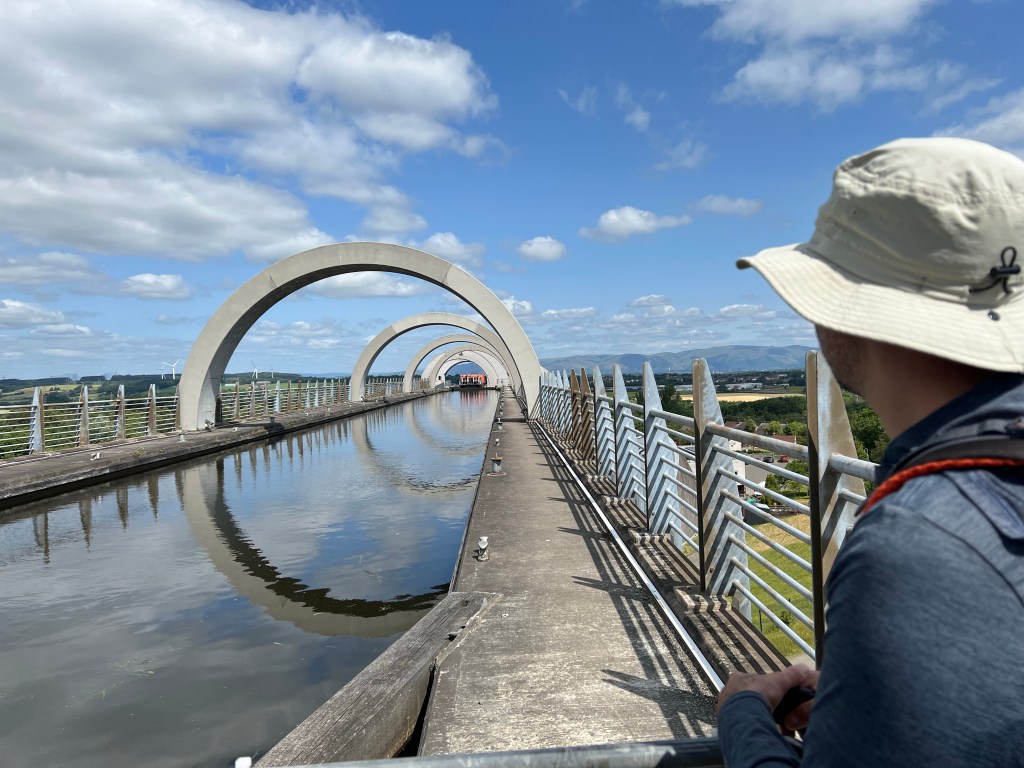
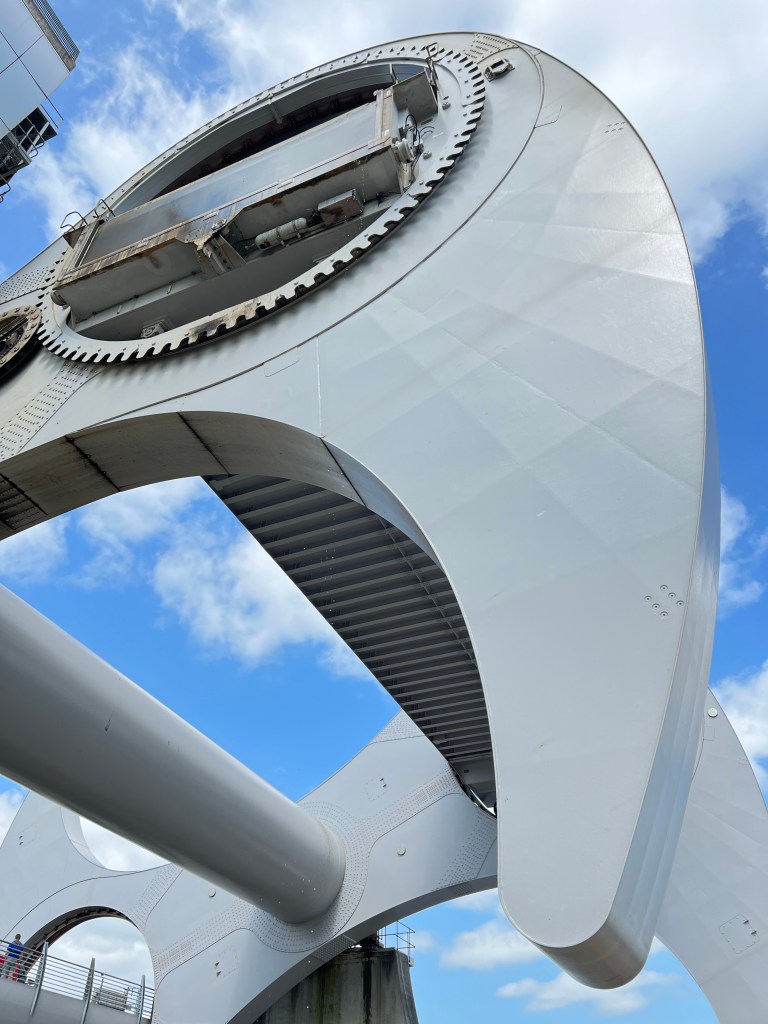
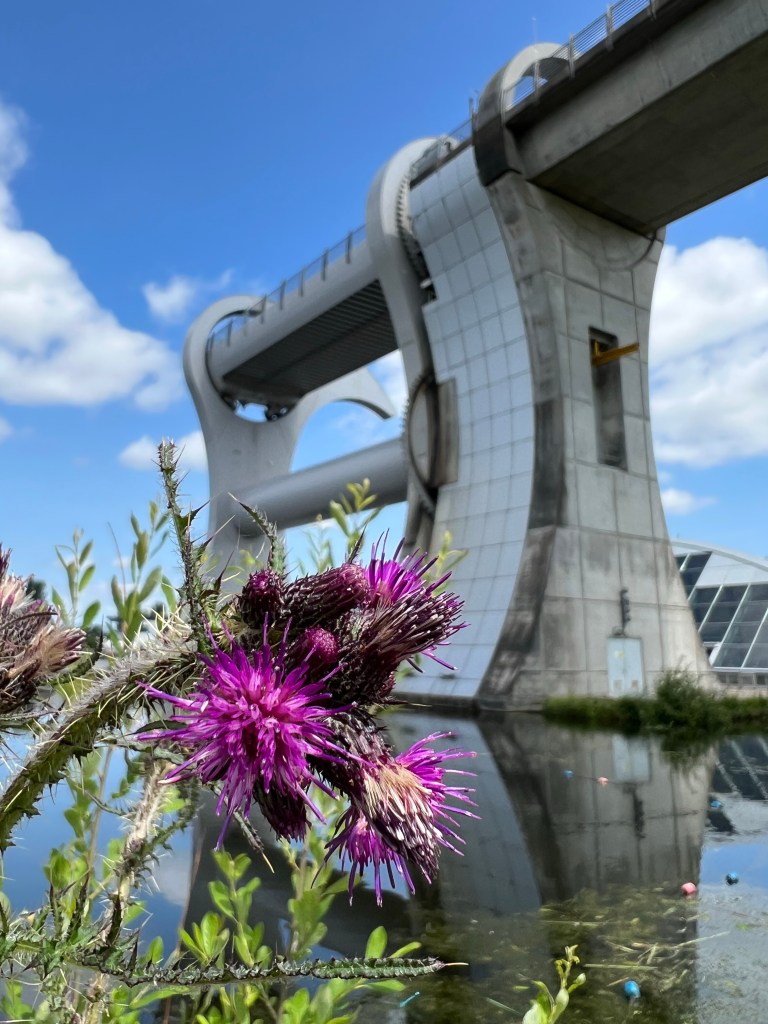
The Falkirk wheel is a giant, slow version of the classic rainbow PNE ride. A giant pan of water – big enough for two narrow boats – rotates up while a matching bucket rotated down. It’s on a geared system, and since the buckets are balanced, it takes little power to move – the same as boiling a kettle eight times. It’s absolutely ridiculous, but a neat piece of engineering.
<\variant> <start more technical variant>
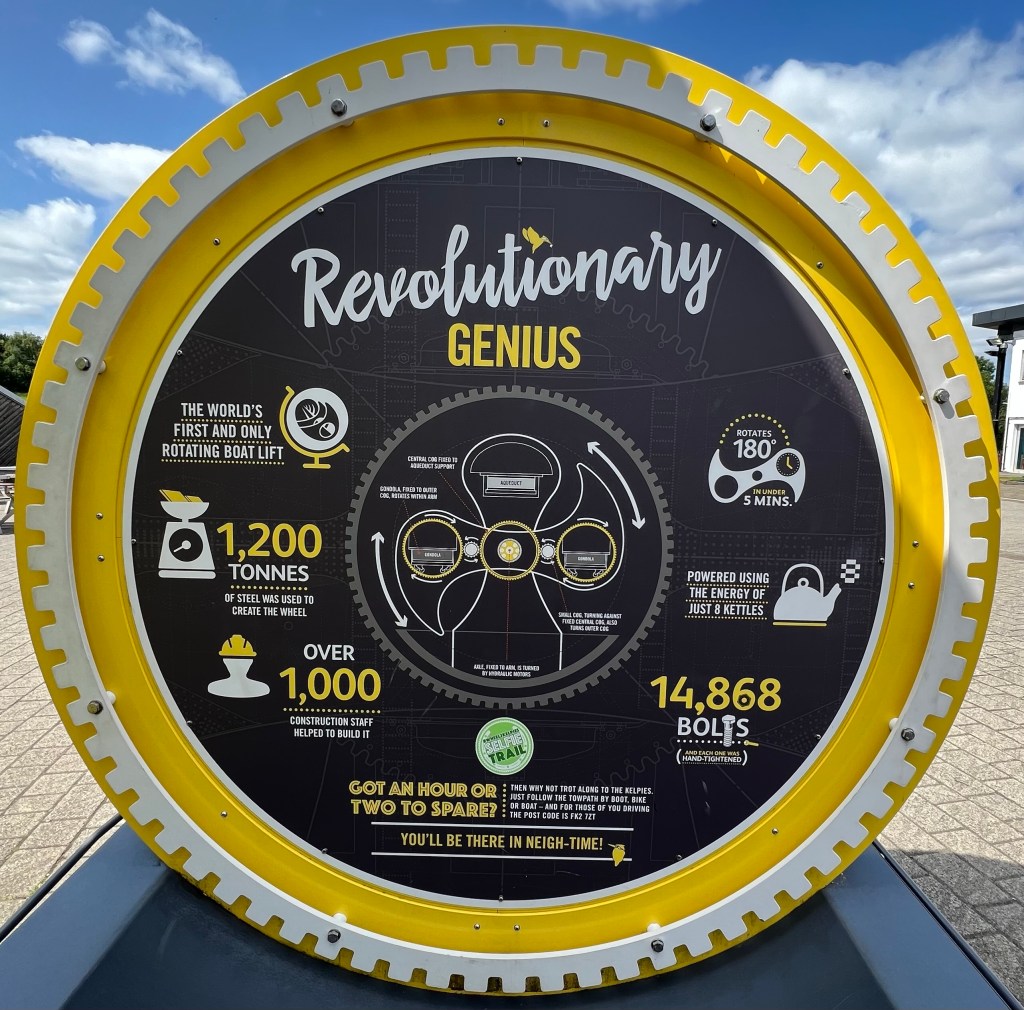
Part of a £84.5 million Millennium Link project to replace a defunct 11-lock system and rejoin the historic Union canal with the Forth & Clyde, the Falkirk wheel stands 35 meters tall and used 1,200 tonnes of steel. Each of the two gondolas hold half a million litres of water, but the vast weights only take 1.5 kWh to turn due to clever gear design and careful balancing. The design itself was inspired by the Celtic axe. Because of the stress reversals, the entire thing is bolted (instead of welded) together, using some 14,000 fasteners.
<\geek>
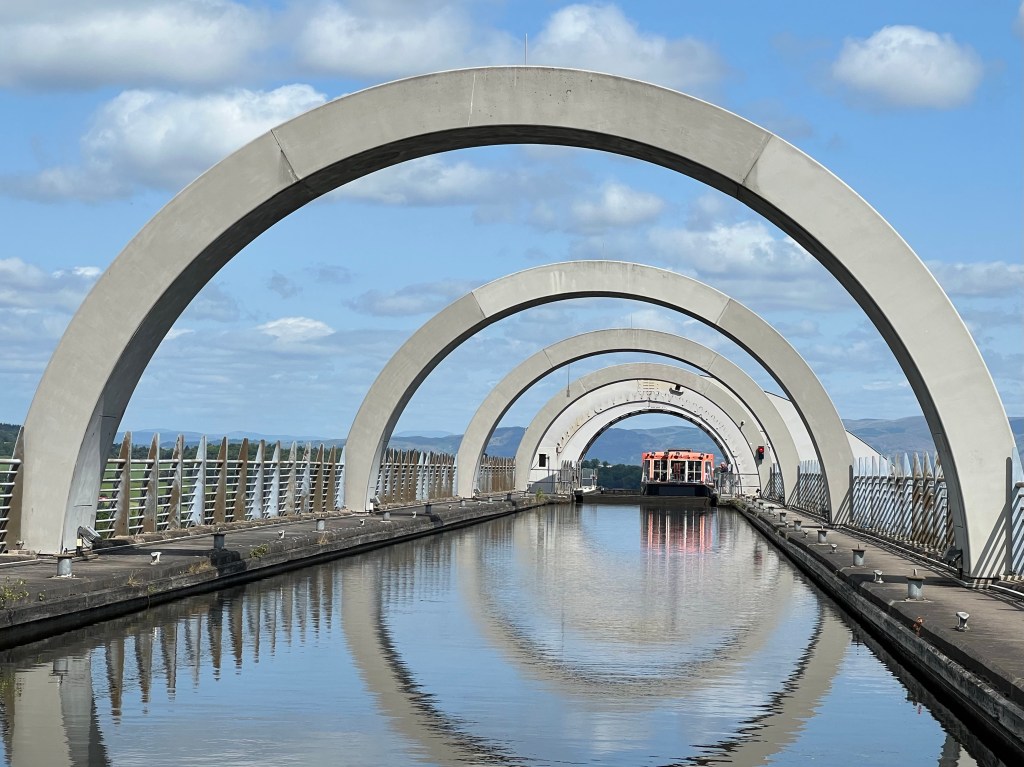
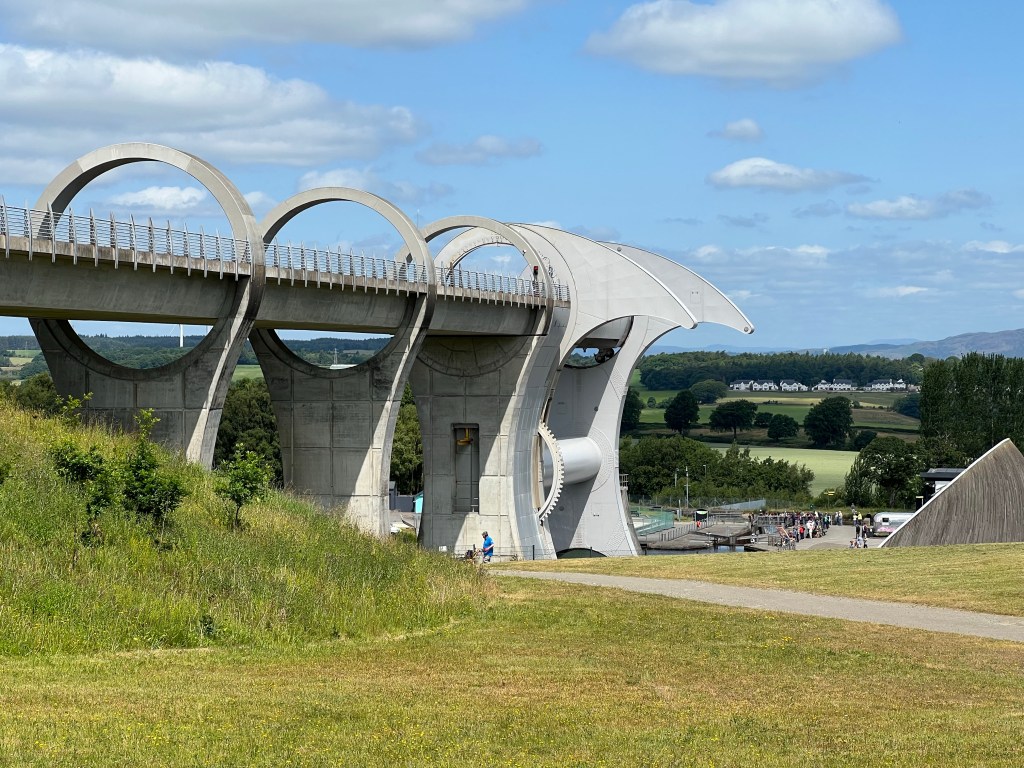
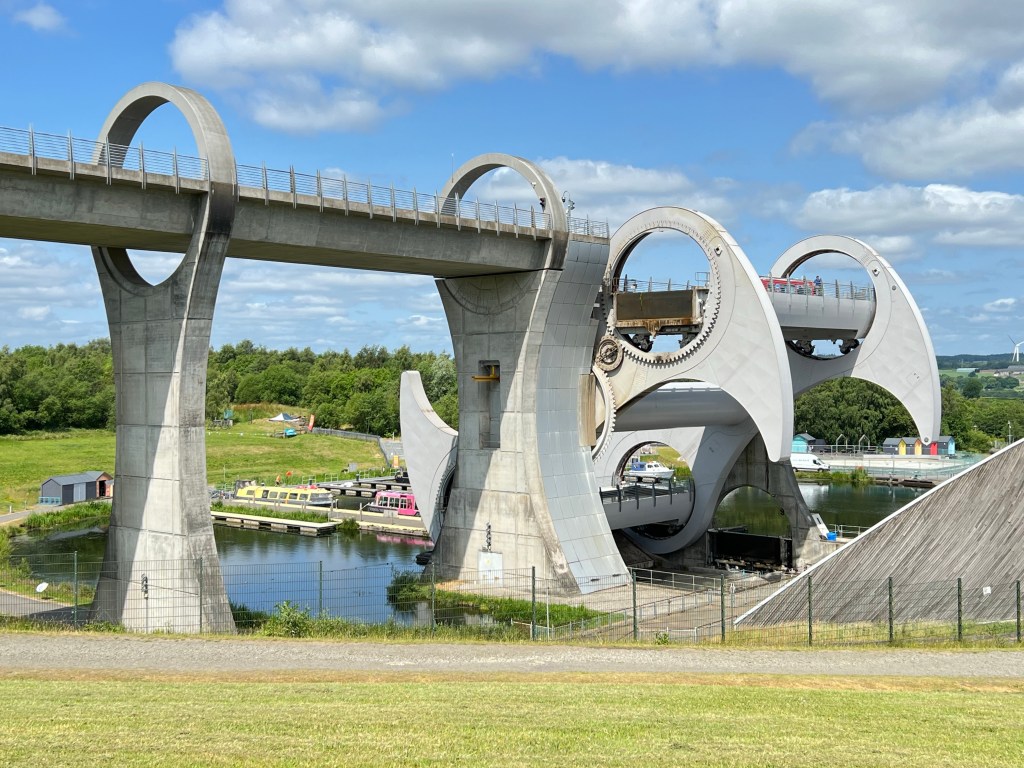
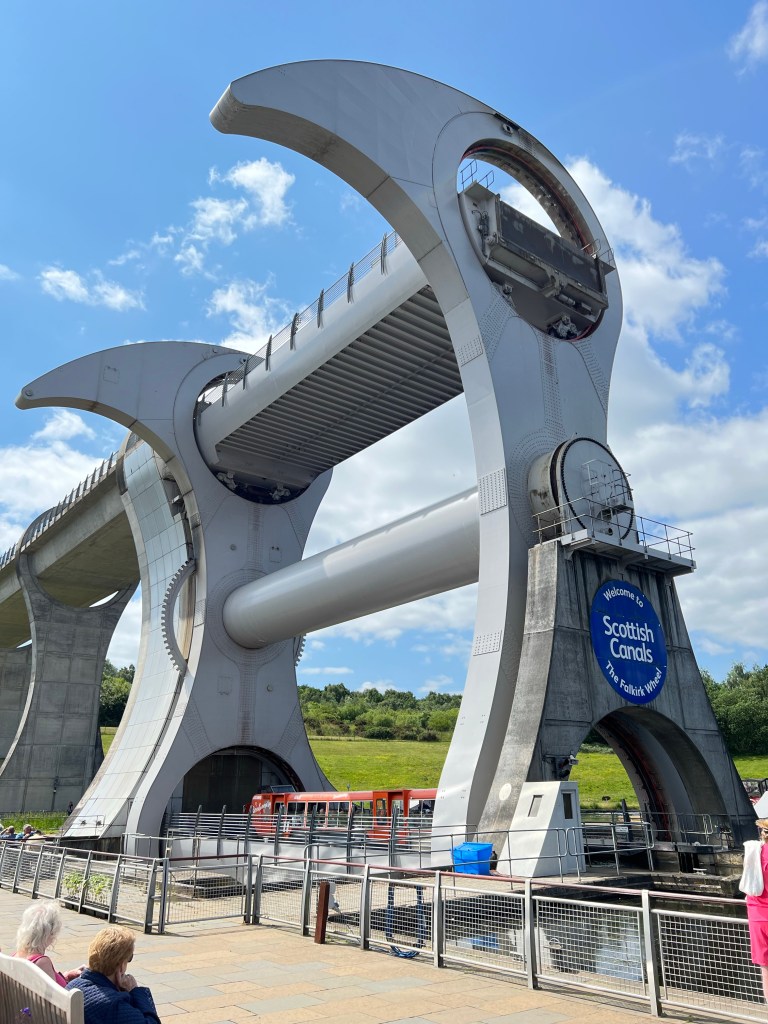
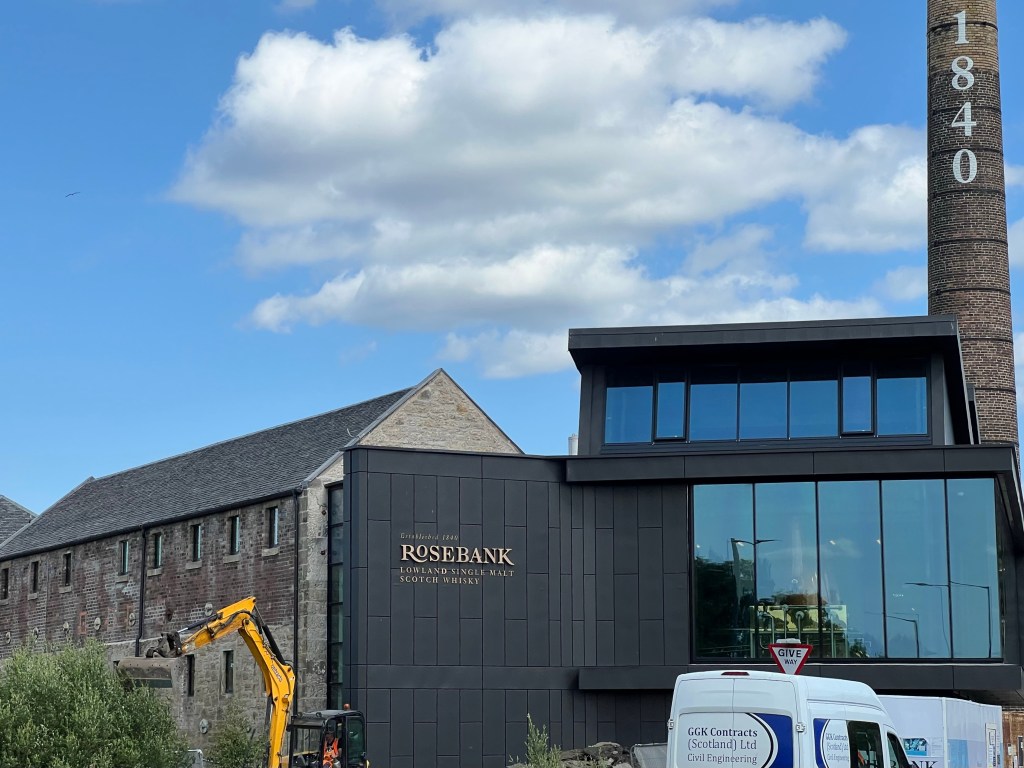
After the wheel and some snacks, we continued along the Forth & Clyde canal, walking on the towpath through industrial and residential areas, and stopping for lunch. We considered stopping at the distillery , but it was closed.
We then reached a point where we stopped dead in our tracks – the Kelpies were in sight.
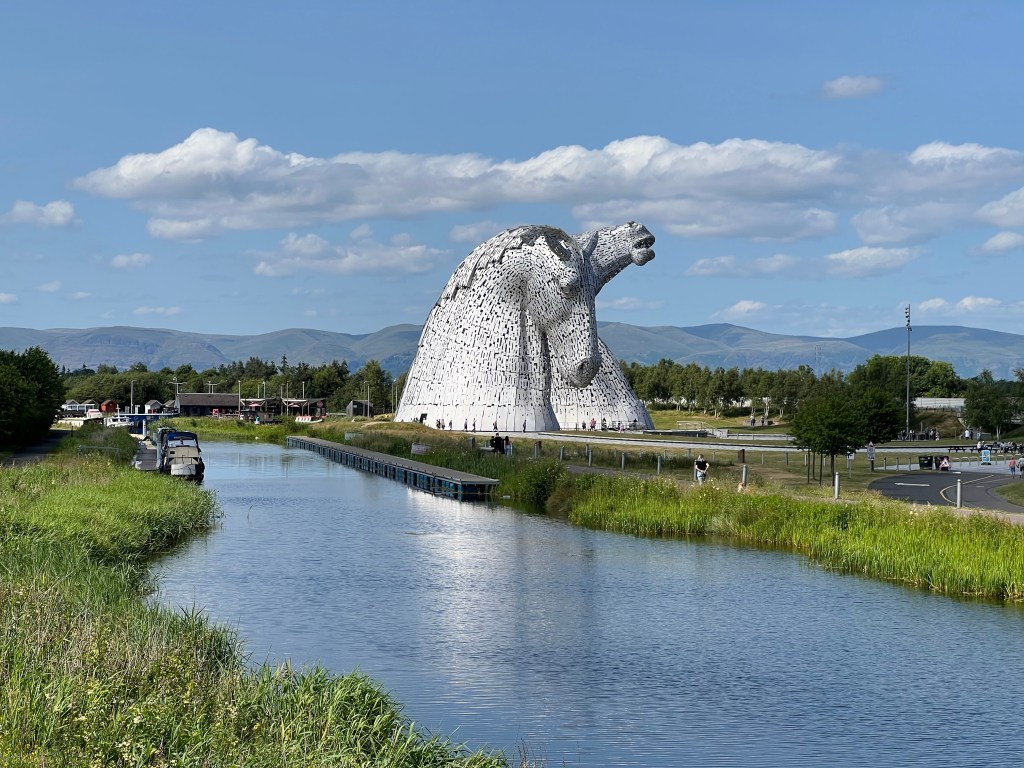
Although they appear as giant horse heads, they were envisioned as kelpies – Scottish spirits that can shift shape but often appear in horse form. There were actually two pairs of heads – the artist vision which was three meters high and made of welded plate, and what Dave calls the “engineers variant” – thirty meter tall structures with substantial inner structure and bolted plates cut to suggest the inspiration.
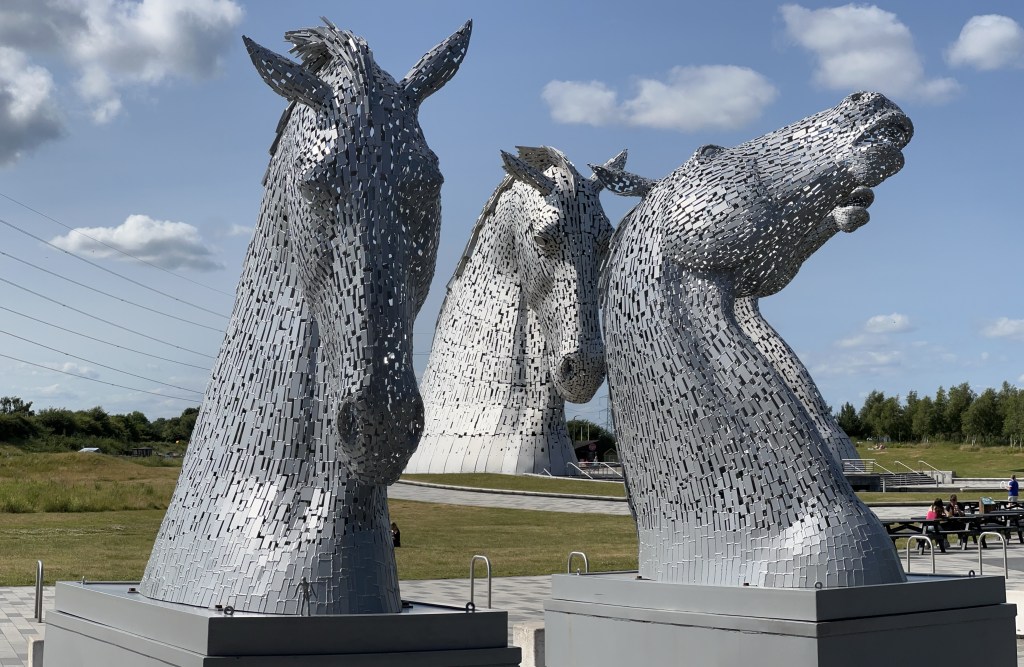
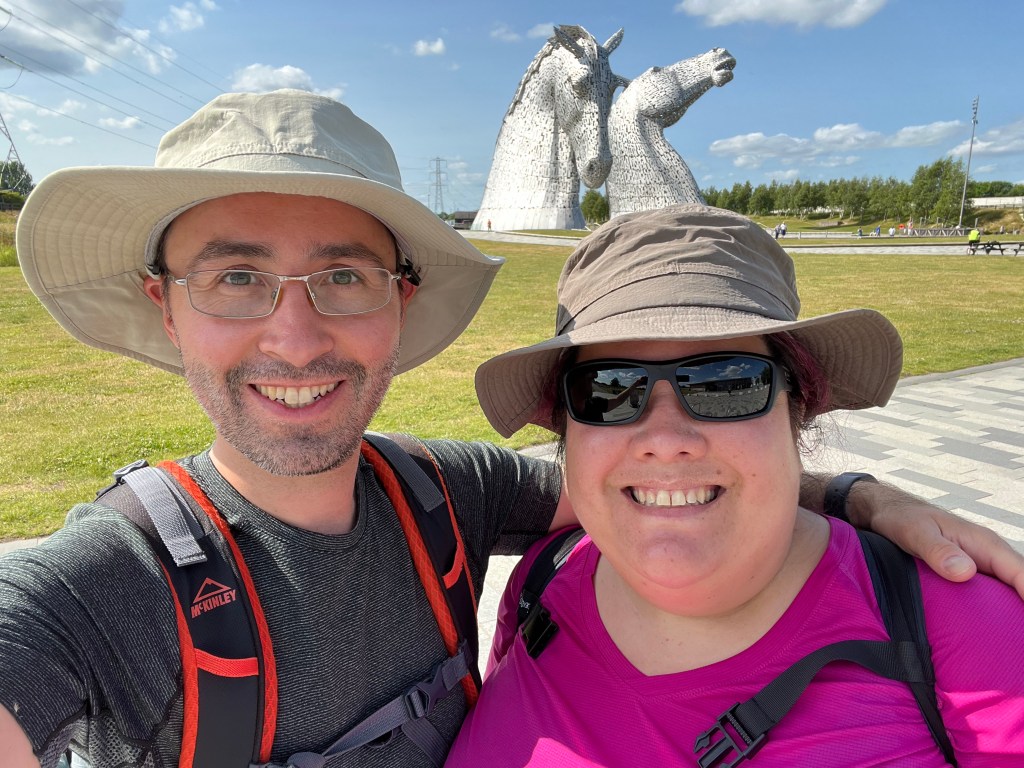
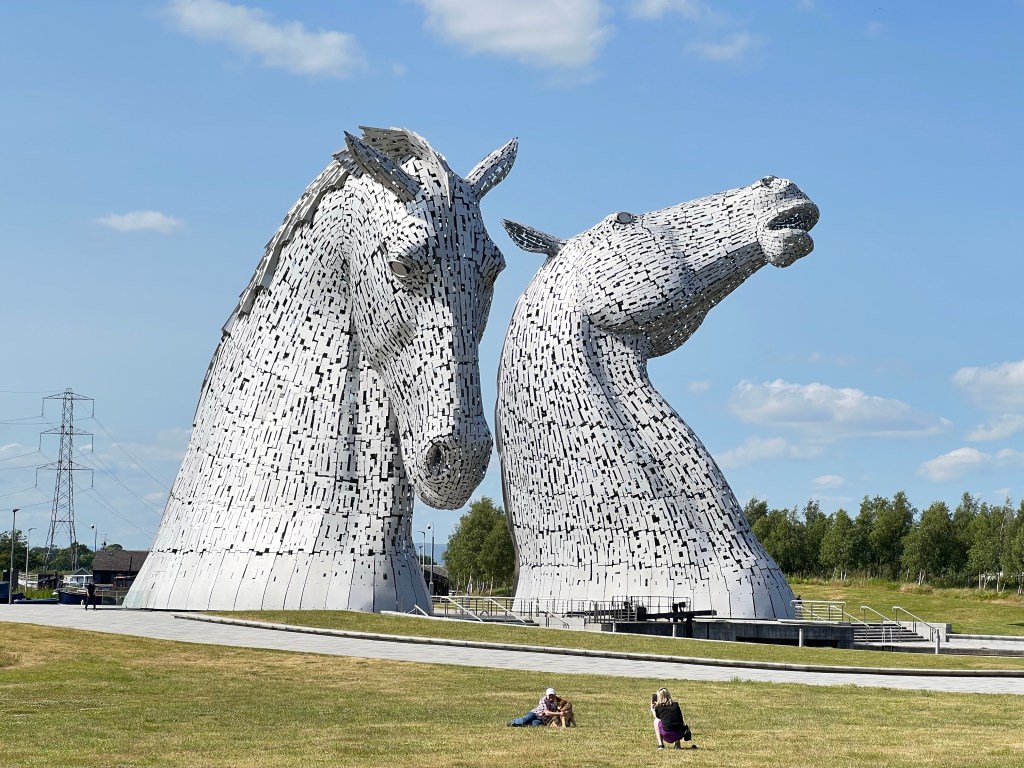
After the Kelpies we walked through Helix park and made our way to Falkirk Grahamston Station for the ride back to Glasgow. A long day, but a lovely one!


 Jen and Dave: Adventuring
Leave a reply to Josy A Cancel reply