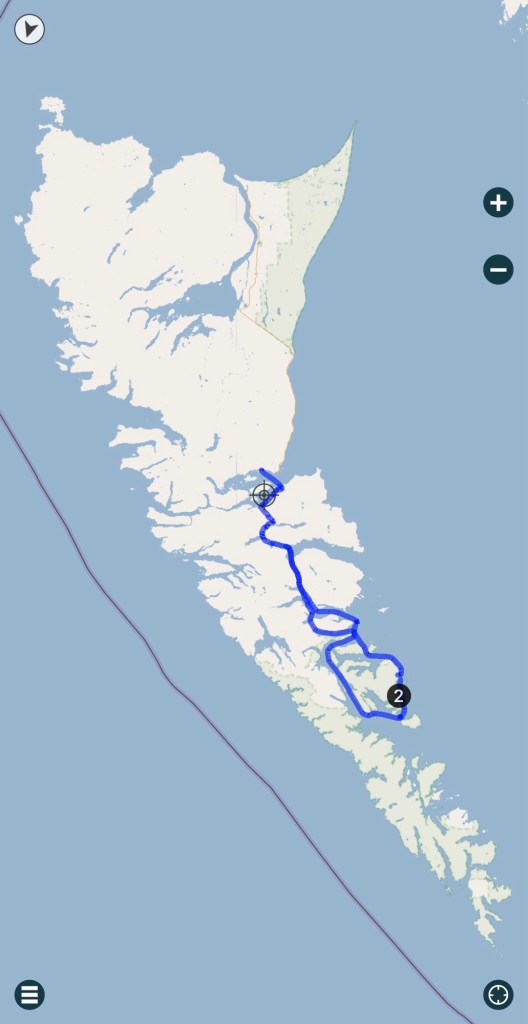
Bright and early this morning we went to the Daajing Giids dock, where we were warmly greeted and outfitted with life jackets. Haida Style Expeditions was taking us out today, albeit on a modified route due to the conditions.
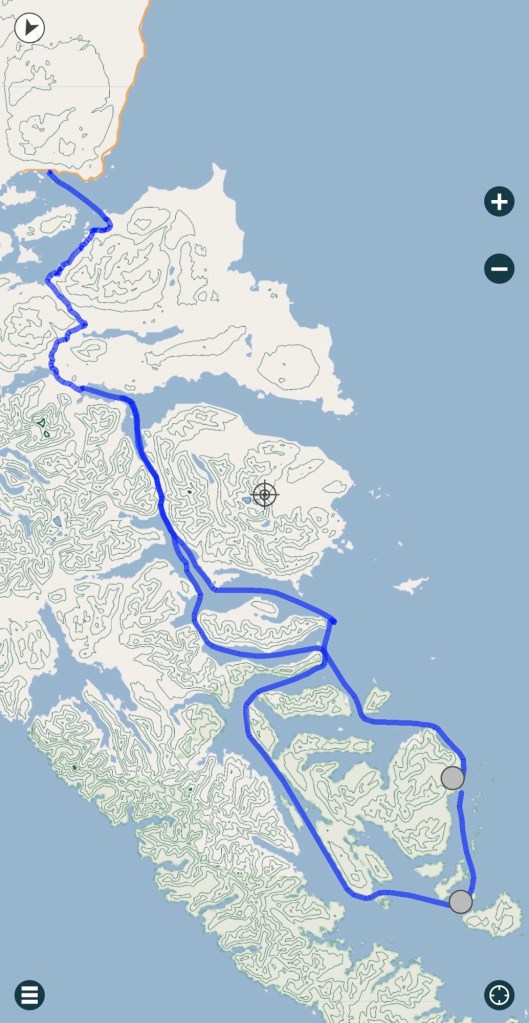
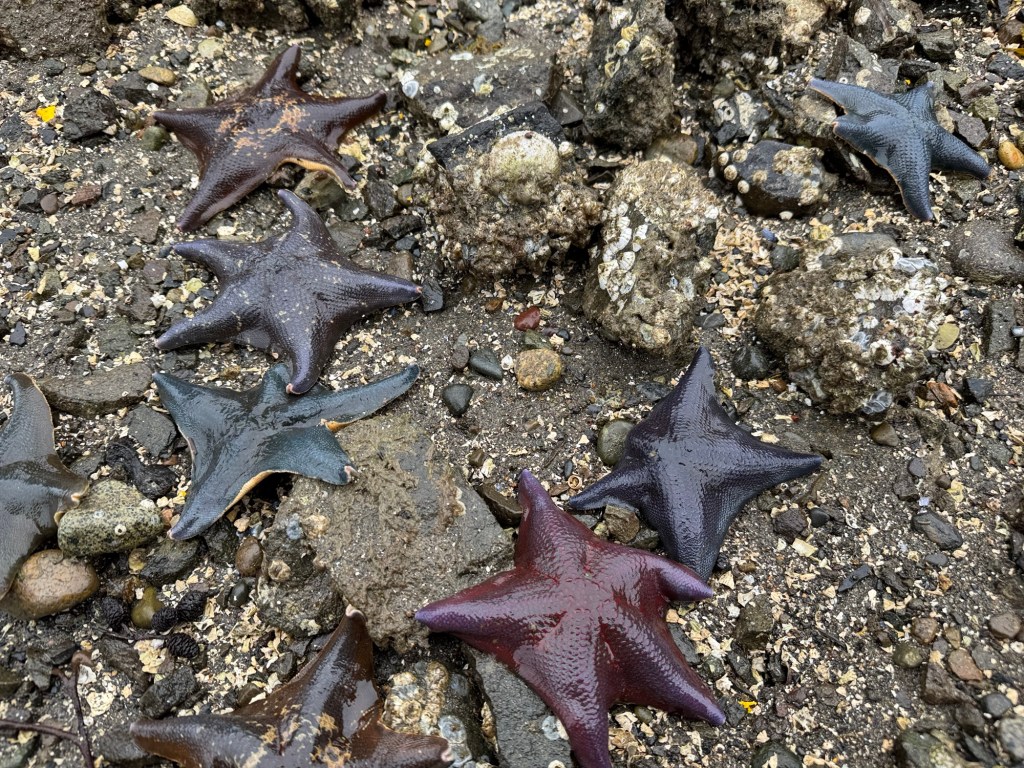
We first boarded one boat to cross to Sandspit, landing amongst bat stars and oysters, then took a van to Moseby Camp (they normally travel entirely by boat but the sand bar was rough). On the way, we saw Taan (black bear). Once at the dock, we headed to the beach, where the kids of the group delighted in catching and squishing invasive European Green Crabs, which are a threat to the native shore crab species.
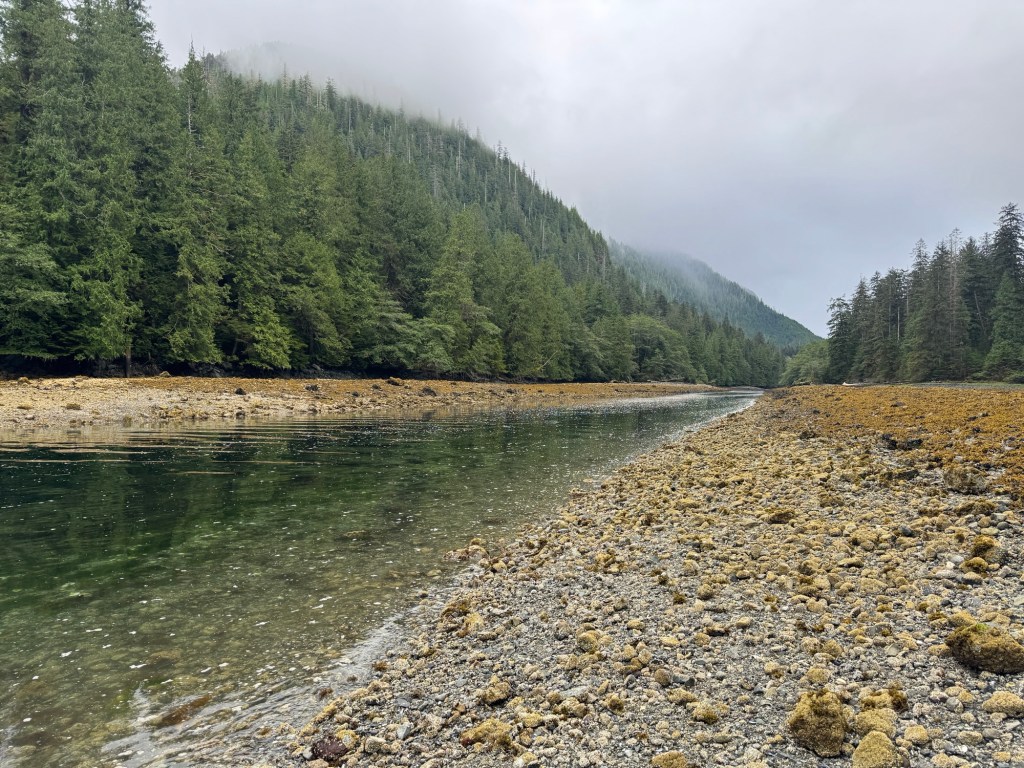
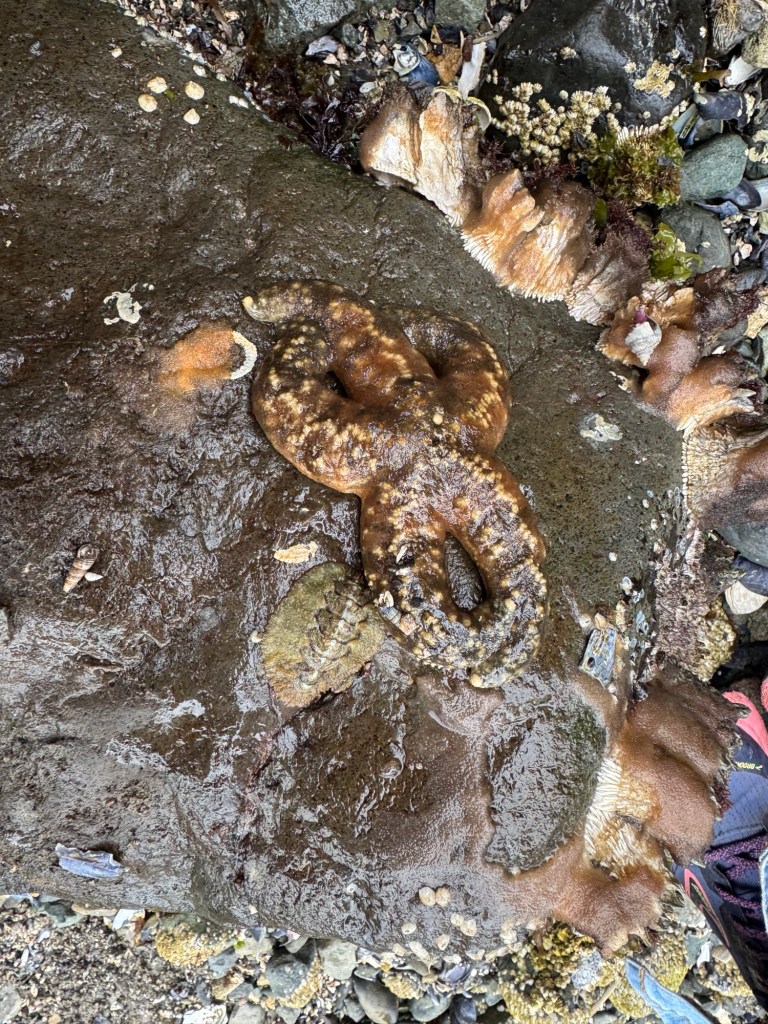
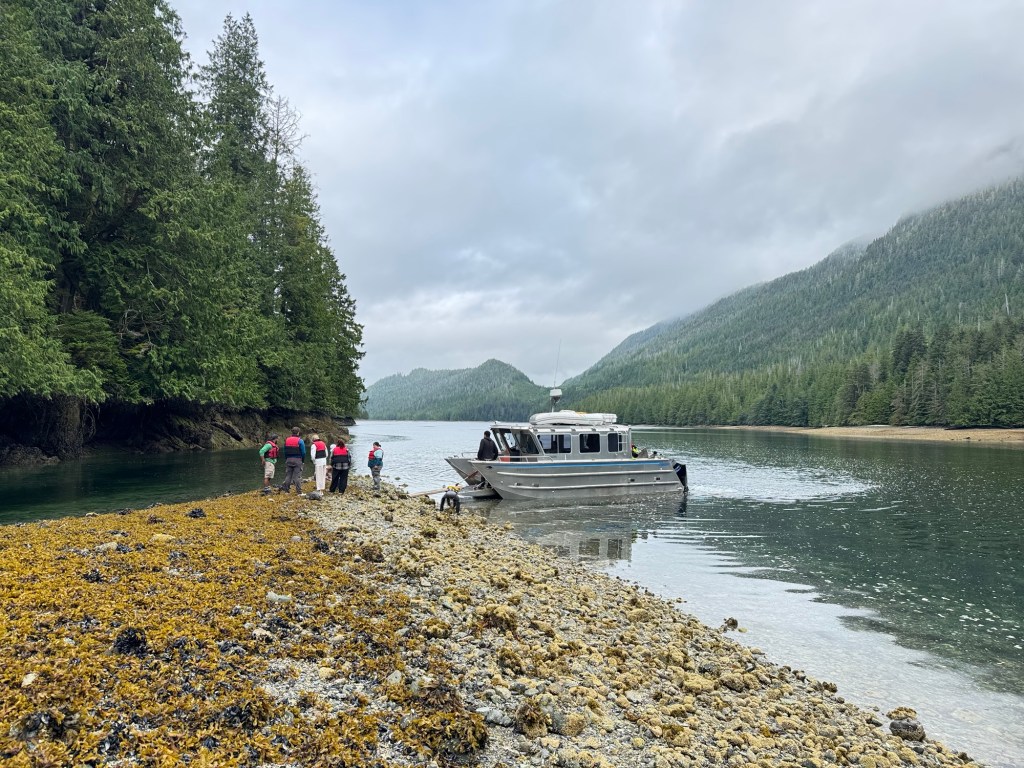
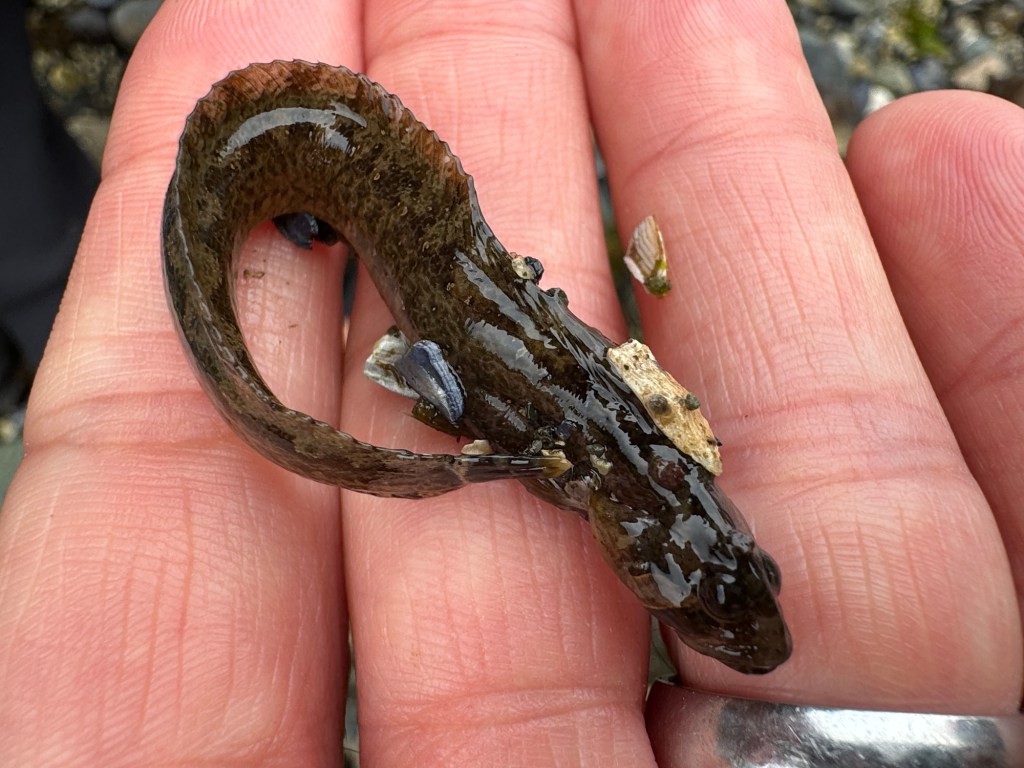
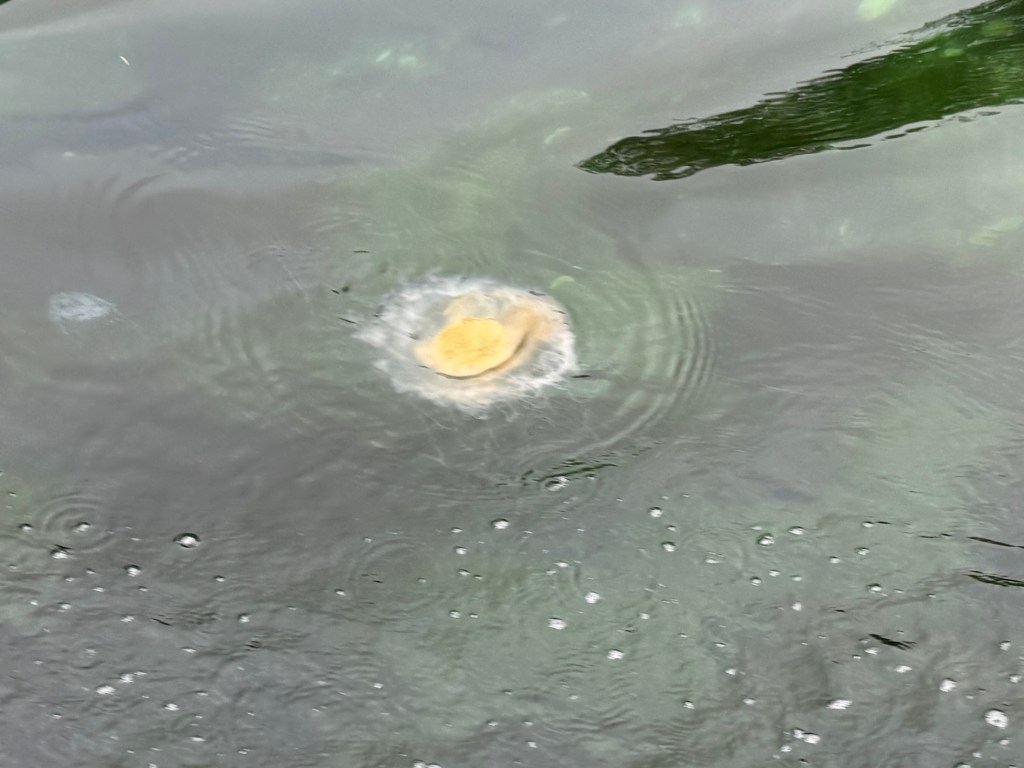
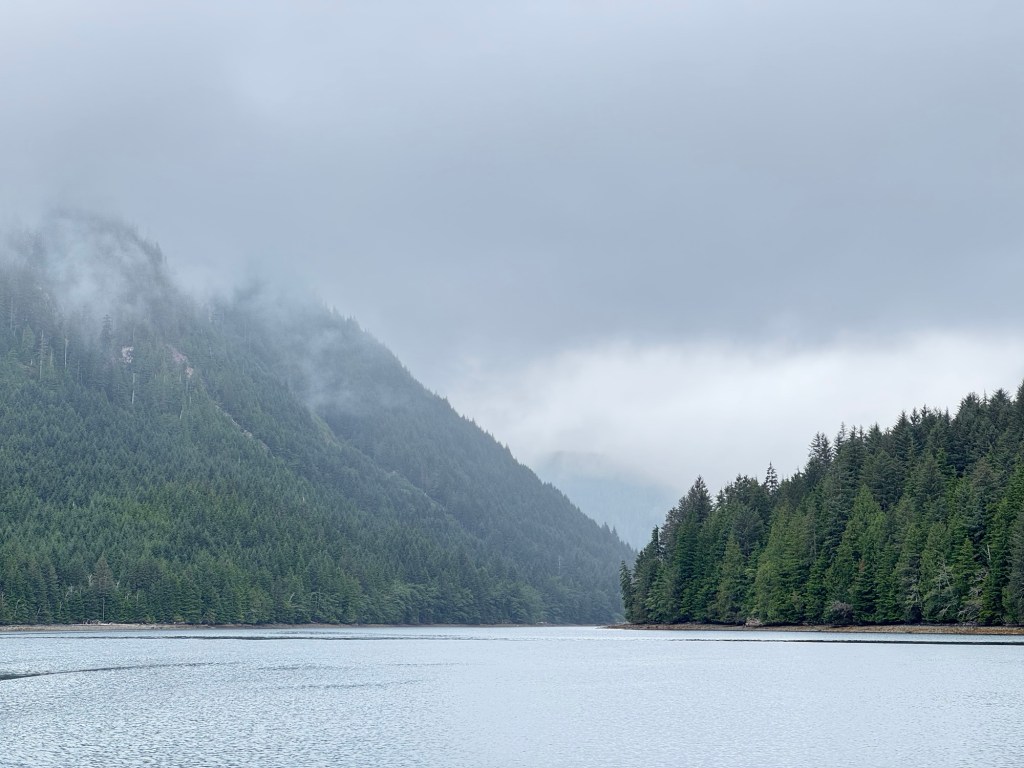
Heading out on our main boat ride, captain James and mate Carter navigated our way through Princess Louise Inlet. Here it was too shallow, so we checked out sea stars, chitons, and prickleback called High Cockscomb on a rocky bar while we waited fifteen minutes for the tide to rise.
Continuing on our way, we were lucky to see a Taan foraging on the beach, humpback whales, and orcas.
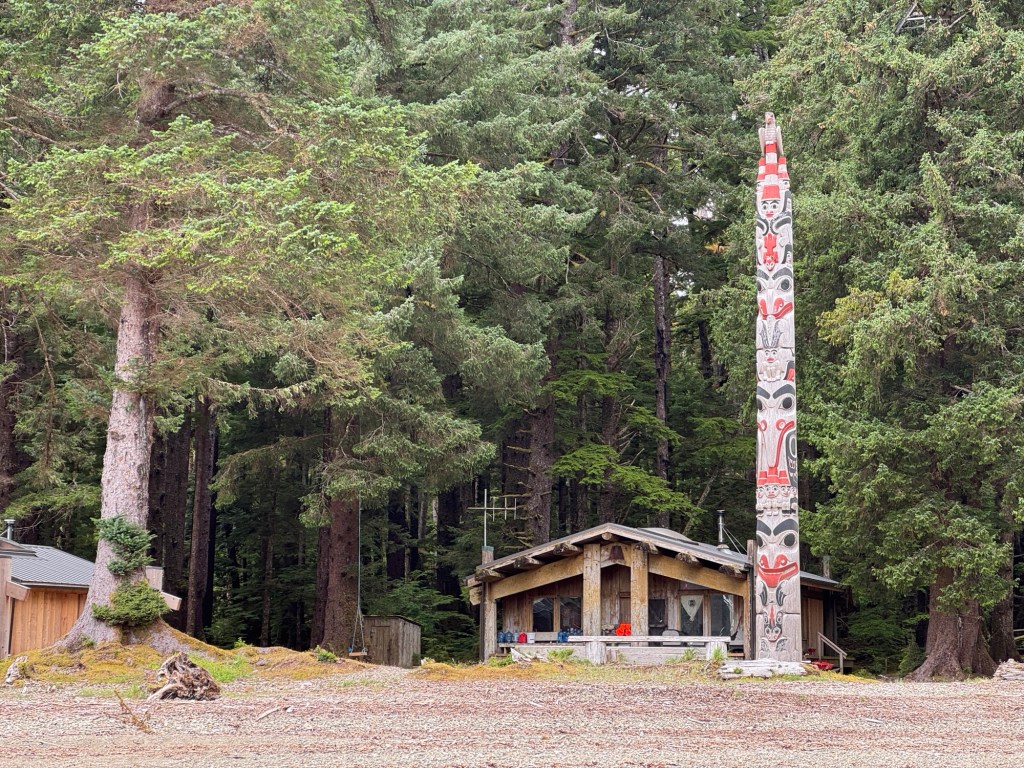
At Hlk’yah G̱awG̱a (Windy Bay), we were honoured to be greeted by an 85 year old Haida Watchman, who serves as one of two caretakers in the summer. Xiila, our Haida interpreter, told us the importance of this place, where the Haida Nation and Government of Canada eventually came to an agreement to form Gwaii Hanaas National Park Reserve (though it took logging protests and the arrest of elders to get there).
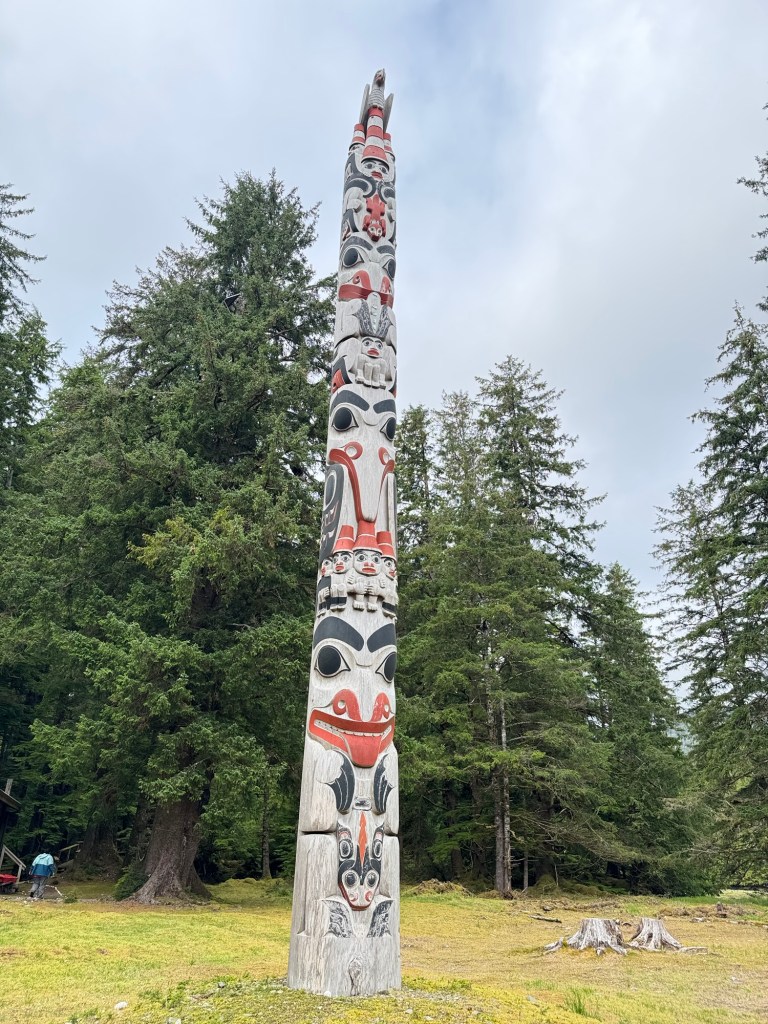
For the twentieth anniversary of the historic agreement, Xiila’s brothers were commissioned to carve a pole to tell the story of what had transpired. The human figures in the middle, wearing gumboots, represent the main protest figures, with the barefoot figure representing the ancestors that were there supporting them.
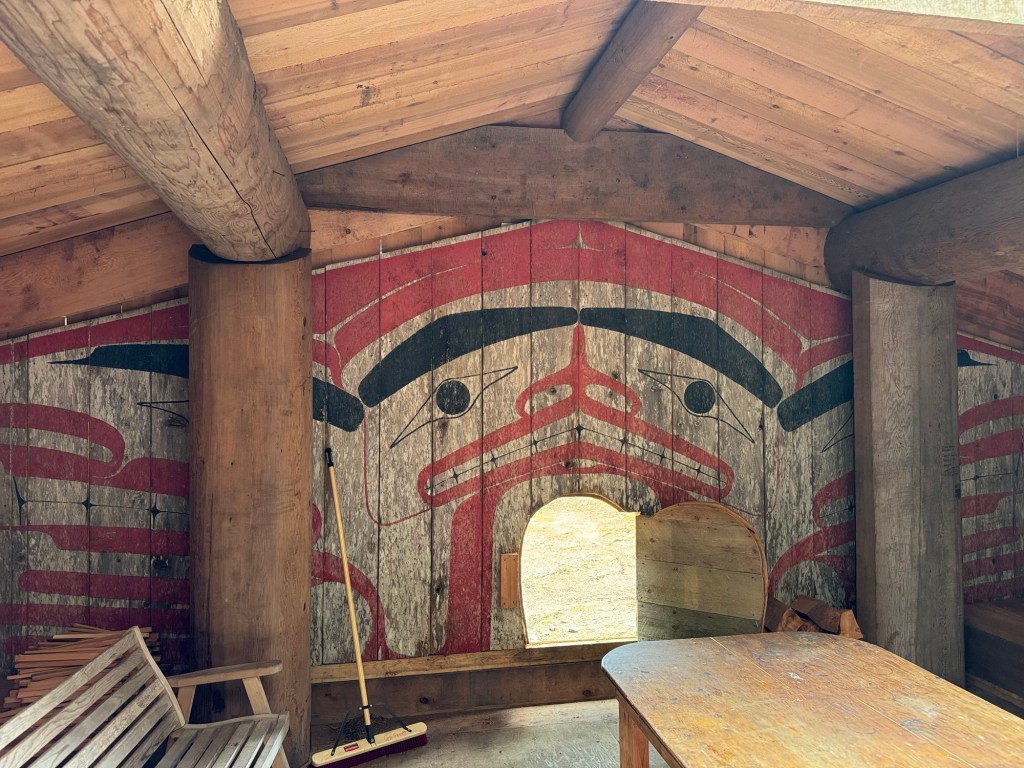
Also at Hlk’yah G̱awG̱a, we saw a beautiful longhouse (with art from a former building inside) near the Watchman’s cabin, for visitors to get out of the weather.
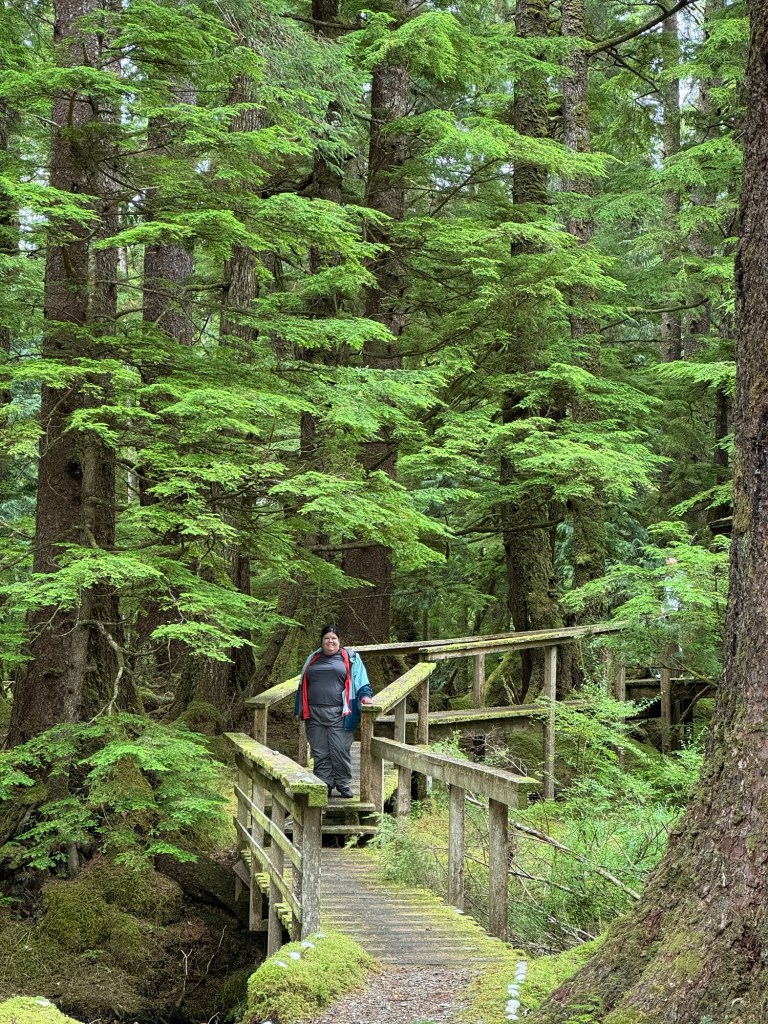
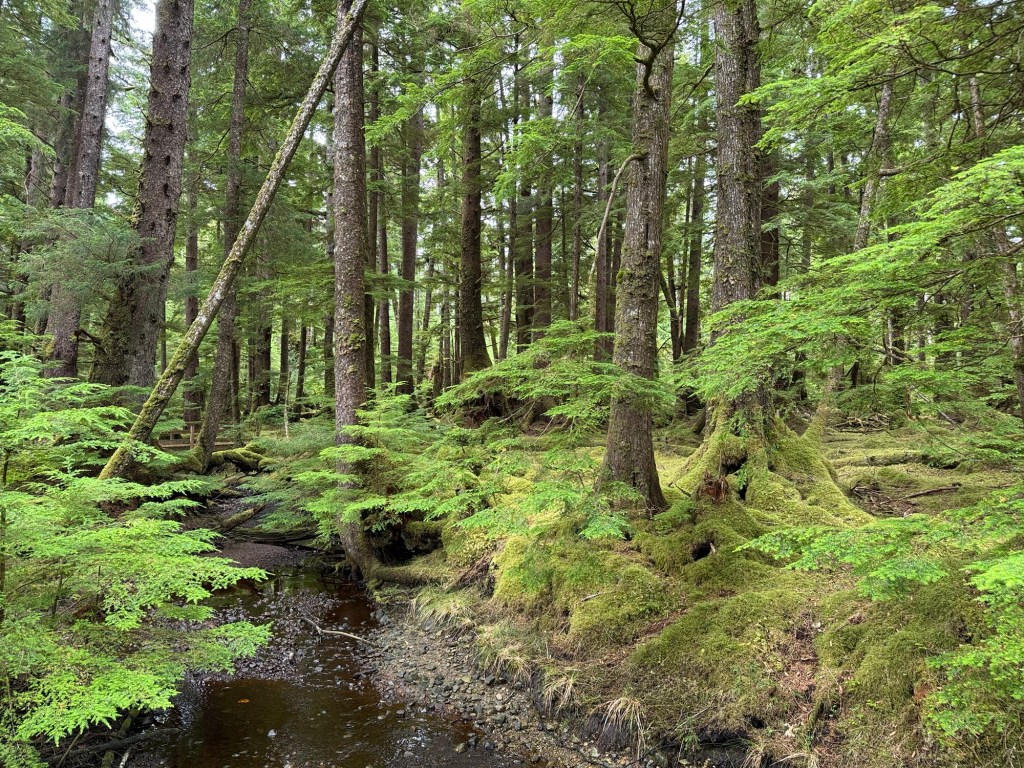
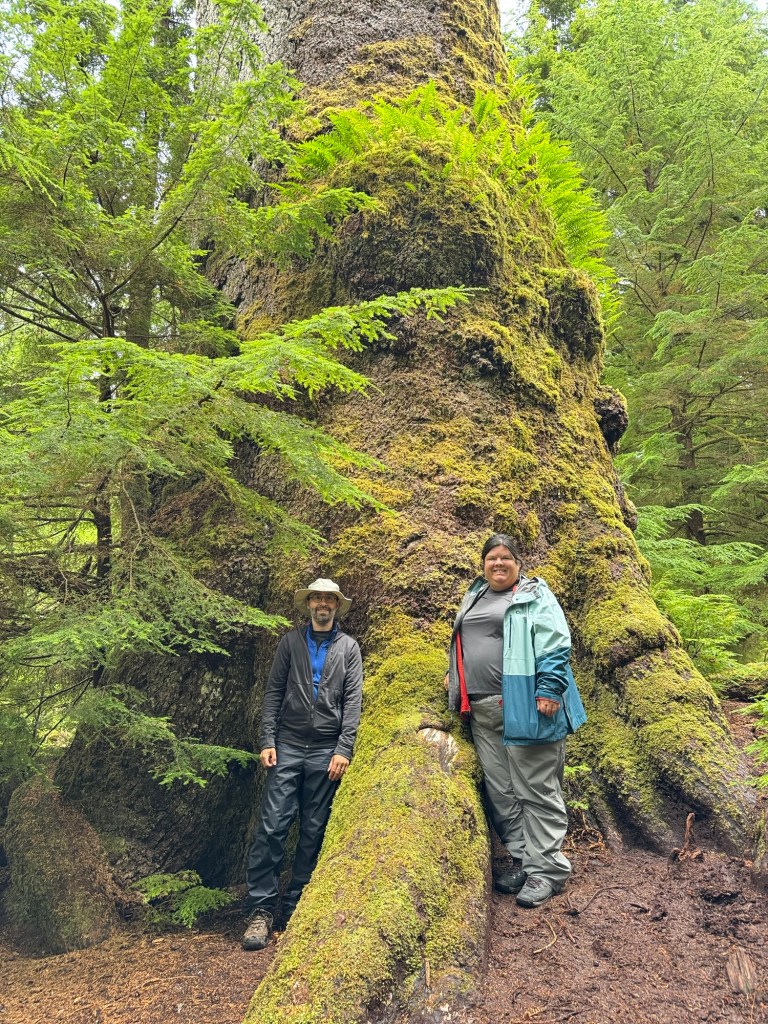
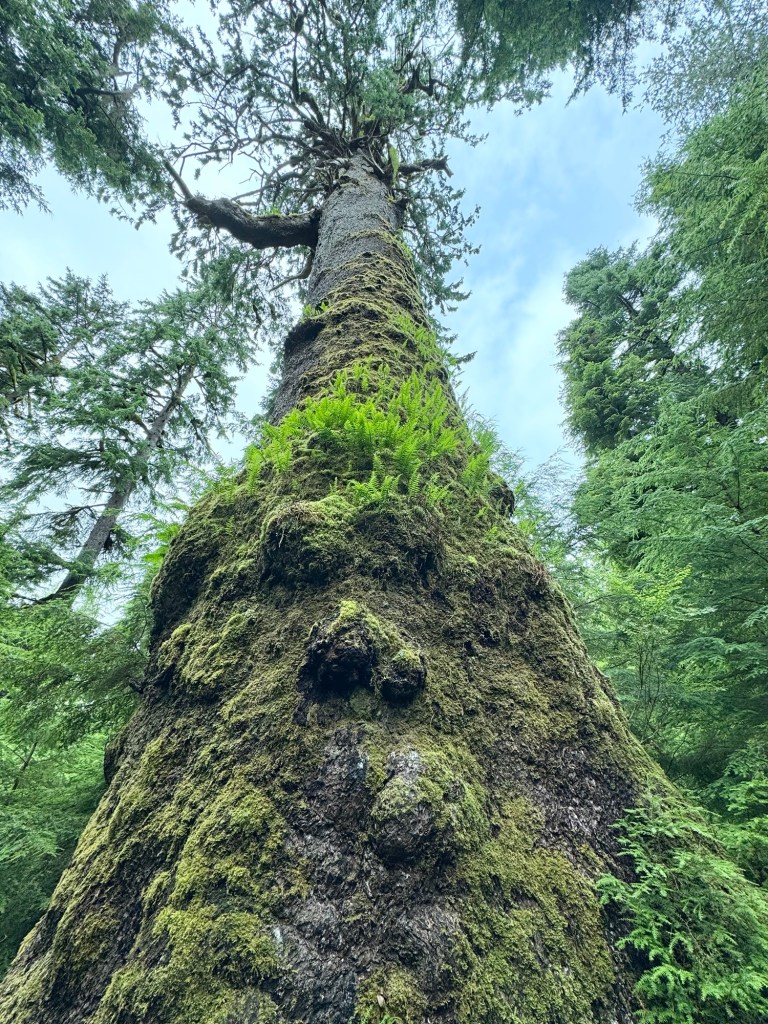
Across the stream, we went on a short walk through the woods to an example old growth spruce tree. It was massive!
Returning to the boat, we were served a lunch of white Spring salmon and breaded halibut, both grilled, with many sides.
The next stop was G̱andll K’in Gwaay.yaay (Hotsprings Island). We learned from Xiila that the hotsprings were known but not what made this island special to the Haida. Here, the sea bed was rich with food, so it was an important harvesting location for scallops, abalone, sea urchins and more.
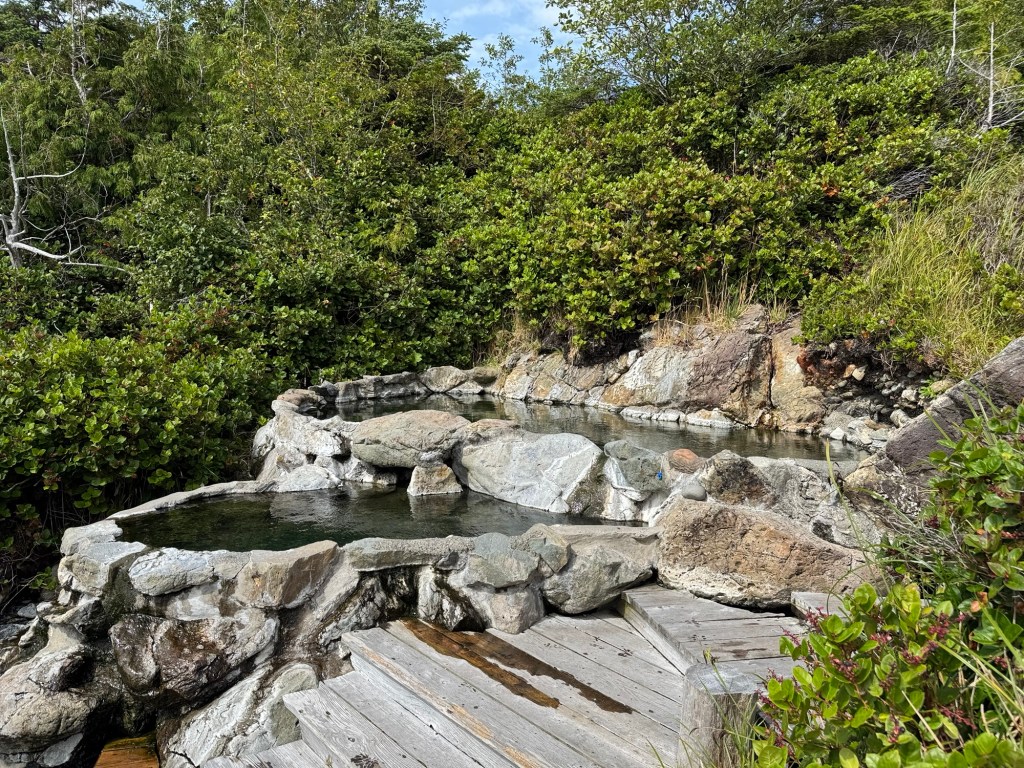
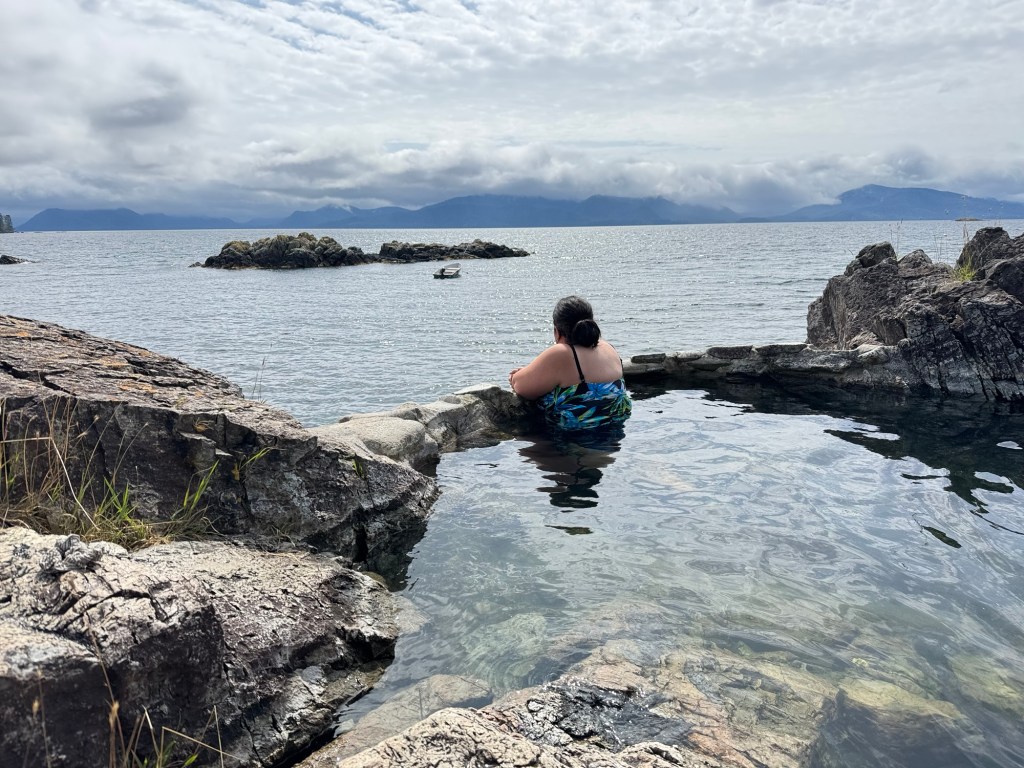
The hot springs, however, were amazing. Perched on the cliff between the ocean and the forest, the pools were warm and incredibly inviting. A perfect way to relax.
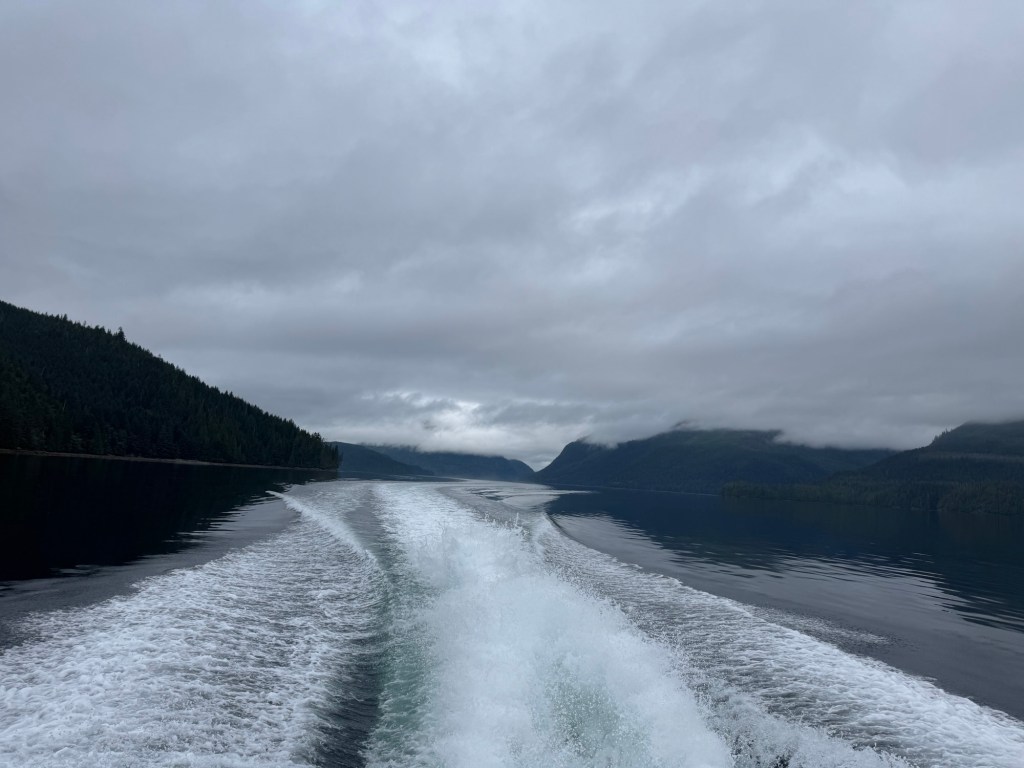
Too soon, it was time to pack up and retrace our steps towards the Daajing Giids docks. We napped a bit and watched more whales, and spotted more Taan.
An amazing day.

 Jen and Dave: Adventuring
Leave a comment